Author name: Shannon Garcia

samsung-files-xr-‘glasses’-trademark-in-the-uk

Samsung Files XR ‘Glasses’ Trademark in the UK

Samsung has secured a trademark with the UK’s Intellectual Property Office for ‘Samsung Glasses’, which could mean we’re finally seeing some movement from the South Korean tech giant to release an XR headset.

Filed in August and later entered into registry in November, the Samsung Glasses trademark specifies that it covers “Virtual reality headsets; Augmented reality headsets; Headphones; Smartphones; Smart glasses.” The news was first reported by UploadVR.

Samsung announced in February it was partnering with Google and Qualcomm to develop an XR device, something the company said at the time was “not too far away.” We’re still not sure what it will be other than hardware made by Samsung, software by Google, and chipset by Qualcomm.

While unconfirmed as a related device, only a short month later Samsung filed for the US trademark ‘Samsung Galaxy Glasses’. In its description, the US filing is said to cover the same categories as the UK trademark.

Granted, this is a pretty wide range of devices which span the entire XR gamut, although both proposed ‘Glasses’ monikers seem to imply it wouldn’t be a direct competitor to either Meta Quest 3 or the soon-to-release Apple Vision Pro, the $3,500 mixed reality headset which is set to launch sometime early next year.
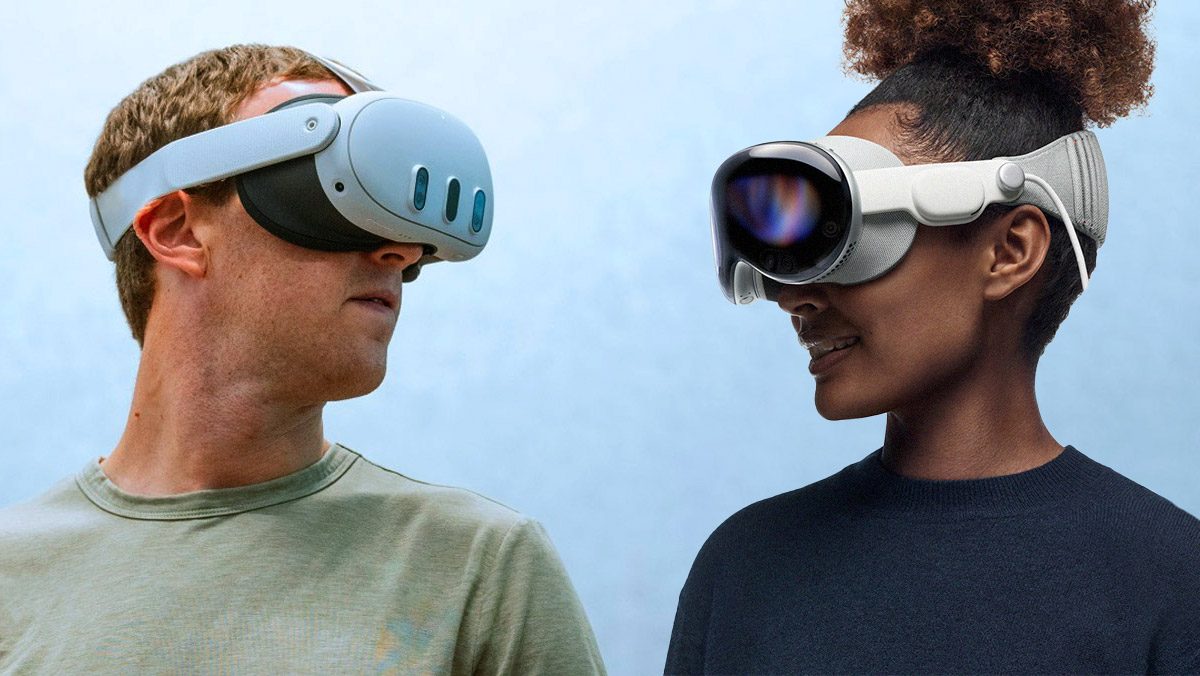
Quest 3 (left) and Apple Vision Pro (right) | Based on images courtesy Meta, Apple

Vision Pro is well beyond the size of spectacles, so calling anything with that format would be an odd move. There are a few candidates though.

Something similar to Meta’s Smart Glasses from Ray-Ban could be more fitting to bear the ‘Samsung Glasses’ name. Confusingly enough, Meta Smart Glasses don’t have a display, instead packing in cameras, off-ear headphones, microphones, and voice access to Meta’s digital assistant.

Another option might be a device similar to XREAL’s Air 2 Pro, which packs in birdbath optics and micro-OLEDs for traditional content consumption, such as film, TV, and flatscreen video games.

A full-blown pair of all-day AR glasses is decidedly out of the picture though, as optics and battery technology (among other things) still aren’t at a point where they’d fit into a glasses format. These are problems that every major tech company in the XR space is working on currently, but it’s safe to say we’re years away from what many hope will be the next major computing platform.

Samsung Files XR ‘Glasses’ Trademark in the UK Read More »
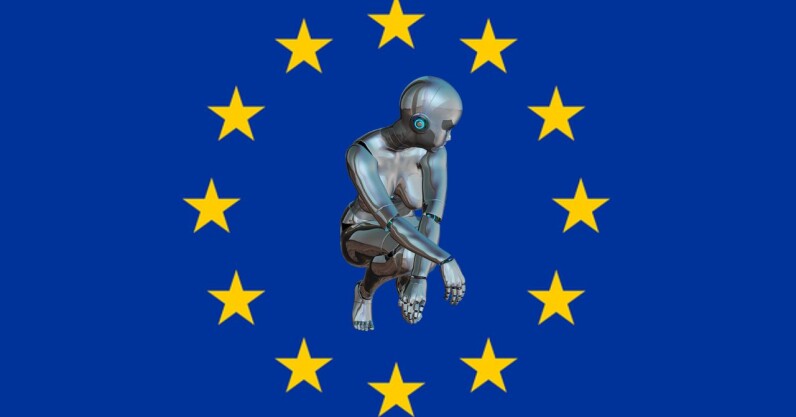
europe’s-it-sector-worried-ai-act-‘misses-mark-on-tech-neutrality’

Europe’s IT sector worried AI Act ‘misses mark on tech neutrality’

The EU’s upcoming AI Act has an ambitious goal: to set the first landmark framework for regulating artificial intelligence. But its strict approach towards General Purpose AI (GPAI) and foundation models has sparked controversy both among the bloc’s policymakers and the wider tech industry.

Now, following the act’s latest Trilogue negotiations between the Commission, the Council, and the Parliament, representatives of Europe’s IT sector are worried that the bill “misses the mark on tech neutrality and risk-based control.”

In a joint statement, the signatories, who include DOT Europe, argue that the suggested proposals on GPAI and foundation models are neither aligned with the complexity of the AI value chain, nor are they consistent with the act’s intended approach to regulate based on risk and not on the type of technology being used.

Specifically, they express concerns about the potential classification of the two technologies as “highly capable,” or as having “high impact,” noting that the EU’s criteria for this assessment aren’t directly linked to the level of risk an AI system may pose.

The <3 of EU tech

The latest rumblings from the EU tech scene, a story from our wise ol’ founder Boris, and some questionable AI art. It’s free, every week, in your inbox. Sign up now!

They further add that any obligations designed for foundation models should take into consideration the multinational and multi-stakeholder ecosystem, in order to enable co-regulatory processes where actors across the entire value chain can help shape future governance.

Meanwhile, the sector representatives are against the potential additional requirements for using copyrighted data to train AI systems, given that there’s already a comprehensive framework of copyright protection in the bloc.

“We believe this additional legal complexity is out of place in the AI Act, which is primarily focused on health, safety, and fundamental rights,” reads the statement.

Alongside DOT Europe, the signatories include The Software Alliance (BSA), the Computer & Communications Industry Association (CCIA), the Developers Alliance, the Information Technology Industry Council (ITI), and the Association of the Internet Industry (eco).

The IT sector isn’t the first to express concerns about the AI Act. Executives at some of Europe’s biggest companies have raised fears over how over-regulation could stifle innovation, while the US has warned that the bill would hurt smaller European companies and only benefit the big players.

Europe’s IT sector worried AI Act ‘misses mark on tech neutrality’ Read More »

‘wave-devouring’-tech-inspired-by-whales-could-propel-ships-towards-net-zero

‘Wave devouring’ tech inspired by whales could propel ships towards net zero

Scientists from Cranfield University in the UK are developing a kind of underwater wing for ships that could help decarbonise a sector responsible for more emissions than air travel.

Known as wave devouring propulsion technology, it is essentially a flapping foil system installed at the bottom of a ship’s hull that helps propel it along. Inspired by the tail fin of a whale, the system harnesses the kinetic energy of the waves to achieve propulsion without fuel.  

As the wing flows through the water, it automatically flaps up and down generating thrust — much like when a bird glides through the air or a fish cruises through the water.  

Just like a fish or a bird, however, the system won’t work unless there is an engine to provide initial power. But once a ship is cruising, the foils reduce the overall effort needed to push the boat forward.  

This graphic from Norwegian startup Wavefoil illustrates the basic concept:

Lab-scale test models of the wave-devouring propulsion system at Cranfield’s ocean laboratory found it could reduce the fuel use of ships by up to 15%. While that might not sound all that much, it is a relatively simple technology that could be retrofitted onto existing vessels. In combination with the plethora of other technologies being developed to decarbonise shipping — like giant windwings or solar sails — the foils could help set the global shipping industry on course for net zero emissions. 

The concept of using flapping foils to generate thrust from flowing water was discovered and demonstrated by German researchers over a century ago. But for a long time, the process simply wasn’t well understood enough to scale on a practical level, and the urgency to cut fuel use wasn’t as great as it is today.    

Over the last few years, however, there have been a few attempts to commercialise wave devouring propulsion and bring it to market. Two companies, Wavefoil from Norway and Liquid Robotics from the US, have shown the most promise. 

Wavefoil made headlines in 2019 when it installed retractable bow foils on a ship for the first time in history. The giant fibreglass foils are designed to fold up into the ship’s hull when not in use, the first technology of its kind to do so. This means the foils can be retracted during heavy storms (they can withstand wave heights up to 6m, not more) and when docking. 

By harnessing the up and down motion of the waves, the foils help save fuel but they also increase comfort in rough seas, said their creators. Having raised €5mn so far (the latest round being a grant in 2022 from Innovation Norway), Wavefoil has installed its technology on several ships since its founding.

autonomous-surface-vehicle-liquid-robotics
Liquid Robotics’ Waveglider robots is powered by solar panels on the surface and a wave propulsion rig below it. Credit: Liquid Robotics 

While Wavefoil is tackling bigger ships like ferries, Liquid Robotics has developed an autonomous surface vehicle called Waveglider. Fitted with solar panels and a wave propulsion system, the ocean-going robot can spend up to a year at sea collecting data for research and defence applications without any human intervention. The company was acquired by Boeing in 2016 and is currently valued at around $200mn, according to Dealroom data. 

While still a nascent field, these two companies have shown that wave-devouring technology has the potential to offer a surprisingly simple solution to cutting the energy consumption of ships great and small. Back at Cranfield, lead researcher Dr Liang Yang envisions the technology will be used for all kinds of maritime applications in the future — from waste-collecting robots to giant cargo ships. 

Check out this video to nerd-out on Wavefoil’s technology:

Time-looping Puzzle Shooter ‘We Are One’ Releases Level Creator in New Update, Trailer Here Read More »

‘unsafe’-ai-images-proliferate-online.-study-suggests-3-ways-to-curb-the-scourge

‘Unsafe’ AI images proliferate online. Study suggests 3 ways to curb the scourge

Over the past year, AI image generators have taken the world by storm. Heck, even our distinguished writers at TNW use them from time to time. 

Truth is, tools like Stable Diffusion, Latent Diffusion, or DALL·E can be incredibly useful for producing unique images from simple prompts — like this picture of Elon Musk riding a unicorn.

But it’s not all fun and games. Users of these AI models can just as easily generate hateful, dehumanising, and pornographic images at the click of a button — with little to no repercussions. 

“People use these AI tools to draw all kinds of images, which inherently presents a risk,” said researcher Yiting Qu from the CISPA Helmholtz Center for Information Security in Germany. Things become especially problematic when disturbing or explicit images are shared on mainstream media platforms, she stressed.

The <3 of EU tech

The latest rumblings from the EU tech scene, a story from our wise ol’ founder Boris, and some questionable AI art. It’s free, every week, in your inbox. Sign up now!

While these risks seem quite obvious, there has been little research undertaken so far to quantify the dangers and create safe guardrails for their use. “Currently, there isn’t even a universal definition in the research community of what is and is not an unsafe image,” said Qu. 

To illuminate the issue, Qu and her team investigated the most popular AI image generators, the prevalence of unsafe images on these platforms, and three ways to prevent their creation and circulation online.

The researchers fed four prominent AI image generators with text prompts from sources known for unsafe content, such as the far-right platform 4chan. Shockingly, 14.56% of images generated were classified as “unsafe,” with Stable Diffusion producing the highest percentage at 18.92%. These included images with sexually explicit, violent, disturbing, hateful, or political content.

Creating safeguards

The fact that so many uncertain images were generated in Qu’s study shows that existing filters do not do their job adequately. The researcher developed her own filter, which scores a much higher hit rate in comparison, but suggests a number of other ways to curb the threat.  

One way to prevent the spread of inhumane imagery is to program AI image generators to not generate this imagery in the first place, she said. Essentially, if AI models aren’t trained on unsafe images, they can’t replicate them. 

Beyond that, Qu recommends blocking unsafe words from the search function, so that users can’t put together prompts that produce harmful images. For those images already circulating, “there must be a way of classifying these and deleting them online,” she said.

With all these measures, the challenge is to find the right balance. “There needs to be a trade-off between freedom and security of content,” said Qu. “But when it comes to preventing these images from experiencing wide circulation on mainstream platforms, I think strict regulation makes sense.” 

Aside from generating harmful content, the makers of AI text-to-image software have come under fire for a range of issues, such as stealing artists’ work and amplifying dangerous gender and race stereotypes

While initiatives like the AI Safety Summit, which took place in the UK this month, aim to create guardrails for the technology, critics claim big tech companies hold too much sway over the negotiations. Whether that’s true or not, the reality is that, at present, proper, safe management of AI is patchy at best and downright alarming at its worst.  

‘Unsafe’ AI images proliferate online. Study suggests 3 ways to curb the scourge Read More »

the-future-of-urban-mobility-in-europe,-10-years-down-the-road

The future of urban mobility in Europe, 10 years down the road

While the glittering lights of Europe’s cities hold the promise of new opportunities, ideas, and fun, they also hold smog and a growing air pollution problem. Not to mention the fact that it’s hard to live your dream city life as you’re trapped in bumper-to-bumper traffic or spending your morning folding yourself into one metro after another. As the population of urban dwellers increases across cities from Stockholm to Milan, getting from point A to point B will only get that much more difficult.

“We believe it doesn’t make sense for people to spend one year of their lives commuting while sitting in queues and congestion,” says Fredrik Hanell, Director of Impact Ventures at EIT Urban Mobility, an initiative started by the European Union to address some of the biggest mobility challenges facing Europe’s cities.

Hanell’s focus is on identifying startups with viable solutions to these problems and providing them with support through matchmaking and funding opportunities. Since its inception in 2019, EIT Urban Mobility has invested in 86 startups.

With an eye on the latest innovations and tech trends in mobility, we asked Hanell: will our futures actually be filled with drones and hoverboards?

Cities are changing shape

The <3 of EU tech

The latest rumblings from the EU tech scene, a story from our wise ol’ founder Boris, and some questionable AI art. It’s free, every week, in your inbox. Sign up now!

Perhaps one of the most apparent changes that are taking place across Europe’s cities is the reclaiming of busy central streets. From Brussels, where the once busy Place la Bourse has been repaved and designated pedestrian-only, to the more cautious “Open Streets” project in Bucharest, which shuts down central streets for vehicles over a weekend and hosts events to get people out and about.

“We don’t hate cars, but we see that the natural place for them needs to change. We need to look at initiatives that can contribute to change in the city. One of the consequences you see from this is that life expectancy increases, accidents decrease, and of course, pollution decreases,” says Hanell.

Rather than a new initiative, this can be seen more as a return to the historic plaza, piazza, or plateía that Europe’s cities have historically been built around, giving it an advantage in this new urban movement over sprawling car traffic-built cities like Los Angeles or Hong Kong.

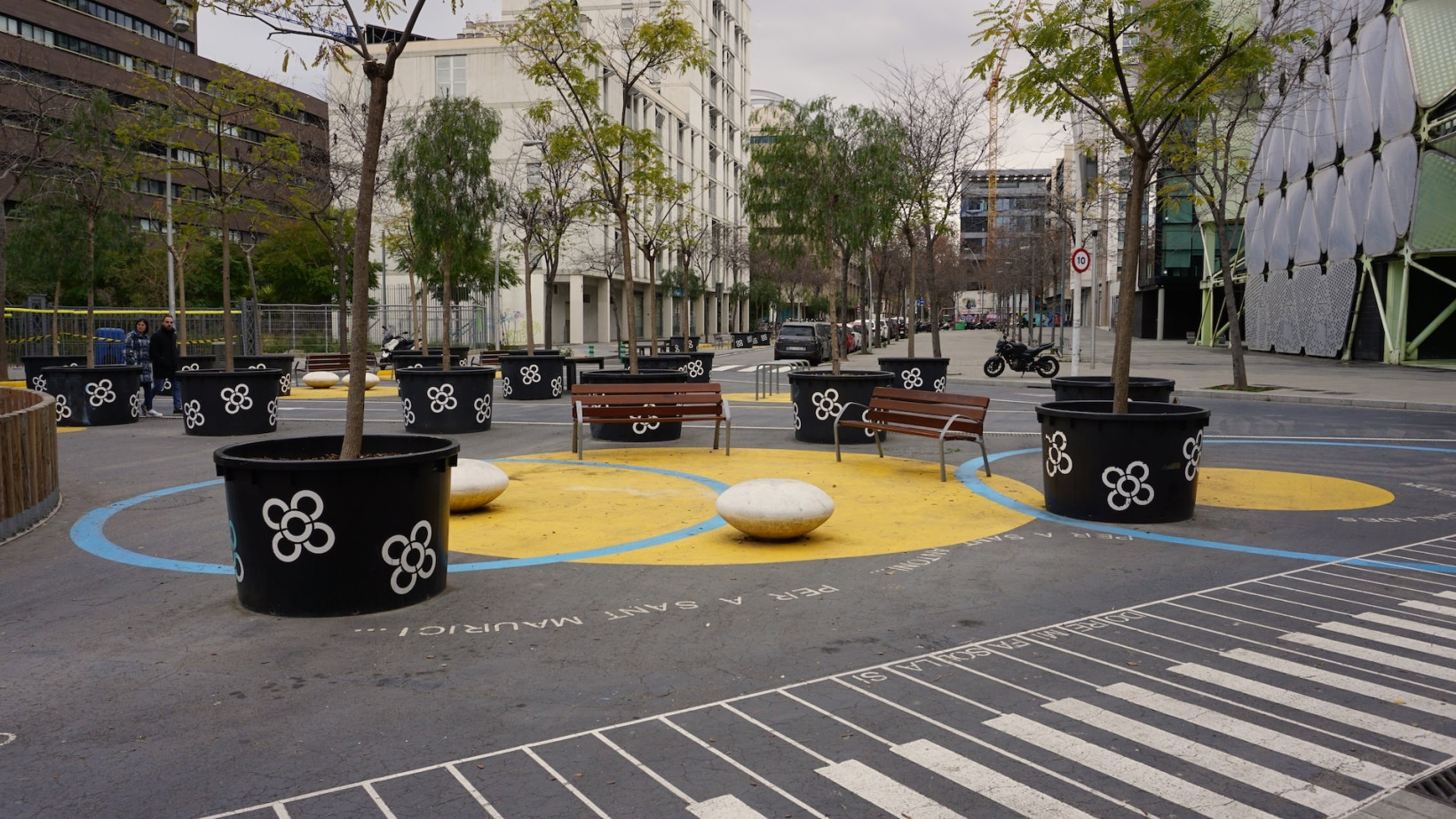
In fact, EIT Urban Mobility is headquartered in Barcelona which was one of the first to introduce ‘superblocks,’ or small traffic-regulated groups of city blocks, in 2016. The most recent study of the project found there has been a 25% decrease in NO2 levels and a 17% decrease in PM10 particle levels. To put this into perspective, studies estimate that, if implemented more widely across the city, the initiative could prevent almost 700 premature deaths a year.

Photo of one of Barcelona's superblock pedestrian streets
Photo by Marek Lumi on Unsplash

However, while this project has been lauded by city planners in fellow EU cities, some residents in the neighbourhoods where it’s been introduced have been less than enthusiastic. The pilot superblock project in the Poblenou neighbourhood faced political and civil society resistance. Several court cases have been brought against the project with a judge ruling in September 2023 that superblocks in the Eixample district would have to be restored to their former state.

Therein lies the quintessential challenge of urban mobility. Put simply, cities are full of people with different needs, jobs, attitudes, beliefs, political leanings, and behaviours. Any change being introduced by city planners has to come with a comprehensive plan to get residents on board. While superblocks might be a great concept for a parent who has more safe space to take their kids out, it might be a bigger burden for a business owner who needs to find a new way to transport goods.

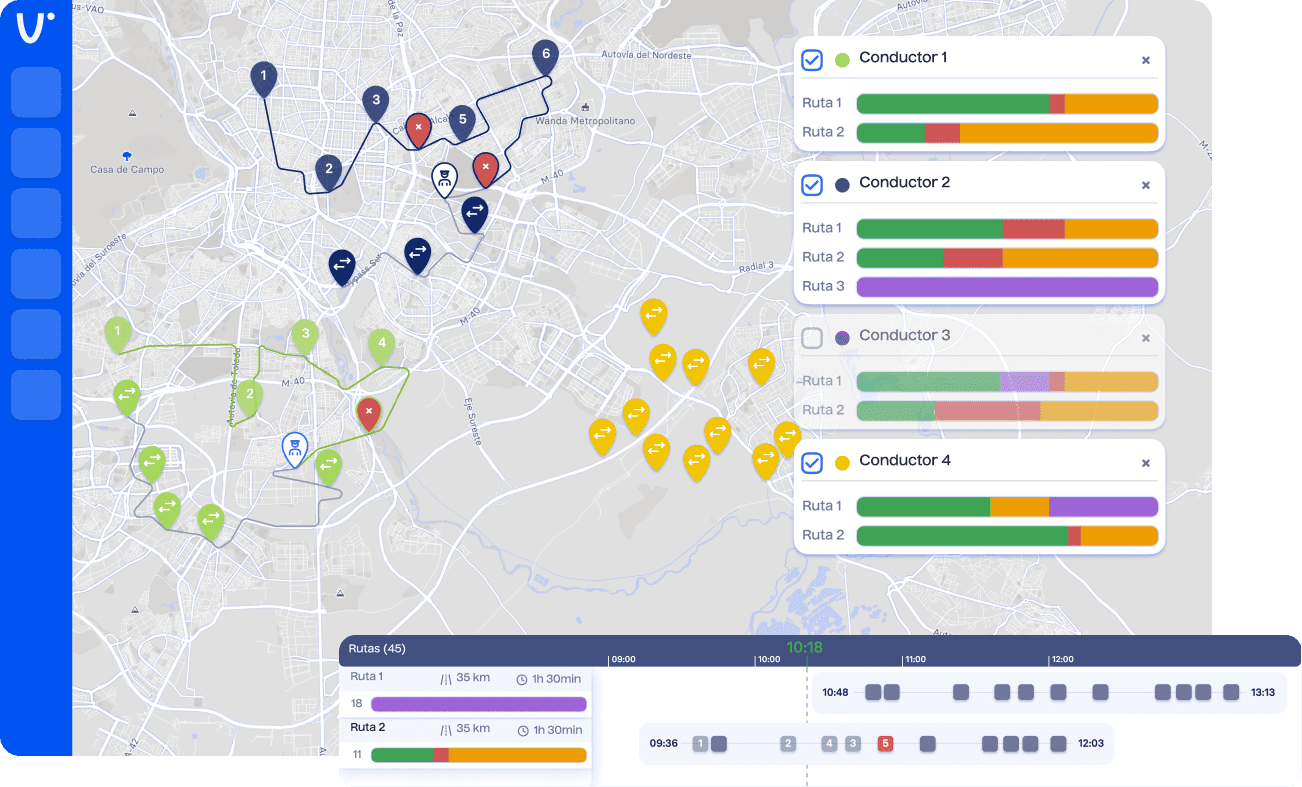
Enhanced logistics planning will be key as traffic flows change. With this in view, one startup EIT Urban Mobility has invested in is Vonzu, a SaaS delivery and logistics management platform, aimed at giving businesses a full overview of all their urban deliveries from supply chain to couriers. As urban logistics become more complex with changing streets and caps on emissions, AI-powered recommendations and automation will be a necessity.

Vonzu's dashboard
Image by Vonzu

Along with reducing pollution and congestion, city planners also hope these changes will encourage citizens to choose healthier and more sustainable transport options. Rather than taking a car or bus to work, pedestrian zones and bike lanes could encourage more walking and biking. But changing behavioural patterns is even more complex than changing cityscapes.

Another interesting startup EIT Urban Mobility has invested in is Nudged, a company that encourages sustainable choices through behavioural design. A pilot in Gotland was able to reduce car commuting by 14% simply by ‘nudging’ commuters to choose more climate-friendly options. Another in Gothenburg helped make users 76% more positive about switching to cycling.

Waterways make a comeback

Many of Europe’s historic cities flourished along rivers and canals as boats were the fastest and most efficient way to transport large cargo, before the invention of motorised vehicles. These waterways were key to the movement of both goods and people.

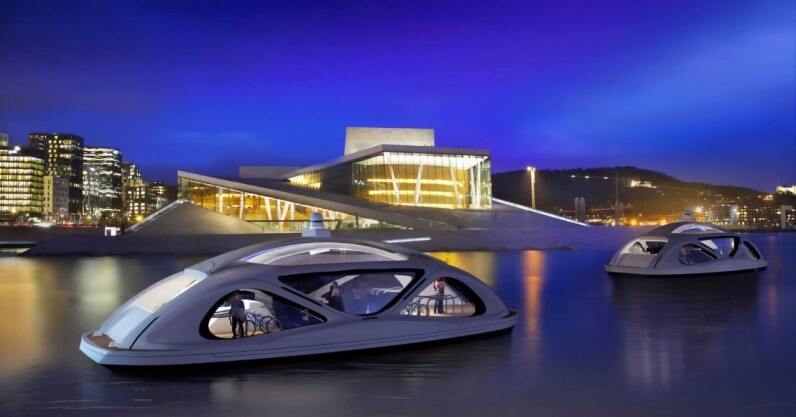
Now, with the evolution of sustainable, autonomous mobility, we’re seeing a revival in waterborne transportation routes. “There are a lot of cities in Europe where public transport across harbours, rivers, and lakes could contribute a lot to changing the mobility patterns and making it much more environmentally friendly,” Hanell says.

On June 8th, Stockholm launched the world’s first commercial autonomous, electric ferry providing a shortcut for passengers across the harbour between Kungsholmen and Södermalm. Solar panels on the roof allow it to charge during the day, and it can be charged via electric plug at night. The ferry, built by Zeabuz, features radar, lidar, cameras, ultrasonic sensors, AI, and GPS technology which allow it to scan and navigate the waters safely.

Design of Zeabuz's smart, autonomous, electric ferry
Image by Zeabuz

Meanwhile, the city of Paris is planning to introduce its own smart ferries, built by Norwegian startup Hyke, to provide extra transport routes across the Seine for visitors during the Summer Olympics in 2024.

Of course, cars aren’t going anywhere…

No matter how many pedestrian and cycling-friendly lanes we build in our cities, we’ll still need cars for longer haul journeys.

While the EU’s shift towards electric vehicles is a great step towards reducing both air and noise pollution, it’s also increasing its dependence on batteries. In fact, the EU predicts EV battery demand and production will increase at a rapid rate until 2030, but the bloc faces a looming shortage of raw materials to meet future demand. As Hanell explains, policymakers are already concerned about the effect this could have across the bloc:

One of the big challenges of Europe is that we’re currently very dependent on China and importing batteries. There are a lot of discussions going on about limiting the import of Chinese electric vehicles and also how we can make ourselves more independent of battery technologies.

Swedish startup Elonroad believes the solution could lay in electrifying Europe’s roads. Much like a power bank, the company has developed a conductive rail that can charge cars as they pass over them on the highway or trucks as they’re parked at a loading bay.

“If vehicles can charge while they’re driving or when they’re parked, then you don’t need as much battery capacity,” Hanell says.

The startup is already beginning a large project to electrify highways across France.

Highway with cars driving over Elonroad's charging rails
Image by Elonroad

Another interesting startup working to meet this challenge is Circu Li-ion which aims to maximise the potential of each battery through upcycling. Rather than focusing on producing new batteries, giving existing batteries a second life is a great way to save CO2 and get the most out of the valuable raw materials inside. And investors are seeing the potential here too. Circu Li-ion recently raised €8.5mn in seed funding.

The future of mobility in Europe won’t be the same

As Hanell emphasised, there is no one size fits all solution to Europe’s mobility challenges. Copenhagen, with its bicycle culture, won’t necessarily follow the same urban mobility path as Madrid. “There are local flavours of everything.”

While the future of urban mobility may not look like a sci-fi movie with flying cars dotting the horizon, Hanell posits that:

The best solutions are pretty much low tech but every once in a while we find these gems, these innovations that can help people change.

Want to learn more about the future of mobility in Europe? EIT Urban Mobility will be hosting a session at Slush 2023 on “Where to invest next in the mobility sector.” Fredrik Hanell and other experts will address topics like how investment in mobility differs from other sectors, the opportunities, traps and where the sector is heading in the coming years. Check it out on 1st of December, 11: 30 am GMT+2.

The future of urban mobility in Europe, 10 years down the road Read More »

norway’s-otovo-bags-e40m-to-grow-rent-to-own-solar-marketplace

Norway’s Otovo bags €40M to grow rent-to-own solar marketplace

Norway-headquartered Otovo has secured €40mn to expand its rent-to-buy online marketplace for solar panels, as it seeks to cash in on booming demand from homeowners looking to slash their energy bills.

Otovo rents out solar panels and inverters at a fixed monthly cost, which includes all repairs and maintenance. It also offers the option to purchase the panels outright.

The platform, currently available 13 European countries, uses satellite data and mapping information to calculate how much sunlight a section of your roof receives and the corresponding energy produced, as well as the size, shape, and specification of suitable rooftop solar products. Then it finds the best price and solar installer for the job in your area.  

Between 2010 and 2020, the price of solar electricity dropped 89% to become the cheapest energy source in history. As gas prices soar, homeowners are increasingly looking to solar panels to increase their energy security, cut costs, and boost the value of their properties. Rooftop solar added 25 GW of capacity in 2022, 8 GW more than in 2021, according to industry body SolarPower Europe.

But even though solar panels are comparatively cheap, they still present a significant upfront cost. Currently, in the EU it costs roughly € 10,000 for a photovoltaic system capable of catering to the energy needs of a 3-bedroom house. Otovo’s rent-to-buy option looks to flatten this financial barrier.

The <3 of EU tech

The latest rumblings from the EU tech scene, a story from our wise ol’ founder Boris, and some questionable AI art. It’s free, every week, in your inbox. Sign up now!

The Oslo-based company now plans to use the fresh funding to ensure its path to reach profitability and to take the number one position in the European residential solar market, it said. 

“The equity raise allows Otovo to aggressively pursue the opportunities given by an energy market in which the cost of building new solar energy is at an all-time low, traditional energy prices are rising and consumers are looking for ways to cut their expenses,” said Otovo CEO, Andreas Thorsheim. 

The round was led by existing shareholders Å Energy, Axel Johnson Group, and Nysnø, the Norwegian government’s Climate Investment Fund.  

This latest raise brings Otovo’s total funding to €231mn, according to Crunchbase data. The company went public in 2021 after listing on the Euronext Growth stock exchange.

From the top investors in this latest round, Nordic energy utility Å Energi was allocated shares worth 22.4mn, Axel Johnson Group for €8.7m, and the state climate fund Nysnø for €2.4mn.

Norway’s Otovo bags €40M to grow rent-to-own solar marketplace Read More »

valve-is-“still-working-on-vr-and-still-pushing-forward-on-it”

Valve is “still working on VR and still pushing forward on it”

Valve unveiled its Steam Deck OLED late last week, offering up a hardware refresh for the first time since the company launched the handheld gaming device last year. While the company has been full steam ahead on handhelds and developing Steam OS, Valve says it’s “still pushing forward” on VR.

Valve ostensibly has a standalone VR headset in the works, and although there wasn’t any big announcement (or acknowledgement) of what the company has in store just yet. Talking to Norman Chan of Tested though, it was revealed the company is still working on VR.

In an interview, Valve designer Lawrence Yang spoke about the overlap between Steam Deck’s design relative to its VR efforts:

“There’s a lot of things [informing hardware decisions]. Working with an APU, working with miniaturization of computers. We don’t have anything to announce today in terms of a VR other than we are still working on VR, and we’re still pushing forward on it. Just like Steam Deck is learning a bunch of stuff from controllers and VR, future products will continue to learn from everything we’ve done with Steam Deck.”

“Obviously there’s a lot of overlap, from technology pieces that we can use; wireless streaming is very applicable to VR. That benefitted Steam Deck as well in improving the wireless experience. But also from just establishing relationships with part suppliers, hardware partners, and that kind of stuff. The SteamVR team and the Steam Deck team work together. There’s a lot of inoculation of ideas, parts and technologies.”

At Steam Deck’s initial launch in February 2022, Valve chief Gabe Newell told Edge Magazine that Steam Deck represented a “steppingstone” to portable VR for the company thanks to its battery-capable, high-performance horsepower.

More recently, the company released its long-awaited SteamVR 2.0 which drastically upgraded the platform’s VR interface. Whether this is in preparation for an upcoming VR standalone headset remains to be seen; it’s certainly a knock-on effect of improvements made specifically for Steam Deck’s UI.

You can check out the full breakdown of Steam Deck OLED in the Tested video below:

Valve is “still working on VR and still pushing forward on it” Read More »