Valve is a notorious black box when it comes to basically everything. A recent update to Steam client for VR though suggests the company is still working behind the scenes on what appears to be its long-awaited standalone VR headset.
As revealed by tech analyst and consummate Steam data miner Brad Lynch, a recent update to Steam’s client included a number of VR-specific strings related to batteries, which seems to support the idea that Valve is currently readying the platform for some sort of standalone VR headset.
Image courtesy Brad Lynch
The update also included mention of new UI elements, icons, and animations added to the Steam Client for VR—something it probably wouldn’t do for a competitor’s headset, like Meta’s soon-to-release Quest 3 standalone.
Meanwhile, South Korean’s National Radio Research Agency (RAA) recently certified a “low-power wireless device” from Valve, also spotted by Lynch. It’s still too early to say whether the device in question is actually a standalone VR headset—the radio certification only mentions it uses 5 GHz wireless—however headsets like Meta Quest 2 are equally as vague when it comes to RAA listings.
Granted, Valve hasn’t come out and said it’s developing a standalone VR headset yet, although with mounting competition from Apple and Meta, 2024 may be the year we finally see the ‘Index of standalone VR’ come to the forefront. Valve Index has widely been regarded as the ‘best fit’ PC VR headset, owing to its excellent quality, performance, and comfort—something we called “the enthusiast’s choice” in our full review of the headset back when it launched in 2019.
But it hasn’t been entirely mum either. In early 2022, Valve chief Gabe Newell called its handheld gaming PC platform Steam Deck “a steppingstone” to standalone VR hardware, nothing that Steam Deck represented “battery-capable, high-performance horsepower that eventually you could use in VR applications as well.”
– – — – –
While a capable, high-end standalone VR headset from Valve is certainly something to salivate over, a few big questions remain: What will happen when Valve opens Steam up to standalone VR content? How would the largely Meta-heavy ecosystem react as Steam becomes a new outlet for VR games? And what if Valve’s headset is instead capable of playing some subsection of standard PC VR content? We don’t know the answer to any of these questions, but with Valve’s continued interest in VR, we’re still pretty hopeful to find out.
Ubisoft announced Assassin’s Creed Nexus VR back in June, staying that we’d get the Quest exclusive sometime this holiday. Now the studio has revealed a first look at gameplay, and announced the official release date.
Coming to Quest on November 16th, the new Assassin’s Creed Nexus VR trailer shows off a few clips of each of the game’s three protagonists: Ezio (Assassin’s Creed II), Connor (Assassin’s Creed 3), and Kassandra (Assassin’s Creed Odyssey).
From the gameplay trailer, it seems there’s going to be a good slice of parkour, melee, and ranged combat too—basically what you’d expect from the long-awaited Assassin’s Creed VR game. Ubisoft says we should expect to “get caught up in a world of espionage, intrigue and betrayal.”
Locations in the game include Venice, Athens, Colonial Boston “and more,” the studio says in the game’s Quest page, noting that players will have the autonomy to “decide the best way to achieve your objectives” across open map environments. “Meet and interact with civilians and historical figures, all of whom react to your VR actions,” Ubisoft says.
As for combat, Assassin’s Creed Nexus VR melee includes blocking, parrying, and counterattacks, with weapons including bow and arrows, the Hidden Blade, swords, tomahawk, throwing knives, crossbow, and smoke bombs.
You can wishlist Assassin’s Creed Nexus VRfor Quest 2 and Quest Pro, with launch coming November 16th. The game is also presumably coming to Quest 3 whenever the headset launches, although Meta hasn’t mentioned yet when Quest 3 is due to release. Whatever the case, we’re sure to learn more next week at Connect 2023, which promises a big info dump on Meta’s latest VR headset.
The future of influence is here: a digital avatar that captivates millions of adoring fans while offering unparalleled customisation and round-the-clock availability.
Virtual influencers are transforming the way content is created, consumed and marketed online. They represent an electrifying dance between cutting-edge technology and our desire for connection. But, at the same time, they are yet another product being peddled by marketers that want our money.
Upon close inspection, we can see the risks that emerge with these blurred realities.
What are virtual influencers?
While virtual influencers aren’t a particularly new concept – virtual Japanese popstar Kyoko Date has been around since 1996 – recent advances in technology have thrust them into the spotlight.
Also called digital influencers or AI influencers, these digital personalities have a social media presence and interact with the world from a first-person perspective.
They’re created by 3D artists using CGI (computer-generated imagery), motion-capture technology and AI tools. Creators can make them look and act exactly how they want, and their personas are thoughtfully developed to align with a target audience.
There are three main types of virtual influencers: non-humans, animated humans and life-like CGI humans. Each one provides an innovative way to connect with audiences.
Why do virtual influencers exist?
Advancements in AI, the rise of social media and visions of the metaverse (in which the real and virtual worlds are blended into a massive immersive digital experience) are synergistically fuelling the growth of virtual influencers.
Their popularity has prompted marketing agencies to embrace them as a cost-effective promotional strategy.
While real influencers with millions of followers may demand hundreds of thousands of dollars per post, one 2020 estimate suggested virtual influencer Lil Miquela charged a more reasonable £6,550 (currently about A$12,600).
Virtual influencers have clear benefits when it comes to online engagement and marketing. They don’t age, they’re free from (real) scandals and they can be programmed to speak any language. It’s no surprise a number of companies and celebrities have caught onto the trend.
In 2019, supermodel Bella Hadid posed with Lil Miquela in ads for Calvin Klein in what one columnist dubbed a “terrifying glimpse of the future”.
Since then, virtual influencers have become even more popular. In 2021, Prada introduced a CGI ambassador for its perfume Candy. More recently, Lil Miquela has popped up in a number of high-profile brand campaigns and celebrity interviews. Even rapper Timbaland has said he is considering a collaboration.
The transparency issue
Virtual influencers have a unique cultural dimension. They exist in a murky space between our world and the virtual which we’ve never quite explored. How might they impact us?
One major concern is transparency. Many virtual influencers already present as human-like, and it may become increasingly difficult to distinguish between them and real people. This is particularly problematic in an advertising context.
Noam Chomsky developed the generative theory of language acquisition.
There’s a problem with that argument, though. Even though humans are endlessly capable of generating new strings of language, people usually don’t. Humans are constantly recycling bits of language they’ve encountered before and shaping their speech in ways that respond – consciously or unconsciously – to the speech of others, present or absent.
As Mikhail Bakhtin – a Chomsky-like figure for linguistic anthropologists – put it, “our thought itself,” along with our language, “is born and shaped in the process of interaction and struggle with others’ thought.” Our words “taste” of the contexts where we and others have encountered them before, so we’re constantly wrestling to make them our own.
Even plagiarism is less straightforward than it appears. The concept of stealing someone else’s words assumes that communication always takes place between people who independently come up with their own original ideas and phrases. People may like to think of themselves that way, but the reality shows otherwise in nearly every interaction – when I parrot a saying of my dad’s to my daughter; when the president gives a speech that someone else crafted, expressing the views of an outside interest group; or when a therapist interacts with her client according to principles that her teachers taught her to heed.
In any given interaction, the framework for production – speaking or writing – and reception – listening or reading and understanding – varies in terms of what is said, how it is said, who says it and who is responsible in each case.
What AI reveals about humans
The popular conception of human language views communication primarily as something that takes place between people who invent new phrases from scratch. However, that assumption breaks down when Woebot, an AI therapy app, is trained to interact with human clients by human therapists, using conversations from human-to-human therapy sessions. It breaks down when one of my favorite songwriters, Colin Meloy of The Decemberists, tells ChatGPT to write lyrics and chords in his own style. Meloy found the resulting song “remarkably mediocre” and lacking in intuition, but also uncannily in the zone of a Decemberists song.
As Meloy notes, however, the chord progressions, themes and rhymes in human-written pop songs also tend to mirror other pop songs, just as politicians’ speeches draw freely from past generations of politicians and activists, which were already replete with phrases from the Bible. Pop songs and political speeches are especially vivid illustrations of a more general phenomenon. When anyone speaks or writes, how much is newly generated à la Chomsky? How much is recycled à la Bakhtin? Are we part robot? Are the robots part human?
People like Chomsky who say that chatbots are unlike human speakers are right. However, so are those like Bakhtin who point out that we’re never really in control of our words – at least, not as much as we’d imagine ourselves to be. In that sense, ChatGPT forces us to consider an age-old question anew: How much of our language is really ours?
The EU’s Chips Act finally entered into force yesterday (September 21), after spending over a year winding its way through the legislature. The landmark law is designed to bolster the bloc’s domestic supply, sovereignty, and competitiveness in the semiconductor sector.
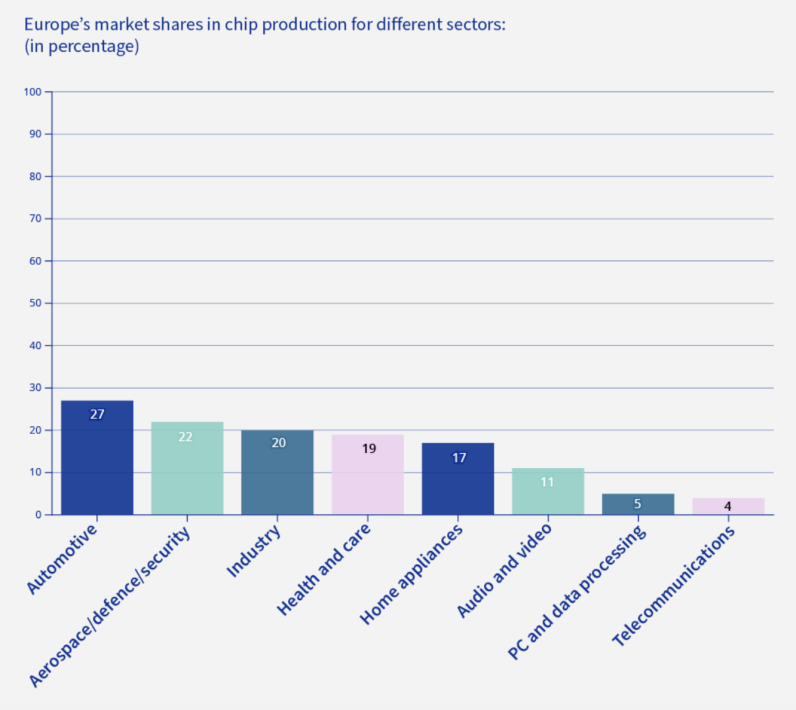
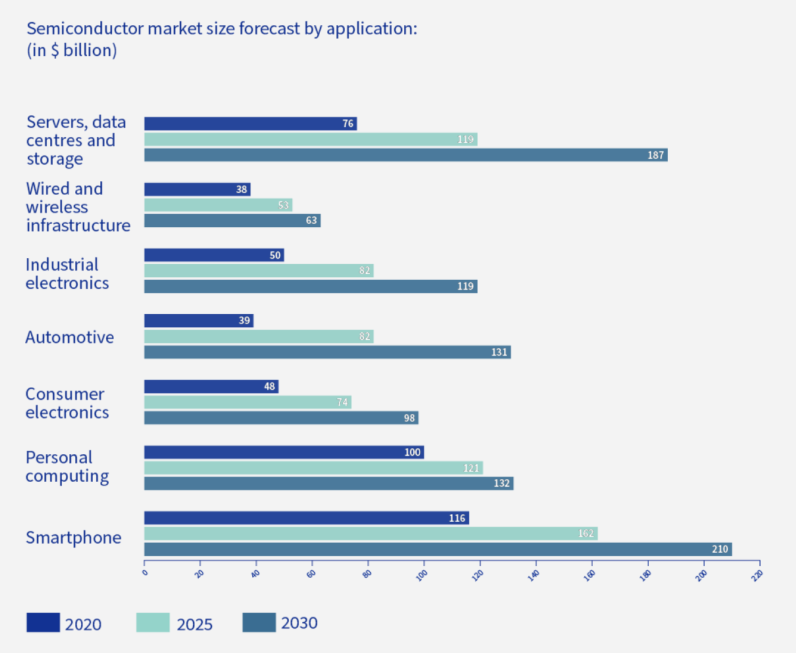
Semiconductor chips are the backbone of all electronic products — and as such, theyr’e fundamental components in everything from smartphones and cars to applications in healthcare, clean energy, and communications. This means chips are also at the centre of geopolitical interests and the global rally for technological supremacy.
“The global race for leadership in chips is a fact and Europe must secure her active part in it,” said Věra Jourová, the Commission’s VP for Values and Transparency. “In the EU we have great talent and research, but we are missing out in linking those advantages with production and rollout of the technology.”
Meanwhile, shortages and frictions in the semiconductor supply chain (especially heightened during the pandemic), exposed the bloc’s heavy reliance on a few foreign suppliers — China and Taiwan for manufacturing, and the US for design.
Credit: Council of the European Union
Against this backdrop, the Chips Act has three main objectives: to strengthen domestic manufacturing capacity, boost the European design ecosystem, and support scaleup and innovation across the entire value chain.
Overall, the EU aims to mobilise €43bn in public and private investments, and bring its share in global production capacity from 10% to 20% by 2030.
Three key pillars of action
1. The Chips for Europe Initiative
The Initiative will facilitate the “lab to fab” process and bridge the gap between research and industrialisation. It will receive €3.3bn in EU funding alongside capital from member states. It will support actions including the development of advanced pilot production lines and quantum chips, and the creation of a Chips Fund to provide easier access to debt financing and equity.
2. Boosting investment
To ensure security of supply and boost production capacity, the act will incentivise private and public investments in manufacturing facilities for chipmakers and their suppliers.
3. Coordination
The act has established a coordination mechanism between member states and the Commission to boost collaboration, monitor supply, estimate demand, and trigger a “crisis stage” if necessary. A pilot semiconductor alert system has already been set for shareholders to report supply chain disruptions.
Credit: Council of the European Union
“Investment is already happening, coupled with considerable public funding, and a robust regulatory framework,” said Commissioner Thierry Breton.
“We are becoming an industrial powerhouse in the markets of the future — capable of supplying ourselves and the world with both mature and advanced semiconductors. Semiconductors that are essential building blocks of the technologies that will shape our future, our industry, and our defence base.”
Flat2VR, the modding team known for bringing unofficial VR support to games such as Final Fantasy XIV, Half-Life 2, Jedi Outcast, and Left 4 Dead 2, recently released a mod for Portal 2 which finally brings SteamVR support to the iconic puzzle game.
🔥 Portal 2 VR Mod Releasing Today! (Video Of First 20 Minutes) 🔥
After a lot of blood, sweat & tears, Gistix has decided to release the initial version of his Portal 2 VR mod today!
The mod is free, and posted to Giovanni ‘Gistix’ Correia’s Github, a contributing member of Flat2VR. If you need help installing, there are instructions on the mod’s Github page, howevrr you can also head over to the Flat2VR Discord (invite link) for help.
Another pretty handy coincidence: Valve has again put both Portal and Portal 2 on sale for just $1 a piece, or in the Portal bundle for just $1.50 total, giving you basically no excuse not to play this mod—provided you have a VR-ready PC and a headset such as a Valve Index or Quest 2 (with Link).
Check out this 20-minute playthrough showcasing just how fluid the VR mod is:
Meta is shutting down three of its exclusive titles next March, including VR shooters Dead and Buried (2016) and Dead and Buried II (2019), and virtual pet simulator Bogo (2019).
Meta announced via email to current game owners that all three titles will no longer be supported come March 15th, 2024. In the meantime, the company has removed the games from store search results, and removed any way to purchase or download them (if not already in your library).
Created as an Oculus Touch launch title for Rift and released in late 2016 by Oculus Studios, Dead and Buried was one of the pioneering multiplayer VR shooters that explored room-scale gameplay, including co-op, PvP, and single-player modes.
Interestingly, the Oculus Touch launch title never came to Quest, although a version was adapted for Oculus Go, the 3DOF standalone released in 2018.
Meta’s internal game development studio back then, Oculus Studios, instead was working on Dead and Buried II, which would release as a launch title for the original Quest in May 2019, but also arrive on Rift with cross-play.
Dead and Buried II departed from the purely room-scale locomotion of the first, and injected some standard stick-driven locomotion to the mix, making for more dynamic shootouts across multiple maps.
Released as a free Oculus Quest launch title in 2019 (and Rift), Bogo lets you raise and care for your own virtual pet. It’s admittedly a short experience without a ton of depth, but it’s getting the axe just the same come March 15th, as it will be removed not only from both Quest and Rift Stores, but also from user libraries.
While both Dead and Buried games heavily feature online gameplay—more understandable victims of platform decay—the decision to shutter the single-player game Bogo suggests Meta isn’t prioritizing legacy support for original Quest games as it moves towards the next generation of Quest headset, or more specifically Quest 3.
Whatever the case, we’re sure to learn more come September 27th during Connect 2023 where the company will very likely release a flurry of news surrounding Quest 3.
ZeroAvia, one of the leading zero-emission aviation companies in the world, just announced its largest financing round to date. The funding round was co-led by Airbus, Barclays Sustainable Impact Capital, and NEOM.
Other participants included Bill Gates’ Breakthrough Energy Ventures, Alaska Airlines, and the Amazon Climate Pledge Fund. No exact funding amount has been disclosed due to legal reasons, but a spokesperson for the startup confirmed to TNW that it is ZeroAvia’s largest to date, following a Series B of $72mn and a Series A of $56mn.
Based out of Kemble, UK, and Hollister, California, ZeroAvia develops hydrogen-electric fuel cell propulsion architecture for aircraft. The funding will allow it to keep working on its first product, the ZA600.
This is a 500kW to 750kW powertrain capable of powering a 9 to 19-seater aircraft, with the ambitious timeline of entry into service in 2025. Fuelled by gaseous hydrogen tanks, it will be able to carry passengers up to 300NM (555.6km).
The <3 of EU tech
The latest rumblings from the EU tech scene, a story from our wise ol’ founder Boris, and some questionable AI art. It’s free, every week, in your inbox. Sign up now!
It will also allow the company to continue work on the 2-5.4MW modular powertrain ZA2000 program. This will first be used to retrofit a Dash 8 400 76-seat testbed aircraft, supplied by Alaska Airlines.
“Anybody following the development of hydrogen aviation — and its potential to transform the industry — will see this investment as a positive step,” said Val Miftakhov, founder and CEO of ZeroAvia. “For ZeroAvia to now have investors such as Airbus coming on board is the strongest possible validation of the prospects for hydrogen-electric propulsion technology.”
Airbus on board for hydrogen fuel cell certification pathway collab
European aerospace giant Airbus has indeed been bullish on hydrogen and its promise to decarbonise air travel. This includes the ZEROe program, which will use the very first A380 as a demonstrator aircraft, with the aim of delivering a commercial hydrogen-powered aircraft into service by 2035. The company recently ground tested its own 1.2MW hydrogen fuel-cell, the power its engineers believe it will take for commercial aircraft to fly.
Meanwhile, ZeroAvia has already performed successful flights with a Dornier 228 testbed aircraft powered by the ZA600 and an electric engine on one of the wings. This, the VP of Airbus’ ZEROe aircraft, Glen LLewellyn, says puts the company in a strong position to take its technology to the next stages of development.
“In addition, ZeroAvia is supporting the development of a wider hydrogen ecosystem for aviation — technologies, decarbonised hydrogen supply and certification of hydrogen propulsion systems — which all complement well with our own ambition to bring a ZEROe hydrogen-powered aircraft to service by 2035,” LLewellyn added. Airbus and ZeroAvia have also entered into a partnership on certification approaches for hydrogen power systems, an area where established OEMs have significantly more experience compared to startups in the aerospace industry. The two will also work together on other critical technical areas, including liquid hydrogen fuel storage (which promises greater range compared to gaseous), flight and ground testing of fuel cell propulsion systems, and development of hydrogen refuelling infrastructure and operations.
Europe’s dawdling on the Ariane 6 is becoming increasingly costly as the new era of space race exploration — and exploitation — heats up. The Exploration Company, based in Bordeaux and Munich, has just signed an agreement with the Indian Space Research Organisation (ISRO), in service of its aim of making it to the Moon by 2028.
The startup will partner with ISRO’s commercial arm, New Space India Limited (NSIL), for launch services using ISRO’s medium-lift Polar Satellite Launch Vehicle (PSLV).
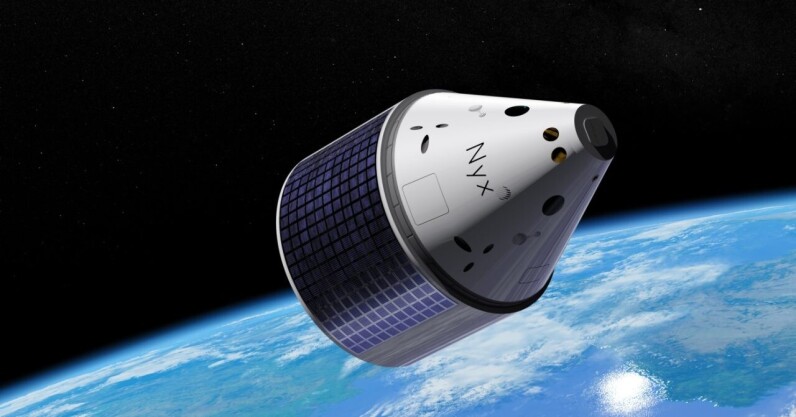
The first mission is scheduled to launch in January 2024, and will involve testing of the Bikini. This is a small prototype of the startup’s modular and reusable orbital vehicle called Nyx, named after the Greek goddess of the night and the creation of the cosmos. Nyx is intended to have open interfaces, available on a SpaceStore to enable space and non-space companies to develop new applications.
While Bikini will burn up in the atmosphere, it will be followed by a reentry prototype called Mission Possible, complete with a planned ocean splashdown. The first orbital mission is currently scheduled for 2026.
Bikini was originally intended to fly with Arianespace’s three-stage launch system Ariane 6 this autumn. However, delays to the program of the European launch vehicle has caused the German startup to seek its ride to space elsewhere. (Last we heard, Ariane 6 is now scheduled to launch next year.)
The <3 of EU tech
The latest rumblings from the EU tech scene, a story from our wise ol’ founder Boris, and some questionable AI art. It’s free, every week, in your inbox. Sign up now!
The reusable space capsule race to the Moon and back
This is not the only space mission business Europe has lost out on as a result of its launch vehicle vacuum. For instance, UK-based Open Cosmos is launching its satellites onboard SpaceX’s Falcon 9. Indeed, the European Space Agency’s (ESA) own Earth Cloud Aerosol and Radiation Explorer (EarthCARE) satellite mission is likely to commission SpaceX for the launch — and it won’t be the first instance. Meanwhile, The Exploration Company is hoping to compete with Musk’s SpaceX and its Dragon spacecraft, and bridge the space cargo capacity gap for Europe.
The startup intends for Nyx to bring cargo, and eventually people, to the International Space Station (ISS) and the Moon. For Moon delivery — including to Lunar Gateway, NASA’s first planned lunar orbit space station — prices will start at €150,000 per kilogram. “America has reusable capsules. China has reusable capsules. Europe has no [equivalent] capsules. It’s quite important we have the capacity to do this,” cofounder and CEO Hélène Huby told Sifted earlier this year.
The company is privately funded and in February raised €40mn in the largest ever Series A for European space tech, taking the total amount of funding to €46.8mn.
Sleeping in VR is definitely a thing. Just head to any of the so-called ‘sleep worlds’ in VRChat to see avatars snoozing away whilst curled up on a virtual couch. Now a Steam overlay looks to make it easier for the VR sleepers among us to catch their forty winks.
Called OyasumiVR – VR Sleeping Utilities, the software is designed to detect when you’re asleep and automate various tasks, something its creator ‘Raphii’ says can help make VR sleeping “as comfortable as possible.”
OyasumiVR can is also said to dim headset brightness, trigger avatar animations based on your sleeping pose, automatically handle invite requests so you’re not disturbed, and automate various SteamVR settings.
There’s actually a pretty extensive array of features beyond those mentioned above, including the ability to create shutdown sequences so you can automatically turn off controllers, base stations, quit SteamVR, or even shut down Windows entirely—just what you need if you’re looking to drift off to asleep in VR, but want to wake up in your own bed.
Originally projected to land on Steam on August 25th, OyasumiVR – VR Sleeping Utilities is available for free starting today on Steam. You check out the full list of features on the linked Steam page to see if it’s right for you.