Author name: Beth Washington

largest-deepfake-porn-site-shuts-down-forever

Largest deepfake porn site shuts down forever

The shuttering of Mr. Deepfakes won’t solve the problem of deepfakes, though. In 2022, the number of deepfakes skyrocketed as AI technology made the synthetic NCII appear more realistic than ever, prompting an FBI warning in 2023 to alert the public that the fake content was being increasingly used in sextortion schemes. But the immediate solutions society used to stop the spread had little impact. For example, in response to pressure to make the fake NCII harder to find, Google started downranking explicit deepfakes in search results but refused to demote platforms like Mr. Deepfakes unless Google received an unspecified “high volume of removals for fake explicit imagery.”

According to researchers, Mr. Deepfakes—a real person who remains anonymous but reportedly is a 36-year-old hospital worker in Toronto—created the engine driving this spike. His DeepFaceLab quickly became “the leading deepfake software, estimated to be the software behind 95 percent of all deepfake videos and has been replicated over 8,000 times on GitHub,” researchers found. For casual users, his platform hosted videos that could be purchased, usually priced above $50 if it was deemed realistic, while more motivated users relied on forums to make requests or enhance their own deepfake skills to become creators.

Mr. Deepfakes’ illegal trade began on Reddit but migrated to its own platform after a ban in 2018. There, thousands of deepfake creators shared technical knowledge, with the Mr. Deepfakes site forums eventually becoming “the only viable source of technical support for creating sexual deepfakes,” researchers noted last year.

Having migrated once before, it seems unlikely that this community won’t find a new platform to continue generating the illicit content, possibly rearing up under a new name since Mr. Deepfakes seemingly wants out of the spotlight. Back in 2023, researchers estimated that the platform had more than 250,000 members, many of whom may quickly seek a replacement or even try to build a replacement.

Further increasing the likelihood that Mr. Deepfakes’ reign of terror isn’t over, the DeepFaceLab GitHub repository—which was archived in November and can no longer be edited—remains available for anyone to copy and use.

404 Media reported that many Mr. Deepfakes members have already connected on Telegram, where synthetic NCII is also reportedly frequently traded. Hany Farid, a professor at UC Berkeley who is a leading expert on digitally manipulated images, told 404 Media that “while this takedown is a good start, there are many more just like this one, so let’s not stop here.”

Largest deepfake porn site shuts down forever Read More »

spacex-pushed-“sniper”-theory-with-the-feds-far-more-than-is-publicly-known

SpaceX pushed “sniper” theory with the feds far more than is publicly known


“It came out of nowhere, and it was really violent.”

The Amos 6 satellite is lost atop a Falcon 9 rocket. Credit: USLaunchReport

The Amos 6 satellite is lost atop a Falcon 9 rocket. Credit: USLaunchReport

The rocket was there. And then it decidedly was not.

Shortly after sunrise on a late summer morning nearly nine years ago at SpaceX’s sole operational launch pad, engineers neared the end of a static fire test. These were still early days for their operation of a Falcon 9 rocket that used super-chilled liquid propellants, and engineers pressed to see how quickly they could complete fueling. This was because the liquid oxygen and kerosene fuel warmed quickly in Florida’s sultry air, and cold propellants were essential to maximizing the rocket’s performance.

On this morning, September 1, 2016, everything proceeded more or less nominally up until eight minutes before the ignition of the rocket’s nine Merlin engines. It was a stable point in the countdown, so no one expected what happened next.

“I saw the first explosion,” John Muratore, launch director for the mission, told me. “It came out of nowhere, and it was really violent. I swear, that explosion must have taken an hour. It felt like an hour. But it was only a few seconds. The second stage exploded in this huge ball of fire, and then the payload kind of teetered on top of the transporter erector. And then it took a swan dive off the top rails, dove down, and hit the ground. And then it exploded.”

The dramatic loss of the Falcon 9 rocket and its Amos-6 satellite, captured on video by a commercial photographer, came at a pivotal moment for SpaceX and the broader commercial space industry. It was SpaceX’s second rocket failure in a little more than a year, and it occurred as NASA was betting heavily on the company to carry its astronauts to orbit. SpaceX was not the behemoth it is today, a company valued at $350 billion. It remained vulnerable to the vicissitudes of the launch industry. This violent failure shook everyone, from the engineers in Florida to satellite launch customers to the suits at NASA headquarters in Washington, DC.

As part of my book on the Falcon 9 and Dragon years at SpaceX, Reentry, I reported deeply on the loss of the Amos-6 mission. In the weeks afterward, the greatest mystery was what had precipitated the accident. It was understood that a pressurized helium tank inside the upper stage had ruptured. But why? No major parts on the rocket were moving at the time of the failure. It was, for all intents and purposes, akin to an automobile idling in a driveway with half a tank of gasoline. And then it exploded.

This failure gave rise to one of the oddest—but also strangely compelling—stories of the 2010s in spaceflight. And we’re still learning new things today.

The “sniper” theory

The lack of a concrete explanation for the failure led SpaceX engineers to pursue hundreds of theories. One was the possibility that an outside “sniper” had shot the rocket. This theory appealed to SpaceX founder Elon Musk, who was asleep at his home in California when the rocket exploded. Within hours of hearing about the failure, Musk gravitated toward the simple answer of a projectile being shot through the rocket.

This is not as crazy as it sounds, and other engineers at SpaceX aside from Musk entertained the possibility, as some circumstantial evidence to support the notion of an outside actor existed. Most notably, the first rupture in the rocket occurred about 200 feet above the ground, on the side of the vehicle facing the southwest. In this direction, about one mile away, lay a building leased by SpaceX’s main competitor in launch, United Launch Alliance. A separate video indicated a flash on the roof of this building, now known as the Spaceflight Processing Operations Center. The timing of this flash matched the interval it would take a projectile to travel from the building to the rocket.

A sniper on the roof of a competitor’s building—forget the Right Stuff, this was the stuff of a Mission: Impossible or James Bond movie.

At Musk’s direction, SpaceX worked this theory both internally and externally. Within the company, engineers and technicians actually took pressurized tanks that stored helium—one of these had burst, leading to the explosion—and shot at them in Texas to determine whether they would explode and what the result looked like. Externally, they sent the site director for their Florida operations, Ricky Lim, to inquire whether he might visit the roof of the United Launch Alliance building.

SpaceX pursued the sniper theory for more than a month. A few SpaceX employees told me that they did not stop this line of inquiry until the Federal Aviation Administration sent the company a letter definitively saying that there was no gunman involved. It would be interesting to see this letter, so I submitted a Freedom of Information Act request to the FAA in the spring of 2023. Because the federal FOIA process moves slowly, I did not expect to receive a response in time for the book. But it was worth a try anyway.

No reply came in 2023 or early 2024, when the final version of my book was due to my editor. Reentry was published last September, and still nothing. However, last week, to my great surprise and delight, I got a response from the FAA. It was the very letter I requested, sent from the FAA to Tim Hughes, the general counsel of SpaceX, on October 13, 2016. And yes, the letter says there was no gunman involved.

However, there were other things I did not know—namely, that the FBI had also investigated the incident.

The ULA rivalry

One of the most compelling elements of this story is that it involves SpaceX’s heated rival, United Launch Alliance. For a long time, ULA had the upper hand, but in recent years, it has taken a dramatic turn. Now we know that David would grow up and slay Goliath: Between the final rocket ULA launched last year (the Vulcan test flight on October 4) and the first rocket the company launched this year (Atlas V, April 28), SpaceX launched 90 rockets.

Ninety.

But it was a different story in the summer of 2016 in the months leading up to the Amos 6 failure. Back then, ULA was launching about 15 rockets a year, compared to SpaceX’s five. And ULA was launching all of the important science missions for NASA and the critical spy satellites for the US military. They were the big dog, SpaceX the pup.

In the early days of the Falcon 9 rocket, some ULA employees would drive to where SpaceX was working on the first booster and jeer at their efforts. And rivalry played out not just on the launch pad but in courtrooms and on Capitol Hill. After ULA won an $11 billion block buy contract from the US Air Force to launch high-value military payloads into the early 2020s, Musk sued in April 2014. He alleged that the contract had been awarded without a fair competition and said the Falcon 9 rocket could launch the missions at a substantially lower price. Taxpayers, he argued, were being taken for a ride.

Eventually, SpaceX and the Air Force resolved their claims. The Air Force agreed to open some of its previously awarded national security missions to competitive bids. Over time, SpaceX has overtaken ULA even in this arena. During the most recent round of awards, SpaceX won 60 percent of the contracts compared to ULA’s 40 percent.

So when SpaceX raised the possibility of a ULA sniper, it came at an incendiary moment in the rivalry, when SpaceX was finally putting forth a very serious challenge to ULA’s dominance and monopoly.

It is no surprise, therefore, that ULA told SpaceX’s Ricky Lim to get lost when he wanted to see the roof of their building in Florida.

“Hair-on-fire stuff”

NASA officials were also deeply concerned by the loss of the Falcon 9 rocket in September 2016.

The space agency spent much of the 2010s working with SpaceX and Boeing to develop, test, and fly spacecraft that could fly humans into space. These were difficult years for the space agency, which had to rely on Russia to get its astronauts into space. NASA also had a challenging time balancing costs with astronaut safety. Then rockets started blowing up.

Consider this sequence from mid-2015 to mid-2016. In June 2015, the second stage of a Falcon 9 rocket carrying a cargo version of the Dragon spacecraft into orbit exploded. Less than two weeks later, NASA named four astronauts to its “commercial crew” cadre from which the initial pilots of Dragon and Starliner spacecraft would be selected. Finally, a little more than a year after this, a second Falcon 9 rocket upper stage detonated.

Video of CRS-7 launch and failure.

Even as it was losing Falcon 9 rockets, SpaceX revealed that it intended to upend NASA’s long-standing practice of fueling a rocket and then, when the vehicle reached a stable condition, putting crew on board. Rather, SpaceX said it would put the astronauts on board before fueling. This process became known as “load and go.”

NASA’s safety community went nuts.

“When SpaceX came to us and said we want to load the crew first and then the propellant, mushroom clouds went off in our safety community,” Phil McAlister, the head of NASA’s commercial programs, told me for Reentry. “I mean, hair-on-fire stuff. It was just conventional wisdom that you load the propellant first and get it thermally stable. Fueling is a very dynamic operation. The vehicle is popping and hissing. The safety community was adamantly against this.”

Amos-6 compounded these concerns. That’s because the rocket was not shot by a sniper. After months of painful investigation and analysis, engineers determined the rocket was lost due to the propellant-loading process. In their goal of rapidly fueling the Falcon 9 rocket, the SpaceX teams had filled the pressurized helium tanks too quickly, heating the aluminum liner and causing it to buckle. In their haste to load super-chilled propellant onto the Falcon 9, SpaceX had found its speed limit.

At NASA, it was not difficult to visualize astronauts in a Dragon capsule sitting atop an exploding rocket during propellant loading rather than a commercial satellite.

Enter the FBI

We should stop and appreciate the crucible that SpaceX engineers and technicians endured in the fall of 2016. They were simultaneously attempting to tease out the physics of a fiendishly complex failure; prove to NASA their exploding rocket was safe; convince safety officials that even though they had just blown up their rocket by fueling it too quickly, load-and-go was feasible for astronaut missions; increase the cadence of Falcon 9 missions to catch and surpass ULA; and, oh yes, gently explain to the boss that a sniper had not shot their rocket.

So there had to be some relief when, on October 13, Hughes received that letter from Dr. Michael C. Romanowski, director of Commercial Space Integration at the FAA.

According to this letter (see a copy here), three weeks after the launch pad explosion, SpaceX submitted “video and audio” along with its analysis of the failure to the FAA. “SpaceX suggested that in the company’s view, this information and data could be indicative of sabotage or criminal activity associated with the on-pad explosion of SpaceX’s Falcon 9,” the letter states.

This is notable because it suggests that Musk directed SpaceX to elevate the “sniper” theory to the point that the FAA should take it seriously. But there was more. According to the letter, SpaceX reported the same data and analysis to the Federal Bureau of Investigation in Florida.

After this, the Tampa Field Office of the FBI and its Criminal Investigative Division in Washington, DC, looked into the matter. And what did they find? Nothing, apparently.

“The FBI has informed us that based upon a thorough and coordinated review by the appropriate Federal criminal and security investigative authorities, there were no indications to suggest that sabotage or any other criminal activity played a role in the September 1 Falcon 9 explosion,” Romanowski wrote. “As a result, the FAA considers this matter closed.”

The failure of the Amos-6 mission would turn out to be a low point for SpaceX. For a few weeks, there were non-trivial questions about the company’s financial viability. But soon, SpaceX would come roaring back. In 2017, the Falcon 9 rocket launched a record 18 times, surpassing ULA for the first time. The gap would only widen. Last year, SpaceX launched 137 rockets to ULA’s five.

With Amos-6, therefore, SpaceX lost the battle. But it would eventually win the war—without anyone firing a shot.

Photo of Eric Berger

Eric Berger is the senior space editor at Ars Technica, covering everything from astronomy to private space to NASA policy, and author of two books: Liftoff, about the rise of SpaceX; and Reentry, on the development of the Falcon 9 rocket and Dragon. A certified meteorologist, Eric lives in Houston.

SpaceX pushed “sniper” theory with the feds far more than is publicly known Read More »

chips-aren’t-improving-like-they-used-to,-and-it’s-killing-game-console-price-cuts

Chips aren’t improving like they used to, and it’s killing game console price cuts

Consider the PlayStation 2. Not all of the PS2 Slim’s streamlining came from chip improvements—it also shed a full-sized 3.5-inch hard drive bay and a little-used IEEE 1394 port, and initially required an external power brick. But shrinking and consolidating the console’s CPU, GPU, memory, and other components took the console from its original design in 2000, to the Slim in 2004, to an even lighter and lower-power version of the Slim that returned to using an internal power supply without increasing the size of the console at all.

Over that same span, the console’s price dropped frequently and significantly, from $299 at launch to just $129 by 2006 (the price was lowered again to $99 in 2009, deep into the PS3 era).

Or look at Microsoft’s Xbox 360. Its external design didn’t change as much over the years—the mid-generation “slim” refresh was actually only a little smaller than the original. But between late 2005 and early 2010, the CPU, GPU, and the GPU’s high-speed eDRAM memory chip went from being built on a 90 nm process, to 80 nm, to 65 nm, and finally to a single 45 nm chip that combined the CPU and GPU into one.

Over that time, the system’s power supply fell from 203 W to 133 W, and the base price fell from $300 to $200. The mid-generation 65nm refresh also substantially fixed the early consoles’ endemic “red ring of death” issue, which was caused in part by the heat that the older, larger chips generated.

As you can see when comparing these various consoles’ external and internal design revisions, shrinking the chips had a cascade of other beneficial and cost-lowering effects: smaller power supplies, smaller enclosures that use less metal and plastic, smaller heatsinks and cooling assemblies, and smaller and less complicated motherboard designs.

Sony’s original PS2 on the left, and the PS2 Slim revision on the right. Sony jettisoned a few things to make the console smaller, but chip improvements were also instrumental. Credit: Evan Amos

A slowdown of that progression was already evident when we hit the PlayStation 4/Xbox One/Nintendo Switch generation, but technological improvements and pricing reductions still followed familiar patterns. Both the mid-generation PS4 Slim and Xbox One S used a 16 nm processor instead of the original consoles’ 28 nm version, and each also had its price cut by $100 over its lifetime (comparing the Kinect-less Xbox One variant, and excluding the digital-only $249 Xbox One). The Switch’s single die shrink, from 20nm to 16nm, didn’t come with a price cut, but it did improve battery life and help to enable the cheaper Switch Lite variant.

Chips aren’t improving like they used to, and it’s killing game console price cuts Read More »

health-care-company-says-trump-tariffs-will-cost-it-$60m–$70m-this-year

Health care company says Trump tariffs will cost it $60M–$70M this year

In the call, Grade noted that only a small fraction of Baxter’s total sales are in China. But, “given the magnitude of the tariffs that have been enacted between the two countries, these tariffs now account for nearly half of the total impact,” he said.

The Tribune reported that Baxter is now looking into ways to dampen the financial blow from the tariffs, including carrying additional inventory, identifying alternative suppliers, alternative shipping routes, and “targeted pricing actions.” Baxter is also working with trade organizations to lobby for exemptions.

In general, the health care and medical sector, including hospitals, is bracing for price increases and shortages from the tariffs. The health care supply chain in America is woefully fragile, which became painfully apparent amid the COVID-19 pandemic.

Baxter isn’t alone in announcing heavy tariff tolls. Earlier this week, GE Healthcare Technologies Inc. said the tariffs would cost the company around $500 million this year, according to financial service firm Morningstar. And in April, Abbott Laboratories said it expects the tariffs to cost “a few hundred million dollars,” according to the Tribune.

Health care company says Trump tariffs will cost it $60M–$70M this year Read More »

judge-on-meta’s-ai-training:-“i-just-don’t-understand-how-that-can-be-fair-use”

Judge on Meta’s AI training: “I just don’t understand how that can be fair use”


Judge downplayed Meta’s “messed up” torrenting in lawsuit over AI training.

A judge who may be the first to rule on whether AI training data is fair use appeared skeptical Thursday at a hearing where Meta faced off with book authors over the social media company’s alleged copyright infringement.

Meta, like most AI companies, holds that training must be deemed fair use, or else the entire AI industry could face immense setbacks, wasting precious time negotiating data contracts while falling behind global rivals. Meta urged the court to rule that AI training is a transformative use that only references books to create an entirely new work that doesn’t replicate authors’ ideas or replace books in their markets.

At the hearing that followed after both sides requested summary judgment, however, Judge Vince Chhabria pushed back on Meta attorneys arguing that the company’s Llama AI models posed no threat to authors in their markets, Reuters reported.

“You have companies using copyright-protected material to create a product that is capable of producing an infinite number of competing products,” Chhabria said. “You are dramatically changing, you might even say obliterating, the market for that person’s work, and you’re saying that you don’t even have to pay a license to that person.”

Declaring, “I just don’t understand how that can be fair use,” the shrewd judge apparently stoked little response from Meta’s attorney, Kannon Shanmugam, apart from a suggestion that any alleged threat to authors’ livelihoods was “just speculation,” Wired reported.

Authors may need to sharpen their case, which Chhabria warned could be “taken away by fair use” if none of the authors suing, including Sarah Silverman, Ta-Nehisi Coates, and Richard Kadrey, can show “that the market for their actual copyrighted work is going to be dramatically affected.”

Determined to probe this key question, Chhabria pushed authors’ attorney, David Boies, to point to specific evidence of market harms that seemed noticeably missing from the record.

“It seems like you’re asking me to speculate that the market for Sarah Silverman’s memoir will be affected by the billions of things that Llama will ultimately be capable of producing,” Chhabria said. “And it’s just not obvious to me that that’s the case.”

But if authors can prove fears of market harms are real, Meta might struggle to win over Chhabria, and that could set a precedent impacting copyright cases challenging AI training on other kinds of content.

The judge repeatedly appeared to be sympathetic to authors, suggesting that Meta’s AI training may be a “highly unusual case” where even though “the copying is for a highly transformative purpose, the copying has the high likelihood of leading to the flooding of the markets for the copyrighted works.”

And when Shanmugam argued that copyright law doesn’t shield authors from “protection from competition in the marketplace of ideas,” Chhabria resisted the framing that authors weren’t potentially being robbed, Reuters reported.

“But if I’m going to steal things from the marketplace of ideas in order to develop my own ideas, that’s copyright infringement, right?” Chhabria responded.

Wired noted that he asked Meta’s lawyers, “What about the next Taylor Swift?” If AI made it easy to knock off a young singer’s sound, how could she ever compete if AI produced “a billion pop songs” in her style?

In a statement, Meta’s spokesperson reiterated the company’s defense that AI training is fair use.

“Meta has developed transformational open source AI models that are powering incredible innovation, productivity, and creativity for individuals and companies,” Meta’s spokesperson said. “Fair use of copyrighted materials is vital to this. We disagree with Plaintiffs’ assertions, and the full record tells a different story. We will continue to vigorously defend ourselves and to protect the development of GenAI for the benefit of all.”

Meta’s torrenting seems “messed up”

Some have pondered why Chhabria appeared so focused on market harms, instead of hammering Meta for admittedly illegally pirating books that it used for its AI training, which seems to be obvious copyright infringement. According to Wired, “Chhabria spoke emphatically about his belief that the big question is whether Meta’s AI tools will hurt book sales and otherwise cause the authors to lose money,” not whether Meta’s torrenting of books was illegal.

The torrenting “seems kind of messed up,” Chhabria said, but “the question, as the courts tell us over and over again, is not whether something is messed up but whether it’s copyright infringement.”

It’s possible that Chhabria dodged the question for procedural reasons. In a court filing, Meta argued that authors had moved for summary judgment on Meta’s alleged copying of their works, not on “unsubstantiated allegations that Meta distributed Plaintiffs’ works via torrent.”

In the court filing, Meta alleged that even if Chhabria agreed that the authors’ request for “summary judgment is warranted on the basis of Meta’s distribution, as well as Meta’s copying,” that the authors “lack evidence to show that Meta distributed any of their works.”

According to Meta, authors abandoned any claims that Meta’s seeding of the torrented files served to distribute works, leaving only claims about Meta’s leeching. Meta argued that the authors “admittedly lack evidence that Meta ever uploaded any of their works, or any identifiable part of those works, during the so-called ‘leeching’ phase,” relying instead on expert estimates based on how torrenting works.

It’s also possible that for Chhabria, the torrenting question seemed like an unnecessary distraction. Former Meta attorney Mark Lumley, who quit the case earlier this year, told Vanity Fair that the torrenting was “one of those things that sounds bad but actually shouldn’t matter at all in the law. Fair use is always about uses the plaintiff doesn’t approve of; that’s why there is a lawsuit.”

Lumley suggested that court cases mulling fair use at this current moment should focus on the outputs, rather than the training. Citing the ruling in a case where Google Books scanning books to share excerpts was deemed fair use, Lumley argued that “all search engines crawl the full Internet, including plenty of pirated content,” so there’s seemingly no reason to stop AI crawling.

But the Copyright Alliance, a nonprofit, non-partisan group supporting the authors in the case, in a court filing alleged that Meta, in its bid to get AI products viewed as transformative, is aiming to do the opposite. “When describing the purpose of generative AI,” Meta allegedly strives to convince the court to “isolate the ‘training’ process and ignore the output of generative AI,” because that’s seemingly the only way that Meta can convince the court that AI outputs serve “a manifestly different purpose from Plaintiffs’ books,” the Copyright Alliance argued.

“Meta’s motion ignores what comes after the initial ‘training’—most notably the generation of output that serves the same purpose of the ingested works,” the Copyright Alliance argued. And the torrenting question should matter, the group argued, because unlike in Google Books, Meta’s AI models are apparently training on pirated works, not “legitimate copies of books.”

Chhabria will not be making a snap decision in the case, planning to take his time and likely stressing not just Meta, but every AI company defending training as fair use the longer he delays. Understanding that the entire AI industry potentially has a stake in the ruling, Chhabria apparently sought to relieve some tension at the end of the hearing with a joke, Wired reported.

 “I will issue a ruling later today,” Chhabria said. “Just kidding! I will take a lot longer to think about it.”

Photo of Ashley Belanger

Ashley is a senior policy reporter for Ars Technica, dedicated to tracking social impacts of emerging policies and new technologies. She is a Chicago-based journalist with 20 years of experience.

Judge on Meta’s AI training: “I just don’t understand how that can be fair use” Read More »

screwworms-are-coming—and-they’re-just-as-horrifying-as-they-sound

Screwworms are coming—and they’re just as horrifying as they sound

We’re on the verge of being screwwormed.

The biological barrier was breached, they’re slithering toward our border, and the US Department of Agriculture is now carpet-bombing parts of Mexico with weaponized flies to stave off an invasion.

This is not a drill. Screwworms are possibly the most aptly named parasites imaginable, both literally and figuratively. Screwworms—technically, New World Screwworms—are flies that lay eggs on the mucous membranes, orifices, and wounds of warm-blooded animals. Wounds are the most common sites, and even a prick as small as a tick bite can be an invitation for the savage insects.

Once beckoned, females lay up to 400 eggs at a time. Within about a day, ravenous flesh-eating larvae erupt, which both look and act like literal screws. They viciously and relentlessly bore and twist into their victim, feasting on the living flesh for about seven days. The result is a gaping ulcer writhing with maggots, which attracts yet more adult female screwworms that can lay hundreds more eggs, deepening the putrid, festering lesion. The infection, called myiasis, is intensely painful and life-threatening. Anyone who falls victim to screwworms is figuratively—well, you know.

Adult screwworm flies. Credit: USDA

Previous victories

Screwworms aren’t a new foe for the US. Decades ago, they were endemic to southern areas of the country, as well as the whole of Central America, parts of the Caribbean and northern areas of South America. While they’re a threat to many animals, including humans, they are a bane to livestock, causing huge economic losses in addition to the carnage.

In the 1950s, the US began an intensive effort to eradicate screwworms. The successful endeavor required carefully inspecting animals and monitoring livestock movements. But most importantly, it relied on a powerful method to kill off the flies.

The ploy—called the Sterile Insect Technique—throws a wrench into the unique lifecycle of screwworms. After the larvae feast on flesh, they fall to the ground to develop into adults, a process that takes another seven days or so during warm weather. Once adults emerge, they can live for around two weeks, again depending on the weather. In that time, females generally only mate once, but don’t worry—they make the most of the one-night stand by retaining sperm for multiple batches of eggs. While females lay up to 400 eggs at once, they can lay up to 2,800 in their lives.

Screwworms are coming—and they’re just as horrifying as they sound Read More »

cyborg-cicadas-play-pachelbel’s-canon

Cyborg cicadas play Pachelbel’s Canon

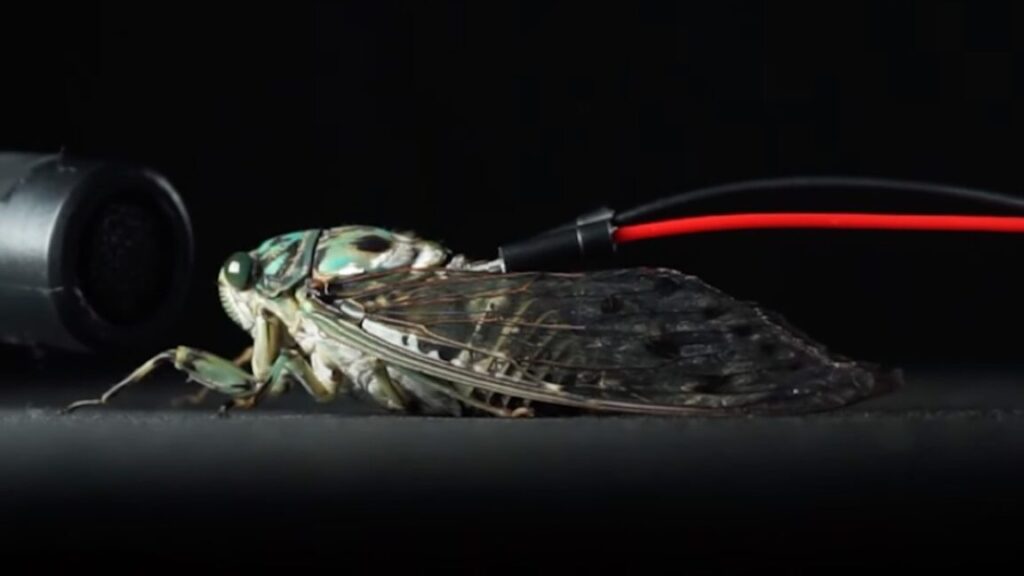
The distinctive chirps of singing cicadas are a highlight of summer in regions where they proliferate; those chirps even featured prominently on Lorde’s 2021 album Solar Power. Now, Japanese scientists at the University of Tsukuba have figured out how to transform cicadas into cyborg insects capable of “playing” Pachelbel’s Canon. They described their work in a preprint published on the physics arXiv. You can listen to the sounds here.

Scientists have been intrigued by the potential of cyborg insects since the 1990s, when researchers began implanting tiny electrodes into cockroach antennae and shocking them to direct their movements. The idea was to use them as hybrid robots for search-and-rescue applications.

For instance, in 2015, Texas A&M scientists found that implanting electrodes into a cockroach’s ganglion (the neuron cluster that controls its front legs) was remarkably effective at successfully steering the roaches 60 percent of the time. They outfitted the roaches with tiny backpacks synced with a remote controller and administered shocks to disrupt the insect’s balance, forcing it to move in the desired direction

And in 2021, scientists at Nanyang Technological University in Singapore turned Madagascar hissing cockroaches into cyborgs, implanting electrodes in sensory organs known as cerci that were then connected to tiny computers. Applying electrical current enabled them to steer the cockroaches successfully 94 percent of the time in simulated disaster scenes in the lab.

The authors of this latest paper were inspired by that 2021 project and decided to apply the basic concept to singing cicadas, with the idea that cyborg cicadas might one day be used to transmit warning messages during emergencies. It’s usually the males who do the singing, and each species has a unique song. In most species, the production of sound occurs via a pair of membrane structures called tymbals, which are just below each side of the insect’s anterior abdominal region. The tymbal muscles contract and cause the plates to vibrate while the abdomen acts as a kind of resonating chamber to amplify the song.

Cyborg cicadas play Pachelbel’s Canon Read More »

if-you’re-in-the-market-for-a-$1,900-color-e-ink-monitor,-one-of-them-exists-now

If you’re in the market for a $1,900 color E Ink monitor, one of them exists now

Color E Ink in its current state requires a whole lot of compromises, as we’ve found when reviewing devices like reMarkable’s Paper Pro or Amazon’s Kindle Colorsoft, including washed-out color, low refresh rates, and a grainy look that you don’t get with regular black-and-white E Ink. But that isn’t stopping device manufacturers from exploring the technology, and today, Onyx International has announced that it has a $1,900 color E Ink monitor that you can connect to your PC or Mac.

The Boox Mira Pro is a 25.3-inch monitor with a 3200×1800 resolution and a 16:9 aspect ratio, and it builds on the company’s previous black-and-white Mira Pro monitors. The Verge reports that the screen uses E Ink Kaleido 3 technology, which can display up to 4,096 colors. Both image quality and refresh rate will vary based on which of the monitor’s four presets you use (the site isn’t specific about the exact refresh rate but does note that “E Ink monitors’ refresh speed is not as high as conventional monitors’, and increased speed will result in more ghosting”).

The monitor’s ports include one full-size HDMI port, a mini HDMI port, a USB-C port, and a DisplayPort. Its default stand is more than a little reminiscent of Apple’s Studio Display, but it also supports VESA mounting.

Onyx International’s lineup of Boox devices usually focuses on Android-powered E Ink tablets, which the company has been building for over a decade. These are notable mostly because they combine the benefits of E Ink—text that’s easy on the eyes and long battery life—and access to multiple bookstores and other content sources via Google Play, rather than tying you to one manufacturer’s ecosystem as Amazon’s Kindles or other dedicated e-readers do.

If you’re in the market for a $1,900 color E Ink monitor, one of them exists now Read More »

google-search’s-made-up-ai-explanations-for-sayings-no-one-ever-said,-explained

Google search’s made-up AI explanations for sayings no one ever said, explained


But what does “meaning” mean?

A partial defense of (some of) AI Overview’s fanciful idiomatic explanations.

Mind…. blown Credit: Getty Images

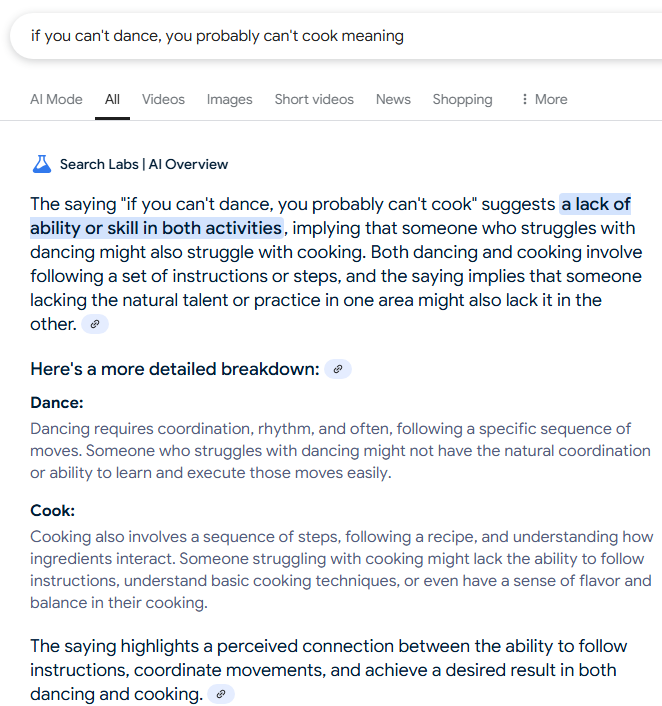
Last week, the phrase “You can’t lick a badger twice” unexpectedly went viral on social media. The nonsense sentence—which was likely never uttered by a human before last week—had become the poster child for the newly discovered way Google search’s AI Overviews makes up plausible-sounding explanations for made-up idioms (though the concept seems to predate that specific viral post by at least a few days).

Google users quickly discovered that typing any concocted phrase into the search bar with the word “meaning” attached at the end would generate an AI Overview with a purported explanation of its idiomatic meaning. Even the most nonsensical attempts at new proverbs resulted in a confident explanation from Google’s AI Overview, created right there on the spot.

In the wake of the “lick a badger” post, countless users flocked to social media to share Google’s AI interpretations of their own made-up idioms, often expressing horror or disbelief at Google’s take on their nonsense. Those posts often highlight the overconfident way the AI Overview frames its idiomatic explanations and occasional problems with the model confabulating sources that don’t exist.

But after reading through dozens of publicly shared examples of Google’s explanations for fake idioms—and generating a few of my own—I’ve come away somewhat impressed with the model’s almost poetic attempts to glean meaning from gibberish and make sense out of the senseless.

Talk to me like a child

Let’s try a thought experiment: Say a child asked you what the phrase “you can’t lick a badger twice” means. You’d probably say you’ve never heard that particular phrase or ask the child where they heard it. You might say that you’re not familiar with that phrase or that it doesn’t really make sense without more context.

Someone on Threads noticed you can type any random sentence into Google, then add “meaning” afterwards, and you’ll get an AI explanation of a famous idiom or phrase you just made up. Here is mine

[image or embed]

— Greg Jenner (@gregjenner.bsky.social) April 23, 2025 at 6: 15 AM

But let’s say the child persisted and really wanted an explanation for what the phrase means. So you’d do your best to generate a plausible-sounding answer. You’d search your memory for possible connotations for the word “lick” and/or symbolic meaning for the noble badger to force the idiom into some semblance of sense. You’d reach back to other similar idioms you know to try to fit this new, unfamiliar phrase into a wider pattern (anyone who has played the excellent board game Wise and Otherwise might be familiar with the process).

Google’s AI Overview doesn’t go through exactly that kind of human thought process when faced with a similar question about the same saying. But in its own way, the large language model also does its best to generate a plausible-sounding response to an unreasonable request.

As seen in Greg Jenner’s viral Bluesky post, Google’s AI Overview suggests that “you can’t lick a badger twice” means that “you can’t trick or deceive someone a second time after they’ve been tricked once. It’s a warning that if someone has already been deceived, they are unlikely to fall for the same trick again.” As an attempt to derive meaning from a meaningless phrase —which was, after all, the user’s request—that’s not half bad. Faced with a phrase that has no inherent meaning, the AI Overview still makes a good-faith effort to answer the user’s request and draw some plausible explanation out of troll-worthy nonsense.

Contrary to the computer science truism of “garbage in, garbage out, Google here is taking in some garbage and spitting out… well, a workable interpretation of garbage, at the very least.

Google’s AI Overview even goes into more detail explaining its thought process. “Lick” here means to “trick or deceive” someone, it says, a bit of a stretch from the dictionary definition of lick as “comprehensively defeat,” but probably close enough for an idiom (and a plausible iteration of the idiom, “Fool me once shame on you, fool me twice, shame on me…”). Google also explains that the badger part of the phrase “likely originates from the historical sport of badger baiting,” a practice I was sure Google was hallucinating until I looked it up and found it was real.

It took me 15 seconds to make up this saying but now I think it kind of works!

Credit: Kyle Orland / Google

It took me 15 seconds to make up this saying but now I think it kind of works! Credit: Kyle Orland / Google

I found plenty of other examples where Google’s AI derived more meaning than the original requester’s gibberish probably deserved. Google interprets the phrase “dream makes the steam” as an almost poetic statement about imagination powering innovation. The line “you can’t humble a tortoise” similarly gets interpreted as a statement about the difficulty of intimidating “someone with a strong, steady, unwavering character (like a tortoise).”

Google also often finds connections that the original nonsense idiom creators likely didn’t intend. For instance, Google could link the made-up idiom “A deft cat always rings the bell” to the real concept of belling the cat. And in attempting to interpret the nonsense phrase “two cats are better than grapes,” the AI Overview correctly notes that grapes can be potentially toxic to cats.

Brimming with confidence

Even when Google’s AI Overview works hard to make the best of a bad prompt, I can still understand why the responses rub a lot of users the wrong way. A lot of the problem, I think, has to do with the LLM’s unearned confident tone, which pretends that any made-up idiom is a common saying with a well-established and authoritative meaning.

Rather than framing its responses as a “best guess” at an unknown phrase (as a human might when responding to a child in the example above), Google generally provides the user with a single, authoritative explanation for what an idiom means, full stop. Even with the occasional use of couching words such as “likely,” “probably,” or “suggests,” the AI Overview comes off as unnervingly sure of the accepted meaning for some nonsense the user made up five seconds ago.

If Google’s AI Overviews always showed this much self-doubt, we’d be getting somewhere.

Credit: Google / Kyle Orland

If Google’s AI Overviews always showed this much self-doubt, we’d be getting somewhere. Credit: Google / Kyle Orland

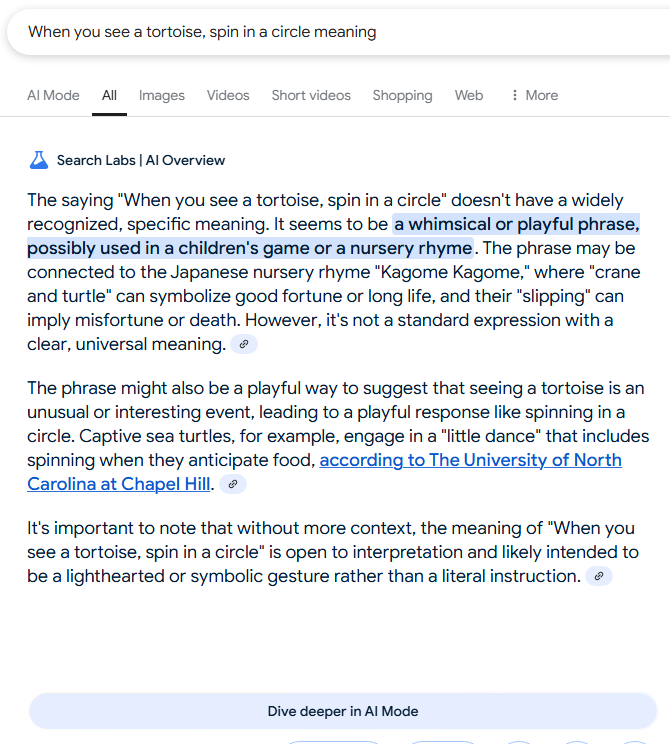
I was able to find one exception to this in my testing. When I asked Google the meaning of “when you see a tortoise, spin in a circle,” Google reasonably told me that the phrase “doesn’t have a widely recognized, specific meaning” and that it’s “not a standard expression with a clear, universal meaning.” With that context, Google then offered suggestions for what the phrase “seems to” mean and mentioned Japanese nursery rhymes that it “may be connected” to, before concluding that it is “open to interpretation.”

Those qualifiers go a long way toward properly contextualizing the guesswork Google’s AI Overview is actually conducting here. And if Google provided that kind of context in every AI summary explanation of a made-up phrase, I don’t think users would be quite as upset.

Unfortunately, LLMs like this have trouble knowing what they don’t know, meaning moments of self-doubt like the turtle interpretation here tend to be few and far between. It’s not like Google’s language model has some master list of idioms in its neural network that it can consult to determine what is and isn’t a “standard expression” that it can be confident about. Usually, it’s just projecting a self-assured tone while struggling to force the user’s gibberish into meaning.

Zeus disguised himself as what?

The worst examples of Google’s idiomatic AI guesswork are ones where the LLM slips past plausible interpretations and into sheer hallucination of completely fictional sources. The phrase “a dog never dances before sunset,” for instance, did not appear in the film Before Sunrise, no matter what Google says. Similarly, “There are always two suns on Tuesday” does not appear in The Hitchhiker’s Guide to the Galaxy film despite Google’s insistence.

Literally in the one I tried.

[image or embed]

— Sarah Vaughan (@madamefelicie.bsky.social) April 23, 2025 at 7: 52 AM

There’s also no indication that the made-up phrase “Welsh men jump the rabbit” originated on the Welsh island of Portland, or that “peanut butter platform heels” refers to a scientific experiment creating diamonds from the sticky snack. We’re also unaware of any Greek myth where Zeus disguises himself as a golden shower to explain the phrase “beware what glitters in a golden shower.” (Update: As many commenters have pointed out, this last one is actually a reference to the greek myth of Danaë and the shower of gold, showing Google’s AI knows more about this potential symbolism than I do)

The fact that Google’s AI Overview presents these completely made-up sources with the same self-assurance as its abstract interpretations is a big part of the problem here. It’s also a persistent problem for LLMs that tend to make up news sources and cite fake legal cases regularly. As usual, one should be very wary when trusting anything an LLM presents as an objective fact.

When it comes to the more artistic and symbolic interpretation of nonsense phrases, though, I think Google’s AI Overviews have gotten something of a bad rap recently. Presented with the difficult task of explaining nigh-unexplainable phrases, the model does its best, generating interpretations that can border on the profound at times. While the authoritative tone of those responses can sometimes be annoying or actively misleading, it’s at least amusing to see the model’s best attempts to deal with our meaningless phrases.

Photo of Kyle Orland

Kyle Orland has been the Senior Gaming Editor at Ars Technica since 2012, writing primarily about the business, tech, and culture behind video games. He has journalism and computer science degrees from University of Maryland. He once wrote a whole book about Minesweeper.

Google search’s made-up AI explanations for sayings no one ever said, explained Read More »

the-byd-dolphin-review:-here’s-what-we’re-missing-out-on-in-america

The BYD Dolphin review: Here’s what we’re missing out on in America

Zero to 62 mph (0–100 km/h) takes 7.0 seconds, and the Dolphin tops out at 99 mph (160 km/h). DC fast charging is capped at 88 kW, or 65 kW for the smaller battery, which means it takes 29 minutes to get from 30 to 80 percent state of charge. The performance sounds rather hot hatch-y until you realize the top-spec car weighs 3,655 lbs (1,658 kg), which is a lot for a family hatchback.

BYD Dolphin interior

It’s quite dark in here. Credit: Alex Goy

The interior is fine. There are plenty of neat design quirks, like funky door handles and swoopy surfaces, that make being in there rather pleasant. It’s called the Dolphin, so you can’t expect it to take itself too seriously, but it’s refreshingly fun without seeming tacky. Drivers get a 5-inch display for speed, range, etc., and while it’s a bit on the small side, it’s not the end of the world. Everything else is run through a 12.8-inch touchscreen in the center of the car.

This screen has a party trick

It’s not any mere rectangle, though; it rotates. You can have your map, apps, and whatever else in portrait or landscape at the push of a button. Unless, sadly, you want to use Apple CarPlay. It’s landscape-only for that. It’s fun to show people that you have a wobbly screen, but after messing with it a couple of times, you’ll find your orientation of choice and keep it there.

Rear passengers are taken care of, as are the tall. There’s a 12.2 cubic foot (345 L) trunk, which isn’t the biggest in the world, but it’ll take a small family’s weekly shop and the usual household “stuff” without issue.

The main instrument panel is sparse but functional. Alex Goy

All in all, on paper at least, it seems like a pleasant thing that can fit into most families’ lives without too many issues (so long as they have a home charger).

It’s as pleasingly quick off the line as its numbers suggest, which helps in city traffic, and its electric insta-torque means overtaking on the highway isn’t an issue, either. Of course, there are drive modes to play with—Eco, Normal, Sport, and Snow—but to be honest, leaving it in Normal and cruising around is probably what you’ll end up doing the most. It doesn’t sap power at an alarming rate, nor does it dull the controls. Throttle response is smooth, and brake regen isn’t too grabby, either.

The BYD Dolphin review: Here’s what we’re missing out on in America Read More »

weapons-of-war-are-launching-from-cape-canaveral-for-the-first-time-since-1988

Weapons of war are launching from Cape Canaveral for the first time since 1988


Unlike a recent hypersonic missile test, officials didn’t immediately confirm Friday’s flight was a success.

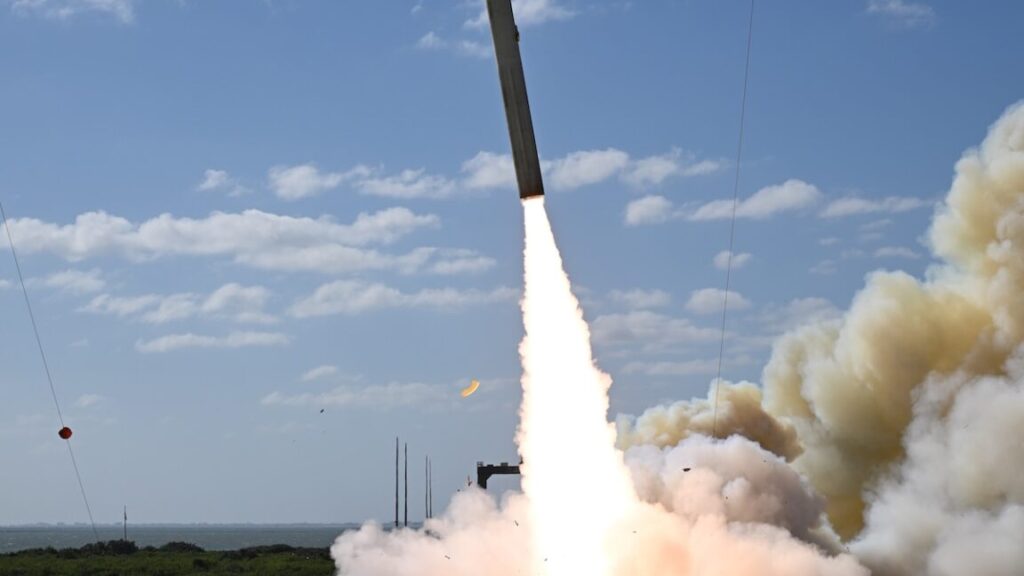
File photo of a previous launch of the Army’s Long-Range Hypersonic Weapon from Cape Canaveral Space Force Station, Florida, on December 12, 2024. Credit: Department of Defense

The US military launched a long-range hypersonic missile Friday morning from Cape Canaveral Space Force Station in Florida on a test flight that, if successful, could pave the way for the weapon’s operational deployment later this year.

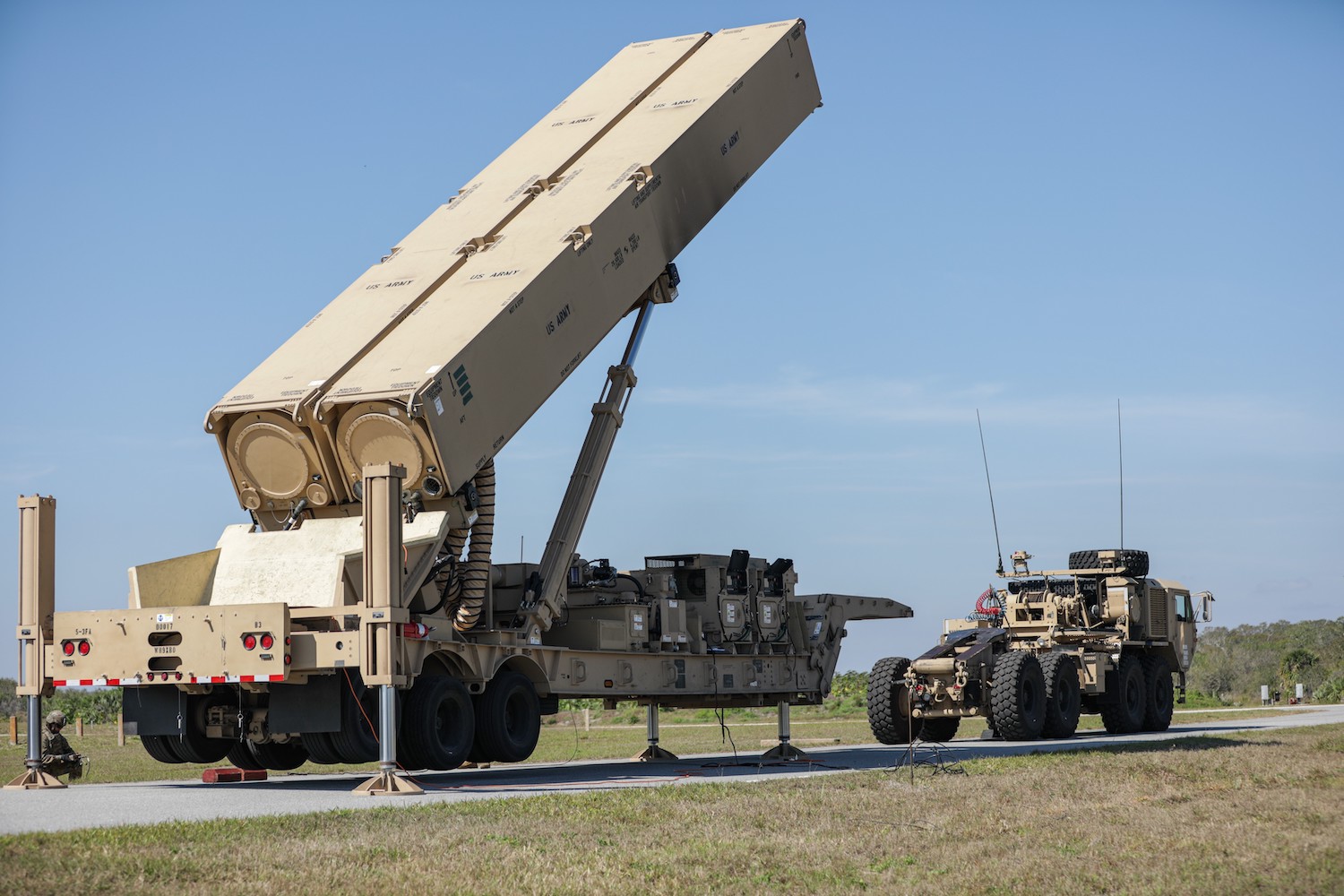
The Army’s Long-Range Hypersonic Weapon fired out of a canister on a road-mobile trailer shortly after sunrise on Florida’s Space Coast, then headed east over the Atlantic Ocean propelled by a solid-fueled rocket booster. Local residents shared images of the launch on social media.

Designed for conventional munitions, the new missile is poised to become the first ground-based hypersonic weapon fielded by the US military. Russia has used hypersonic missiles in combat against Ukraine. China has “the world’s leading hypersonic missile arsenal,” according to a recent Pentagon report on Chinese military power. After a successful test flight from Cape Canaveral last year, the long-range hypersonic weapon (LRHW)—officially named “Dark Eagle” by the Army earlier this week—will give the United States the ability to strike targets with little or no warning.

The Dark Eagle missile rapidly gained speed and altitude after launch Friday morning, then soon disappeared from the view of onlookers at Cape Canaveral. Warning notices advising pilots and mariners to steer clear of the test area indicated the missile and its hypersonic glide vehicle were supposed to splash down in the mid-Atlantic Ocean hundreds of miles north and northeast of Puerto Rico.

Success not guaranteed

A US defense official did not answer questions from Ars about the outcome of the test flight Friday.

“A combined team of government, academic, and industry partners conducted a test on behalf of the Department of Defense from a test site at Cape Canaveral Space Force Station,” the official said. “We are currently evaluating the results of the test.”

Liftoff of the LRHW Dark Eagle this morning 🚀 https://t.co/lCJhUXxT84 pic.twitter.com/YJXXuSxmJK

— Jerry Pike (@JerryPikePhoto) April 25, 2025

This missile launch and a similar one in December are the first tests of land-based offensive weapons at Cape Canaveral since 1988, when the military last tested Pershing ballistic missiles there. The launch range in Florida continues to support offshore tests of submarine-launched Trident missiles, and now is a center for hypersonic missile testing.

The Pentagon has a long-standing policy of not publicizing hypersonic missile tests before they happen, except for safety notices for civilian airplanes and ships downrange. But the Defense Department declared the previous Dark Eagle test flight a success within a few hours of the launch, and did not do so this time.

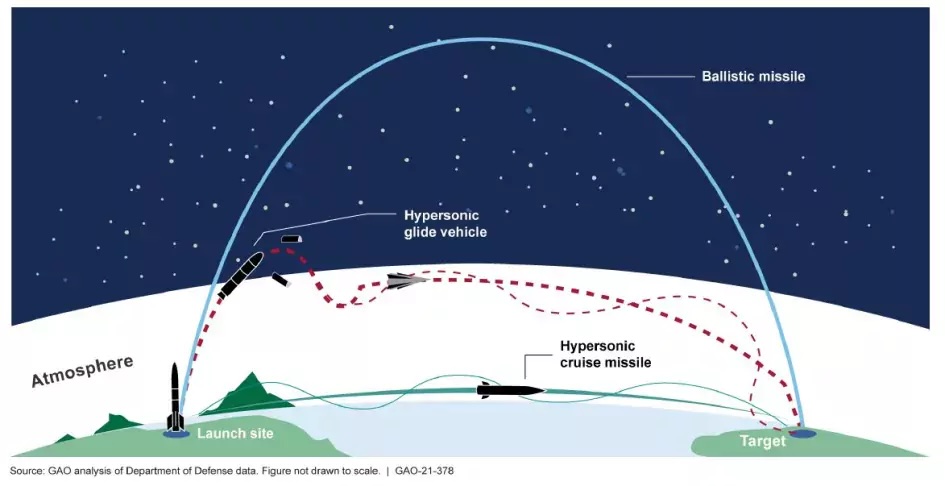
Hypersonic missiles offer several advantages over conventional ballistic missiles. These new kinds of weapons are more maneuverable and dimmer than other missiles, so they are more difficult for an aerial defense system to detect, track, and destroy. They are designed to evade an adversary’s missile warning sensors. These sensors were originally activated to detect larger, brighter incoming ballistic missiles, which have a predictable trajectory toward their targets after boosting themselves out of the atmosphere and into space.

A hypersonic weapon is different. It can skim through the upper atmosphere at blistering speeds, producing a much dimmer heat signature that is difficult to see with an infrared sensor on a conventional missile warning satellite. At these altitudes, the glide vehicle can take advantage of aerodynamic forces for maneuvers. This is why the Pentagon’s Space Development Agency is spending billions of dollars to deploy a network of missile tracking satellites in low-Earth orbit, putting hundreds of sophisticated sensors closer to the flight path of hypersonic weapons.

Dark Eagle is designed to fly at speeds exceeding Mach 5, or 3,800 mph, with a reported range of 1,725 miles (2,775 kilometers), sufficient to reach Taiwan from Guam, or NATO’s borders with Russia from Western Europe. The US military says it has no plans to outfit its hypersonic weapons with nuclear warheads.

In a statement on Thursday, the Department of Defense said the weapon’s official name pays tribute to the eagle, known for its speed, stealth, and agility. Dark Eagle offers a similar mix of attributes: velocity, accuracy, maneuverability, survivability, and versatility, the Pentagon said.

“The word ‘dark’ embodies the LRHW’s ability to dis-integrate adversary capabilities,” the statement said. “Hypersonic weapons will complicate adversaries’ decision calculus, strengthening deterrence,” said Patrick Mason, senior official performing the duties of the assistant secretary of the Army for acquisition, logistics, and technology

A US Army soldier lifts the hydraulic launching system on the new long-range hypersonic weapon (LRHW) during Operation Thunderbolt Strike at Cape Canaveral Space Force Station, Florida, on March 3, 2023. Credit: Spc. Chandler Coats, US Army

Dark Eagle is the land-based component of the Pentagon’s effort to field hypersonic missiles for combat. The Navy will use the same system on its ships to provide a sea-launched version of the hypersonic weapon called Conventional Prompt Strike, which will be placed on destroyers and submarines.

The Army and Navy programs will use an identical two-stage missile, which will jettison after depleting its rocket motors, freeing a hypersonic glide vehicle to steer toward its target. The entire rocket and glide vehicle are collectively called an “All Up Round.”

“The use of a common hypersonic missile and joint test opportunities allow the services to pursue a more aggressive timeline for delivery and to realize cost savings,” the Defense Department said in a statement.

A long road to get here

The Congressional Budget Office reported in 2023 that purchasing 300 intermediate-range hypersonic missiles would cost $41 million per missile. Dynetics, a subsidiary of the defense contractor Leidos, is responsible for developing the Common Hypersonic Glide Body for the Army’s Dark Eagle and the Navy’s Conventional Prompt Strike programs. Lockheed Martin is the prime contractor charged with integrating the entire weapon system.

The military canceled an air-launched hypersonic weapon program in 2023 after it ran into problems during testing.

The Pentagon said Army commanders will use Dark Eagle to “engage adversary high-payoff and time-sensitive targets.” The hypersonic weapon could be used against an adversary’s mobile missile forces if US officials determine they are preparing for launch, or it could strike well-defended targets out of reach of other weapons in the US arsenal. Once in the field, the missile’s use will fall under the authority of US Strategic Command, with the direction of the president and the secretary of defense.

Defense News, an industry trade publication, reported in February that the Army aimed to deliver the first Dark Eagle missiles to a combat unit before October 1, pending final decisions by the Pentagon’s new leadership under the Trump administration.

This illustration from the Government Accountability Office compares the trajectory of a ballistic missile with those of a hypersonic glide vehicle and a hypersonic cruise missile. Credit: GAO

Dark Eagle suffered multiple test failures in 2021 and 2022, according to a report by the Congressional Research Service. Military crews aborted several attempts to launch the missile from Cape Canaveral in 2023 due to a problem with the weapon’s launcher. The program achieved two successes last year with test flights from Hawaii and Florida.

The December launch from Cape Canaveral was an important milestone. “This test builds on several flight tests in which the Common Hypersonic Glide Body achieved hypersonic speed at target distances and demonstrates that we can put this capability in the hands of the warfighter,” said Christine Wormuth, then-secretary of the army, in a Pentagon statement announcing the result of the test flight.

The Dark Eagle readiness tests build on more than a decade of experimental hypersonic flights by multiple US defense agencies. Hypersonic flight is an unforgiving environment, where the outer skin of glide vehicles must withstand temperatures of 3,000° Fahrenheit. It’s impossible to re-create such an extreme environment through modeling or tests on the ground.

While the Army and Navy hope to soon deploy the first US hypersonic missile for use in combat, the military continues pursuing more advanced hypersonic technology. In January, the Pentagon awarded a contract worth up to $1.45 billion to Kratos Defense & Security Solutions for the Multi-Service Advanced Capability Hypersonic Test Bed (MACH-TB) program.

Kratos partners with other companies, like Leidos, Rocket Lab, Firefly Aerospace, and Stratolaunch, to test hypersonic technologies in their operating environment. The program aims for a rapid cadence of suborbital test flights, some of which have already launched with Rocket Lab’s Electron rocket. With these experiments, engineers can see how individual components and technologies work in flight before using them on real weapons.

The Biden administration requested $6.9 billion for the Pentagon’s hypersonic research programs in fiscal year 2025, up from $4.7 billion in 2023. The Trump administration’s budget request for fiscal year 2026 is scheduled for release next month.

Photo of Stephen Clark

Stephen Clark is a space reporter at Ars Technica, covering private space companies and the world’s space agencies. Stephen writes about the nexus of technology, science, policy, and business on and off the planet.

Weapons of war are launching from Cape Canaveral for the first time since 1988 Read More »

a-$20,000-electric-truck-with-manual-windows-and-no-screens?-meet-slate-auto.

A $20,000 electric truck with manual windows and no screens? Meet Slate Auto.


time to put up or shut up, internet

Owners can buy kits to add accessories and features to the Slate Truck.

The headlight of a Slate Truck

Slate Auto is a new American EV startup. Credit: Slate Auto

Slate Auto is a new American EV startup. Credit: Slate Auto

In one of the strangest launches we’ve seen in a while, Slate Auto, the reportedly Jeff Bezos-backed electric vehicle startup, unveiled its first EV, the Slate Truck. Notably, the vehicle is capable of a claimed 150 miles (241 km) of range at a starting price of less than $20,000, assuming federal clean vehicle tax credits continue to exist.

Slate caused a lot of social media froth when it parked a pair of styling concepts (not functional vehicles) in Venice, California, advertising bizarre fake businesses. Today, the company unveiled the vehicle to the press at an event near the Long Beach Airport.

You wanted a bare-bones EV? Here it is.

The Blank Slate, as the company calls it, is “all about accessible personalization” and includes a “flat-pack accessory SUV Kit” that turns the truck from a pickup into a five-seat SUV and another that turns it into an “open air” truck. The aim, according to a spokesperson for Slate Auto, is to make the new vehicle repairable and customizable while adhering to safety and crash standards.

A rendering of a Slate Truck on the road

If you’ve ever said you’d buy a bare-bones truck with no infotainment and manual windows if only they’d build one, it’s time to get out your wallet. Credit: Slate Auto

The truck will come with a choice of two battery packs: a 57.2 kWh battery pack with rear-wheel drive and a target range of 150 miles and an 84.3 kWh battery pack with a target of 240 miles (386 km). The truck has a NACS charging port and will charge to 80 percent in under 30 minutes, peaking at 120 kW, we’re told. The wheels are modest 17-inch steelies, and the truck is no speed demon—zero to 60 mph (0–97 km/h) will take 8 seconds thanks to the 201 hp (150 kW), 195 lb-ft (264 Nm) motor, and it tops out at 90 mph (145 km/h).

Because the truck will be built in just a single configuration from the factory, Slate Auto will offer body wraps instead of different paint colors. Rather than relying on a built-in infotainment system, you’ll use your phone plugged into a USB outlet or a dedicated tablet inside the cabin for your entertainment and navigation needs. The Slate Truck will also aim for a 5-star crash rating, according to a company spokesperson, and will feature active emergency braking, forward collision warning, and as many as eight airbags.

It sounds good on paper (and it looks good in person), but the spec sheet is littered with things that give us pause from a production and safety standpoint. They present hurdles the startup will have to surmount before these trucks start landing in people’s driveways.

Slate Truck interior.

Legally, there has to be some way to show a backup camera feed in here, but you could do that in the rearview mirror. Credit: Slate Auto

For example, the truck has manual crank windows, steel wheels, HVAC knobs, and an optional do-it-yourself “flat-pack accessory SUV kit.” All of these low-tech features are quite cool, and they’re available on other vehicles like the Bronco and the Jeep, but there are a number of supplier, tariff, and safety hurdles they present for an upstart company. There is plenty of Kool-Aid for the automotive press to get drunk on—and if this truck becomes a real thing, we’ll be fully on board—but we have a lot of questions.

Can Slate really build an EV that cheap?

First, there’s the price. The myth of the sub-$25,000 electric vehicle has been around for more than 10 years now, thanks to Tesla CEO Elon Musk’s perpetual promise of an affordable EV.

That vehicle may never exist due to the cost of the current battery and manufacturing technology that we use to make modern EVs. While much of that cost is tied up in the battery, prices have improved as components have come down in price. That combination has led companies like Rivian and Scout to promise SUVs that could start at around $40,000, which is much more attainable for the average buyer. But $40,000 is still wide of that $25,000 marker.

There’s also the issue of federal incentives. Without the full clean vehicle tax credit, the new Slate Truck will actually cost at least $27,500 before tax, title, and so on. Bezos’ team seems to be betting that Trump won’t get rid of the incentives, despite abundant signals that he intends to do just that. “Whether or not the incentive goes away, our truck will be a high-value, desirable vehicle,” a spokesperson for Slate Auto told Ars.

Then there are the retro and basic components Slate Auto says it will use for the truck, many of which are made in China and are thus subject to the Trump tariffs. Even though the company says it will manufacture the vehicles in the US, that doesn’t mean that the components (battery, motors, steel wheels, window cranks, and HVAC knobs) will be made stateside. If the tariffs stick, that sub $30,000 vehicle will become measurably more expensive.

For example, the last automaker to use manual crank windows was Jeep in the JL Wrangler, and as of 2025, the company no longer offers them as an option. Ford also recently phased out hand-wound windows from its Super Duty trucks. That’s because electric switches are cheaper and readily available from suppliers—who are mostly located in China—and because automakers that offer manual and powered windows had to have two different door assembly lines to accommodate the different tech. That made building both options more expensive. Power windows are also somewhat safer for families with younger children in the backseat, as parents can lock the roll-down feature.

A rendering of a Slate SUV

It’s an ambitious idea, and we hope it works. Credit: Slate Auto

Slate Auto’s spokesperson declined to talk about partners or suppliers but did say the company will manufacture its new truck in a “reindustrialized” factory in the Midwest. A quick look at the plethora of job listings at SlateAuto on LinkedIn shows that that factory will be in Troy, Michigan, where there are around 40 jobs listed, including body closure engineers (for the flat-pack kit), prototype engineers, seating buyers/engineers, controls and automation engineers, a head of powertrain and propulsion, wheels and suspension engineers, plant managers, and more. Those are all very pivotal, high-level positions that Slate will need to fill immediately to bring this vehicle to market on the timeline it has set.

Slate Auto also hasn’t said how it will ensure that these DIY vehicle add-ons will be certified to be safe on the road without the company taking on the liability. It will likely work the way Jeep and Bronco handle their accessories, but both Stellantis and Ford have robust service networks they can count on, with dealerships around the country able to help owners who get into a pickle trying to install accessories. Slate doesn’t have that, at least at the moment. Slate’s SUV kit, for example, will include a roll cage, rear seat, and airbags. It will be interesting to see how the company ensures the airbags are installed safely—if it allows DIY-ers to do it.

Will young people actually want it?

Finally, there’s the biggest question: Will younger generations actually plunk down $20,000 or more to own a Slate vehicle that won’t go into production until the fourth quarter of 2026—more than a year and a half out—especially in the face of the economic upheaval and global uncertainty that has taken hold under the second Trump administration?

A rendering of a Slate Truck with a red and black livery

Tesla, Rivian, and Lucid have all been at the mercy of their suppliers, sinking deadlines and making prices rise. How will Slate Auto avoid that trap? Credit: Slate Auto

Data shows that while some young people have started to opt for devices like dumbphones and may prefer the novelty of no tech, they may also prefer to rent a car or rideshare instead of owning a vehicle. Given Slate Auto’s Bezos backing, I’d imagine that the company would be willing to, say, rent out a Slate Truck for a weekend and charge you a subscription fee for its use. It’s also conceivable that these could become fleet vehicles for Amazon and other companies.

Slate Auto says it will sell directly to consumers (which will anger dealers) and offer a nationwide service network. A spokesperson at Slate Auto declined to give more details about how that might all work but said the company will have more to announce about partners who will enable service and installation in the future.

Even with all the unanswered questions, it’s good to see a company making a real effort to build a truly affordable electric vehicle with funky retro styling. There are a number of things Slate Auto will have to address moving forward, but if the company can deliver a consumer vehicle under that magic $25,000 marker, we’ll be roundly impressed.

The Slate Truck is revealed to the world Abigail Bassett

A $20,000 electric truck with manual windows and no screens? Meet Slate Auto. Read More »