Author name: Beth Washington

evolution-journal-editors-resign-en-masse

Evolution journal editors resign en masse


an emerging form of protest?

Board members expressed concerns over high fees, editorial independence, and use of AI in editorial processes.

Over the holiday weekend, all but one member of the editorial board of Elsevier’s Journal of Human Evolution (JHE) resigned “with heartfelt sadness and great regret,” according to Retraction Watch, which helpfully provided an online PDF of the editors’ full statement. It’s the 20th mass resignation from a science journal since 2023 over various points of contention, per Retraction Watch, many in response to controversial changes in the business models used by the scientific publishing industry.

“This has been an exceptionally painful decision for each of us,” the board members wrote in their statement. “The editors who have stewarded the journal over the past 38 years have invested immense time and energy in making JHE the leading journal in paleoanthropological research and have remained loyal and committed to the journal and our authors long after their terms ended. The [associate editors] have been equally loyal and committed. We all care deeply about the journal, our discipline, and our academic community; however, we find we can no longer work with Elsevier in good conscience.”

The editorial board cited several changes made over the last ten years that it believes are counter to the journal’s longstanding editorial principles. These included eliminating support for a copy editor and a special issues editor, leaving it to the editorial board to handle those duties. When the board expressed the need for a copy editor, Elsevier’s response, they said, was “to maintain that the editors should not be paying attention to language, grammar, readability, consistency, or accuracy of proper nomenclature or formatting.”

There is also a major restructuring of the editorial board underway that aims to reduce the number of associate editors by more than half, which “will result in fewer AEs handling far more papers, and on topics well outside their areas of expertise.”

Furthermore, there are plans to create a third-tier editorial board that functions largely in a figurehead capacity, after Elsevier “unilaterally took full control” of the board’s structure in 2023 by requiring all associate editors to renew their contracts annually—which the board believes undermines its editorial independence and integrity.

Worst practices

In-house production has been reduced or outsourced, and in 2023 Elsevier began using AI during production without informing the board, resulting in many style and formatting errors, as well as reversing versions of papers that had already been accepted and formatted by the editors. “This was highly embarrassing for the journal and resolution took six months and was achieved only through the persistent efforts of the editors,” the editors wrote. “AI processing continues to be used and regularly reformats submitted manuscripts to change meaning and formatting and require extensive author and editor oversight during proof stage.”

In addition, the author page charges for JHE are significantly higher than even Elsevier’s other for-profit journals, as well as broad-based open access journals like Scientific Reports. Not many of the journal’s authors can afford those fees, “which runs counter to the journal’s (and Elsevier’s) pledge of equality and inclusivity,” the editors wrote.

The breaking point seems to have come in November, when Elsevier informed co-editors Mark Grabowski (Liverpool John Moores University) and Andrea Taylor (Touro University California College of Osteopathic Medicine) that it was ending the dual-editor model that has been in place since 1986. When Grabowki and Taylor protested, they were told the model could only remain if they took a 50 percent cut in their compensation.

Elsevier has long had its share of vocal critics (including our own Chris Lee) and this latest development has added fuel to the fire. “Elsevier has, as usual, mismanaged the journal and done everything they could to maximize profit at the expense of quality,” biologist PZ Myers of the University of Minnesota Morris wrote on his blog Pharyngula. “In particular, they decided that human editors were too expensive, so they’re trying to do the job with AI. They also proposed cutting the pay for the editor-in-chief in half. Keep in mind that Elsevier charges authors a $3990 processing fee for each submission. I guess they needed to improve the economics of their piratical mode of operation a little more.”

Elsevier has not yet responded to Ars’ request for comment; we will update accordingly should a statement be issued.

Not all AI uses are created equal

John Hawks, an anthropologist at the University of Wisconsin, Madison, who has published 17 papers in JHE over his career, expressed his full support for the board members’ decision on his blog, along with shock at the (footnoted) revelation that Elsevier had introduced AI to its editorial process in 2023. “I’ve published four articles in the journal during the last two years, including one in press now, and if there was any notice to my co-authors or me about an AI production process, I don’t remember it,” he wrote, noting that the move violates the journal’s own AI policies. “Authors should be informed at the time of submission how AI will be used in their work. I would have submitted elsewhere if I was aware that AI would potentially be altering the meaning of the articles.”

There is certainly cause for concern when it comes to using AI in the pursuit of science. For instance, earlier this year, we witnessed the viral sensation of several egregiously bad AI-generated figures published in a peer-reviewed article in Frontiers, a reputable scientific journal. Scientists on social media expressed equal parts shock and ridicule at the images, one of which featured a rat with grotesquely large and bizarre genitals. The paper has since been retracted, but the incident reinforces a growing concern that AI will make published scientific research less trustworthy, even as it increases productivity.

That said, there are also some useful applications of AI in the scientific endeavor. For instance, back in January, the research publisher Science announced that all of its journals would begin using commercial software that automates the process of detecting improperly manipulated images. Perhaps that would have caught the egregious rat genitalia figure, although as Ars Science Editor John Timmer pointed out at the time, the software has limitations. “While it will catch some of the most egregious cases of image manipulation, enterprising fraudsters can easily avoid being caught if they know how the software operates,” he wrote.

Hawks acknowledged on his blog that the use of AI by scientists and scientific journals is likely inevitable and even recognizes the potential benefits. “I don’t think this is a dystopian future. But not all uses of machine learning are equal,” he wrote. To wit:

[I]t’s bad for anyone to use AI to reduce or replace the scientific input and oversight of people in research—whether that input comes from researchers, editors, reviewers, or readers. It’s stupid for a company to use AI to divert experts’ effort into redundant rounds of proofreading, or to make disseminating scientific work more difficult.

In this case, Elsevier may have been aiming for good but instead hit the exacta of bad and stupid. It’s especially galling that they demand transparency from authors but do not provide transparency about their own processes… [I]t would be a very good idea for authors of recent articles to make sure that they have posted a preprint somewhere, so that their original pre-AI version will be available for readers. As the editors lose access, corrections to published articles may become difficult or impossible.

Nature published an article back in March raising questions about the efficacy of mass resignations as an emerging form of protest after all the editors of the Wiley-published linguistics journal Syntax resigned in February. (Several of their concerns mirror those of the JHE editorial board.) Such moves certainly garner attention, but even former Syntax editor Klaus Abels of University College London told Nature that the objective of such mass resignations should be on moving beyond mere protest, focusing instead on establishing new independent nonprofit journals for the academic community that are open access and have high academic standards.

Abels and his former Syntax colleagues are in the process of doing just that, following the example of the former editors of Critical Public Health and another Elsevier journal, NeuroImage, last year.

Photo of Jennifer Ouellette

Jennifer is a senior reporter at Ars Technica with a particular focus on where science meets culture, covering everything from physics and related interdisciplinary topics to her favorite films and TV series. Jennifer lives in Baltimore with her spouse, physicist Sean M. Carroll, and their two cats, Ariel and Caliban.

Evolution journal editors resign en masse Read More »

magnetic-shape-shifting-surface-can-move-stuff-without-grasping-it 

Magnetic shape-shifting surface can move stuff without grasping it 

A kirigami design where the cuts’ length-to-width ratio was six was way more responsive to magnets, and that, in turn, enhanced an effect known as magnetically induced stiffening. With no magnets around, the kirigami disk was way more compliant than one without cuts. But when a magnetic field was applied, it became more than 1.8 times stiffer.

Overall, the kirigami dome could lift an object weighing 43.1 grams (28 times its own weight) to a height of 2.5 millimeters and hold it there. To test what this technology could do, Yin’s team built a 5×5 array of domes actuated by movable permanent magnetic pillars placed underneath that could move left or right, or spin. The array could precisely move droplets, potato chips, a leaf, and even a small wooden plank. It could also rotate a petri dish.

Next-gen haptics

The team thinks one possible application for this technology is precise transport and mixing of very tiny amounts of fluids in research laboratories. But there is another, arguably more exciting option. Chi’s shape-shifting surface is very fast; it reacts to changes in the magnetic field in under 2 milliseconds, which is a response time rivaling gaming monitors.

This, according to the team, makes it possible to use in haptic feedback controllers. Super-fast, magnetically actuated shape-shifting surfaces could emulate the sense of touch, texture, and feel of the objects you interact with wearing your VR goggles. “I’m new to haptics, but considering you can change the stiffness of our surfaces by modulating the magnetic field, this should enable us to recreate different haptic perceptions,” Yin says.

Before that becomes a reality, there is one more limitation the team must overcome.

If you compared Yin’s shape-shifting surface to a display where each dome stands for a single pixel, the resolution of this display would be very low. “So, there is the question how small can you make those domes,” Yin says. He suggested that, with advanced manufacturing techniques, it is possible to miniaturize the domes down to around 10 microns in diameter. “The challenge is how we do the actuation at such scales—that is something we focus on today. We try to pave the way but there is much more to do,” Chi adds.

Science Advances, 2024. DOI: https://doi.org/10.1126/sciadv.adr8421

Magnetic shape-shifting surface can move stuff without grasping it  Read More »

craving-carbs?-blame-an-ancient-gene.

Craving carbs? Blame an ancient gene.

“This observation is concordant with the recent evidence of Neanderthal starch consumption, and perhaps the availability of cooked starch in archaic hominins made possible through the domestication of fire,” the researchers said in a study recently published in Science.

Out of eight genomes examined, multiple copies of AMY1 were found in two Eastern Neanderthal genomes, one from a Western Neanderthal, and one from a Denisovan. So why did these extra copies evolve? While the exact reason is still unknown, the team thinks that the gene itself was copy number variable, meaning the number of copies within a population can vary between individuals. This variation likely developed before humans diverged from Neanderthals and Denisovans.

With the grain

To the research team, it was inevitable that copies of AMY1 in individual genomes would increase as former hunter-gatherers established agricultural societies. Farming meant grains and other starch-rich foods, and the ability to adjust those meant carbs.

And the data here is consistent with that. The team “found a general trend where the AMY1 gene copy number is significantly higher among samples excavated from archaeologically agricultural contexts compared to those from hunter-gatherer contexts,” as they said in the same study.

In genomes from pre-agricultural individuals, there were already anywhere from four to eight copies of the gene. The variation is thought to have come from groups experimenting with food-processing techniques such as grinding wild grains into flour. AMY1 copy numbers grew pretty consistently from the pre-agricultural to post-agricultural period. Individuals from populations that were in the process of transitioning to agriculture (around 16,100 to 8,500 years ago) were found to have about similar numbers of AMY1 copies as hunter-gatherers at the time.

Individuals from after 8,500 years ago who lived in more established agricultural societies showed the most copies and therefore the most evidence of adaptation to eating diets high in carbs. Agriculture continued to advance, and the last 4,000 years have seen the most significant surge of AMY1 copy increases. Modern humans have anywhere from two to 15 copies.

Further research could help with understanding how genetic variation of AMY1 copy numbers influences starch metabolism, including conditions such as gluten allergy and celiac disease, and overall metabolic health.

Can we really blame AMY1 and amylase on our carb cravings? Partly. The number of AMY1 copies in a human genome determine not only the ability to metabolize starches, but will also influence how they taste to us, and may have given us a preference for them. Maybe we can finally ease up on demonizing bread.

Science, 2024.  DOI: 10.1126/science.adn060

Craving carbs? Blame an ancient gene. Read More »

why-the-long-kiss-goodnight-is-a-great-alt-christmas-movie

Why The Long Kiss Goodnight is a great alt-Christmas movie

Everyone has their favorite film that serves as alternative Christmas movie fare, with Die Hard (1988) and Lethal Weapon (1987) typically topping the list—at least when all you want for Christmas is buddy-cop banter, car chases, shootouts, and glorious explosions. (Massive gratuitous property damage is a given.) I love me some Lethal Weapon but it’s high time to give some holiday love to another great action flick set during the Christmas season: The Long Kiss Goodnight (1996), starring Geena Davis as an amnesiac school teacher who turns out to have been a government assassin in her former life.

(Spoilers below for this nearly 30-year-old film.)

At the time, Davis was married to director Renny Harlin, coming off a disastrous showing for their previous collaboration, Cutthroat Island (1995), which remains one of the biggest box office bombs of all time. (It is indeed a pretty bad movie.) But Shane Black’s smart, savvy script for The Long Kiss Goodnight seemed like the perfect next project for them; it was promising enough that New Line Cinema bought it for what was then a record $4 million.

Davis plays Samantha Caine, a small-town school teacher in Honesdale, PA, who has no memory since washing up on a beach eight years earlier with a head injury. Since then, she’s given birth to a daughter, Caitlin (Yvonne Zima) and moved in with a kind-hearted fellow teacher named Hal (Tom Amandes). She’s hired various private investigators to find out her true identity, but only the low-rent Mitch Henessey (Samuel L. Jackson) is still on the case. Then Mitch’s assistant, Trin (Meloina Kanakaredes), finally finds some useful information—just in time, too, since Sam is attacked at home by a criminal named One-Eyed Jack (Joseph McKenna), who broke out of prison to exact revenge after recognizing Sam during her appearance as Mrs. Claus in the town’s annual Christmas parade.

Why The Long Kiss Goodnight is a great alt-Christmas movie Read More »

reminder:-donate-to-win-swag-in-our-annual-charity-drive-sweepstakes

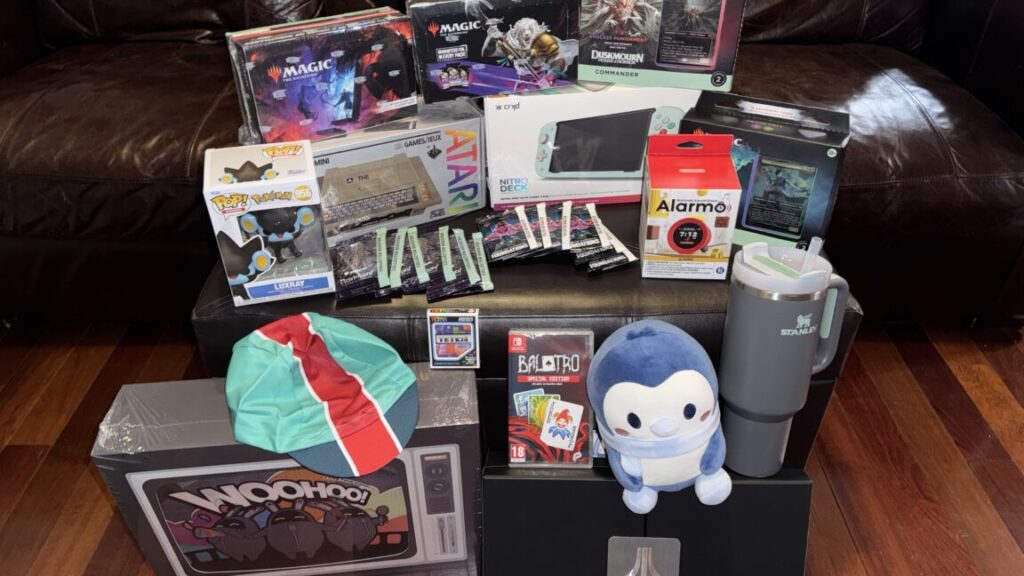
Reminder: Donate to win swag in our annual Charity Drive sweepstakes

How it works

Donating is easy. Simply donate to Child’s Play using a credit card or PayPal or donate to the EFF using PayPal, credit card, or cryptocurrency. You can also support Child’s Play directly by using this Ars Technica campaign page or picking an item from the Amazon wish list of a specific hospital on its donation page. Donate as much or as little as you feel comfortable with—every little bit helps.

Once that’s done, it’s time to register your entry in our sweepstakes. Just grab a digital copy of your receipt (a forwarded email, a screenshot, or simply a cut-and-paste of the text) and send it to [email protected] with your name, postal address, daytime telephone number, and email address by 11: 59 pm ET Wednesday, January 2, 2025. (One entry per person, and each person can only win up to one prize. US residents only. NO PURCHASE NECESSARY. See Official Rules for more information, including how to enter without making a donation. Also, refer to the Ars Technica privacy policy (https://www.condenast.com/privacy-policy).

We’ll then contact the winners and have them choose their prize by January 31, 2025 (choosing takes place in the order the winners are drawn). Good luck!

Reminder: Donate to win swag in our annual Charity Drive sweepstakes Read More »

rocket-report:-ula-has-a-wild-idea;-starliner-crew-will-stay-in-orbit-even-longer

Rocket Report: ULA has a wild idea; Starliner crew will stay in orbit even longer


ULA’s Vulcan rocket is at least several months away from flying again, and Stoke names its engine.

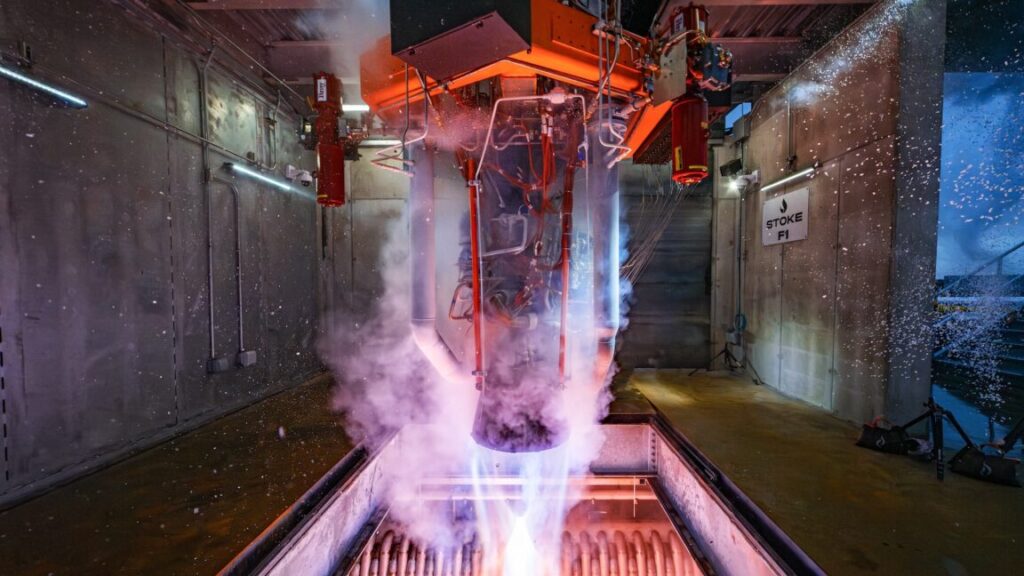
Stoke Space’s Zenith booster engine fires on a test stand at Moses Lake, Washington. Credit: Stoke Space

Welcome to Edition 7.24 of the Rocket Report! This is the last Rocket Report of the year, and what a year it’s been. So far, there have been 244 rocket launches to successfully reach orbit this year, a record for annual launch activity. And there are still a couple of weeks to go before the calendar turns to 2025. Time is running out for Blue Origin to launch its first heavy-lift New Glenn rocket this year, but if it flies before January 1, it will certainly be one of the top space stories of 2024.

As always, we welcome reader submissions. If you don’t want to miss an issue, please subscribe using the box below (the form will not appear on AMP-enabled versions of the site). Each report will include information on small-, medium-, and heavy-lift rockets as well as a quick look ahead at the next three launches on the calendar.

Corkscrew in the sky. A Japanese space startup said its second attempt to launch a rocket carrying small satellites into orbit had been terminated minutes after liftoff Wednesday and destroyed itself again, nine months after the company’s first launch attempt in an explosion, the Associated Press reports. The startup that developed the rocket, named Space One, launched the Kairos rocket from a privately owned coastal spaceport in Japan’s Kansai region. Company executive and space engineer Mamoru Endo said an abnormality in the first stage engine nozzle or its control system is likely to have caused an unstable flight of the rocket, which started spiraling in mid-flight and eventually destroyed itself about three minutes after liftoff, using its autonomous safety mechanism.

0-for-2 … The launch failure this week followed the first attempt to launch the Kairos rocket in March, when the launcher exploded just five seconds after liftoff. An investigation into the failed launch in March concluded the rocket’s autonomous destruct system activated after detecting its solid-fueled first stage wasn’t generating as much thrust as expected. The Kairos rocket is Japan’s first privately funded orbital-class rocket, capable of placing payloads up to 550 pounds (250 kilograms) into low-Earth orbit. (submitted by Jay500001, Ken the Bin, and EllPeaTea)

A fit check for Themis. ArianeGroup has brought the main elements of the Themis reusable booster demonstrator together for the first time in France during a “full-fit check,” European Spaceflight reports. This milestone paves the way for the demonstrator’s inaugural test, which is expected to take place in 2025. Themis, which is funded by the European Space Agency, is designed to test vertical launch and landing capabilities with a new methane-fueled rocket engine. According to ESA, the full-fit check is one of the final steps in the development phase of Themis.

Slow progress … ESA signed the contract with ArianeGroup for the Themis program in 2020, and at that time, the program’s schedule called for initial low-altitude hop tests in 2022. It’s now taken more than double the time officials originally projected to get the Themis rocket airborne. The first up-and-down hops will be based at the Esrange Space Center in Sweden, and will use the vehicle ArianeGroup is assembling now in France. A second Themis rocket will be built for medium-altitude tests from Esrange, and finally, a three-engine version of Themis will fly on high-altitude tests from the Guiana Space Center in South America. At the rate this program is proceeding, it’s fair to ask if Themis will complete a full-envelope launch and landing demonstration before the end of the decade, if it ever does. (submitted by Ken the Bin)

The easiest way to keep up with Eric Berger’s and Stephen Clark’s reporting on all things space is to sign up for our newsletter. We’ll collect their stories and deliver them straight to your inbox.

Sign Me Up!

Baguette One is going critical. French launch startup HyPrSpace has announced that it has completed preliminary design reviews for its Baguette One and Orbital Baguette One (OB-1) rockets, European Spaceflight reports. Baguette One will be a suborbital demonstrator for the OB-1 rocket, designed to use a hybrid propulsion system that combines liquid and solid propellants and doesn’t require a turbopump. With the preliminary design complete, HyPrSpace said it is moving on to the critical design phase for both rockets, a stage of development where detailed engineering plans are finalized and components are prepared for manufacturing.

Heating the oven … HyPrSpace has previously stated the Orbital Baguette One rocket will be capable of delivering a payload of up to 550 pounds (250 kilograms) to low-Earth orbit. Last year, the startup announced it raised 35 million euros in funding, primarily from the French government, to complete the critical design phase of the OB-1 rocket and launch the Baguette One on a suborbital test flight. HyPrSpace has not provided an updated schedule for the first flight of either rocket. (submitted by Ken the Bin)

A new player on the scene. RTX weapons arm Raytheon and defense startup Ursa Major Technologies have completed two successful test flights of a missile propelled by a new solid rocket motor, Breaking Defense reports. The two test flights, held at Naval Air Weapons Station China Lake in California, involved a Raytheon-made missile propelled by an Ursa Major solid rocket motor measuring less than 10 inches in diameter, according to Dan Jablonsky, Ursa Major’s CEO. Details about the missile are shrouded in mystery, and Raytheon officials referred questions on the matter to the Army.

Joining the club … The US military is interested in fostering the development of a third supplier of solid rocket propulsion for weapons systems. Right now, only Northrop Grumman and L3Harris’s Aerojet Rocketdyne are available as solid rocket vendors, and they have struggled to keep up with the demand for weapons systems, especially to support the war in Ukraine. Ursa Major is one of several US-based startups entering the solid rocket propulsion market. “There is a new player on the scene in the solid rocket motor industry,” Jablonsky said. “This is an Army program that we’ve been working on with Raytheon. In this particular program, we went from concept and design to firing and flight on the range in just under four months, which is lightning fast.” (submitted by Ken the Bin)

SpaceX’s rapid response. In a mission veiled in secrecy, a SpaceX Falcon 9 rocket lifted off Monday from Cape Canaveral Space Force Station, Florida, sending a military Global Positioning System (GPS) satellite to a medium orbit about 12,000 miles above Earth, Space News reports. Named Rapid Response Trailblazer-1 (RRT-1), this mission was a US national security space launch and was also intended to demonstrate military capabilities to condense a typical two-year mission planning cycle to less than six months. The payload, GPS III SV-07, is the seventh satellite of the GPS III constellation, built by Lockheed Martin. The spacecraft was in storage awaiting a launch on United Launch Alliance’s Vulcan rocket.

Tightening the timeline … “We decided to pull SV-07 out of storage and try to get it to the launch pad as quickly as possible,” Col. James Horne, senior material leader for launch execution at the US Space Force’s Space Systems Command, told Space News. “It’s our way of demonstrating that we can be responsive to operator needs.” Rather than the typical mission cycle of two years, SpaceX, Lockheed Martin, and the Space Force worked together to prep this GPS satellite for launch in a handful of months. Military officials decided to launch SV-07 with SpaceX as ULA’s Vulcan rocket faced delays in becoming certified to launch national security payloads. According to Space News, Horne emphasized that this move was less about Vulcan delays and more about testing the boundaries of the NSSL program’s flexibility. “This is a way for us to demonstrate to adversaries that we can be responsive,” he said. Because SV-07 was switched to SpaceX, ULA will get to launch GPS III SV-10, originally assigned to SpaceX. (submitted by Ken the Bin and EllPeaTea)

An update on Butch and Suni. NASA has announced that it is delaying the SpaceX Crew-10 launch, a move that will keep astronauts Butch Wilmore and Suni Williams—who already had their stay aboard the International Space Station unexpectedly extended—in orbit even longer, CNN reports. Williams and Wilmore launched to space in June, piloting the first crewed test flight of Boeing’s Starliner spacecraft. Their trip, expected to last about a week, ballooned into a months-long assignment after their vehicle experienced technical issues en route to the space station and NASA determined it would be too risky to bring them home aboard the Starliner.

Nearly 10 months in orbit … The astronauts stayed aboard the space station as the Starliner spacecraft safely returned to Earth in September, and NASA shuffled the station’s schedule of visiting vehicles to allow Wilmore and Williams to come home on a SpaceX Dragon spacecraft with two crewmates to end the Crew-9 mission in February, soon after the arrival of Crew-10. Now, Crew-10 will get off the ground at least a month later than expected because NASA and SpaceX teams need “time to complete processing on a new Dragon spacecraft for the mission,” the space agency said. (submitted by Ken the Bin)

Stoke Space names its engine. Stoke Space, the only other company besides SpaceX developing a fully reusable orbital rocket, has revealed the name of the methane-fueled engine that will power the vehicle’s booster stage. “Say hello to Zenith, our full-flow staged-combustion booster engine, built to power Nova to orbit,” Stoke Space wrote in a post on X. The naming announcement came a few days after Stoke Space said it hot-fired the “Block 2” or “flight layout” version of the main engine on a test stand in Moses Lake, Washington.

Stoked by the progress … “As we build towards the future of space mobility, we’re building on top of the pinnacle–the zenith–of rocket engine cycles: full-flow staged combustion,” Stoke Space said. Only a handful of rocket engines have been designed to use the full-flow staged combustion cycle, and only one has actually flown on a rocket: SpaceX’s Raptor. Seven Zenith engines will power the first stage of the Nova rocket when it takes off from Cape Canaveral, Florida. A hydrogen-fueled propulsion system will power the second stage of Nova, which is designed to launch up to 5 metric tons (11,000 pounds) of payload to low-Earth orbit.

Upgrades coming for Vega. The European Space Agency (ESA) has signed 350 million euros in contracts with Avio to further evolve the Vega launcher family,” Aviation Week & Space Technology reports. The contracts cover the development of the Vega-E and upgrades to the current Vega-C’s ground infrastructure to increase the launch cadence. Vega-E, scheduled to debut in 2027, will replace the Vega-C rocket’s third and fourth stages with a single methane-fueled upper stage under development by Avio. It will also offer a 30 percent increase in Vega’s payload lift capability, and will launch from a new complex to be built on the former Ariane 5 launch pad at the European-run Guiana Space Center in South America.

Adaptations … The fresh tranche of funding from ESA will also pay for Avio’s work to “adapt” the former Ariane 5 integration building at the spaceport in French Guiana, according to ESA. “This will allow technicians to work on two rockets being assembled simultaneously–one on the launch pad and one in the new assembly building–and run two launch campaigns in parallel,” ESA said. (submitted by Ken the Bin and EllPeaTea)

New Glenn coming alive. In a widely anticipated test, Blue Origin will soon ignite the seven main engines on its New Glenn rocket at Launch Complex-36 in Florida, Ars reports. Sources indicated this hot-fire test might occur as soon as Thursday, but it didn’t happen. Instead, Blue Origin’s launch team loaded cryogenic propellants into the New Glenn rocket on the launch pad, but stopped short of igniting the main engines.

Racing the clock … The hot-fire is the final test the company must complete before verifying the massive rocket is ready for its debut flight, and it is the most dynamic. This will be the first time Blue Origin has ever test-fired the BE-7 engines altogether. Theoretically, at least, it remains possible that Blue Origin could launch New Glenn this year—and the company’s urgency certainly speaks to this. On social media this week, some Blue Origin employees noted that they were being asked to work on Christmas Day this year in Florida.

China begins building a new megaconstellation. The first batch of Internet satellites for China’s Guowang megaconstellation launched Monday on the country’s heavy-lift Long March 5B rocket, Ars reports. The satellites are the first of up to 13,000 spacecraft a consortium of Chinese companies plans to build and launch over the next decade. The Guowang fleet will beam low-latency high-speed Internet signals in an architecture similar to SpaceX’s Starlink network, although Chinese officials haven’t laid out any specifics, such as target markets, service specifications, or user terminals.

No falling debris, this time … China used its most powerful operational rocket, the Long March 5B, for the job of launching the first 10 Guowang satellites this week. The Long March 5B’s large core stage, which entered orbit on the rocket’s previous missions and triggered concerns about falling space debris, fell into a predetermined location in the sea downrange from the launch site. The difference for this mission was the addition of the Yuanzheng 2 upper stage, which gave the rocket’s payloads the extra oomph they needed to reach their targeted low-Earth orbit. (submitted by Ken the Bin and EllPeaTea)

Elon Musk’s security clearance under review. A new investigation from The New York Times suggests that SpaceX founder Elon Musk has not been reporting his travel activities and other information to the Department of Defense as required by his top-secret clearance, Ars reports. According to the newspaper, concerns about Musk’s reporting practices have led to reviews by three different bodies within the military: the Air Force, the Office of the Under Secretary of Defense for Intelligence and Security, and the Defense Department Office of Inspector General. However, none of the federal agencies cited in the Times article has accused Musk of disclosing classified material.

It won’t matter … Since 2021, Musk has failed to self-report details of his life, including travel activities, people he has met, and drug use, according to the Times. The government is also concerned that SpaceX did not ensure Musk’s compliance with the reporting rules. Musk’s national security profile has risen following his deep-pocketed and full-throated support of Donald Trump, who won the US presidential campaign in November and will be sworn into office next month. After this inauguration, Trump will have the power to grant security clearance to whomever he wishes.

ULA’s CEO has a pretty wild idea. Ars published a feature story last week examining the US Space Force’s new embrace of offensive weapons in space. In the story, Ars discusses concepts for different types of space weapons, including placing roving “defender” satellites into orbit, with the sole purpose of guarding high-value US satellites against an attack. Tory Bruno, CEO of United Launch Alliance, wrote about the defender concept in a Medium post earlier this month. He added more detail in a recent conversation with reporters, describing the defender concept as “a lightning-fast, long-range, lethal, if necessary, vehicle to defend our assets on orbit.” And guess what? The Centaur upper stage for ULA’s own Vulcan rocket could do the job just fine, according to Bruno.

Death throes or a smart pivot? … A space tug or upper stage like the Centaur could be left in orbit after a launch to respond to threats against US or allied satellites, Bruno said. These wouldn’t be able to effectively defend a spacecraft against a ground-based anti-satellite missile, which can launch without warning. But a space-based attack might involve an enemy satellite taking days or weeks to move close to a US satellite due to limitations in maneuverability and the tyranny of orbital mechanics. Several launch companies have recently pitched their rockets as solutions for weapons testing, including Rocket Lab and ABL. But the concept proposed by Bruno would take ULA far from its core business, where its efforts to compete with SpaceX have often fallen short. However, the competition is still alive, as shown by a comment from SpaceX’s vice president of Falcon launch vehicles, Jon Edwards. In response to Ars’s story, Edwards wrote on X: “The pivot to ‘interceptor’ or ‘target vehicle’ is a common final act of a launch vehicle in its death throes.” (submitted by Ken the Bin)

Vulcan is months away from flying again. Speaking of ULA, here’s an update on the next flight of the company’s Vulcan rocket. The first national security mission on Vulcan might not launch until April 2025 at the earliest, Spaceflight Now reports. This will be the third flight of a Vulcan rocket, following two test flights this year to gather data for the US Space Force to certify the rocket for national security missions. On the second flight, the nozzle fell off one of Vulcan’s solid rocket boosters shortly after liftoff, but the rocket successfully continued its climb into orbit. The anomaly prompted an investigation, and ULA says it is close to determining the root cause.

Stretching the timeline … The Space Force’s certification review of Vulcan is taking longer than anticipated. “The government team has not completed its technical evaluation of the certification criteria and is working closely with ULA on additional data required to complete this evaluation,” a Space Force spokesperson told Spaceflight Now. “The government anticipates completion of its evaluation and certification in the first quarter of calendar year 2025.” The spokesperson said this means the launch of a US military navigation test satellite on the third Vulcan rocket is now slated for the second quarter of next year. (submitted by Ken the Bin and EllPeaTea)

Next three launches

Dec. 21: Falcon 9 | “Astranis: From One to Many” | Cape Canaveral Space Force Station, Florida | 03: 39 UTC

Dec. 21: Falcon 9 | Bandwagon 2 | Vandenberg Space Force Base, California | 11: 34 UTC

Dec. 21: Electron | “Owl The Way Up” | Māhia Peninsula, New Zealand | 13: 00 UTC

Photo of Stephen Clark

Stephen Clark is a space reporter at Ars Technica, covering private space companies and the world’s space agencies. Stephen writes about the nexus of technology, science, policy, and business on and off the planet.

Rocket Report: ULA has a wild idea; Starliner crew will stay in orbit even longer Read More »

startup-set-to-brick-$800-kids-robot-is-trying-to-open-source-it-first

Startup set to brick $800 kids robot is trying to open source it first

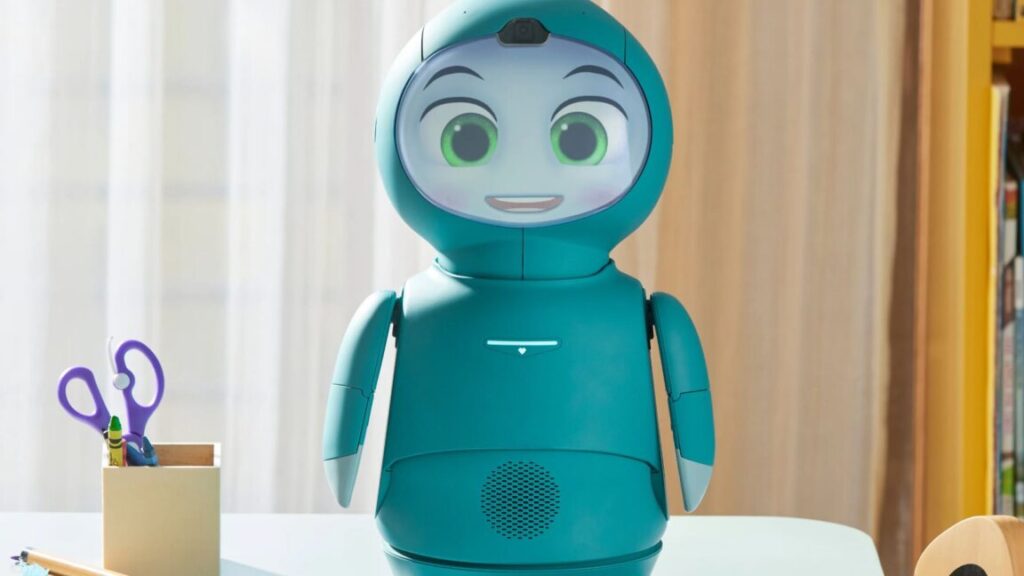
Earlier this month, startup Embodied announced that it is going out of business and taking its Moxie robot with it. The $800 robots, aimed at providing emotional support for kids ages 5 to 10, would soon be bricked, the company said, because they can’t perform their core features without the cloud. Following customer backlash, Embodied is trying to create a way for the robots to live an open sourced second life.

Embodied CEO Paolo Pirjanian shared a document via a LinkedIn blog post today saying that people who used to be part of Embodied’s technical team are developing a “potential” and open source way to keep Moxies running. The document reads:

This initiative involves developing a local server application (‘OpenMoxie’) that you can run on your own computer. Once available, this community-driven option will enable you (or technically inclined individuals) to maintain Moxie’s basic functionality, develop new features, and modify her capabilities to better suit your needs—without reliance on Embodied’s cloud servers.

The notice says that after releasing OpenMoxie, Embodied plans to release “all necessary code and documentation” for developers and users.

Pirjanian said that an over-the-air (OTA) update is now available for download that will allow previously purchased Moxies to support OpenMoxie. The executive noted that Embodied is still “seeking long-term answers” but claimed that the update is a “vital first step” to “keep the door open” for the robot’s continued functionality.

At this time, OpenMoxie isn’t available and doesn’t have a release date. Embodied’s wording also seems careful to leave an opening for OpenMoxie to not actually release; although, the company seems optimistic.

However, there’s also a risk of users failing to update their robots in time and properly. Embodied noted that it won’t be able to support users who have trouble with the update or with OpenMoxie post-release. Updating the robot includes connecting to Wi-Fi and leaving it on for at least an hour.

Startup set to brick $800 kids robot is trying to open source it first Read More »

we’re-about-to-fly-a-spacecraft-into-the-sun-for-the-first-time

We’re about to fly a spacecraft into the Sun for the first time

Twas the night before Christmas, when all through the Solar cycle,

Not a sunspot was stirring, not even a burst;

The stockings were all hung by the corona with care,

In hopes that the Parker Solar Probe would soon be there. 

Almost no one ever writes about the Parker Solar Probe anymore.

Sure, the spacecraft got some attention when it launched.  It is, after all, the fastest moving object that humans have ever built. At its maximum speed, goosed by the gravitational pull of the Sun, the probe reaches a velocity of 430,000 miles per hour, or more than one-sixth of 1 percent the speed of light. That kind of speed would get you from New York City to Tokyo in less than a minute.

And the Parker Solar Probe also has the distinction of being the first NASA spacecraft named after a living person. At the time of its launch, in August 2018, physicist Eugene Parker was 91 years old.

But in the six years since the probe has been zipping through outer space and flying by the Sun? Not so much. Let’s face it, the astrophysical properties of the Sun and its complicated structure are not something that most people think about on a daily basis.

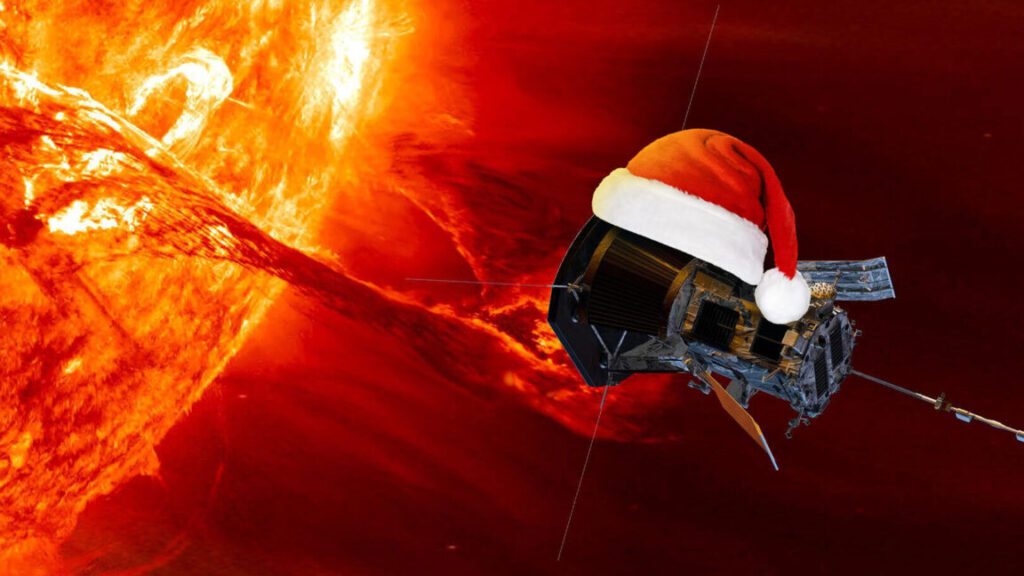
However, the smallish probe—it masses less than a metric ton, and its scientific payload is only about 110 pounds (50 kg)—is about to make its star turn. Quite literally. On Christmas Eve, the Parker Solar Probe will make its closest approach yet to the Sun. It will come within just 3.8 million miles (6.1 million km) of the solar surface, flying into the solar atmosphere for the first time.

Yeah, it’s going to get pretty hot. Scientists estimate that the probe’s heat shield will endure temperatures in excess of 2,500° Fahrenheit (1,371° C) on Christmas Eve, which is pretty much the polar opposite of the North Pole.

Going straight to the source

I spoke with the chief of science at NASA, Nicky Fox, to understand why the probe is being tortured so. Before moving to NASA headquarters, Fox was the project scientist for the Parker Solar Probe, and she explained that scientists really want to understand the origins of the solar wind.

We’re about to fly a spacecraft into the Sun for the first time Read More »

$2-per-megabyte:-at&t-mistakenly-charged-customer-$6,223-for-3.1gb-of-data

$2 per megabyte: AT&T mistakenly charged customer $6,223 for 3.1GB of data

An AT&T customer who switched to the company’s FirstNet service for first responders got quite the shock when his bill came in at $6,223.60, instead of the roughly $260 that his four-line plan previously cost each month.

The Texas man described his experience in a now-deleted Reddit post three days ago, saying he hadn’t been able to get the obviously incorrect bill reversed despite calling AT&T and going to an AT&T store in Dallas. The case drew plenty of attention and the bill was finally wiped out several days after the customer contacted the AT&T president’s office.

The customer said he received the billing email on December 11. An automatic payment was scheduled for December 15, but he canceled the autopay before the money was charged. The whole mess took a week to straighten out.

“I have been with AT&T for over a decade and I have always had unlimited plans so I knew this was a mistake,” he wrote. “The only change I have made to my account is last month I moved my line over to FirstNet. I am a first responder and I was told my price per month would actually go down a few dollars a month.”

“We have apologized for the inconvenience”

AT&T confirmed to Ars today that it “straightened out the customer’s bill.”

“We understand how frustrating this must have been for [the customer] and we have apologized for the inconvenience. We have resolved his concerns about his bill and are investigating to determine what caused this system error,” an AT&T spokesperson told Ars.

The customer posted screenshots of his bill, which helpfully pointed out, “Your bill increased $5,956.92” since the previous month. It included a $5.73 “discount for first responder appreciation,” but that wasn’t enough to wipe out a $6,194 line item listed as “Data Pay Per use 3,097MB at $2.00 per MB.”

$2 per megabyte: AT&T mistakenly charged customer $6,223 for 3.1GB of data Read More »

the-backbone-one-would-be-an-ideal-game-controller—if-the-iphone-had-more-games

The Backbone One would be an ideal game controller—if the iPhone had more games


It works well, but there still aren’t enough modern, console-style games.

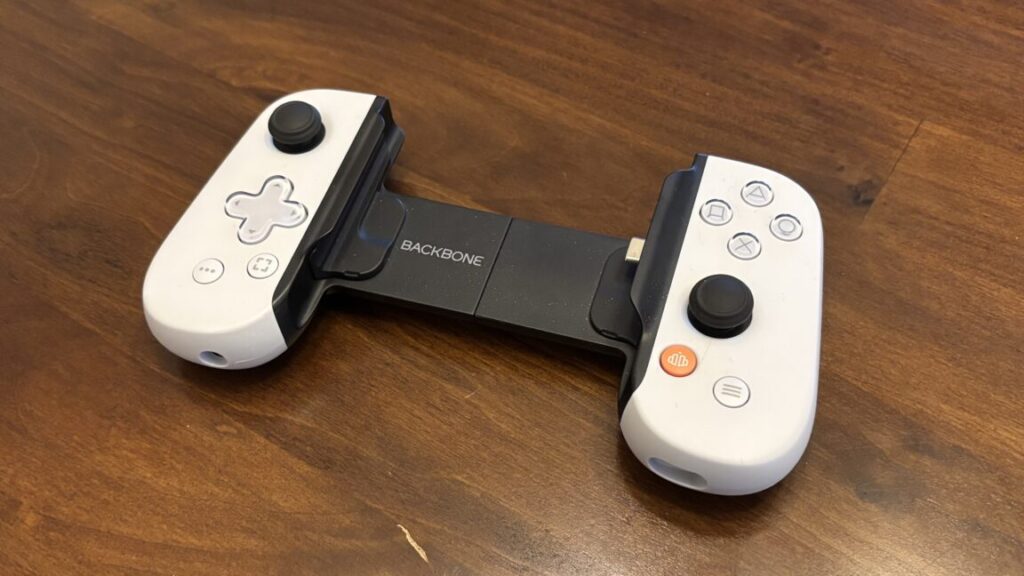
The Backbone One attachable game controller for the iPhone.

In theory, it ought to be as good a time as ever to be a gamer on the iPhone.

Classic console emulators have rolled out to the platform for the first time, and they work great. There are strong libraries of non-skeezy mobile games on Apple Arcade and Netflix Games, streaming via Xbox and PlayStation services is continuing apace, and there are even a few AAA console games now running natively on the platform, like Assassin’s Creed and Resident Evil titles.

Some of those games need a traditional, dual-stick game controller to work well, though, and Apple bafflingly offers no first-party solution for this.

Yes, you can sync popular Bluetooth controllers from Sony, Microsoft, Nintendo, and 8bitdo with your iPhone, but that’s not really the ideal answer—your iPhone isn’t a big TV sitting across the room or a computer monitor propped up on your desk.

A few companies have jumped in to solve this with attachable controllers that give the iPhone a Nintendo Switch or Steam Deck-like form factor (albeit a lot smaller). There’s a wide range of quality, though, and some of the ones you’ll see advertised aren’t very well made.

There’s some debate out there, but there’s one that just about anyone will at least put up for consideration: the Backbone One. That’s the one I picked for my new iPhone 16 Pro Max, which I have loaded with emulators and tons of games.

Since many folks are about to get iPhone 16s for the holidays and might be in the market for something similar, I figured it’d be a good time to write some quick impressions, including pros and cons. Is this thing worth a $99 price tag? What about its subscription-based app?

Switching from the Razer Kishi

Here’s some background, real quick: I previously owned an iPhone 13 Pro, and I played a lot of Diablo Immortal. I wanted to try the controller experience with that game, so I bought a first-generation Razer Kishi—which I liked for the most part. It had excellent thumbsticks that felt similar to those you’d find on an Xbox controller, if a little bit softer.

That said, its design involved a back that loosened up and flexed to fit different kinds of phones, but I found it annoying to take on or off because it immediately crumbled into a folding mess. The big issue that made me go with something else, though, was that the controller worked with a Lightning port, and my new iPhone traded that for USB-C. That’s a good change, overall, but it did mean I had to replace some things.

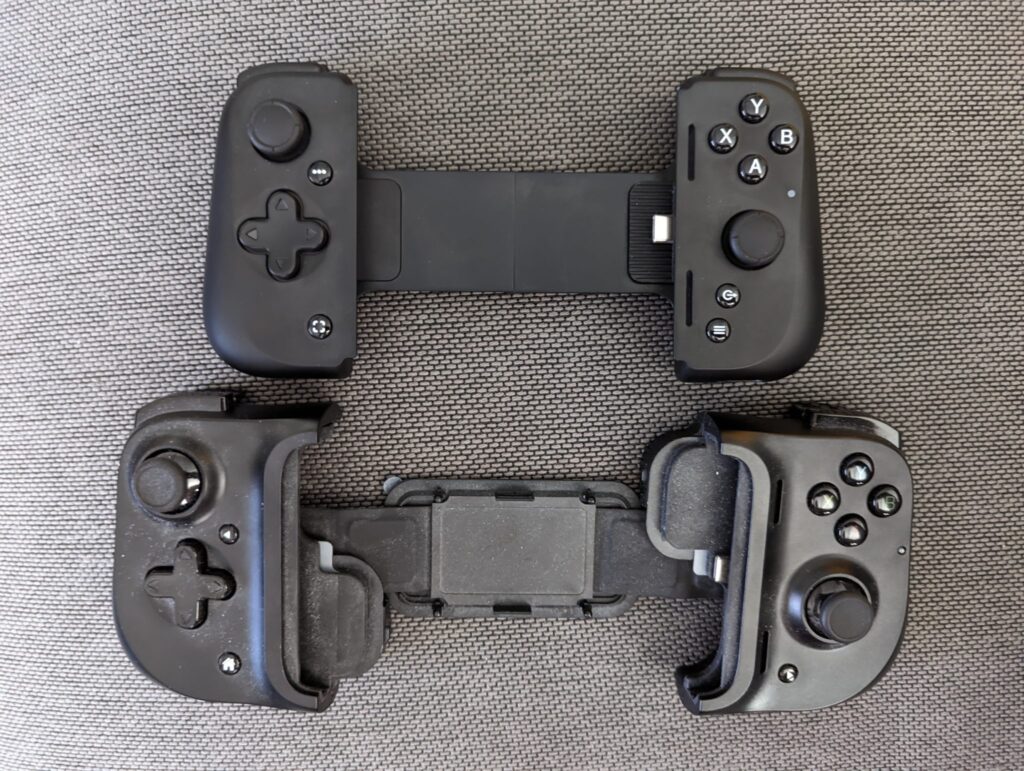
The Kishi I had is now discontinued, and it’s been replaced with the Kishi V2, which looks… less appealing to me. That’s because it ditches those Xbox-like sticks for ones more similar to what you see with a Nintendo Switch. There’s less range of motion and less stability.

The Razer Kishi V2 (top) and Razer Kishi V1 (bottom). I had the V1. Credit: Ars Technica

The Backbone One has similar drawbacks, but I was drawn to the Backbone as an alternative partly because I had enough complaints about the Kishi that I wanted to roll the dice on something new. I also wanted a change because there’s a version with PlayStation button symbols—and I planned to primarily play PS1 games in an emulator as well as stream PS5 games to the device instead of a PlayStation Portal.

Solid hardware

One of my big complaints about the first-generation Kishi (the folding and flimsy back) isn’t an issue with the Backbone One. It’s right there in the name: This accessory has a sturdy plastic backbone that keeps things nice and stable.

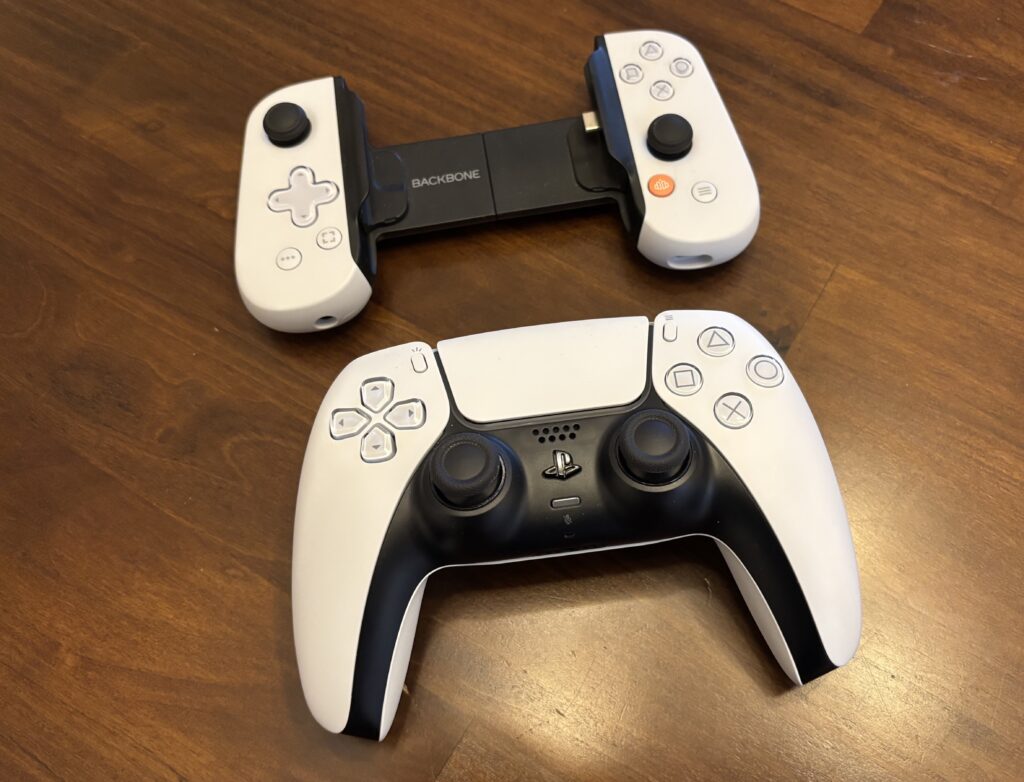
The PlayStation version I got has face buttons and a directional pad that seem like good miniature counterparts to the buttons on Sony’s DualSense controller. The triggers and sticks offer much shallower and less precise control than the DualSense, though—they closely resemble the triggers and sticks on the Nintendo Switch Joy-Cons.

A Backbone One and a DualSense controller side-by-side

This version of the Backbone One adopts some styling from Sony’s DualSense PS5 controller. Credit: Samuel Axon

I feel that’s a big downside. It’s fine for some games, but if you’re playing any game built around quickly and accurately aiming in a 3D environment, you’ll feel the downgrade compared to a real controller.

The product feels quite sturdy to hold and use, and it doesn’t seem likely to break anytime soon. The only thing that bugs me on that front is that the placement of the USB-C port for connecting to the phone is in a place where it takes enough force to insert or remove it that I’m worried about wear and tear on the ports on either my phone or the controller. Time will tell on that front.

There’s an app, but…

The Backbone One is not just a hardware product, even though I think it’d be a perfectly good product without any kind of software or service component.

There is a Backbone app that closely resembles the PlayStation 5’s home screen interface (this is not just for the PlayStation version of the controller, to be clear). It offers a horizontally scrolling list of games from multiple sources like streaming services, mobile game subscription services, or just what’s installed on your device. It also includes voice chat, multiplayer lobbies, streaming to Twitch, and content like video highlights from games.

A screenshot showing a scrollable list of games

The Backbone One app collects games from different sources into one browsing interface. Credit: Samuel Axon

Unfortunately, all this requires a $40 annual subscription after a one-month trial. The good news is that you don’t have to pay for the Backbone One’s subscription service to use it as a controller with your games and emulators.

I don’t think anyone anywhere was asking for a subscription-based app for their mobile game controller. The fact that one is offered proves two things. First, it shows you just how niche this kind of product still is (and transitively, the current state of playing traditional, console-style games on iPhone) that the company that made it felt this was necessary to make a sufficient amount of money.

Second, it shows how much work Apple still needs to do to bake these features into the OS to make iOS/iPadOS a platform that is competitive with offerings from Sony, Microsoft, or even Nintendo in terms of appeal for core rather than casual gamers. That involves more than just porting a few AAA titles.

The state of iPhone gaming

The Backbone One is a nice piece of hardware, but many games you might be excited to play with it are better played elsewhere or with something else.

Hit games with controller support like Genshin Impact, Call of Duty Mobile, and Infinity Nikki all have excellent touch-based control schemes, making using a gamepad simply a matter of preference rather than a requirement.

While Apple is working with publishers like Capcom and Ubisoft to bring some hardcore console titles to the platform, that all still seems like just dipping toes in the water at this point, because they’re such a tiny slice of what’s on offer for PlayStation, Xbox, PC, or even Nintendo Switch players.

In theory, AAA game developers should be excited at the prospect of having iPhone players as a market—the install base of the iPhone absolutely dwarfs all home and handheld consoles combined. But they’re facing two barriers. The first is a chicken-and-egg problem: Only the most recent iPhones (iPhone 15 Pro and the iPhone 16 series) have supported those console AAA titles, and it will take a few years before most iPhone owners catch up.

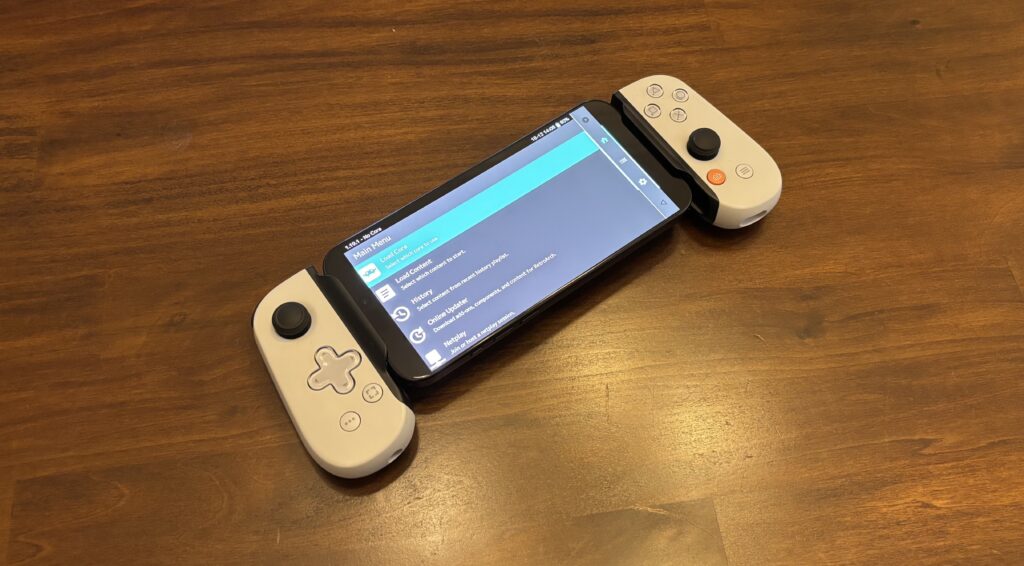
A Backbone One attached to an iphone 16 Pro Max with the RetroArch main menu on its screen

Emulators like RetroArch (seen here running on an iPhone 16 Pro Max) are the main use case of the Backbone One. Credit: Samuel Axon

The second is that modern AAA games are immensely expensive to produce, and they (thankfully) don’t typically have robust enough in-game monetization paths to be distributed for free. That means that to profit and not cannibalize console and PC sales, publishers need to sell games for much higher up-front costs than mobile players are accustomed to.

So if mobile-first hardcore games are best played with touchscreens, and gamepad-first console games haven’t hit their stride on the platform yet, what’s the point of spending $100 on a Backbone One?

The answer is emulators, for both classic and homebrew games. For that, I’ve been pleased with the Backbone One. But if your goal is to play modern games, the time still hasn’t quite come.

Photo of Samuel Axon

Samuel Axon is a senior editor at Ars Technica. He covers Apple, software development, gaming, AI, entertainment, and mixed reality. He has been writing about gaming and technology for nearly two decades at Engadget, PC World, Mashable, Vice, Polygon, Wired, and others. He previously ran a marketing and PR agency in the gaming industry, led editorial for the TV network CBS, and worked on social media marketing strategy for Samsung Mobile at the creative agency SPCSHP. He also is an independent software and game developer for iOS, Windows, and other platforms, and he is a graduate of DePaul University, where he studied interactive media and software development.

The Backbone One would be an ideal game controller—if the iPhone had more games Read More »

call-chatgpt-from-any-phone-with-openai’s-new-1-800-voice-service

Call ChatGPT from any phone with OpenAI’s new 1-800 voice service

On Wednesday, OpenAI launched a 1-800-CHATGPT (1-800-242-8478) telephone number that anyone in the US can call to talk to ChatGPT via voice chat for up to 15 minutes for free. The company also says that people outside the US can send text messages to the same number for free using WhatsApp.

Upon calling, users hear a voice say, “Hello again, it’s ChatGPT, an AI assistant. Our conversation may be reviewed for safety. How can I help you?” Callers can ask ChatGPT anything they would normally ask the AI assistant and have a live, interactive conversation.

During a livestream demo of “Calling with ChatGPT” during Day 10 of “12 Days of OpenAI,” OpenAI employees demonstrated several examples of the telephone-based voice chat in action, asking ChatGPT to identify a distinctive house in California and for help in translating a message into Spanish for a friend. For fun, they showed calls from an iPhone, a flip phone, and a vintage rotary phone.

OpenAI developers demonstrate calling 1-800-CHATGPT during a livestream on December 18, 2024.

OpenAI developers demonstrate calling 1-800-CHATGPT during a livestream on December 18, 2024. Credit: OpenAI

OpenAI says the new features came out of an internal OpenAI “hack week” project that a team built just a few weeks ago. The company says its goal is to make ChatGPT more accessible if someone does not have a smartphone or a computer handy.

During the livestream, an OpenAI employee mentioned that 15 minutes of voice chatting are free and that you can download the app and create an account to get more. While the audio chat version seems to be running a full version of GPT-4o on the back end, a developer during the livestream said the free WhatsApp text mode is using GPT-4o mini.

Call ChatGPT from any phone with OpenAI’s new 1-800 voice service Read More »

openai’s-api-users-get-full-access-to-the-new-o1-model

OpenAI’s API users get full access to the new o1 model

Updates for real-time interaction and fine-tuning

Developers that make use of OpenAI’s real-time voice APIs will also get full access to WebRTC support that was announced today. This comes on top of existing support for the WebSocket audio standard and can simplify the creation of OpenAI audio interfaces for third-party applications from roughly 250 lines of code to about a dozen, according to the company.

OpenAI says it will release simple WebRTC code that can be used on a plug-and-play basis in plenty of simple devices, from toy reindeer to smart glasses and cameras that want to make use of context-aware AI assistants. To help encourage those kinds of uses, OpenAI said it was reducing the cost of o1 audio tokens for API developers by 60 percent and the cost of 4o mini tokens by a full 90 percent.

Developers interested in fine-tuning their own AI models can also make use of a new method called “direct preference optimization” for their efforts. In the current system of supervised fine tuning, model makers have to provide examples of the exact input/output pairs they want to help refine the new model. With direct preference optimization, model makers can instead simply provide two separate responses and indicate that one is preferred over the other.

OpenAI says its fine-tuning process will then optimize to learn the difference between the preferred and non-preferred answers provided, automatically detecting changes in things like verbosity, formatting and style guidelines, or the helpfulness/creativity level of responses and factoring them into the new model.

Programmers who write in Go or Java will also be able to use new SDKs for those languages to connect to the OpenAI API, OpenAI said.

OpenAI’s API users get full access to the new o1 model Read More »