Charter

charter-gets-fcc-permission-to-buy-cox-and-become-largest-isp-in-the-us

Charter gets FCC permission to buy Cox and become largest ISP in the US

The petition cited research suggesting that in the US airline industry, some “mergers increased fares not only on overlap routes but also on non-overlap routes.”

Charter/Cox competition not entirely nonexistent

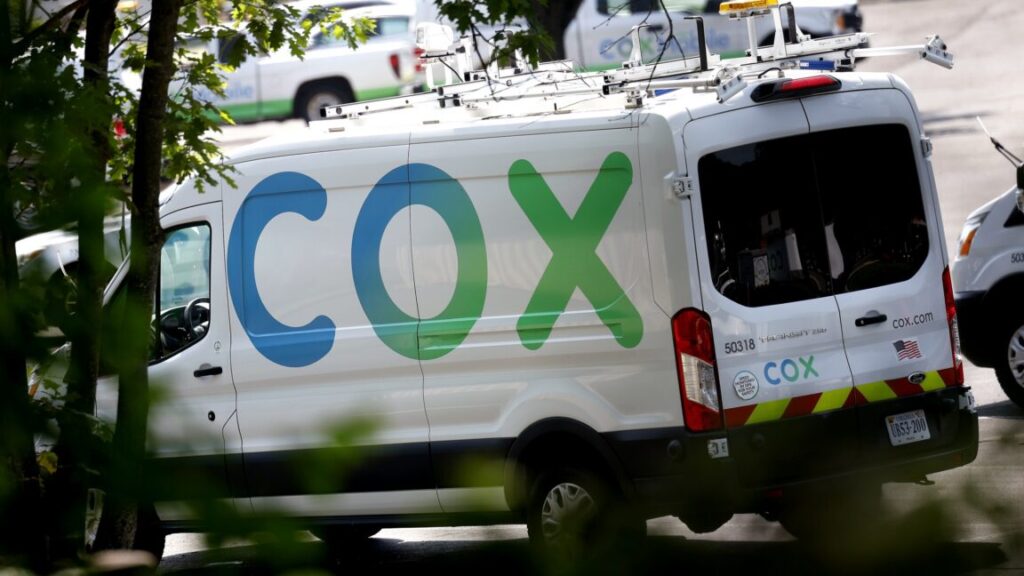
The petition also quoted comments from the California Public Utilities Commission’s Public Advocates Office, which said that Charter and Cox do compete against each other directly in parts of their territories. The California Public Advocates Office submitted a protest in the state regulatory proceeding in September 2025, writing:

The Joint Applicants claim that Charter and Cox have no, or very few, overlapping locations, so the Proposed Transaction will not harm competition. However, FCC broadband data show that Charter and Cox California have 25,503 overlapping locations. At 16,485 of these locations (65%), Charter and Cox California are the only two providers offering speeds of at least 1,000 Mbps download.

If the Proposed Transaction is approved, customers in those areas will have access to only a single provider for high-speed service and will have no meaningful choice between providers. Finally, Charter is already the sole provider of gigabit service in 48% of its service area, while Cox is the sole provider in 65% of its service area. Consolidating these footprints would significantly expand Charter’s monopoly power in the high-speed fixed broadband market.

Public Knowledge Legal Director John Bergmayer said that the Carr FCC “did not require Charter to do anything it wasn’t already planning to do.” He said this is in stark contrast to the FCC’s 2016 approval of Charter’s merger with Time Warner Cable, which allowed Charter to become the second biggest cable company in the US.

“In 2016, the commission approved Charter’s acquisition of Time Warner Cable only after imposing conditions on data caps, usage-based pricing, and paid interconnection,” Bergmayer said on Friday. “Today’s order finds those concerns no longer apply, largely because the agency credits fixed wireless and satellite as competitive constraints on cable. Further, the Commission imposed no affordability conditions, despite doing so in the 2016 Charter, Comcast-NBCU, and Verizon-TracFone transactions. The record does not support this outcome.”

Disclosure: The Advance/Newhouse Partnership, which owns 12 percent of Charter, is part of Advance Publications, which owns Ars Technica parent Condé Nast.

Charter gets FCC permission to buy Cox and become largest ISP in the US Read More »

bleeding-subscribers,-cable-companies-force-their-way-into-streaming

Bleeding subscribers, cable companies force their way into streaming

Enter NOW TV Latino —

Companies like Charter brought about the streaming industry they now want to join.

A person's hand aiming a cable TV remote control at a TV screen

Getty Images | stefanamer

It’s clear that streaming services are the present and future of video distribution. But that doesn’t mean that cable companies are ready to give up on your monthly dollars.

A sign of this is Comcast, the US’ second-biggest cable company, debuting a new streaming service today. Comcast already had an offering that let subscribers stream its Xfinity cable live channels and access some titles on demand. NOW TV Latino differs in being a separate, additional streaming service that people can subscribe to independently of Xfinity cable for $10 per month.

However, unlike streaming services like Netflix or Max, you can only subscribe to NOW TV Latino if Xfinity is sold in your area. NOW TV Latino subscriptions include the ability to stream live TV from Spanish-language channels that Xfinity offers, like Sony Cine and ViendoMovies. And because Comcast owns NBCUniversal, people who subscribe to NOW TV Latino get a free subscription to Peacock with commercials, which usually costs $6/month.

From cable to streaming

In addition to NOW TV Latino, recent Comcast efforts to stay relevant in a TV and movie distribution world dominated by online streaming has centered on bundling. As streaming giants like Netflix struggle with customer churn, bundling is the current favored tactic to keep customers subscribed for longer.

Comcast is selling NOW TV Latino as a separate service, but it’s truly a Peacock bundle. The cable giant is also selling the streaming service bundled with its cable service or with its recently released streaming bundle that combines Comcast’s Peacock with Netflix, Apple TV+, and ads for $15/month.

While popular for streaming service providers, cable companies were some of the pioneers of the bundling strategy, which can overwhelm customers with confusing rates and services that some may not need. As Comcast CEO Brian Roberts said in May while announcing the aforementioned Peacock/Netflix/AppleTV+ bundle: “We’ve been bundling video successfully and creatively for 60 years, and so this is the latest iteration of that.”

Bleeding customers

The cable industry has been in a nose-dive for years. Comcast’s Q1 2024 earnings report showed its cable business losing 487,000 subscribers. The cable giant ended 2022 with 16,142,000 subscribers; in January, it had 13,600,000.

Charter, the only US cable company bigger than Comcast, is rapidly losing pay-TV subscribers, too. In its Q1 2024 earnings report, Charter reported losing 405,000 subscribers, including business accounts. It ended 2022 with 15,147,000 subscribers; at the end of March, it had 13,717,000.

And, like Comcast, Charter is looking to streaming bundles to keep its pay-TV business alive and to compete with the likes of YouTube TV and Hulu With Live TV.

In April, Charter also announced a Spanish language-focused streaming service, but in traditional cable fashion, one must subscribe to Charter’s Spectrum Internet to be able to subscribe (TV Stream Latino is $25/month). Charter also sells the ability to stream live TV from some of the channels that its cable service has.

In 2022, Charter and Comcast formed a joint venture, Xumo, that focuses on streaming but includes cable industry spins, like set-top boxes. The companies are even trying to get a piece of the money made from smart TV operating systems (OSes), with budget brands such as Hisense now selling TVs with Xumo OS.

It’s a curious time, as cable TV providers scramble to be part of an industry created in reaction to business practices that many customers viewed as anti-consumer. Meanwhile, the streaming industry is adopting some of these same practices, like commercials and incessant price hikes, to establish profitability. And some smaller streaming players say it’s nearly impossible to compete as the streaming industry’s top players are taking form and, in some cases, collaborating.

But after decades of discouraging many subscribers with few alternatives, it will be hard for former or current cable customers to view firms like Comcast and Charter as trustworthy competitive streaming providers.

Bleeding subscribers, cable companies force their way into streaming Read More »