Ford cuts EV plans even as it becomes nation’s second-largest EV brand
the market is weird —
Ford is selling more EVs than ever, but it wants to build more hybrids instead.
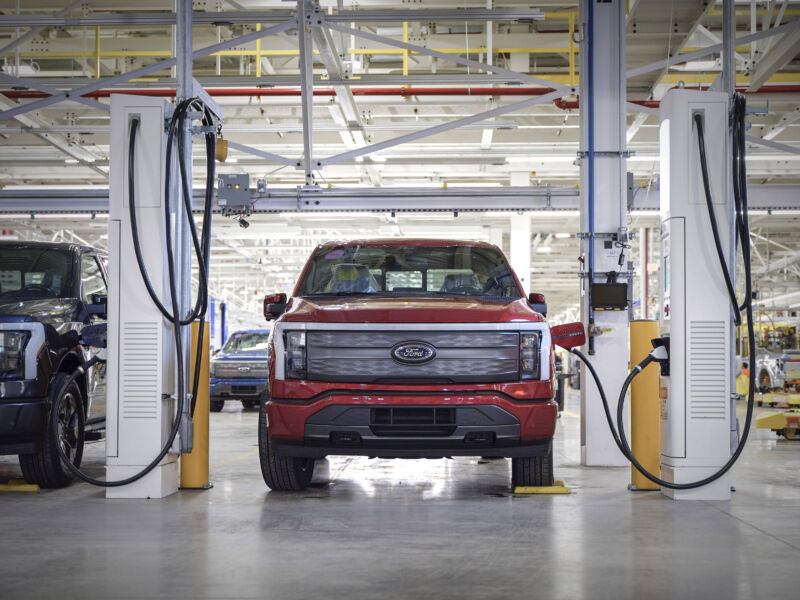
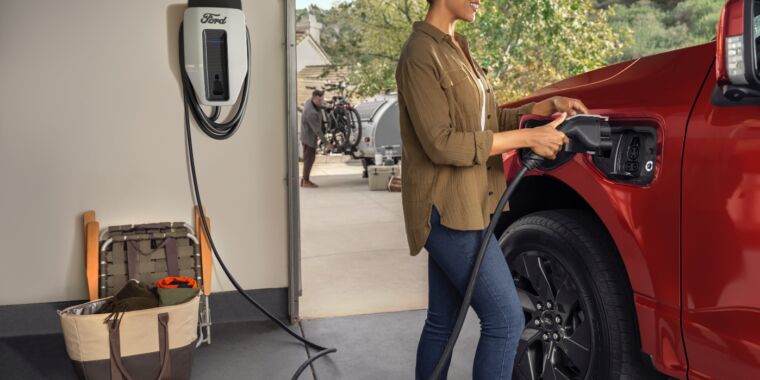
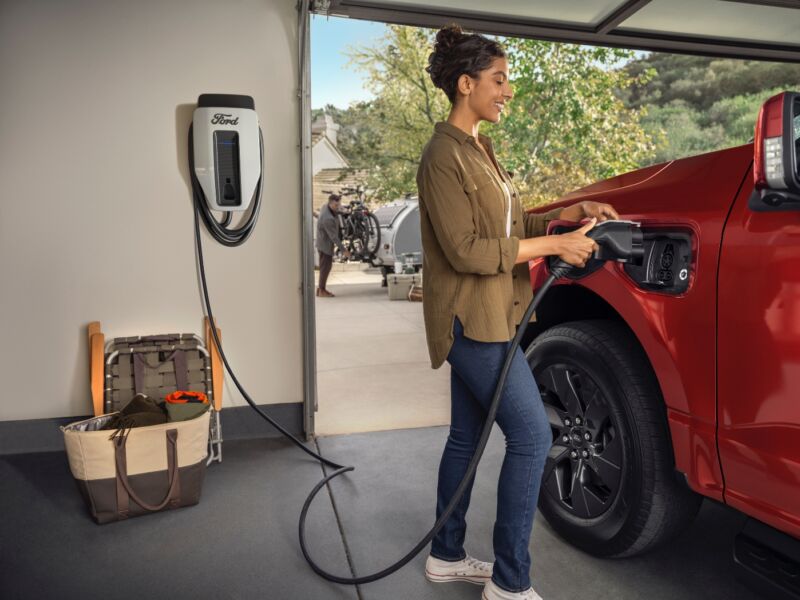
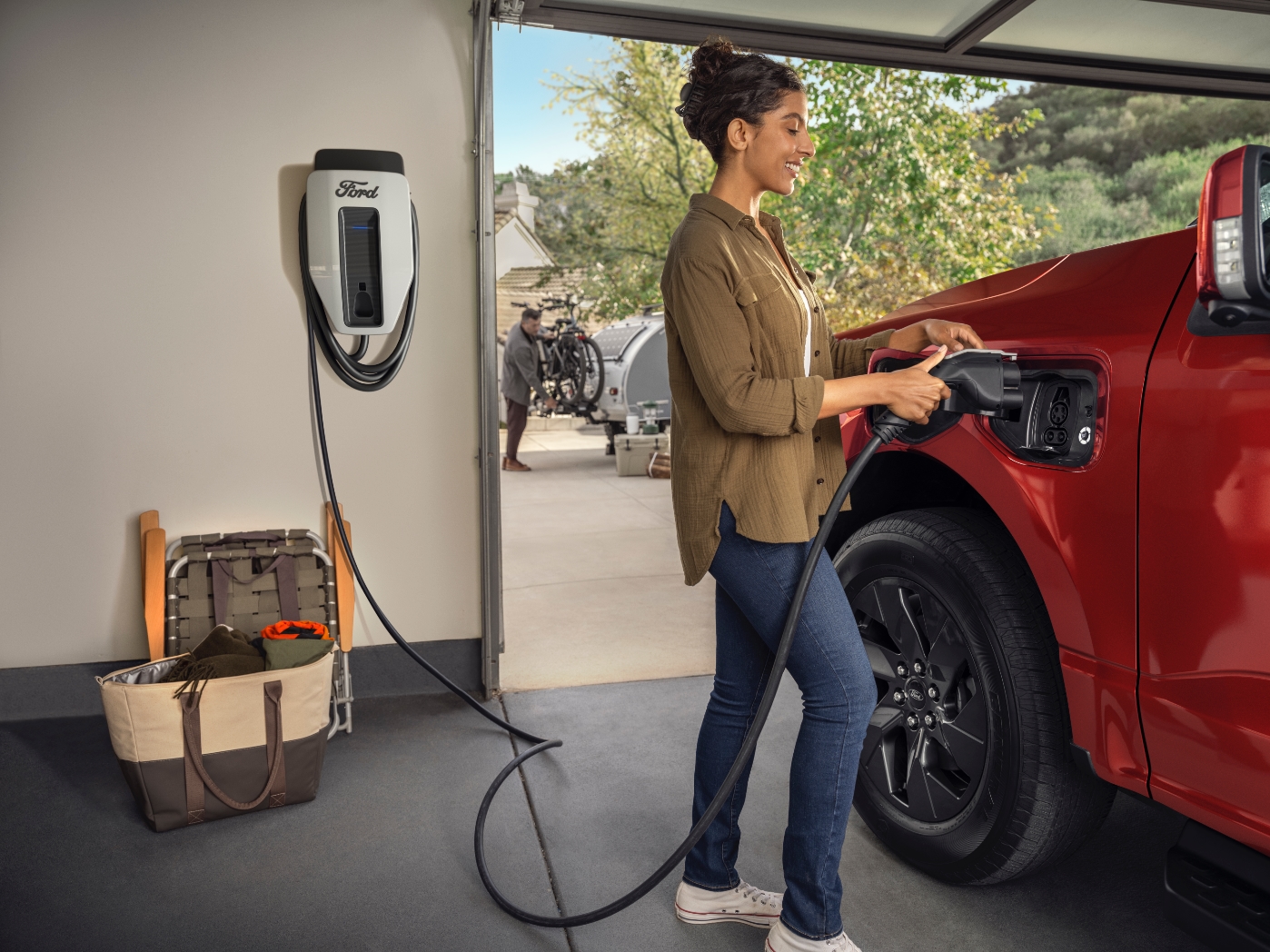
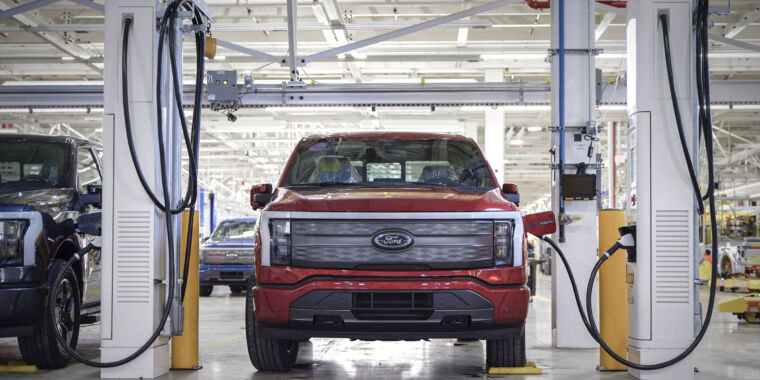
Enlarge / Electric F-150 sales are up 80 percent year over year.
Ford
Ford has caught a case of electric vehicle pessimism and is scaling back or delaying some of its plans for new EV models. A new electric pickup, scheduled to go into production next year, has been pushed back to 2026. And a three-row electric SUV has been given a two-year delay and will now not be available until 2027 at the earliest. The kicker? The automaker has published its sales for the first quarter of the year, and its EV sales are up a whopping 86 percent year over year.
Instead, the Blue Oval wants to focus on making more hybrids instead and says it will have hybrid options for all its internal combustion engine-powered vehicles by 2030. Ford’s current range of hybrids is not extensive, but it grew 42 percent in Q1 compared to the first three months of 2023.
Many of those—19,660 to be exact—were the Maverick Hybrid, despite the fact that for model year 2024, Ford removed the hybrid powertrain as the base model and effectively gave the electrified pickup a $1,500 price hike. In total, Ford sold 38,421 hybrids in Q1 2024, which it says makes this the best-ever quarter for hybrid sales. But they represent a rather small slice of its overall pie—just 7.6 percent of the 508,083 vehicles that Ford sold for the first three months of the year.
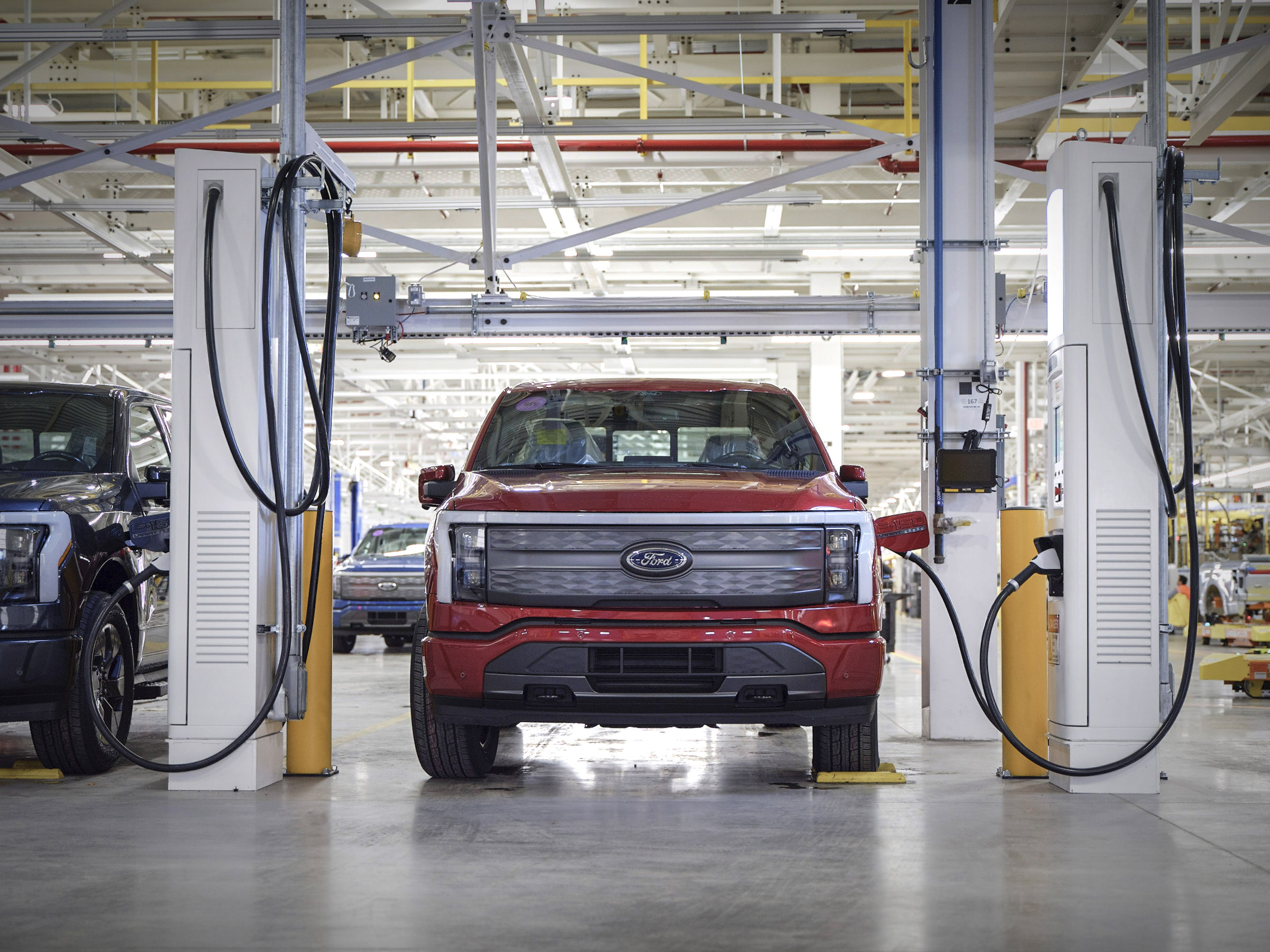
Still, that towers above the company’s total EV sales, which topped out at 20,223 for Q1. The F-150 Lightning was up 80 percent year over year for Q1, with 7,743 trucks sold. But one can see why Ford has cut production shifts for the Lightning—total F-series sales for the quarter were 152,943, suggesting that traditional truck buyers are yet to be tempted by the EV version en masse.
But with Mustang Mach-E sales up 77 percent to 9,589 sold, and a 148 percent growth for the E-Transit, Ford is the country’s second-bestselling EV brand. Despite that status, Ford expects that its EV division will continue to lose money—up to $5.5 billion in 2024, although that is more than offset by the money it expects to make selling commercial vehicles and gasoline-powered vehicles.
Meanwhile, it continues to build a series of battery factory joint ventures in Kentucky and Tennessee, as well as a battery facility in Michigan. It’s also working on a smaller, cheaper EV platform.
EV sales are still growing
Those details say a lot about the overall EV market in the US, which is not quite as bad as many of the naysayers claim, but it also leaves quite a lot to be desired if you’re anxious about US transport-related carbon emissions. In fact, EV sales still grew in Q1 overall, although only by 3.3 percent compared to a total growth in car sales of 5.1 percent. (For all of 2023, EV sales in the US grew 47 percent year over year.)
Other automakers also had a good Q1 in terms of EV sales. Rivian deliveries were up 71 percent. Kia EV sales were up by 88 percent. Hyundai Ioniq 5 sales increased by 19 percent. And Audi sold 23 percent more Q4 e-trons and 47 percent more Q8 e-trons despite overall Audi sales dropping 16 percent.
But not everyone is doing great. Volkswagen sold 37 percent fewer ID.4 crossovers last quarter, even as the brand’s sales grew by 21 percent. And then there’s Tesla. Despite being far and away the largest EV brand in the US, it had a no-good Q1, with an 8.5 percent decline in deliveries and a massive overproduction glut that has led to yet another round of price cuts for vehicles in its inventory. Tesla has also apparently canceled plans for a cheap “Model 2” EV in favor of a renewed focus on robotaxis.
Ford cuts EV plans even as it becomes nation’s second-largest EV brand Read More »