goddard space flight center

nasa-launches-new-mission-to-get-the-most-out-of-the-james-webb-space-telescope

NASA launches new mission to get the most out of the James Webb Space Telescope


“It was not recognized how serious a problem that is until… about 2017 or 2018.”

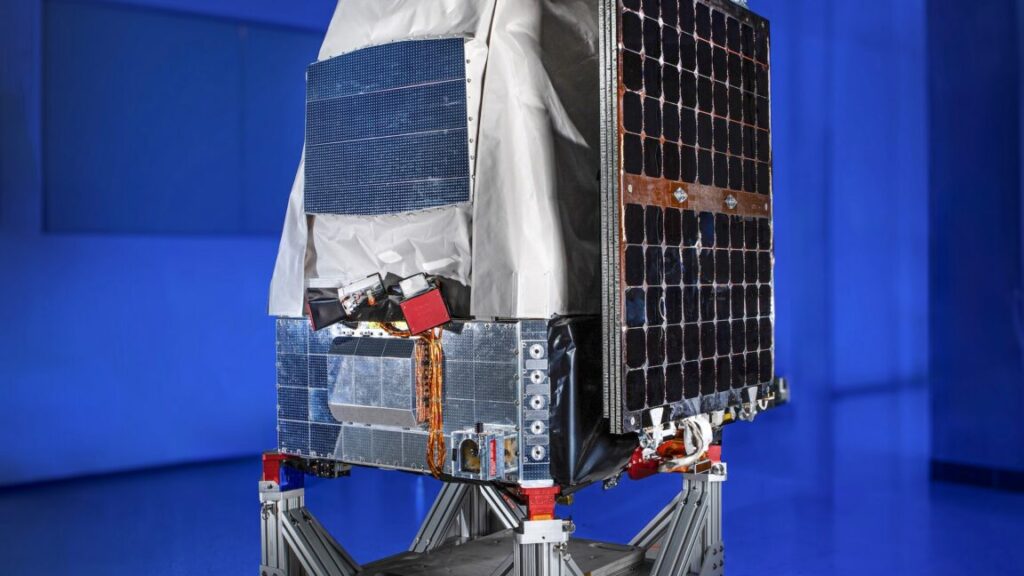
The Pandora observatory, seen here inside a clean room, is about the size of a refrigerator. Credit: Blue Canyon Technologies

Among other things, the James Webb Space Telescope is designed to get us closer to finding habitable worlds around faraway stars. From its perch a million miles from Earth, Webb’s huge gold-coated mirror collects more light than any other telescope put into space.

The Webb telescope, launched in 2021 at a cost of more than $10 billion, has the sensitivity to peer into distant planetary systems and detect the telltale chemical fingerprints of molecules critical to or indicative of potential life, like water vapor, carbon dioxide, and methane. Webb can do this while also observing the oldest observable galaxies in the Universe and studying planets, moons, and smaller objects within our own Solar System.

Naturally, astronomers want to get the most out of their big-budget observatory. That’s where NASA’s Pandora mission comes in.

The Pandora satellite rocketed into orbit early Sunday from Vandenberg Space Force Base, California. It hitched a ride with around 40 other small payloads aboard a SpaceX Falcon 9 rocket, launching into a polar Sun-synchronous orbit before deploying at an altitude of roughly 380 miles (613 kilometers).

Over the next few weeks, ground controllers will put Pandora through a series of commissioning and calibration steps before turning its eyes toward deep space. Pandora is a fraction of the size of Webb. Its primary mirror is about the size of the largest consumer-grade amateur telescopes, less than one-tenth the dimension of Webb’s. NASA capped Pandora’s budget at $20 million. The budget to develop Webb was more than 500 times higher.

Double-checking Webb

So what can little Pandora add to Webb’s bleeding-edge science? First, it helps to understand how scientists use Webb to study exoplanets. When a planet passes in front of its parent star, some of the starlight shines through its atmosphere. Webb has the sensitivity to detect the filtered starlight and break it apart into its spectral components, telling astronomers about the composition of clouds and hazes in the planet’s atmosphere. Ultimately, the data is useful in determining whether an exoplanet might be like Earth.

“I liken it often to holding a glass of wine in front of a candle, so that we can see really what’s inside,” said Daniel Apai, a member of Pandora’s science team from the University of Arizona. “We can assess, basically, the quality of the wine. In this case, we use the light that filters through the star’s [atmosphere] through the planetary atmosphere to judge what chemicals, gases in particular, may be present. Water vapor is one that we are the most sensitive to.”

But there’s a catch. Stars shine millions to billions of times brighter than their planetary companions, and starlight isn’t constant. Like the Sun, other stars have spots, flares, and variability over hours, days, or years. Hot spots and cool spots rotate in and out of view. And the star’s own atmospheres can contain some of the same molecules scientists are seeking to find on exoplanets, including water vapor.

Therefore, a star’s spectral signature easily outshines the signal coming from a nearby planet. Astronomers discovered this signal “contamination” when they started looking for potentially habitable worlds, injecting confounding uncertainties into their findings. Were the promising spectra they were seeing coming from the planet or the star?
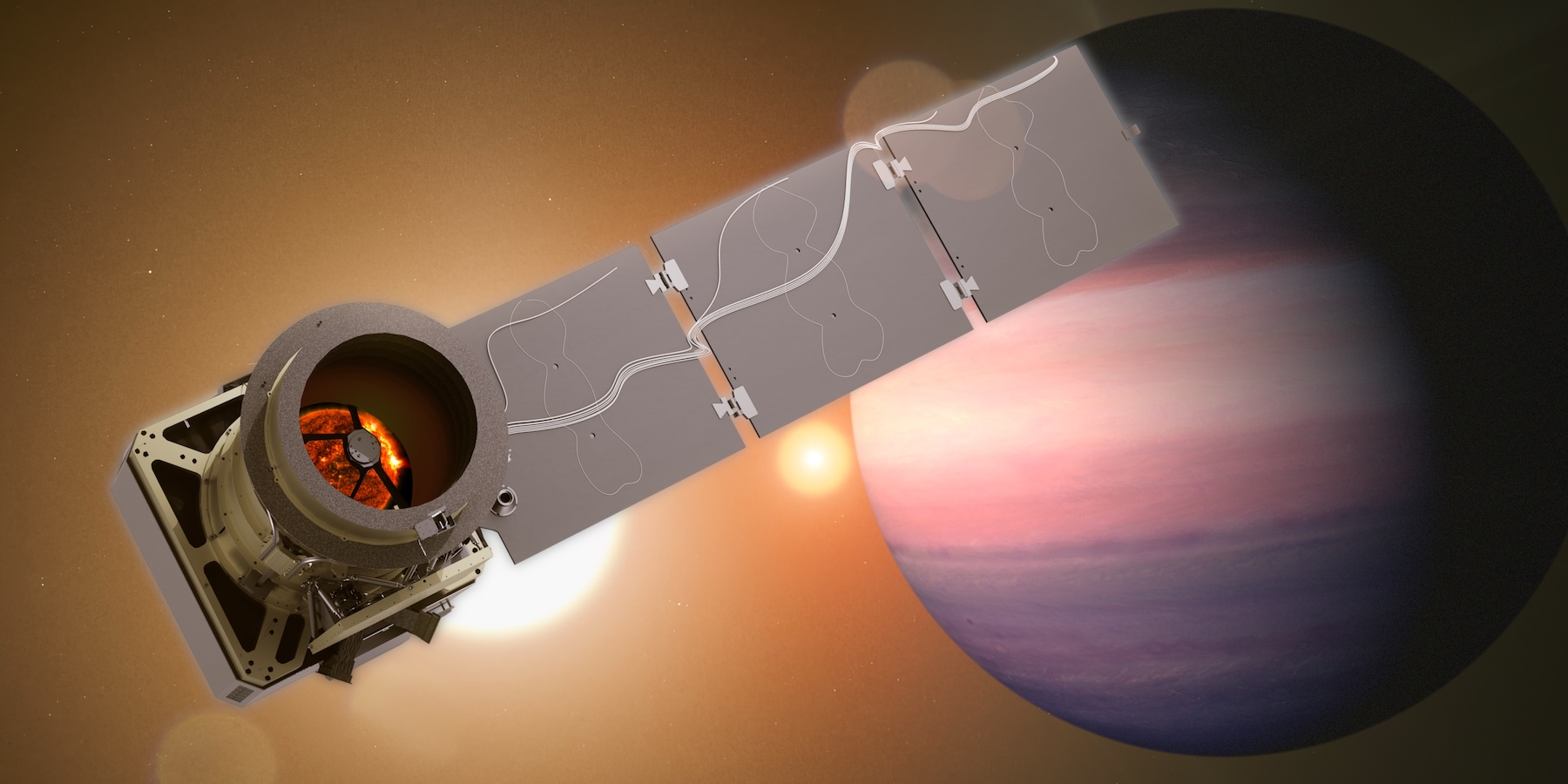
Artist’s concept of the Pandora telescope with an exoplanet and two stars in the background.

Credit: NASA’s Goddard Space Flight Center/Conceptual Image Lab

Artist’s concept of the Pandora telescope with an exoplanet and two stars in the background. Credit: NASA’s Goddard Space Flight Center/Conceptual Image Lab

“One of the ways that this manifests is by making you think that you’re seeing absorption features like water and potentially methane when there may not be any, or, conversely, you’re not seeing the signatures that are there because they’re masked by the stellar signal,” said Tom Barclay, deputy project scientist and technical lead on the Pandora mission at NASA’s Goddard Space Flight Center.

The problem became apparent in the 2010s as astronomers used more powerful telescopes to see the finer details of exoplanets.

“This is something that we always suspected as a community,” Apai told Ars. “We always suspected that stars are not perfect. At some point, it becomes a problem. But it was not recognized how serious a problem that is until, I would say, about 2017 or 2018.”

Scientists quickly got to work looking for a solution, and NASA selected the Pandora mission for development in 2021, just months before the launch of Webb.

“When we’re trying to find water in the atmospheres of these small Earth-like planets, we want to be really sure it’s not coming from the star before we go tell the press and make a big stink about it,” said Elisa Quintana, Pandora’s lead scientist at NASA’s Goddard Space Flight Center. “So we designed the Pandora mission specifically to solve this problem.”

From low-Earth orbit, Pandora will observe exoplanets and their stars simultaneously, allowing astronomers to correct their measurements of the planet’s atmospheric composition and structure based on the ever-changing conditions of the host star itself. Webb could theoretically do this work, but scientists already fill every hour of Webb’s schedule. Pandora will point and stare at 20 preselected exoplanets 10 times during its one-year prime mission, collecting 24 hours of visible and infrared observations with each visit. This will capture short-term and longer-term changes in each star’s behavior.

SpaceX launched Pandora into a so-called “twilight orbit” that follows the boundary between day and night on Earth, allowing the satellite to keep its solar panels illuminated by the Sun while performing its observations.

“We can send this small telescope out, sit on a star for a really long time, and sort of map all the star spots, and really disentangle the star and planet signals,” Quintana said in a recent panel discussion at NASA Goddard. “It’s filling a really nice gap in helping us to sort of calibrate all these stars that James Webb is going to look at, so we can be really confident that all of these molecules that we’re detecting in planets are real.”

“I think this is really the most important scientific barrier that we have to break down to fully unlock the potential of Webb and future missions,” Apai said.
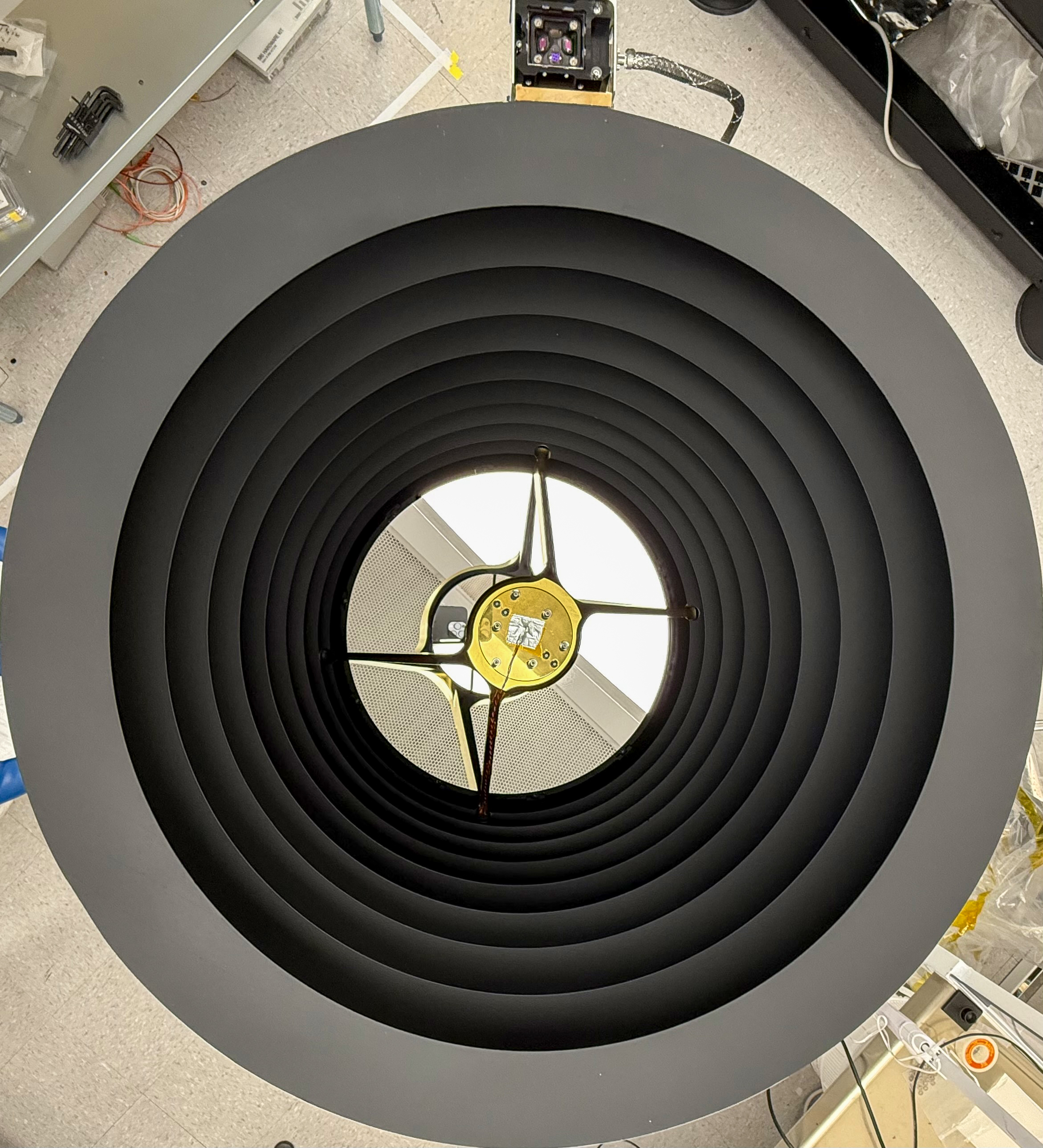
Looking down the barrel of Pandora’s 17-inch-wide (45-centimeter) telescope.

Credit: NASA/Jordan Karburn, LLNL

Looking down the barrel of Pandora’s 17-inch-wide (45-centimeter) telescope. Credit: NASA/Jordan Karburn, LLNL

Ben Hord, a member of Pandora’s science team at Goddard, singled out one example in a presentation at an American Astronomical Society meeting last year. This planet, named GJ 486 b, is a “super-Earth” discovered in 2021 circling a relatively cool red dwarf star. Hord said astronomers had trouble determining if the planet has a water-rich atmosphere based on Webb’s observations alone.

“We want to know if water is in the atmospheres of these exoplanets, and this stellar contamination from the spots on the star can mask or mimic features like water,” Hord said. “Our hope is that Pandora will help James Webb data be even more precise by providing context and understanding for these host stars and these planetary systems.”

Planets around small dwarf stars are some of the best candidates for finding a true Earth analog. Because these stars put out a fraction of the heat of the Sun, a potentially habitable planet could lurk very close to its host, completing a year in a handful of days. This allows astronomers to see the planet repeatedly as it passes in front of its star, rapidly building a dataset on its size, structure, and environment.

Scientists hope they can extend the lessons learned from Pandora’s observations of a sample of 20 exoplanets to other worlds in our galactic neighborhood. As of late last year, astronomers have confirmed detections of more than 6,000 exoplanets.

“With a well-corrected spectrum, we can say there’s water, there’s nitrogen,” Quintana said. “So with every mission, as we evolve, we’re chipping away and taking bigger and bigger steps toward that question of, ‘OK, we know Earths are out there. We know they’re abundant. We know they have atmospheres. How do we know if they have life on them?’”

Building on a budget

A mission like Pandora was not possible until recently, certainly not on the $20 million budget NASA devoted to the project. With Pandora, the agency took advantage of a fast-growing small satellite industry churning out spacecraft at a fraction of what it cost 10 or 15 years ago.

The Pandora spacecraft weighed approximately 716 pounds (325 kilograms) at launch and likely would have required a dedicated rocket to travel to space before SpaceX started offering shared rides on its workhorse Falcon 9 rocket. NASA did not disclose what it paid SpaceX to launch Pandora, but publicly available pricing suggests SpaceX charges a few million dollars to launch a satellite of the same size. Before the rideshare option became available, NASA would have paid tens of millions of dollars for the launch alone.

The Pandora mission is part of NASA’s Astrophysics Pioneers program, an initiative set up to solicit ideas for lower-cost astronomy missions.

“It’s been very, very challenging to try and squeeze this big amount of science into this small cost box, but that’s kind of what makes it fun, right?” Barclay told Ars. “We have to be pretty ruthless in making sure that we only fund the things we need to fund. We accept risk where we need to accept the risk, and at times we need to accept that we may need to give up performance in order to make sure that we hit the schedule and we hit the launch [schedule].”

It helps that Pandora’s 17-inch (45-centimeter) telescope comes from Lawrence Livermore National Laboratory in California, which had the technology on the shelf from a national security program. Pandora uses a small satellite platform from Blue Canyon Technologies, a Colorado company.

“There is no way we could have done Pandora 10 years ago,” Barclay said. “The small launch capabilities that come from companies like Rocket Lab and SpaceX and others meant that now the vendors of spacecraft buses and spacecraft instruments are able to push their costs down because they know that there’s a market for small missions out there. Other parts of the government are investing heavily in small spacecraft, and so that allows us on the science side to make use of that economies of scale.”

For comparison, the European Space Agency launched an exoplanet observatory about the same size as Pandora in 2019 at a cost of more than $100 million.

There are companies now looking at how to scale up production of larger satellites, too. Cheaper, heavy satellites could launch on new heavy- and super-heavy rockets like SpaceX’s Starship or Blue Origin’s New Glenn.

“I think it is an amazing capability to have for astrophysicists because science is moving fast,” Apai said. “Exoplanet science is changing. I would say every three or four years, we have breakthroughs. And the product keeps changing. We push the boundaries, and if you ever have to work with 20- or 25-year-long mission lifetimes, that really just limits progress.”

Photo of Stephen Clark

Stephen Clark is a space reporter at Ars Technica, covering private space companies and the world’s space agencies. Stephen writes about the nexus of technology, science, policy, and business on and off the planet.

NASA launches new mission to get the most out of the James Webb Space Telescope Read More »
the-$4.3-billion-space-telescope-trump-tried-to-cancel-is-now-complete

The $4.3 billion space telescope Trump tried to cancel is now complete


“We’re going to be making 3D movies of what is going on in the Milky Way galaxy.”

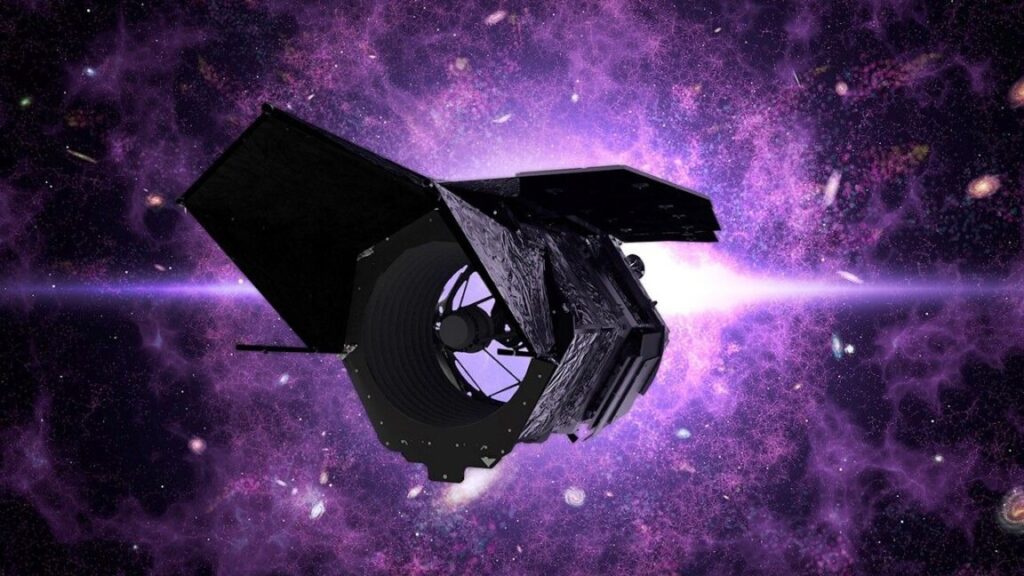
Artist’s concept of the Nancy Grace Roman Space Telescope. Credit: NASA Goddard Space Flight Center Scientific Visualization Studio

A few weeks ago, technicians inside a cavernous clean room in Maryland made the final connection to complete assembly of NASA’s Nancy Grace Roman Space Telescope.

Parts of this new observatory, named for NASA’s first chief astronomer, recently completed a spate of tests to ensure it can survive the shaking and intense sound of a rocket launch. Engineers placed the core of the telescope inside a thermal vacuum chamber, where it withstood the airless conditions and extreme temperature swings it will see in space.

Then, on November 25, teams at NASA’s Goddard Space Flight Center in Greenbelt, Maryland, joined the inner and outer portions of the Roman Space Telescope. With this milestone, NASA declared the observatory complete and on track for launch as soon as fall 2026.

“The team is ecstatic,” said Jackie Townsend, the observatory’s deputy project manager at Goddard, in a recent interview with Ars. “It has been a long road, but filled with lots of successes and an ordinary amount of challenges, I would say. It’s just so rewarding to get to this spot.”

An ordinary amount of challenges is not something you usually hear a NASA official say about a one-of-a-kind space mission. NASA does hard things, and they usually take more time than originally predicted. Astronomers endured more than 10 years of delays, fixes, and setbacks before the James Webb Space Telescope finally launched in 2021.

Webb is the largest telescope ever put into space. After launch, Webb had to perform a sequence of more than 50 major deployment steps, with 178 release mechanisms that had to work perfectly. Any one of the more than 300 single points of failure could have doomed the mission. In the end, Webb unfolded its giant segmented mirror and delicate sunshield without issue. After a quarter-century of development and more than $11 billion spent, the observatory is finally delivering images and science results. And they’re undeniably spectacular.

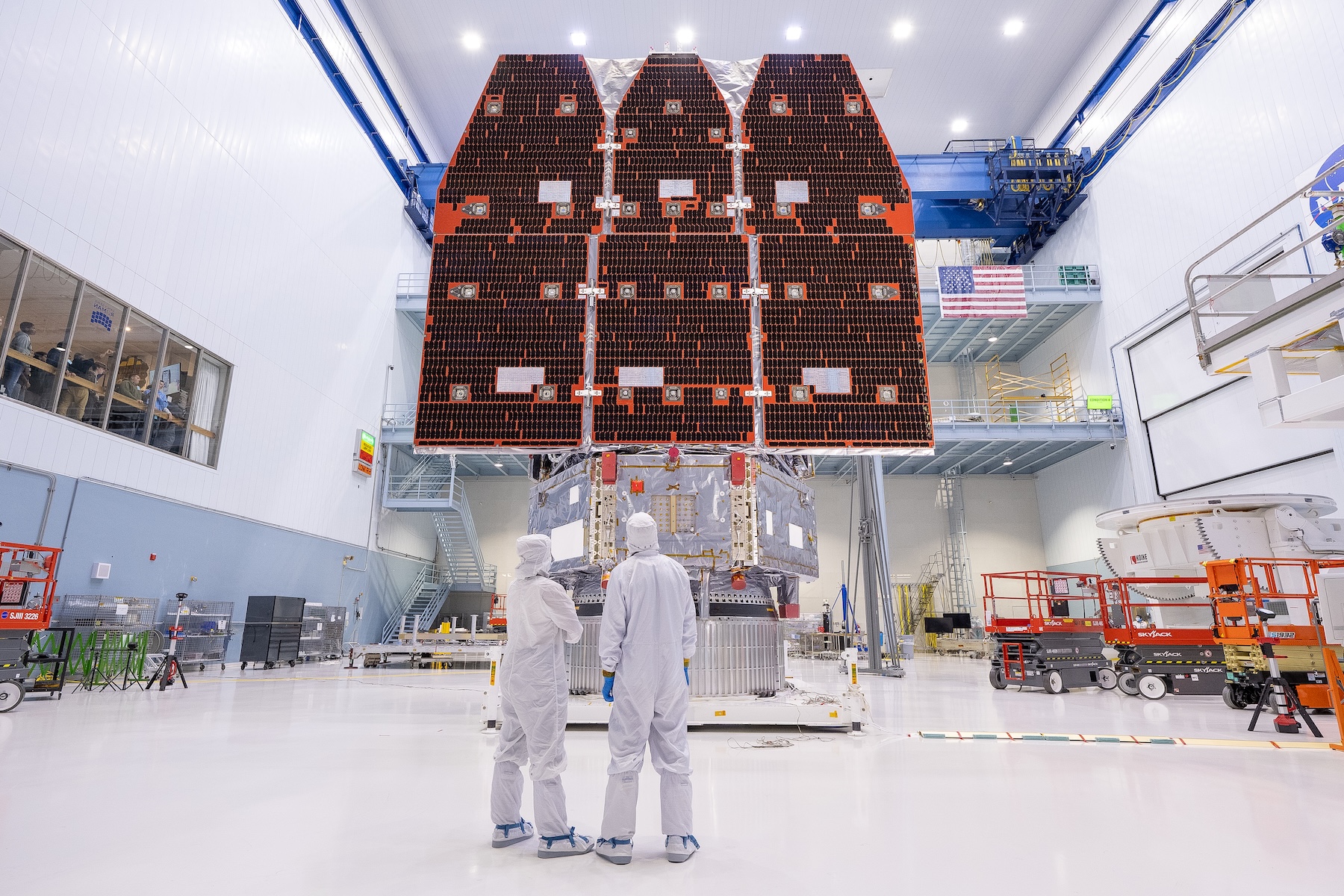
The completed Nancy Grace Roman Space Telescope, seen here with its solar panels deployed inside a clean room at NASA’s Goddard Space Flight Center in Maryland. Credit: NASA/Jolearra Tshiteya

Seeing far and wide

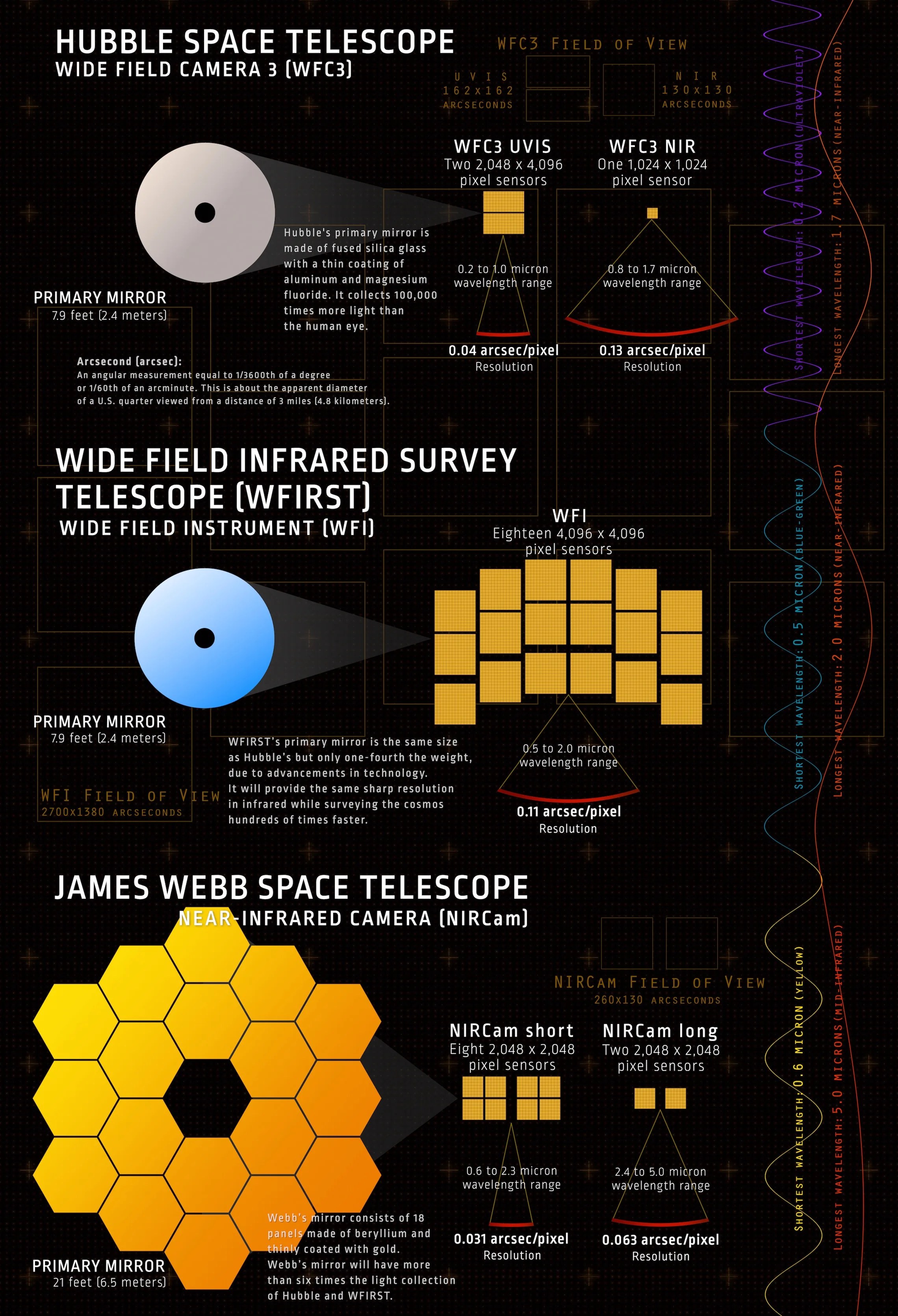
Roman is far less complex, with a 7.9-foot (2.4-meter) primary mirror that is nearly three times smaller than Webb’s. While it lacks Webb’s deep vision, Roman will see wider swaths of the sky, enabling a cosmic census of billions of stars and galaxies near and far (on the scale of the Universe). This broad vision will support research into dark matter and dark energy, which are thought to make up about 95 percent of the Universe. The rest of the Universe is made of regular atoms and molecules that we can see and touch.

It is also illustrative to compare Roman with the Hubble Space Telescope, which has primary mirrors of the same size. This means Roman will produce images with similar resolution to Hubble. The distinction lies deep inside Roman, where technicians have delicately laid an array of detectors to register the faint infrared light coming through the telescope’s aperture.

“Things like night vision goggles will use the same basic detector device, just tuned to a different wavelength,” Townsend said.

These detectors are located in Roman’s Wide Field Instrument, the mission’s primary imaging camera. There are 18 of them, each 4,096×4,096 pixels wide, combining to form a roughly 300-megapixel camera sensitive to visible and near-infrared light. Teledyne, the company that produced the detectors, says this is the largest infrared focal plane ever made.

The near-infrared channel on Hubble’s Wide Field Camera 3, which covers much the same part of the spectrum as Roman, has a single 1,024-pixel detector.

“That’s how you get to a much higher field-of-view for the Roman Space Telescope, and it was one of the key enabling technologies,” Townsend told Ars. “That was one place where Roman invested significant dollars, even before we started as a mission, to mature that technology so that it was ready to infuse into this mission.”

With these detectors in its bag, Roman will cover much more cosmic real estate than Hubble. For example, Roman will be able to re-create Hubble’s famous Ultra Deep Field image with the same sharpness, but expand it to show countless stars and galaxies over an area of the sky at least 100 times larger.

This infographic illustrates the differences between the sizes of the primary mirrors and detectors on the Hubble, Roman, and Webb telescopes. Credit: NASA

Roman has a second instrument, the Roman Coronagraph, with masks, filters, and adaptive optics to block out the glare from stars and reveal the faint glow from objects around them. It is designed to photograph planets 100 million times fainter than their stars, or 100 to 1,000 times better than similar instruments on Webb and Hubble. Roman can also detect exoplanets using the tried-and-true transit method, but scientists expect the new telescope will find a lot more than past space missions, thanks to its wider vision.

“With Roman’s construction complete, we are poised at the brink of unfathomable scientific discovery,” said Julie McEnery, Roman’s senior project scientist at NASA Goddard, in a press release. “In the mission’s first five years, it’s expected to unveil more than 100,000 distant worlds, hundreds of millions of stars, and billions of galaxies. We stand to learn a tremendous amount of new information about the universe very rapidly after Roman launches.”

Big numbers are crucial for learning how the Universe works, and Roman will feed vast volumes of data down to astronomers on Earth. “So much of what physics is trying to understand about the nature of the Universe today needs large number statistics in order to understand,” Townsend said.

In one of Roman’s planned sky surveys, the telescope will cover in nine months what would take Hubble between 1,000 and 2,000 years. In another survey, Roman will cover an area equivalent to 3,455 full moons in about three weeks, then go back and observe a smaller portion of that area repeatedly over five-and-a-half days—jobs that Hubble and Webb can’t do.

“We will do fundamentally different science,” Townsend said. “In some subset of our observations, we’re going to be making 3D movies of what is going on in the Milky Way galaxy and in distant galaxies. That is just something that’s never happened before.”

Getting here and getting there

Roman’s promised scientific bounty will come at a cost of $4.3 billion, including expenses for development, manufacturing, launch, and five years of operations.

This is about $300 million more than NASA expected when it formally approved Roman for development in 2020, an overrun the agency blamed on complications related to the coronavirus pandemic. Otherwise, Roman’s budget has been stable since NASA officials finalized the mission’s architecture in 2017, when it was still known by a bulky acronym: WFIRST, the Wide Field InfraRed Survey Telescope.

At that time, the agency reclassified the Roman Coronagraph as a technology demonstration, allowing managers to relax their requirements for the instrument and stave off concerns about cost growth.

Roman survived multiple attempts by the first Trump administration to cancel the mission. Each time, Congress restored funding to keep the observatory on track for launch in the mid-2020s. With Donald Trump back in the White House, the administration’s budget office earlier this year again wanted to cancel Roman. Eventually, the Trump administration released its fiscal year 2026 budget request in May, calling for a drastic cut to Roman, but not total cancellation.

Once again, both houses of Congress signaled their opposition to the cuts, and the mission remains on track for launch next year, perhaps as soon as September. This is eight months ahead of the schedule NASA has publicized for Roman for the last few years.

Townsend told Ars the mission escaped the kind of crippling cost overruns and delays that afflicted Webb through careful planning and execution. “Roman was under a cost cap, and we operated to that,” she said. “We went through reasonable efforts to preclude those kinds of highly complex deployments that lead you to having trouble in integration and test.”

The outer barrel section of the Roman Space Telescope inside a thermal vacuum chamber at NASA’s Goddard Space Flight Center, Maryland. Credit: NASA/Sydney Rohde

There are only a handful of mechanisms that must work after Roman’s launch. They include a deployable cover designed to shield the telescope’s mirror during launch and solar array wings that will unfold once Roman is in space. The observatory will head to an observing post about a million miles (1.5 million kilometers) from Earth.

“We don’t have moments of terror for the deployment,” Townsend said. “Obviously, launch is always a risk, the tip-off rates that you have when you separate from the launch vehicle… Then, obviously, getting the aperture door open so that it’s deployed is another one. But these feel like normal aerospace risks, not unusual, harrowing moments for Roman.”

It also helps that Roman will use a primary mirror gifted to NASA by the National Reconnaissance Office, the US government’s spy satellite agency. The NRO originally ordered the mirror for a telescope that would peer down on the Earth, but the spy agency no longer needed it. Before NASA got its hands on the surplus mirror in 2012, scientists working on the preliminary design for what became Roman were thinking of a smaller telescope.

The larger telescope will make Roman a more powerful tool for science, and the NRO’s donation eliminated the risk of a problem or delay manufacturing a new mirror. But the upside meant NASA had to build a more massive spacecraft and use a bigger rocket to accommodate it, adding to the observatory’s cost.

Tests of Roman’s components have gone well this year. Work on Roman continued at Goddard through the government shutdown in the fall. On Webb, engineers uncovered one problem after another as they tried to verify the observatory would perform as intended in space. There were leaky valves, tears in the Webb’s sunshield, a damaged transducer, and loose screws. With Roman, engineers so far have found no “significant surprises” during ground testing, Townsend said.

“What we always hope when you’re doing this final round of environmental tests is that you’ve wrung out the hardware at lower levels of assembly, and it looks like, in Roman’s case, we did a spectacular job at the lower level,” she said.

With Roman now fully assembled, attention at Goddard will turn to an end-to-end functional test of the observatory early next year, followed by electromagnetic interference testing, and another round of acoustic and vibration tests. Then, perhaps around June of next year, NASA will ship the observatory to Kennedy Space Center, Florida, to prepare for launch on a SpaceX Falcon Heavy rocket.

“We’re really down to the last stretch of environmental testing for the system,” Townsend said. “It’s definitely already seen the worst environment until we get to launch.”

Photo of Stephen Clark

Stephen Clark is a space reporter at Ars Technica, covering private space companies and the world’s space agencies. Stephen writes about the nexus of technology, science, policy, and business on and off the planet.

The $4.3 billion space telescope Trump tried to cancel is now complete Read More »

nearly-3,000-people-are-leaving-nasa,-and-this-director-is-one-of-them

Nearly 3,000 people are leaving NASA, and this director is one of them

You can add another name to the thousands of employees leaving NASA as the Trump administration primes the space agency for a 25 percent budget cut.

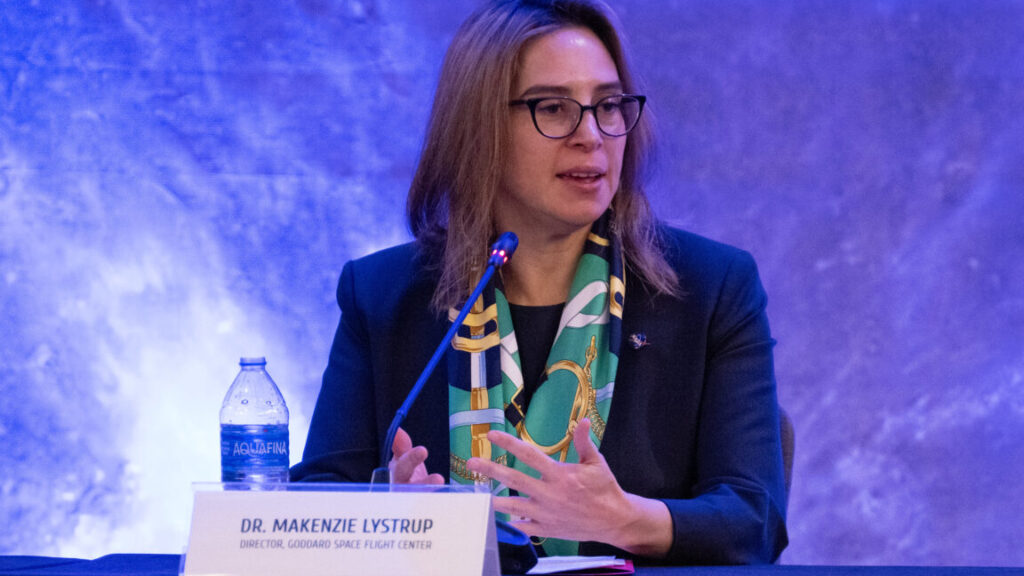
On Monday, NASA announced that Makenzie Lystrup will leave her post as director of the Goddard Space Flight Center on Friday, August 1. Lystrup has held the top job at Goddard since April 2023, overseeing a staff of more than 8,000 civil servants and contractor employees and a budget last year of about $4.7 billion.

These figures make Goddard the largest of NASA’s 10 field centers primarily devoted to scientific research and development of robotic space missions, with a budget and workforce comparable to NASA’s human spaceflight centers in Texas, Florida, and Alabama. Officials at Goddard manage the James Webb and Hubble telescopes in space, and Goddard engineers are assembling the Nancy Grace Roman Space Telescope, another flagship observatory scheduled for launch late next year.

“We’re grateful to Makenzie for her leadership at NASA Goddard for more than two years, including her work to inspire a Golden Age of explorers, scientists, and engineers,” Vanessa Wyche, NASA’s acting associate administrator, said in a statement.

Cynthia Simmons, Goddard’s deputy director, will take over as acting chief at the space center. Simmons started work at Goddard as a contract engineer 25 years ago.

Lystrup came to NASA from Ball Aerospace, now part of BAE Systems, where she managed the company’s work on civilian space projects for NASA and other federal agencies. Before joining Ball Aerospace, Lystrup earned a doctorate in astrophysics from University College London and conducted research as a planetary astronomer.

Formal dissent

The announcement of Lystrup’s departure from Goddard came hours after the release of an open letter to NASA’s interim administrator, Transportation Secretary Sean Duffy, signed by hundreds of current and former agency employees. The letter, titled the “The Voyager Declaration,” identifies what the signatories call “recent policies that have or threaten to waste public resources, compromise human safety, weaken national security, and undermine the core NASA mission.”

Nearly 3,000 people are leaving NASA, and this director is one of them Read More »