
interlune

as-moon-interest-heats-up,-two-companies-unveil-plans-for-a-lunar-“harvester”

As Moon interest heats up, two companies unveil plans for a lunar “harvester”

Starting smaller with FLIP

This is not the first time the two companies have worked together. Last August, Interlune announced that it would fly a multispectral camera on a smaller prototype rover being built by Astrolab. This camera will be used to estimate helium-3 quantities and concentration in Moon dirt, or regolith.

This FLIP rover, about the size of a go-kart, is due to launch later this year on a lunar lander built by Astrobotic. It will fly atop the Griffin lander, taking the place of NASA’s VIPER rover, which has been moved to another spacecraft.

The mission will therefore be a learning exercise for both Astrolab, in testing out its software and other features of a small lunar rover, as well as Interlune, which will seek to ground truth data about the concentration of Helium-3 that has previously been estimated from samples returned to Earth during the Apollo program.

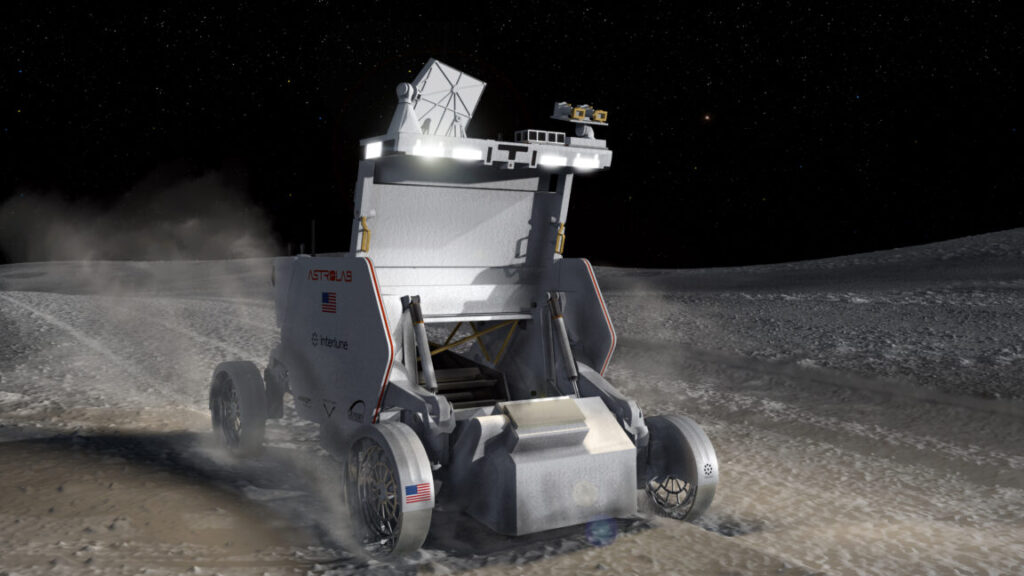
In addition to FLIP, Astrolab is developing a larger rover, FLEX, that is about the size of a minivan. This vehicle has a horseshoe-shaped chassis that can accommodate about 3 cubic meters of payload. This allows for a broad array of activities, from carrying multiple scientific instruments across the Moon and providing a long-distance rover for two astronauts, to moving large equipment or, in the case of Interlune, serving as a mobile harvester.

“Our thesis is to make the most versatile platform possible so we can serve a wide array of customers and achieve NASA’s goal of being one customer among many,” said Jaret Matthews, Astrolab founder and chief executive, in an interview. “So we have essentially a modular approach that allows us to either pick up cargo or implements or payloads. And so in this case, the excavating equipment that Interlune is developing would basically go under the belly of the rover.”

As Moon interest heats up, two companies unveil plans for a lunar “harvester” Read More »
a-long-shot-plan-to-mine-the-moon-comes-a-little-closer-to-reality

A long-shot plan to mine the Moon comes a little closer to reality

The road ahead

Meyerson said the company’s current plan is to fly a prospecting mission in 2027, a payload of less than 100 kg, likely on a commercial lander that is part of NASA’s Commercial Lunar Payload Services program. Two years later, the company seeks to fly a pilot plant. Meyerson said the size of this plant will depend on the launch capability available (i.e., if Starship is flying to the Moon, they’ll go big, and smaller if not).

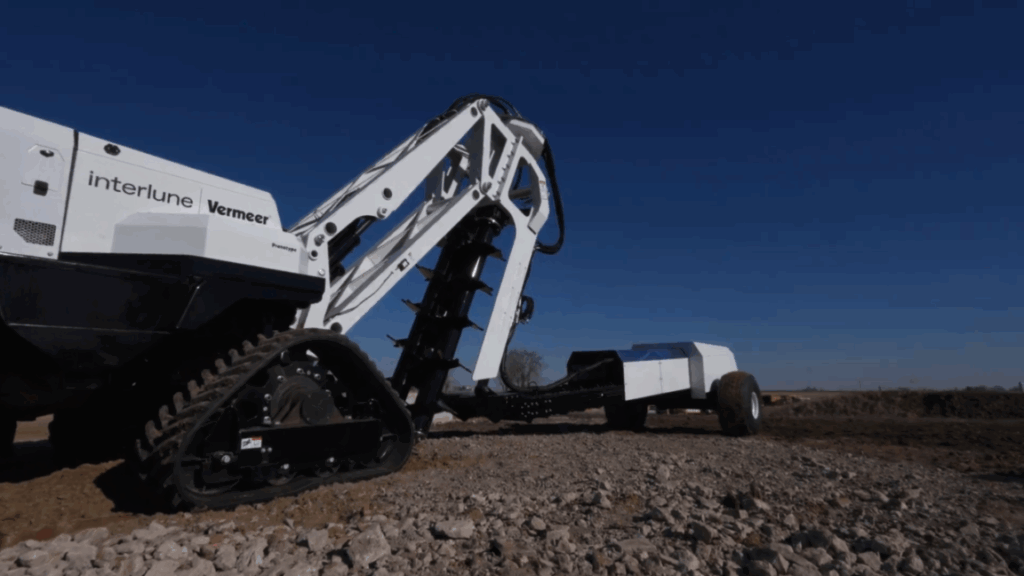
Following this, Interlune is targeting 2032 for the launch of a solar-powered operating plant, which would include five mobile harvesters. The operation would also be able to return material mined to Earth. The total mass for this equipment would be about 40 metric tons, which could fly on a single Starship or two New Glenn Mk 2 landers. This would, understandably, be highly ambitious and capital-intensive. After raising $15 million last year, Meyerson said Interlune is planning a second fundraising round that should begin soon.

There are some outside factors that may be beneficial for Interlune. One is that China has a clear and demonstrated interest in sending humans to the Moon and has already sent rovers to explore for helium-3 resources. Moreover, with the exit of Jared Isaacman as a nominee to lead NASA, the Trump administration is likely to put someone in the position who is more focused on lunar activities. One candidate, a retired Air Force General named Steve Kwast, is a huge proponent of mining helium-3.

Interlune has a compelling story, as there are almost no other lunar businesses focused solely on commercial activities that will drive value from mining the lunar surface. In that sense, they could be a linchpin of a lunar economy. However, they have a long way to go, and a lot of lunar regolith to plow through, before they start delivering for customers.

A long-shot plan to mine the Moon comes a little closer to reality Read More »