
jonathan blow

jonathan-blow-has-spent-the-past-decade-designing-1,400-puzzles-for-you

Jonathan Blow has spent the past decade designing 1,400 puzzles for you

For many independent developers, of course, spending nine years on a single game idea is an unthinkable luxury. Financial constraints mean many game ideas have to be shipped “as soon as you get to the point where it’s fun and shippable,” Blow said, leading to games that “kind of converge to a certain level of complexity and then stop there.”

But thanks to the sales success of The Witness—which reportedly grossed over $5 million in just its first week—Blow said he and his team have had the freedom to spend years “generat[ing] this giant space that’s much more complex than where you go with a typical puzzle game… When we create that much possibility, we feel like we have to explore it. Otherwise we’re not doing our duty as designers and correctly pursuing this agenda of design research.”
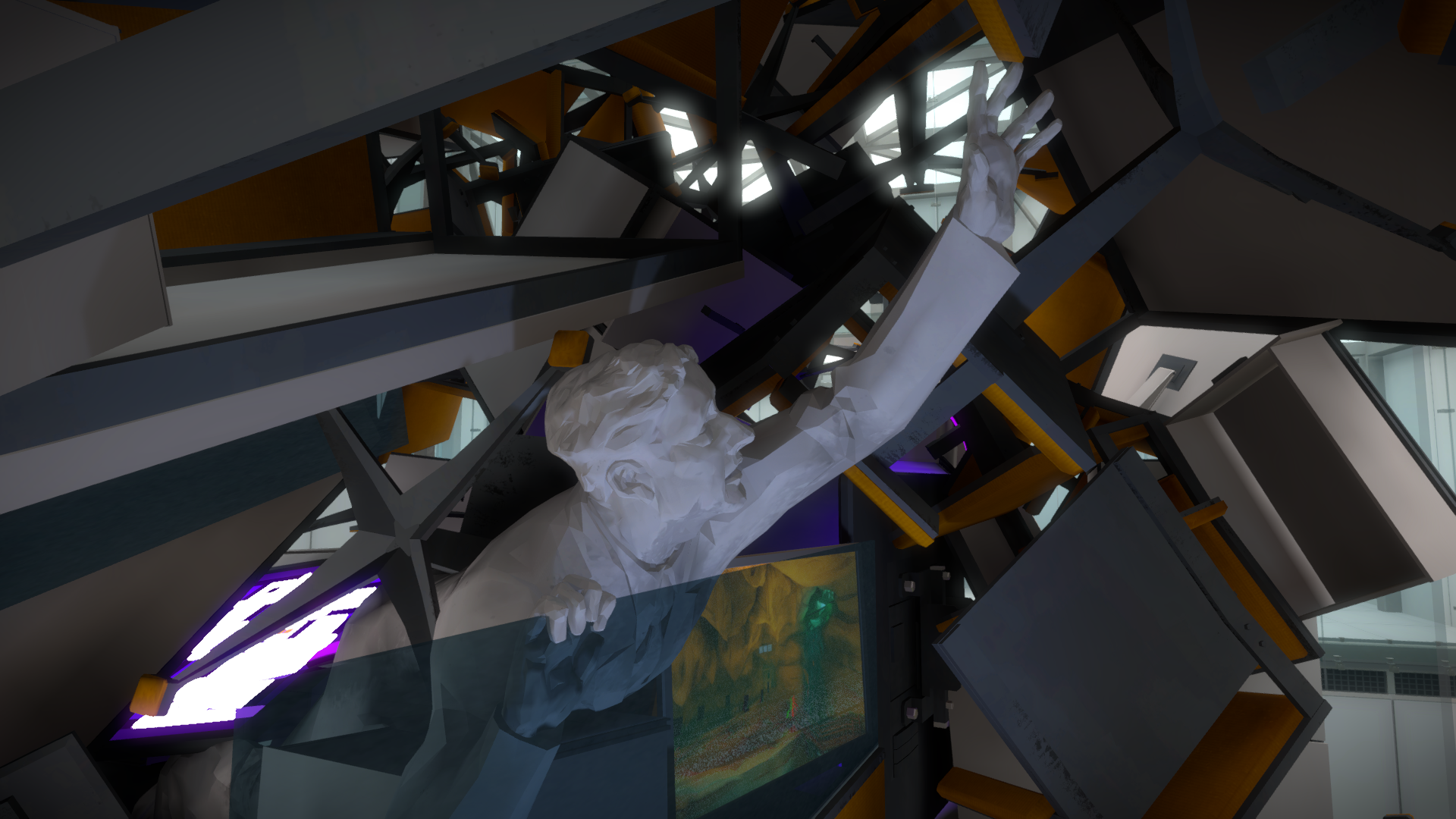
The sales success of The Witness helped enable the extended development time for Order of the Sinking Star.

The sales success of The Witness helped enable the extended development time for Order of the Sinking Star.

Blow also said the size of this project helped get him past his general distaste for playtesting, which he said he was “not that big on” for his previous games. “Even The Witness didn’t have that much play testing, because I always felt like that was a way to make games a little more generic or something, you know? Like playtesters have complaints and then you file down the complaints and then you get a generic game.”

After being immersed in Order of the Sinking Star development for so long, though, Blow said he realized it was important to get a fresh perspective from playtesters who had no experience with the idea. “We have to playtest it because it doesn’t fit in my brain all at once, you know?” he said.

Some might say a nine-plus-year development cycle might be a sign of perfectionist tinkering past the point of diminishing returns. But Blow said that while he “might have been a perfectionist” in his younger days, the difficult process of game development has beaten the tendency out of him. “But I have the remnants of perfectionism,” he said. “I have… wanting to do something really good.”

And eventually, even an idea you’ve been tinkering with for roughly a decade needs to see the light of day. “Even for us, this was very expensive,” Blow admitted. “Man, I’ll be happy to get it out and have a new game making some money, because we need to make that happen at this point.”

Jonathan Blow has spent the past decade designing 1,400 puzzles for you Read More »
creator-of-indie-breaktout-‘braid’-building-roomscale-vr-game-with-‘no-concessions-for-stationary-play’

Creator of Indie Breaktout ‘Braid’ Building Roomscale VR Game With ‘no concessions for stationary play’

Jonathan Blow, the creator of one of indie gaming’s fomative successes, Braid, has begun hiring a team to develop his first VR game.

Before Fez (2012), before Limbo (2010), and before Minecraft (2009)Braid (2008) was one of the breakout successes in the formative years of indie game development and distribution.

Braid is a fairly basic 2D platformer, but with the twist of intriguing time-manipulation mechanics which made it play more like a puzzle game than a typical side-scroller. The game was widely praised and its success helped indie game development become… well, a thingBraid is getting an Anniversary Edition next year.

Jonathan Blow, the creator of ‘Braid’ and ‘The Witness’

Now years after his 3D puzzler followup, The Witness (2016), creator Jonathan Blow is ready to try his game design chops in the VR realm with a focus on pure roomscale gameplay.

“This game has a boundary-pushing design and is made for untethered, roomscale play, with none of those game-ruining concessions for seated or stationary play,” says Blow.

While the game is far from a formal announcement, he recently shared that he’s looking to hire a small team of developers for the project, including a VR Lead Programmer:

Lead development of a new VR game, starting the game from scratch, using our in-house engine. This game has a boundary-pushing design and is made for untethered, roomscale play, with none of those game-ruining concessions for seated or stationary play.

Lead one other programmer and work with others at the company to build this game on a relatively rapid timescale. We’re looking for someone very motivated who can build high-quality technical systems without micromanagement.

Experience shipping VR games is a huge plus. Experience with Android and Vulkan rendering are a substantial plus (but it’s not a dealbreaker if you are fluent in some other rendering API). No C# Unity programmers please (unless you just happen to know C# and are better in a systems language than you are in C#).

Our engine and gameplay code are written in the in-house programming language created by Thekla. It is a modern systems language with high-powered features that do not cost runtime performance; we recommend looking into the language before applying.

Given the job description (“tetherless,” “Android,” etc), it sounds like the game is very likely to target Quest as a first priority, though Blow hasn’t confirmed any specific platforms of release.

Speaking to Road to VR Blow said that although this will be his first VR game, he’s dabbled in the medium before.

“I have been interested in VR for a long time. We had The Witness running on Valve’s pre-production hardware [prior to HTC Vive]. But the time was never right for me to do a game,” he said.

As for why he’s looking back toward VR now? He says the hardware is ready.

“It is just more about hardware having reached a certain threshold that is pretty good now, so it will only get better from here.”

Blow says development of his new VR game is expected to begin in earnest starting in 2024, so it will be some time before we see a formal announcement.

Creator of Indie Breaktout ‘Braid’ Building Roomscale VR Game With ‘no concessions for stationary play’ Read More »