Mixed Reality

whether-hit-or-flop,-apple’s-entrance-will-be-a-pivotal-moment-for-xr

Whether Hit or Flop, Apple’s Entrance Will Be a Pivotal Moment for XR

If the avalanche of recent reports can indicate anything at all, it seems Apple is entering the VR/AR headset market fairly soon, bringing along with it the most inflated expectations the industry has ever seen. It’s probably going to be expensive, but whether it flops or becomes a big hit, the mere existence of Apple in the space is set to change a lot about how things are done.

The iPhone wasn’t the first smartphone. That award goes to an obscure PDA device called the IBM Simon, released in limited numbers in 1994. The Apple Watch wasn’t the first smartwatch either. That was debatably the Seiko Raputer, which was released in 1998 in Japan. Its monochrome LCD wasn’t capable of touch, instead offering up a tiny eight-direction joystick and six function buttons to browse files, play games, and set calendar appointments. Similarly, iPad wasn’t the first tablet. Mac wasn’t the first home computer. iPod wasn’t the first MP3 player. But all of these products have become nothing short of iconic. There’s very little benefit to being first, at least as far as Apple is concerned.

And while it seems the company’s first mixed reality headset could finally debut at its Worldwide Developers Conference (WWDC) in June, like all of its other products, it won’t be the first MR headset. Just the same, like everything else the fruit company makes, it’s going to be the one everyone is talking about—for better or worse.

In case you haven’t noticed, Apple is a big deal. It has an ecosystem of products which connect to each other, design-forward hardware that has helped it maintain brand name cache, and a philosophy that puts user-friendliness at the core of its software experience. Oh, and it’s the most valuable company in the world.

And while the irrational exuberance for successive device generations has mostly petered out since its heydays in the early 2000s, reducing its famed long-line launch extravaganzas to more chill online pre-order releases, becoming an Apple apostate is still unthinkable to many. Once you’re in, you’re in. You buy the phone, the laptop, the headphones, and now, maybe you’ll get the newfangled headset too. Maybe. Let’s put aside the rumors for now. Forget about the spec breakdowns, hardware design leaks, software capabilities, etc. There are plenty of them out there, and you can read about those here. The only thing we know for sure is Apple is… well… Apple. Here’s what you, and probably everyone else is expecting.

Apple’s BKC Store in Mumbai, India | Image courtesy Apple

For Better: What Should Happen

Unless the company is making a drastic departure here, its first mixed reality headset should be built with this same level of user friendliness as all of its other devices, which means it should connect to the Apple ecosystem easily, and have a simple and intuitive UI. Log in with Apple ID. No muss, no fuss (whatever ‘muss’ is). Privacy should be a giant focus for the headset from the outset, since it will almost certainly pack eye-tracking in addition to a host of cameras to get a glimpse of the inside of your immediate surroundings, messiness and all. Apple has its fair share of data collection scandals, yet it seems to inspire enough confidence for privacy to be a big historical selling point for all of its devices.

If you want to avoid drawing the ire of tech reviewers everywhere though, wearing it should be fairly simple and very comfortable, and the experiences within should be of high enough value to overcome that inherent friction of charging it, putting it on, setting up a tracking volume, and wearing it for extended periods of time—everything we expect from any mixed reality headset at this point. It should fit most people, and offer up a clear picture to people with heads and eyes of all shapes and sizes.
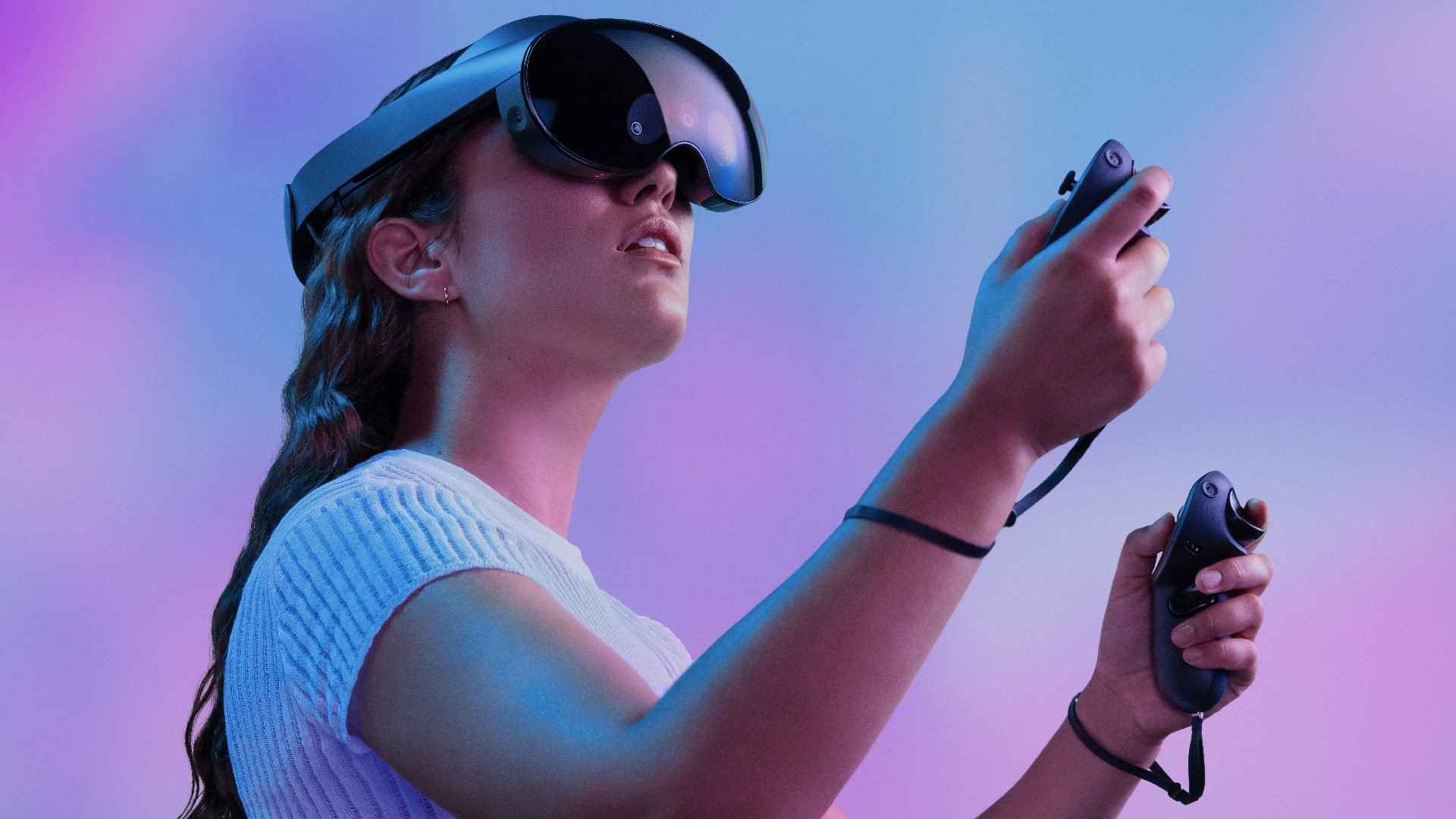
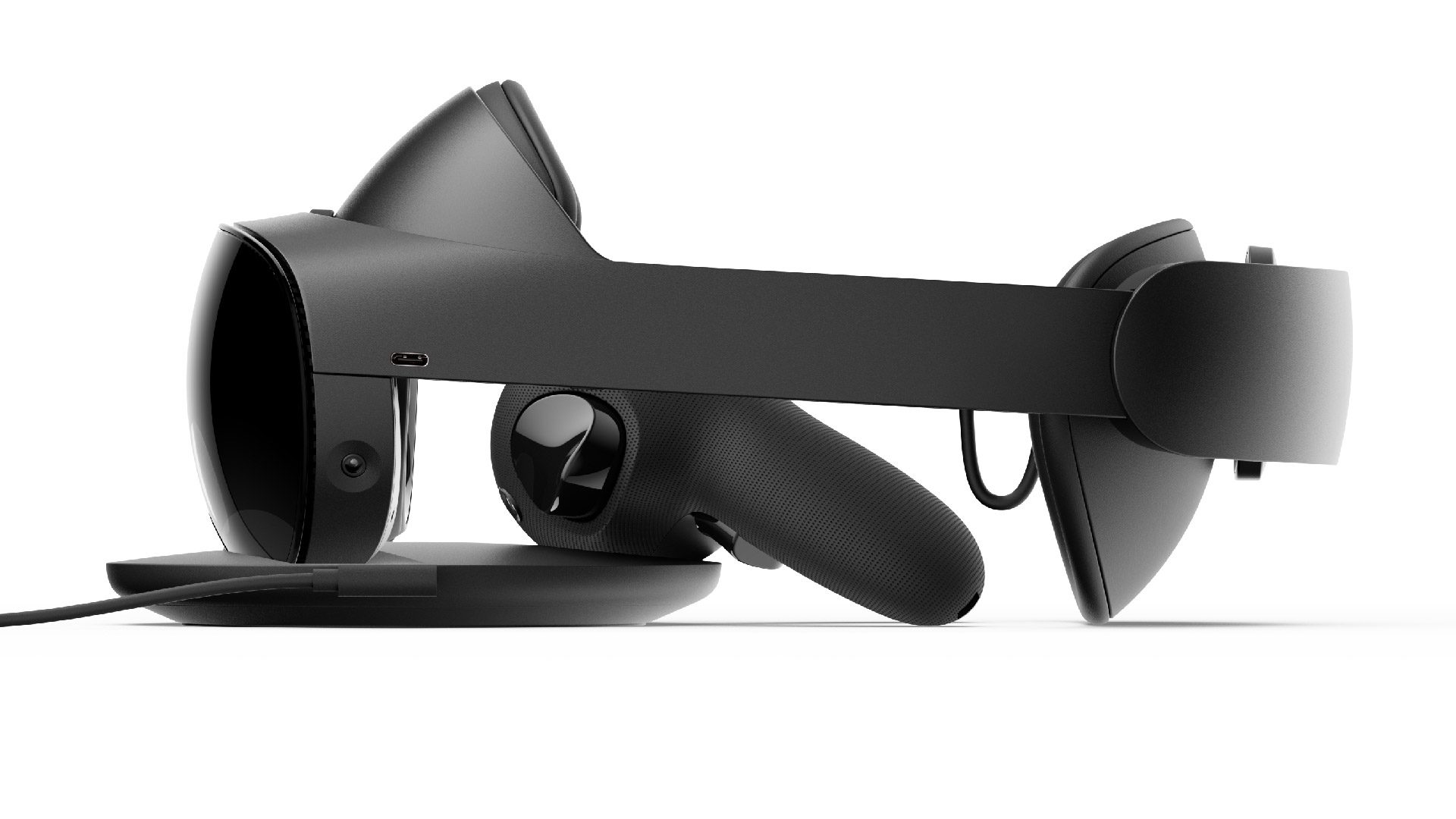
Meta Quest Pro | Image courtesy Meta

An obvious analogue here is Meta Quest Pro, which is relatively low friction, but things like a halo strap that forces too much weight on your brow, or a passthrough that’s just a little too grainy, or a display that doesn’t have a high enough pixel per degree (ppd) for staring at text—all of these things make it less appealing to users in the day-to-day, introducing what you might call accumulative friction. You use it a bunch at first until you figure out all of the niggles, at which point you may revert to traditional computing standards like using a laptop or smartphone. The thing isn’t really the all-purpose device you hoped it would be, and the company thinks twice about when to send the better, more improved version down the pipeline.

One would hope that Apple’s headset, on the other hand, should have a mature design language and have obviously useful features from day one. While there’s bound to be some stutters, like with the first Apple Watch, which was critiqued for its slow software, short battery life, and lack of customization, it should all be there, and not require a ton of feature updates to enhance after the big launch day.

It should sell well out of the gate—at least by the standards of the existing XR industry—even if everything isn’t perfect. And it should be so cool that it’s copied. Like a lot. And it should drag top-level studios into the XR scene to start making innovative and useful apps that aren’t just straight ports of ARkit or ARcore apps made for mobile, but things people need and want to use in-headset. A big win from Apple should not only spur its new mixed reality product category, but kick off a buzz among developers, which would include those who currently work in the XR industry and Apple’s existing cohort of dedicated iOS developers.

But more than merely being the latest shiny new headset within the existing XR industry, Apple’s entrance into the field has a real chance of radically expanding the industry itself, by showing that the world’s most iconic tech company now thinks the medium is worth pursuing. That’s the way it happened when Apple jumped into MP3 players, smartphones, tablets, wireless earbuds, and more.

As the saying goes, a rising tide lifts all boats. The inverse is also true though….

For Worse: What Could Happen

Apple’s headset is reportedly (okay, maybe just one rumor) priced somewhere near $3,000, so it probably won’t be the sort of accessory that initially attracts people to the ecosystem; that would be the job of a peripheral like Apple Watch. It will likely rely on the pool of built-in Apple users. Despite the price, the first iteration very likely won’t offer the sort of power you’d expect from a workhorse like Apple MacBook Pro either.

At the outset, any sustained draw from prosumers will invariably hinge on how well it can manage general computing tasks, like you might have with an iPad or MacBook, and everything else current mixed reality headset should do too, namely VR and AR stuff. That includes a large swath of things like fitness apps, both AR and VR games and experiences, productivity apps, standard work apps, everything. Basically, it has to be the Quest Pro that Meta wanted to release but didn’t.
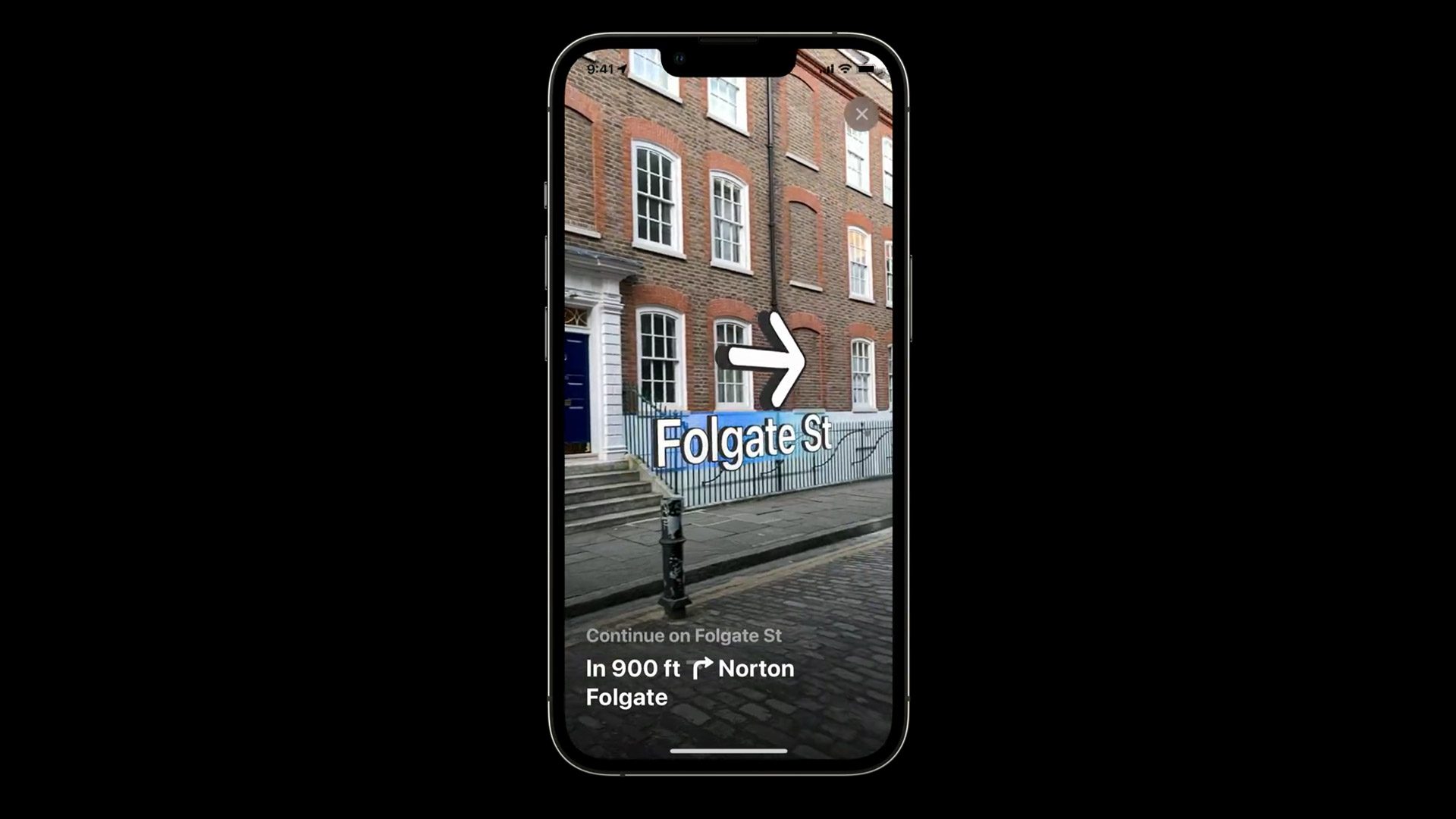
AR turn-by-turn directions on an iPhone | Image courtesy Apple

And if not, it leaves Apple in a pretty precarious situation. If their headset can’t find a proper foothold within its ecosystem and attract enough users, it could lead to low adoption rates and a lack of interest in the technology as a whole. Mixed reality is largely seen as valuable steppingstone to what many consider the true moneymaker: all-day AR glasses. And despite some very glassses-shaped AR headsets out there, we’re still not there yet. Even if Apple is willing to take a hit with a bulky device in service of pushing use cases for its AR glasses yet to come, the short term may not look very bright.

And perhaps most importantly for the industry as a whole are the (metaphorical) optics.

After all, if the iconic Apple can’t manage to make MR something that everybody wants, the rest of the world watching from the sidelines may think the concept just can’t be conquered. In turn, it may mean capital investment in the space will dry up until ‘real’ AR headsets are a thing—the all-day glasses that will let you play Pokémon Go in the park, do turn-by-turn directions, and remind you the name of that person you met last week. The steppingstone of mixed reality may get waterlogged. Those are a lot of ifs, coulds, shoulds, and won’ts though. The only thing truly certain is we’re in for a very interesting few months, which you can of course follow at Road to VR.

Apple’s entrance into XR has the potential to expand the industry by demonstrating its viability, just as Apple has done with previous technologies. It stands a good chance at carving out a sizeable claim in the space, but it’s a gamble that could equally backfire if both sales and public perception aren’t on their side.


Is Apple’s XR headset going to be the “one more thing?” we’ve all been waiting for at WWDC this year? Will it live up to the Apple name, or be an expensive dev kit? Let us know in the comments below!

Whether Hit or Flop, Apple’s Entrance Will Be a Pivotal Moment for XR Read More »
catching-up-with-varjo-partnerships-and-experiences-around-the-world

Catching Up With Varjo Partnerships and Experiences Around the World

Varjo hasn’t been hibernating over the winter but they’ve definitely had a very active spring. ARPost typically reports on the Finnish XR company’s groundbreaking hardware and software developments, but the company also helps develop and distribute XR experiences and solutions ranging from operas to flight simulations.

An Opera Produced Entirely Through XR

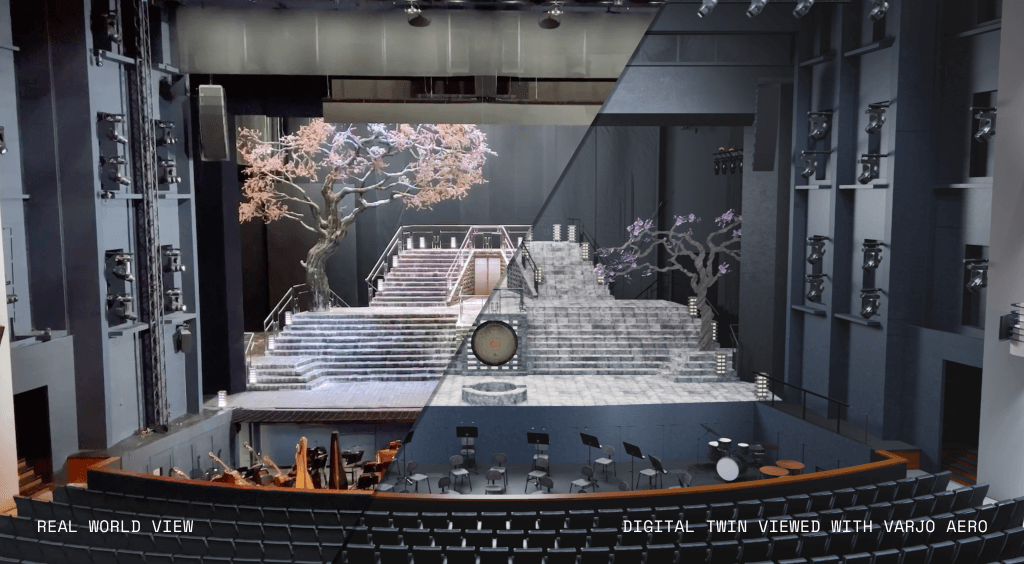
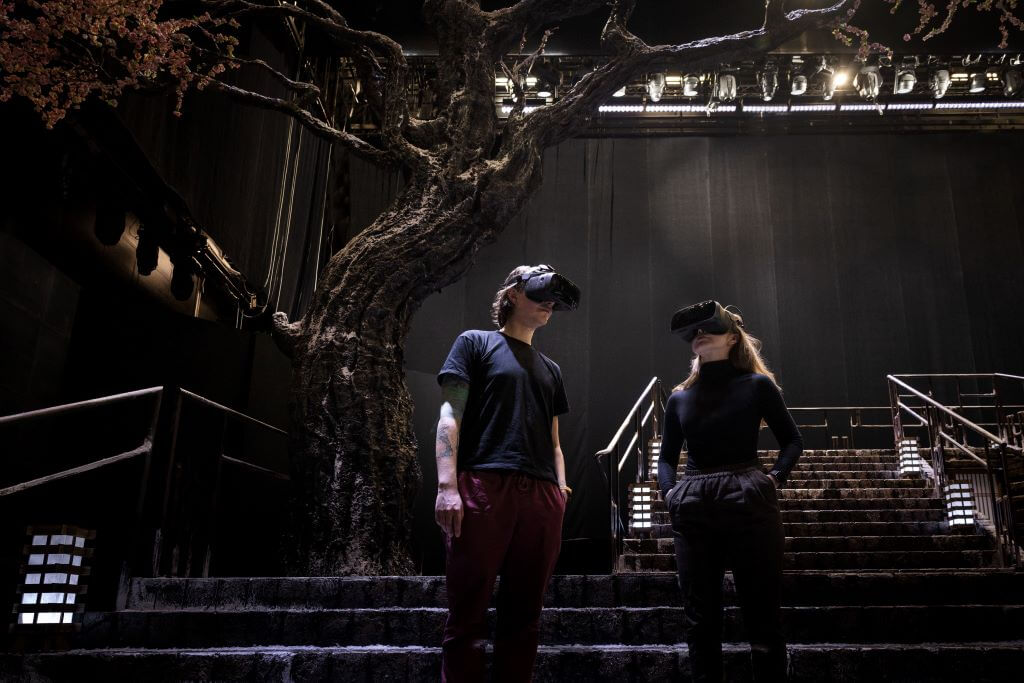
The Finnish National Opera and Ballet (FNOB) spent two years producing Turandot opera with Sweden’s Malmö Opera. The ambitious international product involved designing complex sets and orchestrating intricate scene transitions. FNOB has commented before that Varjo is the only headset manufacturer that matches their high-quality requirements.

Varjo x FNOB and Sweden’s Malmö Opera - Digital Twin vs real-world comparison
Varjo partners with FNOB and Sweden’s Malmö Opera – Digital Twin vs real-world view comparison

FNOB, which has been gradually implementing XR production tools over the last three years, started with two things: the in-house Unreal Engine-driven “XR Stage” visualization tool, and a 3D model of the main stage created by ZOAN – a 3D content agency that uses the same hardware to bring employees into their virtual headquarters.

“Our artists were only open to using virtual tools if models would be photorealistic and it was an intuitive user experience,” FNOB Production and Technical Director Timo Tuovila, said in a release shared with ARPost. “We have been able to create a digital twin of our stage that actually is true to life, matching the expectations of our ambitious artistic and technical teams.”

The virtual stage was used collaboratively between the two opera houses to virtually design and redesign sets – a process that would normally have taken tremendous time, resources, and materials. It is estimated that using XR preproduction instead saved over $82,000 and 1,500 hours of production time, not to mention enhanced crew safety.

Varjo x FNOB and Sweden’s Malmö Opera.png
Varjo partners with FNOB and Sweden’s Malmö Opera for Turandot

This is the eighth FNOB production using XR preproduction, but this is the first time that they – or anybody – have used the technology at every step from proof-of-concept to final production, according to the release. It would be interesting to see XR also being used in recording and distributing live content at this level.

Twinmotion Programs Come to Varjo Devices

The virtual production of Turandot is a highly artistic example of using Varjo for architecture and design. That use case is about to get a big leg up as the company recently announced support for its hardware on Twinmotion. Users of the real-time visualization platform’s most recent update will be able to view its high-fidelity models on Varjo devices.

According to the hardware manufacturer, Twinmotion works with all headsets including Aero – the closest thing that the company offers to an entry-level headset. The headset, priced below the company’s other offerings but still within the almost exclusively enterprise range, comes without mandatory software subscriptions making compatibility with other solutions crucial.

Advancing Brain Health With MachineMD

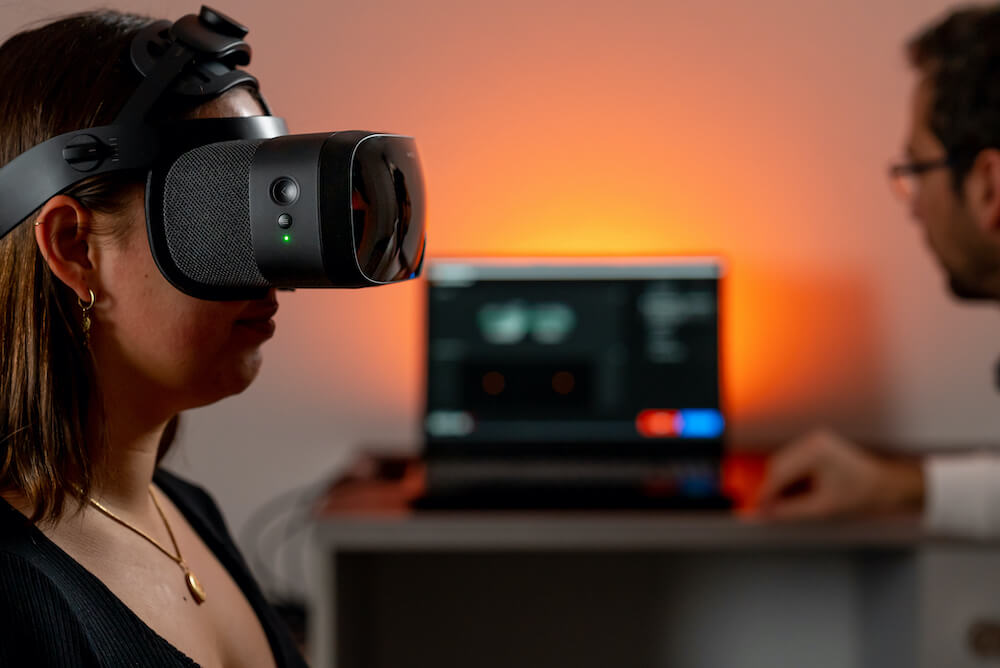
Aero also plays an important part in a partnership with Swiss medical device company machineMD. The partnership’s goal is the development of “neos™” – a proposed device that would use eye-tracking technology for earlier diagnosis of brain disorders. In addition to helping specialists, the device could also be more accessible to doctors that aren’t neuro specialists.

“As a neuro-ophthalmologist, I use the eye as a window to the brain,” said michineMD Medical Director Professor Mathias Abegg in a blog post announcing the partnership. “The Varjo Aero provides me with the most powerful and precise view through this window.”

Varjo and machineMD
machineMD’s solution will be based on Varjo Aero to perform comprehensive eye exams for the diagnosis of brain disorders

Between the advancement of the technology and healthy financial support, machineMD expects neos to be ready by the end of this year. Of course, Varjo is also excited to be a part of the important work which could have far-reaching benefits in the brain health world.

“VR-based eye tracking in combination with ophthalmology and neuroscience is opening up important new avenues for researchers and the larger medical community,” co-founder and CTO of Varjo, Seppo Aaltonen, said in the post. “A rare window into the brain is possible with the Varjo Aero headset and we are proud to partner with machineMD to make this technology a reality.”

Hardware Built for Flight Simulation

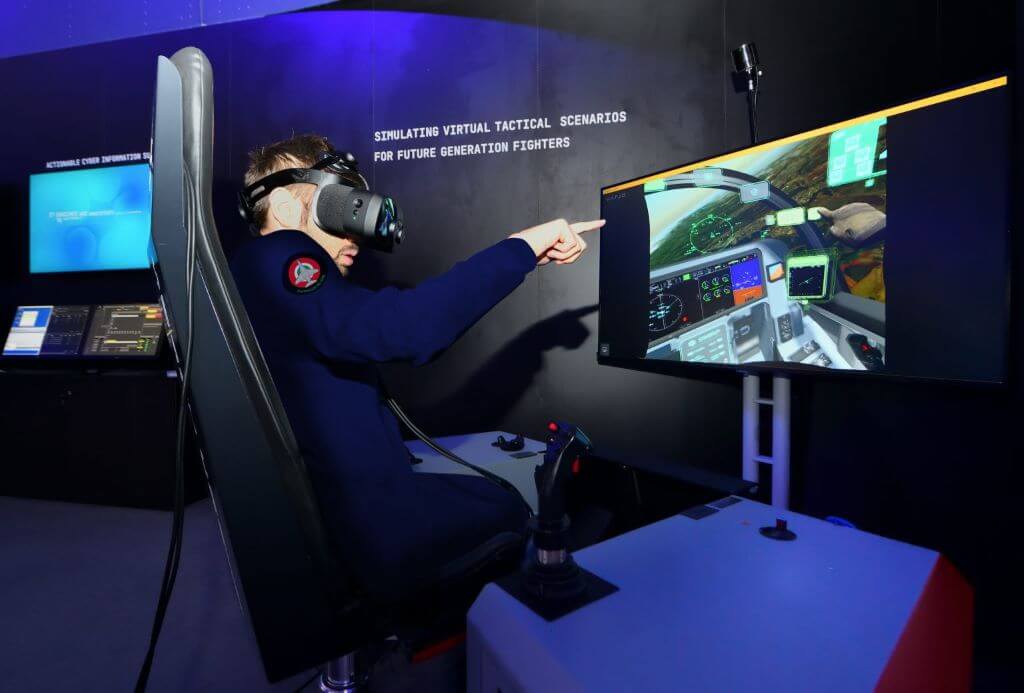
Varjo is also a leading player in the simulation world, particularly automotive and flight simulation. In fact, one of its premiere headsets, XR-3, was recently released in a specially-tooled edition with cockpit simulations in mind. The variable-passthrough headset has a specially calibrated focal plane to optimize the display of the user’s immediate surroundings.

More recently, Varjo partnered with Leonardo – an aerospace, defense, and security developer. The relationship is intended to “enhance the capability of Leonardo’s aircraft training devices.” The above-mentioned XR-3 Focal Edition headset is already being used.

Varjo and Leonardo
Varjo and Leonardo partner in developing and deploying immersive solutions for flight training

“Leonardo simulation and training experience, coupled with advanced Varjo technology, will allow our products to increase pilots’ training experience, bringing it into a more immersive environment, both within the specific customer training pipelines and within the scope of International Flight Training School,” said Leonardo Aircraft Division’s Head of Simulation and Training Systems Giuseppe Pietroniro.

Jumping Off of Virtual Cliffs

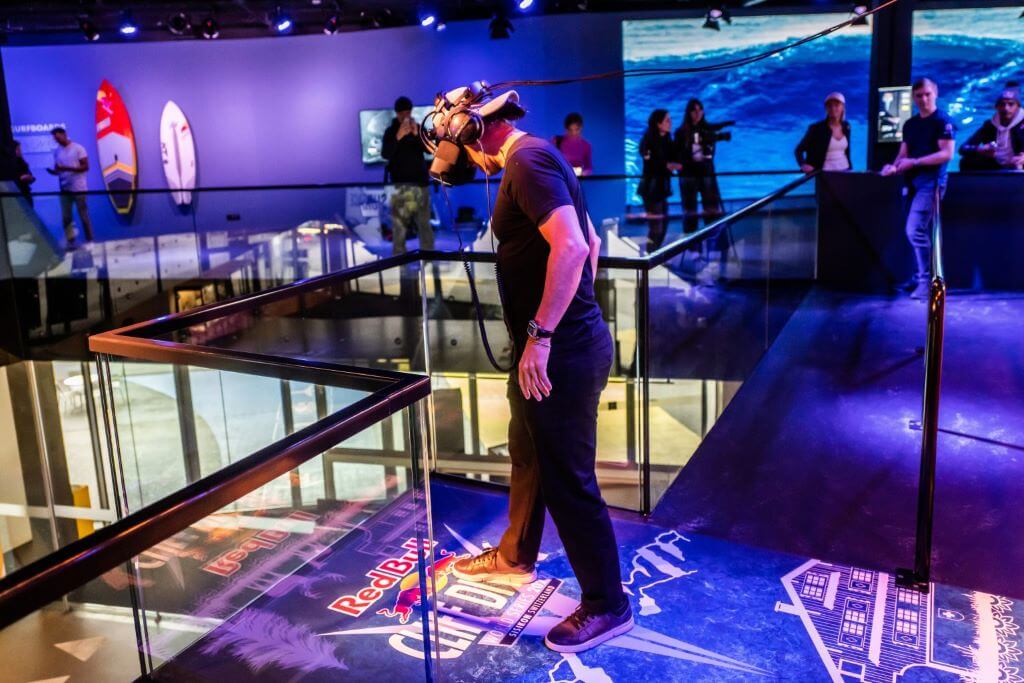
Simulation has a special place in the consumer space as well, where it allows individuals to experience convincing replications of activities that are costly, dangerous, or both. A recent experience offered by Varjo and Red Bull recreates diving from an 80 ft cliff.

“The VR cliff diving experience is really something that you cannot miss,” real-life cliff diver Orlando Duque said of the activation. “It places you right there in the location, in the middle of the action. It’s probably the closest thing to the real deal.”

Varjo and Red Bull - mixed reality watersports experience
Varjo and Red Bull partnership – Mixed reality watersports experience “Water – Breaking the Surface”

The experience is still not coming to a living room near you anytime soon. In addition to using the XR-3 rather than the more consumer-available Aero, the experience is currently only being offered as part of an exhibit at the Swiss Museum of Transport. The complete exhibit also uses AR technology and virtual production to replicate activities like surfing.

While available materials don’t mention plans for a more widely available version, it sure sounds like it would be a step up from Richie’s Plank Experience.

A Virtually Imagined Real World

Varjo is still pushing the limits of extended reality technology – and that means that a lot of its experiences and hardware aren’t available to just anybody. While some people get to put on the headset and jump off of a cliff, the benefits of the technology are definitely benefiting more and more people through the ramifications of work in design, defense, and the arts.

Catching Up With Varjo Partnerships and Experiences Around the World Read More »

get-ready-to-battle-in-space-with-valo-motion’s-latest-mr-game-release-astro-blade

Get Ready to Battle in Space With Valo Motion’s Latest MR Game Release Astro Blade

Last year, Valo Motion launched ValoArena, a mixed reality playground, in the US. Now, the company is back with an exciting MR game release – Astro Blade.

The Finnish game company, known for designing and developing cutting-edge interactive mixed reality games, has recently released a new space-themed game which can now be played in ValoArenas across the country. This interstellar adventure in a galaxy far, far away is sure to give you and your friends a thrilling time. So, get ready to take part in an action-packed battle in space and become a virtual superhero.

Blast Into Space With Valo Motion’s MR Game Astro Blade

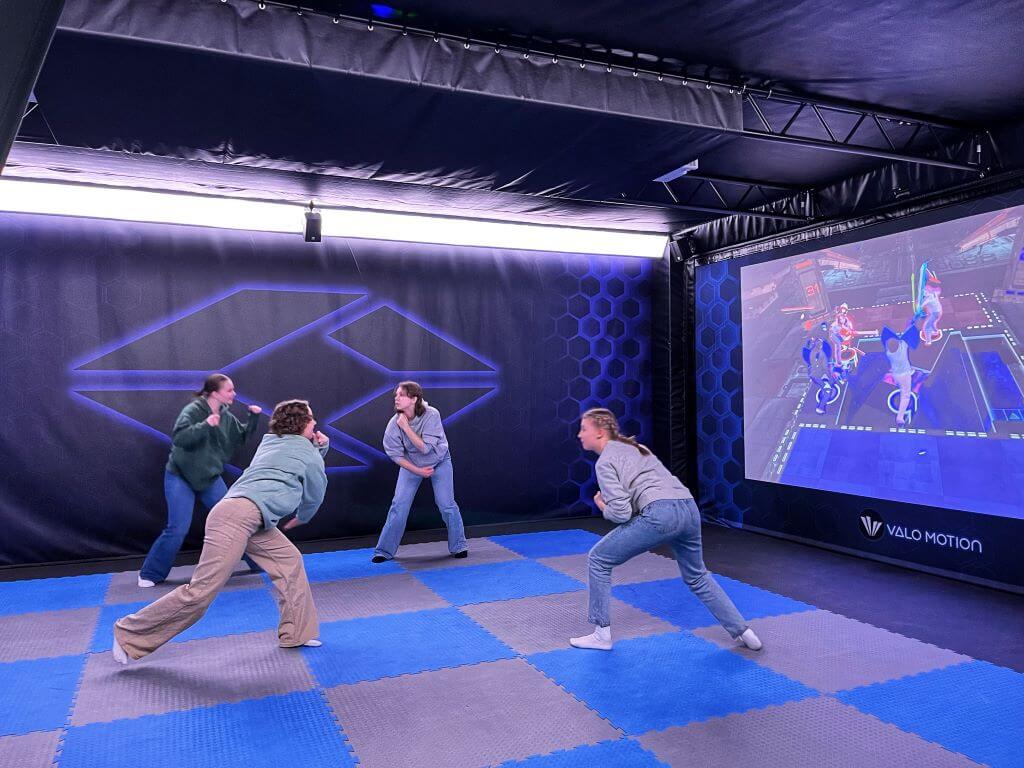
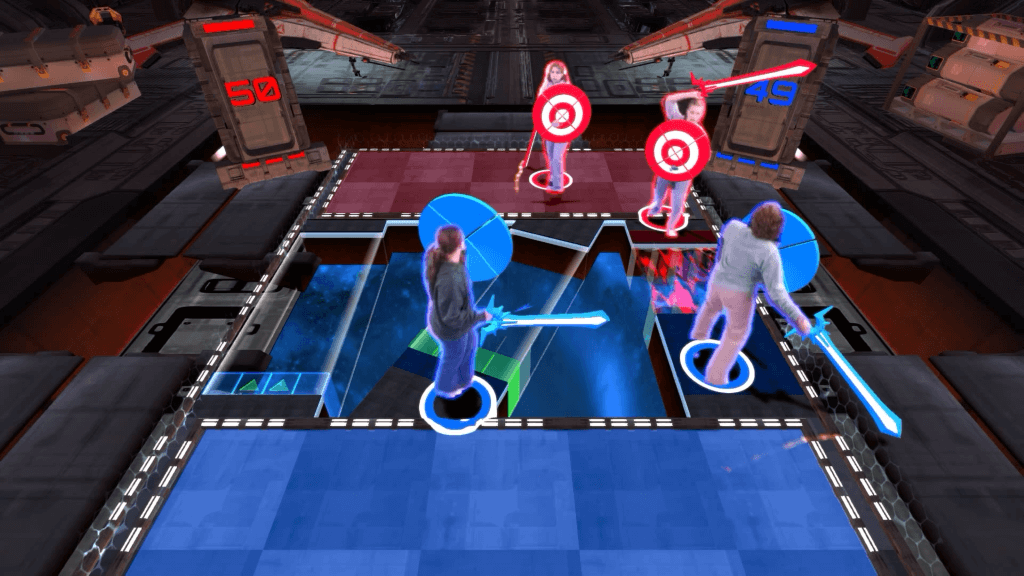
Step into the world of the company’s MR game Astro Blade, where players become virtual holograms fighting in the hangar of a futuristic spaceship. Players can arm themselves with laser swords or spears and protect themselves with shields.

The game is inspired by classic fighting games and space-themed classics like Star Wars lightsaber battles. But what sets it apart is the technology behind ValoArena that makes it possible to bring these classics to life in an entirely new way.

ValoArena’s mixed reality system allows players to fully immerse themselves in the game’s interstellar world, where they can battle against friends and foes alike. The technology accurately tracks players’ movements, making the experience incredibly lifelike and realistic. With stunning graphics, exciting sound effects, and interactive gameplay, Astro Blade is a unique experience.

A Social and Safe Game

Valo Motion’s MR game Astro Blade is designed for up to six people. It is suitable for 8 to 14-year-olds, but it can be enjoyed by both young and adults. Those who grew up wielding imaginary lightsabers as pretend Jedis would definitely love this game. The game company has also paid special attention to making the game safe for younger players, which makes the game great for families with diverse age segments.

Valo Motion - ValoArena MR game Astro Blade

The game is very social and interactive. The actions of other players directly affect what you should do next, making it an excellent addition to ValoArena’s game offerings for small groups. They want players to feel like superheroes in a fighting game and be able to come up with their special moves without limitations.

Where and How to Play Astro Blade

Astro Blade can be found in various locations worldwide where Valo Motion products are available. You can check out their interactive map to find the nearest ValoArena to your location.

According to the company, “Astro Blade is also a part of Valo Motion’s mission of empowering people to move more and be physically active but also have a lot of fun while doing it.  n Astro Blade the players use their entire body to play the game and an intense sword duel among friends is guaranteed to make them sweat!”

Astro Blade is designed to be an interactive and social game, so players can work together in teams or compete against each other. It’s a fun and exciting way to experience the latest in mixed reality gaming.

The Future of Gaming 

Astro Blade is a testament to the power of mixed reality and how it can bring classic gaming experiences to life in new and exciting ways. As the popularity of MR releases like Astro Blade continues to grow, we can expect to see them become an increasingly ubiquitous part of the gaming landscape.

Astro Blade MR game by Valo Motion - ValoArena

For players, MR offers a unique and interactive experience that allows them to socialize and have fun in a way that traditional gaming simply cannot match. And for amusement and entertainment centers, investing in MR technology can provide a competitive advantage by offering a cutting-edge gaming experience that attracts customers and keeps them coming back for more.

Looking to the future, it’s clear that MR is set to play an even bigger role in gaming. With advancements in technology, we can expect to see even more immersive and interactive experiences that blur the line between the real and virtual worlds.

So, whether you’re a gaming enthusiast or an amusement center owner looking to stay ahead of the curve, it’s clear that MR has its place in the future of gaming. It’s an exciting time to be a part of the gaming industry.

Get Ready to Battle in Space With Valo Motion’s Latest MR Game Release Astro Blade Read More »

meta-drops-quest-pro-price-to-$1,100-for-limited-time,-challenging-vive-xr-elite’s-major-selling-point

Meta Drops Quest Pro Price to $1,100 for Limited Time, Challenging Vive XR Elite’s Major Selling Point

It’s only been three months since Meta launched Quest Pro, pitching its next-gen mixed reality standalone to enterprise and prosumers with the hefty price tag of $1,500. In an unusual move by the company, Meta has quietly slashed the price of Quest Pro for a limited time, putting it more directly in competition with HTC’s recently revealed Vive XR Elite standalone headset.

Update (11AM ET): Sale timing has been revealed; the price drop is in effect for one week only in the US, and two weeks in the UK (dropping to £1,300). We’ve included this in the body of the article below.

Released in late October, Quest Pro essentially set the tone of the next generation of standalone VR hardware. Typically, Meta is consumer-forward, pricing its headsets below (or close to) $500, but Quest Pro represents a pivotal shift in Meta’s strategy.

Starting with Quest Pro, the company is using mixed reality as “a key part of the journey toward full augmented reality devices,” Chief Technology Officer and Reality Labs Chief Andrew Bosworth described in a year-end blogpost.

Quest Pro | Image courtesy Meta

With the sale, it seems the company is quietly gunning to retain its share of the budding MR headset marketplace by knocking the price of Quest Pro to match its largest competitor, Vive XR Elite, which HTC revealed earlier this month, couching it as its long-awaited return to the consumer VR space.

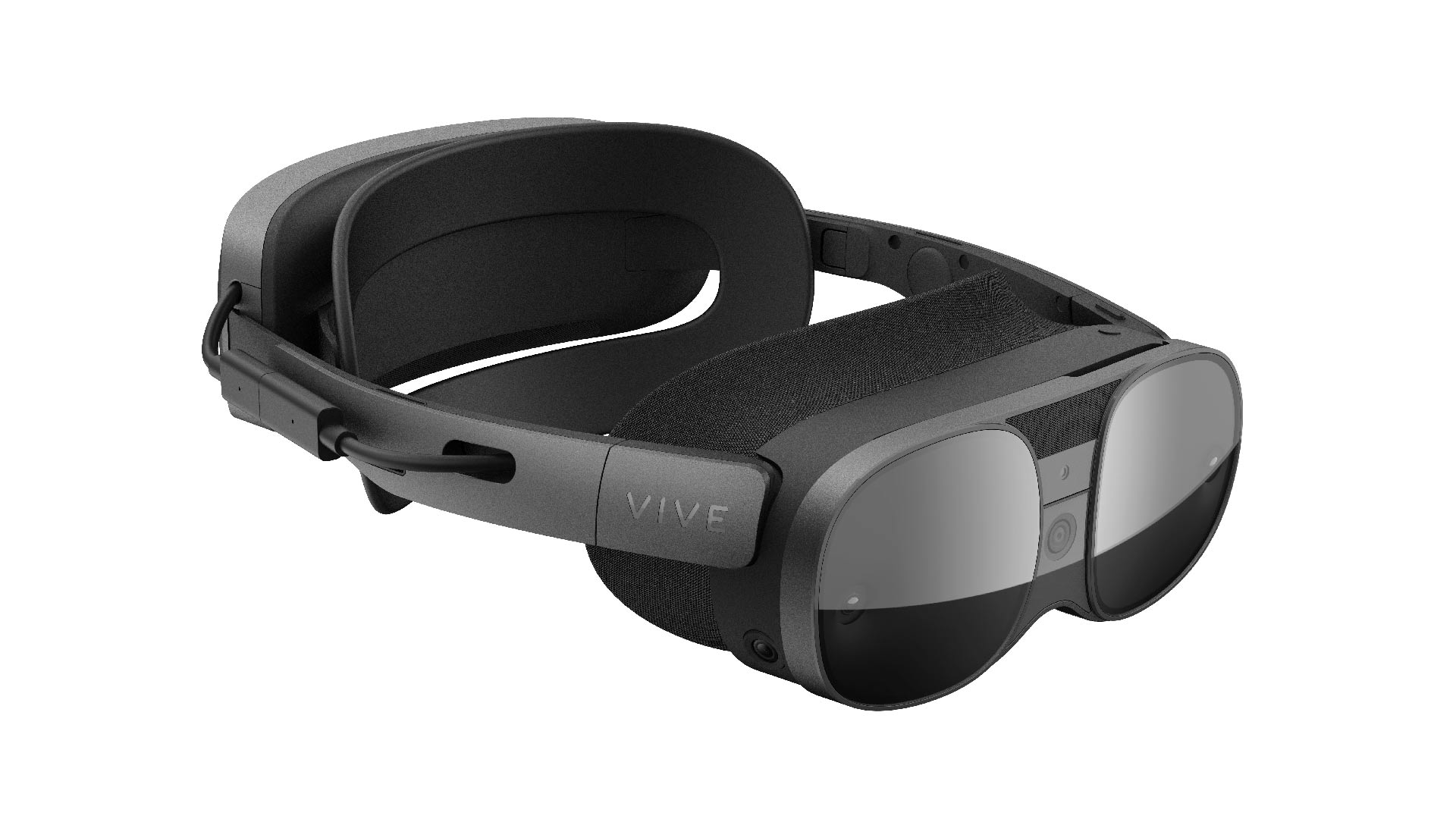
Vive XR Elite | Image courtesy HTC

Now, Meta’s Quest Pro is priced at $1,100, or $400 below its previous MSRP, challenging Vive XR Elite’s unique selling points in the process. According to CNET, the sale is happening for one week only in the US, and two weeks in the UK (dropping to £1,300).

Notably, these aren’t entirely analogous devices; some hardware quirks might act as key differentiators, although the undeniable overlap now puts them squarely in direct competition. Still, it’s pretty close.

Here’s a quick breakdown of the headset specs side-by-side:

Feature

Vive XR Elite

Quest Pro

Inside-out tracking wide FOV cameras (4), depth sensor (1) wide FOV cameras (4), no depth sensor
Passthrough single 16 MP RGB camera single RGB (MP?) camera
Resolution 1,920 × 1,920 per eye (LCD) 1,800 × 1,920 per eye (LCD)
Display Refresh 90 Hz 90 Hz
Eye-tracking Additional module required Onboard eye-tracking
Face-tracking Additional module required Onboard face-tracking
Chipset Qualcomm Snapdragon XR2 Qualcomm Snapdragon XR2+
Storage & Memory 128 GB / 12 GB 256 GB / 12 GB
FOV up to 110-degrees diagonal up to 96-degrees diagonal
Optics Pancake lens Pancake lens
IPD Adjustment manual, 54–73 mm range manual, 55-75 mm
Audio built-in open-ear audio built-in open-ear audio, 3.5mm audio port
Weight 625g (including battery), 273g in ‘glasses’ mode 722 g (including battery)
Controllers 6DOF motion controllers (2), hand-tracking 6DOF motion controllers (2), hand-tracking
Playtime on battery ~2 hours ~2 hours
Retail Price $1,099 $1,099 (MSRP $1,499)

A raw spec sheet doesn’t exactly tell the full story, although it’s clear HTC will need to play catchup if it intends on remaining competitive with Meta now that both headsets have achieved price parity, albeit temporarily. Vive XR Elite is still in pre-order, with a late February shipping window, while Quest Pro is available today, direct from Meta.

In Vive XR Elite’s favor is its convertibility: the traditional battery headstrap can be replaced with a glasses arm piece, which allows it to be used with an external powerbank for more casual content viewing, like watching a film in your own private theater whilst on a plane or train.

It’s a unique selling point, although the lack of 3.5mm sours this somewhat, as you’ll need to use Bluetooth headphones to watch anything if you want complete privacy in a public space. Still, the focus on every day, on-the-go use sets it apart from Quest Pro. On the flipside, Quest Pro however features both eye and face-tracking out of the box, something Vive XR Elite will gain in the future with the release of separate modules.

Hardware aside, Meta undoubtedly has a leg up with its content ecosystem, as all games designed for Quest 2 automatically support Quest Pro—that’s a lot of content out of the box in addition to the admittedly smallish drip of mixed reality experiences already on the Quest Store.

Meanwhile, HTC is still amassing games for its growing content library, which currently doesn’t boast any truly notable exclusives that might make you choose one headset over the other. Notably, HTC also openly refutes it will sell personal user data since it’s not a social media company—a clear shot across the bow at Meta’s spotty track record in user privacy and security.

“What’s the cost of your personal data? We’re not a social media company. Our business model doesn’t rely on advertising revenue, so it’s not something we’re doing. We want to build good hardware.” – @shen

Learn more: https://t.co/IC7JOWmfzE#VIVEXRElitehttps://t.co/GXJWQo0lrH

— HTC VIVE (@htcvive) January 19, 2023

The list of differences doesn’t end there. If you want to learn more about Quest Pro and Vive XR Elite, check out our in-depth hands-on articles with both headsets.

Meta Drops Quest Pro Price to $1,100 for Limited Time, Challenging Vive XR Elite’s Major Selling Point Read More »

gigxr-continues-content-rollouts-and-partnerships

GigXR Continues Content Rollouts and Partnerships


GigXR creates and hosts some of the most mind-blowing educational experiences in what spokespeople call “the mediverse.” Through partnerships with some of the world’s best educational institutions and the world’s most innovative technology companies, the company is helping to bring medical education into the 21st century.

Catching Up With GigXR

GigXR was founded three years ago specifically to take on XR projects from textbook publisher Pearson. By partnering with other creators to host a variety of content, the platform is still like a publishing house of sorts, but a bit more interesting. No offense, Pearson.

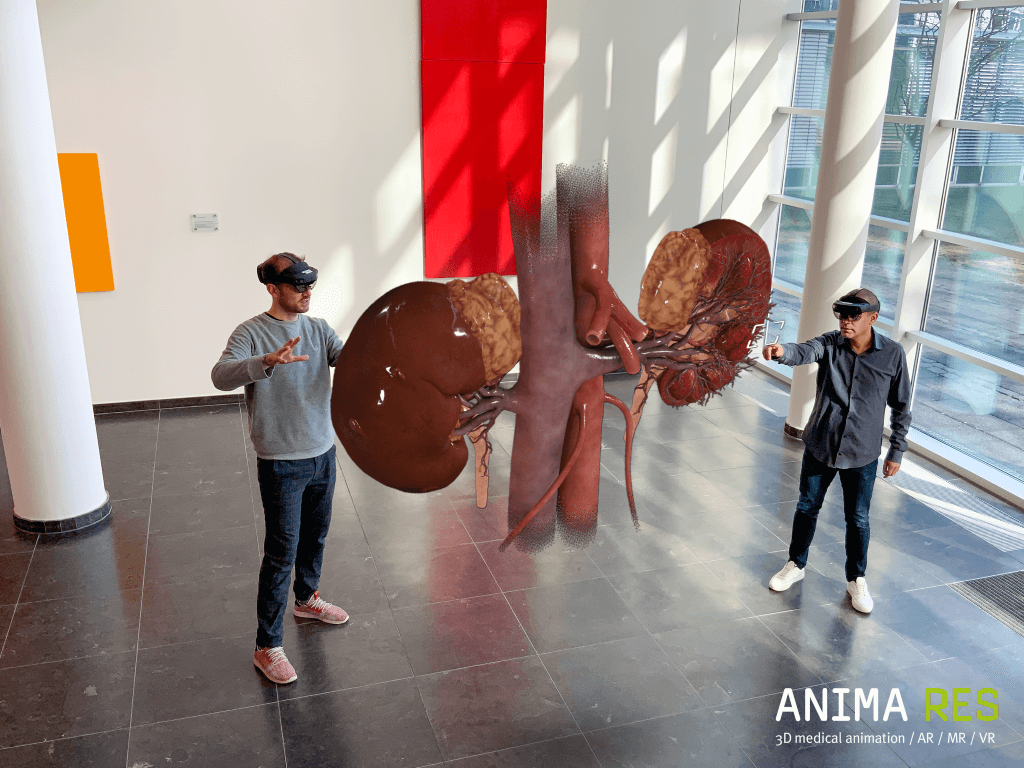
The last time ARPost caught up with GigXR was back in May when the company announced a partnership with ANIMA RES, a 3D medical animation company. The partnership added the Insight Series by ANIMA RES content to their library, which already hosted content from Pearson, Microsoft, and medical universities like Cambridge and the University of Michigan.

Insight works kind of like a product configurator, but instead of changing the color of a virtual car, you’re increasing the stroke volume of a holographic heart, or decreasing the respiratory rate of a holographic lung. Don’t worry, there’s a fresh update from the ANIMA RES series too, we’ll get to that. But first, let’s step back to a developing story from this summer.

The HoloScenarios Mixed Reality App

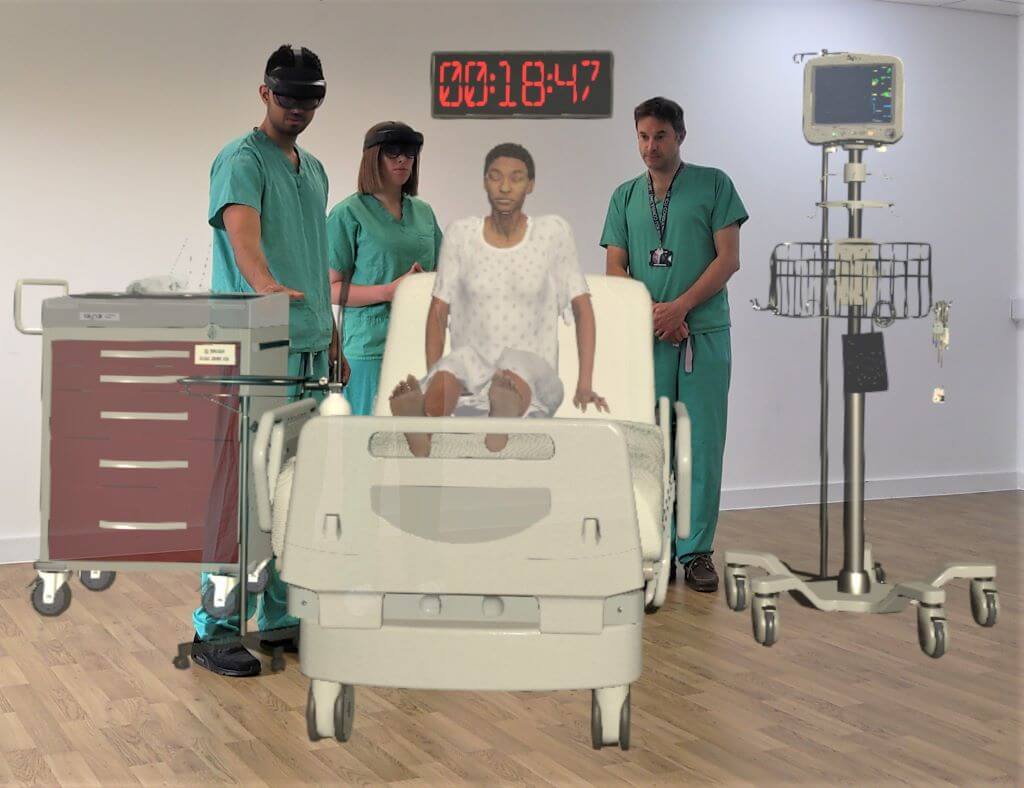
This June, GigXR released a mixed reality app HoloScenarios. For the first module, called HoloScenarios: Respiratory module, the company partnered with the University of Cambridge and Cambridge University Hospitals NHS Foundation Trust. This module sees trainees (from med students to veteran care providers) gathered around a virtual patient undergoing very real conditions like asthma, pneumonia, or a pulmonary embolism.

GigXR - HoloScenarios module Basic Life Support

“Empowering instructors with 360-degree preparation for clinical practice represents a milestone for GigXR that allows us to provide our customers with a library of applications that offers solutions for students from their first courses to continuing education,” company founder, David King Lassman, said in a release shared with ARPost.

The trainees must then not only diagnose the condition, but interact with holographic medical tools to stabilize their virtual patient.

“With HoloScenarios, we’re helping to evolve education from a mentorship-based model to one where students around the world can have equal access to top-flight expertise for mastering invention-based clinical skills,” Cambridge University Health Partnership Director of Postgraduate Education, Arun Gupta, said in the release.

Since then, an additional HoloScenarios module, simulating basic life support, has been released in collaboration with a subsidiary of Northwest Permanente P.C., Morlen Health. In partnership with the same institution, GigXR will, early next year, release HoloScenarios: Advanced Cardiac Life Support module, as well as HoloScenarios: Neurology module, created in collaboration with Michigan Medicine.

Further, as this article was being written, HoloScenarios was named one of the 200 best inventions of 2022 by TIME.

Insight Series Globally Available

In November, GigXR announced a massive availability expansion for the Insight Series, accessible through mixed reality headsets or Android or iOS mobile phones or tablets. The modules are now available to “medical schools, nursing schools, healthcare providers, and government and defense agencies worldwide,” according to a release shared with ARPost.

GigXR and ANIMA RES - Insight Kidney module

“Partnering with GigXR gives us the springboard to expand our geographic reach to match GigXR’s global footprint and get our market-leading content into the hands of educators and learners worldwide,” ANIMA RES CEO, Pablo Olmos, said in the release. “Together, we aim to give learners the best tools for success throughout training and clinical practice.”

Anatomy and Physiology Inside and Out

These announcements are both exciting, but become even more interesting discussed together. The ANIMA RES Insight Series help to get up-close and personal with the interior bodily conditions that can cause the external symptoms that trainees encounter and solve in the HoloScenarios. GigXR offers these and other modules in a tidy package.


GigXR Continues Content Rollouts and Partnerships Read More »

expressvpn-survey-explores-immersive-tech-in-the-workplace

ExpressVPN Survey Explores Immersive Tech in the Workplace


ExpressVPN has conducted a survey of 1,500 employees and 1,500 employers to learn about attitudes toward immersive work. Remote collaboration has been one of the biggest promises of immersive technology as it relates to work but employers seem to be more excited than employees. One potential reason: surveillance fears.

Who Wants to Work in the Metaverse?

Remote work was already trending upward before the pandemic. However, as more and more offices closed, remote work started to seem like part of the “new normal.” It was also an explosive opportunity for the immersive tech industry with many promoting the metaverse as the new office water cooler.

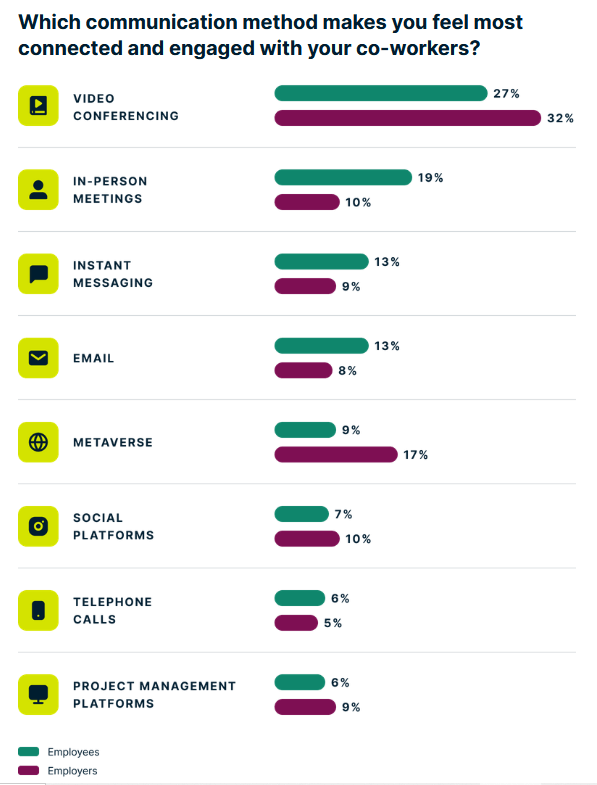
While immersive tech gained some traction during this period, video conferencing remains the standard alternative to in-person meetings. About a third of employees and almost as many employers who participated in the survey prefer video conferencing to in-person meetings.

As for immersive meetings, 17% of employers and only 9% of employees surveyed preferred them over other communication methods. So, metaverse was less popular than in-person meetings, video conferencing, instant messaging, and email among employees, but more popular than social media, phone calls, and project management platforms.

On the other hand, it’s interesting that metaverse was the second-preferred method of communication among employers, with video conferencing being the top pick.

Which communication method makes you feel most connected and engaged with your co-workers
Source: ExpressVPN

Why Not Bring Immersive Tech Into the Workplace?

Why the low numbers among employees? First, they aren’t that low. After all, project management platforms were literally designed for remote collaboration, and immersive tech beat them out. And better than the telephone? That’s pretty good for an emerging technology.

Another potential explanation is that most people still haven’t tried an immersive meeting. The survey report didn’t ask (or didn’t include) how many people have experienced a meeting in the metaverse.

While virtual office meetings are becoming more common, they’re still not part of most people’s work week. Further, these platforms are improving but a lot still have hiccups. Even those that work as intended aren’t what most people are used to, which can lead to a learning curve if not plain old friction.

However, the study also found that over half (57%) of polled employees and over three-quarters (77%) of polled employers are interested in immersive work. So, while not all employees are already convinced, a good number of them are at least curious.

There’s still one more reason that employees in particular aren’t sold on the metaverse for meetings. It’s actually a concern that they already have about more conventional remote work solutions.

Surveillance of employees working remotely is already fairly common practice, particularly in large businesses. Immersive technology platforms, particularly those incorporating VR hardware, offer more opportunities for surveillance. Employees seem largely convinced that more opportunity means more abuse.

Sixty-three percent of employees are concerned about data collection, and 61% about being monitored by their employer in the metaverse.

More than half of surveyed employees responded that they’re concerned specifically about real-time location (51%) and real-time screen monitoring (50%). To be fair, under 40% of employers surveyed said that they intended to use emerging technologies in these ways.

Okay, Boomer

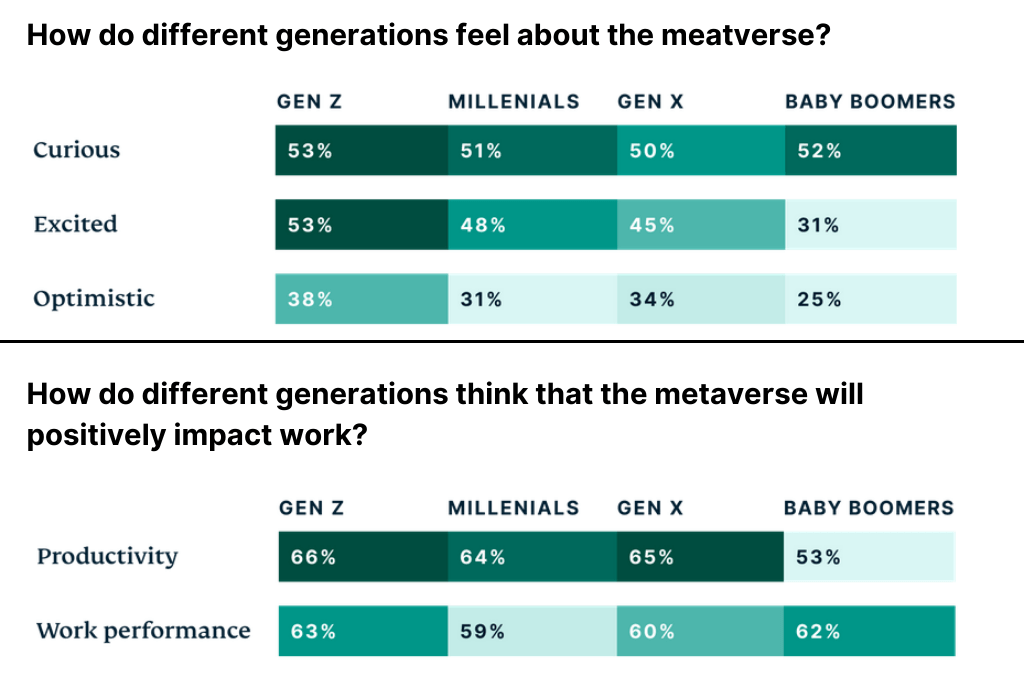
Digging too deep into what these numbers mean can be tricky for one more reason. Zany demographic information. Specifically, Boomers. To understand how confusing their responses are, one other piece of demographic information is required: Gen Z is typically the most supportive and least skeptical about the metaverse.

Boomers are the second most curious about the metaverse – they’re also the least excited and the least optimistic about it. They’re the least convinced that it will positively impact productivity but the second most convinced that it will positively impact work performance.

How do different generations feel about the meatverse and how do they think that the metaverse will positively impact work
Source: ExpressVPN

They’re the second least concerned about employee surveillance but the most concerned about overall digital privacy and security. Finally, they’re the most excited about remote collaboration and working remotely, but well under half of them think that immersive tech is the future of work.

Does any of that make sense to you? No? That’s a relief.

More Problems With Trust

There’s one more area worth looking at that helps to illustrate the complicated relationship between employees and immersive work. That has to do with trust. Sixty-one percent of respondents trust Microsoft, 58% trust Google, 57% trust Apple, and 36% trust Meta. Most have never heard of other immersive tech companies like Magic Leap and NVIDIA.

That said, Google and Apple are doing very little when it comes to (publicly) developing (the user side of) the metaverse for work. Meanwhile, the most trusted company (Microsoft) and the least trusted company (Meta) are working together on their immersive work strategies. The survey report suggests that this reflects a lack of information on service providers.

The survey report concludes by saying that employers should be wary that trust plays such a large role in adoption and employees – particularly those already familiar with workplace surveillance – just don’t trust employers with immersive technology in the workplace.

Why would employers care about the adoption of immersive technologies? They might not. But, if avoiding enhanced workplace surveillance means that employees work somewhere else, employers may want to think twice about how close an eye they keep on their talent.

The Future? Yes. Tomorrow? No.

Please do read the original survey for yourself. There was a lot in there that we didn’t cover here and there are places where you might be able to make more sense of it.

No matter how one reads the numbers, immersive tech may well be the future of work but it may not be the immediate future of work.

ExpressVPN Survey Explores Immersive Tech in the Workplace Read More »

how-active-games-can-make-you-healthy

How Active Games Can Make You Healthy


Video games have been blamed for sedentary lifestyles and social problems since early arcade games hit the streets in the 1970s. Throughout my career, from post-doctoral research to the company boardroom, I have made it my mission to change that perception and truly bring physical activity into the gaming industry.

The recipe is simple: By fully utilizing the capabilities of mixed reality technologies, we can make active, social, and fun gaming experiences that reward exercise. Combining the benefits of an active lifestyle with everything we love about video games, we can finally bury all the negative stereotypes for good.

The Pandemic Glued Us to the Couch

The COVID-19 pandemic was a tough time for many. A study by WHO found that the global prevalence of anxiety and depression increased by 25%. Especially young people found themselves cut off from their social networks. At the same time, interest in gaming skyrocketed.

When we were stuck in our houses, playing video games became one of few ways to spend time with friends and family. Studies undertaken after the pandemic show that people who played augmented reality games like Pokémon Go or Harry Potter: Wizards Unite were less likely to develop anxiety and depression. Another study showed that young people who played online games coped better with anxiety, depression, and stress related to lockdown measures.

Many of our gaming habits have stuck with us after restrictions were lifted. In the US, 56% of male and 47% of female respondents to a recent survey said they play video games as often as they did during the pandemic. Safe to say, gaming is here to stay.

Active Games Make People Active

While games are more popular than ever, we are facing another problem: Sitting down is the new pandemic. As much as 80% of the global underage population does not get enough weekly exercise. The average American sits more than 6.5 hours daily, and it’s even worse in the UK at over 9 hours. Yet we have to acknowledge that going for a run or to the gym is not for everyone. To include more people, we have to rethink what exercise could be.

Gamified exercise is the key. Active games have been around for a long time and are growing in popularity. The first dancing game with a floor pad launched in 1987, and by the late 90s, they were a feature at every arcade. All major consoles have featured active games since Playstation 2’s EyeToy. Yet, these games all share the same issue: they are primarily for one or two players, and the experience relies heavily on factors like additional controllers, having a good TV, or enough space in the living room.

Pokémon Go took on this challenge and made active gaming accessible. Players have to move around to progress and so they had no other choice than to take the dog for a walk or go to the park. Data from 2017 showed the number of active players that walked more than 10,000 steps per day had increased from 15% to 28% since the game launched. Using AR technology and mobile phones, inserting the game directly into the player’s surroundings made the gaming experience feel real.

So how do we build on the success of Pokémon Go? For me, the digitalization of theme parks, arcades, and activity centers, provides a fantastic opportunity to introduce MR active games to larger groups. Using immersive technology, we can create fun and challenging group gaming experiences that could never fit in our living rooms.

Active Games Are Social Arenas

Video games are social, and creating social games is also what MR systems do best. New, immersive, digital attractions are a great social way to inspire competition and get people moving. Friends can work out together, and you are free to move around in the game arena. Competing against real people in a mixed reality space where they can see, hear, touch, and talk to each other while playing takes the gaming experience to the next level.

As a social arena, gearless MR games have an advantage over their equipment-based VR cousins. By removing the need for mobile phones or headwear, we can create games that let you stay connected with your fellow players in the real world. The game truly becomes a challenge you face together. The sense of jeopardy is real, as are the interactions you have with other players.

MR technology also lets us create new, gamified activities for traditional sports venues such as gyms or climbing centers. By boosting the spread of MR gaming experiences, we can introduce healthy activity to more people and promote healthy living. I can think of no better use of technology.

Guest Post


How Active Games Can Make You Healthy Read More »