The Trump administration has renamed the National Renewable Energy Laboratory, now calling it the National Laboratory of the Rockies, marking an identity shift for the Colorado institution that has been a global leader in wind, solar and other renewable energy research.
“The new name reflects the Trump administration’s broader vision for the lab’s applied energy research, which historically emphasized alternative and renewable sources of generation, and honors the natural splendor of the lab’s surroundings in Golden, Colorado,” said Jud Virden, laboratory director, in a statement.
He did not specify what this “broader vision” would mean for the lab’s programs or its staff of about 4,000.
The renaming is the latest in a series of actions by the Trump administration to deemphasize or cut the parts of the federal government that support renewable energy, while also expanding federal support for fossil fuels.
Asked for details, the Department of Energy said in an email that the renaming “reflects the Department’s renewed focus on ‘energy addition’ rather than the prioritization of specific energy resources.”
A lab spokesman had no additional information about whether there will be changes to programs or headcount at the lab.
Bill Ritter, a Democrat who was governor of Colorado from 2007 to 2011, said it’s reasonable to assume that the name change signals that the federal government is abandoning the lab’s status as a world leader in energy research.
“It’s an iconic research facility,” he said.
Underscoring this point, he recalled a trip to Israel while he was governor.
“The head of their renewable energy laboratory said, ‘I have nothing to tell you because you come from the place that has the best renewable energy laboratory in the world,’” Ritter said.
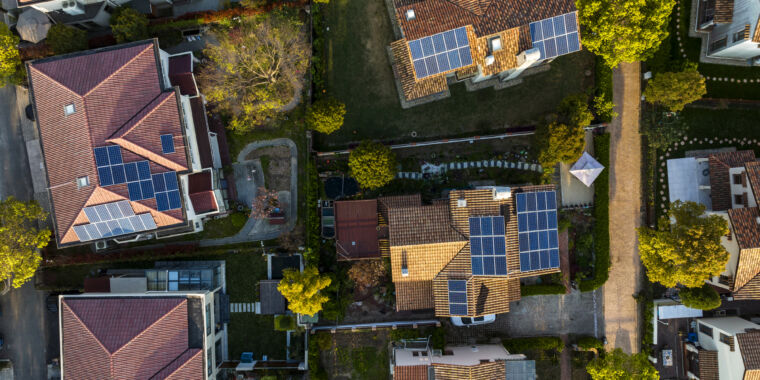
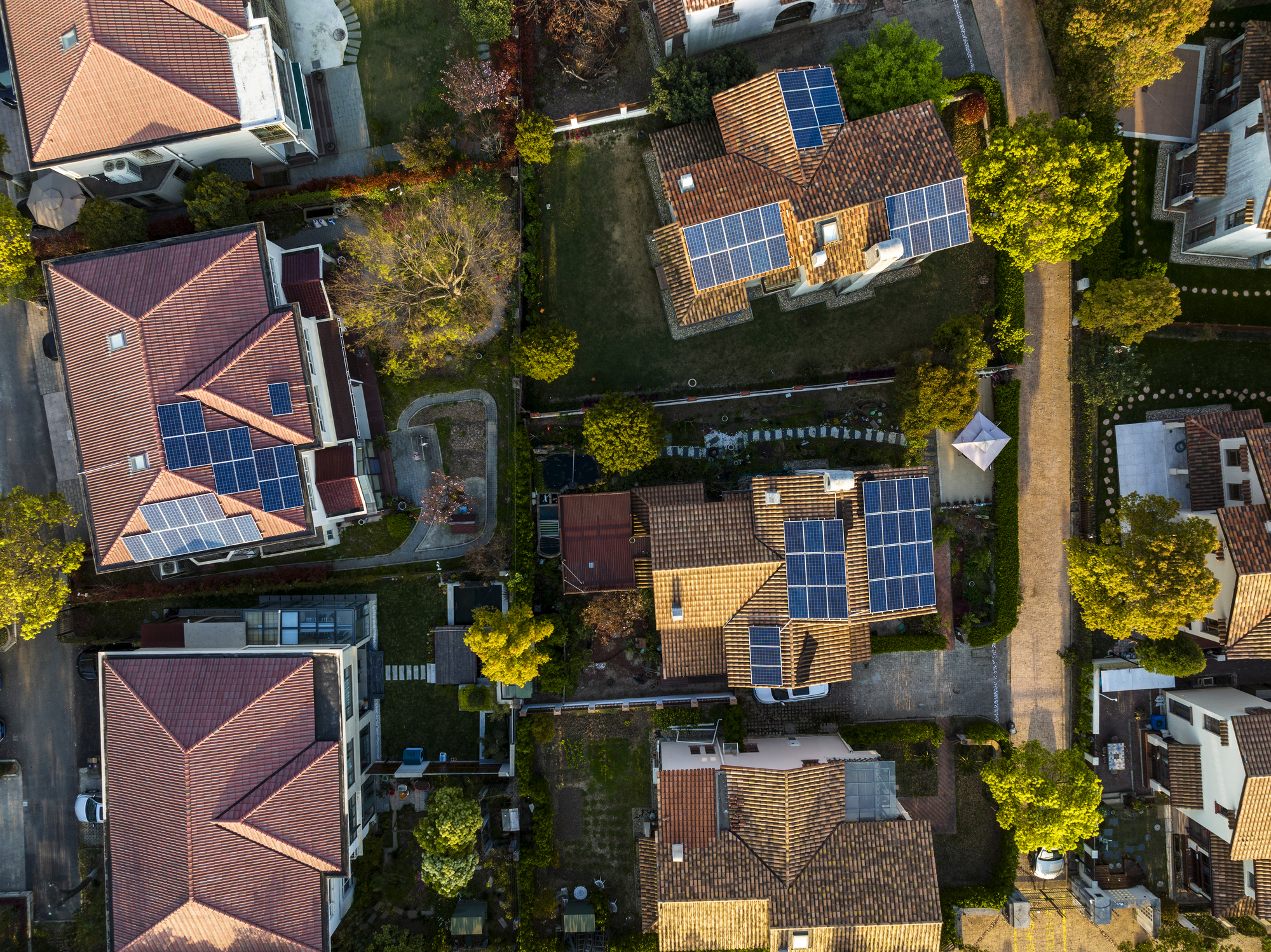
Enlarge/ NREL has taken some of the hassle out of getting permits for projects like these.
Can government agencies develop software to help cut bureaucratic red tape through automation? The answer is “yes,” according to the promising results achieved by the National Renewable Energy Laboratory (NREL), which has saved thousands of hours of labor for local governments by creating a tool called SolarAPP+ (Solar Automated Permit Processing Plus) for residential solar permits.
“We estimate that automatic SolarAPP+ permitting saved around 9,900 hours of… staff time in 2022,” NREL staff wrote in the report, “SolarAPP+ Performance Review (2022 Data). “Based on median timelines, a typical SolarAPP+ project is permitted and inspected 13 business days sooner than traditional projects… SolarAPP+ has eliminated over 134,000 days in permitting-related delays.”
SolarAPP+ automates over 100 compliance checks in the permitting process that are usually the responsibility of city, county, or town employees, according to Jeff Cook, SolarAPP+ program lead at NREL and first author of the report. It can be more accurate, thorough, and efficient than a time-pressured local government employee would be.
Saving time and money
Sometimes, the cost of permitting can be higher than the cost of solar hardware, Cook said. It depends on the specifics of the project.
“We knew that residential rooftop solar volume was increasing across the country,” Cook said. “It took us… 20 years to get to a million PV installations. And I think we got to 2 million PV installations just a few years later. And so there’s a lot of solar volume out there. And the problem is that each one of those systems needs to be reviewed for code compliance. And so if you need a human to review that, you’ve got a million applications.”
“When regulations make it unnecessarily difficult for people to quickly install solar and storage systems, it hurts everyone,” said Senator Scott Wiener (D-Calif.) in a press statement. “It hurts those who want to install solar. And it hurts communities across California, which are being negatively impacted by climate change. We need to make it easier for people to use renewable energy—that’s just a no-brainer. Expediting solar permitting is something we can do to make this a reality.”
A coalition of stakeholders from the solar industry, the US Department of Energy, and the building code-development community requested that NREL develop the software, Cook said. The organizations represented included UL Solutions and the Interstate Renewable Energy Council. (UL Solutions is a company that addresses a broad range of safety issues; initially, it focused on fire and electrical safety.)
“What we identified is the community need for the software and we identified that there was a gap in the private sector,” Cook said. “There was no incentive to do it from any active members of the private sector, but a real potential opportunity or value to the public good if such a software existed and was publicly available and free for a local government to adopt.”
Cook estimates that hundreds of thousands of hours in plan review time would have been required to manually approve all of the residential solar permits in the United States in recent years. Approving a permit for a residential solar project can take local government staff 15 minutes to an hour, and around 30 percent of the applications are later revised.
A flood of applications
“It just inundates the staff with work that they have to do,” Cook said.
“We are seeing about 750 residential requests over the past 12 months, which is about double the number of applications we saw two years ago,” said Kate Gallego, mayor of Phoenix, at the SolarAPP+ Industry Roundtable. “When I ask people in industry what we can do to speed up deployment of solar, they ask, ‘Can you do permitting faster?’ We’re at about 30 days now. We want to get that permitted as fast as possible, but we don’t want to sacrifice safety, and we want to make sure we’re not just doing it quickly, but well. That’s why this partnership was very attractive to me.”
Up to five separate departments may review the permits—the ones that oversee structural, electrical, fire, planning, and zoning decisions, Cook said.
“There’s usually a queue,” Cook said. “Just because it takes the jurisdiction only 15 minutes to review doesn’t mean that you send it to them today—they review it an hour later and get back to you. The average is, across the country, a seven-day turnaround, but it can be 30 days plus. It really varies across the country depending on how much volume of solar is in that space.”