Policy

us-judge-blocks-ohio-republicans’-“troublingly-vague”-social-media-law

US judge blocks Ohio Republicans’ “troublingly vague” social media law

A boy's hands holding an iPhone showing the icons of various social media apps including YouTube, Facebook, X, TikTok, and Instagram.

Getty Images | Matt Cardy

A federal judge blocked an Ohio state law that would prevent minors from using social networks without parental consent, calling it a “troublingly vague” law that likely violates the First Amendment. Ohio’s “Parental Notification by Social Media Operators Act” affects websites including Facebook, X (formerly Twitter), and YouTube.

“Foreclosing minors under sixteen from accessing all content on websites that the Act purports to cover, absent affirmative parental consent, is a breathtakingly blunt instrument for reducing social media’s harm to children,” US District Judge Algenon Marbley wrote in an order issued Tuesday. “The approach is an untargeted one, as parents must only give one-time approval for the creation of an account, and parents and platforms are otherwise not required to protect against any of the specific dangers that social media might pose.”

While more in-depth arguments will be made later, Marbley called it “unlikely that the government will be able to show that the Act is narrowly tailored to any ends that it identifies.” Marbley, a judge in US District Court for the Southern District of Ohio, granted a motion for a temporary restraining order sought by tech-industry lobby group NetChoice. Marbley did not rule on NetChoice’s related motion for a preliminary injunction but scheduled a February 7 hearing on the injunction request.

The temporary restraining order was granted quickly, as NetChoice sued to block the law on January 5. The state law was due to take effect on January 15, but the temporary restraining order will preserve the status quo while the motion for preliminary injunction is considered. A preliminary injunction would prevent the law from being enforced while the case goes to trial. The law was proposed by Gov. Mike DeWine, a Republican, and approved by the state’s Republican-majority legislature last year.

NetChoice is separately challenging Florida and Texas state laws that regulate social networks in a First Amendment case that the US Supreme Court agreed to hear. The Supreme Court is holding oral arguments on the Florida and Texas laws on February 26.

Ohio law fails to define key terms

The Ohio law purports to apply to websites that target children or are “reasonably anticipated to be accessed by children.” This “expansive language” makes it hard to determine exactly which websites are affected, the judge wrote.

“The Act provides an eleven-factor list that the Attorney General or a court may use to determine if a website is indeed covered, which includes malleable and broad-ranging considerations like ‘[d]esign elements’ and ‘[l]anguage.’ All of the listed considerations are undefined,” Marbley wrote.

Moreover, the law has what Marbley called “an eyebrow-raising exception for ‘established’ and ‘widely recognized’ media outlets whose ‘primary purpose’ is to ‘report news and current events.'” Marbley wrote that the law “provides no guardrails or signposts for determining which media outlets are ‘established’ and ‘widely recognized.’ Such capacious and subjective language practically invites arbitrary application of the law.”

DeWine said he was disappointed by the court’s ruling “and hope[s] it will be lifted as the case further proceeds so these important protections for children can take effect.” Ohio Lt. Governor Jon Husted said that Big Tech companies “were included in the legislative process to make sure the law was clear and easy to implement” but “were disingenuous participants in the process and have no interest in protecting children.”

“The negative effects that social media sites and apps have on our children’s mental health have been well documented, and this law was one way to empower parents to have a role in their kids’ digital lives,” DeWine said.

In a statement praising the judge’s ruling, NetChoice said the Ohio law “violates constitutional rights and rips away a parent’s authority to care for their child as they find appropriate.”

Ohio Attorney General Dave Yost hasn’t submitted a written response to the NetChoice lawsuit yet, but the state made arguments during a conference on January 8. Ohio “seeks to cast the Act—and this case—as not about the First Amendment, but about the right to contract,” Marbley wrote. “At the Rule 65.1 conference, Defendant’s counsel explained that any effect that the Act has on First Amendment rights is incidental to its primary purpose, which is to require parental consent before minors under the age of sixteen enter into contracts with the operators to which the Act applies.”

US judge blocks Ohio Republicans’ “troublingly vague” social media law Read More »
amazon-lays-off-500-twitch-employees,-hundreds-more-at-mgm-and-prime-video

Amazon lays off 500 Twitch employees, hundreds more at MGM and Prime Video

More Amazon layoffs —

Twitch reportedly still unprofitable, paid over $1 billion to streamers in 2023.

Twitch logo displayed on a phone screen.

Getty Images | NurPhoto

Amazon today is laying off 500 employees at Twitch and several hundred more at its MGM and Prime Video divisions, the company announced. The 500 job cuts at Twitch reportedly amount to 35 percent of the game-focused live-streaming platform’s staff.

Twitch CEO Dan Clancy announced the cuts in a blog post and email to staff. “As you all know, we have worked hard over the last year to run our business as sustainably as possible. Unfortunately, we still have work to do to rightsize our company and I regret having to share that we are taking the painful step to reduce our headcount by just over 500 people across Twitch,” Clancy wrote.

Twitch is reportedly still unprofitable nine years after Amazon acquired it. Meanwhile, Senior VP of Prime Video and Amazon MGM Studios Mike Hopkins sent a memo to staff announcing the elimination of “several hundred roles across the Prime Video and Amazon MGM Studios organization.”

Amazon is also aiming to boost Prime Video revenue by showing ads to viewers unless they pay an extra $2.99 per month on top of their Amazon Prime subscription. Amazon completed an $8.5 billion acquisition of MGM in March 2022.

Amazon’s latest quarterly earnings report was issued in October. The company said its net sales “increased 13 percent to $143.1 billion in the third quarter.” Amazon’s net income rose to $9.9 billion in Q3 2023, compared to $2.9 billion in Q3 2022.

Amazon declined to answer specific questions about the layoffs but provided Ars with a copy of Hopkins’ memo. The Prime Video and MGM division has “identified opportunities to reduce or discontinue investments in certain areas while increasing our investment and focus on content and product initiatives that deliver the most impact,” Hopkins wrote.

Amazon previously cut 27,000 jobs

Amazon already cut 27,000 jobs in the past year or so, including 400 at Twitch in March 2023. Amazon still had about 1.5 million full-time and part-time employees globally, excluding contractors and temporary personnel.

Previous job cuts included many roles in the Amazon hardware division that makes products, including Echo, Alexa, Fire, and Kindle devices. There were also cuts in Amazon Stores and human resources.

Clancy’s memo today said that despite previous cuts at Twitch, “it has become clear that our organization is still meaningfully larger than it needs to be given the size of our business. Last year we paid out over $1 billion to streamers. So while the Twitch business remains strong, for some time now the organization has been sized based upon where we optimistically expect our business to be in 3 or more years, not where we’re at today.”

Today’s Twitch cuts are about “sizing our organization based upon the current scale of our business and conservative predictions of how we expect to grow in the future,” he wrote. The Twitch employees being laid off include workers in the US, Canada, Brazil, Mexico, Singapore, and elsewhere.

Twitch recently announced plans to stop providing service in South Korea because “sending-party-pays” fees charged by network operators made it impossible to run without a significant loss in the country.

Hopkins’ memo about the Prime Video and MGM cuts said that “our industry continues to evolve quickly and it’s important that we prioritize our investments for the long-term success of our business, while relentlessly focusing on what we know matters most to our customers.”

Layoff notifications were scheduled to be sent to affected employees this morning. “Notifications will be sent out shortly, and we expect all notifications in the Americas to be completed this morning (Pacific time), and most other regions by the end of the week,” Hopkins wrote.

Amazon lays off 500 Twitch employees, hundreds more at MGM and Prime Video Read More »

sec-says-x-account-was-hacked-as-false-post-causes-bitcoin-price-swings

SEC says X account was hacked as false post causes bitcoin price swings

Premature announcement —

X says hacker had control over phone number associated with SEC account.

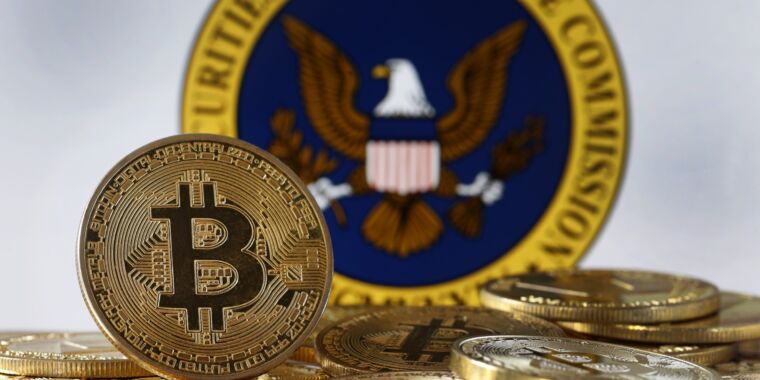
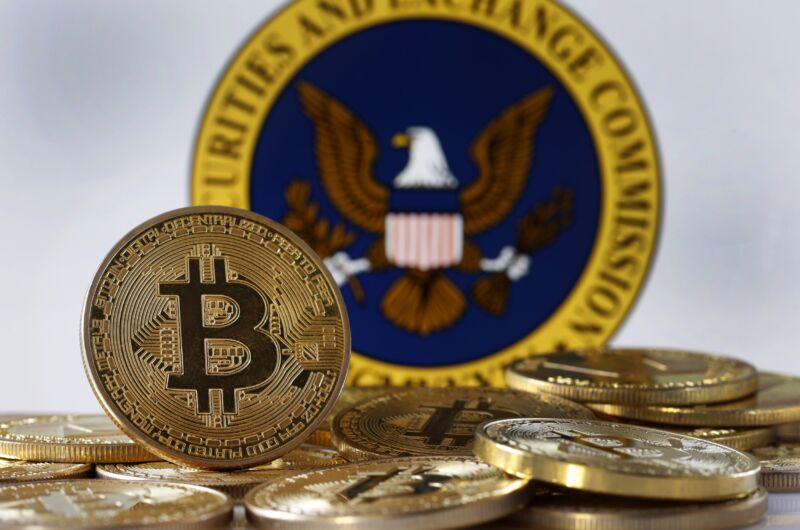
Gold coins with the bitcoin logo are pictured in front of the Securities and Exchange Commission seal.

Getty Images | Chesnot

The Securities and Exchange Commission’s X account was hacked yesterday and briefly displayed a post falsely announcing the approval of bitcoin exchange-traded funds (ETFs), causing an abrupt swing in bitcoin’s price.

“The @SECGov X account was compromised, and an unauthorized post was posted,” the SEC said after the hack. “The SEC has not approved the listing and trading of spot bitcoin exchange-traded products.” SEC Chair Gary Gensler also confirmed the hack and said the commission had not approved bitcoin ETFs.

While the incident highlighted ongoing concerns about the security of government or organizational accounts on X, the social network formerly named Twitter said in a post on its safety account that there was no breach of its systems.

“Based on our investigation, the compromise was not due to any breach of X’s systems, but rather due to an unidentified individual obtaining control over a phone number associated with the @SECGov account through a third party. We can also confirm that the account did not have two-factor authentication enabled at the time the account was compromised. We encourage all users to enable this extra layer of security,” X said.

We contacted the SEC and will update this article if it provides more detail on the hack and whether it plans to use two-factor authentication going forward. The SEC told other media outlets that it “will work with law enforcement and our partners across government to investigate the matter and determine appropriate next steps relating to both the unauthorized access and any related misconduct.”

Despite false post, SEC approval expected soon

Despite yesterday’s post being false, the SEC is expected to approve bitcoin ETFs soon. As Reuters wrote, “The posting came as the SEC was widely expected on Wednesday to finally approve a batch of ETFs that track the price of bitcoin, in a potential watershed moment for the crypto industry. The unauthorized post surprised the industry, with insiders scrambling to find out whether it was true and why the SEC would first publish something on social media.”

The now-deleted X post from @SECGov said, “Today the SEC grants approval for #Bitcoin ETFs for listing on all registered national securities exchanges. The approved Bitcoin ETFs will be subject to ongoing surveillance and compliance measures to ensure continued investor protection.” The post had an attached image with a quote from Gensler saying, “Today’s approval enhances market transparency and provides investors with efficient access to digital asset investments within a regulated framework.”

The post was followed quickly by a surge in bitcoin price, and then a drop after the SEC confirmed that the ETF approval had not happened. As CoinDesk wrote, “BTC first rallied 2.5 percent to a fresh 19-month high of $47,900… with crypto observers prematurely celebrating the landmark decision. Then, bitcoin sharply declined nearly 6 percent to as low as $45,100 when it turned out the SEC’s account was compromised and SEC Chair Gary Gensler denied the news.”

Bitcoin’s price has doubled in the past year. The Wall Street Journal says the rise over the past year was partly fueled by “the expectation that approval would fuel further purchases of digital currencies.” The expected approval of bitcoin ETFs would give ordinary investors more options for buying the cryptocurrency.

“For now, everyday investors who want to buy and sell digital currencies using traditional brokerages must use futures-based bitcoin ETFs, which use derivatives contracts to provide exposure to bitcoin price moves, or products traded in the lightly regulated over-the-counter market,” the WSJ wrote.

SEC says X account was hacked as false post causes bitcoin price swings Read More »

regulators-aren’t-convinced-that-microsoft-and-openai-operate-independently

Regulators aren’t convinced that Microsoft and OpenAI operate independently

Under Microsoft’s thumb? —

EU is fielding comments on potential market harms of Microsoft’s investments.

Regulators aren’t convinced that Microsoft and OpenAI operate independently

European Union regulators are concerned that Microsoft may be covertly controlling OpenAI as its biggest investor.

On Tuesday, the European Commission (EC) announced that it is currently “checking whether Microsoft’s investment in OpenAI might be reviewable under the EU Merger Regulation.”

The EC’s executive vice president in charge of competition policy, Margrethe Vestager, said in the announcement that rapidly advancing AI technologies are “disruptive” and have “great potential,” but to protect EU markets, a forward-looking analysis scrutinizing antitrust risks has become necessary.

Hoping to thwart predictable anticompetitive risks, the EC has called for public comments. Regulators are particularly keen to hear from policy experts, academics, and industry and consumer organizations who can identify “potential competition issues” stemming from tech companies partnering to develop generative AI and virtual world/metaverse systems.

The EC worries that partnerships like Microsoft and OpenAI could “result in entrenched market positions and potential harmful competition behavior that is difficult to address afterwards.” That’s why Vestager said that these partnerships needed to be “closely” monitored now—”to ensure they do not unduly distort market dynamics.”

Microsoft has denied having control over OpenAI.

A Microsoft spokesperson told Ars that, rather than stifling competition, since 2019, the tech giant has “forged a partnership with OpenAI that has fostered more AI innovation and competition, while preserving independence for both companies.”

But ever since Sam Altman was bizarrely ousted by OpenAI’s board, then quickly reappointed as OpenAI’s CEO—joining Microsoft for the brief time in between—regulators have begun questioning whether recent governance changes mean that Microsoft’s got more control over OpenAI than the companies have publicly stated.

OpenAI did not immediately respond to Ars’ request to comment. Last year, OpenAI confirmed that “it remained independent and operates competitively,” CNBC reported.

Beyond the EU, the UK’s Competition and Markets Authority (CMA) and reportedly the US Federal Trade Commission have also launched investigations into Microsoft’s OpenAI investments. On January 3, the CMA ended its comments period, but it’s currently unclear whether significant competition issues were raised that could trigger a full-fledged CMA probe.

A CMA spokesperson declined Ars’ request to comment on the substance of comments received or to verify how many comments were received.

Antitrust legal experts told Reuters that authorities should act quickly to prevent “critical emerging technology” like generative AI from being “monopolized,” noting that before launching a probe, the CMA will need to find evidence showing that Microsoft’s influence over OpenAI materially changed after Altman’s reappointment.

The EC is also investigating partnerships beyond Microsoft and OpenAI, questioning whether agreements “between large digital market players and generative AI developers and providers” may impact EU market dynamics.

Microsoft observing OpenAI board meetings

In total, Microsoft has pumped $13 billion into OpenAI, CNBC reported, which has a somewhat opaque corporate structure. OpenAI’s parent company, Reuters reported in December, is a nonprofit, which is “a type of entity rarely subject to antitrust scrutiny.” But in 2019, as Microsoft started investing billions into the AI company, OpenAI also “set up a for-profit subsidiary, in which Microsoft owns a 49 percent stake,” an insider source told Reuters. On Tuesday, a nonprofit consumer rights group, the Public Citizen, called for California Attorney General Robert Bonta to “investigate whether OpenAI should retain its non-profit status.”

A Microsoft spokesperson told Reuters that the source’s information was inaccurate, reiterating that the terms of Microsoft’s agreement with OpenAI are confidential. Microsoft has maintained that while it is entitled to OpenAI’s profits, it does not own “any portion” of OpenAI.

After OpenAI’s drama with Altman ended with an overhaul of OpenAI’s board, Microsoft appeared to increase its involvement with OpenAI by receiving a non-voting observer role on the board. That’s what likely triggered lawmaker’s initial concerns that Microsoft “may be exerting control over OpenAI,” CNBC reported.

The EC’s announcement comes days after Microsoft confirmed that Dee Templeton would serve as the observer on OpenAI’s board, initially reported by Bloomberg.

Templeton has spent 25 years working for Microsoft and is currently vice president for technology and research partnerships and operations. According to Bloomberg, she has already attended OpenAI board meetings.

Microsoft’s spokesperson told Ars that adding a board observer was the only recent change in the company’s involvement in OpenAI. An OpenAI spokesperson told CNBC that Microsoft’s board observer has no “governing authority or control over OpenAI’s operations.”

By appointing Templeton as a board observer, Microsoft may simply be seeking to avoid any further surprises that could affect its investment in OpenAI, but the CMA has suggested that Microsoft’s involvement in the board may have created “a relevant merger situation” that could shake up competition in the UK if not appropriately regulated.

Regulators aren’t convinced that Microsoft and OpenAI operate independently Read More »

fcc-plans-shutdown-of-affordable-connectivity-program-as-gop-withholds-funding

FCC plans shutdown of Affordable Connectivity Program as GOP withholds funding

Discounts on the way out —

FCC must start winding down low-income program as Congress fails to add money.

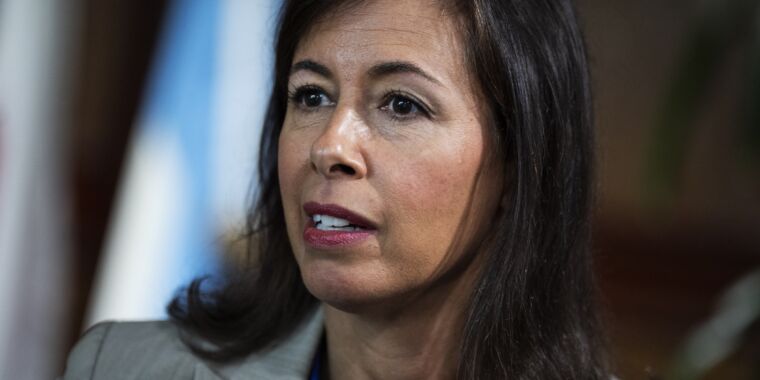
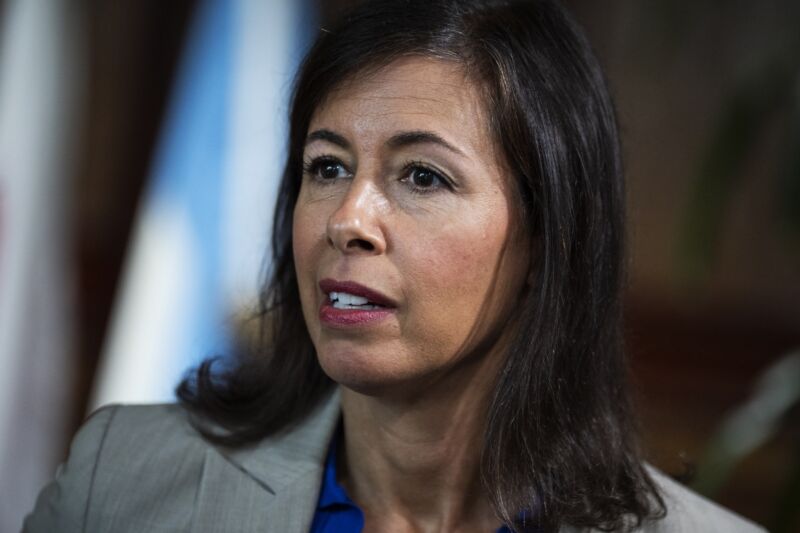
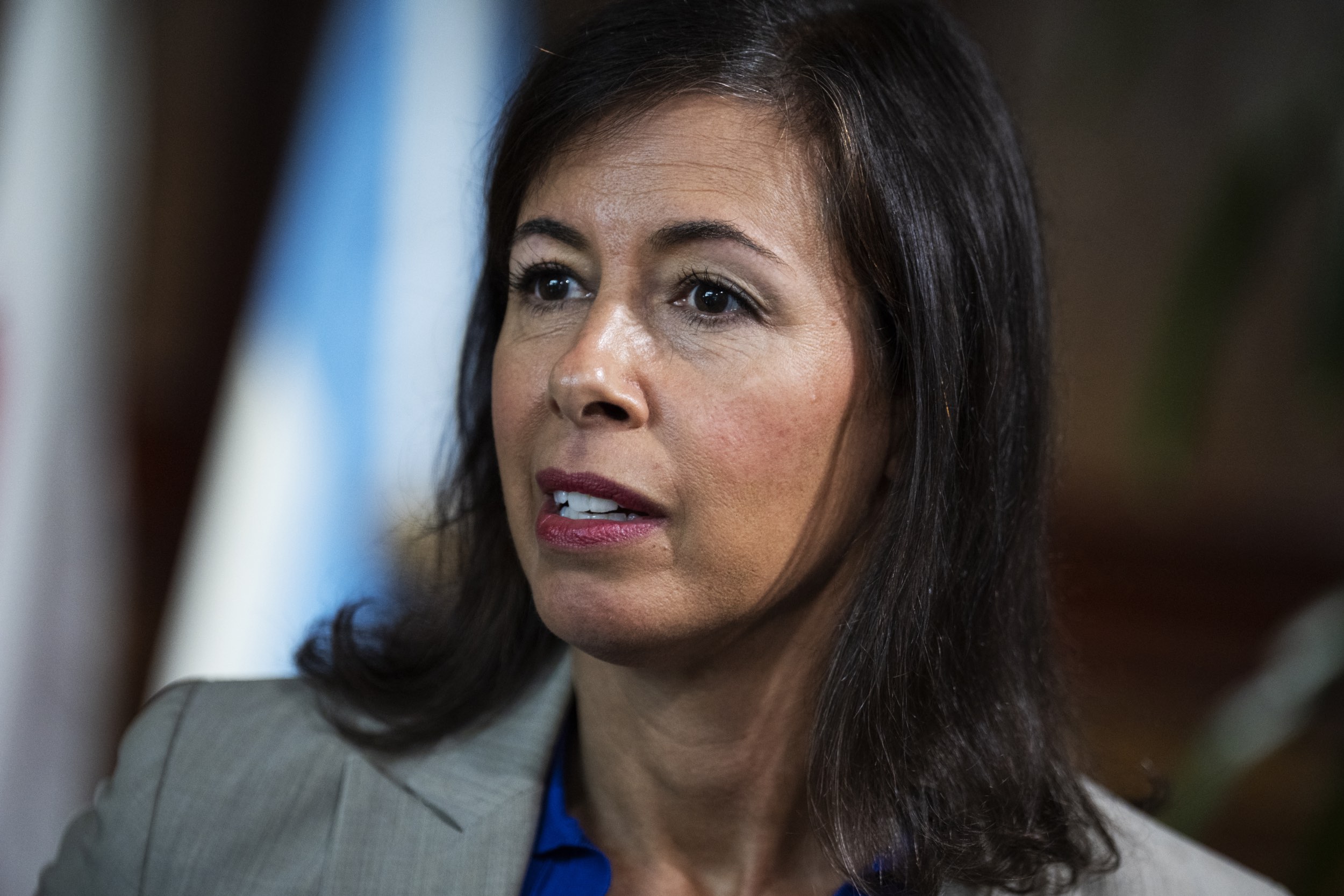
FCC Chairwoman Jessica Rosenworcel pictured at an event.

Enlarge / FCC Chairwoman Jessica Rosenworcel at the National Press Club on September 19, 2022.

Getty Images | Tom Williams

The Federal Communications Commission is about to start winding down a program that gives $30 monthly broadband discounts to people with low incomes, and says it will have to complete the shutdown by May if Congress doesn’t provide more funding.

The 2-year-old Affordable Connectivity Program (ACP) was created by Congress, and Democrats have been pushing for more funding to keep it going. But Republican members of Congress blasted the ACP last month, accusing the FCC of being “wasteful.”

In a letter, GOP lawmakers complained that most of the households receiving the subsidy already had broadband service before the program existed. They threatened to withhold funding and criticized what they called the “Biden administration’s reckless spending spree.” The letter was sent by the highest-ranking Republicans on committees with oversight responsibility over the ACP, namely Sen. John Thune (R-SD), Sen. Ted Cruz (R-Texas), Rep. Cathy McMorris Rodgers (R-Wash.), and Rep. Bob Latta (R-Ohio).

With no resolution in sight, the FCC announced that it would have to start sending out notices about the program’s expected demise. “With less than four months before the projected program end date and without any immediate additional funding, this week the Commission expects to begin taking steps to start winding down the program to give households, providers, and other stakeholders sufficient time to prepare,” the FCC said in an announcement yesterday.

The Biden administration has requested $6 billion to fund the program through December 2024. As of now, the FCC said it “expects funding to last through April 2024, running out completely in May.”

FCC to stop enrolling new households

FCC Chairwoman Jessica Rosenworcel has repeatedly asked Congress for more ACP funding, and sent a letter to lawmakers yesterday in which she repeated her plea. The chairwoman’s letter said that 23 million households are enrolled in the discount program.

“If Congress does not provide additional funding for the ACP in the near future, millions of households will lose the ACP benefit that they use to afford Internet service,” Rosenworcel wrote. “This also means that roughly 1,700 Internet service providers will be affected by the termination of the ACP and may cut off service to households no longer supported by the program.”

Since no funding has been added, Rosenworcel said the FCC will soon have to “announce a date for stopping the enrollment of new households in the ACP.”

“While this step will preclude additional households from benefiting from this important program, it is necessary to slow the depletion of the remaining funding and reduce volatility in the program. This step will also stabilize the number of households affected by the end of the ACP and reduce consumer confusion,” Rosenworcel wrote.

The FCC will give ISPs “guidance on the timing and requirements for notifying participating households about the projected end of the ACP,” she wrote. “To avoid consumer confusion and minimize the risk of consumer bill shock, providers must give consumers specific, frequent notice about the projected end of the program and their ACP discount, and how that will impact their Internet bill.”

Rosenworcel warned that the impending ACP shutoff “would undermine the historic $42.5 billion Broadband Equity, Access, and Deployment Program,” a different program created by Congress to subsidize ISPs’ expansion of broadband networks throughout the US. The discount and deployment programs complement each other because “the ACP supports a stable customer base to help incentivize deployment in rural areas,” Rosenworcel wrote.

GOP support needed to keep program alive

GOP support is needed to keep the program alive, given the Republican majority in the House of Representatives. Rosenworcel defended the program at a recent House hearing, and her testimony was criticized by Republicans who disputed her statement that households would be “unplugged” from the Internet without continued discounts.

“While you have repeatedly claimed that the ACP is necessary for connecting participating households to the Internet, it appears the vast majority of tax dollars have gone to households that already had broadband prior to the subsidy,” the Republicans’ December 2023 letter to Rosenworcel said.

That may be partly explained by the fact that many ACP recipients were getting a different discount under a predecessor program that ended once the ACP was implemented. The $30 monthly ACP benefit replaced the previous $50 monthly subsidy from the Emergency Broadband Benefit Program that started enrolling users in May 2021.

A household is eligible for the ACP if its income is at or below 200 percent of federal poverty guidelines or if it participates in other federal assistance programs such as Medicaid or the Free and Reduced-Price School Lunch Program. Losing the $30 monthly discount could force families to choose between broadband and other necessities, the White House said when it asked Congress for more ACP funding.

FCC plans shutdown of Affordable Connectivity Program as GOP withholds funding Read More »

consumer-group-wants-to-end-$255m-“gift-card-loophole”-for-starbucks-and-others

Consumer group wants to end $255M “gift card loophole” for Starbucks and others

Rounding revenue —

Changes to Washington’s gift card laws could affect cardholders nationwide.

Starbucks app showing on an iPhone

Enlarge / Starbucks’ Rewards programs are a key part of their revenue. How the company deals with unspent amounts in that app could change under new Washington state proposals.

Getty Images

When you get a Starbucks gift card, or keep reloading one on your phone, you often end up with awkward amounts that can be difficult to spend.

For most people, the remainders are a few bucks of wasted potential caffeine and sugar. For Starbucks, they are worth hundreds of millions of dollars each year, according to a consumer advocacy group in Washington state that wants to end the “Gift Card Loophole.” Changes in the coffee giant’s home state could affect gift and loyalty cards nationwide.

The Washington Consumer Protection Coalition (which notes that its top funding contributor is the Service Employees International Union) is pushing state legislators to remove a provision dating back to 2004. While that 2004 legislation was relatively consumer-friendly for its time by barring gift cards from fully expiring and eliminating maintenance fees, it allowed funds left on cards, or now on mobile apps, to be claimed as revenue by companies.

Under proposed legislation backed by the WCPC, those funds would instead go to the unclaimed property division of the Washington Department of Revenue. Before that happens, other reforms would allow for cashing out small amounts left on gift cards (by combining them with cash for payment, for example), requiring companies to inform customers of unspent funds before they are diverted, and potentially removing minimum “reload” amounts on phone apps. Customers could still spend their old funds after they are diverted, with the state reimbursing the card-issuing company.

The reforms are aimed at larger corporations, like Washington state’s Starbucks, and would exempt businesses that generate less than $25 million in annual revenue. Making these changes would generate roughly $250 million per year for the state, according to the WCPC, though it’s unclear if that means residents or the state itself.

Along with Starbucks, which sells billions of dollars in gift cards every year, Washington is home to outdoor retailer REI and department store Nordstrom. Costco, based in Washington state, is exempt from the proposed legislation because customers have to spend at least $50 on memberships and have “a direct and ongoing relationship” with the company.

More than 70 percent of Fortune 500 companies are required to transfer unspent gift balances to unclaimed property programs in the states where they incorporate, according to the WCPC and legislators, including Amazon and Walmart. Starbucks claimed $215 million in unspent gift card revenue in its 2023 fiscal year, according to its filing with the Securities and Exchange Commission. The WCPC claims the firm kept $894 million in the last five years.

A spokesperson for the Washington Hospitality Association said in a statement that there “is no loophole in Washington law” regarding gift cards and claimed that the proposed legislation would make it more difficult for gift card holders to use their balances.

“The existing law where gift cards are forever redeemable is good for consumers; this proposal to limit the time when gift cards can be redeemed and then claim unspent balances as state revenue will likely prove to be equally as unpopular with consumers as current law is popular,” the statement said.

A spokesperson for Starbucks noted that more than one in six American adults are gifted a Starbucks gift card each year. They, too, noted that Starbucks cards have no expiration.

Starbucks’ rewards programs, centered on the regular use of digital cards, are crucial to its revenue. During a Q4 2021 earnings call, executives said that more than 50 percent of company-owned stores’ revenues were generated by customers who had earned or used rewards points in the last 90 days. The company expected nearly $3 billion in funds to be loaded onto Starbucks cards that holiday season.

This post was updated at 3: 45 pm ET on January 5 to note the WCPC’s top sponsor, add context to a claim of state revenue, and add statements from spokespeople for both Starbucks and the Washington Hospitality Association.

Consumer group wants to end $255M “gift card loophole” for Starbucks and others Read More »

elon-musk-drops-price-of-x-gold-checks-amid-rampant-crypto-scams

Elon Musk drops price of X gold checks amid rampant crypto scams

Elon Musk drops price of X gold checks amid rampant crypto scams

There’s currently a surge in cryptocurrency and phishing scams proliferating on X (formerly Twitter)—hiding under the guise of gold and gray checkmarks intended to mark “Verified Organizations,” reports have warned this week.

These scams seem to mostly commandeer dormant X accounts purchased online through dark web marketplaces, according to a whitepaper released by the digital threat monitoring platform CloudSEK. But the scams have also targeted high-profile X users who claim that they had enhanced security measures in place to protect against these hacks.

This suggests that X scammers are growing more sophisticated at a time when X has launched an effort to sell even more gold checks at lower prices through a basic tier announced this week.

Most recently, the cyber threat intelligence company Mandiant—which is a subsidiary of Google—confirmed its X account was hijacked despite enabling two-factor authentication. According to Bleeping Computer, the hackers used Mandiant’s account to “distribute a fake airdrop that emptied cryptocurrency wallets.”

A Google spokesperson declined to comment on how many users may have been scammed, but Mandiant is investigating and promised to share results when its probe concludes.

In September, a similar fate befell Ethereum co-founder Vitalik Buterin, who had his account hijacked by hackers. The bad actors posted a fake offer for free non-fungible tokens (NFTs) with a link to a fake website designed to empty cryptocurrency wallets. The post was only up for about 20 minutes but drained $691,000 in digital assets from Buterin’s unsuspecting followers, according to CloudSEK’s research.

Another group monitoring cryptocurrency and phishing scams linked to X accounts is MalwareHunterTeam (MHT), Bleeping Computer reported. This week, MHT has flagged additional scams targeting politicians’ accounts, including a Canadian senator, Amina Gerba, and a Brazilian politician, Ubiratan Sanderson.

On X, gold ticks are supposed to reassure users that an account can be trusted by designating that an account is affiliated with an official organization or company. Gray ticks signify an account is linked to government organizations. CloudSEK estimated that hijacked gold and gray checks could be sold online for between $1,200 to $2,000, depending on how old the account is or how many followers it has. Bad actors can also buy accounts affiliated with gold accounts for $500 each.

A CloudSEK spokesperson told Ars that its team is “in the process of reporting the matter” to X.

X did not immediately respond to Ars’ request to comment.

CloudSEK predicted that scams involving gold checks would continue to be a problem so long as selling gold and gray checks remains profitable.

“It is evident that threat actors would not budge from such profit-making businesses anytime soon,” CloudSEK’s whitepaper said.

For organizations seeking to avoid being targeted by hackers on X, CloudSEK recommends strengthening brand monitoring on the platform, enhancing security settings, and closing out any dormant accounts. It’s also wise for organizations to cease storing passwords in a browser, and instead use a password manager that’s less vulnerable to malware attacks, CloudSEK said. Organizations on X may also want to monitor activity on any apps that become connected to X, Bleeping Computer advised.

Elon Musk drops price of X gold checks amid rampant crypto scams Read More »

spacex-sues-us-labor-board,-claims-agency-structure-is-unconstitutional

SpaceX sues US labor board, claims agency structure is unconstitutional

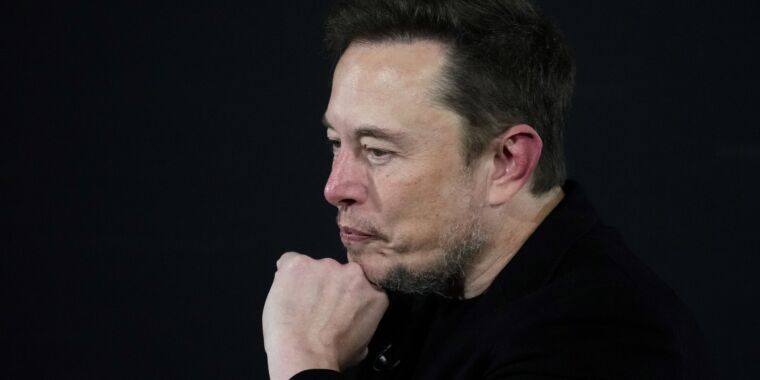
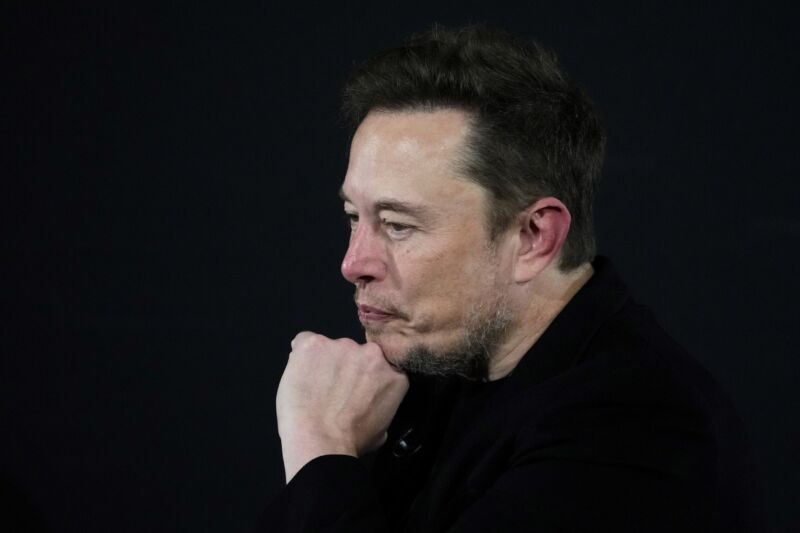
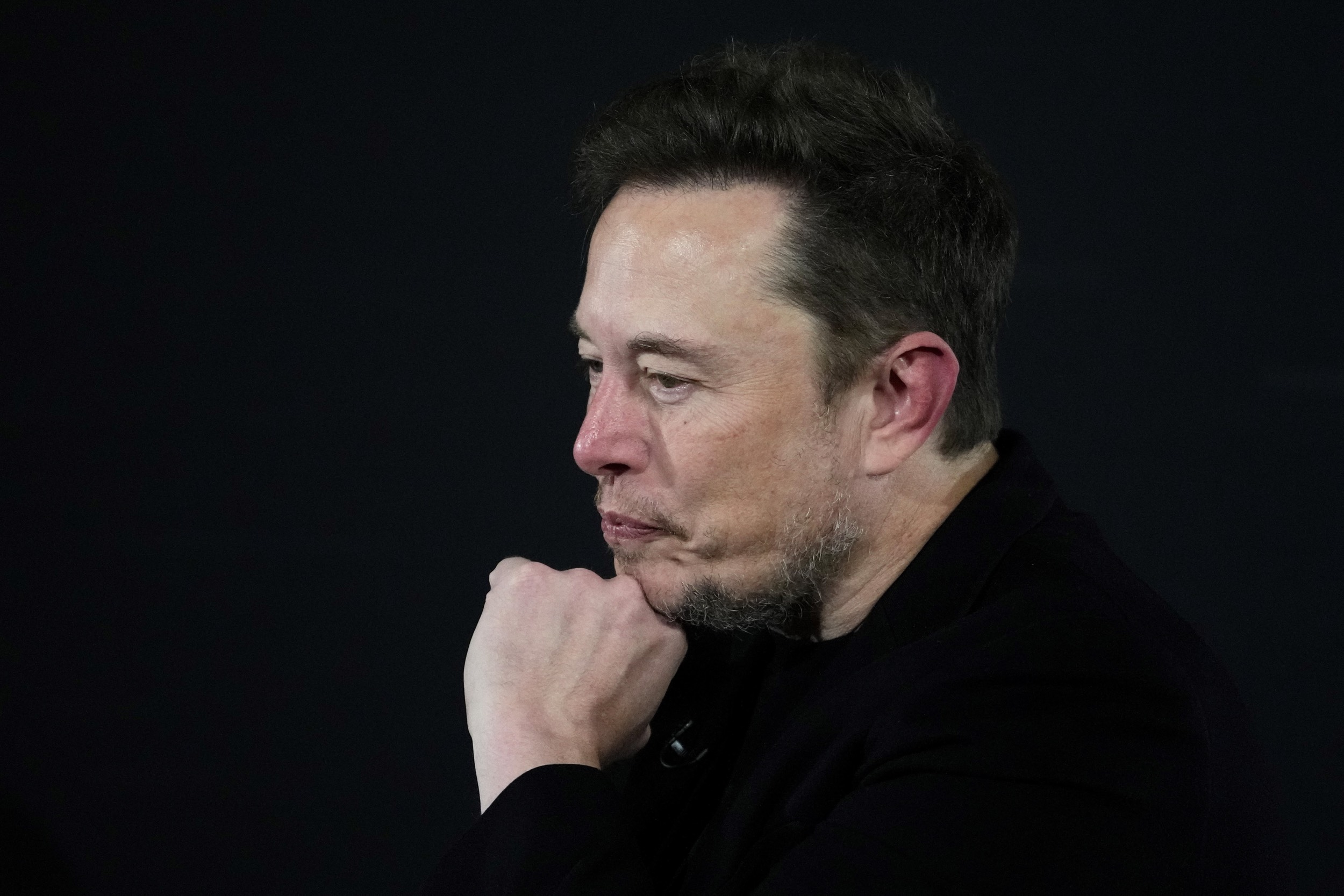
Elon Musk on stage at an event, resting his chin on his hand

Enlarge / Elon Musk at an AI event with Britain Prime Minister Rishi Sunak in London on Thursday, Nov. 2, 2023.

Getty Images | WPA Pool

After being charged with illegally firing workers who criticized Elon Musk, SpaceX yesterday sued the National Labor Relations Board (NLRB) in a lawsuit that claims the US labor agency’s structure is unconstitutional.

On Wednesday, an NLRB regional director filed a complaint against SpaceX alleging that it illegally fired eight employees who drafted and distributed an open letter about Musk in 2022. If SpaceX doesn’t settle the charges, the company is scheduled to face a hearing with an NLRB administrative law judge (ALJ) starting on March 5.

SpaceX filed its lawsuit against the NLRB in US District Court for the Southern District of Texas, claiming that the NLRB structure violates US law because the administrative law judge cannot be removed by the president of the United States. SpaceX made a virtually identically argument recently when it sued the US attorney general and two other Department of Justice officials in an attempt to stop a separate hiring-discrimination case.

“NLRB ALJs are ‘Officers of the United States’ under the Constitution’s Appointments Clause—not mere employees—because among other things, they hold continuing offices through which they preside over adversarial hearings, receive testimony, shape the administrative record, and prepare proposed findings and opinions,” SpaceX argued.

SpaceX: “The very definition of tyranny”

The NLRB administrative law judges have “at least two layers of removal protection,” which “prevents that exercise of presidential authority and thus violates Article II of the Constitution,” SpaceX told the court. “But for these unlawful removal restrictions, either the ALJ assigned to SpaceX’s administrative case or the NLRB Members who bear responsibility to supervise and exercise control over the ALJ would face the prospect of removal by the President based on their conduct during the proceedings.”

Musk’s company asked for a preliminary injunction that would stop the proceeding, saying that “without interim injunctive relief from this Court, SpaceX will be required to undergo an unconstitutional proceeding before an insufficiently accountable agency official.”

The NLRB declined to comment today on SpaceX’s lawsuit. The NLRB complaint and notice of hearing to SpaceX said that during the scheduled administrative hearing, the company has “the right to call, examine, and cross-examine witnesses and to introduce into the record documents and other evidence.”

SpaceX’s lawsuit argues that NLRB members act as both prosecutor and judge. Quoting The Federalist No. 47 by James Madison, SpaceX wrote that the “NLRB’s current way of functioning is miles away from the traditional understanding of the separation of powers, which views ‘[t]he accumulation of all powers legislative, executive and judiciary in the same hands’ as ‘the very definition of tyranny.'”

SpaceX is banking in part on an April 2023 Supreme Court ruling in a case involving the Federal Trade Commission and Securities and Exchange Commission. That ruling didn’t resolve challenges to the agencies’ use of administrative law judges, but found that federal district courts have jurisdiction to hear lawsuits over whether the agency structure is unconstitutional.

SpaceX sues US labor board, claims agency structure is unconstitutional Read More »

amazon-marketplace-crackdown-has-sellers-searching-for-legal-help

Amazon marketplace crackdown has sellers searching for legal help

Legit or not —

Clean-up drive has led to some small businesses having their accounts suspended.

Amazon marketplace crackdown has sellers searching for legal help

Leon Neal | Getty Images

Merchants who have been suspended from selling goods on Amazon’s marketplace are turning to a cottage industry of lawyers to regain access to their accounts and money, amid growing scrutiny of how the retailer treats independents.

Millions of accounts on the leading ecommerce platform have been prevented from engaging in sales for alleged violations of Amazon’s broad range of policies and other bad behavior. Even temporary suspensions can be a critical blow to the small business owners who rely on online sales.

Four ecommerce-focused US law firms told the Financial Times that the majority of the cases they took on were complaints brought by aggrieved Amazon sellers, with each handling hundreds or thousands of cases every year.

About a dozen sellers also said they had grown worried about Amazon’s power to suspend their accounts or product listings, as it was not always clear what had triggered the suspension and Amazon’s seller support services did not always help to sort out the issue.

Account suspension was “a big fear of mine,” said one seller, who declined to be named. “At the end of the day, it’s not really your business. One day you can wake up and it’s all gone.”

Amazon’s recent efforts to crack down on issues such as fake product reviews have come as US and European regulators have upped their scrutiny of the online harms facing shoppers.

But critics said the existence of a growing army of lawyers and consultants to deal with the fallout from Amazon’s actions pointed to a problem with the way the retailer treats its sellers.

“If you’re a seller and you need help to navigate the system, that’s a real vulnerability for the marketplace. If you’re operating a business where the people you’re deriving revenue from feel that they’re being treated in an arbitrary way without due process, that is a problem,” said Marianne Rowden, chief executive of the E-Merchants Trade Council.

“The fact that there are entire law firms dedicated to dealing with Amazon says a lot,” said one seller, who like many who spoke to the FT asked to remain anonymous for fear of reprisals.

Amazon declined to comment in detail but said its selling partners were “incredibly important” and the company worked hard to “protect and help them grow their business.” The company worked to “eliminate mistakes and ‘false positive’ enforcements” and had an appeal process for sellers in place.

Sellers on Amazon’s marketplace account for more than 60 percent of sales in its store. In the nine months to September 30, Amazon recorded $96bn in commissions and fees paid by sellers, a jump of nearly 20 percent compared with the same period a year earlier.

As the marketplace has grown, Amazon has had to do more to police it. During the first half of 2023 in its EU store, Amazon took 274mn “actions” in response to potential policy violations and other suspected problems, which included the removal of content and 4.2mn account suspensions. Amazon revealed the numbers as part of its first European transparency report newly required by EU law.

Amazon typically withholds any money in the account of a seller it has suspended for alleged fraudulent or abusive practices, which it may keep permanently if the account is not reinstated and the merchant is deemed to have been a bad actor.

Figuring out what caused a suspension and how to reverse it can be difficult. “We had a listing shut down during Prime Big Deals Days with no warning, no cause, no explanation,” said one kitchenware seller who has been selling on Amazon.com since 2014. “That’s pretty common.”

Amazon gave no further information when the listing was reinstated days later, the seller said.

Such confusion drives some sellers towards lawyers and consultants who advise on underlying problems, such as intellectual property disputes.

Amazon-focused US firms said they typically charged flat fees of between $1,300 and $3,500 per case.

CJ Rosenbaum, founding partner of the Amazon and ecommerce-focused law firm Rosenbaum Famularo, said the practice experienced a “big jump” in demand during the pandemic.

Many cases related to IP complaints from bigger brands “trying to control who sells their products” and making “a baseless counterfeit complaint” against a smaller Amazon seller, he added.

Lawyers said some sellers had been wrongly accused by the company’s automated systems that identify breaches of rules and policies. They added though that others had broken Amazon’s rules.

The retailer has become “more draconian” in the enforcement of its policies in recent years, said attorney Jeff Schick.

“Clients will say Amazon is unfair,” he said, but added that if the company did not strictly enforce its rules “then the platform becomes the next [US classified advertisements website] Craigslist.”

As part of escalated disputes, lawyers might steer merchants through a costly arbitration process that the company requires US sellers to use for most issues, rather than filing lawsuits against it.

Sellers were subject to “forced” arbitration clauses that required them to “sign away the right to their day in court if a dispute with Amazon arises,” said a 2022 US government report.

The details of arbitrations are not public, and decisions do not typically set binding precedents. They can also be hugely expensive: the up to three arbitrators that preside over a case can charge hundreds of dollars an hour.

“Quickly, you’re at $25,000 of costs or more,” said sole practitioner Leo Vaisburg, who left firm Wilson Elser in 2022 to pursue Amazon-related work full time. For many small businesses the high costs were “a barrier to entry,” he added. “Very few cases are worth that kind of money.”

© 2024 The Financial Times Ltd. All rights reserved. Not to be redistributed, copied, or modified in any way.

Amazon marketplace crackdown has sellers searching for legal help Read More »

vizio-settles-for-$3m-after-saying-60-hz-tvs-had-120-hz-“effective-refresh-rate”

Vizio settles for $3M after saying 60 Hz TVs had 120 Hz “effective refresh rate”

Class action —

Vizio claimed backlight scanning made refresh rates seem twice as high.

A marketing image for Vizio's P-series Q9 TV.

Enlarge / A marketing image for Vizio’s P-series Q9 TV.

Vizio has agreed to pay $3 million to settle a class-action lawsuit that alleged the company misled customers about the refresh rates of its TVs.

In 2018, a lawsuit [PDF], which was later certified as a class action, was filed against Vizio for advertising its 60 Hz and 120 Hz LCD TVs as having an “effective” refresh rate of 120 Hz and 240 Hz, respectively. Vizio was referring to the backlight scanning (or black frame insertion) ability, which it claimed made the TVs look like they were operating at a refresh rate that was twice as fast as they are capable of. Vizio’s claims failed to address the drawbacks that can come from backlight scanning, which include less brightness and the potential for noticeable flickering. The lawsuit complained about Vizio’s language in marketing materials and user manuals.

The lawsuit read:

Vizio knows, or at the very least should know, that its television with 60Hz display panels have a refresh rate of 60 images per second and that backlight manipulation methods cannot and do not increase the effective Hz (refresh rate) of a television.

The lawsuit, filed in the Superior Court of California, County of Los Angeles, accused Vizio of using misleading tactics to persuade retailers to sell and recommend Vizio TVs. It accused Vizio of trying “to sell its lesser-quality product at a higher price and allowed Vizio to realize sales it may not have otherwise made if it were truthful regarding the performance capabilities of its televisions.”

Under the settlement terms [PDF] spotted by The Verge, people who bought a Vizio TV in California after April 30, 2014, can file a claim. They’ll receive $17 or up to $50 if the fund allows it. The individual payout may also be under $17 if the claims exceed the $3 million fund. Vizio will also pay attorney fees. People have until March 30 to submit their claims. The final approval hearing is scheduled for June 20.

Vizio also agreed to stop advertising their TVs with 120 and 240 Hz “effective” refresh rates but “will not be obligated to recall or modify labeling for any Vizio-branded television model that has already been sold or distributed to a third party,” according to the agreement. Further, the California-headquartered company will also offer affected customers a “service and limited warranty package conservatively valued at $25” per person.

Vizio, per the settlement, denies any wrongdoing. The company declined to comment on the settlement to Ars.

The settlement comes as tactics for fighting motion blur, like backlight scanning and frame interpolation (known for causing the “soap opera effect“), have been maligned for often making the viewing experience worse. LG and TCL have also faced class-action lawsuits for boosting refresh rate claims by saying that their motion blur-fighting techniques make it seem like their TVs are running at a higher refresh rate than possible. While the case against LG was dismissed, TCL settled for $2,900,000 [PDF].

Despite the criticisms, backlight scanning and motion smoothing remain on default across countless TVs belonging to unsuspecting owners. Class-action cases like Vizio’s that end up having a negative cost for OEMs provide further incentive for them to at least stop using the ability as a way to superficially boost spec sheets.

Vizio settles for $3M after saying 60 Hz TVs had 120 Hz “effective refresh rate” Read More »

since-elon-musk’s-twitter-purchase,-firm-reportedly-lost-72%-of-its-value

Since Elon Musk’s Twitter purchase, firm reportedly lost 72% of its value

Going down, down, down… —

Fidelity cuts value of X stake, implying 72% drop since Musk paid $44 billion.

A businessman places his hand on his head as he looks up and is perplexed by a chart indicating a drop in value.

Getty Images | DNY59

Fidelity’s latest valuation of its stake in X implies that Elon Musk’s social network is worth about 71.5 percent less than when Musk bought the company in October 2022.

Fidelity’s Blue Chip Growth Fund has a relatively small stake in X. A monthly update for the fund listed the value of its “X Holdings Corp.” stake at $5.6 million as of November 30, 2023. The fund’s share of X was originally worth $19.7 million but lost about two-thirds of its value by April 2023 and has dropped more modestly since then.

Fidelity cut its valuation of X by 10.7 percent in November, according to Axios. One question is whether Fidelity sold any of its stake during November, but the latest drop in value isn’t surprising given the recent Musk-related controversies that drove advertisers away from the platform.

“As of Oct. 30 the fund hadn’t sold any of its stake, but the monthly report with the updated valuation doesn’t disclose whether the size of the holding changed,” Bloomberg wrote. “Assuming the fund hasn’t reduced its holding in X, the latest report implies the value of the entire company has also fallen by 72 percent. Fidelity declined to comment.”

X’s ad woes hurt value

Based on the $44 billion that Musk paid for Twitter over a year ago, the drop in Fidelity’s valuation would make the company worth about $12.5 billion. X reportedly valued itself at about $19 billion in October, based on the value of stock grants to employees.

Since Musk took Twitter private, the company’s value and revenue are harder to determine from the outside. As Axios noted, “Fidelity doesn’t necessarily have much, if any, inside information on X’s financial performance, despite being a shareholder in the privately held business. Other shareholders may value their X stock differently.”

X’s finances were shaky enough at the end of October, the one-year anniversary of Musk’s purchase. Musk made things worse in mid-November when he posted a favorable response to an antisemitic tweet. He addressed the antisemitism controversy in a public interview on November 29, telling businesses that pulled advertising from X to “go fuck yourself.”

X has had trouble retaining advertisers throughout Musk’s tenure, due largely to his approach to content moderation. Musk eliminated most of the company’s staff shortly after becoming its owner.

X loses bid to block California law

X is dealing with new regulations on content moderation, both in Europe and the US. Musk’s company sued California in September in an attempt to block the state’s content-moderation law but last week lost a key ruling in the court case.

On Thursday, US District Judge William Shubb denied X’s motion for a preliminary injunction that would have blocked enforcement of the California content-moderation law. The state law requires companies to file two reports each year with terms of service and detailed descriptions of content-moderation practices.

Shubb rejected X’s claim that the law violates the First Amendment. “While the reporting requirement does appear to place a substantial compliance burden on social medial companies, it does not appear that the requirement is unjustified or unduly burdensome within the context of First Amendment law,” Shubb wrote.

The judge agreed with California that there is “a substantial government interest in requiring social media companies to be transparent about their content moderation policies and practices so that consumers can make informed decisions about where they consume and disseminate news and information.”

Since Elon Musk’s Twitter purchase, firm reportedly lost 72% of its value Read More »

fda-would-like-to-stop-finding-viagra-in-supplements-sold-on-amazon

FDA would like to stop finding Viagra in supplements sold on Amazon

Well, that’s one kind of energy —

“Big Guys Male Energy Supplement” turns out to be a vehicle for prescription drugs.

Image of a pile of blue pills that forms the shape of a male symbol.

If you were to search for a product called “Mens Maximum Energy Supplement” on Amazon, you’d be bombarded with everything from caffeine pills to amino acid supplements to the latest herb craze. But at some point last year, the FDA had purchased a specific product by that name from Amazon and sent it off to one of its labs to find out if the self-proclaimed “dietary supplement” contained anything that would actually boost energy.

In August, the FDA announced that the supposed supplement was actually a vehicle for a prescription drug that offered a very specific type of energy boost. It contained sildenafil, a drug much better known by its brand name: Viagra.

Four months later, the FDA is finally getting around to issuing a warning letter to Amazon, giving it 15 days to not only address Mens Maximum Energy Supplement and a handful of similar vehicles for prescription erection boosters, but also asking for an explanation of how the company is going to keep similarly mislabelled prescription drugs from being hawked on its site in the future.

Prescription energy

Mens Maximum Energy Supplement was just one of seven products that the FDA found for sale on Amazon that contained either Sildenafil or Tadalafil (marketed as Cialis). The product names ranged from the jokey (WeFun and Genergy) to the vaguely suggestive (Round 2) to the verbose (Big Guys Male Energy Supplement and X Max Triple Shot Energy Honey). All of them were marketed as supplements and contained no indication of their active ingredients.

And that, as the FDA explains to Amazon in detail, means selling those products violates a whole host of laws and regulations. They’re being marketed as dietary supplements, but don’t fit the operative legal definition of these supplements. They’re offering prescription drugs without providing directions for their intended and safe use. They contain no warnings about unsafe doses or how long they can be used safely.

The FDA points out that these rules exist for very good reasons. Both of the drugs found in these supplements inhibit an enzyme called a type-5 phosphodiesterase which, among other things, influences the circulatory system. One potential side effect is a dangerous drop in blood pressure. Both Sildenafil and Tadalafil can also have dangerous interactions with a specific class of drugs often taken by those with diabetes, high blood pressure, or heart disease.

Legal remedies

The FDA’s letter makes it clear that the highlighted supplements aren’t intended to be an exhaustive list of the products that Amazon offers in violation of federal law. And it is very explicit about the fact that it is Amazon’s responsibility (and not the FDA’s) to ensure compliance: “You are responsible for investigating and determining the causes of any violations and for preventing their recurrence or the occurrence of other violations.”

And Amazon clearly has its work cut out for it. None of the products cited by the FDA’s letter appear to still be for sale under the same name at Amazon—a company spokesperson told Ars that it pulled them in response to the original FDA findings. But searches for them at Amazon brought up a number of similar products, many of which included pills with the blue color that Viagra was marketed with.

So, the FDA wants to see a plan that describes how Amazon will not only deal with the products at issue in this letter, but prevent all similar violations in the future: “Include an explanation of each step being taken to prevent the recurrence of violations, including steps you will take to ensure that Amazon will no longer introduce or deliver for introduction into interstate commerce unapproved new drugs and/or misbranded products with undeclared drug ingredients, as well as copies of related documentation.”

Amazon is being given 15 days to respond to the warning letter. Failure to adequately address these violations, the FDA warns, will result in legal action.

FDA would like to stop finding Viagra in supplements sold on Amazon Read More »