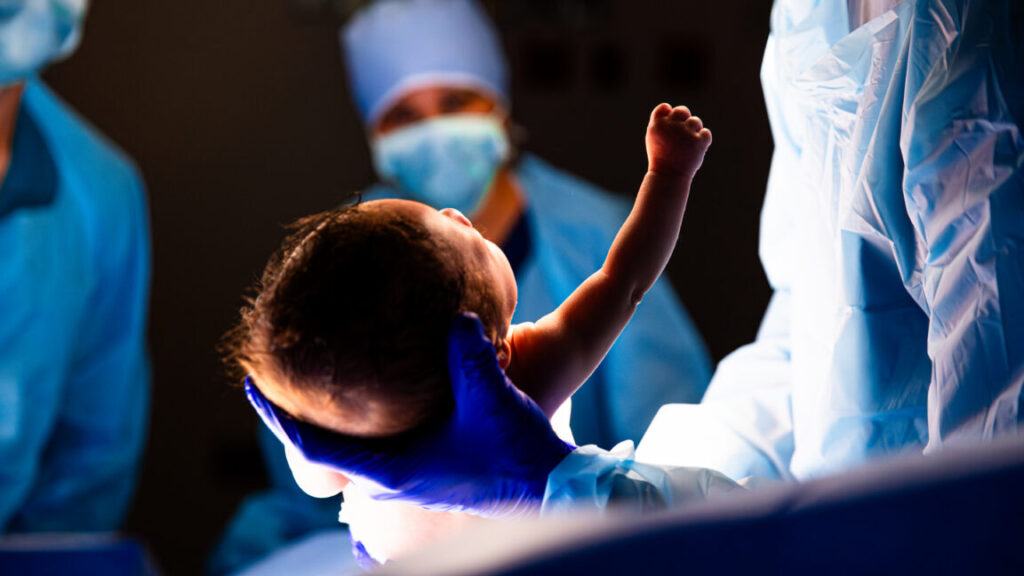
A newborn baby has died in New Mexico from a Listeria infection that state health officials say was likely contracted from raw (unpasteurized) milk that the baby’s mother drank during pregnancy.
In a news release Tuesday, officials warned people not to consume any raw dairy, highlighting that it can be teeming with a variety of pathogens. Those germs are especially dangerous to pregnant women, as well as young children, the elderly, and people with weakened immune systems.
“Raw milk can contain numerous disease-causing germs, including Listeria, which is bacteria that can cause miscarriage, stillbirth, preterm birth, or fatal infection in newborns, even if the mother is only mildly ill,” the New Mexico Department of Health said in the press release.
The health department noted that it could not definitively link the baby’s death to the raw milk the mother drank. But raw milk is notorious for transmitting Listeria monocytogenes bacterium. The Food and Drug Administration has a “Food Safety for Moms-to-Be” webpage about Listeria, in which it poses the question and answer: “How could I get listeriosis? You can get listeriosis by eating raw, unpasteurized milk and unpasteurized milk products… .”
Listeria is a particular danger during pregnancy. When exposed, pregnant people are 10 times more likely to develop a Listeria infection than other healthy adults because altered immune responses during pregnancy make it harder to fight off infections. Further, Listeria is one of a few pathogens that are able to cross the placental barrier and infect a developing fetus.
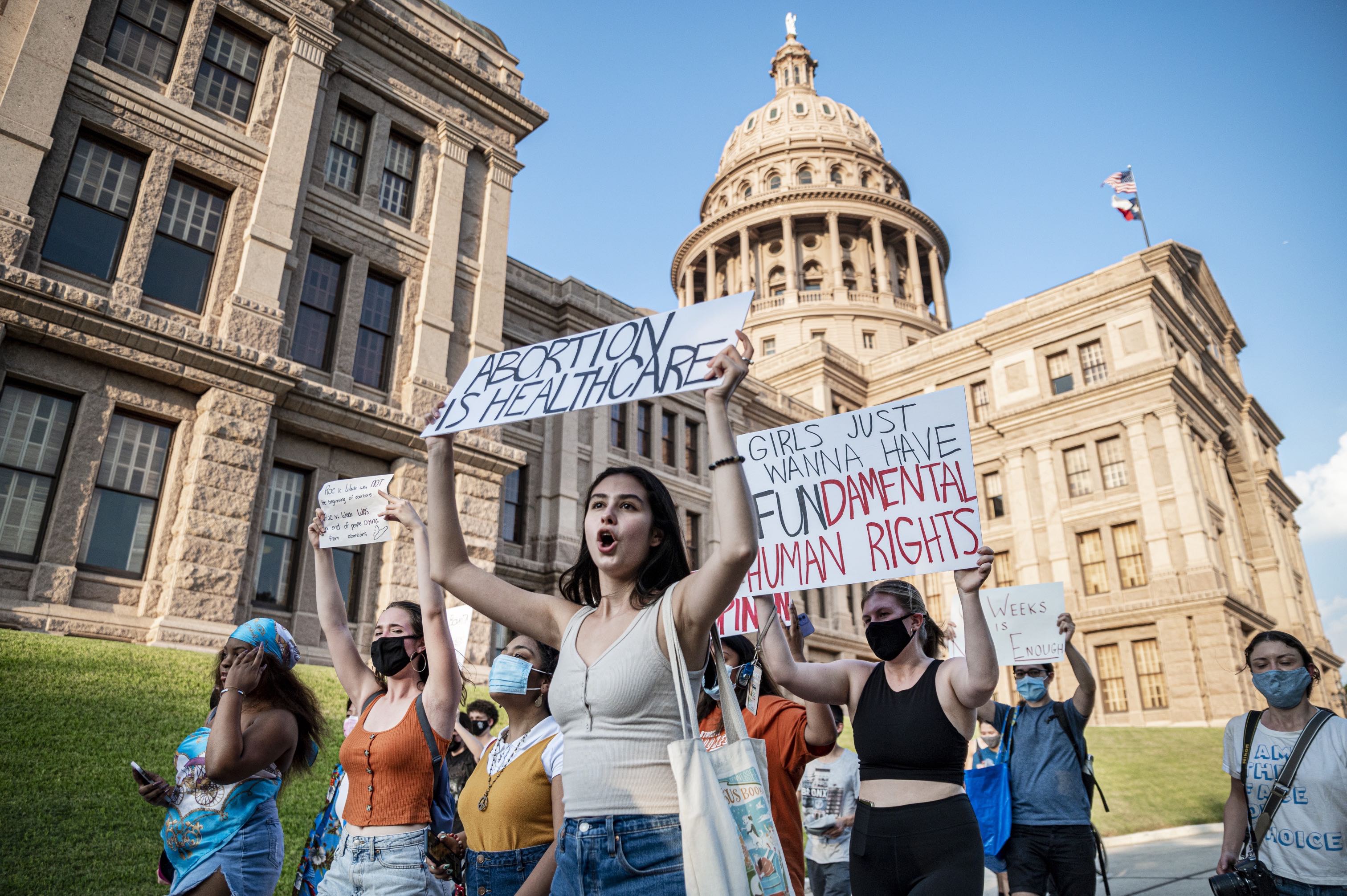
Enlarge/ Pro-choice protesters march outside the Texas State Capitol on Sept. 1, 2021, in Austin, Texas.
Getty Images | The Washington Post
Fourteen states have banned abortions at any gestational age since the Supreme Court overruled Roe v. Wade in 2022. Since the enactment of those abortion bans, an estimated 64,565 people became pregnant as a result of rape in those states. But, while five of the 14 states have exceptions for rape, all of the states logged only 10 or fewer legal abortions per month since their respective bans were enacted.
The finding, published this week in JAMA Internal Medicine, is a stark look at the effects of such bans on reproductive health care. The study did not assess how many of the estimated 64,565 pregnancies resulted in births, but it makes clear that tens of thousands of pregnant rape survivors, including children, were forced to turn to illegal procedures, self-managed abortions, or burdensome travel to states where abortion is legal—cost-prohibitive to many—as an alternative to carrying a rape-related pregnancy to term.
It also showed that legal exceptions for rape don’t work. The states with those exceptions apply stringent time limits on the pregnancy and require victims to report their rapes to law enforcement, which likely disqualifies most. The US Department of Justice estimates that only 21 percent of victims report their rape to police, for myriad reasons.
In an editor’s note accompanying the study, a trio of JAMA Internal Medicine editors—who are also medical researchers at the University of California, San Francisco, Harvard, and NYC Health and Hospitals—note the findings “demonstrate the scope of the problem,” as the number of rape-related pregnancies is “exponentially larger” than the number of legal abortions in those states.
“As physicians, we do not see abortion as a political, religious, or legal issue. Rather we see access to safe abortions as a necessary part of reproductive health services to protect the physical and mental well-being of patients. The best solution to this problem is a national law protecting the right of all people to choose to terminate pregnancy,” they write.
Study design
The study, led by a researcher at Planned Parenthood of Montana, is only an estimate because hard, state-level numbers are impossible to come by. The researchers pulled rape data from the DOJ’s Bureau of Justice Statistics, the FBI, and the Centers for Disease Control and Prevention’s National Intimate Partner and Sexual Violence survey, a specially designed survey to ascertain reported and unreported rapes.
With national data from various sources, the researchers estimated the proportion of rape survivors that are female individuals ages 15 to 45, and they further adjusted for the number of rapes that are vaginal. To estimate state-level rapes, they proportioned the rapes by states based on the FBI’s 2022 crime data, which includes rapes. They then multiplied each state’s rapes by the fraction of rapes likely to result in pregnancy. And finally, adjusted for the months between July 1, 2022 and January 1, 2024 that an abortion ban was in effect in each of the 14 states. Among the 14 states, the number of months in which a ban was in effect ranged from four to 18 months.
In all, the researchers estimated 519,981 completed vaginal rapes in the 14 abortion ban states which resulted in a collective total of 64,565 pregnancies during the four to 18 months that bans were in effect. Of the rape-related pregnancies, an estimated 5,586 (9 percent) were in states with rape exceptions, and 58,979 (91 percent) were in states with no exception.
Texas, the abortion-ban state with the largest population, had an estimated 26,313 (41 percent) of all rape-related pregnancies under its ban, which was enacted for 16 months during the study time frame. The state’s large number drew outrage from Democratic state lawmakers, particularly in light Gov. Greg Abbott’s vow to “eliminate rape” in Texas after a 2021 six-week abortion ban took effect (the state enacted a total ban in August 2022).
“Women and girls across our state are enduring unwanted pregnancies, suffering from life-endangering complications in desired pregnancies and fleeing the state for medical care,” the 13 Democratic state senators said in a Thursday news release, as reported by the Houston Chronicle. “We cannot allow this to be the new norm.”