project kuiper

when-amazon-badly-needed-a-ride,-europe’s-ariane-6-rocket-delivered

When Amazon badly needed a ride, Europe’s Ariane 6 rocket delivered

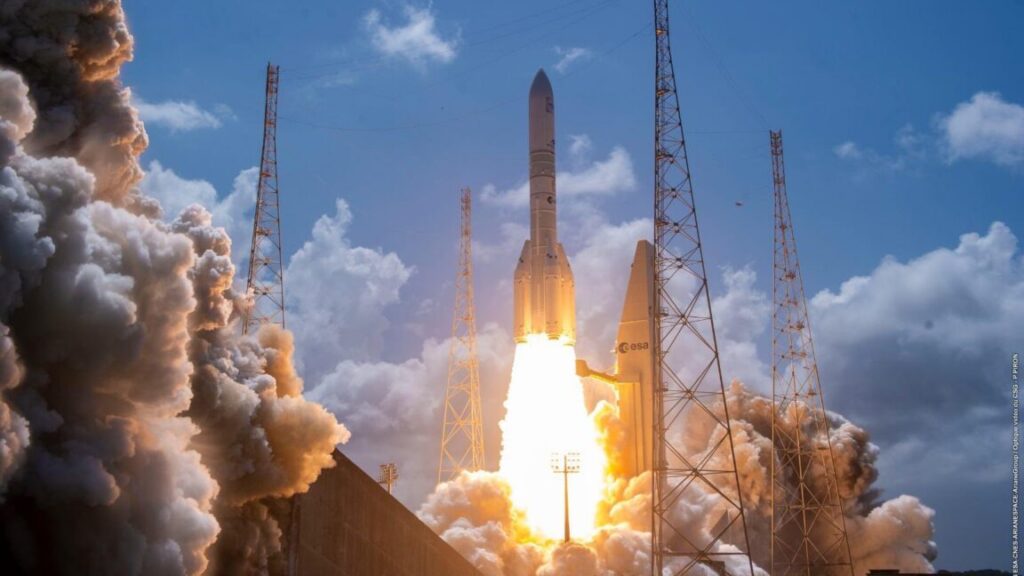
The Ariane 64 flew with an extended payload shroud to fit all 32 Amazon Leo satellites. Combined, the payload totaled around 20 metric tons, or about 44,000 pounds, according to Arianespace. This is close to maxing out the Ariane 64’s lift capability.

Amazon has booked more than 100 missions across four launch providers to populate the company’s planned fleet of more than 3,200 satellites. With Thursday’s launch, Amazon has launched 214 production satellites on eight missions with United Launch Alliance, SpaceX, and now Arianespace.

The Amazon Leo constellation is a competitor with SpaceX’s Starlink Internet network. SpaceX now has more than 9,000 satellites in orbit beaming broadband to more than 9 million subscribers, and all have launched on the company’s own Falcon 9 rockets. Amazon, meanwhile, initially bypassed SpaceX when selecting which companies would launch satellites for the Amazon Leo program, formerly known as Project Kuiper.

Amazon booked the last nine launches on ULA’s soon-to-retire Atlas V, five of which have now flown, and reserved the rest of its launches in 2022 on rockets that had never launched before: 38 flights on ULA’s new Vulcan rocket, 24 launches on Blue Origin’s New Glenn, and 18 on Europe’s Ariane 6.
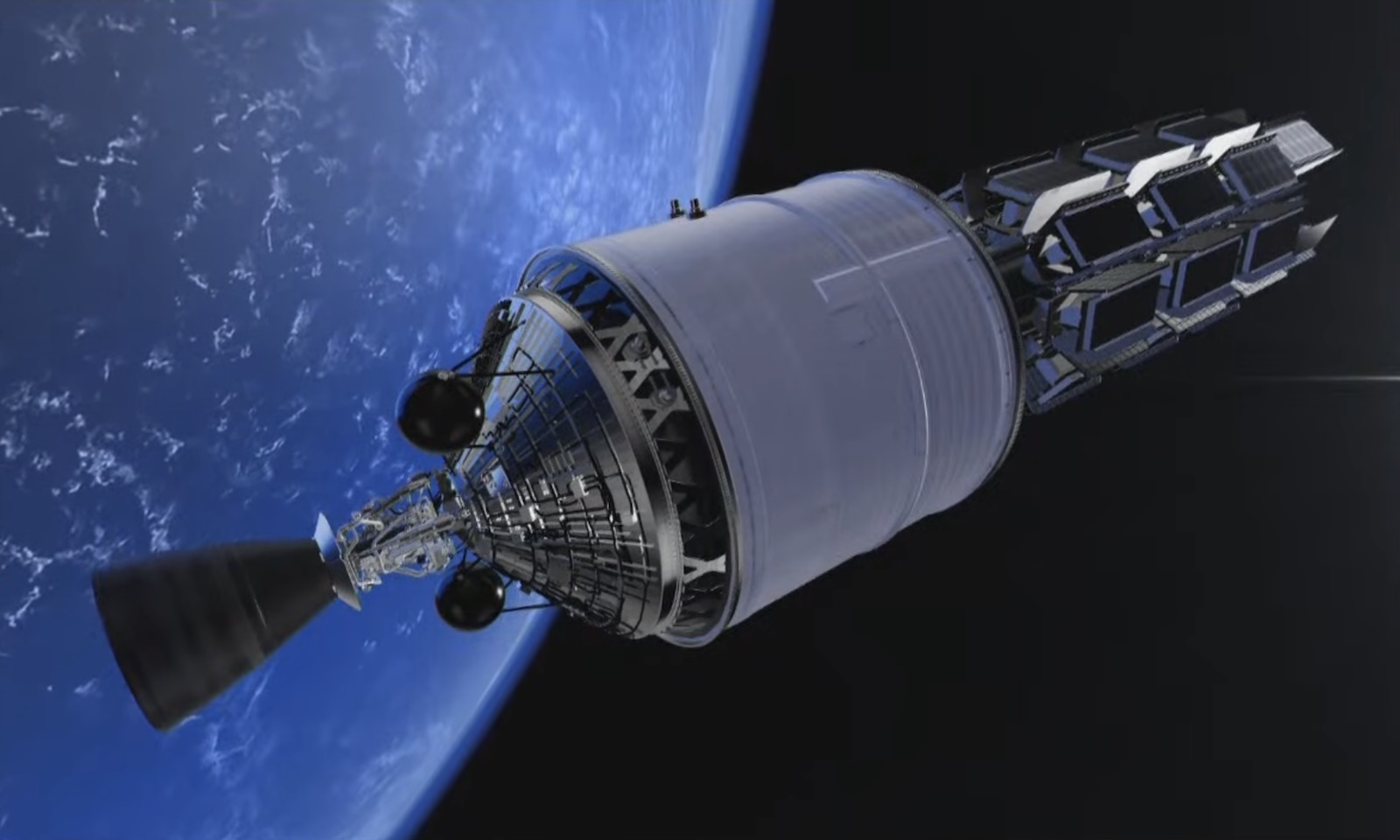
An artist’s illustration of the Ariane 6’s upper stage in orbit with a stack of Amazon Leo satellites awaiting deployment.

Credit: Arianespace

An artist’s illustration of the Ariane 6’s upper stage in orbit with a stack of Amazon Leo satellites awaiting deployment. Credit: Arianespace

Meanwhile, in Florida

All three new rockets suffered delays but are now in service. The Ariane 6 has enjoyed the fastest ramp-up in launch cadence, with six flights under its belt after Thursday’s mission from French Guiana. ULA’s Vulcan rocket has flown four times, and Amazon says its first batch of satellites to fly on Vulcan is now complete. But a malfunction with one of the Vulcan launcher’s solid rocket boosters on a military launch from Florida early Thursday—the second such anomaly in three flights—raises questions about when Amazon will get its first ride on Vulcan.

Blue Origin, owned by Amazon founder Jeff Bezos, is gearing up for the third flight of its heavy-lift New Glenn rocket from Florida as soon as next month. Amazon and Blue Origin have not announced when the first group of Amazon Leo satellites will launch on New Glenn.

When Amazon badly needed a ride, Europe’s Ariane 6 rocket delivered Read More »
a-rocket-launch-monday-night-may-finally-jump-start-amazon’s-answer-to-starlink

A rocket launch Monday night may finally jump-start Amazon’s answer to Starlink

“This launch marks the first step toward the future of our partnership and increased launch cadence,” Bruno said. “We have been steadily modifying our launch facilities in Cape Canaveral to support the capacity for future Project Kuiper missions in a manner that will ultimately benefit both our commercial and government customers as we endeavor to save lives, explore the universe, and connect the world.”

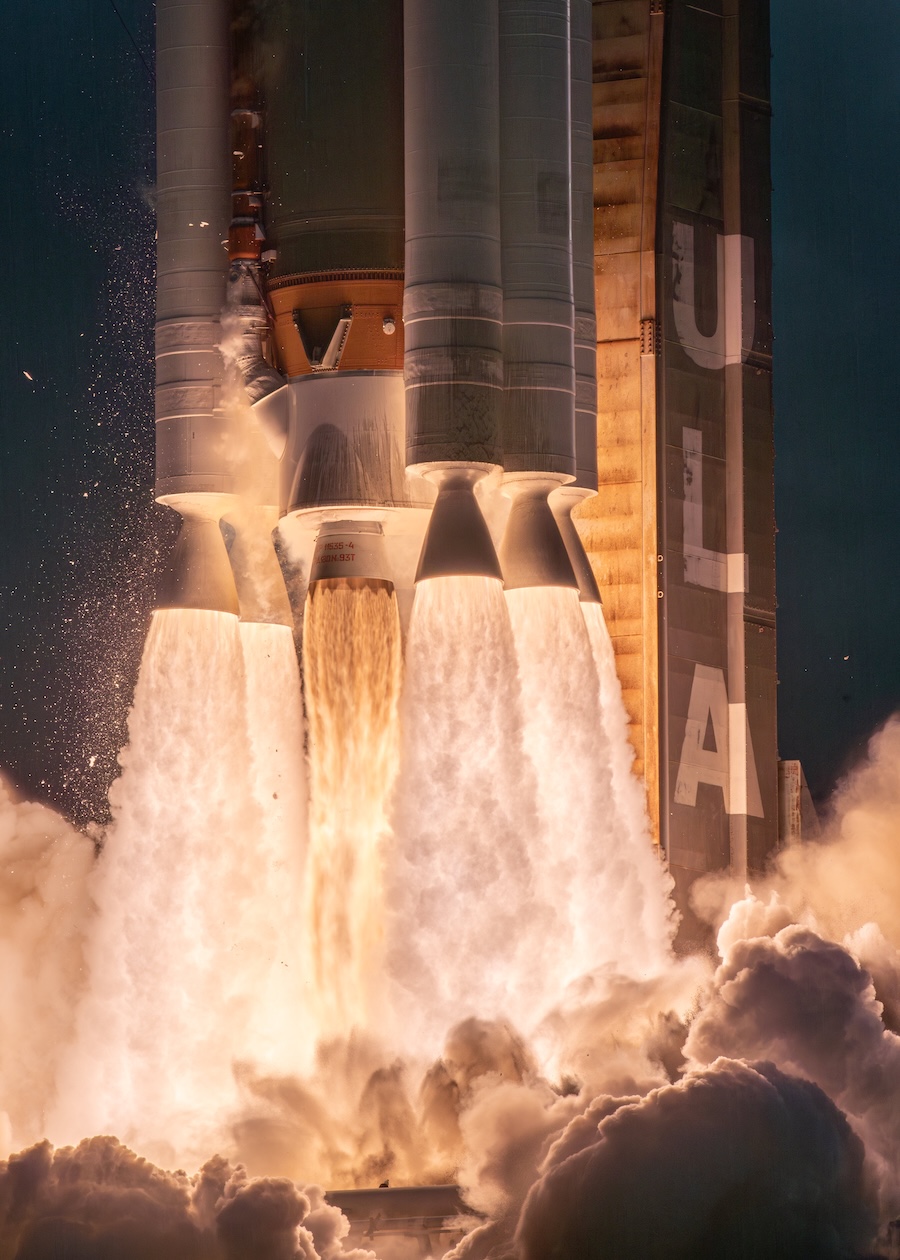
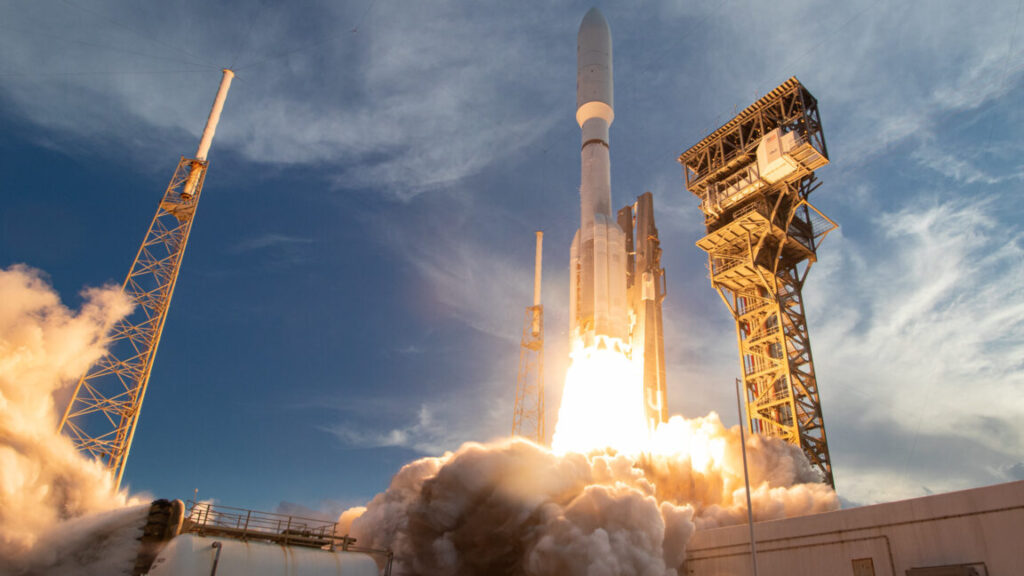
The Atlas V rocket was powered by a Russian-made RD-180 main engine and five strap-on solid rocket boosters. Credit: United Launch Alliance

Amazon ground controllers in Redmond, Washington, are overseeing the operation of the first 27 Kuiper satellites. Engineers there will test each satellite’s ability to independently maneuver and communicate with mission control. So far, this appears to be going well.

The next step will involve activating the satellites’ electric propulsion systems to gradually climb to their assigned orbit of 392 miles (630 kilometers).

“While the satellites complete the orbit-raising process, we will look ahead to our ultimate mission objective: providing end-to-end network connectivity,” Amazon said in a press release. “This involves sending data from the Internet, through our ground infrastructure, up to the satellites, and down to customer terminal antennas, and then repeating the journey in the other direction.”

A moveable deadline

While most of the rockets Amazon will use for the Kuiper network have only recently entered service, that’s not true of the Atlas V. Delays in spacecraft manufacturing at Amazon’s factory near Seattle kept the first Kuiper satellites on the ground until now.

An Amazon spokesperson told Ars that the company is already shipping Kuiper satellites for the next launch on an Atlas V rocket. Sources suggest that mission could lift off in June.

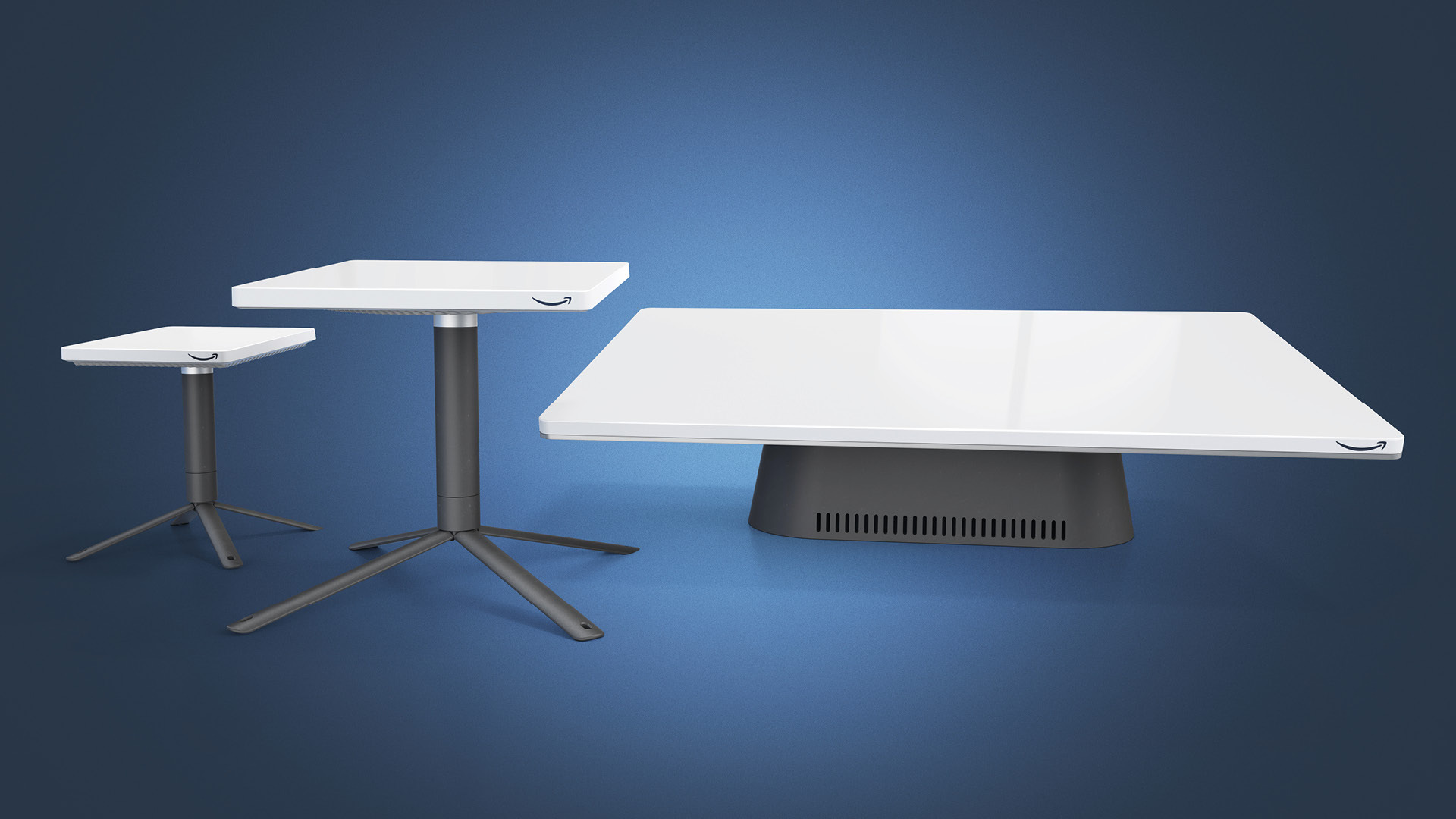
Amazon released this image of Kuiper user terminals in 2023. Credit: Amazon

Amazon and its launch suppliers need to get moving. Kuiper officials face a July 2026 deadline from the Federal Communications Commission to deploy half of the fleet’s 3,236 satellites to maintain network authorization. This is not going to happen. It would require an average of nearly one launch per week, starting now.

The time limit is movable, and the FCC has extended network authorization deadlines before. Brendan Carr, the Trump-appointed chairman of the FCC, has argued for a more “market-friendly regulatory environment” in a chapter he authored for the Heritage Foundation’s Project 2025, widely seen as a blueprint for the Trump administration’s strategies.

But Carr is a close ally of Elon Musk, owner of Kuiper’s primary competitor, Starlink.

Amazon is not selling subscriptions for Kuiper service yet, and the company has said its initial focus will be on testing Kuiper connectivity with “enterprise customers” before moving on to consumer broadband. Apart from challenging Starlink, Kuiper will also compete in some market segments with Eutelsat OneWeb, the London-based operator of the only other active Internet megaconstellation.

OneWeb’s more than 600 satellites provide service to businesses, governments, schools, and hospitals rather than direct service to individual consumers.

A rocket launch Monday night may finally jump-start Amazon’s answer to Starlink Read More »