
ram shortage

don’t-worry,-valve-still-plans-to-launch-the-steam-machine-“this-year”

Don’t worry, Valve still plans to launch the Steam Machine “this year”

Valve quickly reconfirmed that it plans to ship the Steam Machine and other recently announced hardware products “this year,” after an official blog post late last week set off some worried speculation about possible delays.

While Steam’s 2025 Year in Review mainly focused on new Steam tools and features released last year, the introductory section focused on the company’s previously announced upcoming hardware plans. However, when that Year in Review post was first published Friday afternoon, it included a surprisingly vague line saying “we hope to ship in 2026, but as we shared recently, memory and storage shortages have created challenges for us.” (Emphasis added.)

As stray chatter about that stray line started to filter through message boards and comment threads, Valve quickly issued a clarification. By late Friday, the blog post had been updated to note that, despite the global supply chain challenges, “we will be shipping all three products this year. More updates will be shared as we finalize our plans.” (Emphasis added.)

Careful readers might notice that even the updated text leaves out the qualifiers that narrowed Valve’s “this year” launch window in the recent past. Valve announced an “early 2026” target in November and later said that “our goal of shipping all three products in the first half of the year has not changed” in a February update (emphasis added). While we’d caution readers not to necessarily read too much into that change (or the initial “hope” messaging), we will note that Valve said in February that it still has “work to do to land on concrete pricing and launch dates we can confidently announce, being mindful of how quickly the circumstances around both of these things can change.”

Don’t worry, Valve still plans to launch the Steam Machine “this year” Read More »

apple’s-512gb-mac-studio-vanishes,-a-quiet-acknowledgment-of-the-ram-shortage

Apple’s 512GB Mac Studio vanishes, a quiet acknowledgment of the RAM shortage

If the only thing you had to go off was Apple’s string of product announcements this week, you’d have little reason to believe that there is a historic AI-driven memory and storage supply crunch going on. Some products saw RAM and storage increases at the same prices as the products they replaced; others had their prices increased a bit but came with more storage than before as compensation. And there’s the MacBook Neo, which at $599 was priced toward the low end of what Apple-watchers expected.

But even a company with Apple’s scale and buying power can’t totally defy gravity. At some point between March 4 and now, Apple quietly removed the 512GB RAM option from its top-tier M3 Ultra Mac Studio desktop. Pricing for the 256GB configuration has also increased, from $1,600 to $2,000. The Tech Specs page on Apple’s support site still acknowledges the existence of the 512GB configuration, but both the Apple Store page and the list of available configurations have removed any mention of it.

We’ve asked Apple to comment on the disappearance of the 512GB Mac Studio and will update this article if we receive a response.

It’s rare for Apple to pull any configurations of products it sells, aside from removing higher-capacity storage options for older iPhones after new ones come out. More commonly, the company will just increase its shipping estimates to reflect the supply chain backlog.

The 512GB Mac Studio was not a mass-market machine—adding that much RAM also required springing for the most expensive M3 Ultra model, which brought the system’s price to a whopping $9,499.

Apple’s 512GB Mac Studio vanishes, a quiet acknowledgment of the RAM shortage Read More »

ram-shortage-hits-valve’s-four-year-old-steam-deck,-now-available-“intermittently”

RAM shortage hits Valve’s four-year-old Steam Deck, now available “intermittently”

Earlier this month, Valve announced it was delaying the release of its new Steam Machine desktop and Steam Frame VR headset due to memory and storage shortages that have been cascading across the PC industry since late 2025. But those shortages are also coming for products that have already launched.

Valve had added a note to its Steam Deck page noting that the device would be “out-of-stock intermittently in some regions due to memory and storage shortages.” None of Valve’s three listed Steam Deck configurations are currently available to buy, nor are any of the certified refurbished Steam Deck configurations that Valve sometimes offers.

Valve hasn’t announced any price increases for the Deck, at least not yet—the 512GB OLED model is still listed at $549 and the 1TB version at $649. But the basic 256GB LCD model has been formally discontinued now that it has sold out, increasing the Deck’s de facto starting price from $399 to $549. Valve announced in December that it was ending production on the LCD version of the Deck and that it wouldn’t be restocked once it sold out.

The Steam Deck’s hardware is four years old this month, and faster hardware with better chips and higher-resolution screens have been released in the years since. But those Ryzen Z1 and Z2 chips aren’t always dramatically faster than the Deck’s semi-custom AMD chip; many of those handhelds are also considerably more expensive than the OLED Deck’s $549 starting price. When it’s in stock, the Deck still offers compelling performance and specs for the price.

RAM shortage hits Valve’s four-year-old Steam Deck, now available “intermittently” Read More »

ram-shortage-chaos-expands-to-gpus,-high-capacity-ssds,-and-even-hard-drives

RAM shortage chaos expands to GPUs, high-capacity SSDs, and even hard drives

Big Tech’s AI-fueled memory shortage is set to be the PC industry’s defining story for 2026 and beyond. Standalone, direct-to-consumer RAM kits were some of the first products to feel the bite, with prices spiking by 300 or 400 percent by the end of 2025; prices for SSDs had also increased noticeably, albeit more modestly.

The rest of 2026 is going to be all about where, how, and to what extent those price spikes flow downstream into computers, phones, and other components that use RAM and NAND chips—areas where the existing supply of products and longer-term supply contracts negotiated by big companies have helped keep prices from surging too noticeably so far.

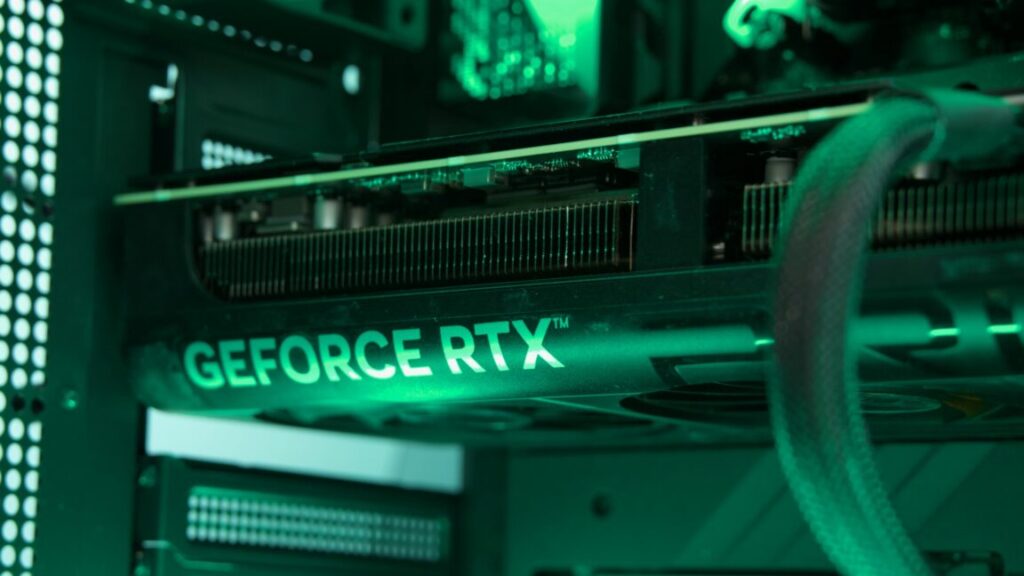
This week, we’re seeing signs that the RAM crunch is starting to affect the GPU market—Asus made some waves when it inadvertently announced that it was discontinuing its GeForce RTX 5070 Ti.

Though the company has since tried to walk this announcement back, if you’re a GPU manufacturer, there’s a strong argument for either discontinuing this model or de-prioritizing it in favor of other GPUs. The 5070 Ti uses 16GB of GDDR7, plus a partially disabled version of Nvidia’s GB203 GPU silicon. This is the same chip and the same amount of RAM used in the higher-end RTX 5080—the thinking goes, why continue to build a graphics card with an MSRP of $749 when the same basic parts could go to a card with a $999 MSRP instead?

Whether Asus or any other company is canceling production or not, you can see why GPU makers would be tempted by the argument: Street prices for the RTX 5070 Ti models start in the $1,050 to $1,100 range on Newegg right now, where RTX 5080 cards start in the $1,500 to $1,600 range. Though 5080 models may need more robust boards, heatsinks, and other components than a 5070 Ti, if you’re just trying to maximize the profit-per-GPU you can get for the same amount of RAM, it makes sense to shift allocation to the more expensive cards.

RAM shortage chaos expands to GPUs, high-capacity SSDs, and even hard drives Read More »