Tech

graphql-could-be-the-key-to-taming-the-api-explosion

GraphQL could be the key to taming the API explosion

Application development has a long history of quick evolution and transformation, perhaps faster than any other industry. The tools we use to create and host our applications are constantly changing.

The fast developments in programming tools provide plenty of opportunities to create software for companies of different sizes, industries, and budgets. However, the added flexibility and diversity of tools — as well as the constantly changing landscape — also introduce their own set of challenges.

Developers must be able to create their apps in ways that can adapt to the scale and changes that their organization, customers, and infrastructure undergo. Fortunately, with the shift toward graph-based programming, companies will be much better equipped to maintain their agility as they continuously grow and adapt to the needs of their customers.

The challenges of modern application development

One of the blessings — and curses — of modern application development is the many options you have.

You can choose between running your application on your own servers, in the cloud, or in a hybrid model. You can use a serverless model, where a cloud provider manages your server in the background and you focus on functionality, or choose a containerized model, where your application is packaged into a docker file. You can choose between different models of data hosting and storage, including data warehouses and data lakes. And you can make these and many other choices for each component of your application.

The benefit of this powerful variety of computing and storage platforms is that you can adjust your application according to the needs of your customers and your organization. However, the downside is the added complexity that comes with communicating with the many different service APIs that support your application.

GraphQL helps developers communicate with APIs through flexible and structured data queries.

“Many applications must communicate with dozens, even hundreds of services during runtime. In some cases, every application update (mobile, web, etc.) requires hundreds of API calls to different services,” says Peggy Rayzis, Sr. Director of Developer Experience at Apollo Graph, Inc. “This requires a huge and complicated effort by developers, who must ensure all these different services are compatible and can interoperate.”

The added complexity also makes it difficult to iterate, add or modify features, or change the underlying infrastructure. In each case, redundant implementations and inconsistencies between services force developers to go through intensive changes in their code to connect all the old and new services.

Graph-based programming to the rescue

One of the trends helping developers tackle the complexity of the application ecosystem is graph-based programming. Graph-based programming enables developers to add a data schema layer between their application and the API services that run behind the scenes. This layer of abstraction decouples these parts and enables them to evolve without causing major disruptions in each other.

“Basically, the idea is that you add an intermediate layer that enables your application to interact with your data entities by querying a graph,” Rayzis says. “The graph layer is uniform and flexible, regardless of what kind of infrastructure is working behind the scenes, whether it’s an on-prem server, a cloud VM, a REST API, a data warehouse, or a serverless function such as AWS Lambda.”

Graph-based programming was popularized by GraphQL, a data-query language introduced by Facebook in 2015. GraphQL helps developers communicate with APIs through flexible and structured data queries. This makes it easier for the developer to focus on the data schema and logic of the application and also maintain the stability of the application as the APIs evolve and change.

We’re seeing 30% of fortune 500 companies building their apps on the supergraph.

Companies and applications of different sizes can benefit from graph-based programming. Rayzis says:

Regardless of size and structure, every application can benefit from graph-based development. As your app grows or your data infrastructure changes, your graph remains consistent and remains tied to the logic of your app.

For example, Walmart used GraphQL to create a federated schema of different entities used across their different applications and services offered on web and mobile. With GraphQL, they could remove a lot of the code being replicated across their APIs, unify their applications, and become much more agile in rolling out features and improving the user experience.

The next generation of graph-based tools

“What we found over our six-plus years working with developers implementing GraphQL at scale is that its flexibility is its greatest strength, but it can also lead to some negative consequences if it isn’t implemented in a principled way,” Rayzis says.

These limitations led to the idea of the supergraph, Apollo’s special implementation of GraphQL. The supergraph goes beyond the basic benefits of GraphQL, which are to replace data-fetching and backend for frontend (BFF) code with schema and queries. It brings together a company’s data, microservices, and digital capabilities, creating a unified composition layer for the whole organization. The supergraph architecture is built on Apollo’s open technology, Apollo Federation. Apollo also provides GraphOS, a cloud-based platform of tools with an edge runtime and schema delivery pipeline for the supergraph. According to Rayzis:

The supergraph allows you to distribute the graph schema across different teams and different services, but then unify it together into one interface for the client. It’s about solving real customer problems. It’s based on our years of experience, helping customers implement GraphQL. And really, the main principles are that it’s one unified layer, built-in modules that you can evolve over time.

One of the companies that have benefited from the supergraph is Booking.com, one of the world’s largest online travel agencies. Booking.com has been around since 1996 and is thus running a lot of legacy code and infrastructure. This makes it very challenging to change the software architecture, especially as the company employs thousands of engineers and needs to make sure they can collaborate safely.

Thanks to the flexibility and versatility of the supergraph, Booking.com was able to make a phased transition to GraphQL without breaking any of their services. As they gradually rolled out the supergraph across the organization, the engineers and managers realized its benefits and helped accelerate the transition. The full adoption of the supergraph has enabled Booking.com to ship 40% faster, sometimes doubling the speed at which they’re releasing features. At the same time, they’ve managed to considerably reduce mistakes and breaking changes.

“We’re seeing 30% of fortune 500 companies building their apps on the supergraph. And I think that number is only going to increase in the years to come,” Rayzis says.

It’s going to dramatically lower the barrier for app development and make it so that more developers can create apps. It’s going to continue to reduce the time needed to create those apps. And so by making it more approachable, and reducing that time, you’re going to see even more innovation.

GraphQL could be the key to taming the API explosion Read More »

european-startups-in-residential-solar-have-raised-over-e500-million-in-2022

European startups in residential solar have raised over €500 million in 2022

Over the past year, the skyrocketing fuel prices across Europe have increased consumer interest in alternative sources of energy, such as solar power. And as demand has been on the rise, 2022 was a good funding year for startups focusing on providing photovoltaic (PV) technology to residential customers.

Specifically, European startups in the sector have raised over €488 million — and that’s excluding the €855-million debt funding round attracted by Berlin-based unicorn Enpal.

Notably, 86.4% of the amount has been injected in German-based startups, including 1Komma5°, Zolar, Sunhero, Enpal, Einhundert, and Sunvigo.

1Komma5° has received the highest funding throughout the year at €200 million. Founded in 2021, the company has secured high-tier investors such as Porsche and is introducing an interesting business strategy: aggregating individual companies that offer solar services and bundling them together.

Beyond Germany, residential solar tech companies that have seen an increase in capital are also active in Spain (Samara), Sweden (Sunroof), Norway (Otovo), Estonia (Solarstone), and the UK (Naked Energy, Solivus).

Among them, Spain-based Samara offers another interesting case. Founded in the summer of 2022, the startup has managed to raise €6.4 million within six months.

The company uses software to develop a comprehensive, customer-centered solution, ranging from the installation of solar panels to EV chargers. The technology enables users to preview solar panel installation through a 3D model, estimate energy savings, and calculate their positive environmental impact through a decrease in CO2 emissions.

What all the companies have in common is the aim to enable the transition to solar energy by focusing on affordability and convenience: from easy installation practices and maintenance services to customizable options and energy monitoring tools.

Overall, 2022 has enabled startups in the space to attract even more capital, demonstrating their potential to provide better services to consumers, and in turn, promote further the switch to solar power.

And as Europe is pushing for the adoption of sustainable forms of energy, we can expect that solar tech startups will see higher investment in the coming year.

Published

Back to top

European startups in residential solar have raised over €500 million in 2022 Read More »

3-nightmare-interviews-for-software-developers

3 nightmare interviews for software developers


This article was originally published on .cult by Nadya Primak. .cult is a Berlin-based community platform for developers. We write about all things career-related, make original documentaries, and share heaps of other untold developer stories from around the world. The tech industry is not known for having great interviewing processes. From the notorious whiteboard interviews to algorithm challenges requiring a computer science degree to even wrap your head around, there are all kinds of outdated standards and approaches to interviewing developers that should have died out years ago. Unfortunately, like most legacy systems we love to hate, these interview processes…

This story continues at The Next Web

3 nightmare interviews for software developers Read More »

new-eu-battery-regulations-spell-big-trouble-for-manufacturers-and-tech-giants

New EU battery regulations spell big trouble for manufacturers and tech giants


EU lawmakers have agreed on a new set of rules aiming to make batteries in the bloc more sustainable and reusable. The regulations will cover the entire battery life cycle: from the extraction of materials and industrial production, to disposal. They will apply to all types of batteries sold in the EU, including portable batteries used in electronic devices, industrial batteries, SLI batteries used in automotive applications, as well as batteries used in two-wheelers and EVs. The green requirements of the newly-agreed rules set an impressive milestone for the Union as part of its goals to advance its energy transition…

This story continues at The Next Web

New EU battery regulations spell big trouble for manufacturers and tech giants Read More »

everything-you-need-to-know-about-big-tech’s-‘digital-layoff’-spree

Everything you need to know about big tech’s ‘digital layoff’ spree


Elon Musk is progressing plans to slim down Twitter since he bought the 396 million-member platform for US$44 billion (£38 billion) on October 27. Musk’s deal has taken Twitter private, dissolved the platform’s board and enhanced his unilateral power as CEO. But mass redundancy announcements made since he took control have been scrutinized globally. Musk’s plans to restructure Twitter began with laying off top executives, before notifications were emailed to around half of the Twitter global workforce that they were being made redundant or that their jobs were at risk. In a memo to staff, Musk defended the firings as…

This story continues at The Next Web

Everything you need to know about big tech’s ‘digital layoff’ spree Read More »

the-eu-will-grant-e1.13bn-to-tech-startups-in-2023

The EU will grant €1.13bn to tech startups in 2023


The newly-adopted 2023 work program of the European Innovation Council (EIC) will grant €1.6 billion in funding to scientists and innovators who can scale up breakthrough technologies and create new markets. Notably, 70% of this amount (€1.13bn) is reserved for the EIC Accelerator, which supports startups and SMEs in developing and marketing high-impact innovations. Specifically, €525 million is made available for startups developing future technologies that will contribute to the EU’s strategic objectives. These include biomarkers for cancer, decontamination for pandemic management, energy storage, quantum or semiconductor components, resilient agriculture, space tech, and the New European Bauhaus initiative. The remaining…

This story continues at The Next Web

The EU will grant €1.13bn to tech startups in 2023 Read More »

brits-don’t-give-a-damn-about-the-metaverse

Brits don’t give a damn about the metaverse


Shocking absolutely no one, it turns out the UK barely gives a diddly about the metaverse — especially when compared to the rest of the world. But, for startups and businesses, this apathy is actually an opportunity. First off though, the data. According to a report from law firm Gowling WLG, 10% of UK consumers aren’t interested in the metaverse, and 20% don’t expect it to become mainstream. On top of that, many people are concerned about its downsides: Credit: Gowling WLG The report also highlights that twice as many consumers in China (83%) want to take part in the…

This story continues at The Next Web

Brits don’t give a damn about the metaverse Read More »

getir’s-acquisition-of-gorillas-is-a-death-knell-for-quick-commerce

Getir’s acquisition of Gorillas is a death knell for quick commerce


Getir, the Turkish fast delivery startup, has bought its German rival Gorillas. This further reduces the number of companies in Europe promising to bring groceries to your door within minutes. This merger leaves only three such businesses active on the continent: Getir, Berlin-based Flink, and US-based Gopuff. As Getir’s founder tweeted, the acquisition valued Gorillas at $1.2 billion — down from $3.1 billion in September 2021. Gorillas was among the most hyped-up startups in the instant grocery delivery sector, offering delivery times in less than ten minutes and numerous discounts. Founded in 2020, the company expanded rapidly covering multiple European…

This story continues at The Next Web

Getir’s acquisition of Gorillas is a death knell for quick commerce Read More »

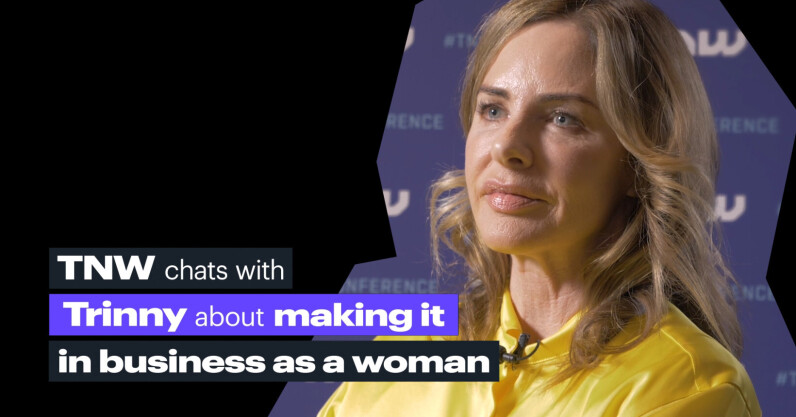
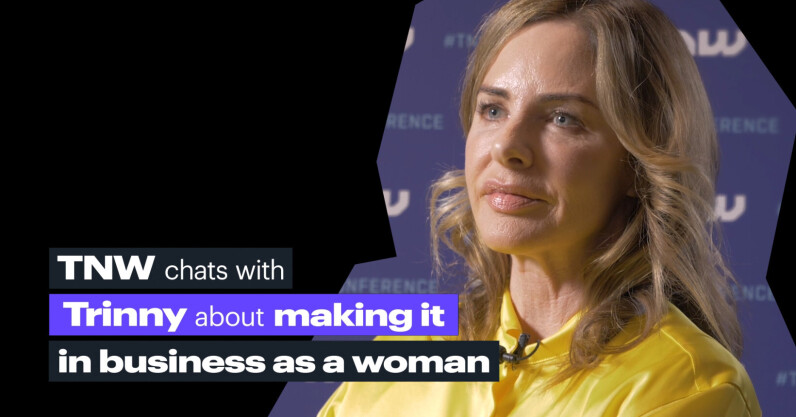
we-asked-trinny-woodall-how-to-make-it-in-business-as-a-woman

We asked Trinny Woodall how to make it in business as a woman


Being a woman in business is incredibly tough. On average, it takes them 30% longer than men to achieve the CEO position. They hold under 25% of board room positions. And 42% of women have experienced sexism at work. These figures are just the tip of the iceberg. From socialization to society-wide prejudice, women are confronted by difficulties at every turn in the startup, tech, and business worlds. But that doesn’t mean success can’t be found, far from it in fact. There are rafts of women thriving in business — and one of those is Trinny Woodall, the co-founder of…

This story continues at The Next Web

We asked Trinny Woodall how to make it in business as a woman Read More »

the-netherlands-is-the-ideal-breeding-ground-for-green-tech-startups

The Netherlands is the ideal breeding ground for green tech startups


The Netherlands is one of the best places in the world for startups and businesses working on green tech. Managing the climate is deeply rooted in Dutch culture. With nearly a third of its land below sea level, the country has been highly-adaptive to environmental challenges — finding ways to turn them into opportunities for technological growth. Think, for instance, of how the Dutch have managed to reclaim land from sea with polders, or avoid flooding from the North Sea with the construction of the Delta Works, a series of dams and surge barriers along the southern West coast. The…

This story continues at The Next Web

The Netherlands is the ideal breeding ground for green tech startups Read More »

eu-challenges-meta-to-a-duel-over-targeted-advertising

EU challenges Meta to a duel over targeted advertising


When signing up for Facebook and Instagram, users are forced to agree to Meta’s privacy policy. This allows the company to deliver targeted adverts — but not for much longer. On Monday, EU privacy regulators ruled that users of Meta’s platforms should no longer have to accept these sort of adverts, sources from Reuters and the Wall Street Journal reveal. The regulators declared that this kind of coerced consent falls foul of the General Data Protection Regulation (GDPR), the EU’s wide-reaching privacy law. This doesn’t mean it’s a done deal though. Ireland’s Data Protection Commission still needs to issue specific orders…

This story continues at The Next Web

EU challenges Meta to a duel over targeted advertising Read More »