vulcan

navajo-objection-to-flying-human-ashes-to-the-moon-won’t-delay-launch

Navajo objection to flying human ashes to the Moon won’t delay launch
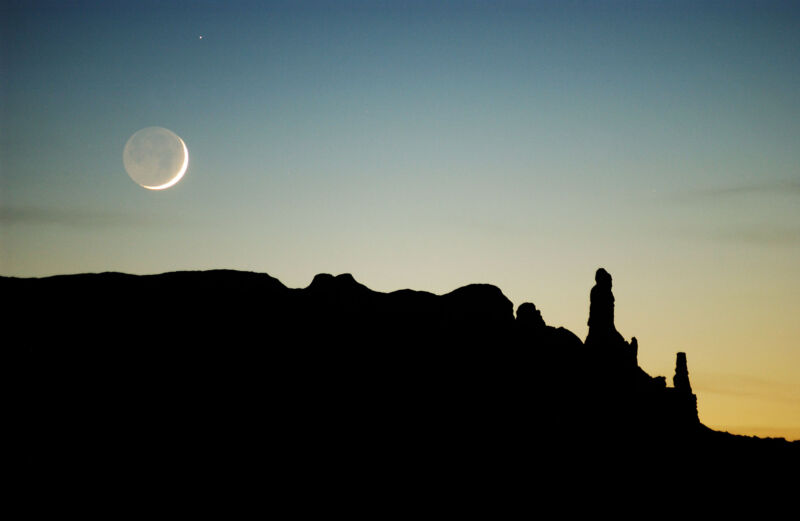
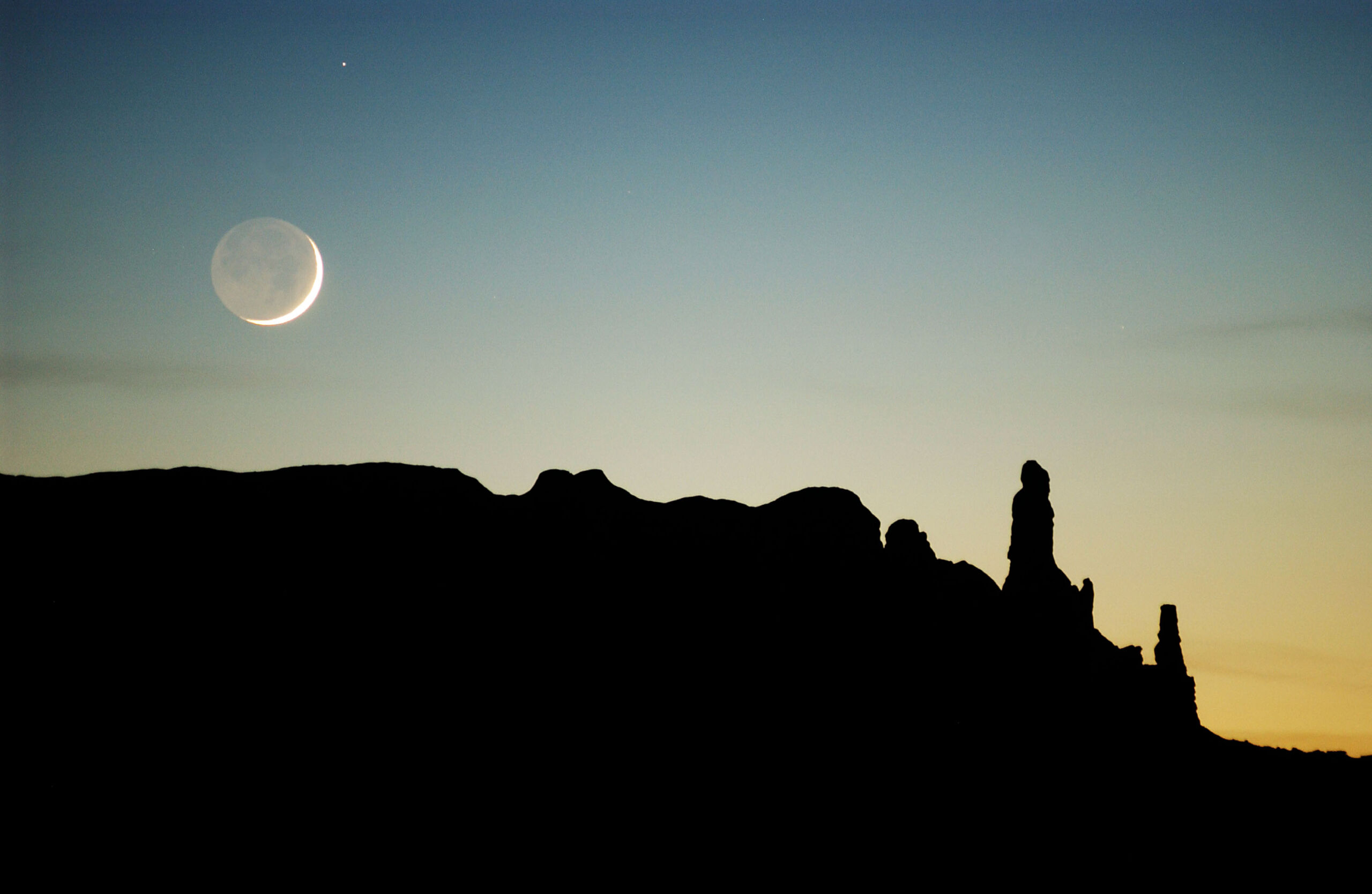
The Moon sets over sandstone formations on the Navajo Nation.

Enlarge / The Moon sets over sandstone formations on the Navajo Nation.

Science instruments aren’t the only things hitching a ride to the Moon on a commercial lunar lander ready for launch Monday. Two companies specializing in “space burials” are sending cremated human remains to the Moon, and this doesn’t sit well with the Navajo Nation.

The Navajo people, one of the nation’s largest Indigenous groups, hold the Moon sacred, and putting human remains on the lunar surface amounts to desecration, according to Navajo Nation President Buu Nygren.

“The sacredness of the Moon is deeply embedded in the spirituality and heritage of many Indigenous cultures, including our own,” Nygren said in a statement. “The placement of human remains on the Moon is a profound desecration of this celestial body revered by our people.”

Last month, Nygren wrote a letter to NASA and the Department of Transportation, which licenses commercial space launches, requesting a postponement of the flight to the Moon. The human remains in question are mounted to the robotic Peregrine lander, built and owned by a Pittsburgh-based company named Astrobotic, poised for liftoff from Cape Canaveral Space Force Station in Florida on top of United Launch Alliance’s Vulcan rocket.

This is the second time a US spacecraft has gone to the Moon with human remains aboard. In 1998, NASA’s Lunar Prospector mission launched with a small capsule containing the ashes of Eugene Shoemaker, a pioneer in planetary geology. NASA intentionally crashed spacecraft into the Moon in 1999, leaving Shoemaker’s ashes permanently on the surface.

At that time, officials from the Navajo Nation objected to the scattering of Shoemaker’s ashes on the Moon. NASA promised to consult with tribal officials before another spacecraft flew to the Moon with human remains. A big part of Nygren’s recent complaint was the lack of dialogue on the matter before this mission.

“This act disregards past agreements and promises of respect and consultation between NASA and the Navajo Nation, notably following the Lunar Prospector mission in 1998,” Nygren said in a statement. He added that the request for consultation is “rooted in a desire to ensure that our cultural practices, especially those related to the Moon and the treatment of the deceased, are respected.”

An oversight

Officials from the White House and NASA met with Nygren on Friday to discuss his concerns. Speaking with reporters after the meeting, Nygren said he believes it was an oversight that federal officials didn’t meet with the Navajo Nation at an earlier stage.

“I think being able to consult into the future is one of the things that they’re going to try to work on,” he told reporters Friday. While Nygren said that was good to hear, “we were given no reassurance that the human remains were not going to be transported to the Moon on Monday.”

Removing the human remains would delay the launch at least several weeks. It would require removing Astrobotic’s lunar lander from the top of the Vulcan rocket, taking it back to a clean room facility, and opening the payload fairing to provide access to the spacecraft.

“They’re not going to remove the human remains and keep them here on Earth where they were created, but instead, we were just told that a mistake has happened, we’re sorry, into the future we’re going to try to consult with you,” Nygren said.

“We take concerns expressed from the Navajo Nation very, very seriously,” said Joel Kearns, deputy associate administrator for exploration in NASA’s science directorate. “And we think we’re going to be continuing this conversation.”
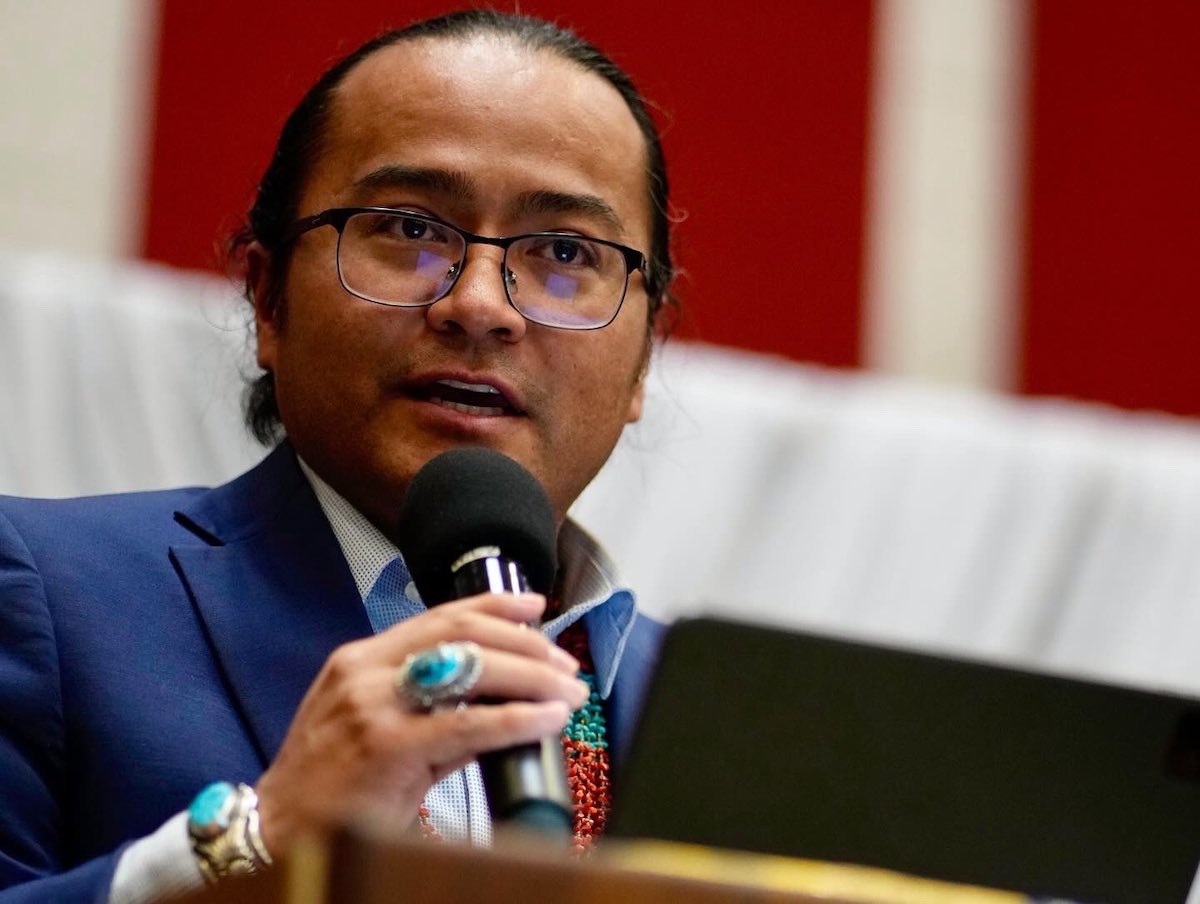
Buu Nygren, president of the Navajo Nation.

Enlarge / Buu Nygren, president of the Navajo Nation.

Astrobotic’s mission is different from Lunar Prospector in one important sense. The Peregrine lander is privately owned, while Lunar Prospector was a government spacecraft. NASA has a $108 million contract with Astrobotic to deliver the agency’s science payloads to the Moon as a commercial service. Astrobotic’s mission is the first time a US company will attempt to land a commercial spacecraft on the Moon.

While Nygren argues that NASA’s role as Astrobotic’s anchor customer should give the agency some influence over decision-making, the government’s only legal authority in overseeing the mission is through the Federal Aviation Administration.

The FAA is responsible for ensuring commercial launches, like the Vulcan rocket flight Monday, don’t put public safety at risk. The launch licensing process also includes an FAA review to ensure a launch would not jeopardize US national security, foreign policy interests, or international obligations.

“For our own missions … NASA works to be very mindful of potential concerns for any work that we’ll do on the Moon,” Kearns said. “In this particular case … NASA really doesn’t have involvement or oversight.”

Navajo objection to flying human ashes to the Moon won’t delay launch Read More »
as-vulcan-nears-debut,-it’s-not-clear-whether-ula-will-live-long-and-prosper

As Vulcan nears debut, it’s not clear whether ULA will live long and prosper

ULA LLAP —

This marks an absolutely pivotal moment for the 20-year-old launch company.

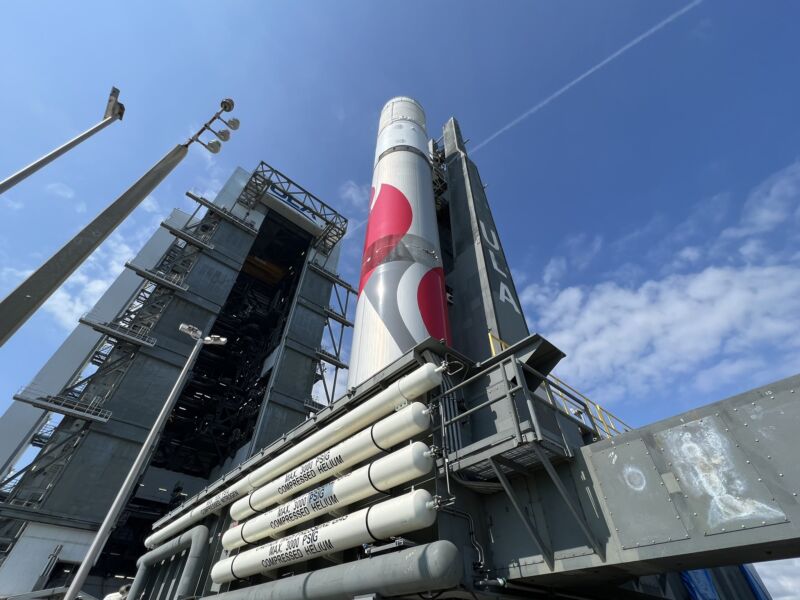
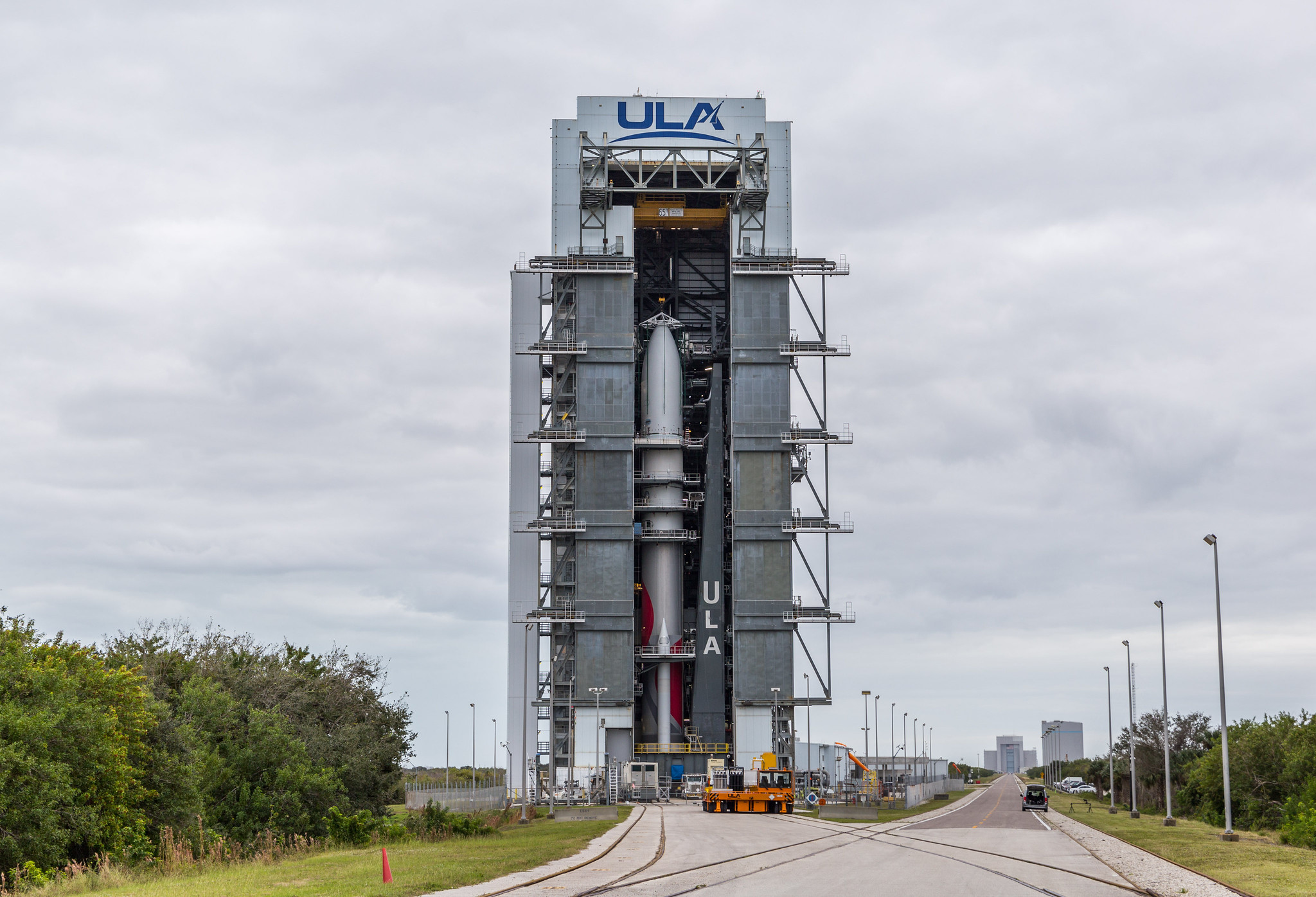
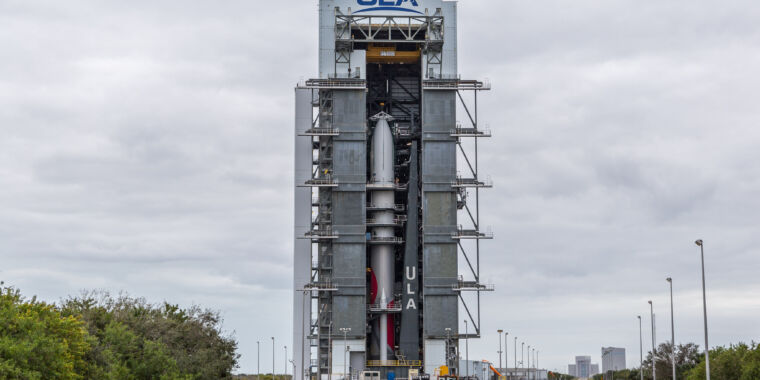
United Launch Alliance hoists the Certification-1 payloads atop the Vulcan rocket in the Vertical Integration Facility adjacent to Space Launch Complex-41 at Cape Canaveral Space Force Station.

Enlarge / United Launch Alliance hoists the Certification-1 payloads atop the Vulcan rocket in the Vertical Integration Facility adjacent to Space Launch Complex-41 at Cape Canaveral Space Force Station.

United Launch Alliance

It’s nearly time. After years of delays, billions of dollars in federal funding, and a spectacular second-stage explosion, the large and impressive Vulcan rocket is finally ready to take flight.

United Launch Alliance’s heavy lift vehicle underwent its final review on Thursday, and the company cleared the rocket for its debut flight. With weather looking favorable, the Vulcan rocket is on track to lift off at 2: 18 am ET (7: 18 UTC) on Monday from Cape Canaveral Space Force Station in Florida. The mission’s primary payload is a lunar lander built by Astrobotic, and the launch will be streamed live here.

This marks an absolutely pivotal moment for the 20-year-old launch company, which has gone from the titan of the US launch industry to playing a distant second fiddle to its one-time upstart competitor SpaceX. Last year, SpaceX launched 98 rockets. United Launch Alliance, or ULA, tallied just three. The owners of ULA, Lockheed Martin and Boeing, are also on the cusp of selling the launch company if they can find a buyer willing to pay the right price. And critically, for the first time, ULA will be flying a new vehicle it designed and developed on its own—a rocket with some but not a majority of its heritage from the legacy Atlas and Delta rockets that have flown since the Cold War.

So yeah, it’s a moment.

A little history

A quarter of a century ago, two of America’s largest aerospace contractors, Lockheed and Boeing, were the national leaders in providing launch services for the US military and many of NASA’s science missions. But they struggled to capture commercial satellite launches in an emerging market. Lockheed, with its Atlas rockets, and Boeing, with its Deltas, could not compete with Europe-based Arianespace and Russia on price. So the two US contractors doubled down on their competition for US government launch contracts.

The competition grew ugly, with allegations that Boeing stole rocket designs from Lockheed. The US Department of Justice began investigating how Boeing acquired tens of thousands of pages of trade secrets belonging to Lockheed Martin. There were lawsuits, and then questions about whether Boeing’s rocket business was viable. Military officials began to worry that if Boeing stopped flying the Delta, their only pathway into space would be through a Russian engine—the RD-180 that powered Lockheed’s Atlas V.

To ensure it had redundant access to space on two different rocket families, the military stepped in and arranged a shotgun marriage. The Department of Defense brokered a deal in which Lockheed and Boeing would merge their rocket-building ventures into one company, United Launch Alliance, in 2005. The parents retained a 50 percent ownership stake, and to sweeten the pot, the military agreed to pay a subsidy of about $1 billion a year.

Everything seemed to be working out well until SpaceX started launching rockets.

A little rivalry

ULA had tried to kill the baby. When SpaceX sought a launch site for its Falcon 9 rocket at Cape Canaveral in 2007, the parents lobbied the Air Force brass hard to stop the lease of Space Launch Complex-40 to Elon Musk and his rocket company. But the commander of the 45th Space Wing with oversight of Cape Canaveral, Gen. Susan Helms, approved the lease anyway.

Since then, ULA and SpaceX have been uneasy bedfellows in Florida, working side by side at nearby launch pads. Some of the rivalry was good-natured. Every week, for a while, engineers from SpaceX and ULA would meet up at Hogan’s Irish Bar in Cape Canaveral for trivia night. They would vie for nerd supremacy, drinking Guinness and blowing off steam.

But there have been more difficult confrontations. Musk kept pointing out the $1 billion subsidy at Congressional hearings—ULA officials bristled at the characterization of this ELC payment as a subsidy, but in effect, that’s what it was—and arguing that SpaceX’s Falcon 9 rocket could fly many of the military’s missions for much-reduced prices.

The issue came to a head in 2014, when the Air Force and ULA announced a new agreement for 36 national security launches to be flown during the remainder of the decade. ULA’s chief executive at the time, Mike Gass, hailed this “block buy” agreement because it would save the government $4.4 billion. Musk seethed. By then, his Falcon 9 rocket had launched eight times, all successfully. He sued the US government to stop the block buy and open up competition for the Falcon 9.

Several months into the lawsuit, SpaceX and the Air Force entered mediation. As part of the settlement, the military agreed to accelerate the certification of the Falcon 9 rocket and open up a number of the block buy launches to competition. SpaceX launched its first national security payload in 2017. SpaceX has not really looked back since.

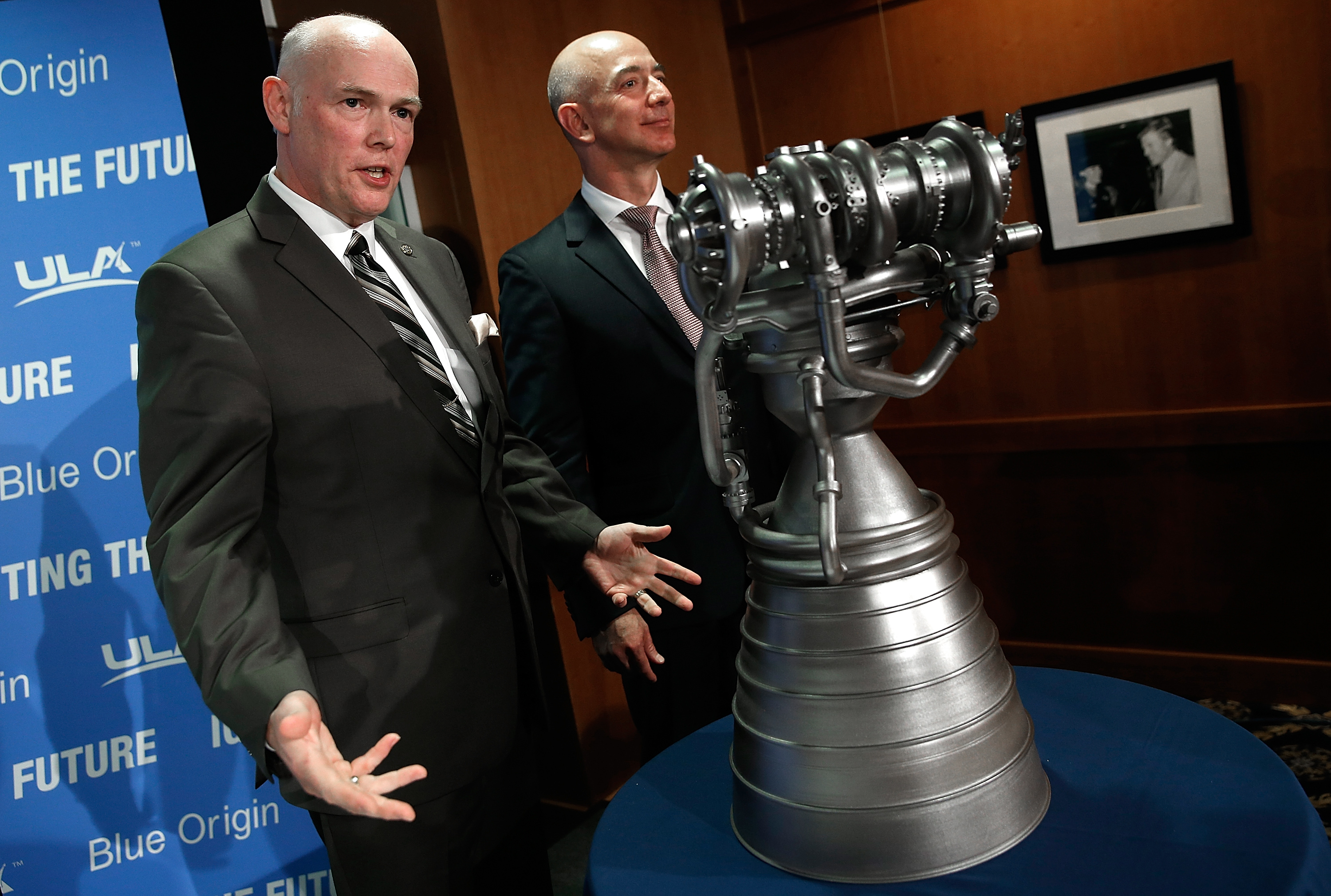
Jeff Bezos (right), the founder of Blue Origin and Amazon.com, and Tory Bruno, CEO of United Launch Alliance, display a small-scale version of the BE-4 rocket engine during a press conference in 2014.

Enlarge / Jeff Bezos (right), the founder of Blue Origin and Amazon.com, and Tory Bruno, CEO of United Launch Alliance, display a small-scale version of the BE-4 rocket engine during a press conference in 2014.

As Vulcan nears debut, it’s not clear whether ULA will live long and prosper Read More »

ula-chief-says-vulcan-rocket-will-slip-to-2024-after-ground-system-issues

ULA chief says Vulcan rocket will slip to 2024 after ground system issues

ULA delay —

The Colorado-based launch company will end 2023 with just three launches.

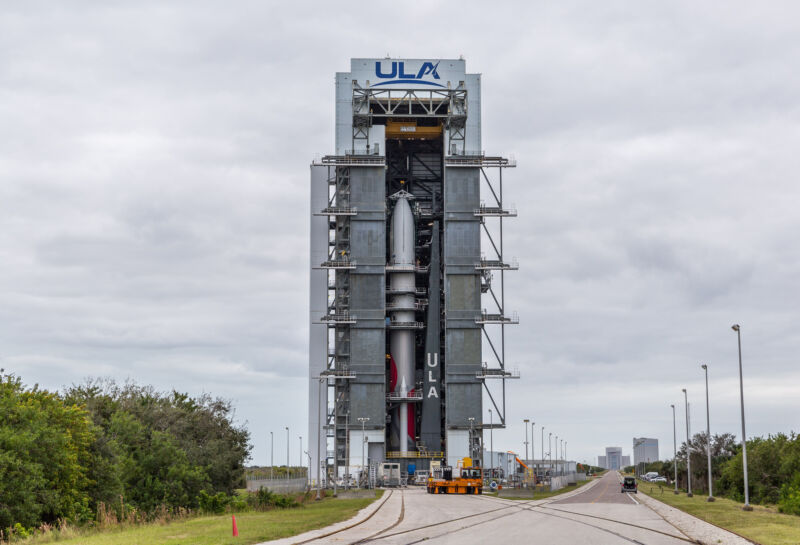
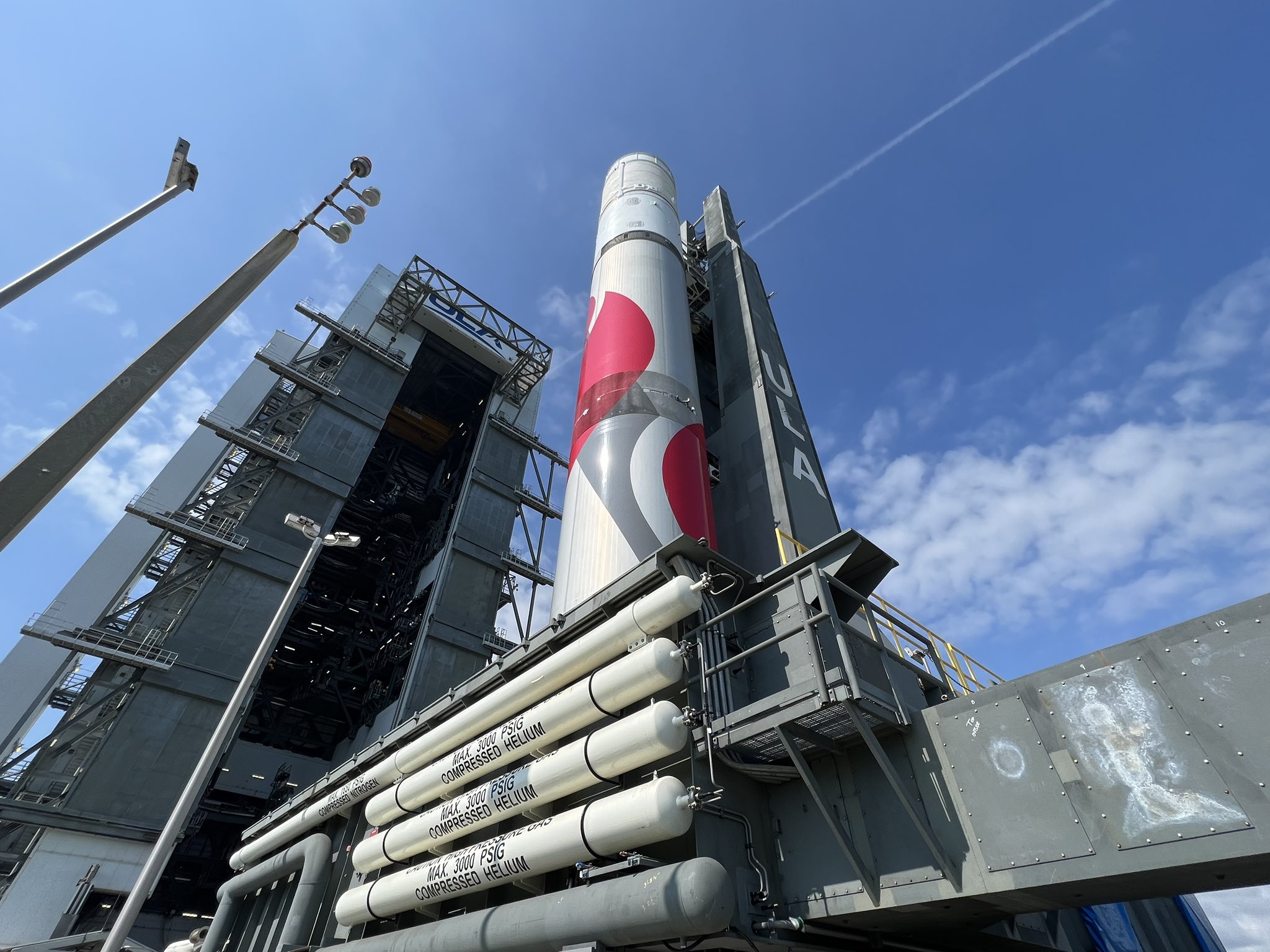
ULA's Vulcan rocket rolls to the launch pad for testing.

Enlarge / ULA’s Vulcan rocket rolls to the launch pad for testing.

United Launch Alliance

United Launch Alliance will not see the debut of its next-generation Vulcan rocket in 2023, as previously planned.

The launch company’s chief executive, Tory Bruno, announced the delay on the social media site X on Sunday. United Launch Alliance had been working toward a debut flight of the lift booster on Christmas Eve, from Cape Canaveral Space Force Station in Florida.

Bruno made the announcement after the company attempted to complete a fueling test of the entire rocket, known as a wet dress rehearsal.

“Vehicle performed well,” Bruno wrote. “Ground system had a couple of (routine) issues, (being corrected). Ran the timeline long so we didn’t quite finish. I’d like a FULL WDR before our first flight, so XMAS eve is likely out. Next Peregrine window is 8 Jan.”

Peregrine is the rocket’s primary payload, a lunar lander built by Astrobotic that is intended to deliver scientific experiments for NASA and other payloads the Moon. It has specific launch windows in order to reach the Moon and attempt a landing during ideal lighting conditions.

From the information contained in Bruno’s comment, it appears as though the work to correct the ground systems to fuel Vulcan—the first stage propellant is methane, which United Launch Alliance has not worked with before—will take long enough that it will preclude another fueling test ahead of the rocket’s late December launch window. Thus, the next launch attempt will likely occur no earlier than January 8.

A light cadence

It has been a slow year for United Launch Alliance, which dominated the US launch industry a decade ago. The company is going to launch just three rockets this calendar year: the classified NROL-68 mission on a Delta IV Heavy rocket in June, the “Silentbarker” mission for the National Reconnaissance Office on an Atlas V in September, and two Project Kuiper satellites for Amazon on an Atlas V in October.

That is the company’s lowest total number of launches since its founding in 2006, when the rocket businesses of Lockheed Martin and Boeing were merged.

Part of the reason for the low total is that United Launch Alliance is undergoing a transition from its historical fleet of Delta and Atlas rockets to Vulcan, which is intended to be more price competitive with other commercial offerings, such as SpaceX’s Falcon 9 and Falcon Heavy rockets. There will be a lot of demand for Vulcan once it starts flying regulary.

However, another factor is that the lower cost and equally reliable Falcon rockets have taken commercial and government launch business away from United Launch Alliance. SpaceX has steadily ascended over the last decade as United Launch Alliance has struggled to compete.

Whereas Bruno’s company launched just three rockets in 2023, on a handful of occasions SpaceX has launched three rockets in three days during this calendar year. SpaceX is likely to end the year with between 95 and 100 total launches.

ULA chief says Vulcan rocket will slip to 2024 after ground system issues Read More »