commercial crew

faulty-valve-scuttles-starliner’s-first-crew-launch

Faulty valve scuttles Starliner’s first crew launch
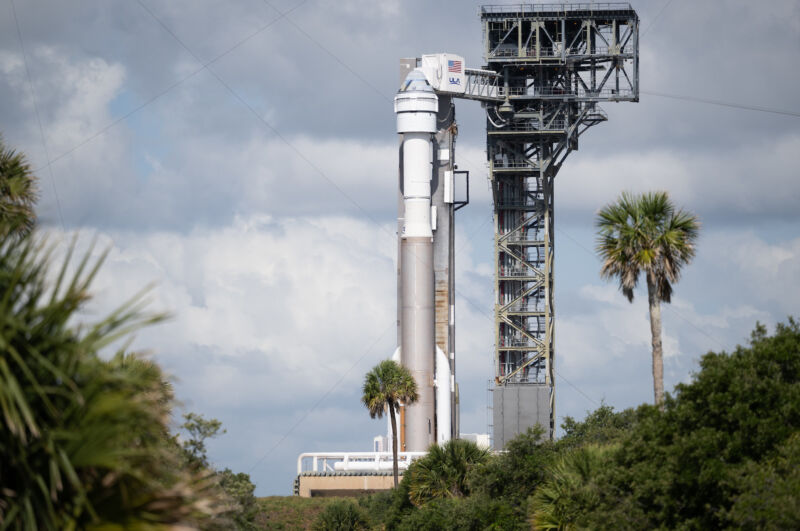
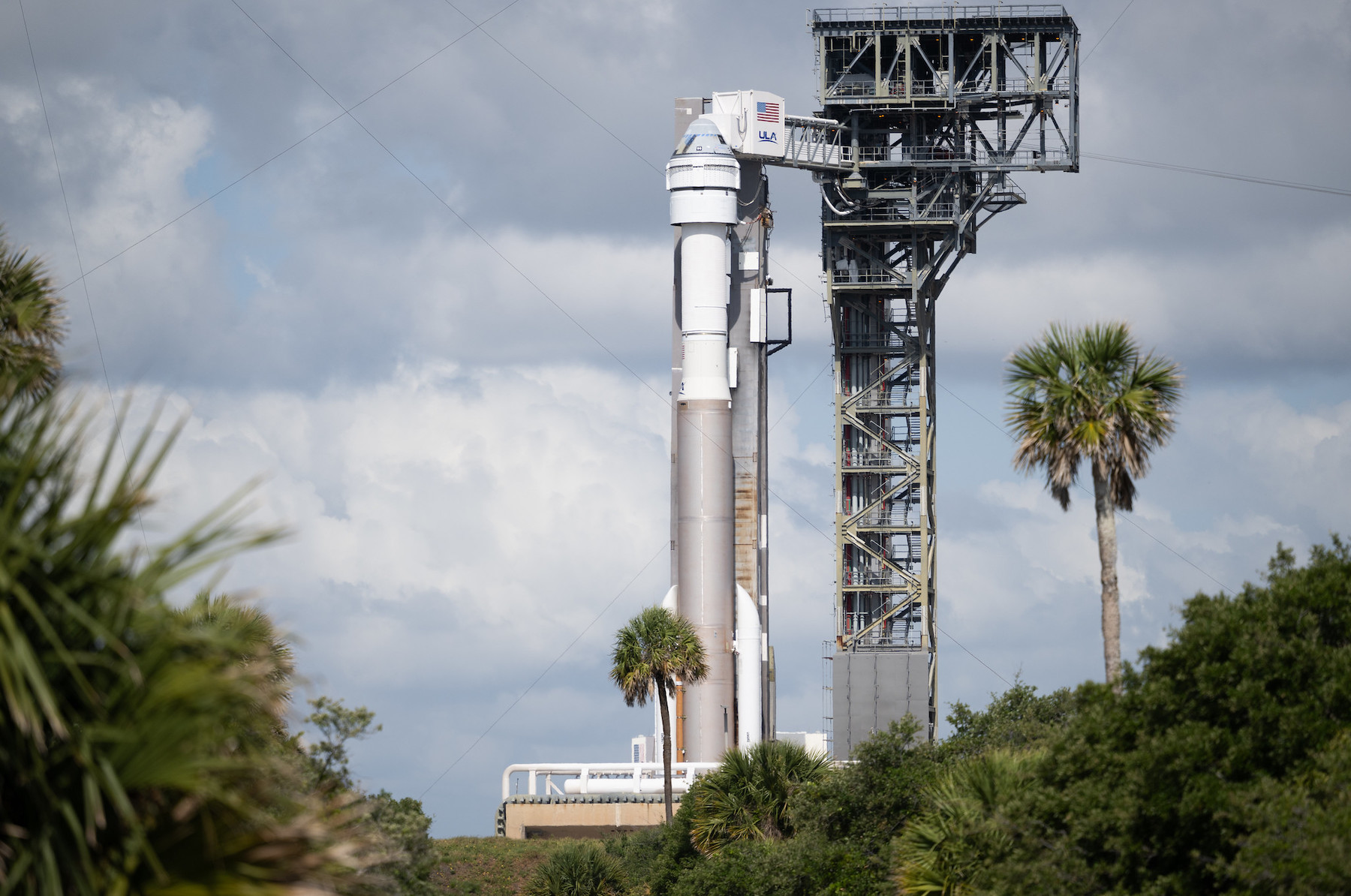
The Atlas V rocket and Starliner spacecraft on their launch pad Monday.

Enlarge / The Atlas V rocket and Starliner spacecraft on their launch pad Monday.

Astronauts Butch Wilmore and Suni Williams climbed into their seats inside Boeing’s Starliner spacecraft Monday night in Florida, but trouble with the capsule’s Atlas V rocket kept the commercial ship’s long-delayed crew test flight on the ground.

Around two hours before launch time, shortly after 8: 30 pm EDT (00: 30 UTC), United Launch Alliance’s launch team stopped the countdown. “The engineering team has evaluated, the vehicle is not in a configuration where we can proceed with flight today,” said Doug Lebo, ULA’s launch conductor.

The culprit was a misbehaving valve on the rocket’s Centaur upper stage, which has two RL10 engines fed by super-cold liquid hydrogen and liquid oxygen propellants.

“We saw a self-regulating valve on the LOX (liquid oxygen) side had a bit of a buzz; it was moving in a strange behavior,” said Steve Stich, NASA’s commercial crew program manager. “The flight rules had been laid out for this flight ahead of time. With the crew at the launch pad, the proper action was to scrub.”

The next opportunity to launch Starliner on its first crew test flight will be Friday night at 9 pm EDT (01: 00 UTC Saturday). NASA announced overnight that officials decided to skip a launch opportunity Tuesday night to allow engineers more time to study the valve problem and decide whether they need to replace it.

Work ahead

Everything else was going smoothly in the countdown Monday night. This mission will also be the first time astronauts have flown on ULA’s Atlas V rocket, which has logged 99 successful flights since 2002. It is the culmination of nearly a decade-and-a-half of development by Boeing, which has a $4.2 billion contract with NASA to ready Starliner for crew missions, then carry out six long-duration crew ferry flights to and from the International Space Station.

This crew test flight will last at least eight days, taking Wilmore and Williams to the space station to verify Starliner’s readiness for operational missions. Once Starliner flies, NASA will have two human-rated spacecraft on contract. SpaceX’s Crew Dragon has been in service since 2020.

When officials scrubbed Monday night’s launch attempt, Wilmore and Williams were already aboard the Starliner spacecraft on top of the Atlas V rocket at Cape Canaveral Space Force Station, Florida. The Boeing and ULA support team helped them out of the capsule and drove them back to crew quarters at the nearby Kennedy Space Center to wait for the next launch attempt.

“I promised Butch and Suni a boring evening,” said Tory Bruno, ULA’s CEO. “I didn’t mean for it to be quite this boring, but we’re going to follow our rules, and we’re going to make sure that the crew is safe.”

When the next launch attempt actually occurs depends on whether ULA engineers determine they can resolve the problem without rolling the Atlas V rocket back to its hangar for repairs.

The valve in question vents gas from the liquid oxygen tank on the Centaur upper stage to maintain the tank at proper pressures. This is important for two reasons. The tank needs to be at the correct pressure for the RL10 engines to receive propellant during the flight, and the Centaur upper stage itself has ultra-thin walls to reduce weight, and requires pressure to maintain structural integrity.

Faulty valve scuttles Starliner’s first crew launch Read More »
the-world’s-most-traveled-crew-transport-spacecraft-flies-again

The world’s most-traveled crew transport spacecraft flies again

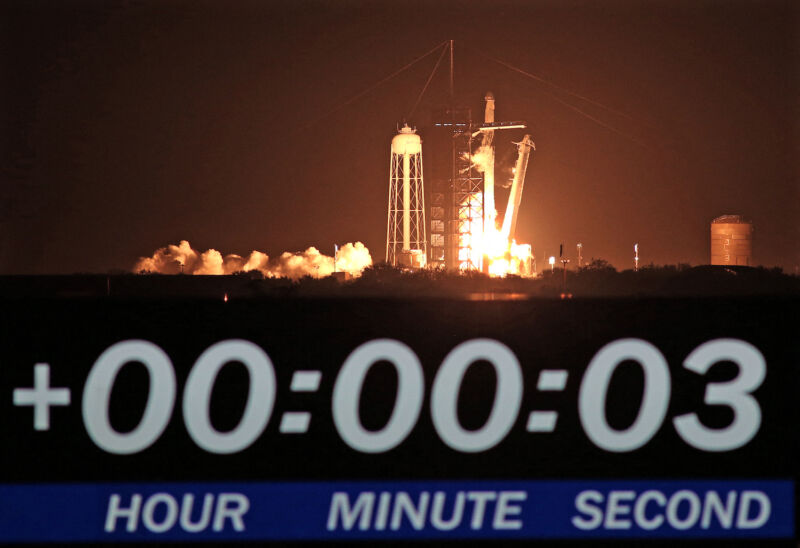
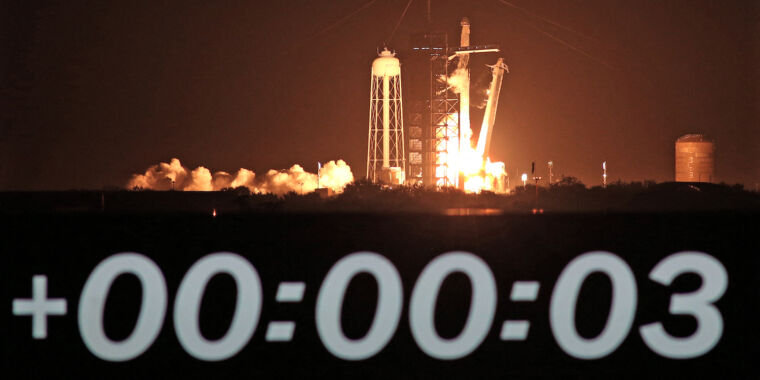
A SpaceX Falcon 9 rocket lifts off with the Crew-8 mission, sending three NASA astronauts and one Russian cosmonaut on a six-month expedition on the International Space Station.

Enlarge / A SpaceX Falcon 9 rocket lifts off with the Crew-8 mission, sending three NASA astronauts and one Russian cosmonaut on a six-month expedition on the International Space Station.

SpaceX’s oldest Crew Dragon spacecraft launched Sunday night on its fifth mission to the International Space Station, and engineers are crunching data to see if the fleet of Dragons can safely fly as many as 15 times.

It has been five years since SpaceX launched the first Crew Dragon spacecraft on an unpiloted test flight to the space station and nearly four years since SpaceX’s first astronaut mission took off in May 2020. Since then, SpaceX has put its clan of Dragons to use ferrying astronauts and cargo to and from low-Earth orbit.

Now, it’s already time to talk about extending the life of the Dragon spaceships. SpaceX and NASA, which shared the cost of developing the Crew Dragon, initially certified each capsule for five flights. Crew Dragon Endeavour, the first in the Dragon fleet to carry astronauts, is now flying for the fifth time.

This ship has spent 466 days in orbit, longer than any spacecraft designed to transport people to and from Earth. It will add roughly 180 days to its flight log with this mission.

Crew Dragon Endeavour lifted off from Florida aboard a Falcon 9 rocket at 10: 53 pm EST Sunday (03: 53 UTC Monday), following a three-day delay due to poor weather conditions across the Atlantic Ocean, where the capsule would ditch into the sea in the event of a rocket failure during the climb into orbit.

Commander Matthew Dominick, pilot Michael Barratt, mission specialist Jeanette Epps, and Russian cosmonaut Alexander Grebenkin put on their SpaceX pressure suits and strapped into their seats inside Crew Dragon Endeavour Sunday evening at NASA’s Kennedy Space Center. SpaceX loaded liquid propellants into the rocket, while ground teams spent the final hour of the countdown evaluating a small crack discovered on Dragon’s side hatch seal. Managers ultimately cleared the spacecraft for launch after considering whether the crack could pose a safety threat during reentry at the end of the mission.

“We are confident that we understand the issue and can still fly the whole mission safely,” a member of SpaceX’s mission control team told the crew inside Dragon.

This mission, known as Crew-8, launched on a brand-new Falcon 9 booster, which returned to landing a few minutes after liftoff at Cape Canaveral Space Force Station. The Falcon 9’s upper stage released the Dragon spacecraft into orbit about 12 minutes after liftoff. The four-person crew will dock at the space station around 3 am EST (0800 UTC) Tuesday.

Crew-8 will replace the four-person Crew-7 team that has been at the space station since last August. Crew-7 will return to Earth in about one week on SpaceX’s Crew Dragon Endurance spacecraft, which is flying in space for the third time.

The Crew-8 mission came home for a reentry and splashdown off the coast of Florida in late August of this year, wrapping up Crew Dragon Endeavour’s fifth trip to space. This is the current life limit for a Crew Dragon spacecraft, but don’t count out Endeavour just yet.

Fleet management

“Right now, we’re certified for five flights on Dragon, and we’re looking at extending that life out,” said Steve Stich, NASA’s commercial crew program manager. “I think the goal would be for SpaceX to say 15 flights of Dragon. We may not get there in every single system.”

One by one, engineers at SpaceX and NASA are looking at Dragon’s structural skeleton, composite shells, rocket engines, valves, and other components to see how much life is left in them. Some parts of the spacecraft slowly fatigue from the stresses of each launch, reentry, and splashdown, along with the extreme temperature swings the capsule sees thousands of times in orbit. Each Draco thruster on the spacecraft is certified for a certain number of firings.

Some components are already approved for 15 flights, Stich said in a recent press conference. “Some, we’re still in the middle of working on,” he said. “Some of those components have to go through some re-qualification to make sure that they can make it out to 15 flights.”

Re-qualifying a component on a spacecraft typically involves putting hardware through extensive testing on the ground. Because SpaceX reuses hardware, engineers can remove a part from a flown Dragon spacecraft and put it through qualification testing. NASA will get the final say in certifying the Dragon spacecraft for additional flights because the agency is SpaceX’s primary customer for crew missions.

The Dragon fleet is flying more often than SpaceX or NASA originally anticipated. The main reason for this is that Boeing, NASA’s other commercial crew contractor, is running about four years behind SpaceX in getting to its first astronaut launch on the Starliner spacecraft.

When NASA selected SpaceX and Boeing for multibillion-dollar commercial crew contracts in 2014, the agency envisioned alternating between Crew Dragon and Starliner flights every six months to rotate four-person crews at the International Space Station. With Boeing’s delays, SpaceX has picked up the slack.

The world’s most-traveled crew transport spacecraft flies again Read More »