computer history

stewart-cheifet,-pbs-host-who-chronicled-the-pc-revolution,-dies-at-87

Stewart Cheifet, PBS host who chronicled the PC revolution, dies at 87

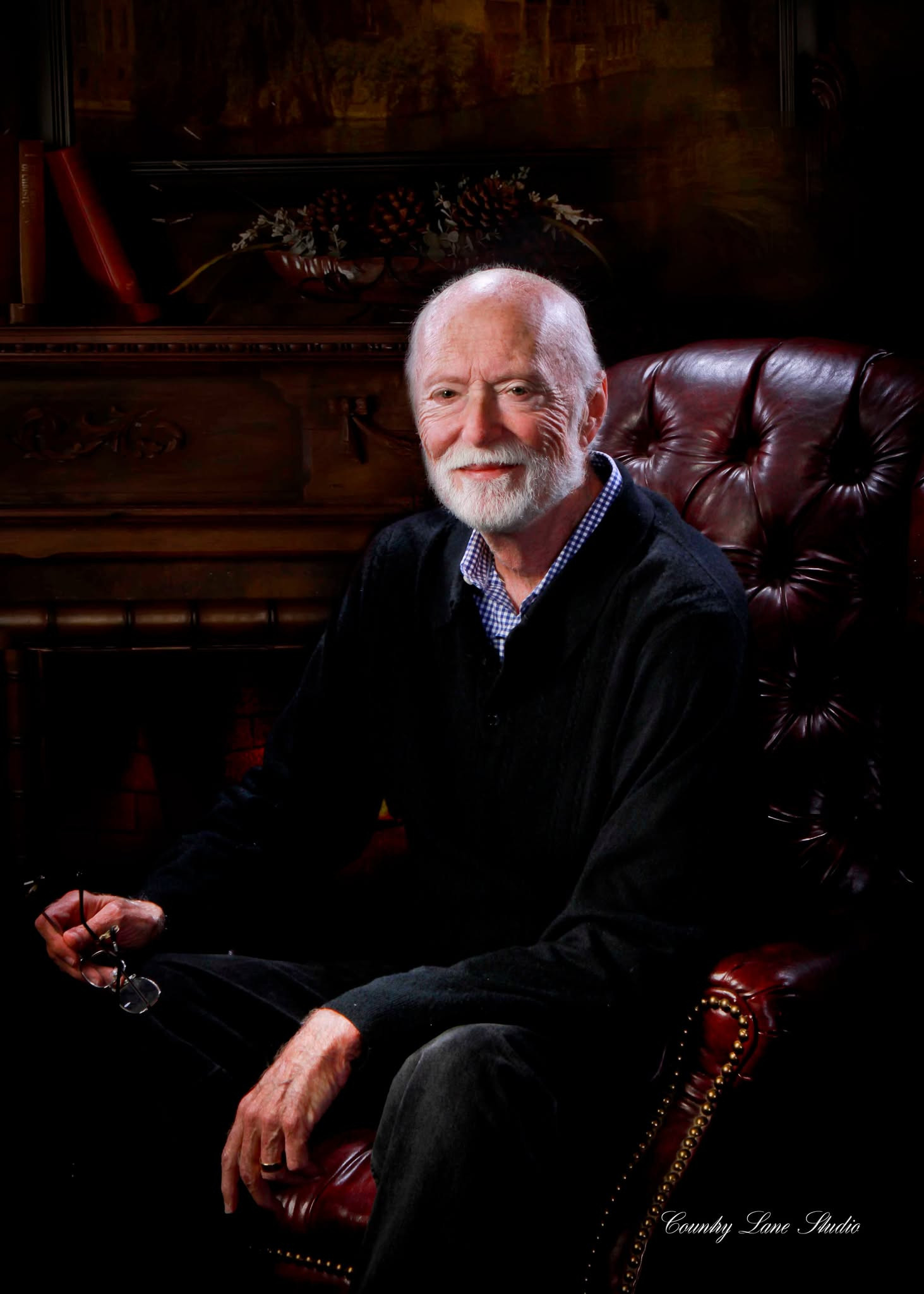
Stewart Cheifet, the television producer and host who documented the personal computer revolution for nearly two decades on PBS, died on December 28, 2025, at age 87 in Philadelphia. Cheifet created and hosted Computer Chronicles, which ran on the public television network from 1983 to 2002 and helped demystify a new tech medium for millions of American viewers.

Computer Chronicles covered everything from the earliest IBM PCs and Apple Macintosh models to the rise of the World Wide Web and the dot-com boom. Cheifet conducted interviews with computing industry figures, including Bill Gates, Steve Jobs, and Jeff Bezos, while demonstrating hardware and software for a general audience.

From 1983 to 1990, he co-hosted the show with Gary Kildall, the Digital Research founder who created the popular CP/M operating system that predated MS-DOS on early personal computer systems.

Computer Chronicles – 01×25 – Artificial Intelligence (1984)

From 1996 to 2002, Cheifet also produced and hosted Net Cafe, a companion series that documented the early Internet boom and introduced viewers to then-new websites like Yahoo, Google, and eBay.

A legacy worth preserving

Computer Chronicles began as a local weekly series in 1981 when Cheifet served as station manager at KCSM-TV, the College of San Mateo’s public television station. It became a national PBS series in 1983 and ran continuously until 2002, producing 433 episodes across 19 seasons. The format remained consistent throughout: product demonstrations, guest interviews, and a closing news segment called “Random Access” that covered industry developments.

After the show’s run ended and Cheifet left television production, he worked to preserve the show’s legacy as a consultant for the Internet Archive, helping to make publicly available the episodes of Computer Chronicles and Net Cafe.

Stewart Cheifet, PBS host who chronicled the PC revolution, dies at 87 Read More »

“rasti-computer”-is-a-detailed-grid-compass-tribute-made-from-framework-innards

“Rasti Computer” is a detailed GRiD Compass tribute made from Framework innards

But can it play Pitfall!? —

It’s a custom keyboard, an artfully dinged-up case, and a wonderful throwback.

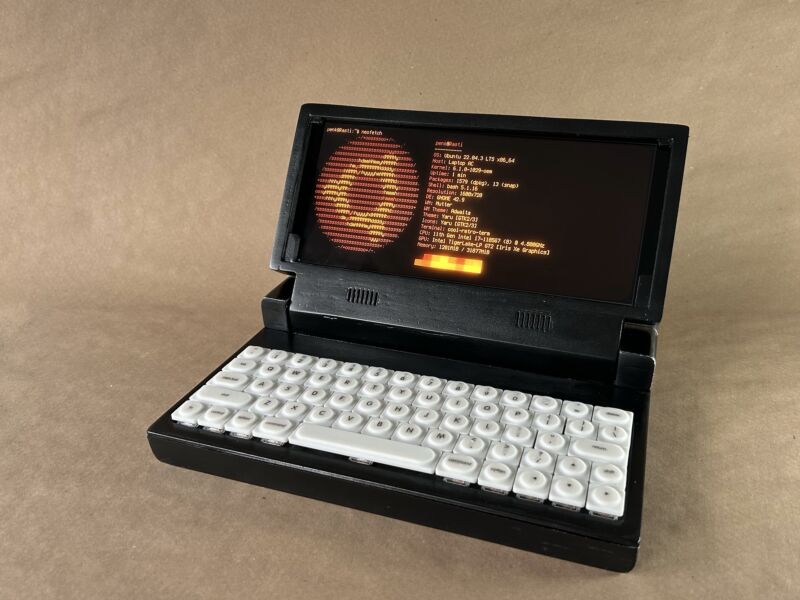
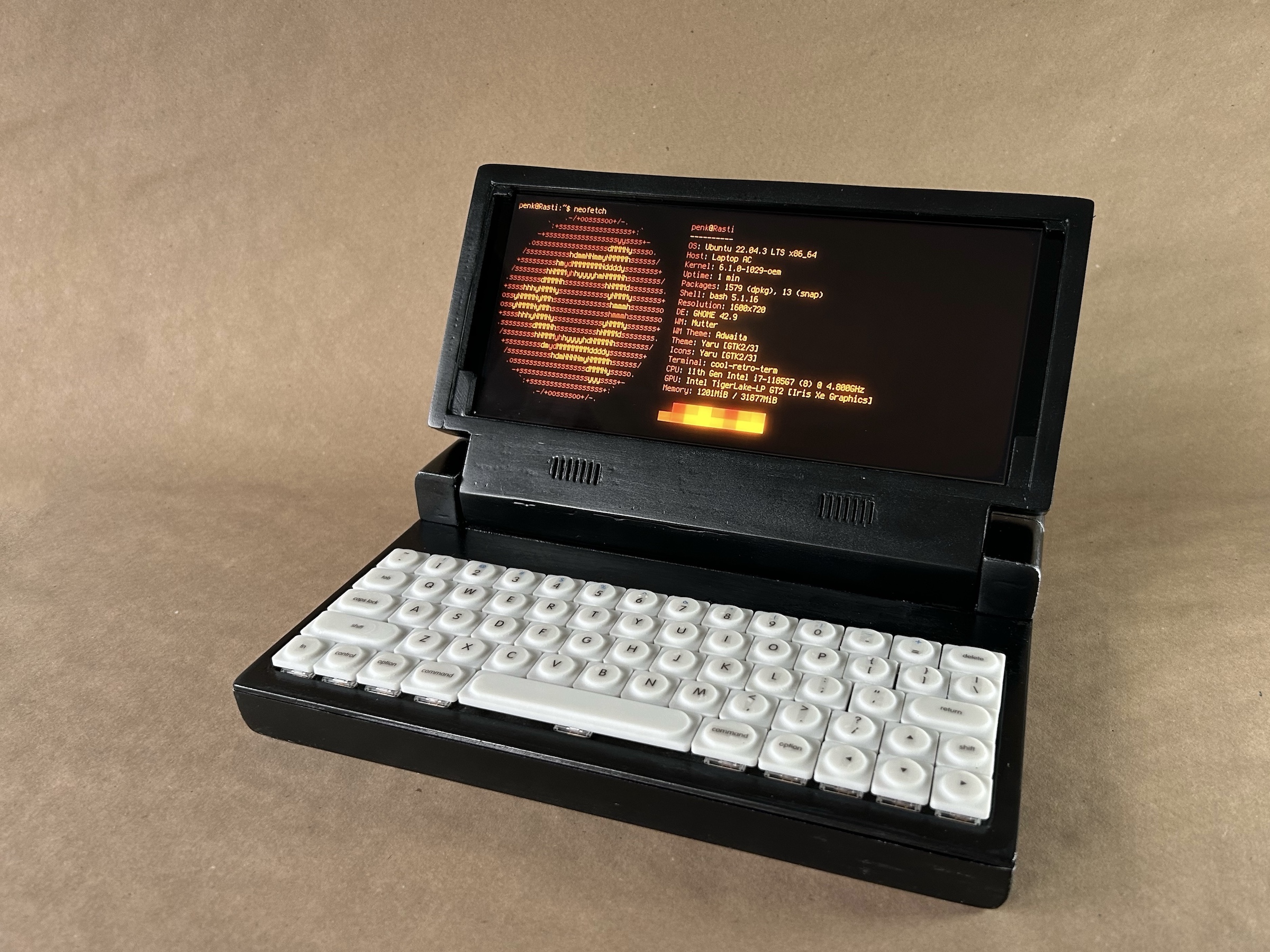
Penk Chen's Rasti Computer

Enlarge / Penk Chen’s Rasti Computer, built with 3D printing, Framework laptop internals, and a deep love for the first laptop that went to space.

If I had to figure out what to do with the insides of a Framework 13 laptop I had lying around after today, I might not turn it into a strange but compelling “Slabtop” this time.

No, I think that, having seen Penk Chen’s remarkable project to fit Framework parts into a kind of modern restyling of the Grid Compass laptop, I would have to wait until Chen posts detailed build instructions for this project… and until I had a 3D printer… and could gather the custom mechanical keyboard parts. Sure, that’s a lot harder, but it’s hard to put a price on drawing unnecessary attention to yourself while you chonk away on your faux-used future laptop.

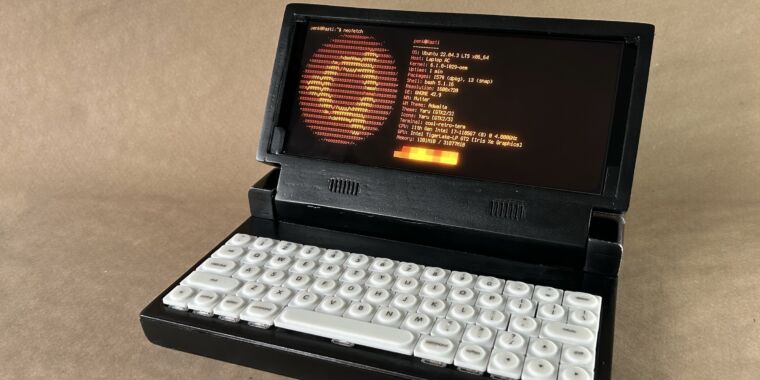
The Rasti Computer, which Chen writes is “derived from the German compound word ‘Rasterrahmen’ (grid + framework),” has at its core the mainboard, battery, and antennae from the highly modular and repairable first-generation Framework laptop. It takes input from the custom keyboard Chen designed for the chassis, with custom PCB and 3D-printed keycaps and case. It sends images to a 10.4-inch QLED 1600×720 display, and it all fits inside a bevy of 3D-printed pieces with some fairly standard hex-head bolts. Oh, and the hinges from a 2012 13-inch MacBook pro, though that’s possibly negotiable.

  • Rear view of the Rasti Computer, with “a touch of silver dry brushing [that] added the beat-up metal look.”

  • Semi-exploded view of the Rasti Computer.

  • You can, of course, run Windows on this device, if you like. But it might feel dissonant to put so much custom work in to run a stock OS.

Chen’s project derives from, and pays tribute to, the Grid Compass (styled “GRiD” by its maker, GRiD Systems Corp.). The Compass was probably (again, probably) the first clamshell-style laptop made. It saw use by NASA’s Space Shuttle program, as well as by military and other entities needing a laptop that was both compact and throw-it-at-a-wall durable. It had 256KB of memory by default (less than half the amount Bill Gates didn’t say you should ever need), a 320×240 pixel screen, and an Intel 8086 processor. Some models contained a 1,200bps modem. It cost more than $8,000 in 1982, or almost $25,000 today.

We have it on good word from some resident vintage computer collectors that the Compass remains a rare and expensive item to get. Rebuilding a Framework mainboard into a modern-day Grid-like doesn’t seem particularly cheap, depending on your 3D printer setup, or lack thereof. Nor is it likely to be easy, given a glimpse at how it goes together. But it will give you a unique portable and conversation piece, one that runs programs beyond Grid-OS.

You can read more about the Grid Compass at Cooper Hewitt, the firm where Compass designer Bill Moggridge worked as design director from 2010 until his 2011 passing. If you remember bubble memory, it’s a dip back into that genial trauma. Hackaday, where we first saw the Rasti project, wrote up a similarly Compass-inspired laptop, the GRIZ Sextant, with a Raspberry Pi at its core.

“Rasti Computer” is a detailed GRiD Compass tribute made from Framework innards Read More »