Equal Time Rule

stephen-colbert-says-cbs-forbid-interview-of-democrat-because-of-fcc-threat

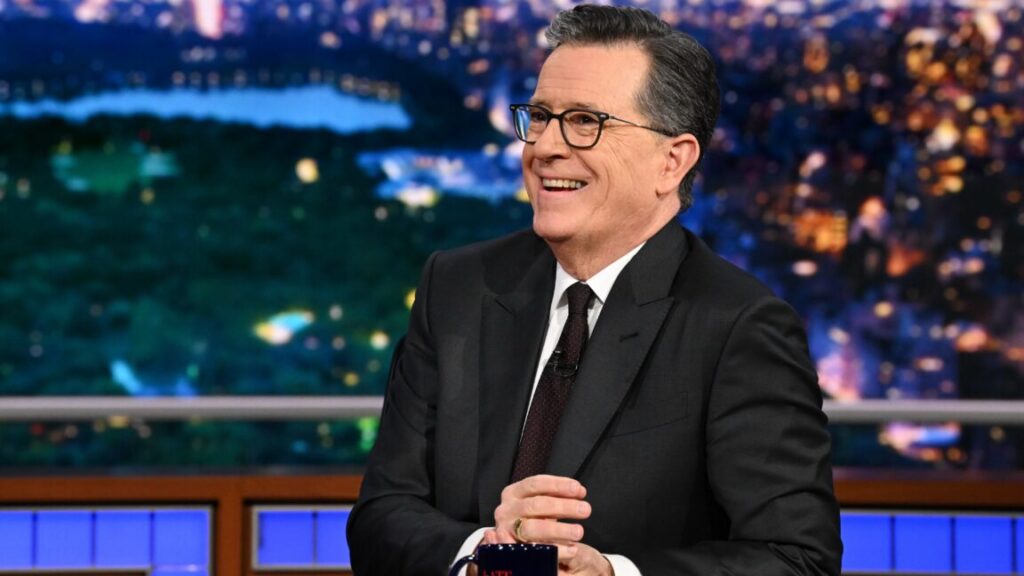
Stephen Colbert says CBS forbid interview of Democrat because of FCC threat

We contacted CBS and its owner Paramount today and have not received a response. CBS denied prohibiting an interview with Talarico in a statement reported by Variety. The CBS statement acknowledged giving “legal guidance” about potential consequences under the equal-time rule, though.

“The Late Show was not prohibited by CBS from broadcasting the interview with Rep. James Talarico,” the statement said. “The show was provided legal guidance that the broadcast could trigger the FCC equal-time rule for two other candidates, including Rep. Jasmine Crockett, and presented options for how the equal time for other candidates could be fulfilled. The Late Show decided to present the interview through its YouTube channel with on-air promotion on the broadcast rather than potentially providing the equal-time options.”

Colbert put interview on YouTube

Colbert played audio of a recent Carr interview in which the FCC chairman said, “If [Jimmy] Kimmel and Colbert want to continue to do their programming, they don’t want to have to comply with this requirement, then they can go to a cable channel or a podcast or a streaming service and that’s fine.”

Colbert said he “decided to take Brendan Carr’s advice” and interviewed Talarico for a segment posted on his show’s YouTube channel. “The network says I can’t give you a URL or a QR code but I promise you if you go to our YouTube page, you’ll find it,” Colbert said. That interview is available here.

Colbert described the unequal treatment of late-night talk shows and talk radio. “Carr here claims he’s just getting partisanship off the airwaves but the FCC is also in charge of regulating radio broadcasts. And what would you know, Brendan Carr says right-wing talk radio isn’t a target of the FCC’s equal time notice,” Colbert said.

Colbert said that a mere threat, and not an actual rule change, caused CBS to forbid him from interviewing a candidate. “At this point, he’s just released a letter that says he’s thinking about doing away with the exception for late night, he hasn’t done away with it yet,” Colbert said. “But my network is unilaterally enforcing it as if he had. But I want to assure you this decision is for purely financial reasons.”

Colbert pushed out after “big fat bribe” comment

Colbert’s tenure as host is scheduled to end in May. CBS announced it would end the show last year after Colbert called CBS owner Paramount’s $16 million settlement with Trump “a big fat bribe.” Paramount subsequently won FCC approval of an $8 billion merger with Skydance, while agreeing to Carr’s demand to install a “bias monitor.”

FCC Democrat Anna Gomez said today that CBS forbidding the interview with Talarico “is yet another troubling example of corporate capitulation in the face of this administration’s broader campaign to censor and control speech. The FCC has no lawful authority to pressure broadcasters for political purposes or to create a climate that chills free expression. CBS is fully protected under the First Amendment to determine what interviews it airs, which makes its decision to yield to political pressure all the more disappointing.”

Stephen Colbert says CBS forbid interview of Democrat because of FCC threat Read More »
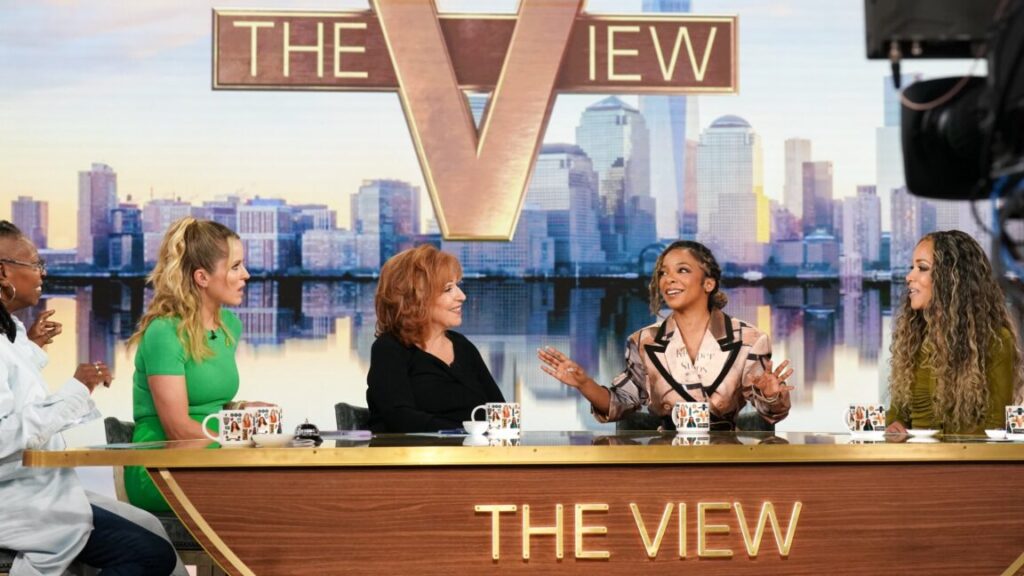
trump-fcc-investigates-the-view,-reportedly-says-“fake-news”-will-be-punished

Trump FCC investigates The View, reportedly says “fake news” will be punished

The FCC Media Bureau’s January 21 public notice to broadcast TV stations said that despite a 2006 decision in which the FCC exempted The Tonight Show with Jay Leno from the rule, current entertainment shows may not qualify for that exemption. “Importantly, the FCC has not been presented with any evidence that the interview portion of any late night or daytime television talk show program on air presently would qualify for the bona fide news exemption,” the notice said.

The Media Bureau’s January 21 notice said the equal-time rule applies to broadcast TV stations because they “have been given access to a valuable public resource (namely, spectrum),” and that compliance with “these requirements is central to a broadcast licensee’s obligation to operate in the public interest.”

The FCC notice got this detail wrong, according to Harold Feld, a longtime telecom attorney who is senior VP of consumer advocacy group Public Knowledge. The equal-time rule actually applies to cable channels, too, he wrote in a January 29 blog post.

“Yes, contrary to what a number of people think, including, annoyingly, the Media Bureau which gets this wrong in its recent order, this is not a ‘public interest obligation’ for using spectrum,” Feld wrote. “It’s a conditional right of access (like leased access for cable) that members of Congress gave themselves (and other candidates) because they recognized the power of mass media to shape elections.” The US law applies both to broadcast stations using public spectrum and “community antenna television,” the old name for cable TV, Feld pointed out.

This doesn’t actually mean that people can file FCC complaints against the Fox News cable channel, though, Feld wrote. This is because the FCC “has consistently interpreted Section 315(c) since it was added as applying only to ‘local origination cablecasting,’ meaning locally originated programming and not the national cable channels that cable operators distribute as part of their bundle,” he wrote.

Leno ruling just one of many

In any case, Feld said the Media Bureau’s “guidance ignores all of the other precedent that creates settled law as to how the FCC evaluates eligibility for an exemption on which broadcast shows have relied.” While the FCC cited its Jay Leno decision, Feld said the Leno ruling was “merely one of a long line of FCC decisions expanding the definition of ‘news interview’ and ‘news show.’”

Trump FCC investigates The View, reportedly says “fake news” will be punished Read More »

trump-fcc-threatens-to-enforce-equal-time-rule-on-late-night-talk-shows

Trump FCC threatens to enforce equal-time rule on late-night talk shows

FCC Democrat says the rules haven’t changed

The equal-time rule, formally known as the Equal Opportunities Rule, applies to radio or TV broadcast stations with FCC licenses to use the public airwaves. When a station gives time to one political candidate, it must provide comparable time and placement to an opposing candidate if an opposing candidate makes a request.

The rule has an exemption for candidate appearances on bona fide news programs. As the FCC explained in 2022, “appearances by legally qualified candidates on bona fide newscasts, interview programs, certain types of news documentaries, and during on-the-spot coverage of bona fide news events are exempt from Equal Opportunities.”

Entertainment talk shows have generally been treated as bona fide news programs for this purpose. But Carr said in September that he’s not sure shows like The View should qualify for the exemption, and today’s public notice suggests the FCC may no longer treat these shows as exempt.

Commissioner Anna Gomez, the only Democrat on the FCC, issued a press release criticizing the FCC for “a misleading announcement suggesting that certain late-night and daytime programs may no longer qualify for the long-standing ‘bona fide news interview’ exemption under the commission’s political broadcasting rules.”

“Nothing has fundamentally changed with respect to our political broadcasting rules,” Gomez said. “The FCC has not adopted any new regulation, interpretation, or commission-level policy altering the long-standing news exemption or equal time framework. For decades, the commission has recognized that bona fide news interviews, late-night programs, and daytime news shows are entitled to editorial discretion based on newsworthiness, not political favoritism. That principle has not been repealed, revised, or voted on by the commission. This announcement therefore does not change the law, but it does represent an escalation in this FCC’s ongoing campaign to censor and control speech.”

Trump FCC threatens to enforce equal-time rule on late-night talk shows Read More »

after-getting-jimmy-kimmel-suspended,-fcc-chair-threatens-abc’s-the-view

After getting Jimmy Kimmel suspended, FCC chair threatens ABC’s The View


Carr: “Turn your license in to the FCC, we’ll find something else to do with it.”

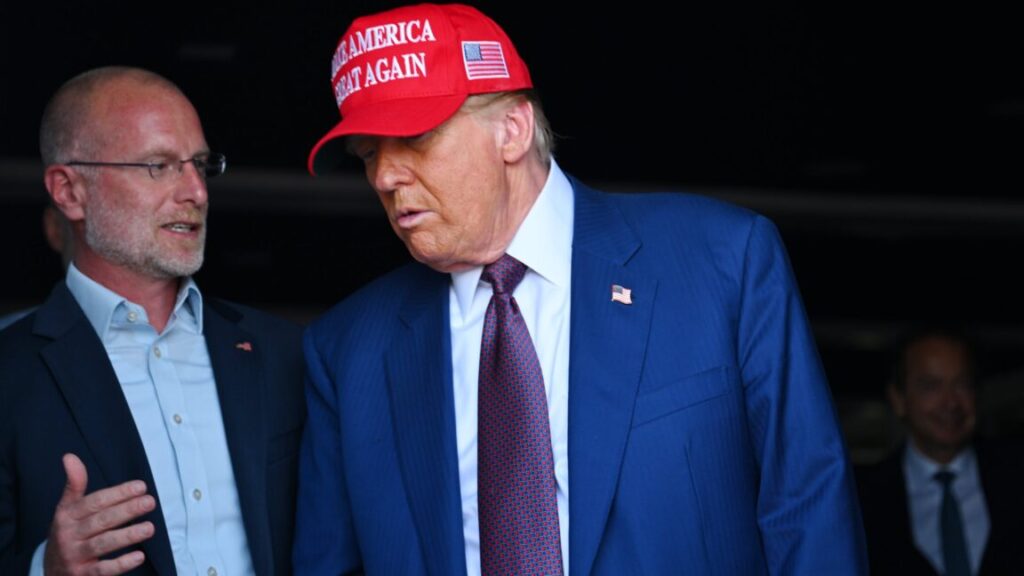
President-elect Donald Trump speaks to Brendan Carr, his intended pick for Chairman of the Federal Communications Commission, as he attends a SpaceX Starship rocket launch on November 19, 2024 in Brownsville, Texas. Credit: Getty Images | Brandon Bell

After pressuring ABC to suspend Jimmy Kimmel, Federal Communications Commission Chairman Brendan Carr is setting his regulatory sights on ABC’s The View and NBC late-night hosts Seth Meyers and Jimmy Fallon.

Carr appeared yesterday on the radio show hosted by Scott Jennings, who describes himself as “the last man standing athwart the liberal mob.” Jennings asked Carr whether The View and other ABC programs violate FCC rules, and made a reference to President Trump calling on NBC to cancel Fallon and Meyers.

“A lot of people think there are other shows on ABC that maybe run afoul of this more often than Jimmy Kimmel,” Jennings said. “I’m thinking specifically of The View, and President Trump himself has mentioned Jimmy Fallon and Seth Meyers at NBC. Do you have comments on those shows, and are they doing what Kimmel did Monday night, and is it even worse on those programs in your opinion?”

In response, Carr discussed the FCC’s Equal Opportunities Rule, also known as the Equal Time Rule, and said the FCC could determine that those shows don’t qualify for an exemption to the rule.

“When you look at these other TV shows, what’s interesting is the FCC does have a rule called the Equal Opportunity Rule, which means, for instance, if you’re in the run-up to an election and you have one partisan elected official on, you have to give equal time, equal opportunity, to the opposing partisan politician,” Carr said.

At another point in the interview, Carr said broadcasters that object to FCC enforcement “can turn your license in to the FCC, we’ll find something else to do with it.”

Bona fide news exemption

Carr said the FCC hasn’t previously enforced the rule on those shows because of an exemption for “bona fide news” programs. He said the FCC could determine the shows mentioned by Jennings aren’t exempt:

There’s an exception to that rule called the bona fide news exception, which means if you are a bona fide news program, you don’t have to abide by the Equal Opportunity Rule. Over the years, the FCC has developed a body of case law on that that has suggested that most of these late night shows, other than SNL, are bona fide news programs. I would assume you could make the argument that The View is a bona fide news show but I’m not so sure about that, and I think it’s worthwhile to have the FCC look into whether The View and some of these other programs you have still qualify as bona fide news programs and [are] therefore exempt from the Equal Opportunity regime that Congress has put in place.

The Equal Opportunity Rule applies to radio and TV broadcast stations with FCC licenses to use the airwaves. An FCC fact sheet explains that stations giving time to one candidate must provide “comparable time and placement to opposing candidates” upon request. The onus is on candidates to request air time—”the station is not required to seek out opposing legally qualified candidates and offer them Equal Opportunities,” the fact sheet says.

The exemption mentioned by Carr means that “appearances by legally qualified candidates on bona fide newscasts, interview programs, certain types of news documentaries, and during on-the-spot coverage of bona fide news events are exempt from Equal Opportunities,” the fact sheet says.

In 1994, the FCC said that “Congress removed the inhibiting effect of the equal opportunities obligation upon bona fide news programming to encourage increased news coverage of political campaign activity.” Congress gave the FCC leeway to interpret the scope of bona fide news exemptions.

Referring to its 1988 ruling on Entertainment Tonight and Entertainment This Week, the FCC said it found that “the principal consideration should be ‘whether the program reports news of some area of current events… in a manner similar to more traditional newscasts.’ The Commission has thus declined to evaluate the relative quality or significance of the topics and stories selected for newscast coverage, relying instead on the broadcaster’s good faith news judgment.”

Carr’s allegations

Carr alleged in November 2024 that NBC putting Kamala Harris on Saturday Night Live before the election was “a clear and blatant effort to evade the FCC’s Equal Time rule.” In fact, NBC gave Trump two free 60-second messages in order to comply with the rule.

Carr didn’t cite any specific incidents on The View or late-night shows that would violate the FCC rule. The View has addressed its attempts to get Trump on the show, however. Executive Producer Brian Teta told Deadline in April 2024, “We’ve invited Trump to join us at the table for both 2016 and 2020 elections, and he declined, and at a certain point, we stopped asking. So I don’t anticipate that changing. I think he’s pretty familiar with how the co-hosts feel about him and doesn’t see himself coming here.”

The Kimmel controversy erupted over a monologue in which he said, “We hit some new lows over the weekend with the MAGA gang desperately trying to characterize this kid who murdered Charlie Kirk as anything other than one of them and with everything they can to score political points from it.”

With accused murderer Tyler Robinson being described as having liberal views, Carr and other conservatives alleged that Kimmel misled viewers. Carr appeared on right-wing commentator Benny Johnson’s podcast on Wednesday and said, “We can do this the easy way or the hard way. These companies can find ways to change conduct, to take action, frankly on Kimmel, or there’s going to be additional work for the FCC ahead.”

Nexstar and Sinclair, two major owners of TV stations, both urged ABC to take action against Kimmel and said their stations would not air his show. The pressure from broadcasters is happening at a time when both Nexstar and ABC owner Disney are seeking Trump administration approval for mergers.

Democrats accuse Carr of hypocrisy on First Amendment

Anna Gomez, the only Democrat on the Republican-majority FCC, said yesterday that Carr overstepped his authority, but “billion-dollar companies with pending business before the agency” are “vulnerable to pressure to bend to the government’s ideological demands.”

Democratic lawmakers criticized Carr and proposed investigations into the chair for abuse of authority. “It is not simply unacceptable for the FCC chairman to threaten a media organization because he does not like the content of its programming—it violates the First Amendment that you claim to champion,” Senate Democrats wrote in a letter to Carr. “The FCC’s role in overseeing the public airwaves does not give it the power to act as a roving press censor, targeting broadcasters based on their political commentary. But under your leadership, the FCC is being weaponized to do precisely that.”

Democrats pointed to some of Carr’s previous statements in which he decried government censorship. During his 2023 re-confirmation proceedings, Senate Democrats asked Carr about social media posts in which he accused Democrats of engaging in censorship like “what you’d see in the Soviet Union.”

“I posted those tweets in the context of expressing my view on the First Amendment that debate on matters of public interest should be robust, uninhibited, and wide open,” Carr wrote in his response to Democratic senators. “I believe that the best remedy to speech that someone does not like or finds objectionable is more speech. I posted them because I believe that a newsroom’s decision about what stories to cover and how to frame them should, consistent with the First Amendment, be beyond the reach of any government official.”

Years earlier, in 2019, Carr posted a tweet that said, “Should the government censor speech it doesn’t like? Of course not. The FCC does not have a roving mandate to police speech in the name of the ‘public interest.'”

Sen. Ted Cruz (R-Texas) also criticized Carr’s approach, saying it would lead to the same tactics being used against Republicans the next time Democrats are in power.

Carr to broadcasters: Give your licenses back to FCC

Carr said this week he’s only addressing licensed broadcasters, which have public-interest obligations, as opposed to cable and streaming services that don’t need FCC licenses. Network programming itself doesn’t need an FCC license, but the TV stations that carry network shows require licenses.

Carr tried to cast Kimmel’s suspension as the result of organic pressure from licensed broadcasters, rather than FCC coercion. “There’s no untoward coercion happening here,” Carr told Jennings. “The market was intended to function this way, where local TV stations get to push back.”

But TV station owners did so in exactly the way that Carr urged them to. “The individual licensed stations that are taking their content, it’s time for them to step up and say this garbage isn’t something that we think serves the needs of our local communities,” Carr said on Johnson’s podcast. Carr said that Kimmel’s monologue “appears to be some of the sickest conduct possible.”

On the Jennings show, Carr alleged that Democrats in the previous administration implemented “a two-tiered weaponized system of justice,” and that his FCC is instead giving everyone “a fair shake and even-handed treatment.”

Carr has repeatedly threatened broadcasters with the FCC’s rarely enforced news distortion policy. As we’ve explained, the FCC technically has no rule or regulation against news distortion, which is why it is called a policy and not a rule. But on Jennings’ show, he described it as a rule.

“We do have those rules at the FCC: If you engage in news distortion, we can take action,” Carr said.

As we’ve written several times, it is difficult legally for the FCC to revoke broadcast licenses. But it isn’t difficult for Carr to exert pressure on networks and broadcasters through public statements. Carr suggested yesterday that broadcasters turn in their licenses if they don’t like his approach to enforcement.

“If you’re a broadcaster and you don’t like being held accountable for the first time in a long time through the public interest standard, that’s fine. You can turn your license in to the FCC, we’ll find something else to do with it,” Carr said. “Or you can go to Congress and say, ‘I don’t want the FCC having public interest obligations on broadcasters anymore, I want broadcasters to be like cable, to be like a streaming service.’ That’s fine too. But as long as that’s the system that Congress has created, we’re going to enforce it.”

Photo of Jon Brodkin

Jon is a Senior IT Reporter for Ars Technica. He covers the telecom industry, Federal Communications Commission rulemakings, broadband consumer affairs, court cases, and government regulation of the tech industry.

After getting Jimmy Kimmel suspended, FCC chair threatens ABC’s The View Read More »