eyes

why-are-vertebrate-eyes-so-different-from-those-of-other-animals?

Why are vertebrate eyes so different from those of other animals?

“We think that in this early deuterostome, the median eye contained both ciliary and rhabdomeric cells,” Kafetzis explains. As a result, both cellular lineages were incorporated into a single, ancient, cyclopean eye, which later evolved into the vertebrate eyes.

The vertebrate third eye

A trace of this transformation may still survive in the pineal complex at the base of the brain—often referred to as a vertebrate “third eye.” Scientists have long recognized striking similarities between the retina and the pineal organ, leading many to suspect that the two evolved from a single ancestral structure, with the pineal representing a more rudimentary version.

Kafetzis and his colleagues see it differently.

Many researchers suspect that one class of neurons—the bipolar cells—is unique to the retina and represents a key evolutionary innovation of the vertebrate eye. Bipolar cells connect rods and cones to ganglion cells (hence the name “bipolar”). “We think that these bipolar-like cells already exist in the pineal,” says Kafetzis. “It’s just that they don’t look like the typical bipolar—they don’t have a cell before and a cell after.”

For this reason, Kafetzis and his colleagues argue that bipolar neurons are not a de novo evolutionary invention but instead have a chimeric origin, blending features of both rhabdomeric and ciliary cells and bridging the two photoreceptor lineages.

Though grounded in existing ideas and data, the new proposal offers a potentially far-reaching synthesis. Several aspects still require firmer evidence. The idea that the ancestral chordate adopted a burrowing lifestyle remains debated, and the claim that early bilaterians already possessed paired lateral eyes is still speculative.

The authors acknowledge that their model now needs testing. In the paper, they lay out several ways to do so—from molecular comparisons of pineal and retinal cells to developmental studies and broader sampling of eye development across other deuterostome species.

“We want to put forward some literature-based and inspired hypotheses that are testable, and now we can go out and test them,” concludes Kafetzis.

Cell, 2026.  DOI: 10.1016/j.cell.2025.12.056

Federica Sgorbissa is a science journalist; she writes about neuroscience and cognitive science for Italian and international outlets.

Why are vertebrate eyes so different from those of other animals? Read More »
worm-invades-man’s-eyeball,-leading-doctors-to-suck-out-his-eye-jelly

Worm invades man’s eyeball, leading doctors to suck out his eye jelly

For eight months, a 35-year-old man in India was bothered by his left eye. It was red and blurry. When he finally visited an ophthalmology clinic, it didn’t take long for doctors to unearth the cause.

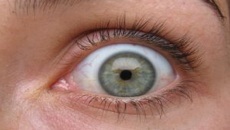
In a case report in the New England Journal of Medicine, doctors report that they first noted that the eye was bloodshot and inflamed, and the pupil was dilated and fixed. The man’s vision in the eye was 20/80. A quick look inside his eye revealed it was all due to a small worm, which they watched “moving sluggishly” in the back of his eyeball.

To gouge out the parasitic pillager, the doctors performed a pars plana vitrectomy—a procedure that involves sucking out some of the jelly-like vitreous inside the eye. This procedure can be used in the treatment of a variety of eye conditions, but using it to hoover up worms is rare. In order to get in, the doctors make tiny incisions in the white parts of the eye (the sclera) and use a hollow needle-like device with suction. They replace extracted eye jelly with things like saline.

In this case, the device was able to suck in part of the worm’s tail and drag it out—still squirming. Under the microscope, they quickly identified the peeper creeper. With a bulbous head, well-formed intestines, and a thick outer layer, it perfectly fit the description of Gnathostoma spinigerum, a known bodily marauder that can sometimes wiggle its way into eyeballs.

Panel A shows the pars plana vitrectomy removing the worm; Panel B shows the worm under light microscopy, revealing a larval-stage nematode with a cephalic bulb, thick cuticle, and well-developed intestine. Credit: New England Journal of Medicine, 2025

Stomach-churning cycle

G. spinigerum are endemic parasites in India that infect carnivorous mammals, particularly wild and domestic cats and dogs. In these primary hosts, adult worms form tumor-like masses on the walls of the animals’ intestinal tracts. There, the adults mate, and the mass erupts like an infernal, infectious volcano, spewing out eggs. The eggs are passed in the animals’ feces and can then spread to intermediate hosts. These include freshwater plankton, which get eaten by fish and amphibians, which then get eaten by the cats and dogs to complete the cycle. The young parasites can also be taken up by dead-end hosts like birds, including chickens, and snakes—these are called paratenic hosts.

Worm invades man’s eyeball, leading doctors to suck out his eye jelly Read More »