Features

centurylink-left-customers-without-internet-for-39-days—until-ars-stepped-in

CenturyLink left customers without Internet for 39 days—until Ars stepped in

A

Aurich Lawson | Getty Images

When a severe winter storm hit Oregon on January 13, Nicholas Brown’s CenturyLink fiber Internet service stopped working at his house in Portland.

The initial outage was understandable amid the widespread damage caused by the storm, but CenturyLink’s response was poor. It took about 39 days for CenturyLink to restore broadband service to Brown and even longer to restore service to one of his neighbors. Those reconnections only happened after Ars Technica contacted the telco firm on the customers’ behalf last week.

Brown had never experienced any lengthy outage in over four years of subscribing to CenturyLink, so he figured the telco firm would restore his broadband connection within a reasonable amount of time. “It had practically never gone down at all up to this point. I’ve been quite happy with it,” he said.

While CenturyLink sent trucks to his street to reconnect most of his neighbors after the storm and Brown regularly contacted CenturyLink to plead for a fix, his Internet connection remained offline. Brown had also lost power, but the electricity service was reconnected within about 48 hours, while the broadband service remained offline for well over a month.

Fearing he had exhausted his options, Brown contacted Ars. We sent an email to CenturyLink’s media department on February 21 to seek information on why the outage lasted so long.

Telco finally springs into action

Roughly four hours after we contacted the firm, a CenturyLink technician arrived at the Portland house Brown shares with his partner, Jolene Edwards. The technician was able to reconnect them that day.

“At 4: 30 pm, a CenturyLink tech showed up unannounced,” Brown told us. “No one was home at the time, but he said he would wait. I get the idea that he was told not to come back until it was fixed.”

Brown’s neighbor, Leonard Bentz, also lost Internet access on January 13 and remained offline for two days longer than Brown. The technician who arrived on February 21 didn’t reconnect Bentz’s house.

“My partner gently tried to egg him to go over there and fix them too, and he more or less said, ‘That’s not the ticket that I have,'” Brown said.

After getting Bentz’s name and address, we contacted CenturyLink again on February 22 to notify them that he also needed to be reconnected. CenturyLink later confirmed to us that it restored his Internet service on February 23.

“They kept putting me off and putting me off”

Bentz told Ars that during the month-plus outage, he called CenturyLink several times. Customer service reps and a supervisor told him the company would send someone to fix his service, but “they kept putting me off and putting me off and putting me off,” Bentz said.

On one of those calls, Bentz said that CenturyLink promised him seven free months of service in exchange for the long outage. Brown told us he received a refund for the entire length of his outage, plus a bit extra. He pays $65 a month for gigabit service.

Brown said he is “happy enough with the resolution,” at least financially since he “got all the money for the non-service.” But those 39 days without Internet service will remain a bad memory.

Unfortunately, Internet service providers like CenturyLink have a history of failing to fix problems until media coverage exposes their poor customer service. CenturyLink is officially called Lumen these days, but it still uses the CenturyLink brand name.

After fixing Brown’s service in Portland, a CenturyLink spokesperson gave us the following statement:

It’s frustrating to have your services down and for that we apologize. We’ve brought in additional resources to assist in restoring service that was knocked out due to severe storms and multiple cases of vandalism. Some services are back, and we are working diligently to completely restore everything. In fact, we have technicians there now. We appreciate our customers’ patience and understanding, and we welcome calls from our customers to discuss their service.

CenturyLink left customers without Internet for 39 days—until Ars stepped in Read More »

it-turns-out-that-odysseus-landed-on-the-moon-without-any-altimetry-data

It turns out that Odysseus landed on the Moon without any altimetry data

Intuitive Machines' <em>Odysseus</em> lander is shown shortly before touching down on the Moon. ” src=”https://cdn.arstechnica.net/wp-content/uploads/2024/02/IM-1-800×600.jpg”></img><figcaption>
<p><a data-height=Enlarge / Intuitive Machines’ Odysseus lander is shown shortly before touching down on the Moon.

Intuitive Machines

HOUSTON—Steve Altemus beamed with pride on Tuesday morning as he led me into Mission Control for the Odysseus lander, which is currently operating on the Moon and returning valuable scientific data to Earth. A team of about a dozen operators sat behind consoles, attempting to reset a visual processing unit onboard the lunar lander, one of their last, best chances to deploy a small camera that would snap a photo of Odysseus in action.

“I just wanted you to see the team,” he said.

The founder and chief executive of Intuitive Machines, which for a few days this month has been the epicenter of the spaceflight universe after landing the first commercial vehicle on the Moon, invited me to the company’s nerve center in Houston to set some things straight.

“You can say whatever you want to say,” Altemus said. “But from my perspective, this is an absolute success of a mission. Holy crap. The things that you go through to fly to the Moon. The learning, just every step of the way, is tremendous.”

Altemus will participate in a news conference on Wednesday at Johnson Space Center to provide a fuller perspective of the journey of Odysseus to the Moon and all those learnings. But I got the sense he invited me to the company’s offices Tuesday because he was itching to tell someone—to tell the world—that although Odysseus had toppled over after touching down, the mission was, in his words, an absolute success.

After more than an hour of speaking with Altemus, I believe him.

Odysseus is a beastly machine, and the team flying it isn’t shabby, either. They have certainly busted their asses. The offices in south Houston were littered with the remains of junk food, coffee, and other elixirs of long nights and wracked brains. It’s all been a whirlwind, no doubt. Next to a bag of tortilla chips, there was a bottle of Ibuprofen.

Coming in blind

As has been previously reported, Intuitive Machines discovered that the range finders on Odysseus were inoperable a couple of hours before it was due to attempt to land on the Moon last Thursday. This was later revealed to be due to the failure to install a pencil-sized pin and a wire harness that enabled the laser to be turned on and off. As a result, the company scrambled to rewrite its software to take advantage of three telescopes on a NASA payload, the Navigation Doppler Lidar for Precise Velocity and Range Sensing, for altimetry purposes.

While this software patch mostly worked, Altemus said Tuesday that the flight computer onboard Odysseus was unable to process data from the NASA payload in real time. Therefore, the last accurate altitude reading the lander received came when it was 15 kilometers above the lunar surface—and still more than 12 minutes from touchdown.

That left the spacecraft, which was flying autonomously, to rely on its optical navigation cameras. By comparing imagery data frame by frame, the flight computer could determine how fast it was moving relative to the lunar surface. Knowing its initial velocity and altitude prior to initiating powered descent and using data from the inertial measurement unit (IMU) on board Odysseus, it could get a rough idea of altitude. But that only went so far.

“So we’re coming down to our landing site with no altimeter,” Altemus said.

Unfortunately, as it neared the lunar surface, the lander believed it was about 100 meters higher relative to the Moon than it actually was. So instead of touching down with a vertical velocity of just 1 meter per second and no lateral movement, Odysseus was coming down three times faster and with a lateral speed of 2 meters per second.

“That little geometry made us hit a little harder than we wanted to,” he said.

But all was not lost. Based upon data downloaded from the spacecraft and imagery from NASA’s Lunar Reconnaissance Orbiter, which flew over the landing site, Intuitive Machines has determined that the lander came down to the surface and likely skidded. This force caused one of its six landing legs to snap. Then, for a couple of seconds, the lander stood upright before toppling over due to the failed leg.

The company has an incredible photo of this moment showing the lander upright, with the snapped leg and the engine still firing. Altemus plans to publicly release this photo Wednesday.

It turns out that Odysseus landed on the Moon without any altimetry data Read More »

varda’s-drug-cooking-winnebago-will-be-remembered-as-a-space-pioneer

Varda’s drug-cooking Winnebago will be remembered as a space pioneer

Varda's reentry capsule soon after landing at the Utah Test and Training Range.

Enlarge / Varda’s reentry capsule soon after landing at the Utah Test and Training Range.

Varda Space Industries is finally able to celebrate. For nearly eight months, the in-space manufacturing company’s first mission was essentially stranded in low-Earth orbit, but not because of any technical malfunction or a restriction imposed by the laws of physics.

Instead, the spacecraft couldn’t return to Earth until Varda and three government entities—the US military, the Federal Aviation Administration’s Office of Commercial Space Transportation, and the FAA’s Air Traffic Organization—all got on the same page. This was far more complicated than anyone envisioned, and Varda had to bypass landing opportunities in July and September because it couldn’t secure governmental approvals.

Finally, earlier this month, the FAA approved a commercial reentry license for Varda’s space capsule, which was somewhat larger than a mini-fridge, to fall back into the atmosphere and parachute to a landing in the remote Utah desert southwest of Salt Lake City. Varda’s landing zone was at the Utah Test and Training Range, a sprawling military facility primarily used for weapons testing.

Varda’s capsule landed in the Utah desert at around 4: 40 pm EST (2140 UTC) last Wednesday. Approaching from the north, the craft’s heat shield protected it from scorching temperatures during reentry. Then, the capsule deployed a 6.2-foot-diameter (2.1-meter) parachute to slow its velocity for a relatively gentle landing.

A recovery team went out to retrieve the nearly 200-pound capsule and connect it to a helicopter line for a short flight to a nearby processing facility, where engineers would prepare the spacecraft for transport back to Varda’s headquarters in El Segundo, California.

The mood at Varda following the successful landing was “as cheerful as it gets,” said Delian Asparouhov, who co-founded the company in 2020 with former SpaceX engineer Will Bruey and scientist Daniel Marshall.

“I always felt confidence in our team’s ability to accomplish this,” Asparouhov told Ars. “It was just a question of time.”

Waiting game

Varda achieved several firsts with this mission. The Utah Test and Training Range (UTTR) has some experience in supporting spacecraft landings, but this was the first time a commercial spacecraft landed at a military test range, adding another layer of regulatory and bureaucratic oversight. In September, NASA’s OSIRIS-REx mission deposited a cache of asteroid samples at UTTR.

Varda was the first company to secure a commercial FAA reentry license under streamlined commercial spaceflight regulations known as Part 450. This licensing paradigm is regularly used for commercial launches (there were 117 FAA-licensed launches last year), but this was the first time any company went through this process for a reentry.

Only two companies received commercial FAA reentry licenses before Varda—Lockheed Martin for a single test flight of the Orion spacecraft in 2014 and SpaceX for more than 40 commercial flights of its Dragon crew and cargo spacecraft. Both companies have operated under previous licensing regimes before the FAA introduced the revised Part 450 protocol in 2020.

The FAA’s commercial space office is responsible for licensing commercial launch and reentry operations, with a primary interest in ensuring that these activities don’t endanger the public. But FAA air traffic controllers had to find a time to clear a broad swath of airspace around the trajectory of Varda’s descending space capsule. The FAA’s temporary flight restriction for Varda’s reentry was unusually large, particularly for such a small spacecraft, stretching more than 400 miles (700 kilometers) long and 60 miles (100 kilometers) wide from southern Montana to western Utah.

The timing of Varda’s reentry, along with Varda’s access to the secure military facility, also had to be coordinated with the test range’s busy schedule of military exercises.

Varda’s drug-cooking Winnebago will be remembered as a space pioneer Read More »

it’s-no-accident:-these-automotive-safety-features-flopped

It’s no accident: These automotive safety features flopped

safety first —

Over the years, inventors have had some weird ideas about how to make cars safer.

a toy car crashing into another toy car

Aurich Lawson | Getty Images

Turn signals have been a vehicle safety staple since they first appeared on Buicks in 1939. Of course, many drivers don’t use them, perhaps believing that other motorists can telepathically divine others’ intentions.

More people might use turn signals if they knew that drivers’ failure to do so leads to more than 2 million accidents annually, according to a study conducted by the Society of Automotive Engineers. That’s 2 percent of all crashes, according to the National Highway Traffic Safety Administration. And not using turn signals increases the likelihood of an accident by 40 percent, according to the University of Michigan Research Institute.

Human nature could be to blame—death and injury will never happen to us, only others.

You wish.

So, is it any wonder that during the first six decades of automobile production, there were few safety features? The world into which the automobile was born was one in which horses powered most transportation, but that didn’t mean getting around was safe. Say a horse got spooked. If the animal was pulling a carriage, its actions could cause the carriage to barrel away or even overturn, injuring or killing its occupants. Or the horse could cause death directly. In fact, a surprising number of kings met their end over the centuries by a horse’s swift kick. And rail travel proved even deadlier. Studies comparing modern traffic accidents with those of the early 20th century reveal that death from travel is 90 percent less likely today than it was in 1925.

Yet America’s passive acceptance of death from vehicle travel in the late 19th and early 20th century explains why auto safety was sporadically addressed, if at all. Sure, there were attempts at offering basic safety in early automobiles, like windshield wipers and improved lighting. And some safety features endured, such as Ford’s introduction of safety glass as standard equipment in 1927 or GM’s turn signals. But while other car safety features appeared from time to time, many of them just didn’t pan out.

Dead ends on the road to safer cars

Among the earliest attempts at providing safety was the O’Leary Fender, invented by John O’Leary of Cohoes, New York, in 1906. “It is made of bands of iron of such shape and design that falling into it is declared to be like the embrace of a summer girl on a moonlit night on the shore,” wrote The Buffalo News in 1919, with more than a little poetic license.

Advertisement for Pennsylvania Vacuum Cup Tires by the Pennsylvania Rubber Company in Jeannette, Pennsylvania. The Pennsylvania Auto Tube is pictured, 1919.

Enlarge / Advertisement for Pennsylvania Vacuum Cup Tires by the Pennsylvania Rubber Company in Jeannette, Pennsylvania. The Pennsylvania Auto Tube is pictured, 1919.

Jay Paull/Getty Images

According to the account, O’Leary was so confident of the fender’s ability to save lives that he used his own child to prove its safety. “The babe was gathered up on the folds of the fender as tenderly as it had ever been in the arms of its mother,” the newspaper reported, “and was not only uninjured but seemed to enjoy the experience.”

There’s no word on what Mrs. O’Leary thought of using the couple’s child as a crash test dummy. But the invention seemed worthy enough that an unnamed car manufacturer battled O’Leary in court over it and lost. Ultimately, his victory proved futile, as the feature was not adopted.

Others also tried to bring some measure of safety to automobiles, chief among them the Pennsylvania Rubber Company of Jeanette, Pennsylvania. The company’s idea: make a tire tread of small suction cups to improve traction. Called the Pennsylvania Vacuum Cup tire, the product proved to be popular for a while, with reports of sales outnumbering conventional tires 10 to 1, according to the Salt Lake Tribune in 1919. While Pennsylvania wasn’t the only rubber company to offer vacuum cup tires, the concept had its day before fading, although the idea does resurface from time to time.

Nevertheless, safety remained unaddressed, even as the number of deaths was rising substantially.

“Last year more than 22,000 persons were killed in or by automobiles, and something like three quarters of a million injured,” wrote The New Republic in 1926. “The number of dead is almost half as large as the list of fatalities during the nineteen months of America’s participation in the Great War.”

“The 1925 total is 10 percent larger than that for 1924,” the publication added.

The chief causes cited were the same as they are today—namely, speeding, violating the rules of the road, inattention, inexperience, and confusion. But at least one automaker—Stutz—was trying to put safety first.

It’s no accident: These automotive safety features flopped Read More »

what-i-do-to-clean-up-a-“clean-install”-of-windows-11-23h2-and-edge

What I do to clean up a “clean install” of Windows 11 23H2 and Edge

What I do to clean up a “clean install” of Windows 11 23H2 and Edge

Aurich Lawson | Getty Images

I’ve written before about my nostalgia for the Windows XP- or Windows 7-era “clean install,” when you could substantially improve any given pre-made PC merely by taking an official direct-from-Microsoft Windows install disk and blowing away the factory install, ridding yourself of 60-day antivirus trials, WildTangent games, outdated drivers, and whatever other software your PC maker threw on it to help subsidize its cost.

You can still do that with Windows 11—in fact, it’s considerably easier than it was in those ’00s versions of Windows, with multiple official Microsoft-sanctioned ways to download and create an install disk, something you used to need to acquire on your own. But the resulting Windows installation is a lot less “clean” than it used to be, given the continual creep of new Microsoft apps and services into more and more parts of the core Windows experience.

I frequently write about Windows, Edge, and other Microsoft-adjacent technologies as part of my day job, and I sign into my daily-use PCs with a Microsoft account, so my usage patterns may be atypical for many Ars Technica readers. But for anyone who uses Windows, Edge, or both, I thought it might be useful to detail what I’m doing to clean up a clean install of Windows, minimizing (if not totally eliminating) the number of annoying notifications, Microsoft services, and unasked-for apps that we have to deal with.

That said, this is not a guide about creating a minimally stripped-down, telemetry-free version of Windows that removes anything other than what Microsoft allows you to remove. There are plenty of experimental hacks dedicated to that sort of thing—NTDev’s Tiny11 project is one—but removing built-in Windows components can cause unexpected compatibility and security problems, and Tiny11 has historically had issues with basic table-stakes stuff like “installing security updates.”

Avoiding Microsoft account sign-in

The most contentious part of Windows 11’s setup process relative to earlier Windows versions is that it mandates Microsoft account sign-in, with none of the readily apparent “limited account” fallbacks that existed in Windows 10. As of Windows 11 22H2, that’s true of both the Home and Pro editions.

There are two reasons I can think of not to sign in with a Microsoft account. The first is that you want nothing to do with a Microsoft account, thank you very much. Signing in makes you more of a target for Microsoft 365, OneDrive, or Game Pass subscription upsells since all you need to do is add them to an account that already exists, and Windows setup will offer subscriptions to each if you sign in first.

The second—which is my situation—is that you do use a Microsoft account because it offers some handy benefits like automated encryption of your local drive (having those encryption keys saved to my account has saved me a couple of times) or syncing of browser info and some preferences. But you don’t want to sign in at setup, either because you’re just testing something or you prefer your user folder to be located at “C:UsersAndrew” rather than “C:Users.”

Regardless of your reasoning, if you don’t want to bother with sign-in at setup, you have two options (three for Windows 11 Pro users):

Use the command line

During Windows 11 Setup, after selecting a language and keyboard layout but before connecting to a network, hit Shift+F10 to open the command prompt. Type OOBEBYPASSNRO, hit Enter, and wait for the PC to reboot.

When it comes back, click “I don’t have Internet” on the network setup screen, and you’ll have recovered the option to use “limited setup” (aka a local account) again, like older versions of Windows 10 and 11 offered.

For Windows 11 Pro

Windows 11 Pro users, take a journey with me.

Proceed through the Windows 11 setup as you normally would, including connecting to a network and allowing the system to check for updates. Eventually, you’ll be asked whether you’re setting your PC up for personal use or for “work or school.”

Select the work or school option, then sign-in options, at which point you’ll finally be asked whether you plan to join the PC to a domain. Tell it you are (even though you aren’t), and you’ll see the normal workflow for creating a “limited” local account.

This one won’t work if you don’t want to start your relationship with a new computer by lying to it, but it also doesn’t require going to the command line.

What I do to clean up a “clean install” of Windows 11 23H2 and Edge Read More »
doing-dns-and-dhcp-for-your-lan-the-old-way—the-way-that-works

Doing DNS and DHCP for your LAN the old way—the way that works

All shall tremble before your fully functional forward and reverse lookups!

Enlarge / All shall tremble before your fully functional forward and reverse lookups!

Aurich Lawson | Getty Images

Here’s a short summary of the next 7,000-ish words for folks who hate the thing recipe sites do where the authors babble about their personal lives for pages and pages before getting to the cooking: This article is about how to install bind and dhcpd and tie them together into a functional dynamic DNS setup for your LAN so that DHCP clients self-register with DNS, and you always have working forward and reverse DNS lookups. This article is intended to be part one of a two-part series, and in part two, we’ll combine our bind DNS instance with an ACME-enabled LAN certificate authority and set up LetsEncrypt-style auto-renewing certificates for LAN services.

If that sounds like a fun couple of weekend projects, you’re in the right place! If you want to fast-forward to where we start installing stuff, skip down a couple of subheds to the tutorial-y bits. Now, excuse me while I babble about my personal life.

My name is Lee, and I have a problem

(Hi, Lee.)

I am a tinkering homelab sysadmin forever chasing the enterprise dragon. My understanding of what “normal” means, in terms of the things I should be able to do in any minimally functioning networking environment, was formed in the days just before and just after 9/11, when I was a fledgling admin fresh out of college, working at an enormous company that made planes starting with the number “7.” I tutored at the knees of a whole bunch of different mentor sysadmins, who ranged on the graybeard scale from “fairly normal, just writes his own custom GURPS campaigns” to “lives in a Unabomber cabin in the woods and will only communicate via GPG.” If there was one consistent refrain throughout my formative years marinating in that enterprise IT soup, it was that forward and reverse DNS should always work. Why? Because just like a clean bathroom is generally a sign of a nice restaurant, having good, functional DNS (forward and reverse) is a sign that your IT team knows what it’s doing.

Just look at what the masses have to contend with outside of the datacenter, where madness reigns. Look at the state of the average user’s LAN—is there even a search domain configured? Do reverse queries on dynamic hosts work? Do forward queries on dynamic hosts even work? How can anyone live like this?!

I decided long ago that I didn’t have to, so I’ve maintained a linked bind and dhcpd setup on my LAN for more than ten years. Also, I have control issues, and I like my home LAN to function like the well-run enterprise LANs I used to spend my days administering. It’s kind of like how car people think: If you’re not driving a stick shift, you’re not really driving. I have the same kind of dumb hang-up, but for network services.

Honestly, though, running your LAN with bind and dhcpd isn’t even that much work—those two applications underpin a huge part of the modern Internet. The packaged versions that come with most modern Linux distros are ready to go out of the box. They certainly beat the pants off of the minimal DNS/DHCP services offered by most SOHO NAT routers. Once you have bind and dhcpd configured, they’re bulletproof. The only time I interact with my setup is if I need to add a new static DHCP mapping for a host I want to always grab the same IP address.

So, hey, if the idea of having perfect forward and reverse DNS lookups on your LAN sounds exciting—and, come on, who doesn’t want that?!—then pull up your terminal and strap in because we’re going make it happen.

(Note that I’m relying a bit on Past Lee and this old blog entry for some of the explanations in this piece, so if any of the three people who read my blog notice any similarities in some of the text, it’s because Past Lee wrote it first and I am absolutely stealing from him.)

But wait, there’s more!

This piece is intended to be part one of two. If the idea of having one’s own bind and dhcpd servers sounds a little silly (and it’s not—it’s awesome), it’s actually a prerequisite for an additional future project with serious practical implications: our own fully functioning local ACME-enabled certificate authority capable of answering DNS-01 challenges so we can issue our own certificates to LAN services and not have to deal with TLS warnings like plebes.

(“But Lee,” you say, “why not just use actual-for-real LetsEncrypt with a real domain on my LAN?” Because that’s considerably more complicated to implement if one does it the right way, and it means potentially dealing with split-horizon DNS and hairpinning if you also need to use that domain for any Internet-accessible stuff. Split-horizon DNS is handy and useful if you have requirements that demand it, but if you’re a home user, you probably don’t. We’ll keep this as simple as possible and use LAN-specific DNS zones rather than real public domain names.)

We’ll tackle all the certificate stuff in part two—because we have a ways to go before we can get there.

Doing DNS and DHCP for your LAN the old way—the way that works Read More »
why-walking-around-in-public-with-vision-pro-makes-no-sense

Why walking around in public with Vision Pro makes no sense

  • A close-up look at the Vision Pro from the front.

    Samuel Axon

  • The Apple Vision Pro with AirPods Pro, Magic Keyboard, Magic Trackpad, and an Xbox Series X|S controller.

    Samuel Axon

  • You can see the front-facing cameras that handle passthrough video just above the downward-facing cameras that read your hand gestures here.

    Samuel Axon

  • There are two buttons for Vision Pro, both on the top.

    Samuel Axon

  • This is the infamous battery pack. It’s about the size of an iPhone (but a little thicker) and has a USB-C port for external power sources.

    Samuel Axon

  • There are two displays inside the Vision Pro, one for each eye. Each offers just under 4K resolution.

    Samuel Axon

  • Apple offers several variations of the light seal to fit different face shapes.

    Samuel Axon

If you’ve spent any time in the tech-enthusiast corners of Instagram of TikTok over the past few weeks, you’ve seen the videos: so-called tech bros strolling through public spaces with confidence, donning Apple’s $3,500 Vision Pro headset on their faces while gesturing into the air.

Dive into the comments on those videos and you’ll see a consistent ratio: about 20 percent of the commenters herald this as the future, and the other 80 mock it with vehement derision. “I’ve never had as much desire to disconnect from reality as this guy does,” one reads.

Over the next few weeks, I’m going all-in on trying the Vision Pro in all sorts of situations to see which ones it suits. Last week, I talked about replacing a home theater system with it—at least when traveling away from home. Today, I’m going over my experience trying to find a use for it out on the streets of Chicago.

I’m setting out to answer a few questions here: Does it feel weird wearing it in public spaces? Will people judge you or react negatively when you wear it—and if so, will that become less common over time? Does it truly disconnect you from reality, and has Apple succeeded in solving virtual reality’s isolationist tendencies? Does it provide enough value to be worth wearing?

As it turns out, all these questions are closely related.

The potential of AR in the wild

I was excited about the Vision Pro in the lead-up to its launch. I was impressed by the demo I saw at WWDC 2023, even though I was aware that it was offered in an ideal setting: a private, well-lit room with lots of space to move around.

Part of my excitement was about things I didn’t see in that demo but that I’ve seen augmented reality developers explore in smartphone augmented reality (AR) and niche platforms like HoloLens and Xreal. Some smart folks have already produced a wide variety of neat tech demos showing what you can do with a good consumer AR headset, and many of the most exciting ideas work outside the home or office.

I’ve seen demonstrations of real-time directions provided with markers along the street while you walk around town, virtual assistant avatars guiding you through the airport, menus and Yelp reviews overlaid on the doors of every restaurant on a city strip, public art projects pieced together by multiple participants who each get to add an element to a virtual statue, and much more.

Of course, all those ideas—and most others for AR—make a lot more sense for unintrusive glasses than they do for something that is essentially a VR headset with passthrough. Nonetheless, I was hoping to get a glimpse at that eventuality with the Vision Pro.

Why walking around in public with Vision Pro makes no sense Read More »
fake-grass,-real-injuries?-dissecting-the-nfl’s-artificial-turf-debate

Fake grass, real injuries? Dissecting the NFL’s artificial turf debate

Fake grass, real injuries? Dissecting the NFL’s artificial turf debate

iStock/Getty Images

Super Bowl LVIII will be played on a natural grass field in an indoor stadium in Las Vegas on February 11, 2024. How do you keep a grass field vibrant in such a hostile growing environment like the Nevada desert?

The answer: You don’t. By the end of the regular NFL season, paint was used to camouflage the reality that only a few scant patches of grass remained in Allegiant Stadium, home to the Las Vegas Raiders. Immediately after the Raiders’ last game on January 7, 2024, the field crew ripped up the remaining grass, installed California-grown sod over three days, and began the tedious process of keeping the grass alive long enough for the big game.

Herculean efforts to prepare a vibrant natural grass field for 2024’s Super Bowl LVIII are especially questionable when one realizes that Allegiant Stadium also has an artificial turf playing surface available (used by UNLV Football). Why don’t teams in hostile environments switch to more robust artificial turf, which is designed to overcome the many limitations of natural grass fields?

The answer lies in a debate over the safety of synthetic playing surfaces. While artificial turf manufacturers tout research that their products result in fewer injuries, the NFL Players Association (NFLPA) claims it raises injury risk and is advocating for its use to be abolished in the NFL. Let’s explore some key arguments of this debate, which continues to grab headlines with each high-profile NFL injury.

Super Bowl gridirons

Pressure for NFL field managers is especially high following the embarrassingly poor field conditions of last year’s Super Bowl. Super Bowl LVII took place at State Farm Stadium in Glendale, Arizona—another natural grass field in the desert (with a retractable roof, closed at night to protect the grass). Despite two years of preparation and an $800,000 investment, the grass field was a disaster, as players struggled to find footing on its slippery surface.

Veteran NFL groundskeeper George Toma attributed the mess to woefully improper field preparation. Players also complained about the slipping issue the previous time the Super Bowl was hosted at the natural grass field in State Farm Stadium eight years prior for Super Bowl XLIX in 2015. That year, the poor traction was blamed on the green paint used on the grass.

For perspective, some of the best sports field managers in the nation oversee field preparations for the Super Bowl. However, maintaining natural grass in desert conditions is so unfavorable (especially when the grass is sometimes indoors) that even the best can mess it up.

None of these issues existed when the Super Bowl was last played on artificial turf. Super Bowl LVI in 2022 was held at SoFi Stadium in Inglewood, California, home to both the Los Angeles Rams and Chargers. Not only did the artificial turf stand up to double the workload during the regular season (hosting home games for the LA Rams and the LA Chargers), but it also withstood a busy playoff season. The artificial turf field at SoFi Stadium hosted NFL games through the regular season and right up to the last playoff game when the LA Rams beat the San Francisco 49ers. Two weeks later, the Rams ended up winning Super Bowl LVI on the very same surface.

While turf avoids the durability issues seen with grass surfaces, players have widespread concerns about its safety—a recent poll by the NFLPA reported 92 percent of players favored grass.

Fake grass, real injuries? Dissecting the NFL’s artificial turf debate Read More »

can-a-$3,500-headset-replace-your-tv?-we-tried-vision-pro-to-find-out

Can a $3,500 headset replace your TV? We tried Vision Pro to find out

Apple Vision Pro Review —

We kick off our multi-part Vision Pro review by testing it for entertainment.

  • The Apple Vision Pro with AirPods Pro, Magic Keyboard, Magic Trackpad, and an Xbox Series X|S controller.

    Samuel Axon

  • You can see the front-facing cameras that handle passthrough video just above the down-facing cameras that read your hand gestures here.

    Samuel Axon

  • There are two buttons for Vision Pro, both on the top.

    Samuel Axon

  • This is the infamous battery pack. It’s about the size of an iPhone (but a little thicker) and has a USB-C port for external power sources.

    Samuel Axon

  • There are two displays inside the Vision Pro, one for each eye. Each offers just under 4K resolution.

    Samuel Axon

  • Apple offers several variations of the light seal to fit different face shapes.

    Samuel Axon

  • A close-up look at the Vision Pro from the front.

    Samuel Axon

The Vision Pro is the strangest product Apple has introduced in the time I’ve been covering the company. By now, it’s well established that the headset is both impressively cutting-edge and ludicrously expensive.

You could certainly argue that its price means it’s only for Silicon Valley techno-optimists with too much money to burn or for developers looking to get in on the ground floor on the chance that this is the next gold rush for apps. But the platform will need more than those users to succeed.

Part of Apple’s pitch behind the price tag seems to be that the Vision Pro could replace several devices, just like the iPhone did back in the late 2000s. It could replace your laptop, your tablet, your 4K TV, your video game console, your phone or other communications device, your VR headset, and so on. If it truly replaced all of those things, the price wouldn’t seem quite so outrageous to some.

And those are just the use cases Apple has put a lot of effort into facilitating for the launch. Many of the most important uses of the company’s prior new product categories didn’t become totally clear until a couple of years and generations in. The iPhone wasn’t originally intended as a meditation aid, a flashlight, and a number of other common uses until third-party developers invented apps to make it do those things. And Apple’s approach with the Apple Watch seemed to be to just throw it out there with a number of possible uses to see what stuck with users. (The answer seemed to be health and fitness, but the device’s distinct emphasis on that took a bit of time to come into focus.)

So while I could write a dense review meandering through all the possibilities based on my week with the Vision Pro, that doesn’t seem as helpful as drilling in on each specific possibility. This is the first in a series of articles that will do that, so consider it part one of a lengthy, multi-step review. By the end, we’ll have considered several possible applications of the device, and we might be able to make some recommendations or predictions about its potential.

So far, I believe there’s one use case that’s a slam dunk, closer to clarity during launch week than any of the others: entertainment. For certain situations, The Vision Pro is a better device for consuming TV shows and movies (among other things) away from a dedicated theater than we’ve ever seen before. So let’s start there.

My (perhaps too) exacting standards

I know I’m not the usual TV consumer. It’s important to note that before we get too deep.

I bought my first OLED television (a 55-inch LG B6) in 2016. I previously had a 50-inch plasma TV I liked, but it only supported 1080p and SDR (standard dynamic range), and Sony had announced the PlayStation 4 Pro, which would support 4K games (sort of) and HDR (high dynamic range). Game consoles had always driven TV purchases in the past, so I sprung for the best I could afford.

I always cared about picture quality before I bought an OLED, but that interest turned into something more obsessive at that point. I was stunned at the difference, and I began to find it hard to accept the imperfections of LCD monitors and TVs after that. Granted, I’d always disliked LCDs, going straight from CRT to plasma to avoid that grayish backlight glow. But the comparison was even harsher once I went to OLED.

My fellow Ars Technica writers and editors often talk about their robust, multi-monitor PC setups, their expensive in-home server racks, and other Ars-y stuff. I have some of that stuff, too, but I put most of my time and energy into my home theater. I’ve invested a lot into it, and that has the unfortunate side effect of making most other screens I use feel inadequate by comparison.

All that said, some have argued that the Vision Pro is a solution in search of a problem, but there is one pre-existing problem I have that it has the potential to solve.

I travel a lot, so I spend a total of at least two months out of every year in hotel or Airbnb rooms. Whenever I’m in one of those places, I’m always irritated at how its TV compares to the one I have at home. It’s too small for the space, it’s not 4K, it doesn’t support HDR, it’s mounted way too high to comfortably watch, or it’s a cheap LCD with washed-out black levels and terrible contrast. Often, it’s all of the above. And even when I’m home, my wife might want to watch her shows on the big TV tonight.

I end up not watching movies or shows I want to watch because I feel like I’d be doing those shows a disservice by ruining the picture with such terrible hardware. “Better to hold off until I’m home,” I tell myself.

The Vision Pro could be the answer I’ve been waiting for. Those two displays in front of my eyes are capable of displaying an image that stands up to that of a mid-range OLED TV in most situations, and I can use it absolutely anywhere.

Can a $3,500 headset replace your TV? We tried Vision Pro to find out Read More »
what-i-learned-from-the-apple-store’s-30-minute-vision-pro-demo

What I learned from the Apple Store’s 30-minute Vision Pro demo

Seeing is believing? —

Despite some awe-inspiring moments, the $3,500 headset is a big lift for retail.

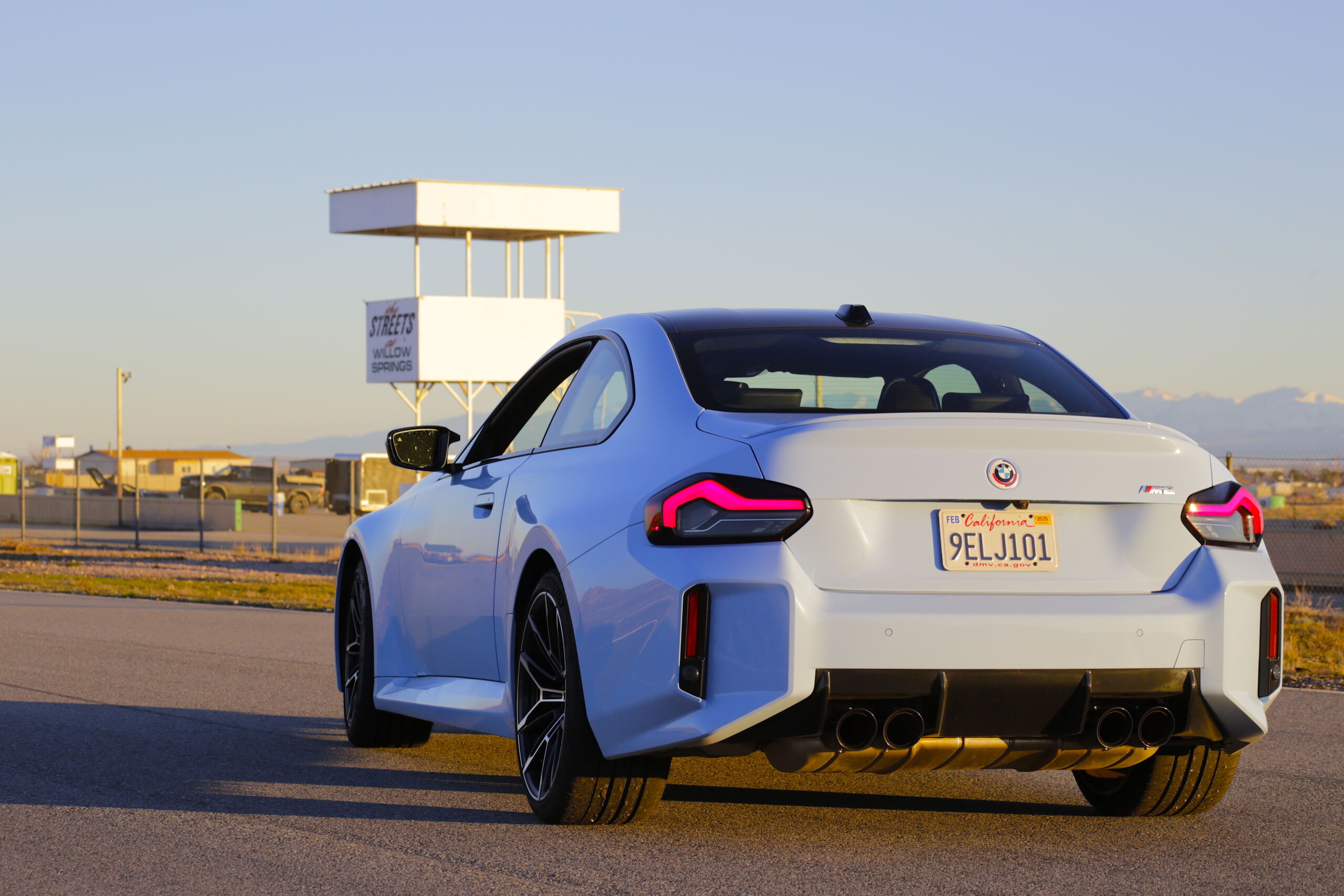
These mounted displays near the entrance let visitors touch, but not use, a Vision Pro.

Enlarge / These mounted displays near the entrance let visitors touch, but not use, a Vision Pro.

Kyle Orland

For decades now, potential Apple customers have been able to wander in to any Apple Store and get some instant eyes-on and hands-on experience with most of the company’s products. The Apple Vision Pro is an exception to this simple process; the “mixed-reality curious” need to book ahead for a guided, half-hour Vision Pro experience led by an Apple Store employee.

As a long-time veteran of both trade show and retail virtual-reality demos, I was interested to see how Apple would sell the concept of “spatial computing” to members of the public, many of whom have minimal experience with existing VR systems. And as someone who’s been following news and hands-on reports of the Vision Pro’s unique features for months now, I was eager to get a brief glimpse into what all the fuss was about without plunking down at least $3,499 for a unit of my own.

After going through the guided Vision Pro demo at a nearby Apple Store this week, I came away with mixed feelings about how Apple is positioning its new computer interface to the public. While the short demo contained some definite “oh, wow” moments, the device didn’t come with a cohesive story pitching it as Apple’s next big general-use computing platform.

Setup snafus

After arriving a few minutes early for my morning appointment in a sparsely attended Apple Store, I was told to wait by a display of Vision Pro units set on a table near the front. These headsets were secured tightly to their stands, meaning I couldn’t try a unit on or even hold it in my hands while I waited. But I could fondle the Vision Pro’s various buttons and straps while getting a closer look at the hardware (and at a few promotional videos running on nearby iPads).

  • Two Vision Pro headsets let you see it from multiple angles at once.

    Kyle Orland

  • Nearby iPads let you scroll through videos and information about the Vision Pro.

    Kyle Orland

  • The outward-facing display is very subtle in person.

    Kyle Orland

  • Without an appointment you can feel the headstrap with your hands but not with your skull.

    Kyle Orland

  • To Apple’s credit, it did not even try to hide the external battery in these store displays.

    Kyle Orland

After a few minutes, an Apple Store employee, who we’ll call Craig, walked over and said with genuine enthusiasm that he was “super excited” to show off the Vision Pro. He guided me to another table, where I sat in a low-backed swivel chair across from another customer who looked a little zoned out as he ran through his own Vision Pro demo.

Craig told me that the Vision Pro was the first time Apple Store employees like him had gotten early hands-on access to a new Apple device well before the public, in order to facilitate the training needed to guide these in-store demos. He said that interest had been steady for the first few days of demos and that, after some initial problems, the store now mostly managed to stay on schedule.

Unfortunately, some of those demo kinks were still present. First, Craig had trouble tracking down the dedicated iPhone used to scan my face and determine the precise Vision Pro light seal fit for my head. After consulting with a fellow employee, they decided to have me download the Apple Store app and use a QR code to reach the face-scanning tool on my own iPhone. (I was a bit surprised this fit scanning hadn’t been offered as part of the process when I signed up for my appointment days earlier.)

It took three full attempts, scanning my face from four angles, before the app managed to spit out the code that Craig needed to send my fit information to the back room. Craig told me that the store had 38 different light seals and 900 corrective lens options sitting back there, ready to be swapped in to ensure maximum comfort for each specific demo.

  • Sorry, I think I ordered the edamame…

    Kyle Orland

  • Shhh… the Vision Pro is napping.

After a short wait, another employee brought my demo unit out on a round wooden platter that made me feel like I was at a Japanese restaurant. The platter was artistically arranged, from the Solo Knit Band and fuzzy front cover to the gently coiled cord leading to the battery pack sitting in the center. (I never even touched or really noticed the battery pack for the rest of the demo.)

At this point, Craig told me that he would be able to see everything I saw in the Vision Pro, which would stream directly to his iPad. Unfortunately, getting that wireless connection to work took a good five minutes of tapping and tinkering, including removing the Vision Pro’s external battery cord several times.

Once everything was set, Craig gave me a brief primer on the glances and thumb/forefinger taps I would use to select, move, and zoom in on things in the VisionOS interface. “You’re gonna pretend like you’re pulling on a piece of string and then releasing,” he said by way of analogy. “The faster you go, the faster it will scroll, so be mindful of that. Nice and gentle, nice and easy, and things will go smoothly for you.”

Fifteen minutes after my appointed start time, I was finally ready to don the Vision Pro.

A scripted experience

After putting the headset on, my first impression was how heavy and pinchy the Vision Pro was on the bridge of my nose. Thankfully, Craig quickly explained how to tighten the fit with a dial behind my right ear, which helped immediately and immensely. After that, it only took a minute or two to run through some quick calibration of the impressively snappy eye and hand tracking. (“Keep your head nice and still as you do this,” Craig warned me during the process.)

Imagine this but with an Apple Store in the background.

Enlarge / Imagine this but with an Apple Store in the background.

Kyle Orland

As we dove into the demo proper, it quickly became clear that Craig was reading from a prepared script on his iPhone. This was a bit disappointing, as the genuine enthusiasm he had shown in our earlier, informal chat gave way to a dry monotone when delivering obvious marketing lines. “With Apple Vision Pro, you can experience your entire photo library in a brand new way,” he droned. “Right here, we have some beautiful shots, right from iPhone.”

Craig soldiered through the script as I glanced at a few prepared photos and panoramas. “Here we have a beautiful panorama, but we’re going to experience it in a whole new way… as if you were in the exact spot in which it was taken,” Craig said. Then we switched to some spatial photos and videos of a happy family celebrating a birthday and blowing bubbles in the backyard. The actors in the video felt a little stilted, but the sense of three-dimensional “presence” in the high-fidelity video was impressive.

After that, Craig informed me that “with spatial computing, your apps can exist anywhere in your space.” He asked me to turn the digital crown to replace my view of the store around me with a virtual environment of mountains bathed in cool blue twilight. Craig’s script seemed tuned for newcomers who might be freaked out by not seeing the “real world” anymore. “Remember, you’re always in control,” Craig assured me. “You can change it at any time.”

From inside the environment, Craig’s disembodied voice guided me as I opened a few flat app windows, placing them around my space and resizing them as I liked. Rather than letting these sell themselves, though, Craig pointed out how webpages are “super beautiful [and] easy to navigate” on Vision Pro. “As you can also see… text is super sharp, super easy to read. The pictures on the website look stunning.” Craig also really wanted me to know that “over one million iPhone/iPad apps” will work like this on the Vision Pro on day one.

What I learned from the Apple Store’s 30-minute Vision Pro demo Read More »
the-2024-rolex-24-at-daytona-put-on-very-close-racing-for-a-record-crowd

The 2024 Rolex 24 at Daytona put on very close racing for a record crowd

actually 23 hours and 58 minutes this time —

The around-the-clock race marked the start of the North American racing calendar.

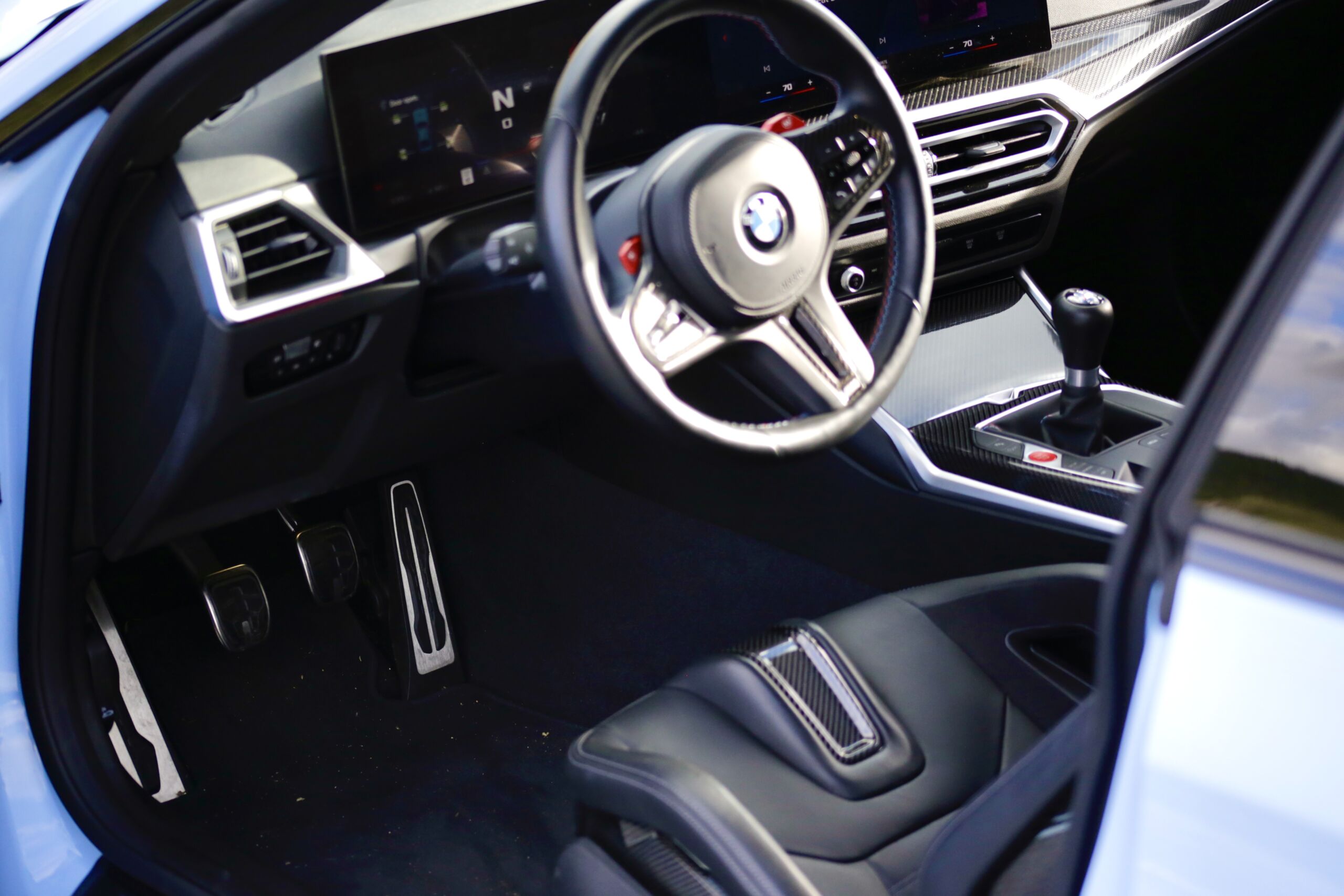
Porsche and Cadillac GTP race cars at Daytona

Enlarge / The current crop of GTP hybrid prototypes look wonderful, thanks to rules that cap the amount of downforce they can generate in favor of more dramatic styling.

Porsche Motorsport

DAYTONA BEACH, Fla.—Near-summer temperatures greeted a record crowd at the Daytona International Speedway in Florida last weekend. At the end of each January, the track hosts the Rolex 24, an around-the-clock endurance race that’s now as high-profile as it has ever been during the event’s 62-year history.

Between the packed crowd and the 59-car grid, there’s proof that sports car racing is in good shape. Some of that might be attributable to Drive to Survive‘s rising tide lifting a bunch of non-F1 boats, but there’s more to the story than just a resurgent interest in motorsport. The dramatic-looking GTP prototypes have a lot to do with it—powerful hybrid racing cars from Acura, BMW, Cadillac, and Porsche are bringing in the fans and, in some cases, some pretty famous drivers with F1 or IndyCar wins on their resumes.

But IMSA and the Rolex 24 is about more than just the top class of cars; in addition to the GTP hybrids, the field also comprised the very competitive pro-am LMP2 prototype class and a pair of classes (one for professional teams, another for pro-ams) for production-based machines built to a global set of rules, called GT3. (To be slightly confusing, in IMSA, those classes are known as GTD-Pro and GTD. More on sports car racing being needlessly confusing later.)

The crowd for the 2024 Rolex 24 was larger even than last year. This is the pre-race grid walk, which I chose to watch from afar.

Enlarge / The crowd for the 2024 Rolex 24 was larger even than last year. This is the pre-race grid walk, which I chose to watch from afar.

Jonathan Gitlin

There was even a Hollywood megastar in attendance, as the Jerry Bruckheimer-produced, Joseph Kosinski-directed racing movie starring Brad Pitt was at the track filming scenes for the start of that movie.

GTP finds its groove

Last year’s Rolex 24 was the debut of the new GTP cars, and they didn’t have an entirely trouble-free race. These cars are some of the most complicated sports prototypes to turn a wheel due to hybrid systems, and during the 2023 race, two of the entrants required lengthy stops to replace their hybrid batteries. Those teething troubles are a thing of the past, and over the last 12 months, the cars have found an awful lot more speed, with most of the 10-car class breaking Daytona’s lap record during qualifying.

Most of that new speed has come from the teams’ familiarity with the cars after a season of racing but also from a year of software development. Only Porsche’s 963 has had any mechanical upgrades during the off-season. “You… will not notice anything on the outside shell of the car,” explained Urs Kuratle, Porsche Motorsport’s director of factory racing. “So the aerodynamics, all [those] things, they look the same… Sometimes it’s a material change, where a fitting used to be out of aluminum and due to reliability reasons we change to steel or things like this. There are minor details like this.”

  • This year, the Wayne Taylor Racing team had not one but two ARX-06s. I expected the cars to be front-runners, but a late BoP change added another 40 kg.

    Jonathan Gitlin

  • The Cadillacs are fan favorites because of their loud, naturally aspirated V8s. I think the car looks better than the other GTP cars, too.

    Jonathan Gitlin

  • Porsche’s 963 is the only GTP car that has had any changes since last year, but they’re all under the bodywork.

    Jonathan Gitlin

  • Porsche is the only manufacturer to start selling customer GTP cars so far. The one on the left is the Proton Competition Mustang Sampling car; the one on the right belongs to JDC-Miller MotorSports.

    Jonathan Gitlin

GTP cars aren’t as fast or even as powerful as an F1 single-seater, but the driver workload from inside the cockpit may be even higher. At last year’s season-ending Petit Le Mans, former F1 champion Jenson Button—then making a guest appearance in the privateer-run JDC Miller Motorsport Porsche 963—came away with a newfound respect for how many different systems could be tweaked from the steering wheel.

The 2024 Rolex 24 at Daytona put on very close racing for a record crowd Read More »
i-abandoned-openlitespeed-and-went-back-to-good-ol’-nginx

I abandoned OpenLiteSpeed and went back to good ol’ Nginx

Adventures in server babysitting —

One weather site’s sudden struggles, and musings on why change isn’t always good.

Ish is on fire, yo.

Enlarge / Ish is on fire, yo.

Since 2017, in what spare time I have (ha!), I help my colleague Eric Berger host his Houston-area weather forecasting site, Space City Weather. It’s an interesting hosting challenge—on a typical day, SCW does maybe 20,000–30,000 page views to 10,000–15,000 unique visitors, which is a relatively easy load to handle with minimal work. But when severe weather events happen—especially in the summer, when hurricanes lurk in the Gulf of Mexico—the site’s traffic can spike to more than a million page views in 12 hours. That level of traffic requires a bit more prep to handle.

Space City Weather!” data-height=”2008″ data-width=”2560″ href=”https://cdn.arstechnica.net/wp-content/uploads/2024/01/Screenshot-2024-01-24-at-9.02.05%E2%80%AFAM.jpg”>Hey, it's <a href=Space City Weather!” height=”235″ src=”https://cdn.arstechnica.net/wp-content/uploads/2024/01/Screenshot-2024-01-24-at-9.02.05%E2%80%AFAM.jpg” width=”300″>

Lee Hutchinson

For a very long time, I ran SCW on a backend stack made up of HAProxy for SSL termination, Varnish Cache for on-box caching, and Nginx for the actual web server application—all fronted by Cloudflare to absorb the majority of the load. (I wrote about this setup at length on Ars a few years ago for folks who want some more in-depth details.) This stack was fully battle-tested and ready to devour whatever traffic we threw at it, but it was also annoyingly complex, with multiple cache layers to contend with, and that complexity made troubleshooting issues more difficult than I would have liked.

So during some winter downtime two years ago, I took the opportunity to jettison some complexity and reduce the hosting stack down to a single monolithic web server application: OpenLiteSpeed.

Out with the old, in with the new

I didn’t know too much about OpenLiteSpeed (“OLS” to its friends) other than that it’s mentioned a bunch in discussions about WordPress hosting—and since SCW runs WordPress, I started to get interested. OLS seemed to get a lot of praise for its integrated caching, especially when WordPress was involved; it was purported to be quite quick compared to Nginx; and, frankly, after five-ish years of admining the same stack, I was interested in changing things up. OpenLiteSpeed it was!

check my blog. Yeah, I still have a blog. I’m old.” data-height=”1442″ data-width=”2318″ href=”https://cdn.arstechnica.net/wp-content/uploads/2024/01/Screen-Shot-2022-06-09-at-6.37.47-AM-1.jpg”>The OLS admin console, showing vhosts. This is from my personal web server rather than the Space City Weather server, but it looks the same. If you want some deeper details on the OLS config I was using, <a href=check my blog. Yeah, I still have a blog. I’m old.” height=”398″ src=”https://cdn.arstechnica.net/wp-content/uploads/2024/01/Screen-Shot-2022-06-09-at-6.37.47-AM-1.jpg” width=”640″>

Enlarge / The OLS admin console, showing vhosts. This is from my personal web server rather than the Space City Weather server, but it looks the same. If you want some deeper details on the OLS config I was using, check my blog. Yeah, I still have a blog. I’m old.

Lee Hutchinson

The first significant adjustment to deal with was that OLS is primarily configured through an actual GUI, with all the annoying potential issues that brings with it (another port to secure, another password to manage, another public point of entry into the backend, more PHP resources dedicated just to the admin interface). But the GUI was fast, and it mostly exposed the settings that needed exposing. Translating the existing Nginx WordPress configuration into OLS-speak was a good acclimation exercise, and I eventually settled on Cloudflare tunnels as an acceptable method for keeping the admin console hidden away and notionally secure.

Just a taste of the options that await within the LiteSpeed Cache WordPress plugin.

Enlarge / Just a taste of the options that await within the LiteSpeed Cache WordPress plugin.

Lee Hutchinson

The other major adjustment was the OLS LiteSpeed Cache plugin for WordPress, which is the primary tool one uses to configure how WordPress itself interacts with OLS and its built-in cache. It’s a massive plugin with pages and pages of configurable options, many of which are concerned with driving utilization of the Quic.Cloud CDN service (which is operated by LiteSpeed Technology, the company that created OpenLiteSpeed and its for-pay sibling, LiteSpeed).

Getting the most out of WordPress on OLS meant spending some time in the plugin, figuring out which of the options would help and which would hurt. (Perhaps unsurprisingly, there are plenty of ways in there to get oneself into stupid amounts of trouble by being too aggressive with caching.) Fortunately, Space City Weather provides a great testing ground for web servers, being a nicely active site with a very cache-friendly workload, and so I hammered out a starting configuration with which I was reasonably happy and, while speaking the ancient holy words of ritual, flipped the cutover switch. HAProxy, Varnish, and Nginx went silent, and OLS took up the load.

I abandoned OpenLiteSpeed and went back to good ol’ Nginx Read More »