
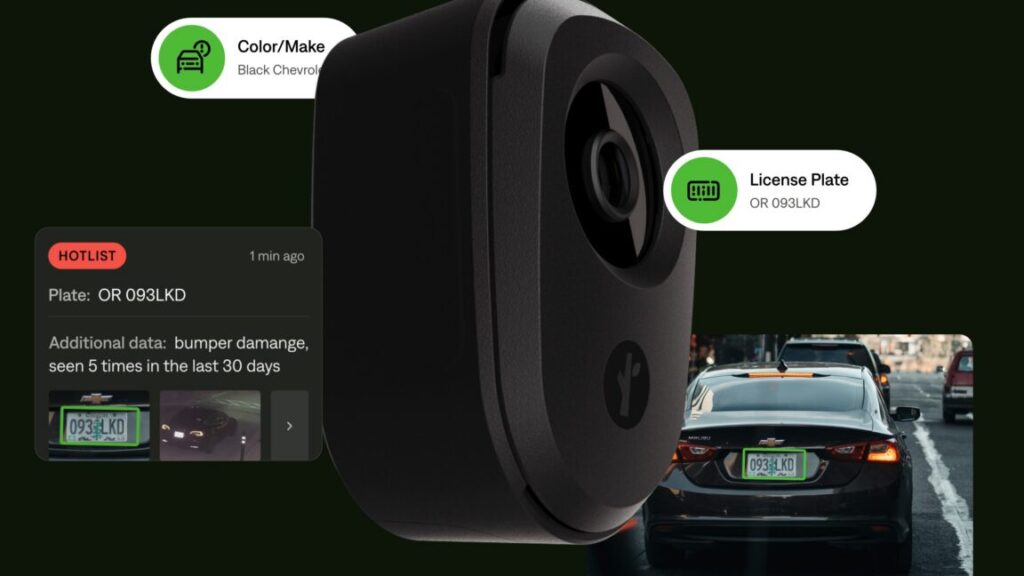
Flock!

angry-norfolk-residents-lose-lawsuit-to-stop-flock-license-plate-scanners

Angry Norfolk residents lose lawsuit to stop Flock license plate scanners

In his Thursday ruling, Judge Davis referenced the family tree of modern surveillance case-law, noting that a 1983 Supreme Court case (Knotts v. United States) found that there is no “reasonable expectation of privacy” when traveling on a public road.

That 1983 case, which centered on a radio transmitter that enabled law enforcement to follow the movements of alleged drug traffickers driving between Minnesota and Wisconsin, has provided the legal underpinning for the use of ALPR technology in the United States over the last few decades.

“Modern-day license plate reader systems, like Norfolk’s, are nothing like [the technology of the early 1980s],” Michael Soyfer, one of the Institute of Justice attorneys, told Ars by email. “They track the movements of virtually every driver within a city for weeks at a time. That can reveal a host of insights not captured in any single trip.”

For its part, Flock Safety celebrated the ruling and wrote on its website that its clients may continue to use the cameras.

“Here, the court emphasized that LPR technology, as deployed in Norfolk, is meaningfully different from systems that enable persistent, comprehensive tracking of individuals’ movements,” the company wrote.

“When used with appropriate limitations and safeguards, LPRs do not provide an intimate portrait of a person’s life and therefore do not trigger the constitutional concerns raised by continuous surveillance,” it added.

But some legal scholars disagree with both the judge’s and Flock’s conclusions.

Andrew Ferguson, a law professor at George Washington University and the author of the forthcoming book Your Data Will Be Used Against You: Policing in the Age of Self-Surveillance, told Ars by email that the judge’s ruling here is “understandably conservative and dangerous.”

“The danger is that the same reasoning that there is no expectation of privacy in public would justify having ALPR cameras on every single street corner,” he continued.

“Further,” he said, “looking at the technology as a mere tool, rather than a system of surveillance, misses the mark on its erosion of privacy. Think how revealing ALPRs would be outside religious institutions, gun ranges, medical clinics, addiction treatment centers, or protests.”

Angry Norfolk residents lose lawsuit to stop Flock license plate scanners Read More »

flock-haters-cross-political-divides-to-remove-error-prone-cameras

Flock haters cross political divides to remove error-prone cameras

“People should care because this could be you,” White said. “This is something that police agencies are now using to document and watch what you’re doing, where you’re going, without your consent.”

Haters cross political divides to fight Flock

Currently, Flock’s reach is broad, “providing services to 5,000 police departments, 1,000 businesses, and numerous homeowners associations across 49 states,” lawmakers noted. Additionally, in October, Flock partnered with Amazon, which allows police to request Ring camera footage that widens Flock’s lens further.

However, Flock’s reach notably doesn’t extend into certain cities and towns in Arizona, Colorado, New York, Oregon, Tennessee, Texas, and Virginia, following successful local bids to end Flock contracts. These local fights have only just started as groups learn from each other, Sarah Hamid, EFF’s director of strategic campaigns, told Ars.

“Several cities have active campaigns underway right now across the country—urban and rural, in blue states and red states,” Hamid said.

A Flock spokesperson told Ars that the growing effort to remove cameras “remains an extremely small percentage of communities that consider deploying Flock technology (low single digital percentages).” To keep Flock’s cameras on city streets, Flock attends “hundreds of local community meetings and City Council sessions each month, and the vast majority of those contracts are accepted,” Flock’s spokesperson said.

Hamid challenged Flock’s “characterization of camera removals as isolated incidents,” though, noting “that doesn’t reflect what we’re seeing.”

“The removals span multiple states and represent different organizing strategies—some community-led, some council-initiated, some driven by budget constraints,” Hamid said.

Most recently, city officials voted to remove Flock cameras this fall in Sedona, Arizona.

A 72-year-old retiree, Sandy Boyce, helped fuel the local movement there after learning that Sedona had “quietly” renewed its Flock contract, NBC News reported. She felt enraged as she imagined her tax dollars continuing to support a camera system tracking her movements without her consent, she told NBC News.

Flock haters cross political divides to remove error-prone cameras Read More »