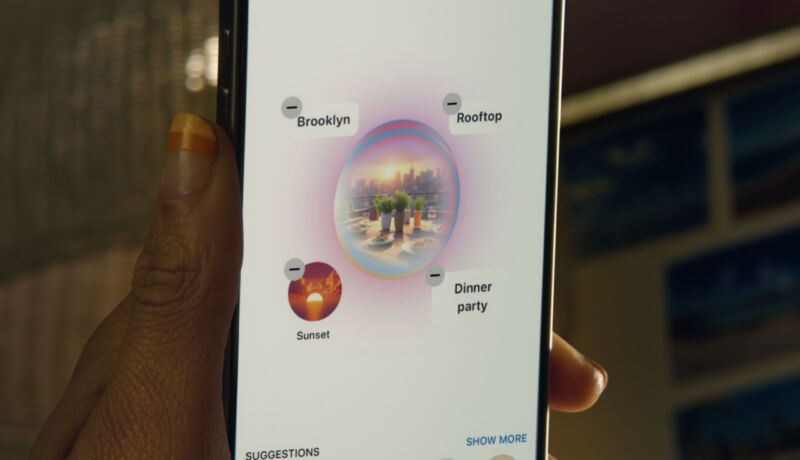
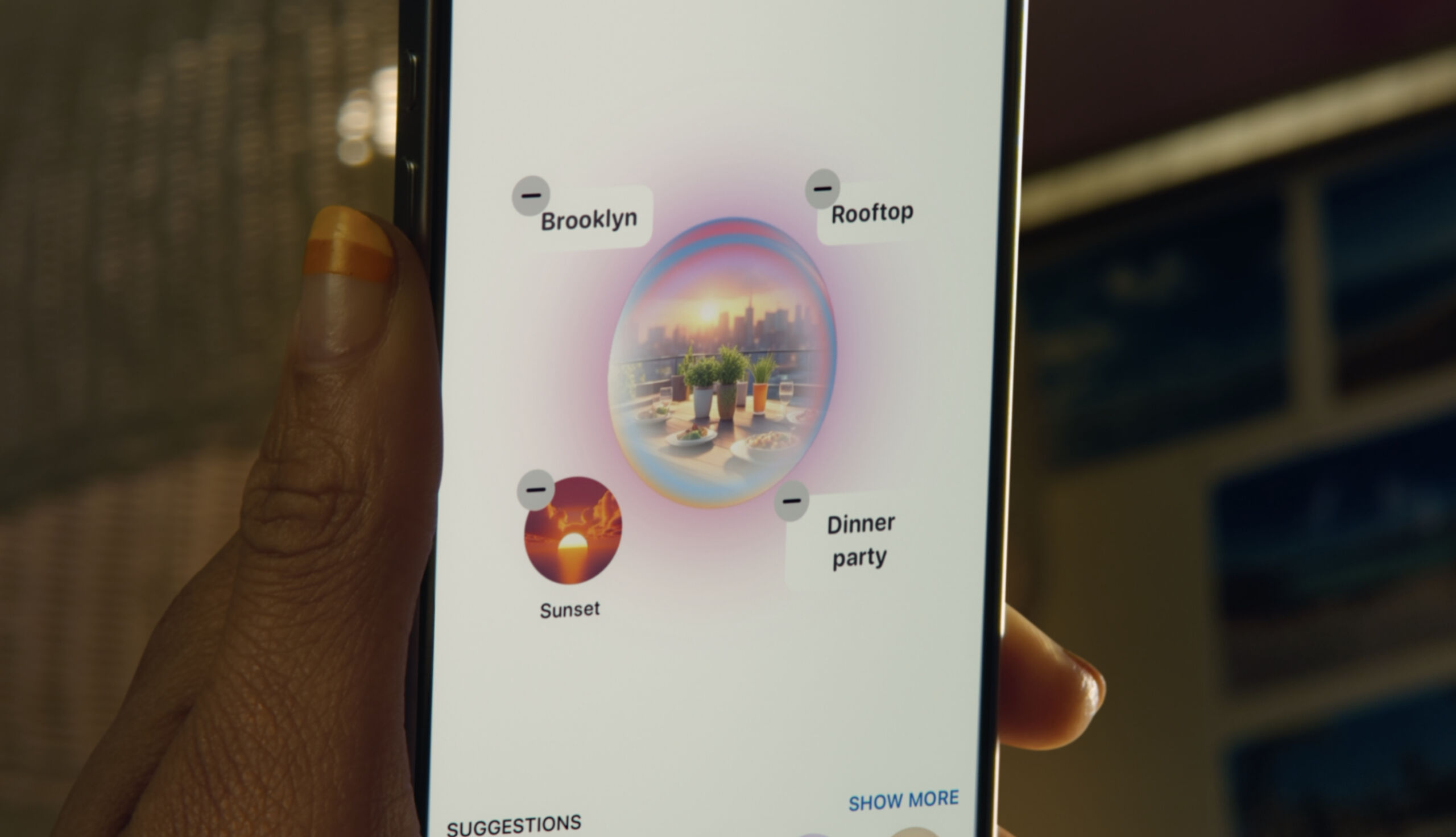
Enlarge/ Features like Image Playground won’t arrive in Europe at the same time as other regions.
Apple
Three major features in iOS 18 and macOS Sequoia will not be available to European users this fall, Apple says. They include iPhone screen mirroring on the Mac, SharePlay screen sharing, and the entire Apple Intelligence suite of generative AI features.
In a statement sent to Financial Times, The Verge, and others, Apple says this decision is related to the European Union’s Digital Markets Act (DMA). Here’s the full statement, which was attributed to Apple spokesperson Fred Sainz:
Two weeks ago, Apple unveiled hundreds of new features that we are excited to bring to our users around the world. We are highly motivated to make these technologies accessible to all users. However, due to the regulatory uncertainties brought about by the Digital Markets Act (DMA), we do not believe that we will be able to roll out three of these features — iPhone Mirroring, SharePlay Screen Sharing enhancements, and Apple Intelligence — to our EU users this year.
Specifically, we are concerned that the interoperability requirements of the DMA could force us to compromise the integrity of our products in ways that risk user privacy and data security. We are committed to collaborating with the European Commission in an attempt to find a solution that would enable us to deliver these features to our EU customers without compromising their safety.
It is unclear from Apple’s statement precisely which aspects of the DMA may have led to this decision. It could be that Apple is concerned that it would be required to give competitors like Microsoft or Google access to user data collected for Apple Intelligence features and beyond, but we’re not sure.
This is not the first recent and major divergence between functionality and features for Apple devices in the EU versus other regions. Because of EU regulations, Apple opened up iOS to third-party app stores in Europe, but not in other regions. However, critics argued its compliance with that requirement was lukewarm at best, as it came with a set of restrictions and changes to how app developers could monetize their apps on the platform should they use those other storefronts.
While Apple says in the statement it’s open to finding a solution, no timeline is given. All we know is that the features won’t be available on devices in the EU this year. They’re expected to launch in other regions in the fall.
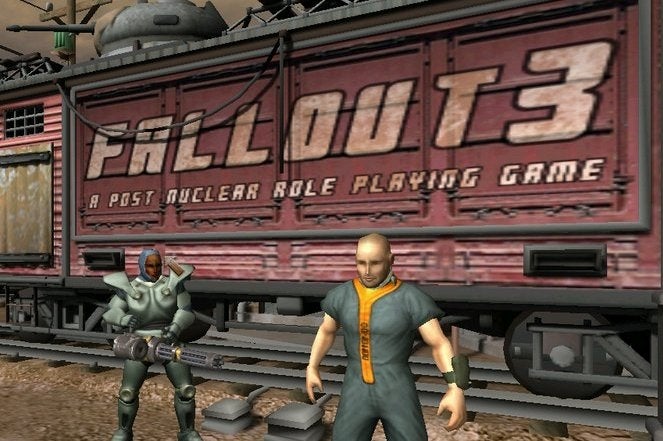
PC gamers of a certain vintage will remember tales of Project Van Buren, a title that early ’00s Interplay intended as the sequel to 1998’s hit Fallout 2. Now, original Fallout producer Timothy Cain is sharing some behind-the-scenes details about how he contributed to the project’s cancellation during a particularly difficult time for publisher Interplay.
Cain famously left Interplay during Fallout 2‘s development in the late ’90s to help form short-lived RPG house Troika Games. After his departure, though, he was still in touch with some people from his former employer, including an unnamed Interplay vice president looking for some outside opinions on the troubled Van Buren project.
“Would you mind coming over and playing one of my game prototypes?” Cain recalls this vice president asking him sometime in mid-2003. “We’re making a Fallout game and I’m going to have to cancel it. I don’t think they can get it done… but if you could come over and look at it and give me an estimate, there’s a chance I wouldn’t cancel it.”
Cain discusses his memories of testing “Project Van Buren.”
Cain recalls walking “across the street” from Troika to the Interplay offices, motivated to help because, as he remembers it, “if you don’t do it, bad things will happen to other people.” There, he got to see the latest build of Project Van Buren, running on the 3D Jefferson Engine that was intended to replace the sprite-based isometric view of the first two Fallout games. Cain said the version he played was similar or identical to a tech demo obtained by fan site No Mutants Allowed in 2007 and featured in a recent YouTube documentary about the failed project.
After playing for about two hours and talking to the team behind the project, Cain said the VP asked him directly how long the demo needed to become a shippable game. The answer Cain reportedly gave—18 months of standard development for “a really good game” or 12 months of “death march” crunch time for an unbalanced, buggy mess—was too long for the financially strapped publisher to devote to funding the project.
“He could not afford a development period of more than six months,” Cain said. “To me, that time frame was out of the question… He thought it couldn’t be done in six months; I just confirmed that.”
Show me the money
Looking back today, Cain said it’s hard to pinpoint a single “villain” responsible for Van Buren’s failure. Even reusing the engine from the first Fallout game—as the Fallout 2 team did for that title’s quick 12-month development process—wouldn’t have necessarily helped, Cain said. “Would that engine have been acceptable five years later [after Fallout 2]?” he asked rhetorically. “Had anyone really looked at it? I started the engine in 1994… it’s creaky.”
Real “Van Buren”-heads will enjoy this in-depth look at the game’s development, including details of Interplay’s troubled financial situation in the early ’00s.
In the end, Van Buren’s cancellation (and that of a planned Interplay Fallout MMO years later) simply “comes down to money,” Cain said. “I do not believe that [with] the money they had left, the game in the state it was in, and the people who were working on it could have completed it within six months,” he said. “And [if they did], I don’t think it would have been a game you would have liked playing.”
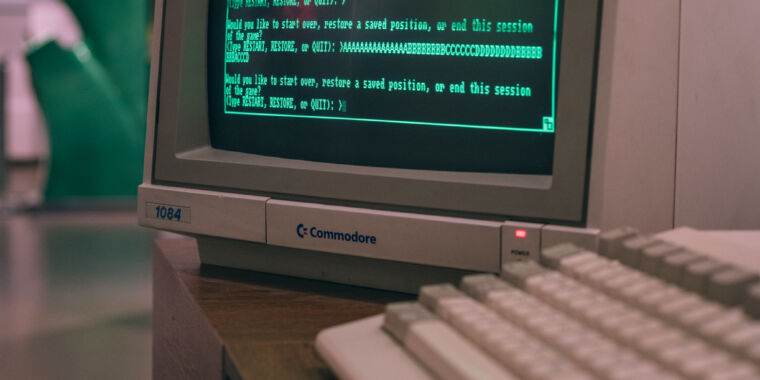
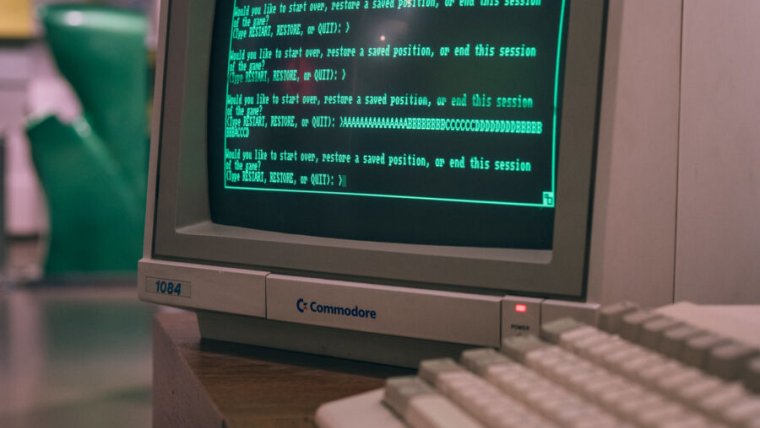
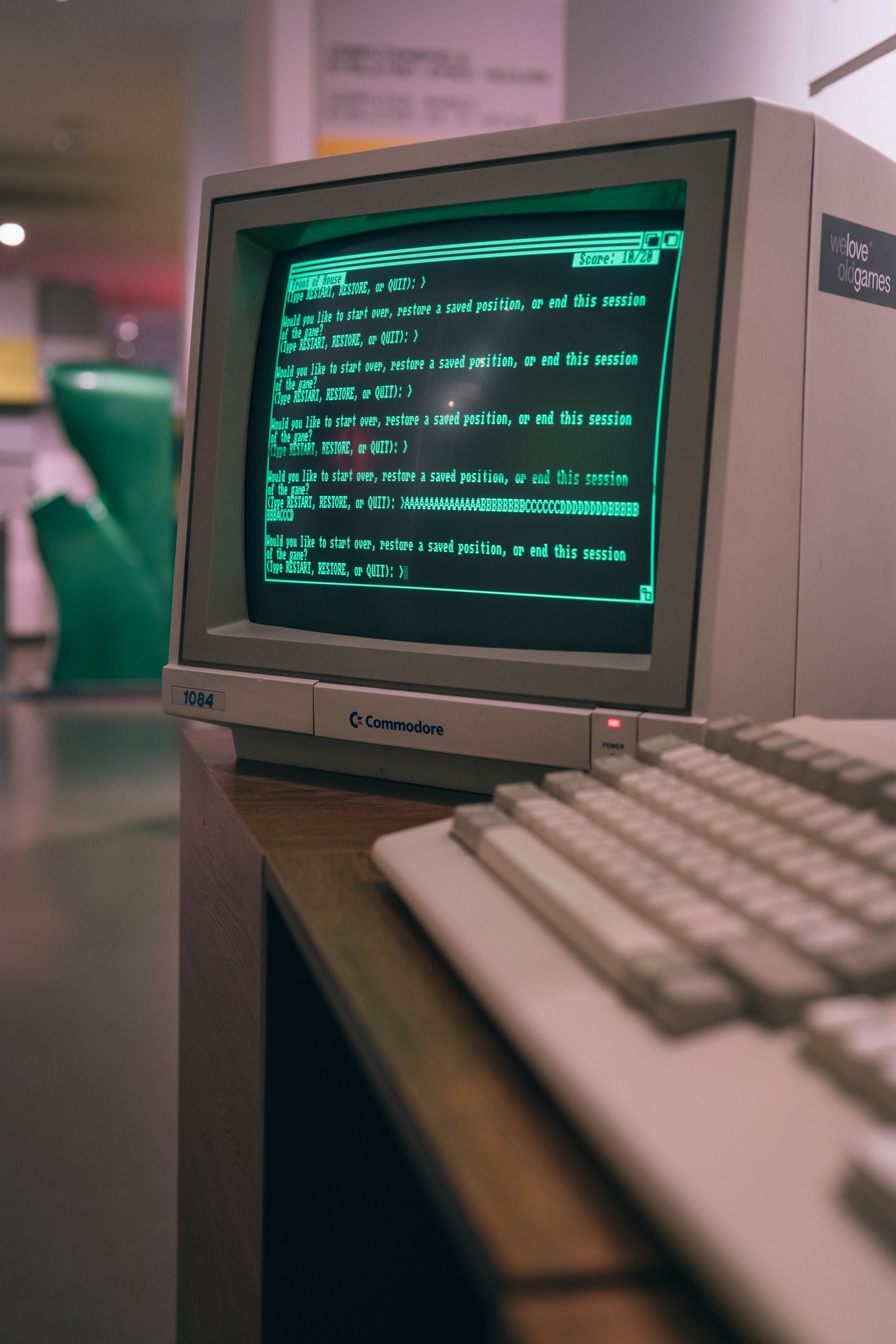
Enlarge/ Zork running on an Amiga at the Computerspielemuseum in Berlin, Germany.
You are standing at the end of a road before a small brick building.
That simple sentence first appeared on a PDP-10 mainframe in the 1970s, and the words marked the beginning of what we now know as interactive fiction.
From the bare-bones text adventures of the 1980s to the heartfelt hypertext works of Twine creators, interactive fiction is an art form that continues to inspire a loyal audience. The community for interactive fiction, or IF, attracts readers and players alongside developers and creators. It champions an open source ethos and a punk-like individuality.
But whatever its production value or artistic merit, at heart, interactive fiction is simply words on a screen. In this time of AAA video games, prestige television, and contemporary novels and poetry, how does interactive fiction continue to endure?
To understand the history of IF, the best place to turn for insight is the authors themselves. Not just the authors of notable text games—although many of the people I interviewed for this article do have that claim to fame—but the authors of the communities and the tools that have kept the torch burning. Here’s what they had to say about IF and its legacy.
Examine roots: Adventure and Infocom
The interactive fiction story began in the 1970s. The first widely played game in the genre was Colossal Cave Adventure, also known simply as Adventure. The text game was made by Will Crowther in 1976, based on his experiences spelunking in Kentucky’s aptly named Mammoth Cave. Descriptions of the different spaces would appear on the terminal, then players would type in two-word commands—a verb followed by a noun—to solve puzzles and navigate the sprawling in-game caverns.
During the 1970s, getting the chance to interact with a computer was a rare and special thing for most people.
“My father’s office had an open house in about 1978,” IF author and tool creator Andrew Plotkin recalled. “We all went in and looked at the computers—computers were very exciting in 1978—and he fired up Adventure on one of the terminals. And I, being eight years old, realized this was the best thing in the universe and immediately wanted to do that forever.”
“It is hard to overstate how potent the effect of this game was,” said Graham Nelson, creator of the Inform language and author of the landmark IF Curses, of his introduction to the field. “Partly that was because the behemoth-like machine controlling the story was itself beyond ordinary human experience.”
Perhaps that extraordinary factor is what sparked the curiosity of people like Plotkin and Nelson to play Adventure and the other text games that followed. The roots of interactive fiction are entangled with the roots of the computing industry. “I think it’s always been a focus on the written word as an engine for what we consider a game,” said software developer and tech entrepreneur Liza Daly. “Originally, that was born out of necessity of primitive computers of the ’70s and ’80s, but people discovered that there was a lot to mine there.”
Home computers were just beginning to gain traction as Stanford University student Don Woods released his own version of Adventure in 1977, based on Crowther’s original Fortran work. Without wider access to comparatively pint-sized machines like the Apple 2 and the Vic-20, Scott Adams might not have found an audience for his own text adventure games, released under his company Adventure International, in another homage to Crowther. As computers spread to more people around the world, interactive fiction was able to reach more and more readers.
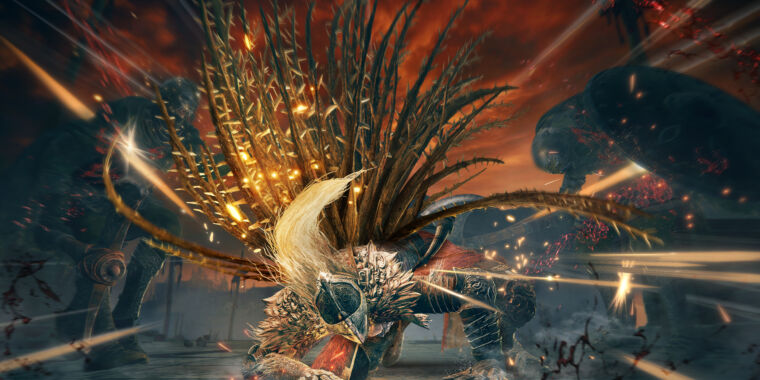
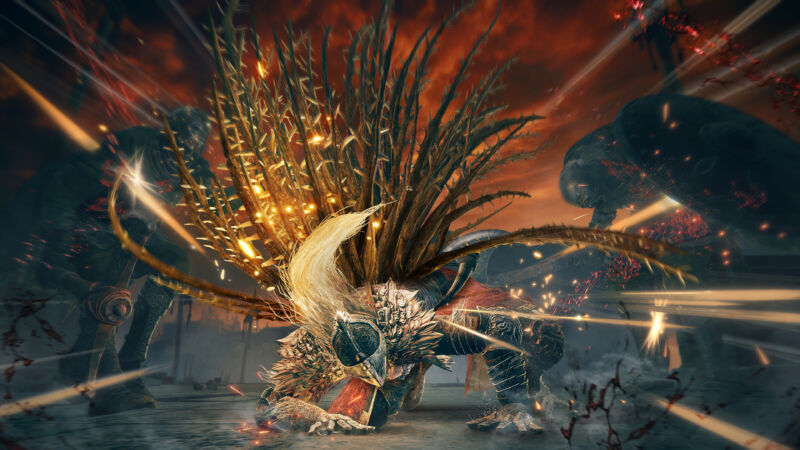
Elden Ring was my first leap into FromSoftware titles (and Dark-Souls-like games generally), and I fell in deep. Over more than 200 hours, I ate up the cryptic lore, learned lots of timings, and came to appreciate the feeling of achievement through perseverance.
Months ago, in preparation for Elden Ring’s expansion, Shadow of the Erdtree (also on PlayStation and Xbox, arriving June 21), I ditched the save file with which I had beaten the game and started over. I wanted to try out big swords and magic casting. I wanted to try a few new side quests. And I wanted to have a fresh experience with the game before Shadow arrived.
I have had a very fresh experience, in that this DLC has made me feel like I’m still in the first hour of my first game. Reader, this expansion is mopping the floor with me. It looked at my resume, which has “Elden Lord” as its most recent job title, and has tossed it into the slush pile. If you’re wondering whether Shadow would, like Elden Ring, provide a different kind of challenge and offer, like the base game, easier paths for Souls newcomers: No, not really. At least not until you’re already far along. This DLC is for people who beat Elden Ring, or all but beat it, and want capital-M More.
That should be great news for longtime Souls devotees, who fondly recall the difficulty spikes of some of earlier games’ DLC or those who want a slightly more linear, dungeon-by-dungeon, boss-by-boss experience. For everybody else, I’d suggest waiting until you’re confidently through most of the main game—and for the giant wiki/YouTube apparatus around the game to catch up and provide some guidance.
What “ready for the DLC” really means
Technically, you can play Shadow of the Erdtree once you’ve done two things in Elden Ring: beaten Starscourge Radahn and Mohg, Lord of Blood. Radahn is a mid-game boss, and Mohg is generally encountered in the later stages. But, perhaps anticipating the DLC, the game allows you to get to Mohg relatively early by using a specific item.
Just getting to a level where you’re reasonably ready to tackle Mohg will be a lot. As of a week ago, more than 60 percent of players on Steam (PC) had not yet beaten Mohg; that number is even higher on consoles. On my replay, I got to about level 105 at around 50 hours, but I remembered a lot about both the mechanics and the map. I had the item to travel to Mohg and the other item that makes him easier to beat. Maybe it’s strange to avoid spoilers for a game that came out more than two years ago, but, again, most players have not gotten this far.
I took down Mohg in one try; I’m not bragging, just setting expectations. I had a fully upgraded Moonlight Greatsword, a host of spells, a fully upgraded Mimic Tear spirit helper, and a build focused on Intelligence (for the sword and spell casting), but I could also wear decent armor while still adequately rolling. Up until this point, I was surprised by how much easier the bosses and dungeons I revisited had felt (except the Valiant Gargoyle, which was just as hard).
I stepped into the DLC, wandered around a bit, killed a few shambling souls (“Shadows of the Dead”), and found a sealed chasm (“Blackgaol”) in the first area. The knight inside took me out, repeatedly, usually in two quick sword flicks. Sometimes he would change it up and perforate me with gatling-speed flaming crossbow bolts or a wave emanating from his sword. Most of the time, he didn’t even touch his healing flask before I saw “YOU DIED.”
Ah, but most Elden Ring players will remember that the game put an intentionally way-too-hard enemy in the very first open area, almost as a lesson about leveling up and coming back. So I hauled my character and bruised ego toward a nearby ruin, filled mostly with more dead Shadows. The first big “legacy dungeon,” Belurat, Tower Settlement, was just around the corner. I headed in and started compiling my first of what must be 100 deaths by now.
There are the lumbering Shadows, yes, but there are also their bigger brothers, who love to ambush with a leaping strike and take me down in two hits. There are Man-Flies, which unsurprisingly swarmed and latched onto my head, killing me if I wasn’t at full health (40 Vigor, if you must know). There are Gravebirds, which, like all birds in EldenRing, are absolute jerks that mess with your camera angles. And there are Horned Warriors, who are big, fast, relentless, and responsible for maybe a dozen each of my deaths.
At level 105, with a known build strategy centered around a weapon often regarded as overpowered and all the knowledge I had of the game’s systems and strategies, I was barely hanging on, occasionally inching forward. What gives?
It has now been almost exactly seven years since Nintendo first announced Metroid Prime 4 and over five years since the company said it was restarting work on the game with series mainstay Retro Studios. Now, Nintendo has finally shared the first glimpse of gameplay for the renamed Metroid Prime 4: Beyond, which is now planned for a 2025 release.
“After a very long time, we are finally able to share more information about this title,” Nintendo executive Shinya Takahashi said during today’s livestreamed Nintendo Direct presentation, showing a remarkable talent for understatement. Takahashi went on to also ask that fans “please wait a little bit longer” for additional information before the game’s planned release next year.
That “additional information” should include whether the highly anticipated game will launch for the Switch—as was promised in 2017—or for Nintendo’s next console, which the company recently teased via a pre-announcement announcement. Nintendo kept its promise that “there will be no mention of the Nintendo Switch successor” during today’s Nintendo Direct presentation, but a major first-party franchise game launching in 2025 definitely seems well-positioned to serve as a showcase for new hardware that Nintendo seems to be planning for around the same time frame.
Metroid Prime 4 also seems like a prime candidate to be the kind of “bridge game” that Nintendo sometimes launches across an aging console and its replacement hardware simultaneously. The Legend of Zelda: Breath of the Wild served as such a bridge game during the transition from the Wii U to the Switch in 2017, and The Legend of Zelda: Twilight Princess did so during the GameCube to Wii transition in 2006.
In 2019, Takahashi admitted that “the current development status of [Metroid Prime 4] is very challenged,” leading to the “difficult decision” to “essentially restart development” with a new internal structure under Retro Studios. “It will be a long road until the next time we will be able to update you on the development progress,” Takahashi said at the time, presaging the five-year wait for today’s trailer.
The world of 20X9
A familiar head emerges from a familiar ship.
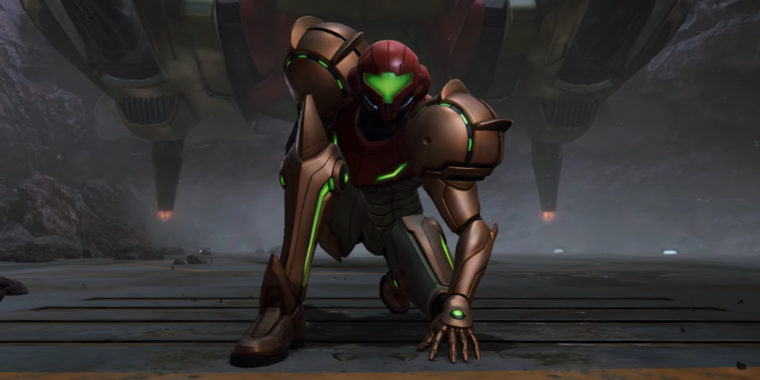
Samus has mastered the cool three-point landing by now.
If you look in the background, you’ll notice Samus is getting some help from one of those Space Pirates (yes, that’s their official name).
No one will notice me if I transform into a tiny sphere!
Come meet my pets. Don’t worry, they don’t bite.
This cruise excursion was definitely worth the extra money.
The two-minute teaser footage for Metroid Prime 4 Nintendo released today features series protagonist Samus landing on a “Galactic Federation Research Facility” in the suitably cheesy, sci-fi-ish “Cosmic Year 20X9” (hey, maybe she’ll run into Stinkoman). Background details in the trailer point to Samus intruding on some sort of alien civil war, with familiar-looking Space Pirates firing on each other amid a barrage of anti-aircraft lasers.
The brief glimpse of gameplay we got features plenty of elements that will be familiar to anyone who has played the first three Metroid Prime games, including scanning objects for additional information, transforming into a morph ball to traverse narrow tunnels, and locking on to foes to easily circle them while firing away. The action-heavy portion concludes with the entrance of a mysterious figure in a strange, light-stripped mask breaking through an outer wall flanked by two seemingly docile metroids.
As the trailer concludes, we get a sweeping shot of a more tranquil, open area full of flowing waterfalls and giant trees, suggesting more of the exploration-heavy and combat-light puzzle-platforming sections the series is known for.
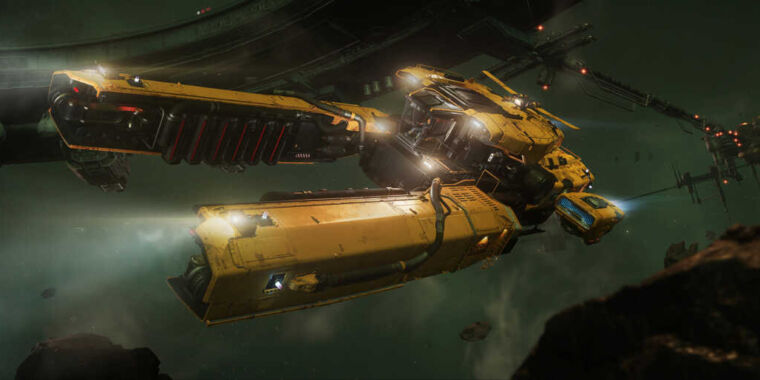
Shortly after the May release of Star Citizen’s Alpha 2.23.1 update, players started noticing that they could easily make extra money by storing a freight ship, selling their cargo, and then returning to the ship to find the cargo ready to be sold a second time. As knowledge of this “money doubling” exploit spread, players reported that the price of basic in-game resources saw significant inflation in a matter of days.
Now, Cloud Imperium Games Senior Director of Player Relations Will Leverett has written that the developer has investigated “multiple exploits within Star Citizen that compromised stability and negatively impacted the in-game economy.” In doing so, CIG says it “identified and suspended over 600 accounts involved in exploitative behaviors while also removing the illicitly gained aUEC [in-game currency] from the Star Citizen ecosystem.”
A ban for “over 600” players may not seem that notable when games like Dota 2 and World of Warcraft routinely announce ban waves that include tens of thousands of players. Still, it’s a reminder that at least a small portion of the game’s more than 5.2 million backers are actively playing the alpha so much that they’re willing to cheat to see more of what the game has to offer.
“From zero, in two evenings, I did make about [200 million aUEC] just to buy ships that [are] unavailable for me, to try it in full!” user ZeroInsideOut wrote on the game’s forums. “There [are] many things in Star Citizen [which] I would like to try and test, but I am short of money.”
It’s getting late for “early access” bugs
Leverett wrote that exploits like these should be expected in Star Citizen “at this stage of development”—a stage that we hasten to once again point out is now part of well over a decade of active development. Finding and squashing these kinds of bugs “early” is all part of the game’s crowdfunded development plan and “one of the benefits of open development and working closely with our community,” Leverett wrote.
“We’ve gained valuable insights through your issue council reports, and we thank you for that,” he continued. “However, once an exploit is identified and confirmed, continued abuse for personal gain will not be tolerated and will result in action on our part.”
However, some players feel that the “open development” process failed to find this significant issue quickly enough. Commenter Nitebird took CIG to task for “allow[ing] exploits reported during [Public Test Universe] to go to live despite many people confirming the issue in [the Issue Council] and urging CIG to pause to fix it. The patch is ruined regardless for many people… What is IC good for than to prevent this?”
CIG founder and CEO Chris Roberts said in a March update that the development team “is hard at work, heads down, driving toward the finish line” and that the leadership team has now “spent significant time looking at what Star Citizen 1.0 means and what it would take to get there.” That includes the planned introduction of long-sought key features like base building and crafting that were apparently not a priority during the game’s first 11-plus years of development work.
“As that roadmap [for a 1.0 release] comes together and becomes validated, we look forward to sharing with you both its vision and executional plan later this year,” Roberts wrote.
Enlarge/ Illustration of the Apollo lunar lander Eagle over the Moon.
On Friday, a retired software engineer named Martin C. Martin announced that he recently discovered a bug in the original Lunar Lander computer game’s physics code while tinkering with the software. Created by a 17-year-old high school student named Jim Storer in 1969, this primordial game rendered the action only as text status updates on a teletype, but it set the stage for future versions to come.
The legendary game—which Storer developed on a PDP-8 minicomputer in a programming language called FOCAL just months after Neil Armstrong and Buzz Aldrin made their historic moonwalks—allows players to control a lunar module’s descent onto the Moon’s surface. Players must carefully manage their fuel usage to achieve a gentle landing, making critical decisions every ten seconds to burn the right amount of fuel.
In 2009, just short of the 40th anniversary of the first Moon landing, I set out to find the author of the original Lunar Lander game, which was then primarily known as a graphical game, thanks to the graphical version from 1974 and a 1979 Atari arcade title. When I discovered that Storer created the oldest known version as a teletype game, I interviewed him and wrote up a history of the game. Storer later released the source code to the original game, written in FOCAL, on his website.
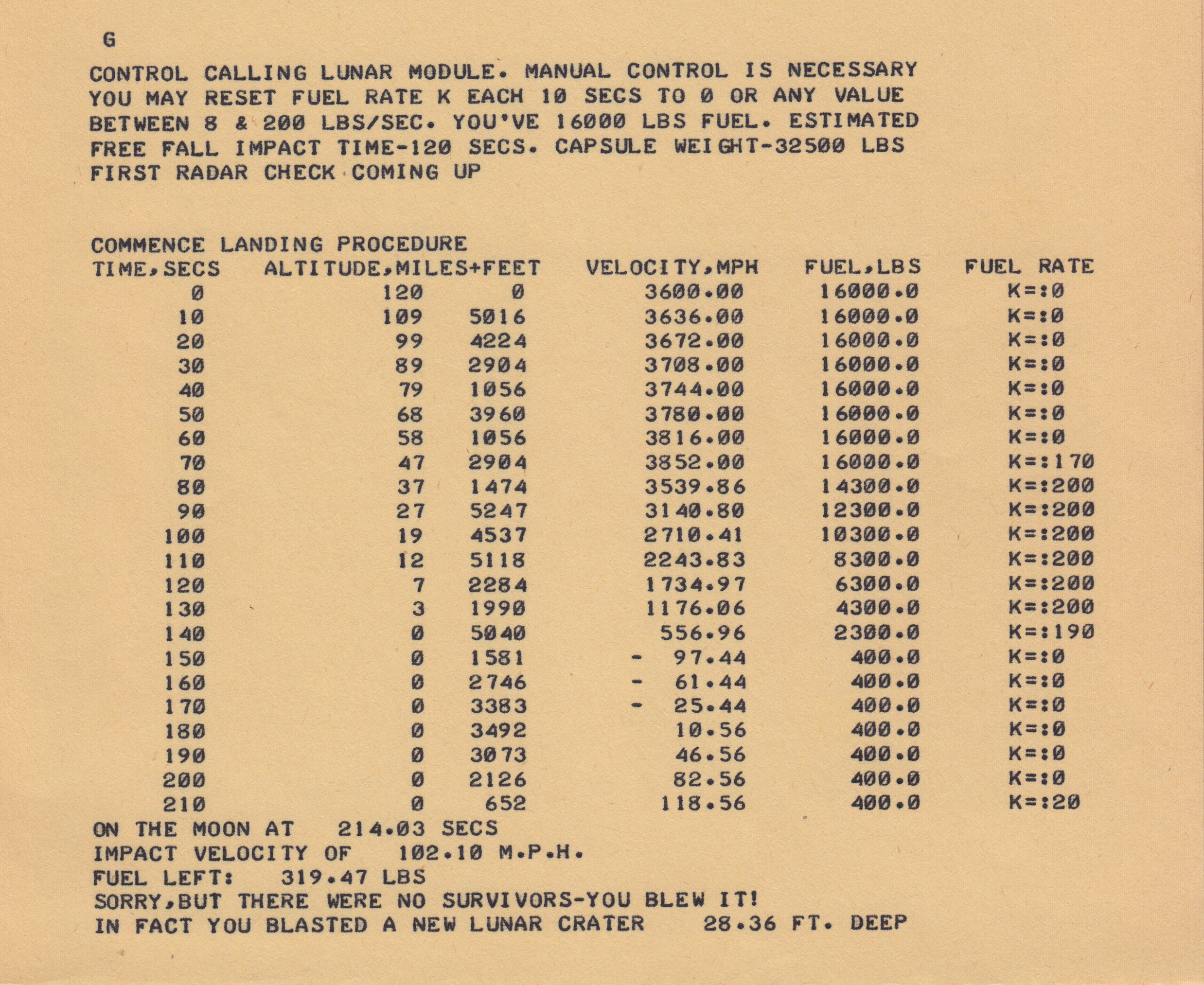
Enlarge/ A scan of printed teletype output from the original Lunar Lander game, provided by Jim Storer.
Jim Storer
Fast forward to 2024, when Martin—an AI expert, game developer, and former postdoctoral associate at MIT—stumbled upon a bug in Storer’s high school code while exploring what he believed was the optimal strategy for landing the module with maximum fuel efficiency—a technique known among Kerbal Space Program enthusiasts as the “suicide burn.” This method involves falling freely to build up speed and then igniting the engines at the last possible moment to slow down just enough to touch down safely. He also tried another approach—a more gentle landing.
“I recently explored the optimal fuel burn schedule to land as gently as possible and with maximum remaining fuel,” Martin wrote on his blog. “Surprisingly, the theoretical best strategy didn’t work. The game falsely thinks the lander doesn’t touch down on the surface when in fact it does. Digging in, I was amazed by the sophisticated physics and numerical computing in the game. Eventually I found a bug: a missing ‘divide by two’ that had seemingly gone unnoticed for nearly 55 years.”
A matter of division
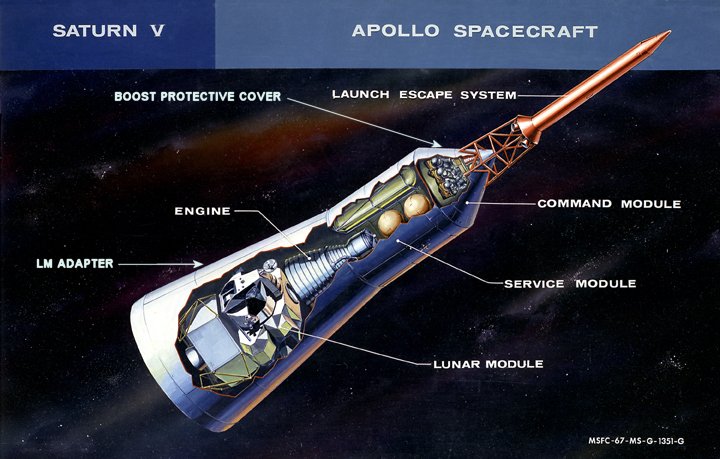
Enlarge/ Diagram of launch escape system on top of the Apollo capsule.
NASA
Despite applying what should have been a textbook landing strategy, Martin found that the game inconsistently reported that the lander had missed the Moon’s surface entirely. Intrigued by the anomaly, Martin dug into the game’s source code and discovered that the landing algorithm was based on highly sophisticated physics for its time, including the Tsiolkovsky rocket equation and a Taylor series expansion.
As mentioned in the quote above, the root of the problem was a simple computational oversight—a missing division by two in the formula used to calculate the lander’s trajectory. This seemingly minor error had big consequences, causing the simulation to underestimate the time until the lander reached its lowest trajectory point and miscalculate the landing.
Despite the bug, Martin was impressed that Storer, then a high school senior, managed to incorporate advanced mathematical concepts into his game, a feat that remains impressive even by today’s standards. Martin reached out to Storer himself, and the Lunar Lander author told Martin that his father was a physicist who helped him derive the equations used in the game simulation.
While people played and enjoyed Storer’s game for years with the bug in place, it goes to show that realism isn’t always the most important part of a compelling interactive experience. And thankfully for Aldrin and Armstrong, the real Apollo lunar landing experience didn’t suffer from the same issue.
You can read more about Martin’s exciting debugging adventure over on his blog.
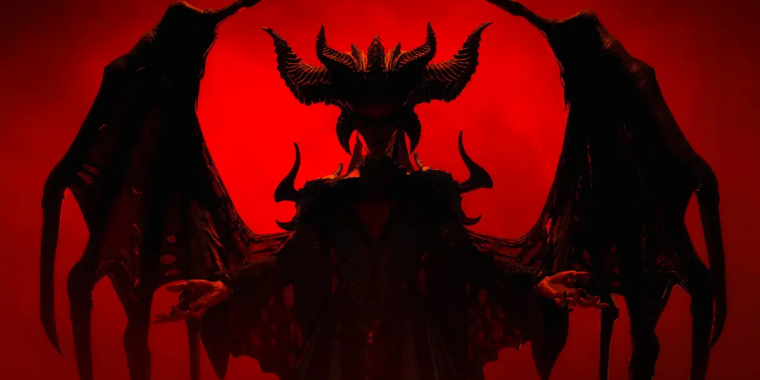
Enlarge / Do you have a few hundred hours to hear the good news about our lord and savior, Diablo?
Blizzard
Longtime fans of Diablo II are deeply familiar with the extreme timesink that is the late-game grind for the very best loot. But when the creators of Diablo IV tried to re-create that style of grinding for the latest game in the series, they found that their players’ tastes had changed quite a bit in the intervening years.
“One of the assumptions was that people were going to be okay with the long grind for the Unique or an Uber Unique in particular, because in Diablo II, it can go years,” Fergusson said. “You can go three years before you find the Uber you’re looking for… and so we were like, okay, this is what people love about the progression of D2, that idea of that very long chase.”
Once the game launched, though, Fergusson said the development team was surprised to find players complaining of how long it took to get some items—our own review expressed concern about the “‘loot treadmill’ approach to the endgame” and “loot drops [that] seem tuned a bit low for my taste.”
“We found out very quickly that if you don’t give me my Uber in my [months-long] season, then I’m upset,” Fergusson said. “And so we’re like, oh, wow, okay.”
Changing with the players
To help calm those upset players, subsequent Diablo IV updates have made it easier to earn Resplendent Sparks, which those players can use to craft high-end Uber Unique items they’ve been unable to find from random item drops. Having that option to skip the randomized item search helped satisfy the desires of modern players, Fergusson said.
“It’s just a kind of recognition of how much players have changed in 20 years,” he said. “You know… that consumptive nature of a live service and that time is money and I don’t have much time, so let’s go, right? And so that idea of like, oh, you’re going to get a unique every six months.”
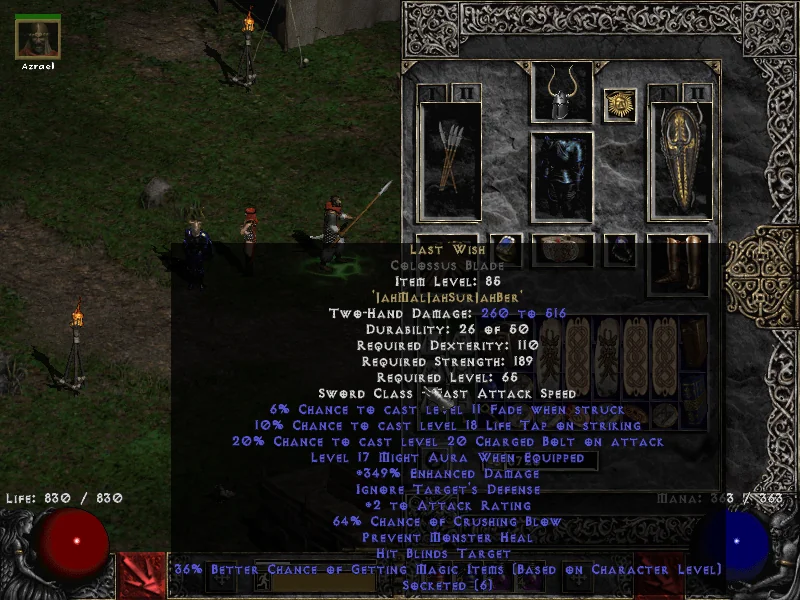
Enlarge/ Ah, the old-fashioned joy of finding an item with a wall of ability text.
That recognition of “how much players have changed” reflects how much the mere passage of time has changed the Diablo audience over the years. A 16-year-old who was sinking all their free time into Diablo II when it launched in 2000 is pushing 40 these days. That means the core, nostalgic audience for the series is now very likely to have a career, family, and/or other responsibilities eating into their playtime. There’s nothing like a few decades of aging to make the prospect of sinking hundreds of hours into a loot grind seem less appealing.
With Diablo III, Blizzard initially assumed that players with more money than time would simply bid up the game’s best items in the game’s real-money auction house, where players who had more time to grind would benefit from selling their rarest random finds. Instead, Blizzard soon acknowledged that the auction system “short-circuited [the] core reward loop” of the game, making it trivial to buy high-level loot that quickly made the entire late-game feel kind of irrelevant.
With Diablo IV, Blizzard seems to have struck a better balance for players who simply want a more reliable reward for any time investment they can make. With Resplendent Sparks, players willing to put in the in-game work can be confident that they’ll eventually get the top-level items they’re seeking. That consistency can be much more appealing for time-limited players than simply crossing your fingers for a low-odds virtual dice roll or opening your wallet to skip the gameplay grind process entirely.
The evolution of Diablo‘s item progression system is an important reminder of how the relative value of a player’s time can change as those players move between different stages of life. Who knows, maybe in 25 years Diablo VI will find success with ultra-rare item drops that soak up all the free time for a core audience of retirement-age players with nothing better to do than spend 500 hours grinding for a digital sword.
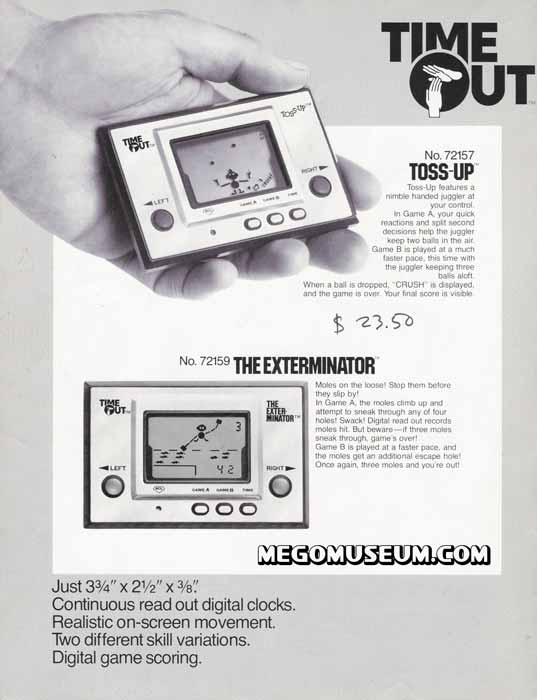
Gamers of a certain age may remember Nintendo’s Game & Watch line, which predated the cartridge-based Game Boy by offering simple, single-serving LCD games that can fetch a pretty penny at auction today. But even most ancient gamers probably don’t remember Mego’s “Time Out” line, which took the internal of Nintendo’s early Game & Watch titles and rebranded them for an American audience that hadn’t yet heard of the Japanese game maker.
Now, the Video Game History Foundation (VGHF) has helped preserve the original film of an early Mego Time Out commercial, marking the recovered, digitized video as “what we believe is the first commercial for a Nintendo product in the United States.” The 30-second TV spot—which is now available in a high-quality digital transfer for the first time—provides a fascinating glimpse into how marketers positioned some of Nintendo’s earliest games to a public that still needed to be sold on the very idea of portable gaming.
Imagine an “electronic sport”
Enlarge/ A 1980 Mego catalog sells Nintendo’s Game & Watch games under the toy company’s “Time Out” branding.
Founded in the 1950s, Mego made a name for itself in the 1970s with licensed movie action figures and early robotic toys like the 2-XL (a childhood favorite of your humble author). In 1980, though, Mego branched out to partner with a brand-new, pre-Donkey Kong Nintendo of America to release rebranded versions of four early Game & Watch titles: Ball (which became Mego’s “Toss-Up”), Vermin (“Exterminator”), Fire (“Fireman Fireman”), and Flagman (“Flag Man”).
While Mego would go out of business by 1983 (long before a 2018 brand revival), in 1980, the company had the pleasure and responsibility of introducing America to Nintendo games for the first time, even if they were being sold under the Mego name. And while home systems like the Atari VCS and Intellivision were already popular with the American public at the time, Mego had to sell the then-new idea of simple black-and-white games you could play away from the living room TV (Milton Bradley Microvision notwithstanding).
The 1980 Mego spot that introduced Nintendo games to the US, now preserved in high-resolution.
That’s where a TV spot from Durona Productions came in. If you were watching TV in the early ’80s, you might have heard an announcer doing a bad Howard Cosell impression selling the Time Out line as “the new electronic sport,” suitable as a pastime for athletes who have been injured jogging or playing tennis or basketball.
The ad also had to introduce even extremely basic gaming functions like “an easy game and a hard game,” high score tracking, and the ability to “tell time” (as Douglas Adams noted, humans were “so amazingly primitive that they still [thought] digital watches [were] a pretty neat idea”). And the ad made a point of highlighting that the game is “so slim you can play it anywhere,” complete with a close-up of the unit fitting in the back pocket of a rollerskater’s tight shorts.
Preserved for all time
This early Nintendo ad wasn’t exactly “lost media” before now; you could find fuzzy, video-taped versions online, including variations that talk up the pocket-sized games as sports “where size and strength won’t help.” But the Video Game History Foundation has now digitized and archived a much higher quality version of the ad, courtesy of an original film reel discovered in an online auction by game collector (and former game journalist) Chris Kohler. Kohler acquired the rare 16 mm film and provided it to VGHF, which in turn reached out to film restoration experts at Movette Film Transfer to help color-correct the faded, 40-plus-year-old print and encode it in full 2K resolution for the first time.
This important historical preservation work is as good an excuse as any to remember a time when toy companies were still figuring out how to convince the public that Nintendo’s newfangled portable games were something that could fit into their everyday life. As VGHF’s Phil Salvador writes, “it feels laser-targeted to the on-the-go yuppie generation of the ’80s with disposable income to spend on electronic toys. There’s shades of how Nintendo would focus on young, trendy, mobile demographics in their more recent marketing campaigns… but we’ve never seen an ad where someone plays Switch in the hospital.”
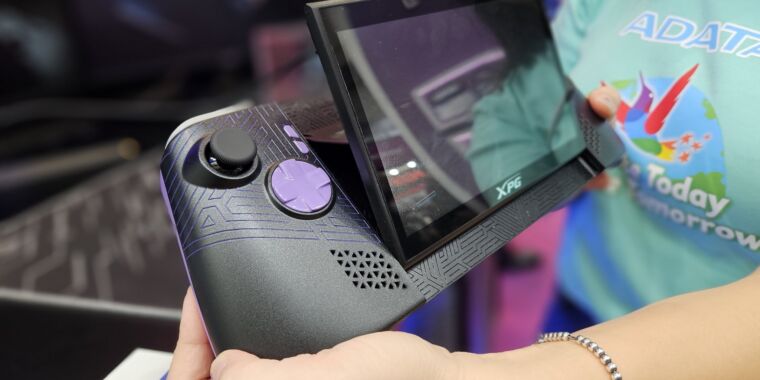
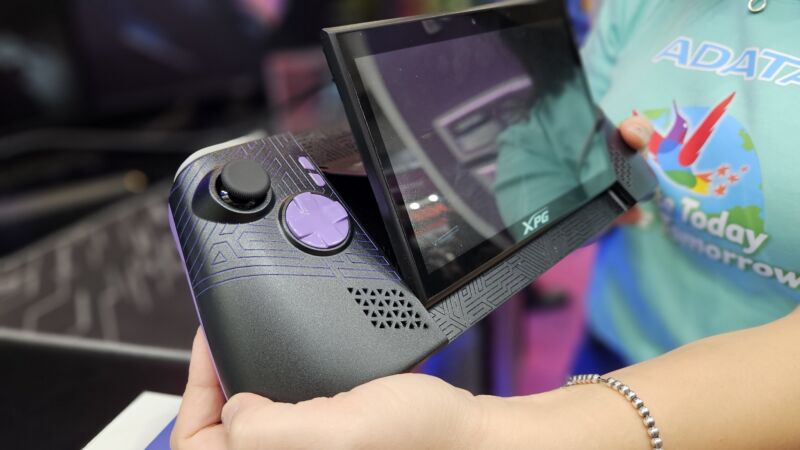
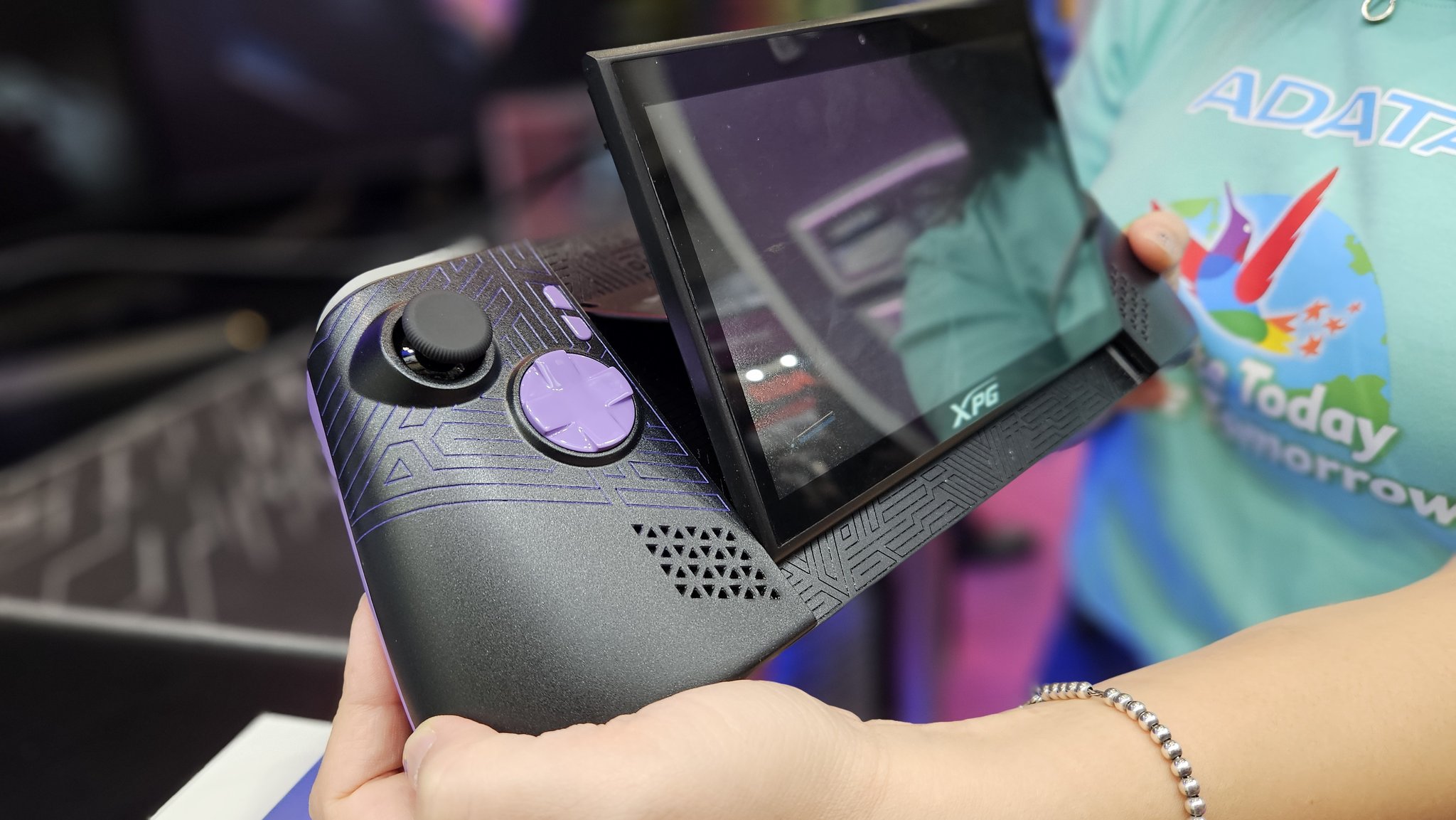
Enlarge/ A slide-up screen is just one of the novel features for Adata’s Steam Deck clone.
For PC gamers used to the modular design of a desktop rig, there are pros and cons to the all-in-one, pre-fab design of the Steam Deck (and its manysubsequentimitators in the growing handheld gaming PC market). On the one hand, you don’t have to worry about pricing out individual parts and making sure they all work together. On the other hand, the only way to upgrade one of these devices is to essentially throw out the old unit and replace the entire thing, console-style.
Korean computer storage-maker Adata is looking to straddle these two extremes. Lilliputing reports on Adata’s XPG Nia prototype, which was shown off at the Computex trade show. The unit is the first gaming handheld so far to embrace the CAMM (Compression Attached Memory Module) standard that allows for easily replaceable and upgradeable memory modules, as well as a number of other mod-friendly features.
CAMM on down
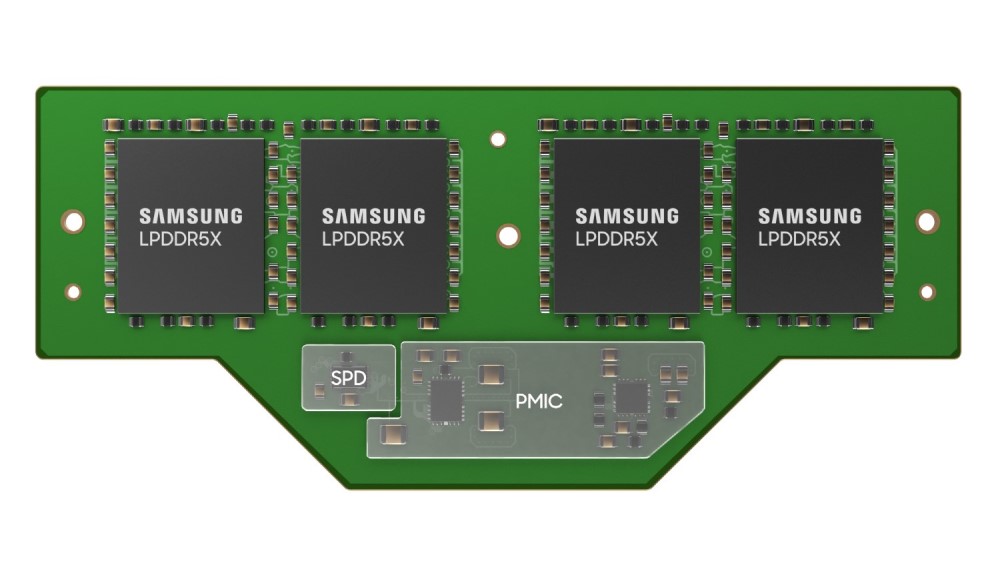
Enlarge/ Samsung shared this rendering of a CAMM ahead of the publishing of the CAMM2 standard in September.
If you’ve read our previous coverage of the emerging CAMM standard, you know how excited we are about the ultra-thin modules that can simply be screwed into place on a laptop or portable motherboard. That offers a viable replacement for the now-standard soldered LPDDR RAM, which saves space but is incredibly difficult to repair or replace.
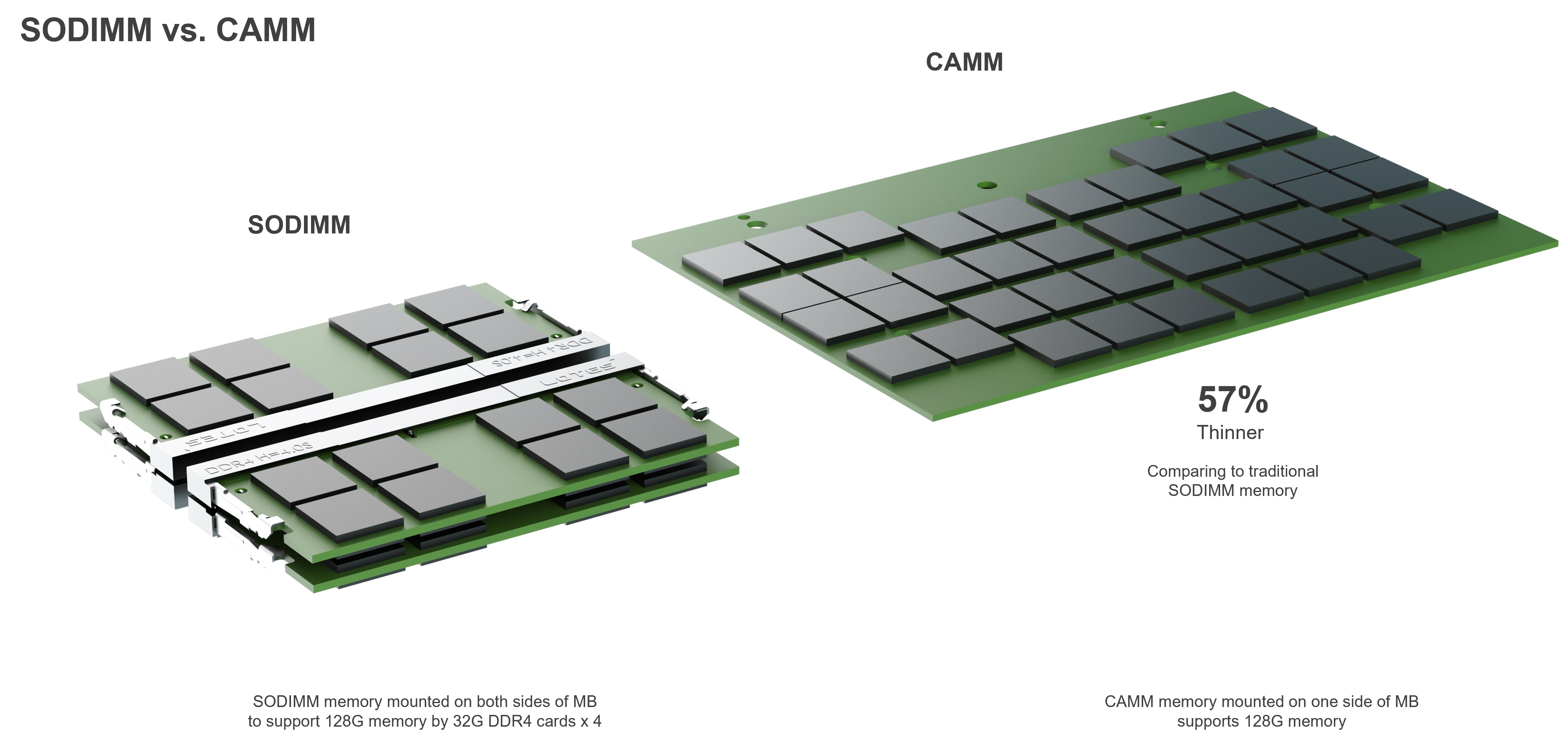
The CAMM standard brings the same easy-to-swap design as the older SO-DIMM RAM stick standard but with a smaller footprint, thermal design, and power usage specially made for portable devices. Reports suggest the XPG Nia will use the low-power LPCAMM2 version of these RAM modules, which will be easily accessible by lifting up the kickstand on the back of the XPG Nia. Alongside a standard M.2 2230 slot for adding more storage, that should make the new handheld much easier to upgrade than the likes of the Steam Deck, which requires some serious hacking to push above the standard spec.
Enlarge/ A Dell rendering depicting the size differences between SODIMM and CAMM.
Dell
The only real downside to CAMM2 memory modules, at the moment, is the price; a recent CAMM2 offering from Crucial runs $175 for 32GB or $330 for 64GB. That’s significantly more than similar, bulkier SO-DIMM modules, but those prices should come down as more device makers and RAM manufacturers start supporting the standard.
A “circular computing device”?
Thus far, the XRG Nia’s modular design doesn’t seem to extend to the planned AMD Phoenix APU or Ryzen Z1 Extreme processor. That said, users will reportedly be able to remove the entire motherboard from the portable case, which can then be inserted into a smaller, screen-free enclosure for a potential second life as an Arudino/Raspberry Pi-like mini-PC.
Adata says it also plans to release the system’s 3D design files and pinout details publicly, letting modders and third-party manufacturers design their own cases and accessories. It’s all part of what Adata is calling a “circular computing design” that’s part of its “sustainable future” initiative.
GGF Events talks with the makers of the Adata XPG Nia prototype at Computex.
There are a few other features that set the XRG Nia apart from the waves of me-too Steam Deck clones. In addition to the rear kickstand, the entire screen enclosure slides up on a sort of pivot, providing a shallower viewing angle that requires less neck tilting when holding the device in front of your chest. Adata is also promising a front-facing camera that can be used for streaming as well as eye-tracking, which could theoretically power some fancy foveated rendering tricks for extra graphics horsepower.
It’s way too early to know how all of these features will shake out in the move from prototype to final device; reports suggest the company is aiming for a release sometime in 2025. Still, it’s nice to see a company trying some new things in the increasingly crowded space of handheld PC gaming devices that Valve has unleashed. If Adata can deliver the portable as an actual consumer product at its target of 1.5 pounds and $600, it could be one to keep an eye on.
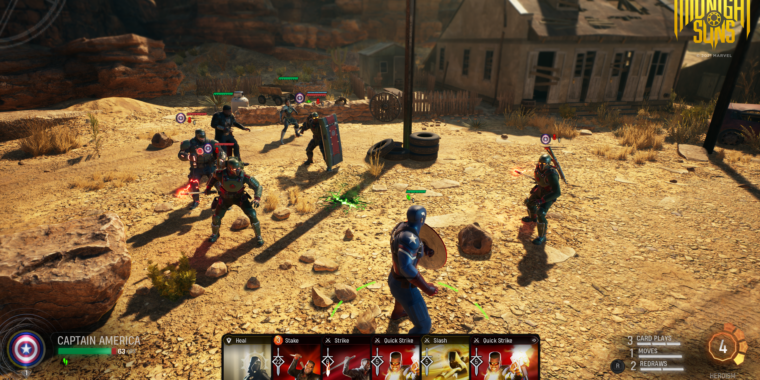
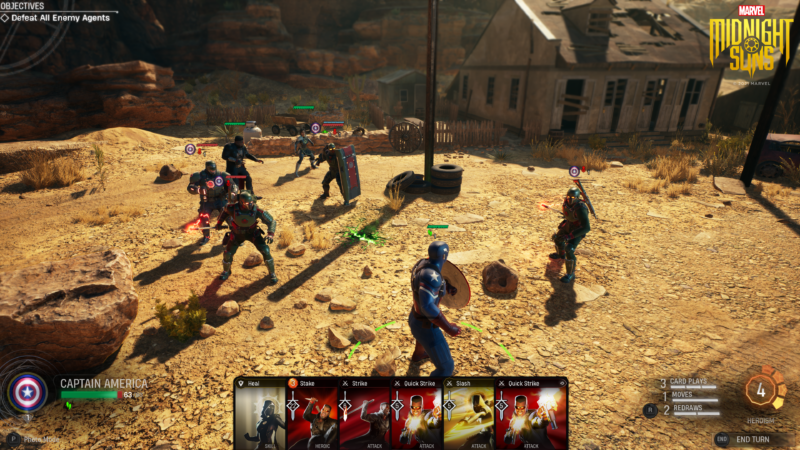
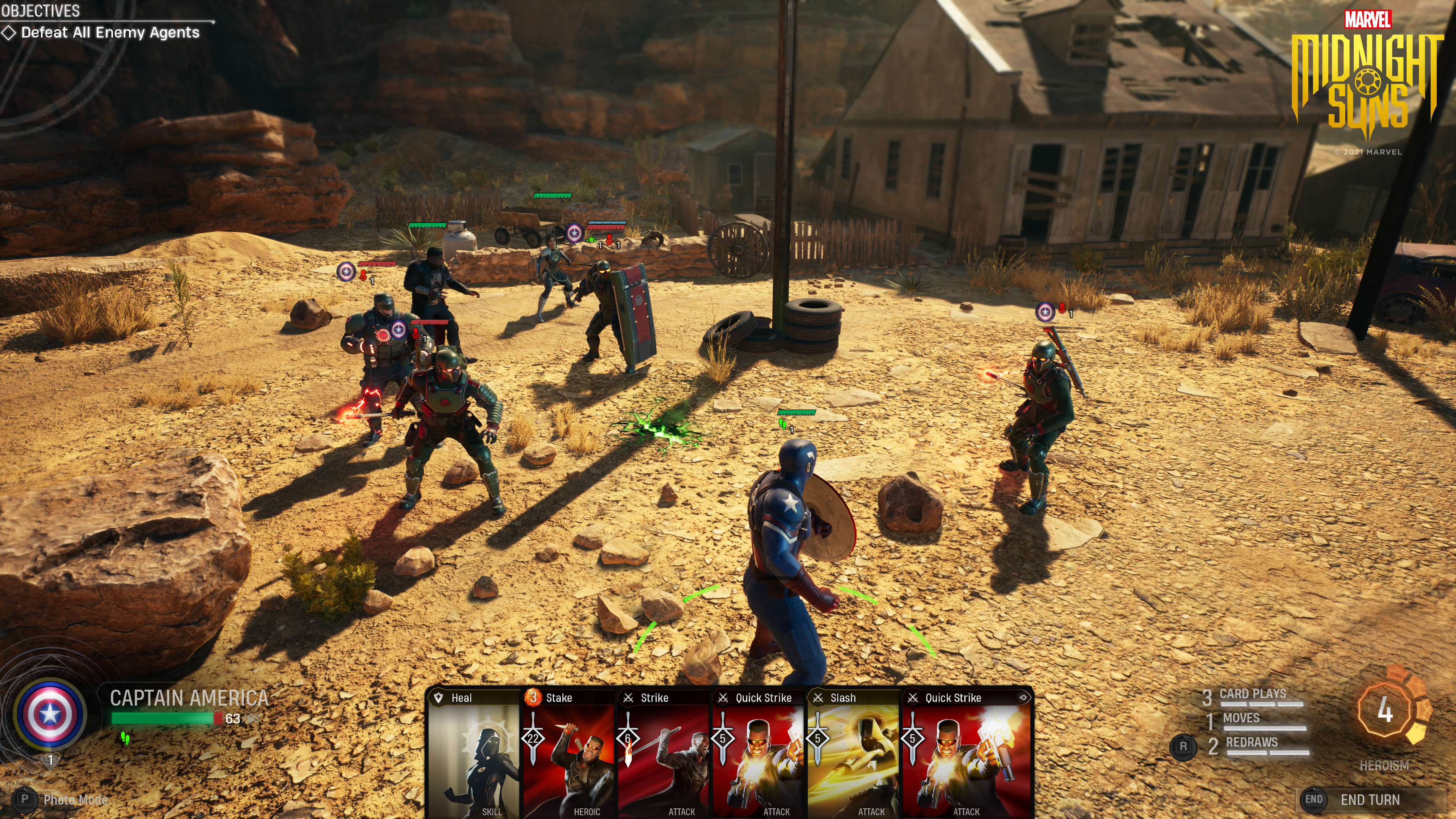
Enlarge/ All these goons are targeting Captain America, as shown in icons above their heads. Good. That’s just how he likes it. (No, really, he’s a tank, that’s his thing.)
2K/Firaxis
I fully understand why people don’t want multiple game launchers on their PC. Steam is the default and good enough for (seemingly) most people. It’s not your job to compel competition in the market. You want to launch and play games you enjoy, as do most of us.
So when I tell you that Marvel’s Midnight Suns is a game worth the hassle of registering, installing, and using the Epic Games Launcher, I am carefully picking my shot. For the price of giving Epic your email (or a proxy/relay version, like Duck), or just logging in again, you can play a fun, novel, engaging turn-based strategy game, with deckbuilding and positioning tactics, for zero dollars. Even if you feel entirely sapped by Marvel at this point, like most of us, I assure you that this slice of Marvel feels more like the comic books and less like the overexposed current films. Just ask the guy who made it.
Tactical deckbuilding is fun
The game was very well-regarded by most critics but was not a financial success upon release in December 2022, or was at least “underwhelming.” Why any game hits or doesn’t is a combination of many factors, but one of them was likely that the game was trying something new. It wasn’t just X-COM with Doctor Strange. It had some Fire Emblem relationship-building and base exploration, but it also had cards. The cards blend into the turn-based, positional, chain-building strategy, but some people apparently saw cards and turned away.
“Before, I never had an experience where people had expressed disappointment before playing, you know,” Jake Solomon, the now-departed director of Midnight Suns and XCOM,told Rock Paper Shotgun in an interview. “As we told people from the beginning, it’s not an accident, we don’t share a single mechanic with XCOM. … And so I think when people play it, they get it, it’s really fun, and you can get as addicted to this as you can to XCOM. But I also totally get it when people look at images coming out and go ‘What the fis that? Are those… are those cards? Cards!?’ So yeah, I can sympathise with people for that reason, I guess.”
Blade is in charge of training, i.e. upgrading your cards. He’s tough, but fair!
2K/Firaxis
As with XCOM, you’ll eventually get mission choices, with different rewards and expiring deadlines.
2K/Firaxis
Most battles are in big arenas, but some make you figure out the best angles very up-close.
2K/Firaxis
Socking goons into each other, and into that ambulance over there, is real fun.
2K/Firaxis
In X-COM fashion, the moves and bad guys occasionally get a close-up.
2K/Firaxis
Folks, the cards are fun. The resources you gather go into upgrading your cards, which are all your moves in combat. There are strategies inherent to each character, like chaining attacks, moving enemies through portals, area-of-effect attacks, and the like. But then you can min-max heroes’ abilities, focus on your favorite heroes, and laugh when things go horribly awry or ridiculously in your favor.
You don’t build one deck in Midnight Suns, you build a whole team of little decks. As a designer for deckbuilder Cobalt Coretold Ars, deckbuilding puts you “in this space where no two turns are ever exactly the same, so players get to keep figuring out new optimal solutions. But even though the options are always huge, they’re made up of pretty simple building blocks, so it’s not overwhelming.”
The other big change from XCOM and similar games is a rich use of both a destructible environment and rag-doll enemies. Having Magik set up a portal, then Iron Man blasts a goon through it, then seeing that enemy fly through the exit portal into an overloaded battery that explodes, knocking out two more baddies—it’s a great feeling.
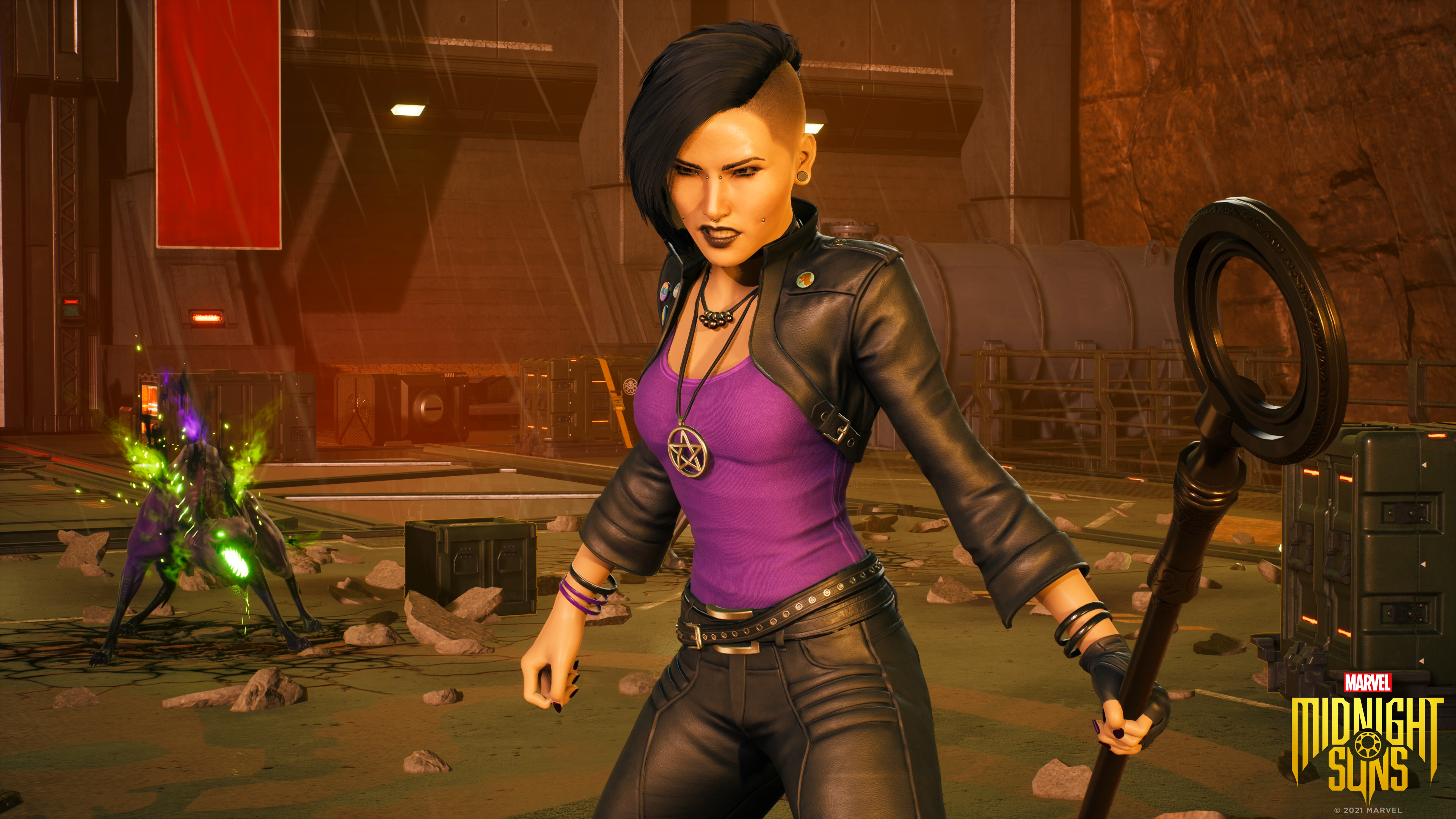
Even devout Marvel fans will find some characters they’d never delved into previously, like Nico Minoru of the Midnight Suns crew.
2K/Firaxis
Comicbook Marvel, not movie-stars Marvel
The thing that most often happens in between missions is talking. You seek out and talk to your teammates, respond to things they say, go on excursions with them. It gets to the point where you can join a book club with Captain America, Blade, Captain Marvel, and, reluctantly, Wolverine.
It can be a bit much, but the dialogue and voice acting is well-done, in my estimation. In some comic-book-but-also-movie games, the lack of rights to an actor’s face can be hard to get past, if you’re used to seeing them in that superhero getup. Midnight Suns has both pretty close approximations of various heroes, or alternate faces that didn’t bug me after the first few sightings. And if none of the world-building/friend-making stuff is for you, you can hold a button and skip through toward more goon-bashing.
Solomon noted in that same RPS interview that he is a “really, really, like, super Marvel Comics nerd.” That comes through in how each character is framed, how they interact, and their motivations. There’s still a good bit of the modern Marvel quip quotient, but it’s palatable. Going on friend dates with the Scarlet Witch may not be something you seek out in your turn-based tactics, but give it a try. It gives you some motivation to see your heroes succeed and work together.
Epic has the base Midnight Suns game free through June 13 at 11 am. You could add on some DLC if you like, with new characters like Storm, Venom, Morbius, and Deadpool (if you’re _really_ okay with quipping). You’ll see various costumes and in-game currencies available for sale, too, but none of them are at all necessary to play and succeed at the game. If you’re enjoying the game, and wish it ran a bit faster, consider disabling the 2K launcher in the Epic Games version.
A lot of games release every day, and some of them end up being games I wish I could have written about and recommended. Midnight Suns has long resided in that mental space for me. For the price of zero dollars, plus whatever level of commitment is required for an Epic Store download, it’s an easy game to recommend.
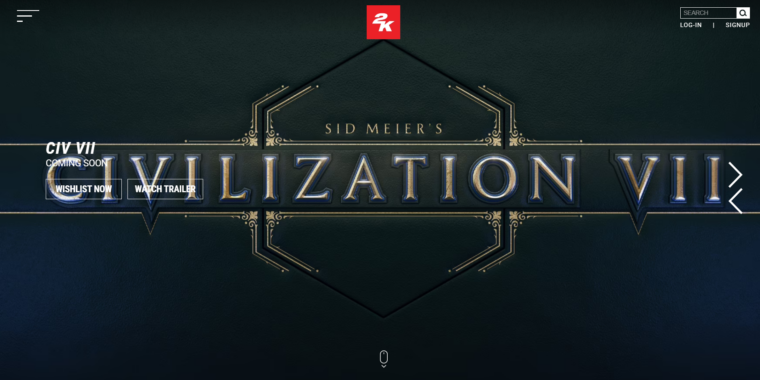
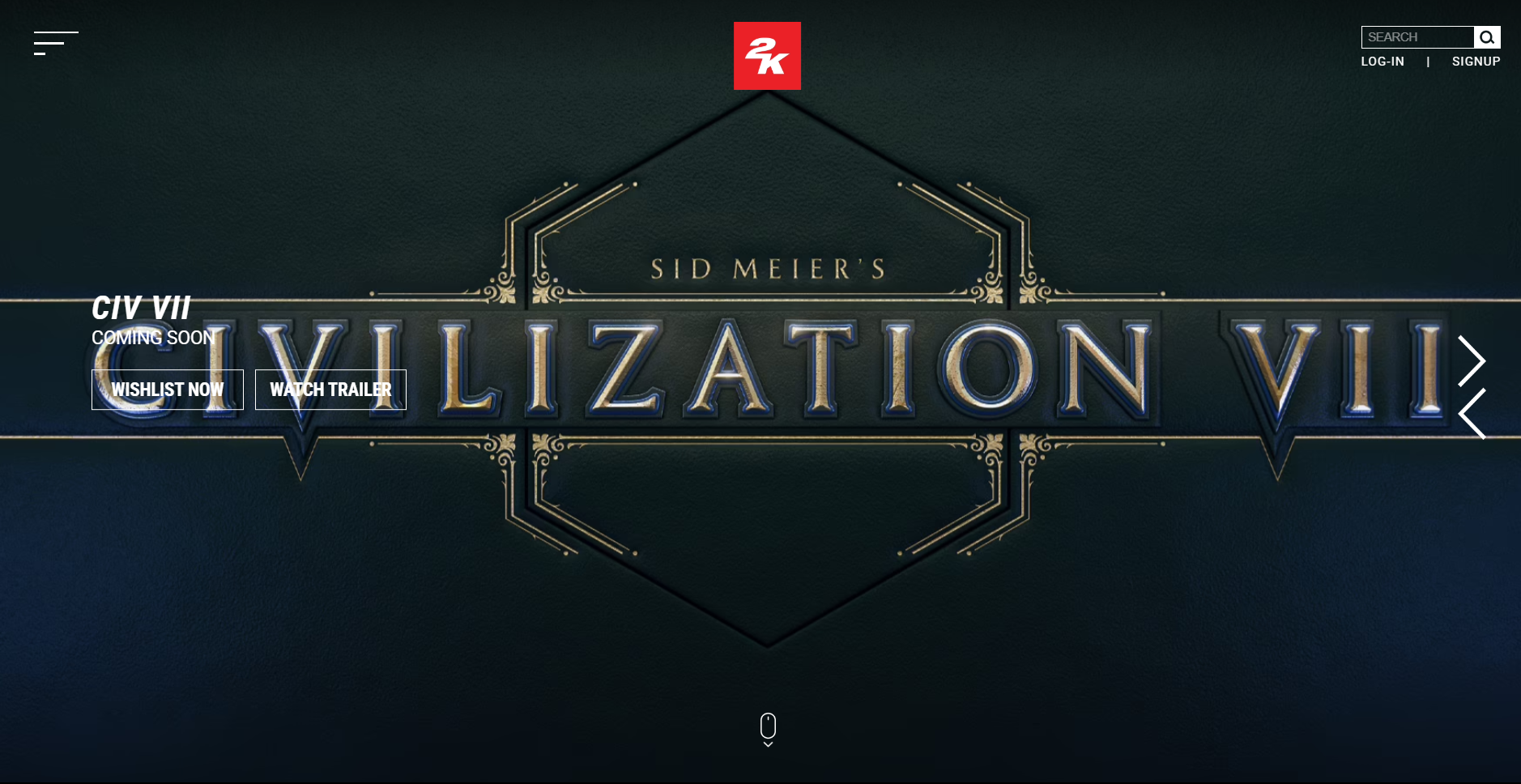
2K Games is expected to show the first trailer footage of the upcoming Civilization VII as part of this weekend’s Summer Games Fest marketing extravaganza after a logo for the game leaked on 2K’s website this morning.
Eagle-eyed gamers at ResetEra and Reddit both noticed the Civ VII banner atop the publisher’s official site early this morning, alongside a “Coming Soon” label and inactive links to a trailer and wishlist page. The appearance comes just ahead of the trailer-filled Summer Games Fest livestream, which will premiere at 5 pm Eastern Friday afternoon.
In May, the Summer Games Fest Twitter account teased that 2K would be using the event “to reveal the next iteration in one of [its] biggest and most beloved franchises.” Civilization VII now seems primed to fill that pre-announced slot, which may be unwelcome news for fans of 2K-owned franchises like Borderlands, Bioshock, and NFL2K (which was first publicly mulled for a revival in 2020).
Last year, developer Firaxis announced that it had started development on the “next mainline game in the world-famous Sid Meier’s Civilization franchise,” under the guidance of Civilization VI Creative Director Ed Beach and newly promoted studio head Heather Hazen (who previously worked with Epic Games and Popcap). “We have plans to take the Civilization franchise to exciting new heights for our millions of players around the world,” Hazen said in a statement at the time.
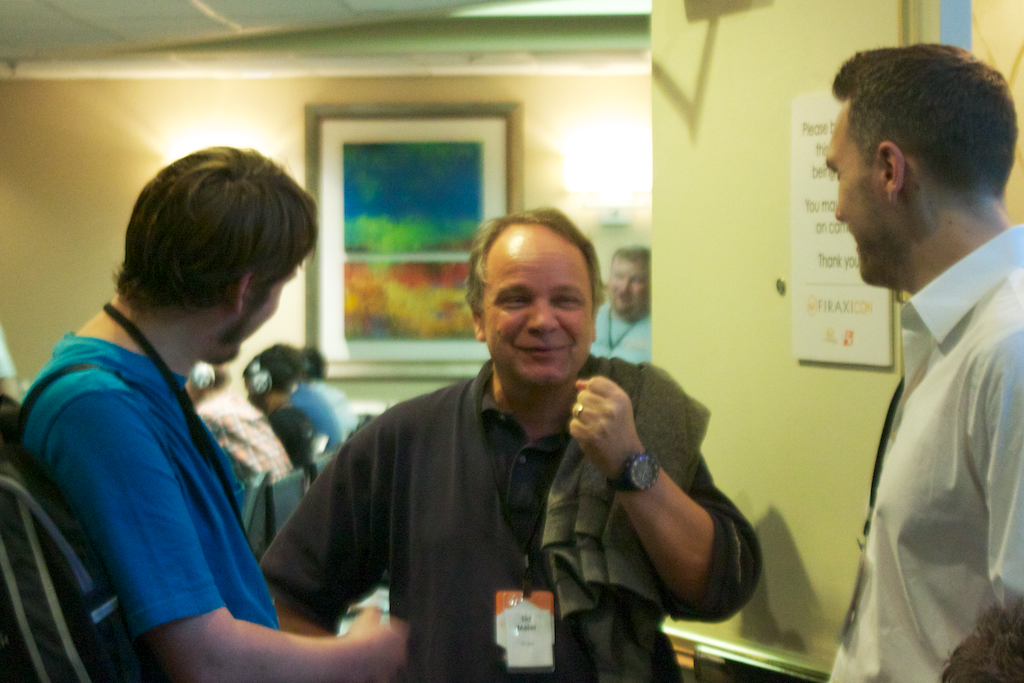
Enlarge/Civilization namesake Sid Meier holds forth with fans at a Firaxicon fan gathering in 2014.
Kyle Orland
Civilization VII will be the first entry in the storied strategy franchise in at least eight years, a historically long gap for a series that has seen a new numbered entry every four to six years since its debut in 1991. When Civilization VI hit in 2016, we praised the game for its smoother, more easily accessible interface and focus on fraught decision-making.
In an interview with Ars just after the launch of Civ VI, series namesake Sid Meier said his official role as franchise director has evolved over the years into more of a support structure for younger designers. “I’m there to kind of represent the history of the game,” Meier told Ars. “My role is just to be supportive. Designers have huge egos, and they’re easily bruised. Making a game can be a painful process. Part of my role is to be encouraging—’that idea didn’t work, try something else.'”