
Google Veo

google’s-updated-veo-model-can-make-vertical-videos-from-reference-images-with-4k-upscaling

Google’s updated Veo model can make vertical videos from reference images with 4K upscaling

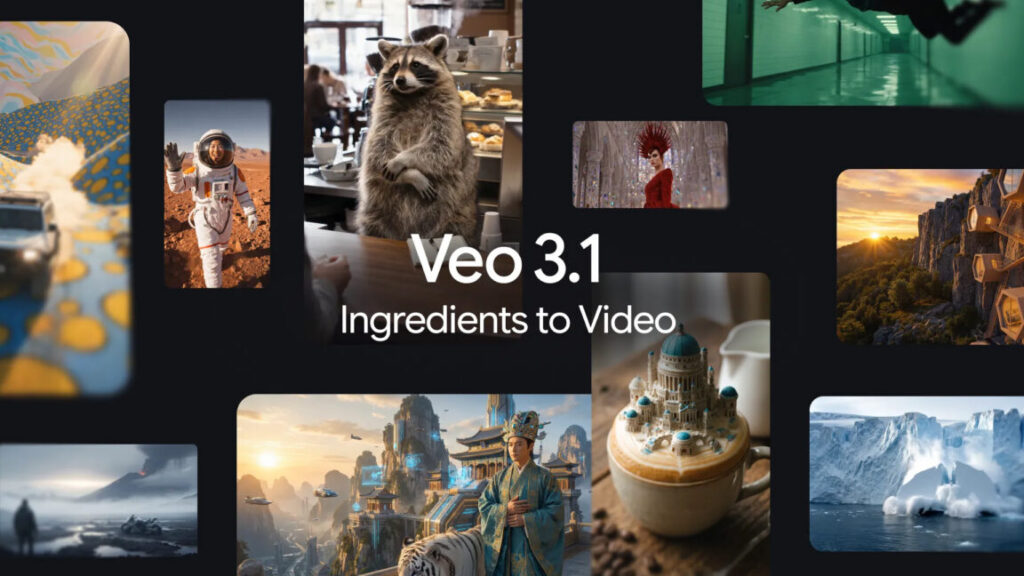
Enhanced support for Ingredients to Video and the associated vertical outputs are live in the Gemini app today, as well as in YouTube Shorts and the YouTube Create app, fulfilling a promise initially made last summer. Veo videos are short—just eight seconds long for each prompt. It would be tedious to assemble those into a longer video, but Veo is perfect for the Shorts format.

Veo 3.1 Updates – Seamlessly blend textures, characters, and objects.

The new Veo 3.1 update also adds an option for higher-resolution video. The model now supports 1080p and 4K outputs. Google debuted 1080p support last year, but it’s mentioning that option again today, suggesting there may be some quality difference. 4K support is new, but neither 1080p nor 4K outputs are native. Veo creates everything in 720p resolution, but it can be upscaled “for high-fidelity production workflows,” according to Google. However, a Google rep tells Ars that upscaling is only available in Flow, the Gemini API, and Vertex AI. Video in the Gemini app is always 720p.

We are rushing into a world where AI video is essentially indistinguishable from real life. Google, which more or less controls online video via YouTube’s dominance, is at the forefront of that change. Today’s update is reasonably significant, and it didn’t even warrant a version number change. Perhaps we can expect more 2025-style leaps in video quality this year, for better or worse.

Google’s updated Veo model can make vertical videos from reference images with 4K upscaling Read More »

google’s-will-smith-double-is-better-at-eating-ai-spaghetti-…-but-it’s-crunchy?

Google’s Will Smith double is better at eating AI spaghetti … but it’s crunchy?

On Tuesday, Google launched Veo 3, a new AI video synthesis model that can do something no major AI video generator has been able to do before: create a synchronized audio track. While from 2022 to 2024, we saw early steps in AI video generation, each video was silent and usually very short in duration. Now you can hear voices, dialog, and sound effects in eight-second high-definition video clips.

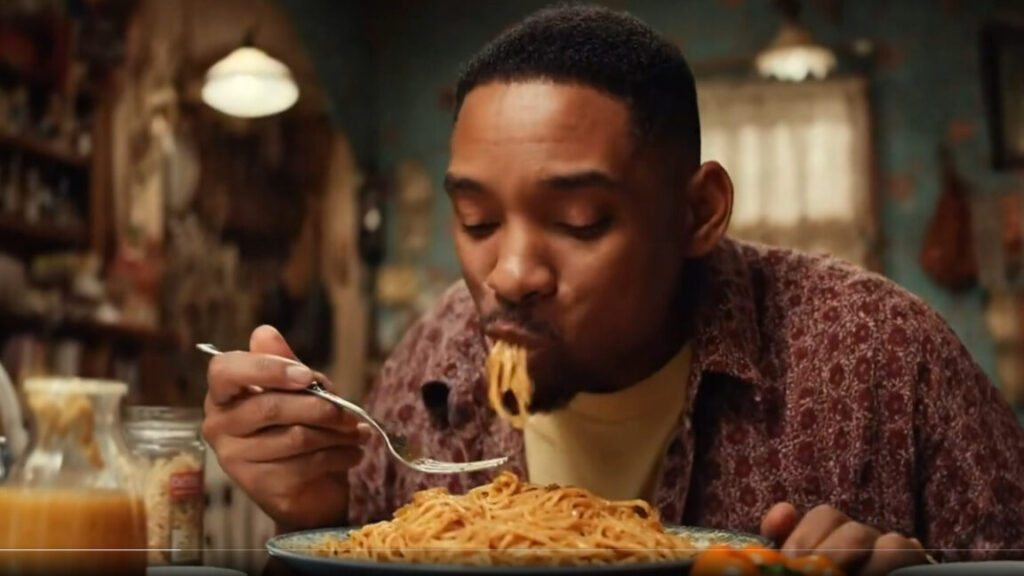
Shortly after the new launch, people began asking the most obvious benchmarking question: How good is Veo 3 at faking Oscar-winning actor Will Smith at eating spaghetti?

First, a brief recap. The spaghetti benchmark in AI video traces its origins back to March 2023, when we first covered an early example of horrific AI-generated video using an open source video synthesis model called ModelScope. The spaghetti example later became well-known enough that Smith parodied it almost a year later in February 2024.

Here’s what the original viral video looked like:

One thing people forget is that at the time, the Smith example wasn’t the best AI video generator out there—a video synthesis model called Gen-2 from Runway had already achieved superior results (though it was not yet publicly accessible). But the ModelScope result was funny and weird enough to stick in people’s memories as an early poor example of video synthesis, handy for future comparisons as AI models progressed.

AI app developer Javi Lopez first came to the rescue for curious spaghetti fans earlier this week with Veo 3, performing the Smith test and posting the results on X. But as you’ll notice below when you watch, the soundtrack has a curious quality: The faux Smith appears to be crunching on the spaghetti.

On X, Javi Lopez ran “Will Smith eating spaghetti” in Google’s Veo 3 AI video generator and received this result.

It’s a glitch in Veo 3’s experimental ability to apply sound effects to video, likely because the training data used to create Google’s AI models featured many examples of chewing mouths with crunching sound effects. Generative AI models are pattern-matching prediction machines, and they need to be shown enough examples of various types of media to generate convincing new outputs. If a concept is over-represented or under-represented in the training data, you’ll see unusual generation results, such as jabberwockies.

Google’s Will Smith double is better at eating AI spaghetti … but it’s crunchy? Read More »

the-ai-war-between-google-and-openai-has-never-been-more-heated

The AI war between Google and OpenAI has never been more heated

Over the past month, we’ve seen a rapid cadence of notable AI-related announcements and releases from both Google and OpenAI, and it’s been making the AI community’s head spin. It has also poured fuel on the fire of the OpenAI-Google rivalry, an accelerating game of one-upmanship taking place unusually close to the Christmas holiday.

“How are people surviving with the firehose of AI updates that are coming out,” wrote one user on X last Friday, which is still a hotbed of AI-related conversation. “in the last <24 hours we got gemini flash 2.0 and chatGPT with screenshare, deep research, pika 2, sora, chatGPT projects, anthropic clio, wtf it never ends."

Rumors travel quickly in the AI world, and people in the AI industry had been expecting OpenAI to ship some major products in December. Once OpenAI announced “12 days of OpenAI” earlier this month, Google jumped into gear and seemingly decided to try to one-up its rival on several counts. So far, the strategy appears to be working, but it’s coming at the cost of the rest of the world being able to absorb the implications of the new releases.

“12 Days of OpenAI has turned into like 50 new @GoogleAI releases,” wrote another X user on Monday. “This past week, OpenAI & Google have been releasing at the speed of a new born startup,” wrote a third X user on Tuesday. “Even their own users can’t keep up. Crazy time we’re living in.”

“Somebody told Google that they could just do things,” wrote a16z partner and AI influencer Justine Moore on X, referring to a common motivational meme telling people they “can just do stuff.”

The Google AI rush

OpenAI’s “12 Days of OpenAI” campaign has included releases of their full o1 model, an upgrade from o1-preview, alongside o1-pro for advanced “reasoning” tasks. The company also publicly launched Sora for video generation, added Projects functionality to ChatGPT, introduced Advanced Voice features with video streaming capabilities, and more.

The AI war between Google and OpenAI has never been more heated Read More »