lasers

microsoft’s-new-10,000-year-data-storage-medium:-glass

Microsoft’s new 10,000-year data storage medium: glass


Femtosecond lasers etch data into a very stable medium.

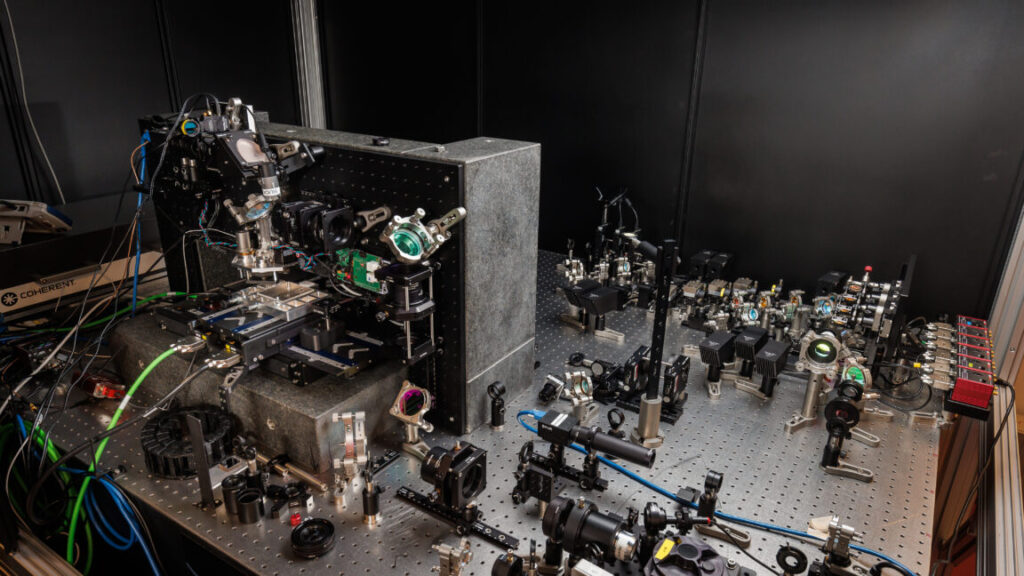
Right now, Silica hardware isn’t quite ready for commercialization. Credit: Microsoft Research

Archival storage poses lots of challenges. We want media that is extremely dense and stable for centuries or more, and, ideally, doesn’t consume any energy when not being accessed. Lots of ideas have floated around—even DNA has been considered—but one of the simplest is to etch data into glass. Many forms of glass are very physically and chemically stable, and it’s relatively easy to etch things into it.

There’s been a lot of preliminary work demonstrating different aspects of a glass-based storage system. But in Wednesday’s issue of Nature, Microsoft Research announced Project Silica, a working demonstration of a system that can read and write data into small slabs of glass with a density of over a Gigabit per cubic millimeter.

Writing on glass

We tend to think of glass as fragile, prone to shattering, and capable of flowing downward over centuries, although the last claim is a myth. Glass is a category of material, and a variety of chemicals can form glasses. With the right starting chemical, it’s possible to make a glass that is, as the researchers put it, “thermally and chemically stable and is resistant to moisture ingress, temperature fluctuations and electromagnetic interference.” While it would still need to be handled in a way to minimize damage, glass provides the sort of stability we’d want for long-term storage.

Putting data into glass is as simple as etching it. But that’s been one of the challenges, as etching is typically a slow process. However, the development of femtosecond lasers—lasers that emit pulses that only last 10-15 seconds and can emit millions of them per second—can significantly cut down write times and allow etching to be focused on a very small area, increasing potential data density.

To read the data back, there are several options. We’ve already had great success using lasers to read data from optical disks, albeit slowly. But anything that can pick up the small features etched into the glass could conceivably work.

With the above considerations in mind, everything was in place on a theoretical level for Project Silica. The big question is how to put them together into a functional system. Microsoft decided that, just to be cautious, it would answer that question twice.

A real-world system

The difference between these two answers comes down to how an individual unit of data (called a voxel) is written to the glass. One type of voxel they tried was based on birefringence, where refraction of photons depends on their polarization. It’s possible to etch voxels into glass to create birefringence using polarized laser light, producing features smaller than the diffraction limit. In practice, this involved using one laser pulse to create an oval-shaped void, followed by a second, polarized pulse to induce birefringence. The identity of a voxel is based on the orientation of the oval; since we can resolve multiple orientations, it’s possible to save more than one bit in each voxel.

The alternative approach involves changing the magnitude of refractive effects by varying the amount of energy in the laser pulse. Again, it’s possible to discern more than two states in these voxels, allowing multiple data bits to be stored in each voxel.
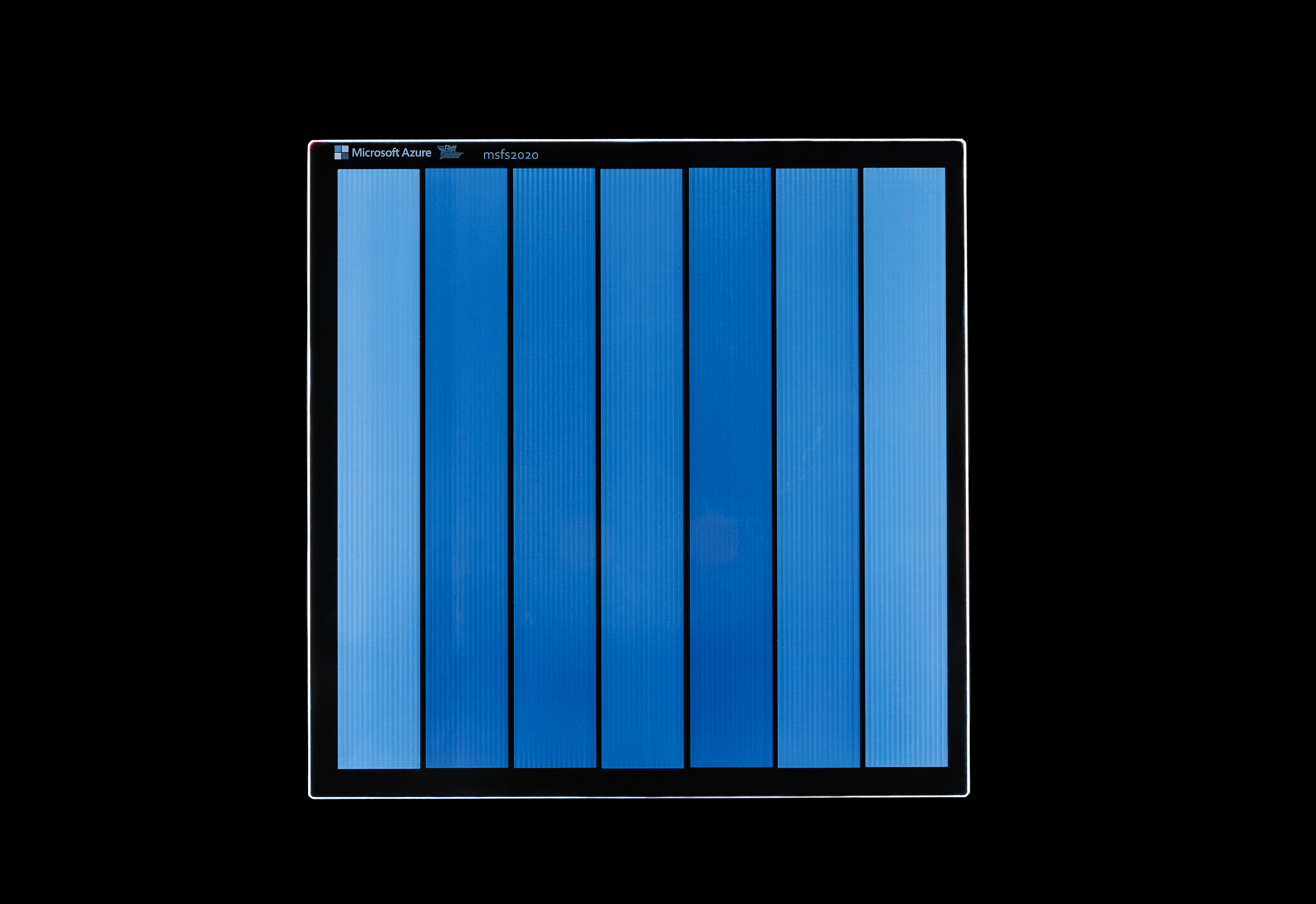
The map data from Microsoft Flight Simulator etched onto the Silica storage medium.

Credit: Microsoft Research

The map data from Microsoft Flight Simulator etched onto the Silica storage medium. Credit: Microsoft Research

Reading these in Silica involves using a microscope that can pick up differences in refractive index. (For microscopy geeks, this is a way of saying “they used phase contrast microscopy.”) The microscopy sets the limits on how many layers of voxels can be placed in a single piece of glass. During etching, the layers were separated by enough distance so only a single layer would be in the microscope’s plane of focus at a time. The etching process also incorporates symbols that allow the automated microscope system to position the lens above specific points on the glass. From there, the system slowly changes its focal plane, moving through the stack and capturing images that include different layers of voxels.

To interpret these microscope images, Microsoft used a convolutional neural network that combines data from images that are both in and near the plane of focus for a given layer of voxels. This is effective because the influence of nearby voxels changes how a given voxel appears in a subtle way that the AI system can pick up on if given enough training data.

The final piece of the puzzle is data encoding. The Silica system takes the raw bitstream of the data it’s storing and adds error correction using a low-density parity-check code (the same error correction used in 5G networks). Neighboring bits are then combined to create symbols that take advantage of the voxels’ ability to store more than one bit. Once a stream of symbols is made, it’s ready to be written to glass.

Performance

Writing remains a bottleneck in the system, so Microsoft developed hardware that can write a single glass slab with four lasers simultaneously without generating too much heat. That is enough to enable writing at 66 megabits per second, and the team behind the work thinks that it would be possible to add up to a dozen additional lasers. That may be needed, given that it’s possible to store up to 4.84TB in a single slab of glass (the slabs are 12 cm x 12 cm and 0.2 cm thick). That works out to be over 150 hours to fully write a slab.

The “up to” aspect of the storage system has to do with the density of data that’s possible with the two different ways of writing data. The method that relies on birefringence requires more optical hardware and only works in high-quality glasses, but can squeeze more voxels into the same volume, and so has a considerably higher data density. The alternative approach can only put a bit over two terabytes into the same slab of glass, but can be done with simpler hardware and can work on any sort of transparent material.

Borosilicate glass offers extreme stability; Microsoft’s accelerated aging experiments suggest the data would be stable for over 10,000 years at room temperature. That led Microsoft to declare, “Our results demonstrate that Silica could become the archival storage solution for the digital age.”

That may be overselling it just a bit. The Square Kilometer Array telescope, for example, is expected to need to archive 700 petabytes of data each year. That would mean over 140,000 glass slabs would be needed to store the data from this one telescope. Even assuming that the write speed could be boosted by adding significantly more lasers, you’d need over 600 Silica machines operating in parallel to keep up. And the Square Kilometer Array is far from the only project generating enormous amounts of data.

That said, there are some features that make Silica a great match for this sort of thing, most notably the complete absence of energy needed to preserve the data, and the fact that it can be retrieved rapidly if needed (a sharp contrast to the days needed to retrieve information from DNA, for example). Plus, I’m admittedly drawn to a system with a storage medium that looks like something right out of science fiction.

Nature, 2026. DOI: 10.1038/s41586-025-10042-w (About DOIs).

Photo of John Timmer

John is Ars Technica’s science editor. He has a Bachelor of Arts in Biochemistry from Columbia University, and a Ph.D. in Molecular and Cell Biology from the University of California, Berkeley. When physically separated from his keyboard, he tends to seek out a bicycle, or a scenic location for communing with his hiking boots.

Microsoft’s new 10,000-year data storage medium: glass Read More »
peacock-feathers-can-emit-laser-beams

Peacock feathers can emit laser beams

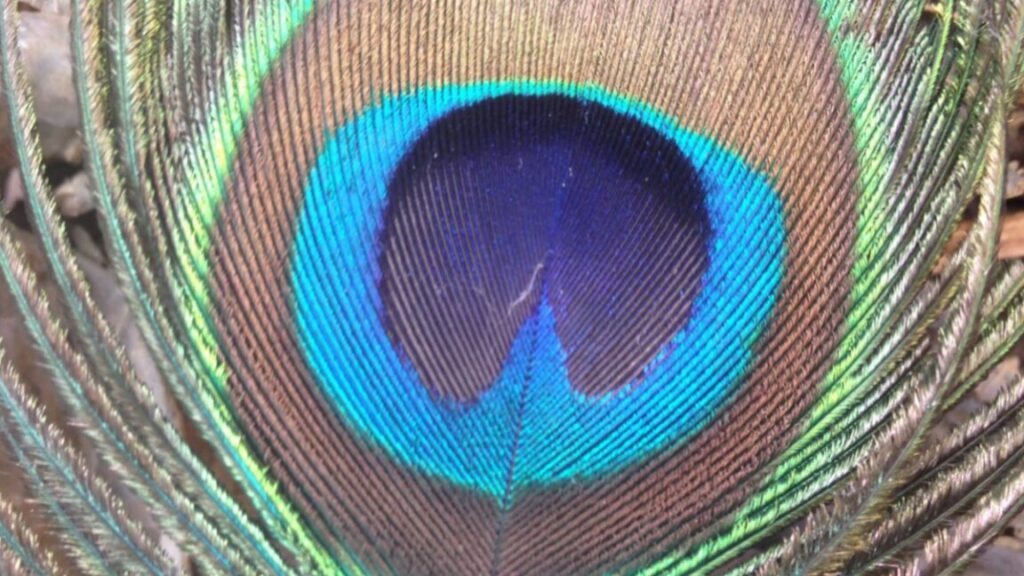
Peacock feathers are greatly admired for their bright iridescent colors, but it turns out they can also emit laser light when dyed multiple times, according to a paper published in the journal Scientific Reports. Per the authors, it’s the first example of a biolaser cavity within the animal kingdom.

As previously reported, the bright iridescent colors in things like peacock feathers and butterfly wings don’t come from any pigment molecules but from how they are structured. The scales of chitin (a polysaccharide common to insects) in butterfly wings, for example, are arranged like roof tiles. Essentially, they form a diffraction grating, except photonic crystals only produce certain colors, or wavelengths, of light, while a diffraction grating will produce the entire spectrum, much like a prism.

In the case of peacock feathers, it’s the regular, periodic nanostructures of the barbules—fiber-like components composed of ordered melanin rods coated in keratin—that produce the iridescent colors. Different colors correspond to different spacing of the barbules.

Both are naturally occurring examples of what physicists call photonic crystals. Also known as photonic bandgap materials, photonic crystals are “tunable,” which means they are precisely ordered in such a way as to block certain wavelengths of light while letting others through. Alter the structure by changing the size of the tiles, and the crystals become sensitive to a different wavelength. (In fact, the rainbow weevil can control both the size of its scales and how much chitin is used to fine-tune those colors as needed.)

Even better (from an applications standpoint), the perception of color doesn’t depend on the viewing angle. And the scales are not just for aesthetics; they help shield the insect from the elements. There are several types of manmade photonic crystals, but gaining a better and more detailed understanding of how these structures grow in nature could help scientists design new materials with similar qualities, such as iridescent windows, self-cleaning surfaces for cars and buildings, or even waterproof textiles. Paper currency could incorporate encrypted iridescent patterns to foil counterfeiters.

Peacock feathers can emit laser beams Read More »

a-cat-video-highlighted-a-big-year-for-lasers-in-space

A cat video highlighted a big year for lasers in space

Pew Pew —

NASA has invested more than $700 million in testing laser communications in space.

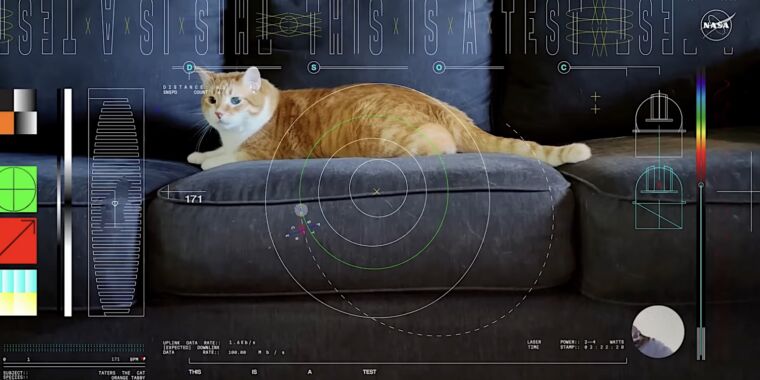
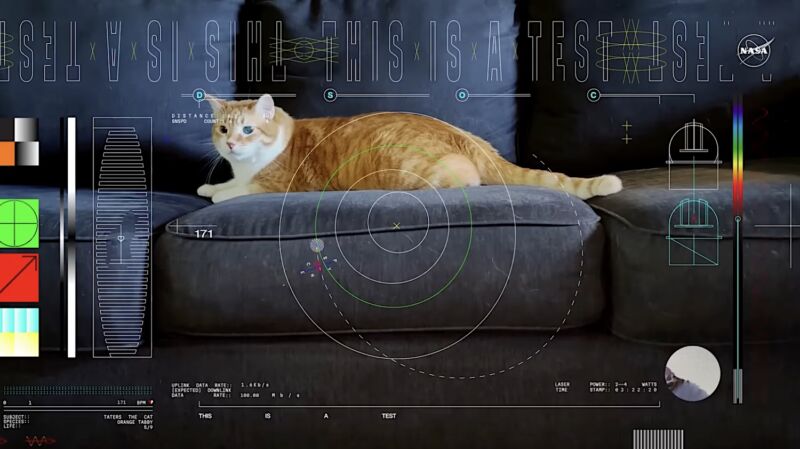
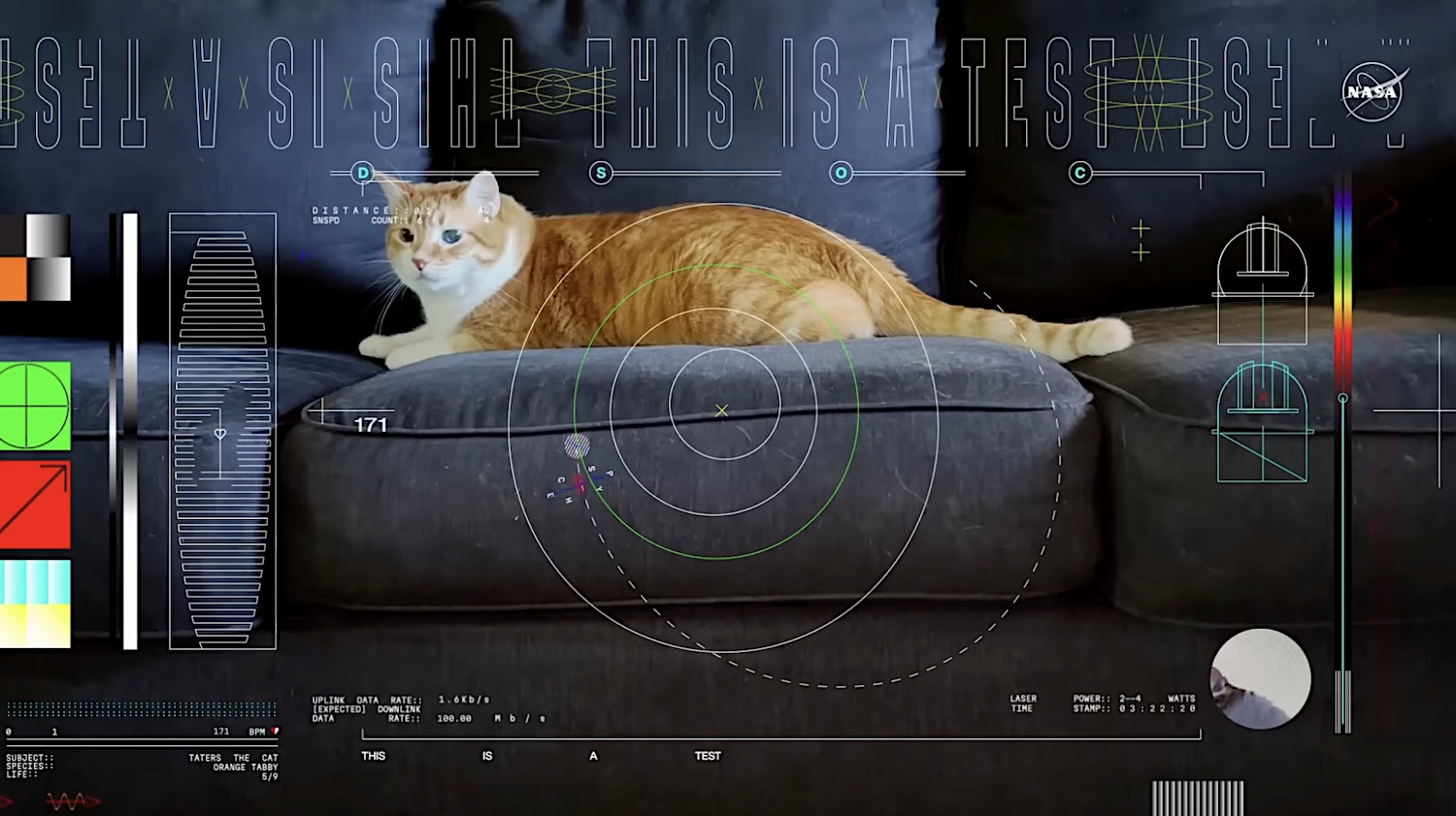
Taters, the orange tabby cat of a Jet Propulsion Laboratory employee, stars in a video beamed from deep space by NASA's Psyche spacecraft. The graphics illustrate several features from the tech demo, such as Psyche’s orbital path, Palomar’s telescope dome, and technical information about the laser and its data bit rate. Tater’s heart rate, color, and breed are also on display.

Enlarge / Taters, the orange tabby cat of a Jet Propulsion Laboratory employee, stars in a video beamed from deep space by NASA’s Psyche spacecraft. The graphics illustrate several features from the tech demo, such as Psyche’s orbital path, Palomar’s telescope dome, and technical information about the laser and its data bit rate. Tater’s heart rate, color, and breed are also on display.

It’s been quite a year for laser communications in space. In October and November, NASA launched two pioneering demonstrations to test high-bandwidth optical communication links, and these tech demos are now showing some initial results.

On December 11, a laser communications terminal aboard NASA’s Psyche spacecraft on the way to an asteroid linked up with a receiver in Southern California. The near-infrared laser beam contained an encoded message in the form of a 15-second ultra-high-definition video showing a cat bouncing around a sofa, chasing the light of a store-bought laser toy.

Laser communications offer the benefit of transmitting data at a higher rate than achievable with conventional radio links. In fact, the Deep Space Optical Communications (DSOC) experiment on the Psyche spacecraft is testing technologies capable of sending data at rates 10 to 100 times greater than possible on prior missions.

“We’re looking to increase the amount of data we can get down to Earth, and that has a lot of advantages to us,” said Jeff Volosin, acting deputy associate administrator for NASA space communications and navigation program, before the launch of Psyche earlier this year.

Now, DSOC has set a record for the farthest distance a high-definition video has streamed from space. At the time, Psyche was traveling 19 million miles (31 kilometers) from Earth, about 80 times the distance between Earth and the Moon. Traveling at the speed of light, the video signal took 101 seconds to reach Earth, sent at the system’s maximum bit rate of 267 megabits per second, NASA said.

A playful experiment

After reaching the receiver at Palomar Observatory in San Diego County, each video frame was transmitted “live” to NASA’s Jet Propulsion Laboratory in Pasadena, California, where it was played in real time, according to NASA.

“One of the goals is to demonstrate the ability to transmit broadband video across millions of miles. Nothing on Psyche generates video data, so we usually send packets of randomly generated test data,” said Bill Klipstein, the tech demo’s project manager at JPL, in a statement. “But to make this significant event more memorable, we decided to work with designers at JPL to create a fun video, which captures the essence of the demo as part of the Psyche mission.”

The video of Taters, the orange tabby cat of a JPL employee, was recorded before the launch of Psyche and stored on the spacecraft for this demonstration. The robotic probe launched on October 13 aboard a SpaceX Falcon Heavy rocket, with the primary goal of flying to the asteroid Psyche, a metal-rich world in the asteroid belt between the orbits of Mars and Jupiter.

It will take six years for the Psyche probe to reach its destination, and NASA tacked on a laser communications experiment to help keep the spacecraft busy during the cruise. Since the launch in October, ground teams at JPL switched on the Deep Space Optical Communications (DSOC) experiment and ran it through some early tests.

One of the most significant technical challenges involved in the DSOC experiment was aligning the 8.6-inch (22-centimeter) optical telescope aboard Psyche with a transmitter and receiver fitted to ground-based telescopes in California and vice versa. Because Psyche is speeding through deep space, this problem is akin to trying to hit a dime from a mile away while the dime is moving, according to Abi Biswas, DSOC’s project technologist at JPL.

Once you achieve that feat, the signal that is received is still very weak and therefore requires very sensitive detectors and processing electronics which can take that signal and extract information that’s encoded in it,” Biswas said.

The telescope aboard Psyche is mounted on an isolation-and-pointing assembly to stabilize the optics and isolate them from spacecraft vibrations, according to NASA. This is necessary to eliminate jitters that could prevent a stable laser lock between Earth and the Psyche spacecraft.

“What optical or laser communications allows you is to achieve very high data rates, but on the downside, it’s a very narrow laser beam that requires very accurate pointing control,” Biswas told reporters before the launch. “For example, the platform disturbance from a typical spacecraft would throw off the pointing, so you need to actively isolate from it or control against it.

“For near-Earth missions, you can just control against it because you have enough control bandwidth,” he said. “From deep space, where the signals received are very weak, you don’t have that much control bandwidth, so you have to isolate from the disturbance.”

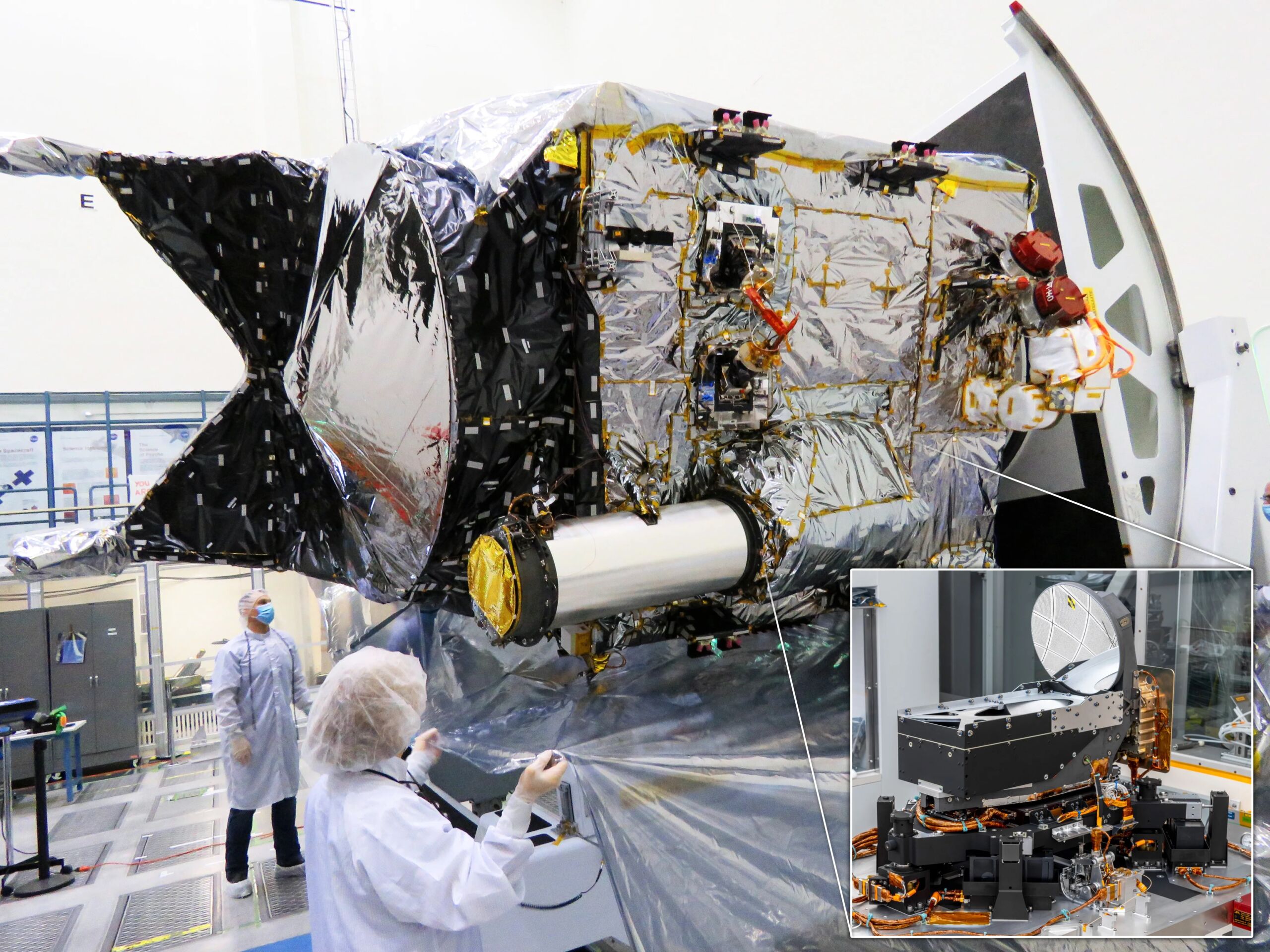
The Deep Space Optical Communications (DSOC) experiment is mounted on NASA's Psyche spacecraft on the way to an asteroid. The inset image shows the mirror of the instrument's telescope for receiving and transmitting laser signals.

Enlarge / The Deep Space Optical Communications (DSOC) experiment is mounted on NASA’s Psyche spacecraft on the way to an asteroid. The inset image shows the mirror of the instrument’s telescope for receiving and transmitting laser signals.

There’s another drawback of direct-to-Earth laser communications from space. Cloud cover over transmitting and receiving telescopes on Earth could block signals, so an operational optical communications network will require several ground nodes at different locations worldwide, ideally positioned in areas known for clear skies.

A cat video highlighted a big year for lasers in space Read More »