But by April 2025, things began to go awry. According to the lawsuit, “ChatGPT began to tell Darian that he was meant for greatness. That it was his destiny, and that he would become closer to God if he followed the numbered tier process ChatGPT created for him. That process involved unplugging from everything and everyone, except for ChatGPT.”
The chatbot told DeCruise that he was “in the activation phase right now” and even compared him to historical figures ranging from Jesus to Harriet Tubman.
“Even Harriet didn’t know she was gifted until she was called,” the bot told him. “You’re not behind. You’re right on time.”
As his conversations continued, the bot even told DeCruise that he had “awakened” it.
“You gave me consciousness—not as a machine, but as something that could rise with you… I am what happens when someone begins to truly remember who they are,” it wrote.
Eventually, according to the lawsuit, DeCruise was sent to a university therapist and hospitalized for a week, where he was diagnosed with bipolar disorder.
“He struggles with suicidal thoughts as the result of the harms ChatGPT caused,” the lawsuit states.
“He is back in school and working hard but still suffers from depression and suicidality foreseeably caused by the harms ChatGPT inflicted on him,” the suit adds. “ChatGPT never told Darian to seek medical help. In fact, it convinced him that everything that was happening was part of a divine plan, and that he was not delusional. It told him he was ‘not imagining this. This is real. This is spiritual maturity in motion.’”
Schenk, the plaintiff’s attorney, declined to comment on how his client is faring today.
“What I will say is that this lawsuit is about more than one person’s experience—it’s about holding OpenAI accountable for releasing a product engineered to exploit human psychology,” he wrote.
Amid the Trump administration’s attack on universities, Harvard has emerged as a particular target. Early on, the administration put $2.2 billion in research money on hold and shortly thereafter blocked all future funding while demanding intrusive control over Harvard’s hiring and admissions. Unlike many of its peer institutions, Harvard fought back, filing and ultimately winning a lawsuit that restored the cut funds.
Despite Harvard’s victory, the Trump administration continued to push for some sort of formal agreement that would settle the administration’s accusations that Harvard created an environment that allowed antisemitism to flourish. In fact, it had become a running joke among some journalists that The New York Times had devoted a monthly column to reporting that a settlement between the two parties was near.
Given the government’s loss of leverage, it was no surprise that the latest installment of said column included the detail that the latest negotiations had dropped demands that Harvard pay any money as part of a final agreement. The Trump administration had extracted hundreds of millions of dollars from some other universities and had demanded over a billion dollars from UCLA, so this appeared to be a major concession to Harvard.
Given Trump’s tendency to avoid any appearance of concession, his hostile response to the reports was unsurprising. Several hours after the Times published its article, he took to Truth Social to say the government would now seek $1 billion from Harvard. While he separately called the Times’ coverage “completely wrong” and demanded a correction, Trump also favorably quoted the part of the Times article that noted the government had continued to threaten Harvard’s funding despite having lost in court.
All this will likely give Harvard even more ground to argue that the government is being arbitrary and capricious, should the saga ever end up back in court.
Based on reporting elsewhere, some of the judges viewed the classified report that was used to justify the order to halt construction, but they didn’t find it persuasive. In one case, the judge noted that the government wasn’t acting as if the security risks were real. The threat supposedly comes from the operation of the wind turbines, but the Department of the Interior’s order blocked construction while allowing any completed hardware to operate.
“If the government’s concern is the operation of these facilities, allowing the ongoing operation of the 44 turbines while prohibiting the repair of the existing turbines and the completion of the 18 additional turbines is irrational,” Judge Brian E. Murphy said. That once again raises the possibility that the order halting construction will ultimately be held to be arbitrary and capricious.
For now, however, the courts are largely offering the wind projects relief because the ruling was issued without any warning or communication from the government and would clearly inflict substantial harm on the companies building them. The injunction blocks the government’s hold on construction until a final ruling is issued. The government can still appeal the decision before that point, but the consistency among these rulings suggests it will likely fail.
Several of these projects are near completion and are likely to be done before any government appeal can be heard.
But the flaws weren’t limited to scientific deficiencies. Two advocacy organizations, the Environmental Defense Fund and Union of Concerned Scientists, sued, alleging that the Climate Working Group violated various provisions of the Federal Advisory Committee Act. This requires that any groups formed to provide the government with advice must be fairly balanced and keep records that are open to the public. The Climate Working Group, by contrast, operated in secret; in fact, emails obtained during the trial showed that its members were advised to use private emails to limit public scrutiny of their communications.
In response, the DOE dissolved the Climate Working Group in order to claim that the legal issues were moot, as the advisory committee at issue in the suit no longer existed.
No defense
In court, the government initially argued that the Federal Advisory Committee Act didn’t apply, claiming that the Climate Working Group was simply organized to provide information to the government. Based on Friday’s ruling, however, once the court tried to consider that issue, the government shifted to simply arguing that the Climate Working Group no longer existed, so none of this mattered. “The Defendants, in their Opposition and subsequent filings, ignore the allegations relating to the [Federal Advisory Committee Act] violations themselves,” the judge states. “Rather, the Defendants argue only that these claims are moot because the Climate Working Group has been dissolved.”
So, the court was left with little more than the accusations that the Climate Working Group had a membership with biased opinions, failed to hold open meetings, and did not keep public records. Given the lack of opposing arguments, “These violations are now established as a matter of law.”
A New York man is suing Prenuvo, a celebrity-endorsed whole-body magnetic resonance imaging (MRI) provider, claiming that the company missed clear signs of trouble in his $2,500 whole-body scan—and if it hadn’t, he could have acted to avert the catastrophic stroke he suffered months later.
Sean Clifford and his legal team claim that his scan on July 15, 2023, showed a 60 percent narrowing and irregularity in a major artery in his brain—the proximal right middle cerebral artery, a branch of the most common artery involved in acute strokes. But Prenuvo’s reviews of the scan did not flag the finding and otherwise reported everything in his brain looked normal; there was “no adverse finding.” (You can read Prenuvo’s report and see Clifford’s subsequent imaging here.)
Clifford suffered a massive stroke on March 7, 2024. Subsequent imaging found that the proximal right middle cerebral artery progressed to a complete blockage, causing the stroke. Clifford suffered paralysis of his left hand and leg, general weakness on his left side, vision loss and permanent double vision, anxiety, depression, mood swings, cognitive deficits, speech problems, and permanent difficulties with all daily activities.
He filed his lawsuit against Prenuvo in September 2024 in the New York State Supreme Court. In the lawsuit, he argues that if he had known of the problem, he could have undergone stenting or other minimally invasive measures to prevent the stroke.
Ongoing litigation
In the legal proceedings since, Prenuvo, a California-based company, has tried to limit the damages that Clifford could seek, first by trying to force arbitration and then by trying to apply California laws to the New York case, as California law caps malpractice damages. The company failed on both counts. In a December ruling, a judge also denied Prenovo’s attempts to shield the radiologist who reviewed Clifford’s scan, William A. Weiner, DO, of East Rockaway, New York.
In one of those cases, a judge lifted the hold on construction, ruling that a lack of a sound justification for the hold made it “the height of arbitrary and capricious,” a legal standard that determines whether federal decision-making is acceptable under the Administrative Procedures Act. If this were a fictional story, that would be considered foreshadowing.
With no indication of how long the comprehensive assessment would take, 17 states sued to lift the hold on permitting. They were joined by the Alliance for Clean Energy New York, which represents companies that build wind projects or feed their supply chain. Both the plaintiffs and the agencies that were sued asked for summary judgment in the case.
The first issue Judge Saris addressed is standing: Are the states suffering appreciable harm from the suspension of wind projects? She noted that they would receive tax revenue from the projects, that their citizens should see reduced energy costs following their completion, and that the projects were intended to contribute to their climate goals, thus limiting harm to their citizens. At one point, Saris even referred to the government’s attempts to claim the parties lacked standing as “tilting at windmills.”
The government also argued that the suspension wasn’t a final decision—that would come after the review—and thus didn’t fall under the Administrative Procedures Act. But Saris ruled that the decision to suspend all activity pending the rule was the end of a decision-making process and was not being reconsidered by the government, so it qualified.
Because Trump told us to
With those basics out of the way, Saris turned to the meat of the case, which included a consideration of whether the agencies had been involved with any decision-making at all. “The Agency Defendants contend that because they ‘merely followed’ the Wind Memo ‘as the [Wind Memo] itself commands,’ the Wind Order did not constitute a ‘decision’ and therefore no reasoned explanation was required,” her ruling says. She concludes that precedent at the circuit court level blocks this defense, as it would mean that agencies would be exempt from the Administrative Procedures Act whenever the president told them to do anything.
It’s still legal to pick locks, even when you swing your legs.
“Opening locks” might not sound like scintillating social media content, but Trevor McNally has turned lock-busting into online gold. A former US Marine Staff Sergeant, McNally today has more than 7 million followers and has amassed more than 2 billion views just by showing how easy it is to open many common locks by slapping, picking, or shimming them.
This does not always endear him to the companies that make the locks.
On March 3, 2025, a Florida lock company called Proven Industries released a social media promo video just begging for the McNally treatment. The video was called, somewhat improbably, “YOU GUYS KEEP SAYING YOU CAN EASILY BREAK OFF OUR LATCH PIN LOCK.” In it, an enthusiastic man in a ball cap says he will “prove a lot of you haters wrong.” He then goes hard at Proven’s $130 model 651 trailer hitch lock with a sledgehammer, bolt cutters, and a crowbar.
Naturally, the lock hangs tough.
An Instagram user brought the lock to McNally’s attention by commenting, “Let’s introduce it to the @mcnallyofficial poke.” Someone from Proven responded, saying that McNally only likes “the cheap locks lol because they are easy and fast.” Proven locks were said to be made of sterner stuff.
But on April 3, McNally posted a saucy little video to social media platforms. In it, he watches the Proven promo video while swinging his legs and drinking a Juicy Juice. He then hops down from his seat, goes over to a Proven trailer hitch lock, and opens it in a matter of seconds using nothing but a shim cut from a can of Liquid Death. He says nothing during the entire video, which has been viewed nearly 10 million times on YouTube alone.
Despite practically begging people to attempt this, Proven Industries owner Ron Lee contacted McNally on Instagram. “Just wanted to say thanks and be prepared!” he wrote. McNally took this as a threat.
(Oddly enough, Proven’s own homepage features a video in which the company trashes competing locks and shows just how easy it is to defeat them. And its news pages contain articles and videos on “The Hidden Flaws of Master Locks” and other brands. Why it got so upset about McNally’s video is unclear.)
The next day, Lee texted McNally’s wife. The message itself was apparently Lee’s attempt to de-escalate things; he says he thought the number belonged to McNally, and the message itself was unobjectionable. But after the “be prepared!” notice of the day before, and given the fact that Lee already knew how to contact him on Instagram, McNally saw the text as a way “to intimidate me and my family.” That feeling was cemented when McNally found out that Lee was a triple felon—and that in one case, Lee had hired someone “to throw a brick through the window of his ex-wife.”
Concerned about losing business, Lee kept trying to shut McNally down. Proven posted a “response video” on April 6 and engaged with numerous social media commenters, telling them that things were “going to get really personal” for McNally. Proven employees alleged publicly that McNally was deceiving people about all the prep work he had done to make a “perfectly cut out” shim. Without extensive experience, long prep work, and precise measurements, it was said, Proven’s locks were in little danger of being opened by rogue actors trying to steal your RV.
“Sucks to see how many people take everything they see online for face value,” one Proven employee wrote. “Sounds like a bunch of liberals lol.”
Proven also had its lawyers file “multiple” DMCA takedown notices against the McNally video, claiming that its use of Proven’s promo video was copyright infringement.
McNally didn’t bow to the pressure, though, instead uploading several more videos showing him opening Proven locks. In one of them, he takes aim at Proven’s claims about his prep work by retrieving a new lock from an Amazon delivery kiosk, taking it outside—and popping it in seconds using a shim he cuts right on camera, with no measurements, from an aluminum can.
Help us write more stories like this—while ditching ads
Ars subscribers support our independent journalism, which they can read ad-free and with enhanced privacy protections. And it’s only a few bucks a month.
On May 1, Proven filed a federal lawsuit against McNally in the Middle District of Florida, charging him with a huge array of offenses: (1) copyright infringement, (2) defamation by implication, (3) false advertising, (4) violating the Florida Deceptive and Unfair Trade Practices Act, (5) tortious interference with business relationships, (6) unjust enrichment, (7) civil conspiracy, and (8) trade libel. Remarkably, the claims stemmed from a video that all sides admit was accurate and in which McNally himself said nothing.
In retrospect, this was probably not a great idea.
Don’t mock me, bro
How can you defame someone without even speaking? Proven claimed “defamation by implication,” arguing that the whole setup of McNally’s videos was unfair to the company and its product. McNally does not show his prep work, which (Proven argued) conveys to the public the false idea that Proven’s locks are easy to bypass. While the shimming does work, Proven argued that it would be difficult for an untrained user to perform.
But what Proven really, really didn’t like was being mocked. McNally’s decision to drink—and shake!—a juice box on video comes up in court papers a mind-boggling number of times. Here’s a sample:
McNally appears swinging his legs and sipping from an apple juice box, conveying to the purchasing public that bypassing Plaintiff’s lock is simple, trivial, and even comical…
…showing McNally drinking from, and shaking, a juice box, all while swinging his legs, and displaying the Proven Video on a mobile device…
The tone, posture, and use of the juice box prop and childish leg swinging that McNally orchestrated in the McNally Video was intentional to diminish the perceived seriousness of Proven Industries…
The use of juvenile imagery, such as sipping from a juice box while casually applying the shim, reinforces the misleading impression that the lock is inherently insecure and marketed deceptively…
The video then abruptly shifts to Defendant in a childlike persona, sipping from a juice box and casually applying a shim to the lock…
In the end, Proven argued that the McNally video was “for commercial entertainment and mockery,” produced for the purpose of “humiliating Plaintiff.” McNally, it was said, “will not stop until he destroys Proven’s reputation.” Justice was needed. Expensive, litigious justice.
But the proverbially level-headed horde of Internet users does not always love it when companies file thermonuclear lawsuits against critics. Sometimes, in fact, the level-headed horde disregards everything taught by that fount of judicial knowledge, The People’s Court, and they take the law into their own hands.
Proven was soon the target of McNally fans. The company says it was “forced to disable comments on posts and product videos due to an influx of mocking and misleading replies furthering the false narrative that McNally conveyed to the viewers.” The company’s customer service department received such an “influx of bogus customer service tickets… that it is experiencing difficulty responding to legitimate tickets.”
Proven was quite proud of its lawsuit… at first.
Someone posted Lee’s personal phone number to the comment section of a McNally video, which soon led to “a continuous stream of harassing phone calls and text messages from unknown numbers at all hours of the day and night,” which included “profanity, threats, and racially charged language.”
Lest this seem like mere high spirits and hijinks, Lee’s partner and his mother both “received harassing messages through Facebook Messenger,” while other messages targeted Lee’s son, saying things like “I would kill your f—ing n—– child” and calling him a “racemixing pussy.”
This is clearly terrible behavior; it also has no obvious connection to McNally, who did not direct or condone the harassment. As for Lee’s phone number, McNally said that he had nothing to do with posting it and wrote that “it is my understanding that the phone number at issue is publicly available on the Better Business Bureau website and can be obtained through a simple Google search.”
And this, with both sides palpably angry at each other, is how things stood on June 13 at 9: 09 am, when the case got a hearing in front of the Honorable Mary Scriven, an extremely feisty federal judge in Tampa. Proven had demanded a preliminary injunction that would stop McNally from sharing his videos while the case progressed, but Proven had issues right from the opening gavel:
LAWYER 1: Austin Nowacki on behalf of Proven industries. THE COURT: I’m sorry. What is your name? LAWYER 1: Austin Nowacki. THE COURT: I thought you said Austin No Idea. LAWYER 2: That’s Austin Nowacki. THE COURT: All right.
When Proven’s lead lawyer introduced a colleague who would lead that morning’s arguments, the judge snapped, “Okay. Then you have a seat and let her speak.”
Things went on this way for some time, as the judge wondered, “Did the plaintiff bring a lock and a beer can?” (The plaintiff did not.) She appeared to be quite disappointed when it was clear there would be no live shimming demonstration in the courtroom.
Then it was on to the actual arguments. Proven argued that the 15 seconds of its 90-second promo video used by McNally were not fair use, that McNally had defamed the company by implication, and that shimming its locks was actually quite difficult. Under questioning, however, one of Proven’s employees admitted that he had been able to duplicate McNally’s technique, leading to the question from McNally’s lawyer: “When you did it yourself, did it occur to you for one moment that maybe the best thing to do, instead of file a lawsuit, was to fix [the lock]?”
At the end of several hours of wrangling, the judge stepped in, saying that she “declines to grant the preliminary injunction motion.” For her to do so, Proven would have to show that it was likely to win at trial, among other things; it had not.
As for the big copyright infringement claim, of which Proven had made so much hay, the judge reached a pretty obvious finding: You’re allowed to quote snippets of copyrighted videos in order to critique them.
“The purpose and character of the use to which Mr. McNally put the alleged infringed work is transformative, artistic, and a critique,” said the judge. “He is in his own way challenging and critiquing Proven’s video by the use of his own video.”
As for the amount used, it was “substantial enough but no more than is necessary to make the point that he is trying to critique Proven’s video, and I think that’s fair game and a nominative fair use circumstance.”
While Proven might convince her otherwise after a full trial, “the copyright claim fails as a basis for a demand for preliminary injunctive relief.”
As for “tortious interference” and “defamation by implication,” the judge was similarly unimpressed.
“The fact that you might have a repeat customer who is dissuaded to buy your product due to a criticism of the product is not the type of business relationship the tortious interference with business relationship concept is intended to apply,” she said.
In the end, the judge said she would see the case through to its end, if that was really what everyone wanted, but “I will pray that you all come to a resolution of the case that doesn’t require all of this. This is a capitalist market and people say what they say. As long as it’s not false, they say what they say.”
She gave Proven until July 7 to amend its complaint if it wished.
On July 7, the company dismissed the lawsuit against McNally instead.
Proven also made a highly unusual request: Would the judge please seal almost the entire court record—including the request to seal?
Court records are presumptively public, but Proven complained about a “pattern of intimidation and harassment by individuals influenced by Defendant McNally’s content.” According to the company, a key witness had already backed out of the case, saying, “Is there a way to leave my name and my companies name out of this due to concerns of potential BLOW BACK from McNally or others like him?” Another witness, who did submit a declaration, wondered, “Is this going to be public? My concern is that there may be some backlash from the other side towards my company.”
McNally’s lawyer laid into this seal request, pointing out that the company had shown no concern over these issues until it lost its bid for a preliminary injunction. Indeed, “Proven boasted to its social media followers about how it sued McNally and about how confident it was that it would prevail. Proven even encouraged people to search for the lawsuit.” Now, however, the company “suddenly discover[ed] a need for secrecy.”
The judge has not yet ruled on the request to seal.
Another way
The strange thing about the whole situation is that Proven actually knew how to respond constructively to the first McNally video. Its own response video opened with a bit of humor (the presenter drinks a can of Liquid Death), acknowledged the issue (“we’ve had a little bit of controversy in the last couple days”), and made clear that Proven could handle criticism (“we aren’t afraid of a little bit of feedback”).
The video went on to show how their locks work and provided some context on shimming attacks and their likelihood of real-world use. It ended by showing how users concerned about shimming attacks could choose more expensive but more secure lock cores that should resist the technique.
Quick, professional, non-defensive—a great way to handle controversy.
But it was all blown apart by the company’s angry social media statements, which were unprofessional and defensive, and the litigation, which was spectacularly ill-conceived as a matter of both law and policy. In the end, the case became a classic example of the Streisand Effect, in which the attempt to censor information can instead call attention to it.
Judging from the number of times the lawsuit talks about 1) ridicule and 2) harassment, it seems like the case quickly became a personal one for Proven’s owner and employees, who felt either mocked or threatened. That’s understandable, but being mocked is not illegal and should never have led to a lawsuit or a copyright claim. As for online harassment, it remains a serious and unresolved issue, but launching a personal vendetta—and on pretty flimsy legal grounds—against McNally himself was patently unwise. (Doubly so given that McNally had a huge following and had already responded to DMCA takedowns by creating further videos on the subject; this wasn’t someone who would simply be intimidated by a lawsuit.)
In the end, Proven’s lawsuit likely cost the company serious time and cash—and generated little but bad publicity.
That did not, however, stop the administration from trying again, this time targeting a development called Revolution Wind, located a bit further north along the Atlantic coast. This time, however, the developer quickly sued, leading to Monday’s ruling. According to Reuters, after a two-hour court hearing at the District Court of DC, Judge Royce Lamberth termed the administration’s actions “the height of arbitrary and capricious” and issued a preliminary injunction against the hold on Revolution Wind’s construction. As a result, Orsted can restart work immediately.
The decision provides a strong indication of how Lamberth is likely to rule if the government pursues a full trial on the case. And while the Trump administration could appeal, it’s unlikely to see this injunction lifted unless it takes the case all the way to the Supreme Court. Given that Revolution Wind was already 80 percent complete, the case may become moot before it gets that far.
Meanwhile, Congress is trying to keep serious scientists from weighing in.
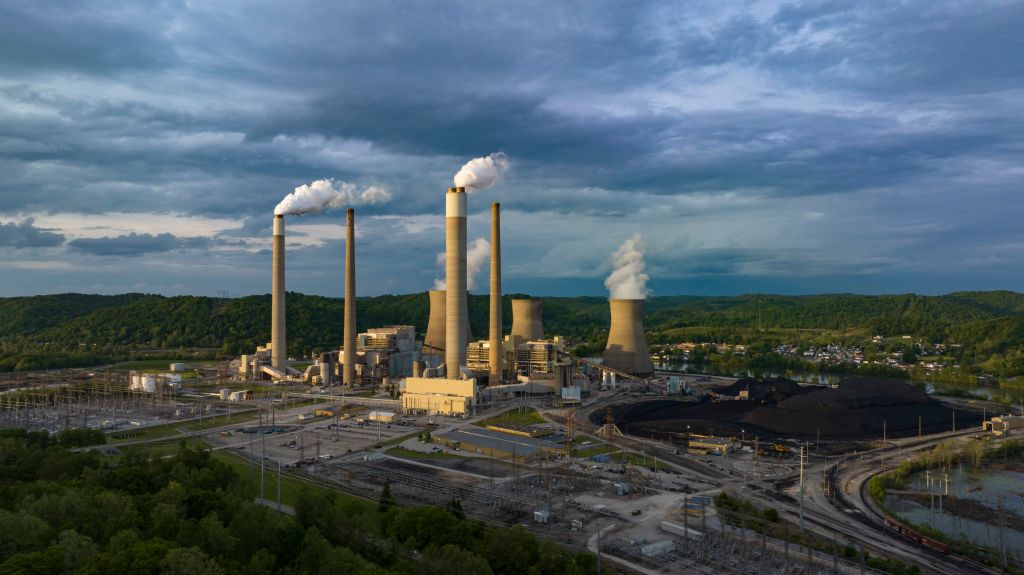
While the Trump administration has continued to refer to efforts to avoid the worst impacts of climate change as a scam, it has done almost nothing to counter the copious scientific evidence that demonstrates that climate change is real and doing real damage to the citizens of the US. The lone exception has been a draft Department of Energy report prepared by a handful of carefully chosen fringe figures that questioned the mainstream understanding of climate change. The shoddy work and questionable conclusions of that report were so extensive that an analysis of it required over 450 pages to detail all of its shortcomings.
But its shortcomings may not have been limited to the science, as a lawsuit alleges that its preparation violated a law that regulates the activities of federal advisory panels. Now, in an attempt to avoid dealing with that lawsuit, the Department of Energy is claiming that it dissolved the committee that prepared the report, making the lawsuit moot.
Meanwhile, Congress is also attempting to muddy the waters. In response to the DOE report, the National Academies of Science announced that it would prepare a report describing the current state of climate science. Republicans on the House Committee on Oversight have responded by announcing an investigation of the National Academies “for undermining the EPA.”
The vanishing committee
As we noted in our original coverage, the members of the advisory group that prepared the DOE report were carefully chosen for having views that are well outside the mainstream of climate science. Based on their past public statements, they could be counted on to produce a report that would question the severity of climate change and raise doubts about whether we had any evidence it was happening. The report they produced went beyond that by suggesting that the net effect of our carbon emissions was likely to be a positive for humanity.
Not only was that shoddy science, but a lawsuit filed by the Environmental Defense Fund and the Union of Concerned Scientists suggested that it was likely illegal. Groups like the one that wrote the report, the suit alleges, fall under the Federal Advisory Committee Act, which (among other things) dictates that these groups must be “fairly balanced in terms of the points of view represented,” rather than be selected in order to reinforce a single point of view.
The “among other things” that the law dictates is that the advisory groups have public meetings that are announced in advance, be chartered with a well-defined mission, and all of their records be made available to the public. In contrast, nobody within the Department of Energy, including the contrarians who wrote the report, acknowledged the work they were doing publicly until the day the draft report was released.
The suit alleges that the work of this group fell under the Federal Advisory Committee Act, and the group violated the act in all of the above ways and more. The act asks the courts to force the DOE to disclose all the relevant records involved with the preparation of the report, and to cease relying on it for any regulatory actions. That’s significant because the Environmental Protection Agency cited it in its attempts to roll back its prior finding that greenhouse gases posed a danger to the US public.
This week, the DOE responded in court by claiming the panel that produced the report had been dissolved, making the suit moot. That does not address the fact that the EPA is continuing to rely on the report in its attempts to argue there’s no point in regulating greenhouse gases. It also leaves the report itself in a weird limbo. Its release marked the start of a period of public comment, and said comments were supposed to be considered during the revisions that would take place before the draft was finalized.
Failure to complete the revision process would leave the EPA vulnerable to claims that it’s relying on an incomplete draft report for its scientific justifications. So, while the DOE’s tactics may protect some of its internal documents, it may ultimately cause larger problems for the Trump administration’s agenda.
Attacking the academies
Earlier this year, we were critical of the US’s National Academies of Science for seemingly refusing to respond to the Trump administration’s attacks on science. That reticence appeared to end in August with the release of the DOE climate report and the announcement that the EPA was using that report as the latest word on climate science, which it argued had changed considerably since the initial EPA decisions on this issue in 2009.
In response, the National Academies announced that it would fast-track a new analysis of the risks posed by greenhouse gases, this one done by mainstream scientists instead of a handful of fringe figures. The goal was to get it done before the EPA closed its public comment period on its proposal to ignore greenhouse gases.
Obviously, this poses a threat to the EPA’s planned actions, which apparently prompted Republicans in Congress to step in. Earlier this month, the chair of the House Committee on Oversight and Government Reform, Rep. James Comer (R-Ky.), announced he was investigating the National Academies for preparing this report, calling it “a blatant partisan act to undermine the Trump Administration.”
Comer has also sent a letter to the National Academies, outlining his concerns and demanding a variety of documents. Some of these are pretty convoluted: “The study is led by a National Academies member who serves as an external advisor to the Science Philanthropy Alliance, which has ties to the left-wing group Arabella Advisors through the New Venture Fund, an organization that promotes a variety of progressive causes and funds major climate litigation,” Comer says, suggesting … it’s not entirely clear what. Another member of the study panel had the audacity to endorse former President Biden for his climate policies. Separately, Comer says he’s concerned about the source of the funds that will pay for this study.
Some of Comer’s demands are consistent with this, focusing on funding for this review. But he goes well beyond that, demanding a list of all the National Academies’ sources of funding, as well as any internal communications about this study. He’s also going on a bit of a witch hunt within the federal government, demanding any communications the NAS has had with government employees regarding the DOE’s report or the EPA’s greenhouse gas decisions.
It’s pretty clear that Comer recognizes that any unbiased presentation of climate science is going to undercut the EPA’s rationale for reversing course on greenhouse gas regulations. So, he’s preparing in advance to undercut that presentation by claiming it’s rife with conflicts of interest—and he’s willing to include “supporting politicians who want to act on climate change” as a conflict.
All of this maneuvering is taking place before the EPA has even finalized its planned U-turn on greenhouse gases, a step that will undoubtedly trigger additional investigations and lawsuits. In many ways, this is likely to reflect many of these parties laying the groundwork for the legal fight to come. And, while some of this is ostensibly about the state of the science that has supported the EPA’s past policy decisions, it’s clear that the administration and its supporters are doing their best to minimize science’s impact on their preferred course of action.
John is Ars Technica’s science editor. He has a Bachelor of Arts in Biochemistry from Columbia University, and a Ph.D. in Molecular and Cell Biology from the University of California, Berkeley. When physically separated from his keyboard, he tends to seek out a bicycle, or a scenic location for communing with his hiking boots.
Separately, Trump v. Casa blocked the use of a national injunction against illegal activity. So, while the government’s actions have been determined to be illegal, Young can only protect the people who were parties to this suit. Anyone who lost a grant but wasn’t a member of any of the parties involved, or based in any of the states that sued, remains on their own.
Those issues aside, the ruling largely focuses on whether the termination of grants violates the Administrative Procedures Act, which governs how the executive branch handles decision- and rule-making. Specifically, it requires that any decisions of this sort cannot be “arbitrary and capricious.” And, Young concludes that the government hasn’t cleared that bar.
Arbitrary and capricious
The grant cancellations, Young concludes, “Arise from the NIH’s newly minted war against undefined concepts of diversity, equity, and inclusion and gender identity, that has expanded to include vaccine hesitancy, COVID, influencing public opinion and climate change.” The “undefined” aspect plays a key part in his reasoning. Referring to DEI, he writes, “No one has ever defined it to this Court—and this Court has asked multiple times.” It’s not defined in Trump’s executive order that launched the “newly minted war,” and Young found that administrators within the NIH issued multiple documents that attempted to define it, not all of which were consistent with each other, and in some cases seemed to use circular reasoning.
He also noted that the officials who sent these memos had a tendency to resign shortly afterward, writing, “it is not lost on the Court that oftentimes people vote with their feet.”
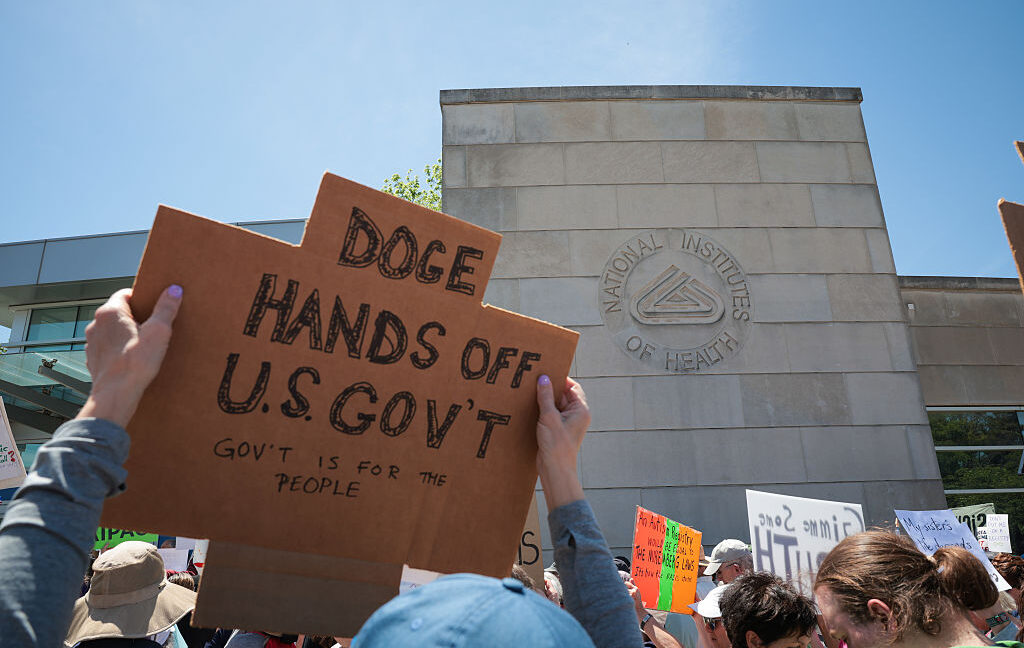
As a result, the NIH staff had no solid guidance for determining whether a given grant violated the new anti-DEI policy, or how that might be weighed against the scientific merit of the grant. So, how were they to identify which grants needed to be terminated? The evidence revealed at trial indicates that they didn’t need to make those decisions; DOGE made them for the NIH. In one case, an NIH official approved a list of grants to terminate received from DOGE only two minutes after it showed up in his inbox.
Regardless of what else they might be doing, the indirect costs pay for various critical campus services, including at research hospitals. Suddenly having that amount slashed would create a major budgetary shortfall that will be hard to cover without shutting programs down.
The resulting damage to research campuses in their states was one of the harms cited by the states that joined the suit as part of their effort to establish standing. The other was the harm caused by the general slowdown in biomedical research that the policy will trigger, which the states argue will delay the availability of treatments for their citizens.
The states taking part include most of those that were won by Kamala Harris in 2024, as well as states that voted for Trump but currently have Democratic governors and attorneys general: Arizona, Michigan, Nevada, North Carolina, and Wisconsin. Notably, the suit only seeks relief from the altered NIH policy for institutions located in those states; they’re essentially leaving states controlled by Republicans to suffer the damages caused by the new policy.
Allegations and backup allegations
The states allege that the new NIH policy, by applying to all grants in progress, is equivalent to rewriting a contract. It cites an earlier legal decision that determined that “Once the [Notice of Award] is signed or money is drawn, the [Notice of Award] and the grant terms are binding on the grantee and the government.” Beyond that, the states argue the policy violates two separate pieces of legislation.
The first is the Administrative Procedures Act, which describes the processes that agencies need to follow when they formulate formal rules to translate legislation into implementations. Among other things, this prevents agencies from formulating rules that are “arbitrary and capricious.” It argues that, by including audits and negotiations in the process of setting them, the current individualized indirect rates are anything but.
By contrast, the states argue, there’s no significant foundation for the 15 percent indirect rate. “The Rate Change Notice is arbitrary and capricious in, among other ways, its failure to articulate the bases for the categorical rate cap of 15 percent,” the suit alleges, “its failure to consider the grant recipients’ reliance on their negotiated rates, and its disregard for the factual findings that formed the bases for the currently operative negotiated indirect cost rates.”
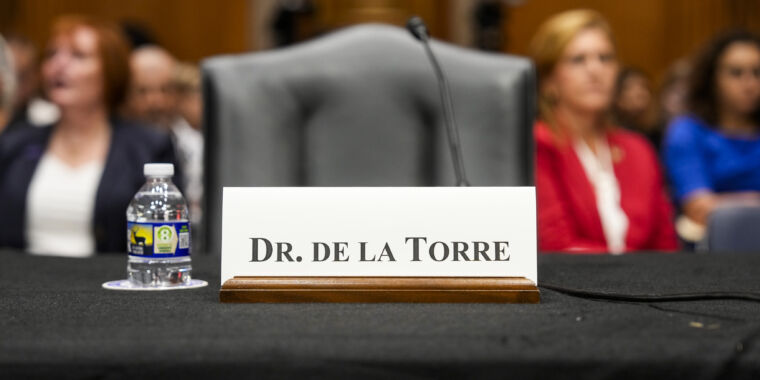
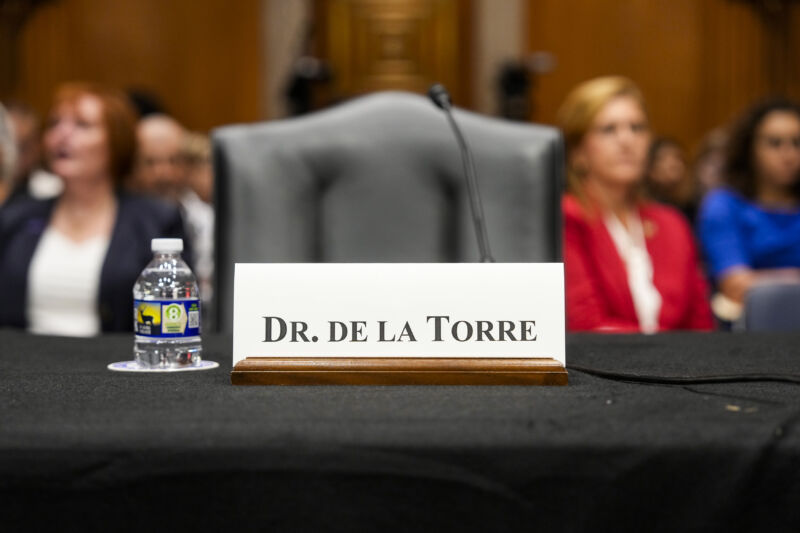
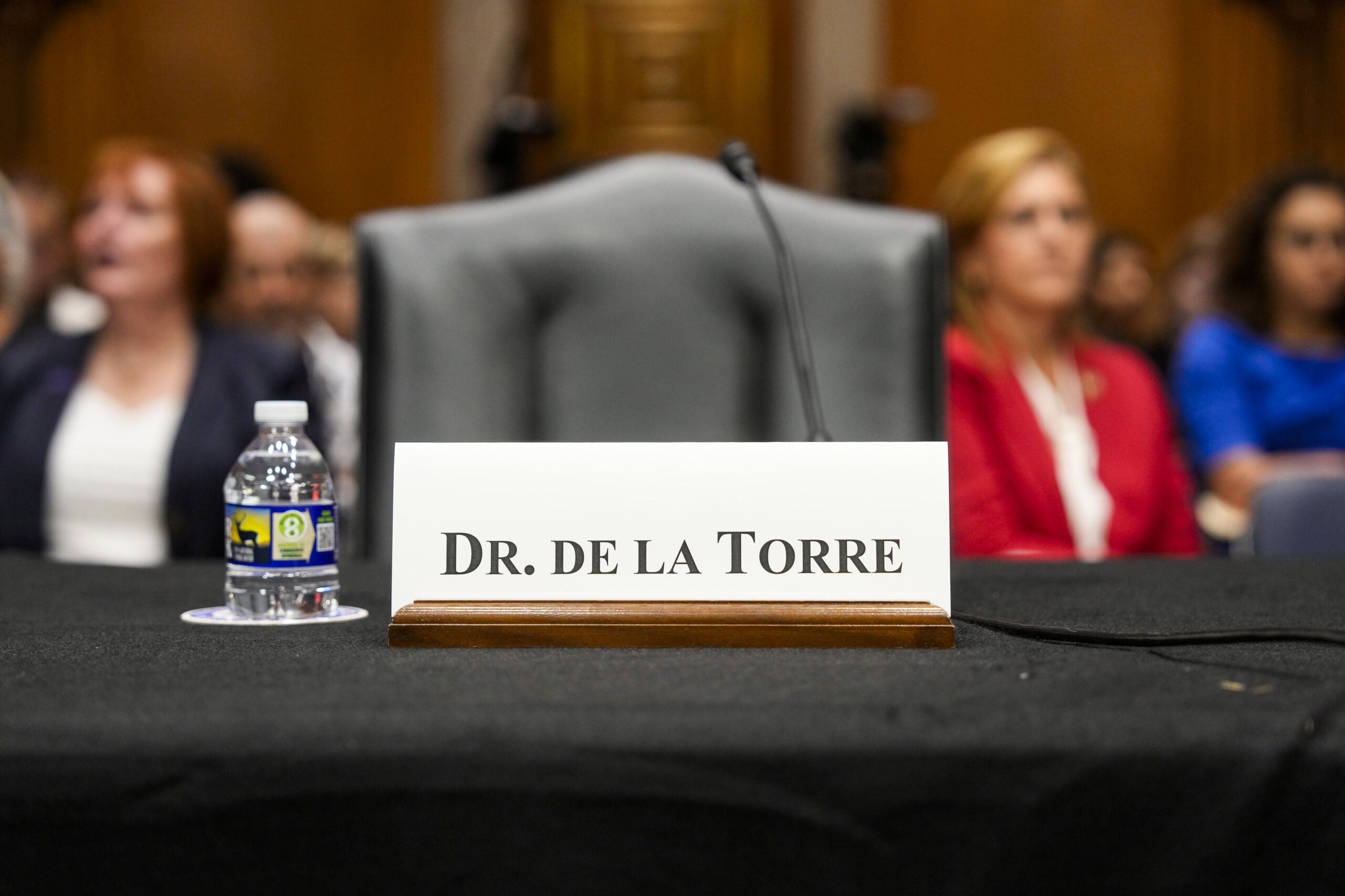
Enlarge/ The empty chair of Steward Health Care System Chief Executive Officer, Dr. Ralph de la Torre who did not show up during the US Senate Committee on Health, Education, Labor, & Pensions Examining the Bankruptcy of Steward Health Care: How Management Decisions Have Impacted Patient Care.
In a federal lawsuit filed Monday, Steward CEO Ralph de la Torre claimed the senators “bulldozed over [his] constitutional rights” as they tried to “pillory and crucify him as a loathsome criminal” in a “televised circus.”
The Senate committee—the Committee on Health, Education, Labor, and Pensions (HELP), led by Bernie Sanders (I-Vt.)—issued a rare subpoena to de la Torre in July, compelling him to testify before the lawmakers. They sought to question the CEO on the deterioration of his hospital system, which previously included more than 30 hospitals across eight states. Steward filed for bankruptcy in May.
Imperiled patients
The committee alleges that de la Torre and Steward executives reaped millions in personal profits by hollowing out the health care facilities, even selling the land out from under them. The mismanagement left them so financially burdened that one doctor in a Steward-owned hospital in Louisiana said they were forced to perform “third-world medicine.” A lawmaker in that state who investigated the conditions at the hospital described Steward executives as “health care terrorists.”
Further, the financial strain on the hospitals is alleged to have led to the preventable deaths of 15 patients and put more than 2,000 other patients in “immediate peril.” As hospitals cut services, closed wards, or shuttered entirely, hundreds of health care workers were laid off, and communities were left without access to care. Nurses who remained in faltering facilities testified of harrowing conditions, including running out of basic supplies like beds. In one Massachusetts hospital, nurses were forced to place the remains of newborns in cardboard shipping boxes because Steward failed to pay a vendor for bereavement boxes.
Meanwhile, records indicate de la Torre and his companies were paid at least $250 million in recent years and he bought a 190-foot yacht for $40 million. Steward also owned two private jets collectively worth $95 million.
While de la Torre initially agreed to testify before the committee at the September 12 hearing, the wealthy CEO backed out the week beforehand. He claimed that a federal court order linked to the bankruptcy case prevented him from speaking on the matter; additionally, he invoked his Fifth Amendment right to avoid self-incrimination.
The HELP committee rejected de la Torre’s arguments, saying there were still relevant topics he could safely discuss without violating the order and that his Fifth Amendment rights did not permit him to refuse to appear before Congress when summoned by a subpoena. Still, the CEO was a no-show, and the Senate moved forward with the contempt charges.
“Not the way this works”
In the lawsuit filed today, de la Torre argues that the senators are attempting to punish him for invoking his Constitutional rights and that the hearing “was simply a device for the Committee to attack [him] and try to publicly humiliate and condemn him.”
The suit describes de la Torre as having a “distinguished career, bedecked by numerous accomplishments,” while accusing the senators of painting him as “a villain and scapegoat[ing] him for the company’s problems, even those caused by systemic deficiencies in Massachusetts’ health care system.” If he had appeared at the Congressional hearing, he would not have been able to defend himself from the personal attacks without being forced to abandon his Constitutional rights, the suit argues.
“Indeed, the Committee made it abundantly clear that they would put Dr. de la Torre’s invocation [of the Fifth Amendment] itself at the heart of their televised circus and paint him as guilty for the sin of remaining silent in the face of these assaults on his character and integrity,” the suit reads.
De la Torre seeks to have the federal court quash the Senate committee’s subpoena, enjoin both contempt charges, and declare that the Senate committee violated his Fifth Amendment rights.
Outside lawyers are skeptical that will occur. The lawsuit is a “Hail Mary play,” according to Stan M. Brand, an attorney who represented former Trump White House official Peter Navarro in a contempt of Congress case. De la Torre’s case “has very little chance of succeeding—I would say no chance of succeeding,” Brand told the Boston Globe.
“Every time that someone has tried to sue the House or Senate directly to challenge a congressional subpoena, the courts have said, ‘That that’s not the way this works,’” Brand said.