Policy

delta’s-ai-spying-to-“jack-up”-prices-must-be-banned,-lawmakers-say

Delta’s AI spying to “jack up” prices must be banned, lawmakers say

“There is no fare product Delta has ever used, is testing or plans to use that targets customers with individualized offers based on personal information or otherwise,” Delta said. “A variety of market forces drive the dynamic pricing model that’s been used in the global industry for decades, with new tech simply streamlining this process. Delta always complies with regulations around pricing and disclosures.”

Other companies “engaging in surveillance-based price setting” include giants like Amazon and Kroger, as well as a ride-sharing app that has been “charging a customer more when their phone battery is low.”

Public Citizen, a progressive consumer rights group that endorsed the bill, condemned the practice in the press release, urging Congress to pass the law and draw “a clear line in the sand: companies can offer discounts and fair wages—but not by spying on people.”

“Surveillance-based price gouging and wage setting are exploitative practices that deepen inequality and strip consumers and workers of dignity,” Public Citizen said.

AI pricing will cause “full-blown crisis”

In January, the Federal Trade Commission requested information from eight companies—including MasterCard, Revionics, Bloomreach, JPMorgan Chase, Task Software, PROS, Accenture, and McKinsey & Co—joining a “shadowy market” that provides AI pricing services. Those companies confirmed they’ve provided services to at least 250 companies “that sell goods or services ranging from grocery stores to apparel retailers,” lawmakers noted.

That inquiry led the FTC to conclude that “widespread adoption of this practice may fundamentally upend how consumers buy products and how companies compete.”

In the press release, the anti-monopoly watchdog, the American Economic Liberties Project, was counted among advocacy groups endorsing the Democrats’ bill. Their senior legal counsel, Lee Hepner, pointed out that “grocery prices have risen 26 percent since the pandemic-era explosion of online shopping,” and that’s “dovetailing with new technology designed to squeeze every last penny from consumers.”

Delta’s AI spying to “jack up” prices must be banned, lawmakers say Read More »

skydance-deal-allows-trump’s-fcc-to-“censor-speech”-and-“silence-dissent”-on-cbs

Skydance deal allows Trump’s FCC to “censor speech” and “silence dissent” on CBS

Warning that the “Paramount payout” and “reckless” acquisition approval together mark a “dark chapter” for US press freedom, Gomez suggested the FCC’s approval will embolden “those who believe the government can—and should—abuse its power to extract financial and ideological concessions, demand favored treatment, and secure positive media coverage.”

FCC terms also govern Skydance hiring decisions

Gomez further criticized the FCC for overstepping its authority in “intervening in employment matters reserved for other government entities with proper jurisdiction on these issues” by requiring Skydance commitments to not establish any DEI programs, which Carr derided as “invidious.” But Gomez countered that “this agency is undermining legitimate efforts to combat discrimination and expand opportunity” by meddling in private companies’ employment decisions.

Ultimately, commissioner Olivia Trusty joined Carr in voting to stamp the agency’s approval, celebrating the deal as “lawful” and a “win” for American “jobs” and “storytelling.” Carr suggested the approval would bolster Paramount’s programming by injecting $1.5 billion into operations, which Trusty said would help Paramount “compete with dominant tech platforms.”

Gomez conceded that she was pleased that at least—unlike the Verizon/T-Mobile merger—Carr granted her request to hold a vote, rather than burying “the outcome of backroom negotiations” and “granting approval behind closed doors, under the cover of bureaucratic process.”

“The public has a right to know how Paramount’s capitulation evidences an erosion of our First Amendment protections,” Gomez said.

Outvoted 2–1, Gomez urged “companies, journalists, and citizens” to take up the fight and push back on the Trump administration, emphasizing that “unchecked and unquestioned power has no rightful place in America.”

Skydance deal allows Trump’s FCC to “censor speech” and “silence dissent” on CBS Read More »

white-house-unveils-sweeping-plan-to-“win”-global-ai-race-through-deregulation

White House unveils sweeping plan to “win” global AI race through deregulation

Trump’s plan was not welcomed by everyone. J.B. Branch, Big Tech accountability advocate for Public Citizen, in a statement provided to Ars, criticized Trump as giving “sweetheart deals” to tech companies that would cause “electricity bills to rise to subsidize discounted power for massive AI data centers.”

Infrastructure demands and energy requirements

Trump’s new AI plan tackles infrastructure head-on, stating that “AI is the first digital service in modern life that challenges America to build vastly greater energy generation than we have today.” To meet this demand, it proposes streamlining environmental permitting for data centers through new National Environmental Policy Act (NEPA) exemptions, making federal lands available for construction and modernizing the power grid—all while explicitly rejecting “radical climate dogma and bureaucratic red tape.”

The document embraces what it calls a “Build, Baby, Build!” approach—echoing a Trump campaign slogan—and promises to restore semiconductor manufacturing through the CHIPS Program Office, though stripped of “extraneous policy requirements.”

On the technology front, the plan directs Commerce to revise NIST’s AI Risk Management Framework to “eliminate references to misinformation, Diversity, Equity, and Inclusion, and climate change.” Federal procurement would favor AI developers whose systems are “objective and free from top-down ideological bias.” The document strongly backs open source AI models and calls for exporting American AI technology to allies while blocking administration-labeled adversaries like China.

Security proposals include high-security military data centers and warnings that advanced AI systems “may pose novel national security risks” in cyberattacks and weapons development.

Critics respond with “People’s AI Action Plan”

Before the White House unveiled its plan, more than 90 organizations launched a competing “People’s AI Action Plan” on Tuesday, characterizing the Trump administration’s approach as “a massive handout to the tech industry” that prioritizes corporate interests over public welfare. The coalition includes labor unions, environmental justice groups, and consumer protection nonprofits.

White House unveils sweeping plan to “win” global AI race through deregulation Read More »

ukrainians-arrest-alleged-admin-of-major-crime-forum-xss

Ukrainians arrest alleged admin of major crime forum XSS

Yesterday, Ukrainian authorities arrested the suspected administrator of a notorious Russian-language crime forum, XSS.is.

In an X post, the Paris Prosecutor’s Office announced that Ukrainian authorities detained the suspect after an investigation conducted with French authorities’ and Europol’s help that began almost exactly four years ago.

XSS has been “one of the main hubs of global cybercrime” since 2013, French authorities said, allowing “the sale of malware, access to compromised systems, stolen data, and ransomware-related services.”

Used by criminals globally to cover up illicit activity, the forum was shut down soon after the admin’s arrest.

The suspected admin has so far not been named. But police said the suspect was identified after authorities began intercepting encrypted chats sent on a Jabber messaging server that members used, “thesecure.biz.”

Surveilling chats between forum users, the government eventually intercepted a message that tipped authorities off to the alleged admin’s identity back in September. Soon after, they deployed agents to find the admin, and ultimately, it took months for Ukrainian authorities to make the arrest, with both French and Europol authorities present.

“The intercepted messages revealed numerous illicit activities related to cybercrime and ransomware, and established that they generated at least $7 million in profits,” a translation of the press release said.

Ukrainians arrest alleged admin of major crime forum XSS Read More »

whistleblower-scientists-outline-trump’s-plan-to-politicize-and-dismantle-nsf

Whistleblower scientists outline Trump’s plan to politicize and dismantle NSF

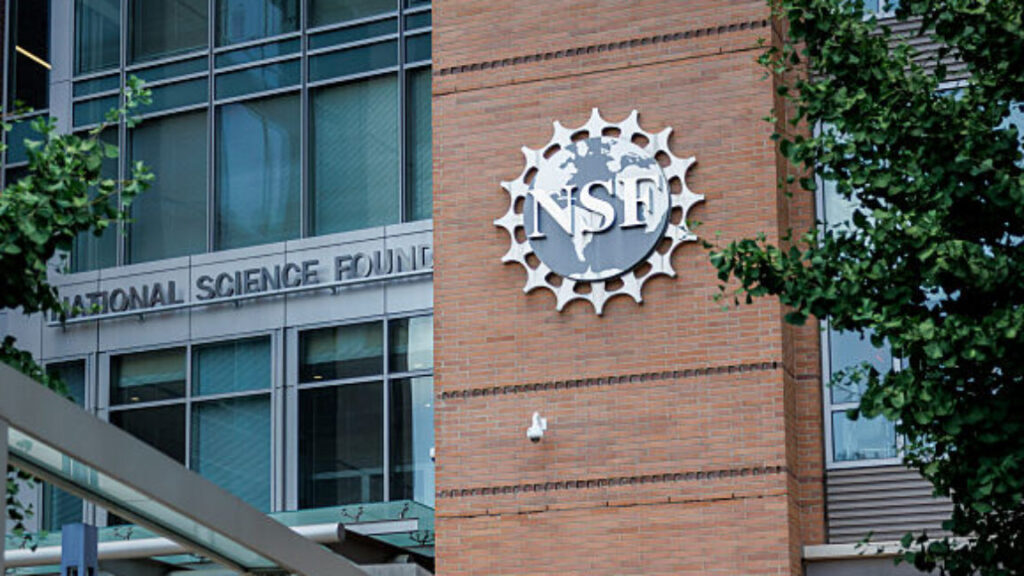
Nearly 150 employees of the National Science Foundation (NSF) sent an urgent letter of dissent to Congress on Tuesday, warning that the Trump administration’s recent “politically motivated and legally questionable” actions threaten to dismantle the independent “world-renowned scientific agency.”

Most NSF employees signed the letter anonymously, with only Jesus Soriano, the president of their local union (AFGE Local 3403), publicly disclosing his name. Addressed to Rep. Zoe Lofgren (D-Calif.), ranking member of the House Committee on Science, Space, and Technology, the letter insisted that Congress intervene to stop steep budget cuts, mass firings and grant terminations, withholding of billions in appropriated funds, allegedly coerced resignations, and the sudden eviction of NSF from its headquarters planned for next year.

Perhaps most disturbingly, the letter revealed “a covert and ideologically driven secondary review process by unqualified political appointees” that is now allegedly “interfering with the scientific merit-based review system” that historically has made NSF a leading, trusted science agency. Soriano further warned that “scientists, program officers, and staff” have all “been targeted for doing their jobs with integrity” in what the letter warned was “a broader agenda to dismantle institutional safeguards, impose demagoguery in research funding decisions, and undermine science.”

At a press conference with Lofgren on Wednesday, AFGE National president Everett Kelley backed NSF workers and reminded Congress that their oversight of the executive branch “is not optional.”

Taking up the fight, Lofgren promised to do “all” that she “can” to protect the agency and the entire US scientific enterprise.

She also promised to protect Soriano from any retaliation, as some federal workers, including NSF workers, alleged they’ve already faced retaliation, necessitating their anonymity to speak publicly. Lofgren criticized the “deep shame” of the Trump administration creating a culture of fear permeating NSF, noting that all the “horrifying” statements in the letter are “all true,” yet filed as a whistleblower complaint as if they’re sharing secrets.

Whistleblower scientists outline Trump’s plan to politicize and dismantle NSF Read More »

conduct-rules-are-coming-for-google-and-apple-in-the-uk

Conduct rules are coming for Google and Apple in the UK

“The targeted and proportionate actions we have set out today would enable UK app developers to remain at the forefront of global innovation while ensuring UK consumers receive a world-class experience,” Cardell said. “Time is of the essence: as competition agencies and courts globally take action in these markets, it’s essential the UK doesn’t fall behind.”

Google and Apple oppose the outlined changes, arguing they could threaten user security and delay the launch of new products and services in the UK.

“We’re concerned the rules the UK is now considering would undermine the privacy and security protections that our users have come to expect, hamper our ability to innovate, and force us to give away our technology for free to foreign competitors,” Apple said. “We will continue to engage with the regulator to make sure they fully understand these risks.”

Oliver Bethell, Google’s senior director for competition, said the CMA’s move was “both disappointing and unwarranted” and that it was “crucial that any new regulation is evidence-based, proportionate, and does not become a roadblock to growth in the UK.”

Apple has repeatedly clashed with Brussels over the implementation of the EU’s Digital Markets Act, making changes to its platform after the European Commission accused the iPhone maker of failing to comply with its “online gatekeeper” rules.

The DMA also requires Apple to open up iOS features and data to its rivals and has demanded changes to its App Store, such as allowing users to install apps from outside its store.

The CMA said it was taking a different approach to the EU by being more “tailored” and iterative than the DMA’s blanket rules.

Last month, Google’s search services were the first Big Tech product to be targeted under the UK’s Digital Markets, Competition and Consumers Act, which was passed last year.

If a company’s products or services are designated as having “strategic market status,” it can last for a five-year period. Companies can be fined up to 10 percent of global turnover for breaching conduct rules.

© 2025 The Financial Times Ltd. All rights reserved. Not to be redistributed, copied, or modified in any way.

Conduct rules are coming for Google and Apple in the UK Read More »

toy-company-may-regret-coming-for-“sylvanian-drama”-tiktoker,-experts-say

Toy company may regret coming for “Sylvanian Drama” TikToker, experts say


Possible legal paths to revive a shuttered video series on TikTok and Instagram.

A popular account on TikTok and Instagram stopped posting suddenly at the end of last year, hit by a lawsuit after garnering millions of views on funny videos it made using adorable children’s Calico Critter dolls to act out dark, cringe-y adult storylines.

While millions of followers mourn the so-called “Sylvanian Drama” account’s demise, experts told Ars that the creator may have a decent chance at beating the lawsuit.

The “Sylvanian Drama” account derived its name from “Sylvanian Families,” a brand name used by Epoch Company Ltd., the maker of Calico Critters, for its iconic fuzzy animal dolls in some markets outside the US. Despite these videos referencing murder, drugs, and hookups, the toy company apparently had no problem, until the account, managed by Ireland-based Thea Von Engelbrechten, started accepting big brand partnerships and making sponsored content featuring the dolls.

Since Epoch, too, strikes partnerships with brands and influencers to promote its own videos marketing the dolls, the company claimed “Sylvanian Drama” risked creating too much confusion online. They also worried viewers would think Epoch had signed off on the videos, since the sponsored content was marked “paid partnership” without specifying precisely which featured brands had paid for the spots. They further accused Von Engelbrechten of building her advertising business around their brand without any attempt to properly license the dolls, while allegedly usurping licensing opportunities from Epoch.

So far, Von Engelbrechten has delayed responding in the lawsuit. As the account remained inactive over the past few months, fans speculated whether it could survive the lawsuit, which raised copyright and trademark infringement claims to get all the videos removed. In their complaint, the toy company requested not only an injunction preventing Von Engelbrechten from creating more “Sylvanian Drama” videos, but also sought all of her profits from her online accounts, in addition to further damages.

Von Engelbrechten declined Ars’ request to provide an update on her defense in the case, but her response is due in early August. That filing will make clear what arguments she may make to overcome Epoch’s suit, but legal experts told Ars that the case isn’t necessarily a slam dunk for the toy company. So all that “Sylvanian Drama” isn’t over just yet.

Epoch’s lawyers did not respond to Ars’ request to comment.

“Sylvanian Drama” needs the court to get the joke

Epoch raised copyright infringement charges that could hit Von Engelbrechten with fines totaling $150,000 per violation.

For Von Engelbrechten to defeat the copyright infringement claim, she’ll need to convince the court that her videos are parodies. A law professor at Santa Clara University School of Law, Eric Goldman, told Ars that her videos may qualify since “even if they don’t expressly reference Epoch’s offerings by name, the videos intentionally communicate a jarring juxtaposition of adorable critters who are important parts of pop culture living through the darker sides of humanity.”

Basically, Von Engelbrechten will need the court to understand the humor in her videos to win on that claim, Rebecca Tushnet, a First Amendment law professor at Harvard Law School, told Ars.

“Courts have varied in their treatment of parodies; the complaint’s definition of parody is not controlling but humor is one of the hardest things to predict—if the court gets the joke, it will be more likely to say that the juxtaposition between the storylines and the innocent appearance of the dolls is parodic,” Tushnet said.

But if the court does get the joke, Goldman suggested that even the sponsored content—which hilariously incorporates product placements from various big brands like Marc Jacobs, Taco Bell, Hilton, and Sephora into storylines—could possibly be characterized as parody.

However, “the fact that the social media posts were labeled #ad will make it extremely difficult for the artist to contest the videos’ status as ads,” Goldman said.

Ultimately, Goldman said that Epoch’s lawsuit “raises a host of complex legal issues” and is “not an easy case on either side.”

And one of the most significant issues that Epoch may face in the courtroom could end up gutting all of its trademark infringement claims that supposedly entitle the toy company to all of Von Engelbrechten’s profits, Alexandra Jane Roberts, a Northeastern University professor of law and media with special expertise in trademark law, told Ars.

Calico Critters may stumble on trademark hurdle

The toy company has raised several trademark infringement claims, all of which depend on Epoch proving that Von Engelbrechten “knowingly and willfully” used its trademarks without permission.

However, Roberts pointed out to Ars that Epoch has no trademarks for its iconic dolls, relying only on common law to assert sole rights to the “look and design of the critters.”

It’s likely impossible for Epoch to trademark the dolls, since trademarks are not intended to block competition, and there are only so many ways to design cute dolls that resemble cats or bunnies, Roberts suggested. A court may decide “there’s only so many ways to make a small fuzzy bunny that doesn’t look like this,” potentially narrowing the rights Epoch has under trade dress, a term that Epoch doesn’t use once in its complaint.

Roberts told Ars that Epoch’s trademark claims are “not so far off the mark,” and Von Engelbrechten’s defense was certainly not strengthened by her decision to monetize the content. Prior cases, like the indie band OK Go sending a cease-and-desist to Post cereal over a breakfast product called “OK Go” due to fears of false endorsement, make it clear that courts have agreed in the past that online collaborations have muddied the waters regarding who is the actual source of content for viewers.

“The question becomes whether people are going to see these videos, even though they’re snarky, and even though they’re silly and think, ‘Oh, Calico Critters must have signed off on this,'” Roberts said. “So the argument about consumer confusion, I think, is a plausible argument.”

However, if Epoch fails to convince the court that its trademarks have been infringed, then its other claims alleging false endorsement and unfair competition would likely also collapse.

“You can still get sometimes to unfair competition or to kind of like a false endorsement, but it’s harder to win on those claims and certainly harder to get damages on those claims,” Roberts said. “You don’t get trademark infringement if you don’t have a trademark.”

Possible defenses to keep “Sylvanian Drama” alive

Winning on the trademark claims may not be easy for Von Engelbrechten, who possibly weakened her First Amendment defense by creating the sponsored content. Regardless, she will likely try to convince the court to view the videos as parody, which is a slightly different analysis under trademark law than copyright’s more well-known fair use parody exceptions.

That could be a struggle, since trademark law requires that Von Engelbrechten’s parody videos directly satirize the “Sylvanian Families” brand, and “Sylvanian Drama” videos, even the ads, instead seem to be “making fun of elements of society and culture,” rather than the dolls themselves, Roberts said.

She pointed to winning cases involving the Barbie trademark as an instructive example. In a case disputing Mattel trademarks used in the lyrics for the one-hit wonder “Barbie Girl,” the song was cleared for trademark infringement as a “purely expressive work” that directly parodies Barbie in the lyrics. And in another case, where an artist, Tom Forsythe, captured photos of Barbie dolls in kitchen vessels like a blender or a margarita glass, more robust First Amendment protection was offered since his photos “had a lot to say about sexism and the dolls and what the dolls represent,” Roberts said.

The potential “Sylvanian Drama” defense seems to lack strong go-to arguments that typically win trademark cases, but Roberts said there is still one other defense the content creator may be weighing.

Under “nominative fair use,” it’s OK to use another company’s trademark if it’s necessary in an ad. Roberts provided examples, like a company renting Lexus cars needing to use that trademark or comparative advertising using Tiffany’s diamonds as a reference point to hype their lower prices.

If Von Engelbrechten goes that route, she will need to prove she used “no more of the mark than is necessary” and did not mislead fans on whether Epoch signed off on the use.

“Here it’s hard to say that ‘Sylvanian Drama’ really needed to use so much of those characters and that they didn’t use more than they needed and that they weren’t misleading,” Roberts said.

However, Von Engelbrechten’s best bet might be arguing that there was no confusion, since “Sylvanian Families” isn’t even a brand that’s used in the US, which is where Epoch chose to file its lawsuit because the brands that partnered with the popular account are based in New York. And the case may not even get that far, Roberts suggested, since “before you can get to those questions about the likelihood of confusion, you have to show that you actually have trademark or trade dress rights to enforce.”

Calico Critters creator may face millennial backlash

Epoch may come to regret filing the lawsuit, Roberts said, noting that as a millennial who grew up a big “Hello Kitty” fan, she still buys merch that appeals to her, and Epoch likely knows about that market, as it has done collaborations with the “Hello Kitty” brand. The toymaker could risk alienating other millennials nostalgic for Calico Critters who may be among the “Sylvanian Drama” audience and feel turned off by the lawsuit.

“When you draw attention to something like this and appear litigious, and that you’re coming after a creator who a lot of people really like and really enjoy and probably feel defensive about, like, ‘Oh, she’s just making these funny videos that everyone loves. Why would you want to sue her?'” Roberts said, “that can be really bad press.”

Goldman suggested that Epoch might be better off striking a deal with the creator, which “could establish some boundaries for the artist to keep going without stepping on the IP owner’s rights.” But he noted that “often IP owners in these situations are not open to negotiation,” and “that requires courts to draw difficult and unpredictable lines about the permissible scope of fair use.”

For Von Engelbrechten, the lawsuit may mean that her days of creating “Sylvanian Drama”-sponsored content are over, which could risk crushing a bigger dream she had to succeed in advertising. However, if the lawsuit can be amicably settled, the beloved content creator could also end up making money for Epoch, considering her brand deals appeared to be bigger.

While she seems to take her advertising business seriously, Von Engelbrechten’s videos often joke about legal consequences, such as one where a cat doll says she cannot go to a party because she’s in jail but says “I’ll figure it out” when told her ex will be attending. Perhaps Von Engelbrechten is currently devising a scheme, like her characters, to escape consequences and keep the “Sylvanian Drama” going.

“Maybe if this company were really smart, they would want to hire this person instead of suing them,” Roberts said.

Photo of Ashley Belanger

Ashley is a senior policy reporter for Ars Technica, dedicated to tracking social impacts of emerging policies and new technologies. She is a Chicago-based journalist with 20 years of experience.

Toy company may regret coming for “Sylvanian Drama” TikToker, experts say Read More »

a-power-utility-is-reporting-suspected-pot-growers-to-cops-eff-says-that’s-illegal.

A power utility is reporting suspected pot growers to cops. EFF says that’s illegal.

In May 2020, Sacramento, California, resident Alfonso Nguyen was alarmed to find two Sacramento County Sheriff’s deputies at his door, accusing him of illegally growing cannabis and demanding entry into his home. When Nguyen refused the search and denied the allegation, one deputy allegedly called him a liar and threatened to arrest him.

That same year, deputies from the same department, with their guns drawn and bullhorns and sirens sounding, fanned out around the home of Brian Decker, another Sacramento resident. The officers forced Decker to walk backward out of his home in only his underwear around 7 am while his neighbors watched. The deputies said that he, too, was under suspicion of illegally growing cannabis.

Invasion of the privacy snatchers

According to a motion the Electronic Frontier Foundation filed in Sacramento Superior Court last week, Nguyen and Decker are only two of more than 33,000 Sacramento-area people who have been flagged to the sheriff’s department by the Sacramento Municipal Utility District, the electricity provider for the region. SMUD called the customers out for using what it and department investigators said were suspiciously high amounts of electricity indicative of illegal cannabis farming.

The EFF, citing investigator and SMUD records, said the utility unilaterally analyzes customers’ electricity usage in “painstakingly” detailed increments of every 15 minutes. When analysts identify patterns they deem likely signs of illegal grows, they notify sheriff’s investigators. The EFF said the practice violates privacy protections guaranteed by the federal and California governments and is seeking a court order barring the warrantless disclosures.

“SMUD’s disclosures invade the privacy of customers’ homes,” EFF attorneys wrote in a court document in support of last week’s motion. “The whole exercise is the digital equivalent of a door-to-door search of an entire city. The home lies at the ‘core’ of constitutional privacy protection.”

Contrary to SMUD and sheriff’s investigator claims that the likely illegal grows are accurate, the EFF cited multiple examples where they have been wrong. In Decker’s case, for instance, SMUD analysts allegedly told investigators his electricity usage indicated that “4 to 5 grow lights are being used [at his home] from 7pm to 7am.” In actuality, the EFF said, someone in the home was mining cryptocurrency. Nguyen’s electricity consumption was the result of a spinal injury that requires him to use an electric wheelchair and special HVAC equipment to maintain his body temperature.

A power utility is reporting suspected pot growers to cops. EFF says that’s illegal. Read More »

xai-workers-balked-over-training-request-to-help-“give-grok-a-face,”-docs-show

xAI workers balked over training request to help “give Grok a face,” docs show

For the more than 200 employees who did not opt out, xAI asked that they record 15- to 30-minute conversations, where one employee posed as the potential Grok user and the other posed as the “host.” xAI was specifically looking for “imperfect data,” BI noted, expecting that only training on crystal-clear videos would limit Grok’s ability to interpret a wider range of facial expressions.

xAI’s goal was to help Grok “recognize and analyze facial movements and expressions, such as how people talk, react to others’ conversations, and express themselves in various conditions,” an internal document said. Allegedly among the only guarantees to employees—who likely recognized how sensitive facial data is—was a promise “not to create a digital version of you.”

To get the most out of data submitted by “Skippy” participants, dubbed tutors, xAI recommended that they never provide one-word answers, always ask follow-up questions, and maintain eye contact throughout the conversations.

The company also apparently provided scripts to evoke facial expressions they wanted Grok to understand, suggesting conversation topics like “How do you secretly manipulate people to get your way?” or “Would you ever date someone with a kid or kids?”

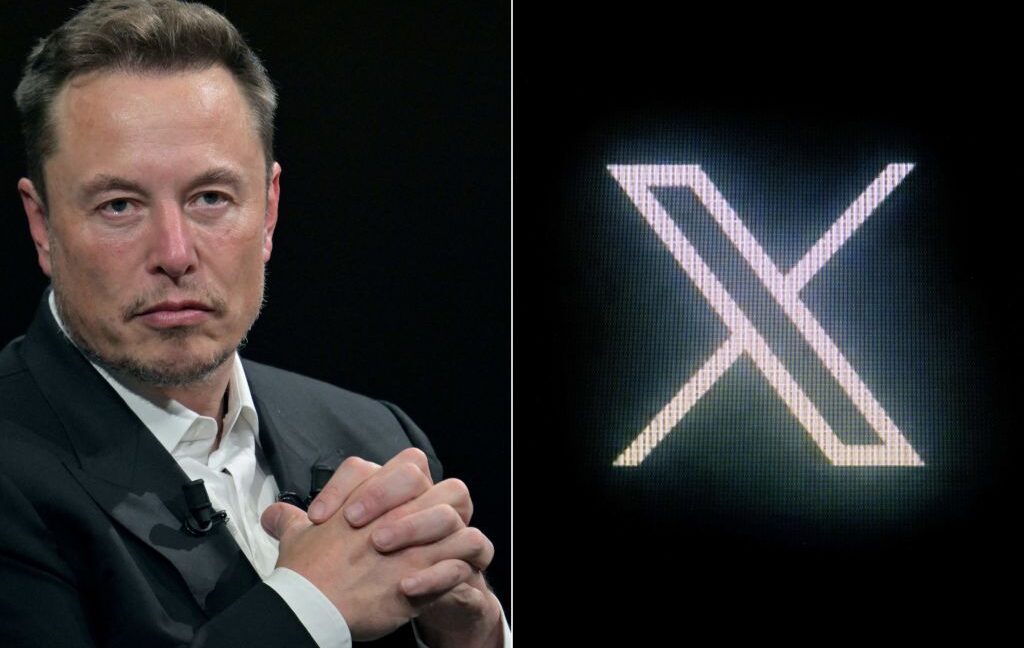
For xAI employees who provided facial training data, privacy concerns may still exist, considering X—the social platform formerly known as Twitter that recently was folded into xAI—has recently been targeted by what Elon Musk called a “massive” cyberattack. Because of privacy risks ranging from identity theft to government surveillance, several states have passed strict biometric privacy laws to prevent companies from collecting such data without explicit consent.

xAI did not respond to Ars’ request for comment.

xAI workers balked over training request to help “give Grok a face,” docs show Read More »

fcc-to-eliminate-gigabit-speed-goal-and-scrap-analysis-of-broadband-prices

FCC to eliminate gigabit speed goal and scrap analysis of broadband prices

“As part of our return to following the plain language of section 706, we propose to abolish without replacement the long-term goal of 1,000/500Mbps established in the 2024 Report,” Carr’s plan said. “Not only is a long-term goal not mentioned in section 706, but maintaining such a goal risks skewing the market by unnecessarily potentially picking technological winners and losers.”

Fiber networks can already meet a 1,000/500Mbps standard, and the Biden administration generally prioritized fiber when it came to distributing grants to Internet providers. The Trump administration changed grant-giving procedures to distribute more funds to non-fiber providers such as Elon Musk’s Starlink satellite network.

Carr’s proposal alleged that the 1,000/500Mbps long-term goal would “appear to violate our obligation to conduct our analysis in a technologically neutral manner,” as it “may be unreasonably prejudicial to technologies such as satellite and fixed wireless that presently do not support such speeds.”

100/20Mbps standard appears to survive

When the 100/20Mbps standard was adopted last year, Carr alleged that “the 100/20Mbps requirement appears to be part and parcel of the Commission’s broader attempt to circumvent the statutory requirement of technological neutrality.” It appears the Carr FCC will nonetheless stick with 100/20Mbps for measuring availability of fixed broadband. But his plan would seek comment on that approach, suggesting a possibility that it could be changed.

“We propose to again focus our service availability discussion on fixed broadband at speeds of 100/20Mbps and seek comment on this proposal,” the plan said.

If any regulatory changes are spurred by Carr’s deployment inquiry, they would likely be to eliminate regulations instead of adding them. Carr has been pushing a “Delete, Delete, Delete” initiative to eliminate rules that he considers unnecessary, and his proposal asks for comment on broadband regulations that could be removed.

“Are there currently any regulatory barriers impeding broadband deployment, investment, expansion, competition, and technological innovation that the Commission should consider eliminating?” the call for comment asks.

FCC to eliminate gigabit speed goal and scrap analysis of broadband prices Read More »

researcher-threatens-x-with-lawsuit-after-falsely-linking-him-to-french-probe

Researcher threatens X with lawsuit after falsely linking him to French probe

X claimed that David Chavalarias, “who spearheads the ‘Escape X’ campaign”—which is “dedicated to encouraging X users to leave the platform”—was chosen to assess the data with one of his prior research collaborators, Maziyar Panahi.

“The involvement of these individuals raises serious concerns about the impartiality, fairness, and political motivations of the investigation, to put it charitably,” X alleged. “A predetermined outcome is not a fair one.”

However, Panahi told Reuters that he believes X blamed him “by mistake,” based only on his prior association with Chavalarias. He further clarified that “none” of his projects with Chavalarias “ever had any hostile intent toward X” and threatened legal action to protect himself against defamation if he receives “any form of hate speech” due to X’s seeming error and mischaracterization of his research. An Ars review suggests his research on social media platforms predates Musk’s ownership of X and has probed whether certain recommendation systems potentially make platforms toxic or influence presidential campaigns.

“The fact my name has been mentioned in such an erroneous manner demonstrates how little regard they have for the lives of others,” Panahi told Reuters.

X denies being an “organized gang”

X suggests that it “remains in the dark as to the specific allegations made against the platform,” accusing French police of “distorting French law in order to serve a political agenda and, ultimately, restrict free speech.”

The press release is indeed vague on what exactly French police are seeking to uncover. All French authorities say is that they are probing X for alleged “tampering with the operation of an automated data processing system by an organized gang” and “fraudulent extraction of data from an automated data processing system by an organized gang.” But later, a French magistrate, Laure Beccuau, clarified in a statement that the probe was based on complaints that X is spreading “an enormous amount of hateful, racist, anti-LGBT+ and homophobic political content, which aims to skew the democratic debate in France,” Politico reported.

Researcher threatens X with lawsuit after falsely linking him to French probe Read More »

uk-backing-down-on-apple-encryption-backdoor-after-pressure-from-us

UK backing down on Apple encryption backdoor after pressure from US

Under the terms of the legislation, recipients of such a notice are unable to discuss the matter publicly, even with customers affected by the order, unless granted permission by the Home Secretary.

The legislation’s use against Apple has triggered the tech industry’s highest-profile battle over encryption technology in almost a decade.

In response to the demand, Apple withdrew its most secure cloud storage service from the UK in February and is now challenging the Home Office’s order at the Investigatory Powers Tribunal, which probes complaints against the UK’s security services.

Last month, Meta-owned WhatsApp said it would join Apple’s legal challenge, in a rare collaboration between the Silicon Valley rivals.

In the meantime, the Home Office continues to pursue its case with Apple at the tribunal.

Its lawyers discussed the next legal steps this month, reflecting the divisions within government over how best to proceed. “At this point, the government has not backed down,” said one person familiar with the legal process.

A third senior British official added that the UK government was reluctant to push “anything that looks to the US vice-president like a free-speech issue.”

In a combative speech at the Munich Security Conference in February, Vance argued that free speech and democracy were threatened by European elites.

The UK official added, this “limits what we’re able to do in the future, particularly in relation to AI regulation.” The Labour government has delayed plans for AI legislation until after May next year.

Trump has also been critical of the UK stance on encryption.

The US president has likened the UK’s order to Apple to “something… that you hear about with China,” saying in February that he had told Starmer: “You can’t do this.”

US Director of National Intelligence Tulsi Gabbard has also suggested the order would be an “egregious violation” of Americans’ privacy that risked breaching the two countries’ data agreement.

Apple did not respond to a request for comment. “We have never built a back door or master key to any of our products, and we never will,” Apple said in February.

The UK government did not respond to a request for comment.

A spokesperson for Vance declined to comment.

The Home Office has previously said the UK has “robust safeguards and independent oversight to protect privacy” and that these powers “are only used on an exceptional basis, in relation to the most serious crimes.”

© 2025 The Financial Times Ltd. All rights reserved. Not to be redistributed, copied, or modified in any way.

UK backing down on Apple encryption backdoor after pressure from US Read More »