screwworm

flesh-eating-flies-are-eating-their-way-through-mexico,-cdc-warns

Flesh-eating flies are eating their way through Mexico, CDC warns

Across Central America and Mexico, there have been 1,190 human cases of NWS reported and seven deaths. More than 148,000 animals have been affected.

Close calls

In September, the USDA warned that an 8-month-old cow with an active NWS infection was found in a feedlot in the Mexican state of Nuevo León, just 70 miles from the border. The finding prompted Texas Agriculture Commissioner Sid Miller to step up warnings about the threat.

The screwworm is dangerously close,” Miller said at the time. “It nearly wiped out our cattle industry before; we need to act forcefully now.”

According to the USDA’s latest data, Nuevo León has seen three cases in the outbreak, with none that are currently active. But, its neighboring state, Tamaulipas, is having a flare-up, with eight animal cases considered active. The Mexican state shares a border with the southern-most portion of Texas. Mexico overall has reported 24 hospitalizations among people and 601 animal cases.

For now, the NWS has not been detected in the US, and the CDC considers the risk to people to be low.

“However, given the potential for geographic spread, CDC is issuing this Health Advisory to increase awareness of the outbreak and to summarize CDC recommendations for clinicians and health departments in the United States on case identification and reporting, specimen collection, diagnosis, and treatment of NWS, as well as guidance for the public,” the agency said.

Generally, the agency advises being on the lookout for egg masses or fly larvae in wounds or infection sites, especially if there’s destruction of living tissue or feelings of movement. Once discovered, health care workers should report the case and promptly remove and kill all larvae and eggs, preferably by drowning in a sealed, leak-proof container of 70 percent ethanol. “Failure to kill and properly dispose of all larvae or eggs could result in the new introduction and spread of NWS in the local environment,” the CDC warns in bold. At least 10 dead larvae should then be sent to the CDC for confirmation.

The USDA is currently releasing 100 million sterile male flies per week in Mexico to try to establish a new biological barrier.

This isn’t the fly’s first attempt at a US comeback since the 1960s. In 2016, the flies were somehow reintroduced to the Florida Keys, where they viciously attacked Key Deer, an endangered species and the smallest of North America’s white-tailed deer. The flies were eliminated again in 2017 using the sterile fly method.

Flesh-eating flies are eating their way through Mexico, CDC warns Read More »
screwworms-are-coming—and-they’re-just-as-horrifying-as-they-sound

Screwworms are coming—and they’re just as horrifying as they sound

We’re on the verge of being screwwormed.

The biological barrier was breached, they’re slithering toward our border, and the US Department of Agriculture is now carpet-bombing parts of Mexico with weaponized flies to stave off an invasion.

This is not a drill. Screwworms are possibly the most aptly named parasites imaginable, both literally and figuratively. Screwworms—technically, New World Screwworms—are flies that lay eggs on the mucous membranes, orifices, and wounds of warm-blooded animals. Wounds are the most common sites, and even a prick as small as a tick bite can be an invitation for the savage insects.

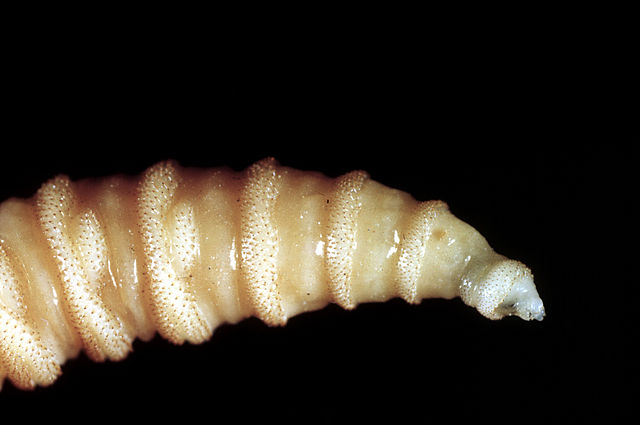
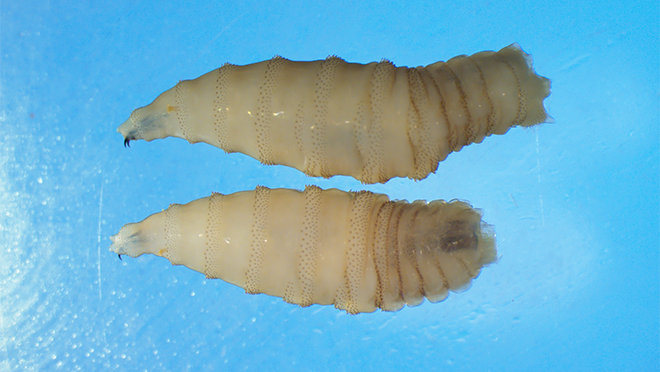
Once beckoned, females lay up to 400 eggs at a time. Within about a day, ravenous flesh-eating larvae erupt, which both look and act like literal screws. They viciously and relentlessly bore and twist into their victim, feasting on the living flesh for about seven days. The result is a gaping ulcer writhing with maggots, which attracts yet more adult female screwworms that can lay hundreds more eggs, deepening the putrid, festering lesion. The infection, called myiasis, is intensely painful and life-threatening. Anyone who falls victim to screwworms is figuratively—well, you know.

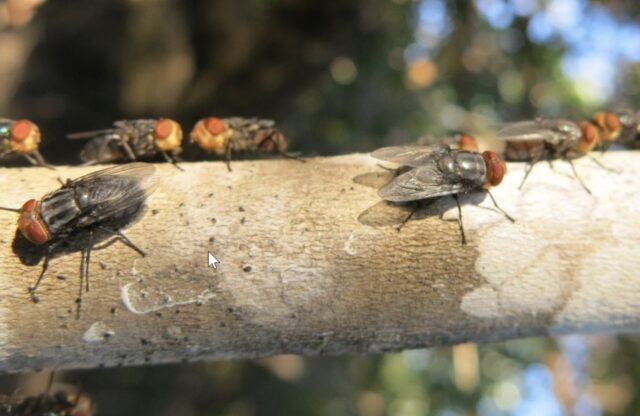
Adult screwworm flies. Credit: USDA

Previous victories

Screwworms aren’t a new foe for the US. Decades ago, they were endemic to southern areas of the country, as well as the whole of Central America, parts of the Caribbean and northern areas of South America. While they’re a threat to many animals, including humans, they are a bane to livestock, causing huge economic losses in addition to the carnage.

In the 1950s, the US began an intensive effort to eradicate screwworms. The successful endeavor required carefully inspecting animals and monitoring livestock movements. But most importantly, it relied on a powerful method to kill off the flies.

The ploy—called the Sterile Insect Technique—throws a wrench into the unique lifecycle of screwworms. After the larvae feast on flesh, they fall to the ground to develop into adults, a process that takes another seven days or so during warm weather. Once adults emerge, they can live for around two weeks, again depending on the weather. In that time, females generally only mate once, but don’t worry—they make the most of the one-night stand by retaining sperm for multiple batches of eggs. While females lay up to 400 eggs at once, they can lay up to 2,800 in their lives.

Screwworms are coming—and they’re just as horrifying as they sound Read More »