social media censorship

man-sues-cops-who-jailed-him-for-37-days-for-trolling-a-charlie-kirk-vigil

Man sues cops who jailed him for 37 days for trolling a Charlie Kirk vigil

While there’s no evidence of anyone interpreting the meme as a violent threat to school kids, there was a “national uproar” when Bushart’s story started spreading online, his complaint noted. Bushart credits media attention for helping to secure his release. The very next day after a local news station pressed Weems in a TV interview to admit he knew the meme wasn’t referencing his county’s high school and confirm that no one ever asked Bushart to clarify his online remarks, charges were dropped, and Bushart was set free.

Morrow and Weems have been sued in their personal capacities and could “be on the hook for monetary damages,” a press release from Bushart’s legal team at the Foundation for Individual Rights in Education (FIRE) said. Perry County, Tennessee, is also a defendant since it’s liable for unconstitutional acts of its sheriffs.

Perry County officials did not immediately respond to Ars’ request to comment.

Bushart suffered “humiliating” arrest

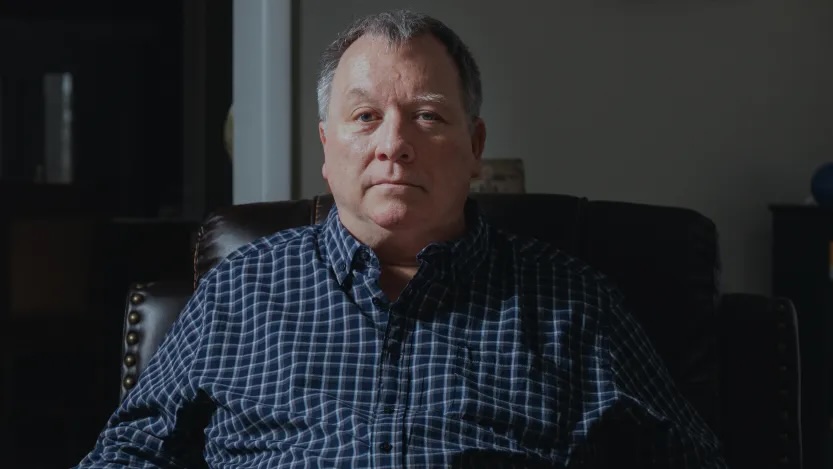
For Bushart, the arrest has shaken up his life. As the primary breadwinner, he’s worried about how he will support himself and his wife after losing his job while in jail. The arrest was particularly “humiliating,” his complaint said, “given his former role as a law enforcement officer.” And despite his release, fear of arrest has chilled his speech, impacting how he expresses his views online.

“I spent over three decades in law enforcement, and have the utmost respect for the law,” Bushart said. “But I also know my rights, and I was arrested for nothing more than refusing to be bullied into censorship.”

Bushart is seeking punitive damages, alleging that cops acted “willfully and maliciously” to omit information from his arrest affidavit that would’ve prevented his detention. One of his lawyers, FIRE senior attorney Adam Steinbaugh, said that a win would protect all social media meme posters from police censorship.

“If police can come to your door in the middle of the night and put you behind bars based on nothing more than an entirely false and contrived interpretation of a Facebook post, no one’s First Amendment rights are safe,” Steinbaugh said.

Man sues cops who jailed him for 37 days for trolling a Charlie Kirk vigil Read More »
rednote-may-wall-off-“tiktok-refugees”-to-prevent-us-influence-on-chinese-users

RedNote may wall off “TikTok refugees” to prevent US influence on Chinese users

Whether TikTok will be banned in the US in three days is still up in the air. The Supreme Court has yet to announce its verdict on the constitutionality of a law requiring TikTok to either sell its US operations or shut down in the US. It’s possible that the Supreme Court could ask for more time to deliberate, potentially delaying enforcement of the law as TikTok has requested until after Donald Trump takes office.

While the divest-or-sell law had bipartisan support when it passed last year, momentum has seemingly shifted this week. Senator Ed Markey (D-Mass.) has introduced a bill to extend the deadline ahead of a potential TikTok ban, and a top Trump adviser, Congressman Mike Waltz, has said that Trump plans to stop the ban and “keep TikTok from going dark,” the BBC reported. Even the Biden administration, whose justice department just finished arguing why the US needed to enforce the law to SCOTUS, “is considering ways to keep TikTok available,” sources told NBC News.

Many US RedNote users quickly banned

For RedNote and China, the app’s sudden popularity as the US alternative to TikTok seems to have come as a surprise. A Beijing-based independent industry analyst, Liu Xingliang, told Reuters that RedNote was “caught unprepared” by the influx of users.

To keep restricted content off the app, RedNote allegedly has since been “scrambling to find ways to moderate English-language content and build English-Chinese translation tools,” two sources familiar with the company told Reuters. Time’s reporting echoed that, noting that “Red Note is urgently recruiting English content moderators [Chinese]” became a trending topic Wednesday on the Chinese social media app Weibo.

Many analysts have suggested that Americans’ fascination with RedNote will be short-lived. Liu told Reuters that “American netizens are in a dissatisfied mood, and wanting to find another Chinese app to use is a catharsis of short-term emotions and a rebellious gesture.” But unfortunately, “the experience on it is not very good for foreigners.”

On RedNote, Chinese users have warned Americans that China censors way more content than they’re used to on TikTok. Analysts told The Washington Post that RedNote’s “focus on shopping and entertainment means it is often even more active in blocking content seen as too serious for the app’s target audience.” Chinese users warned Americans not to post about “politics, religion, and drugs” or risk “account bans or legal repercussions, including jail time,” Rest of World reported. Meanwhile, on Reddit, Americans received additional warnings about common RedNote scams and reasons accounts could be banned. But Rest of World noted that many so-called “TikTok refugees” migrating to RedNote do not “seem to know, or care, about platform rules.”

RedNote may wall off “TikTok refugees” to prevent US influence on Chinese users Read More »

trump-told-scotus-he-plans-to-make-a-deal-to-save-tiktok

Trump told SCOTUS he plans to make a deal to save TikTok

Several members of Congress— Senator Edward J. Markey (D-Mass.), Senator Rand Paul (R-Ky.), and Representative Ro Khanna (D-Calif.)—filed a brief agreeing that “the TikTok ban does not survive First Amendment scrutiny.” They agreed with TikTok that the law is “illegitimate.”

Lawmakers’ “principle justification” for the ban—”preventing covert content manipulation by the Chinese government”—masked a “desire” to control TikTok content, they said. Further, it could be achieved by a less-restrictive alternative, they said, a stance which TikTok has long argued for.

Attorney General Merrick Garland defended the Act, though, urging SCOTUS to remain laser-focused on the question of whether a forced sale of TikTok that would seemingly allow the app to continue operating without impacting American free speech violates the First Amendment. If the court agrees that the law survives strict scrutiny, TikTok could still be facing an abrupt shutdown in January.

The Supreme Court has scheduled oral arguments to begin on January 10. TikTok and content creators who separately sued to block the law have asked for their arguments to be divided, so that the court can separately weigh “different perspectives” when deciding how to approach the First Amendment question.

In its own brief, TikTok has asked SCOTUS to strike the portions of the law singling out TikTok or “at the very least” explain to Congress that “it needed to do far better work either tailoring the Act’s restrictions or justifying why the only viable remedy was to prohibit Petitioners from operating TikTok.”

But that may not be necessary if Trump prevails. Trump told the court that TikTok was an important platform for his presidential campaign and that he should be the one to make the call on whether TikTok should remain in the US—not the Supreme Court.

“As the incoming Chief Executive, President Trump has a particularly powerful interest in and responsibility for those national-security and foreign-policy questions, and he is the right constitutional actor to resolve the dispute through political means,” Trump’s brief said.

Trump told SCOTUS he plans to make a deal to save TikTok Read More »