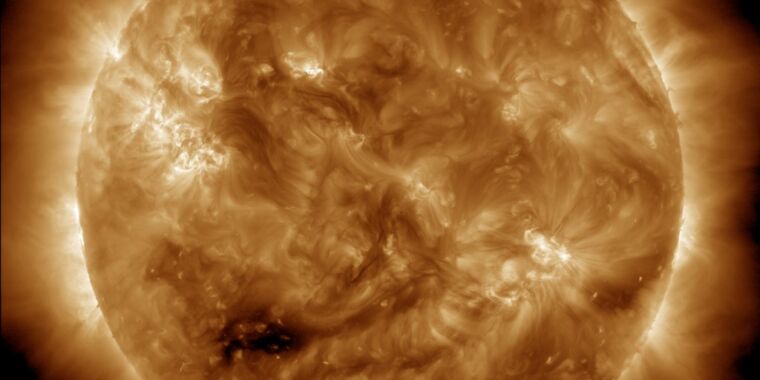
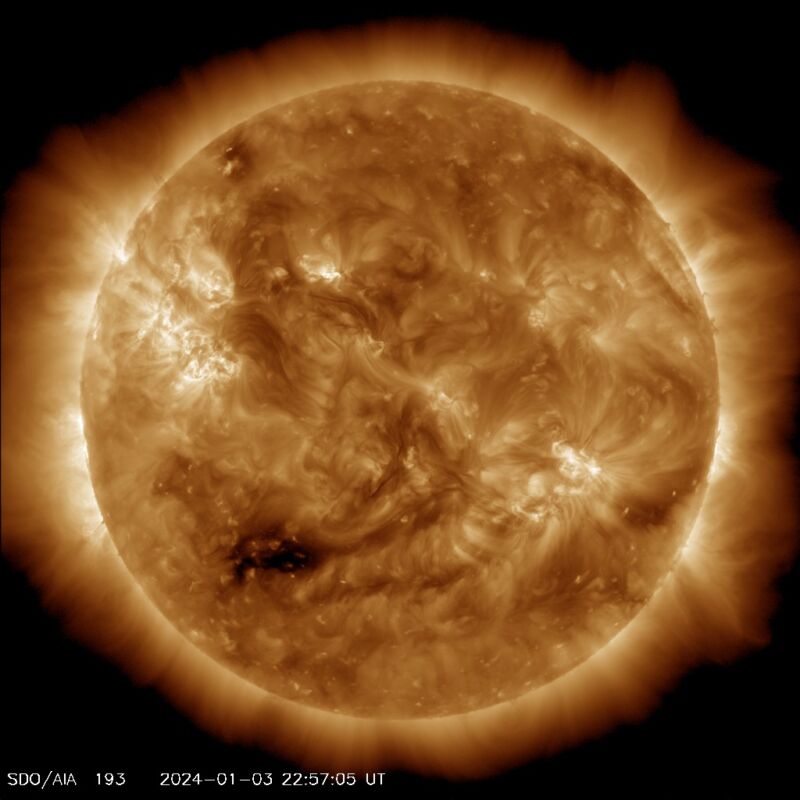
Enlarge/ Sol, imaged by NASA’s Solar Dynamics Observatory.
NASA
Welcome to the Daily Telescope. There is a little too much darkness in this world and not enough light, a little too much pseudoscience and not enough science. We’ll let other publications offer you a daily horoscope. At Ars Technica, we’re going to take a different route, finding inspiration from very real images of a universe that is filled with stars and wonder.
Good morning. It’s January 4, and today’s image is a photo of our star, Sol. The image was captured by NASA’s Solar Dynamics Observatory, a spacecraft in geosynchronous orbit, on Wednesday.
So why a picture of the Sun? Because we’ve just passed perihelion, the point at which planet Earth reaches its closest point to the Sun. This year perihelion came at 00: 38 UTC on Wednesday, January 3. We got to within about 91.4 million miles (147 million km) of the star. Due to its slightly elliptical orbit around the Sun, Earth will reach aphelion this year on July 5, at a distance of 94.5 million miles (152 million km).
There is a bit of irony for those of us who live in the Northern Hemisphere, of course. We approach nearest to the Sun at almost the coldest time of year, just a couple of weeks after the winter solstice. Our planet’s seasons are determined by Earth’s axial tilt, however, not its proximity to the Sun.
In any case, happy new year, a time when the world can seem full of possibility—shiny and bright like a star.
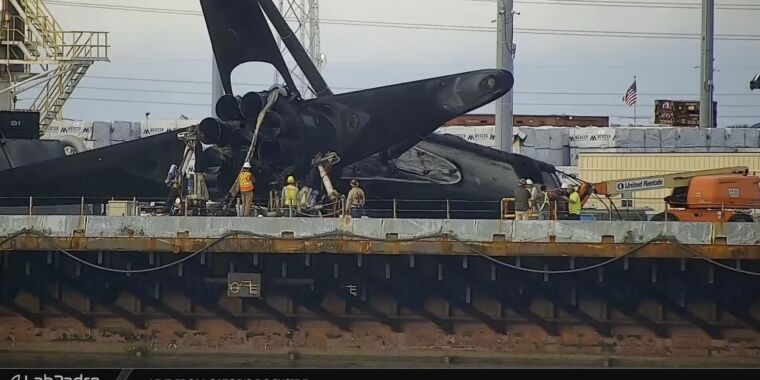
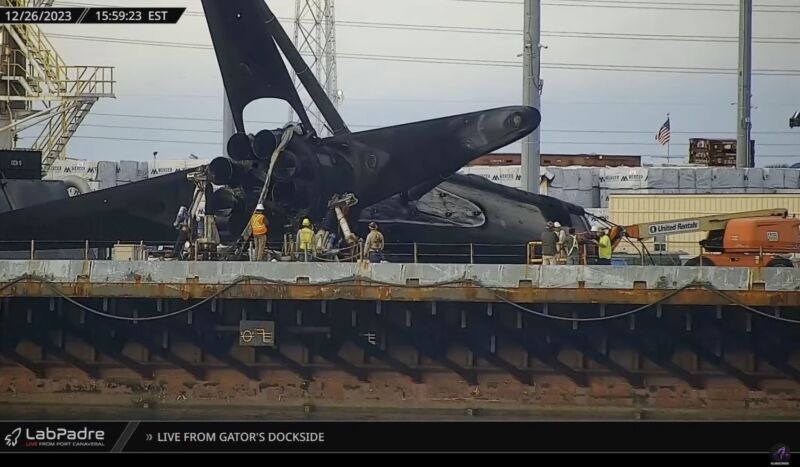
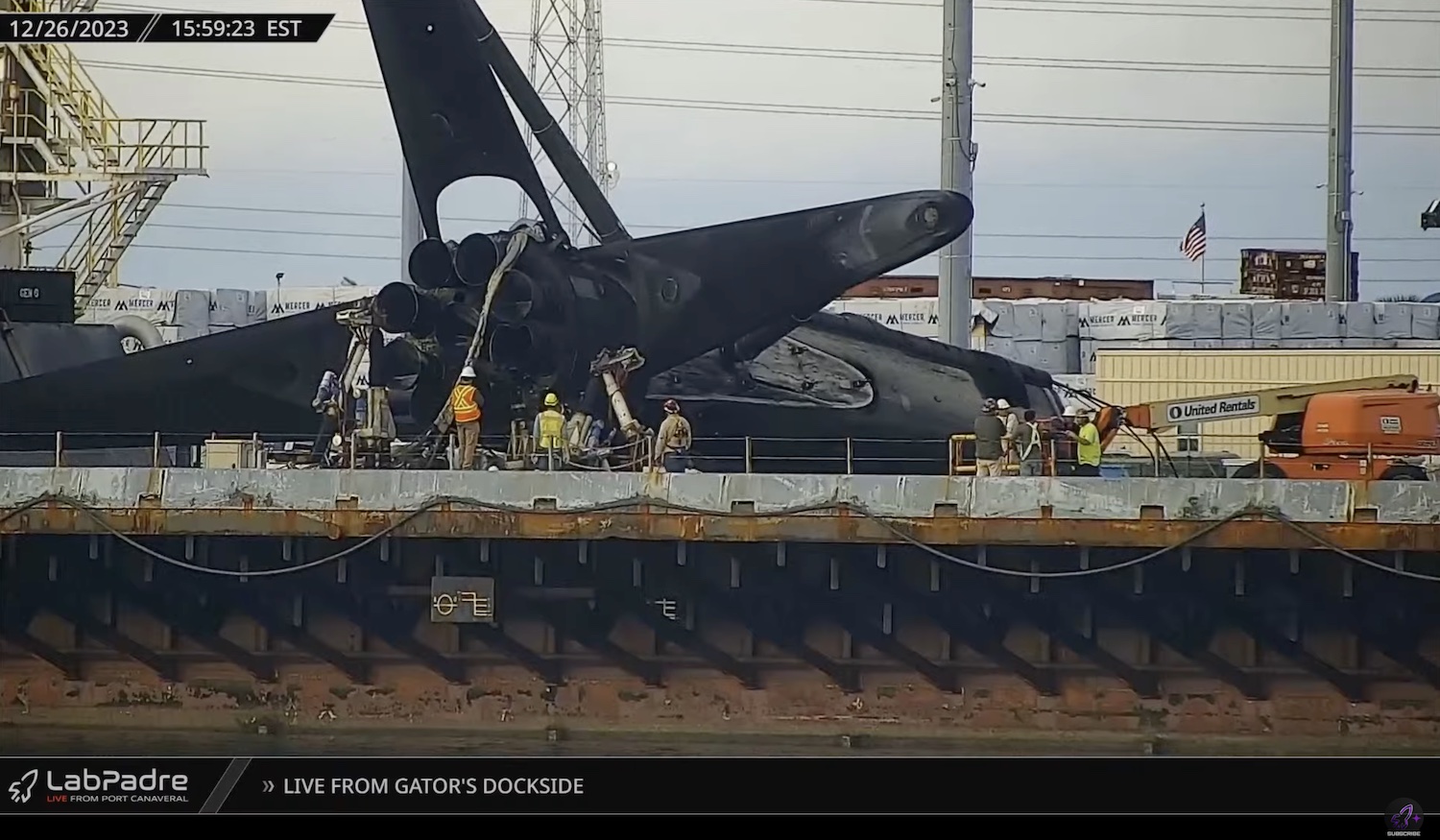
Enlarge/ One of the most historic rockets in SpaceX’s fleet toppled over Christmas Day on the return trip to Cape Canaveral, Florida, following its previous mission.
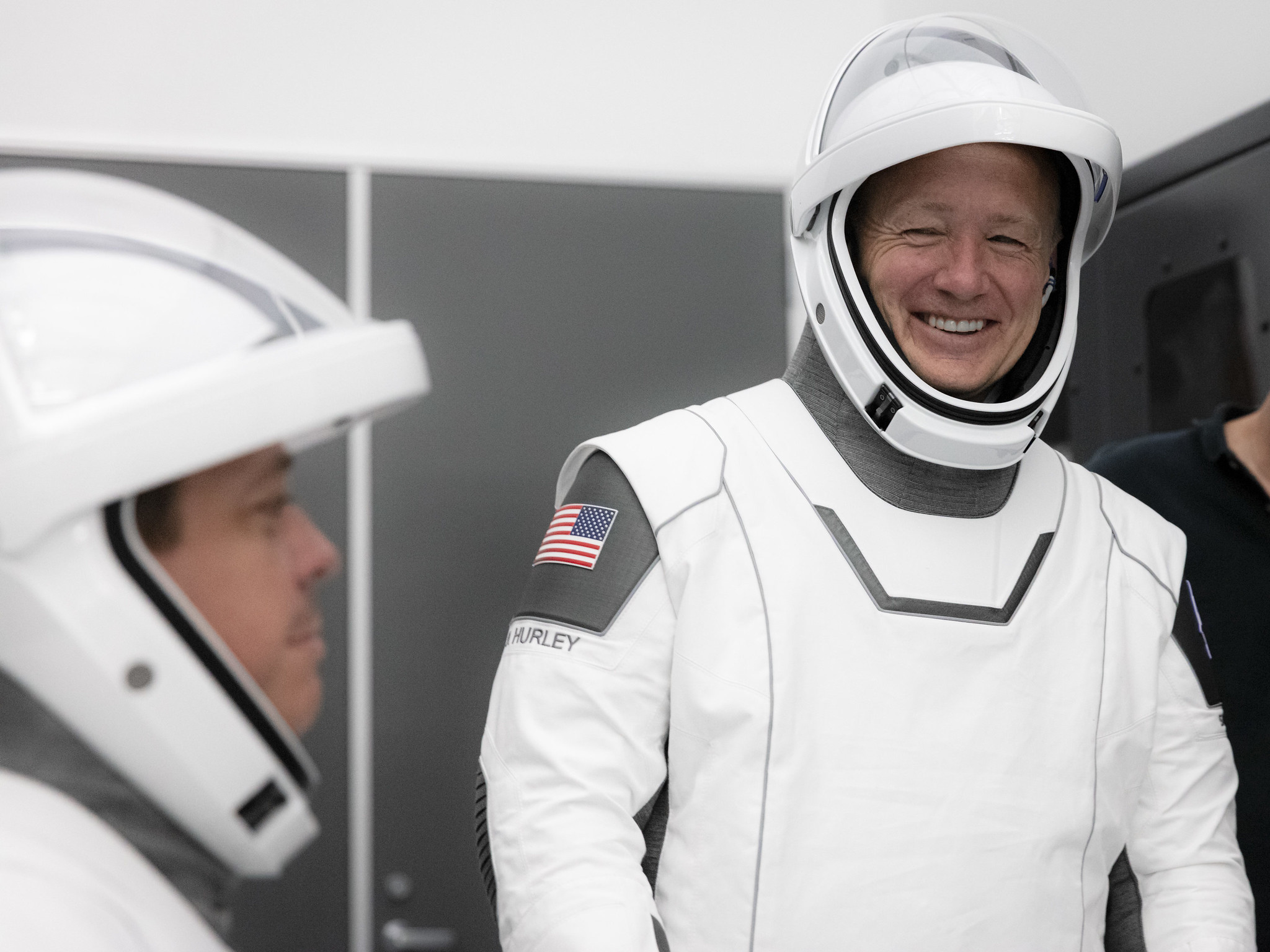
The Falcon 9 rocket that launched NASA astronauts Doug Hurley and Bob Behnken on SpaceX’s first crew mission in 2020 launched and landed for the 19th and final time just before Christmas, then tipped over on its recovery ship during the trip back to Cape Canaveral, Florida.
This particular booster, known by the tail number B1058, was special among SpaceX’s fleet of reusable rockets. It was the fleet leader, having tallied 19 missions over the course of more than three-and-a-half years. More importantly, it was the rocket that thundered into space on May 30, 2020, on a flight that made history on several counts.
It was the first time a commercial rocket and spacecraft launched people into orbit, and ended a nine-year gap in America’s ability to send astronauts into orbit from US soil, following the retirement of the space shuttle. This mission, known as Demo-2 and launched by SpaceX under contract with NASA, ended US reliance on Russian rockets to send crews to the International Space Station.
SpaceX recovered the booster on one of its offshore landing platforms after the historic launch in May 2020, while the Falcon 9’s upper stage fired into orbit with the Crew Dragon spacecraft containing Hurley and Behnken. Then, the rocket went into SpaceX’s fleet rotation to launch 18 more times, primarily on missions to deploy Starlink Internet satellites.
Hurley, who commanded the Crew Dragon spacecraft on the Demo-2 mission, kept up with the booster’s exploits well after his return to Earth. He regularly exchanged text messages with Behnken and Kiko Dontchev, SpaceX’s vice president of launch, as the rocket just kept flying.
“For Bob and I, that particular booster was always pretty special for a lot of reasons,” said Hurley, a veteran Marine Corps fighter pilot who retired from NASA’s astronaut corps in 2021. He now works at Northrop Grumman.
An inauspicious ending
Hurley told Ars he would like to see the booster’s remains displayed in a museum alongside the Crew Dragon spacecraft (named Endeavour) he and Behnken flew in 2020. “In a perfect world, I’d love to see Endeavour and at least now part of that booster in the Smithsonian or in a museum somewhere,” he said.
“It’s kind of a bummer,” Hurley told Ars. But he understands SpaceX got a lot of use out of this rocket. SpaceX also has a lot of love for Hurley and Behnken. The company named two of its recovery ships for payload fairings “Bob” and “Doug” after the astronaut duo.
“SpaceX has got a business to run,” he said. “I think, at this point, certainly Endeavour is going to fly more, but this booster isn’t, so hopefully they can find a spot to display it somewhere. Even part of it would look kind of cool somewhere. They could figure something out … People, I think, can get a lot of inspiration from seeing stuff that’s actually flown in space, and being able to get right up close to it, I think, is a big deal to a lot of people.”
Enlarge/ Doug Hurley, right, commanded the Crew Dragon spacecraft on the Demo-2 mission in 2020.
NASA
The 19th launch of this booster on December 23 was just as successful as the previous 18, with a smooth climb into space before shutting down its nine kerosene-fueled Merlin engines. The booster coasted to the highest point in its trajectory—72 miles (116 kilometers)—before Earth’s gravity pulled it back into the atmosphere.
Two engine burns slowed the rocket as it descended toward SpaceX’s drone ship positioned near the Bahamas, and then four carbon-fiber legs deployed moments before an on-target touchdown. Then, as usual, the recovery vessel started its slow journey back to Florida with the 15-story-tall booster standing vertically.
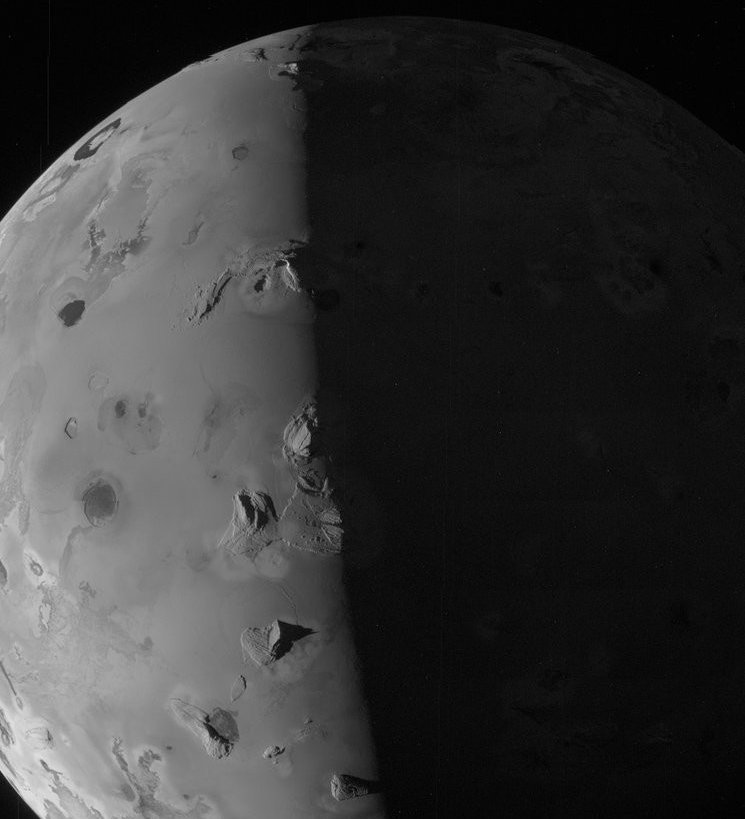
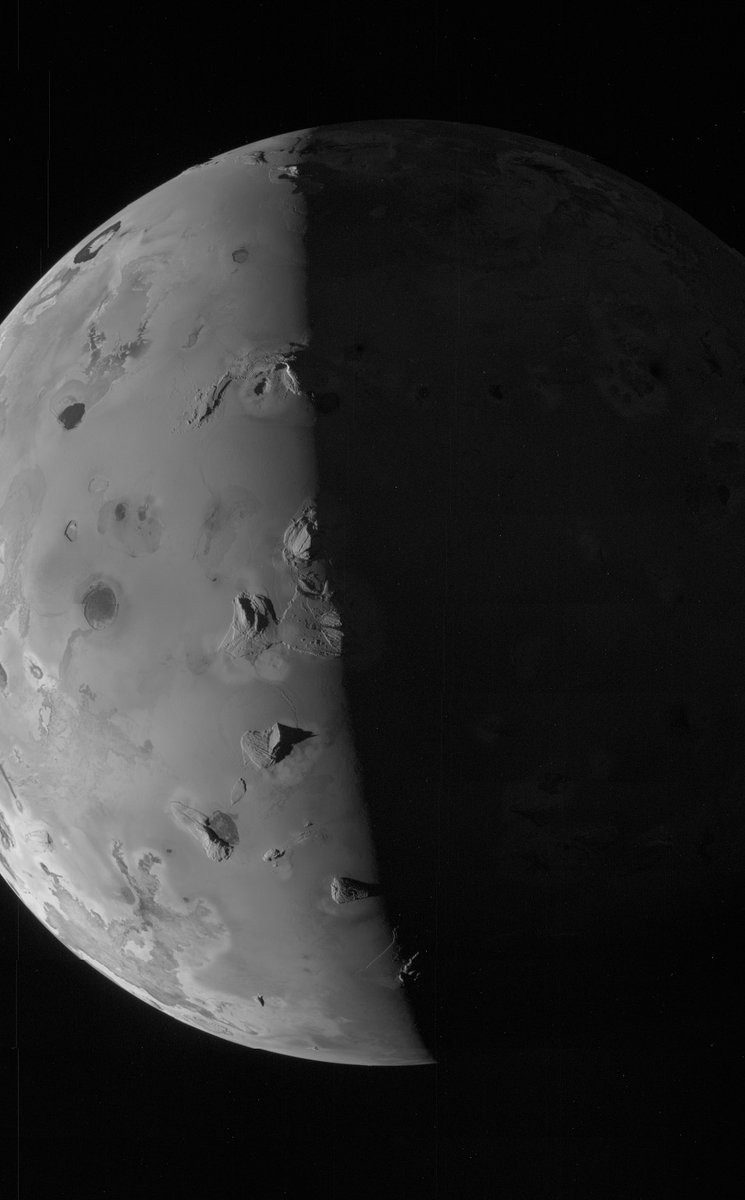
On Saturday NASA’s Juno spacecraft, which has been orbiting Jupiter for the better part of a decade, made its closest flyby of the innermost moon in the Jovian system.
The spacecraft came to within 930 miles (1,500 km) of the surface of Io, a dense moon that is the fourth largest in the Solar System. Unlike a lot of moons around Jupiter and Saturn, which have surface ice or subsurface water, Io is a very dry world. It is also extremely geologically active. Io has more than 400 active volcanoes and is therefore an object of great interest to astronomers and planetary scientists.
Images from the December 30 flyby were posted by NASA over the New Year holiday weekend, and they provide some of the clearest views yet of this hell-hole world. The new data will help planetary scientists determine how often these volcanoes erupt and how this activity is connected to Jupiter’s magnetosphere—Io is bathed in intense radiation from the gas-giant planet.
To date Juno has mostly observed Io from afar as the spacecraft has made 56 flybys of Jupiter, studying the complex gas giant in far greater detail than ever before. Since arriving in the planetary system in July 2016, Juno has previously gotten to within several thousand miles of the moon. Juno will make another close flyby of Io on February 3, 2024, and this will allow scientists to compare changes on the moon’s surface over a short period of time.
Since its launch on an Atlas V rocket, Juno has performed very well while operating in the Jovian system, surviving extended operations in the harsh radiation of the planet. This is a significant challenge for any spacecraft bound for Jupiter, which must carry radiation-hardened instruments, including its cameras.
“The cumulative effect of all that radiation has begun to show on JunoCam over the last few orbits,” said Ed Hirst, project manager of Juno at NASA’s Jet Propulsion Laboratory in Southern California. “Pictures from the last flyby show a reduction in the imager’s dynamic range and the appearance of ‘striping’ noise. Our engineering team has been working on solutions to alleviate the radiation damage and to keep the imager going.”
Eventually, the radiation will win, so NASA has a disposal planned for Juno before it ceases being operational. Originally, the space agency planned to end the vehicle’s life in 2018, but because Juno has been such a survivor as it has probed the largest planet in the Solar System, the spacecraft now is planned to operate until September 2025.
At that point, however, it will descend into Jupiter’s atmosphere to burn up, in order to not contaminate any of the planet’s moons with any stray Earth microbes on board, unlikely though that may be.
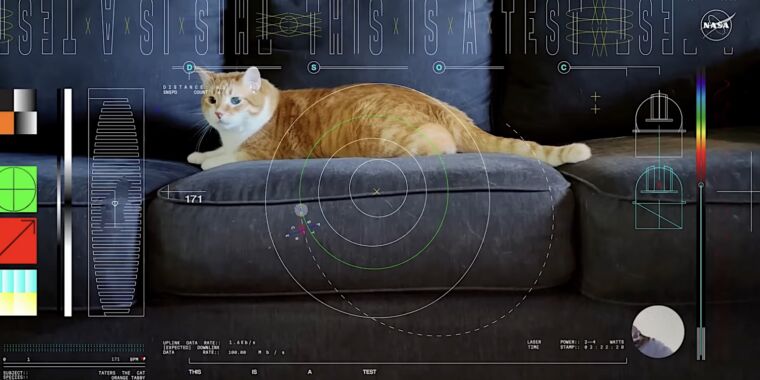
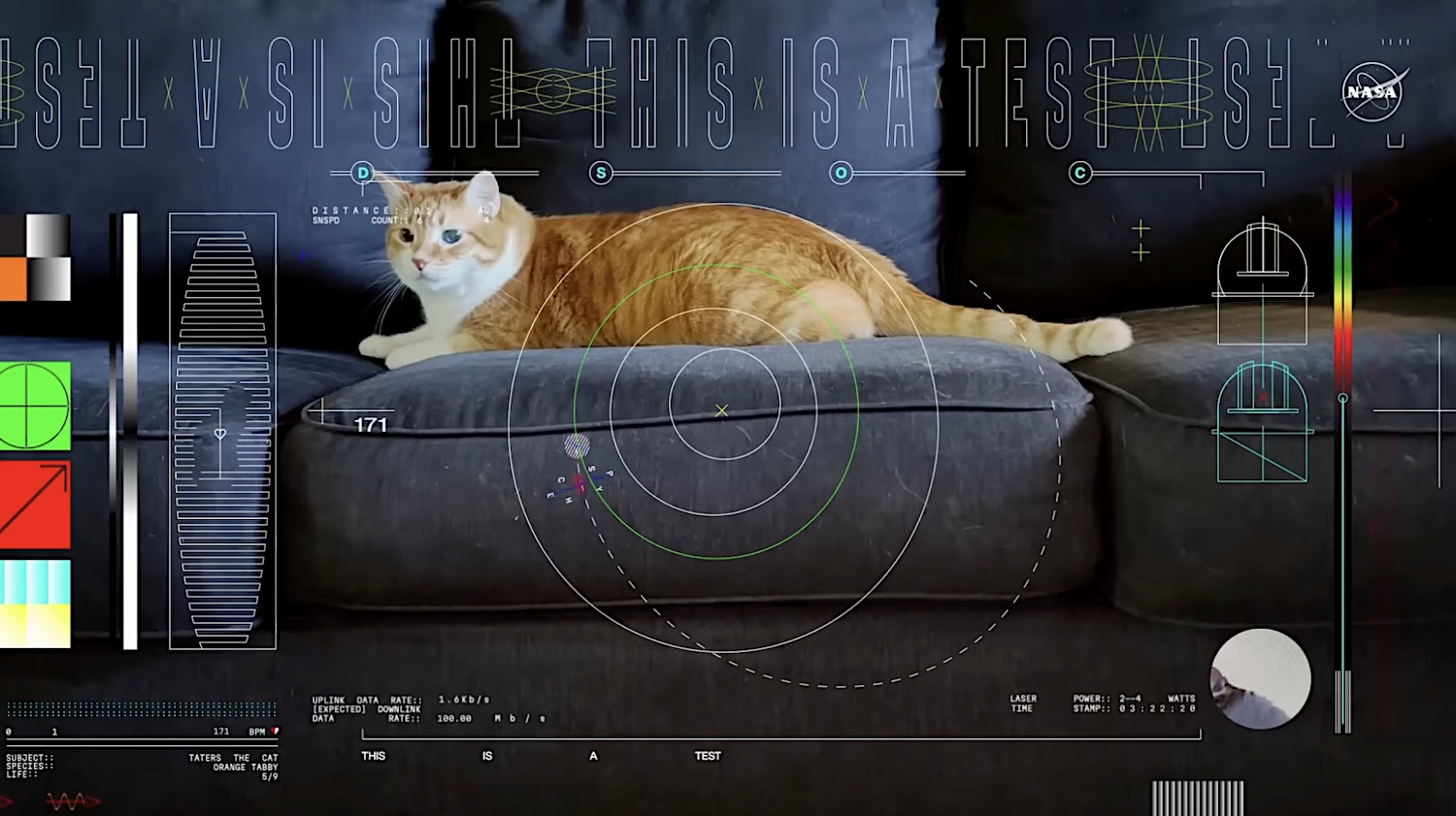
Enlarge/ Taters, the orange tabby cat of a Jet Propulsion Laboratory employee, stars in a video beamed from deep space by NASA’s Psyche spacecraft. The graphics illustrate several features from the tech demo, such as Psyche’s orbital path, Palomar’s telescope dome, and technical information about the laser and its data bit rate. Tater’s heart rate, color, and breed are also on display.
It’s been quite a year for laser communications in space. In October and November, NASA launched two pioneering demonstrations to test high-bandwidth optical communication links, and these tech demos are now showing some initial results.
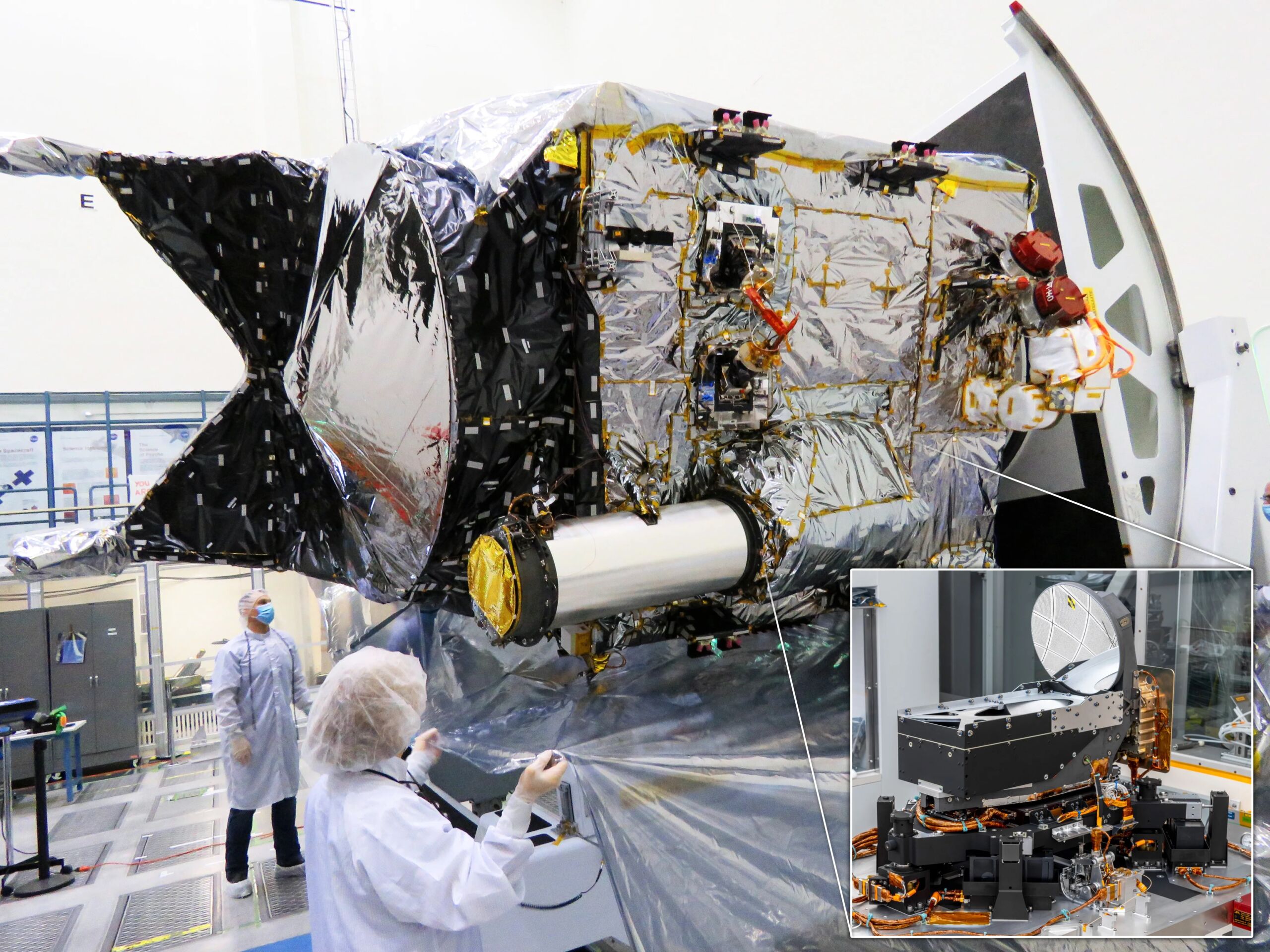
On December 11, a laser communications terminal aboard NASA’s Psyche spacecraft on the way to an asteroid linked up with a receiver in Southern California. The near-infrared laser beam contained an encoded message in the form of a 15-second ultra-high-definition video showing a cat bouncing around a sofa, chasing the light of a store-bought laser toy.
Laser communications offer the benefit of transmitting data at a higher rate than achievable with conventional radio links. In fact, the Deep Space Optical Communications (DSOC) experiment on the Psyche spacecraft is testing technologies capable of sending data at rates 10 to 100 times greater than possible on prior missions.
“We’re looking to increase the amount of data we can get down to Earth, and that has a lot of advantages to us,” said Jeff Volosin, acting deputy associate administrator for NASA space communications and navigation program, before the launch of Psyche earlier this year.
Now, DSOC has set a record for the farthest distance a high-definition video has streamed from space. At the time, Psyche was traveling 19 million miles (31 kilometers) from Earth, about 80 times the distance between Earth and the Moon. Traveling at the speed of light, the video signal took 101 seconds to reach Earth, sent at the system’s maximum bit rate of 267 megabits per second, NASA said.
A playful experiment
After reaching the receiver at Palomar Observatory in San Diego County, each video frame was transmitted “live” to NASA’s Jet Propulsion Laboratory in Pasadena, California, where it was played in real time, according to NASA.
“One of the goals is to demonstrate the ability to transmit broadband video across millions of miles. Nothing on Psyche generates video data, so we usually send packets of randomly generated test data,” said Bill Klipstein, the tech demo’s project manager at JPL, in a statement. “But to make this significant event more memorable, we decided to work with designers at JPL to create a fun video, which captures the essence of the demo as part of the Psyche mission.”
The video of Taters, the orange tabby cat of a JPL employee, was recorded before the launch of Psyche and stored on the spacecraft for this demonstration. The robotic probe launched on October 13 aboard a SpaceX Falcon Heavy rocket, with the primary goal of flying to the asteroid Psyche, a metal-rich world in the asteroid belt between the orbits of Mars and Jupiter.
It will take six years for the Psyche probe to reach its destination, and NASA tacked on a laser communications experiment to help keep the spacecraft busy during the cruise. Since the launch in October, ground teams at JPL switched on the Deep Space Optical Communications (DSOC) experiment and ran it through some early tests.
One of the most significant technical challenges involved in the DSOC experiment was aligning the 8.6-inch (22-centimeter) optical telescope aboard Psyche with a transmitter and receiver fitted to ground-based telescopes in California and vice versa. Because Psyche is speeding through deep space, this problem is akin to trying to hit a dime from a mile away while the dime is moving, according to Abi Biswas, DSOC’s project technologist at JPL.
Once you achieve that feat, the signal that is received is still very weak and therefore requires very sensitive detectors and processing electronics which can take that signal and extract information that’s encoded in it,” Biswas said.
The telescope aboard Psyche is mounted on an isolation-and-pointing assembly to stabilize the optics and isolate them from spacecraft vibrations, according to NASA. This is necessary to eliminate jitters that could prevent a stable laser lock between Earth and the Psyche spacecraft.
“What optical or laser communications allows you is to achieve very high data rates, but on the downside, it’s a very narrow laser beam that requires very accurate pointing control,” Biswas told reporters before the launch. “For example, the platform disturbance from a typical spacecraft would throw off the pointing, so you need to actively isolate from it or control against it.
“For near-Earth missions, you can just control against it because you have enough control bandwidth,” he said. “From deep space, where the signals received are very weak, you don’t have that much control bandwidth, so you have to isolate from the disturbance.”
Enlarge/ The Deep Space Optical Communications (DSOC) experiment is mounted on NASA’s Psyche spacecraft on the way to an asteroid. The inset image shows the mirror of the instrument’s telescope for receiving and transmitting laser signals.
There’s another drawback of direct-to-Earth laser communications from space. Cloud cover over transmitting and receiving telescopes on Earth could block signals, so an operational optical communications network will require several ground nodes at different locations worldwide, ideally positioned in areas known for clear skies.
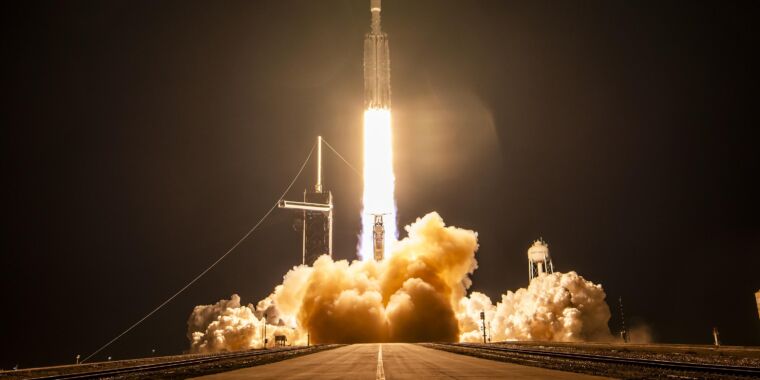
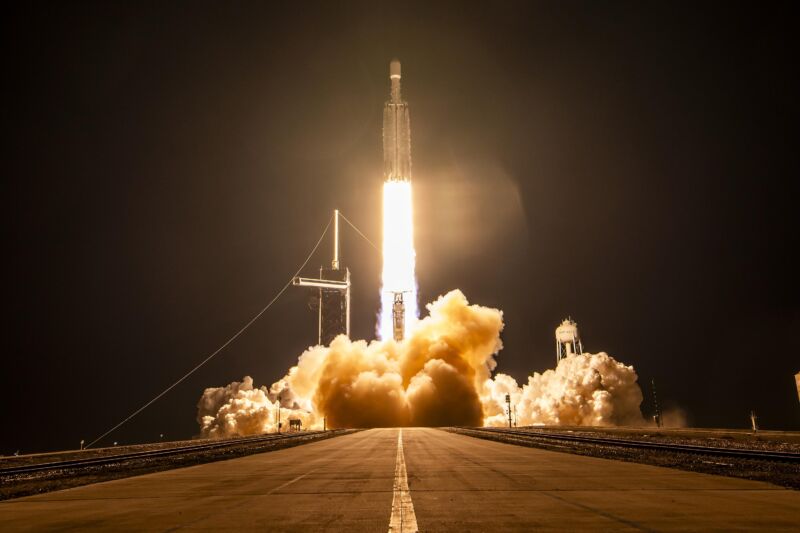
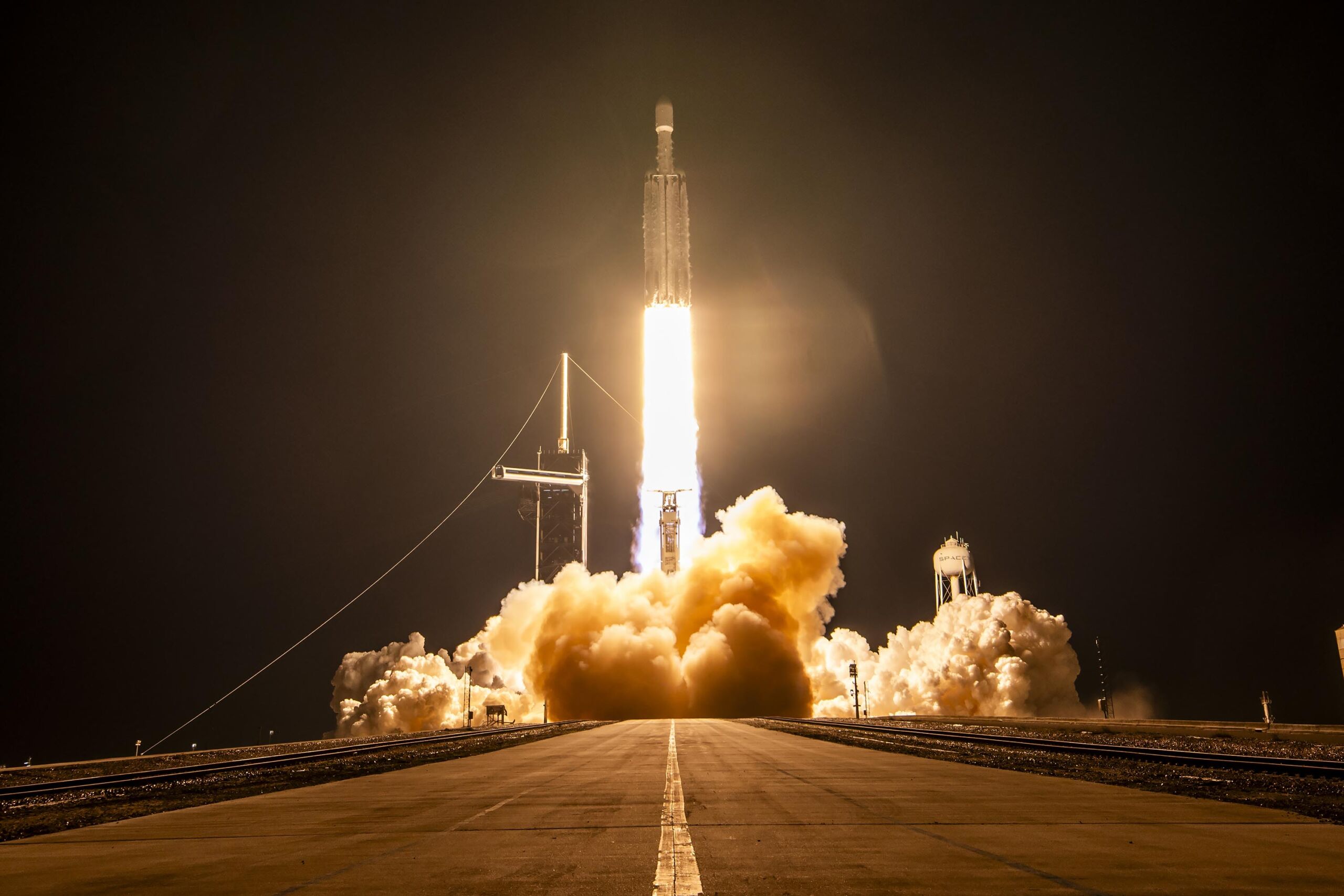
Enlarge/ SpaceX’s Falcon Heavy rocket lifted off Thursday night from NASA’s Kennedy Space Center in Florida.
It seems like SpaceX did everything this year but launch 100 times.
On Thursday night, the launch company sent two more rockets into orbit from Florida. One was a Falcon Heavy, the world’s most powerful rocket in commercial service, carrying the US military’s X-37B spaceplane from a launch pad at NASA’s Kennedy Space Center at 8: 07 pm EST (01: 07 UTC). Less than three hours later, at 11: 01 pm EST (04: 01 UTC), SpaceX’s workhorse Falcon 9 launcher took off a few miles to the south with a payload of 23 Starlink Internet satellites.
The Falcon Heavy’s two side boosters and the Falcon 9’s first stage landed back on Earth for reuse.
These were SpaceX’s final launches of 2023. SpaceX ends the year with 98 flights, including 91 Falcon 9s, five Falcon Heavy rockets, and two test launches of the giant new Super Heavy-Starship rocket. These flights were spread across four launch pads in Florida, California, and Texas.
Elon Musk, SpaceX’s founder and CEO, set a goal of 100 launches this year, up from the company’s previous record of 61 in 2022. For a while, it looked like SpaceX was on track to accomplish the feat, but a spate of bad weather and technical problems with the final Falcon Heavy launch of the year kept the company short of 100 flights.
King of ‘upmass’
“Congrats to the entire Falcon team at SpaceX on a record breaking 96 launches in 2023!” wrote Jon Edwards, vice president of Falcon launch vehicles at SpaceX, on the social media platform X. “I remember when Elon Musk first threw out a goal of 100 launches as a thought experiment, intended to unlock our thinking as to how we might accelerate Falcon across all levels of production and launch.
“Only a few years later and here we are,” Edwards wrote. “I’m so incredibly proud to work with the best team on Earth, and so excited to see what we achieve next year.”
It’s important to step back and put these numbers in context. No other family of orbit-class rockets has ever flown more than 63 times in a year. SpaceX’s Falcon rockets have now exceeded this number by roughly 50 percent. SpaceX’s competitors in the United States, such as United Launch Alliance and Rocket Lab, managed far fewer flights in 2023. ULA had three missions, and Rocket Lab launched its small Electron booster 10 times.
Nearly two-thirds of SpaceX’s missions this year were dedicated to delivering satellites to orbit for SpaceX’s Starlink broadband network, a constellation that now numbers more than 5,000 spacecraft.
SpaceX also launched five missions with the Falcon Heavy rocket, created by aggregating three Falcon 9 rocket boosters together. Highlights from SpaceX’s 2023 Falcon launch schedule included three crew missions to the International Space Station, and the launch of NASA’s Psyche mission to explore a metallic asteroid.
In all, SpaceX’s Falcon rockets hauled approximately 1,200 metric tons, or more than 2.6 million pounds, of payload mass into orbit this year. This “upmass” is equivalent to nearly three International Space Stations. Most of this was made up of mass-produced Starlink satellites.
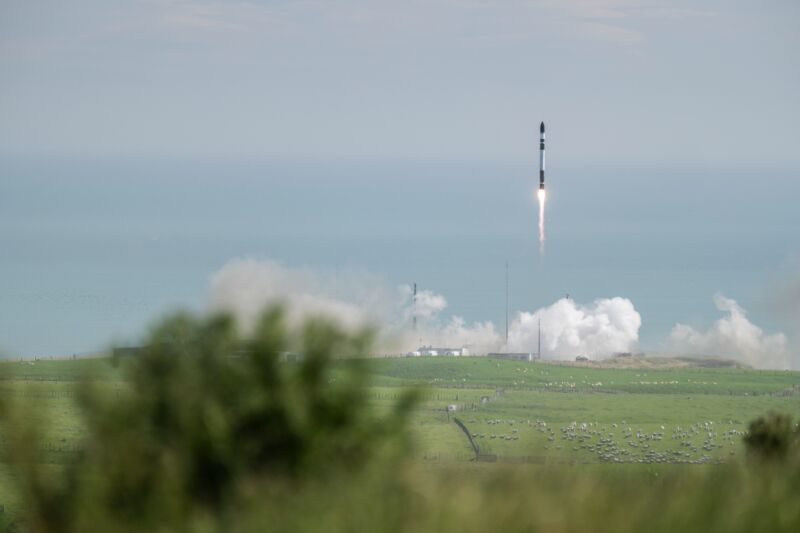
Enlarge/ Electron returned to flight successfully this week.
Rocket Lab
Welcome to Edition 6.24 of the Rocket Report! This will be the final edition of this newsletter until January 4—hey, space enthusiasts need a holiday break too! And given all that’s expected to happen in 2024 in the world of launch, a bit of a recharge seems like a smart move. Stephen and I wish everyone happy holidays and a healthy and prosperous new year. Until then!
As always, we welcome reader submissions, and if you don’t want to miss an issue, please subscribe using the box below (the form will not appear on AMP-enabled versions of the site). Each report will include information on small-, medium-, and heavy-lift rockets as well as a quick look ahead at the next three launches on the calendar.
Ranking the top 10 US launch companies of 2023. Oops, we did it again and published a list of the most accomplished US commercial launch companies. It’s no surprise that SpaceX is atop the list, but what comes after is more intriguing, including a new company in second position. I hope the list sparks debate, discussion, and appreciation for the challenge of operating a successful rocket company.
This is a really hard business … The article closes with this message, which I think is a fitting way to end the calendar year and kick off the holiday season: “As ever, I remain in awe of all the talented engineers and business people out there trying to make a go of it in the launch industry. This is a difficult and demanding business, replete with problems. I salute your hard work and hope for your success.”
New Shepard finally flies again. With redesigned engine components, Blue Origin’s New Shepard rocket took off from West Texas and flew to the edge of space on Tuesday with a package of scientific research and technology demonstration experiments, Ars reports. This was the first flight of Blue Origin’s New Shepard rocket since September 12, 2022, when an engine failure destroyed the booster and triggered an in-flight abort for the vehicle’s pressurized capsule during an uncrewed flight.
Does “soon'” really mean soon? … It took 15 months for Blue Origin to return to flight with New Shepard, but Tuesday’s successful launch puts the company on a path to resuming human missions. So when will Blue Origin start flying people again? “Following a thorough review of today’s mission, we look forward to flying our next crewed flight soon,” said Erika Wagner, a longtime Blue Origin manager who co-hosted the company’s webcast of Tuesday’s flight. (submitted by EllPeaTea and Ken the Bin)
The easiest way to keep up with Eric Berger’s space reporting is to sign up for his newsletter, we’ll collect his stories in your inbox.
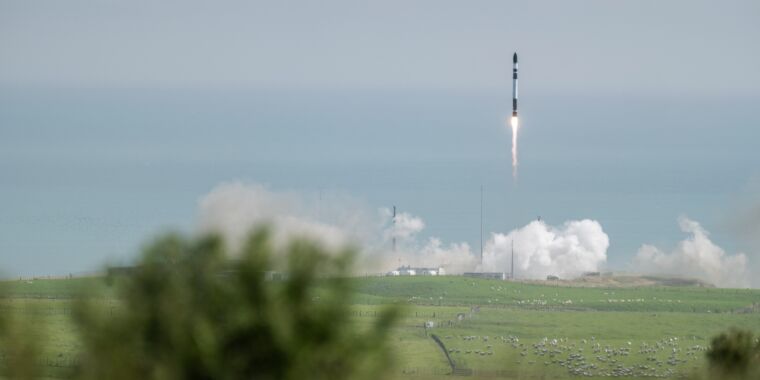
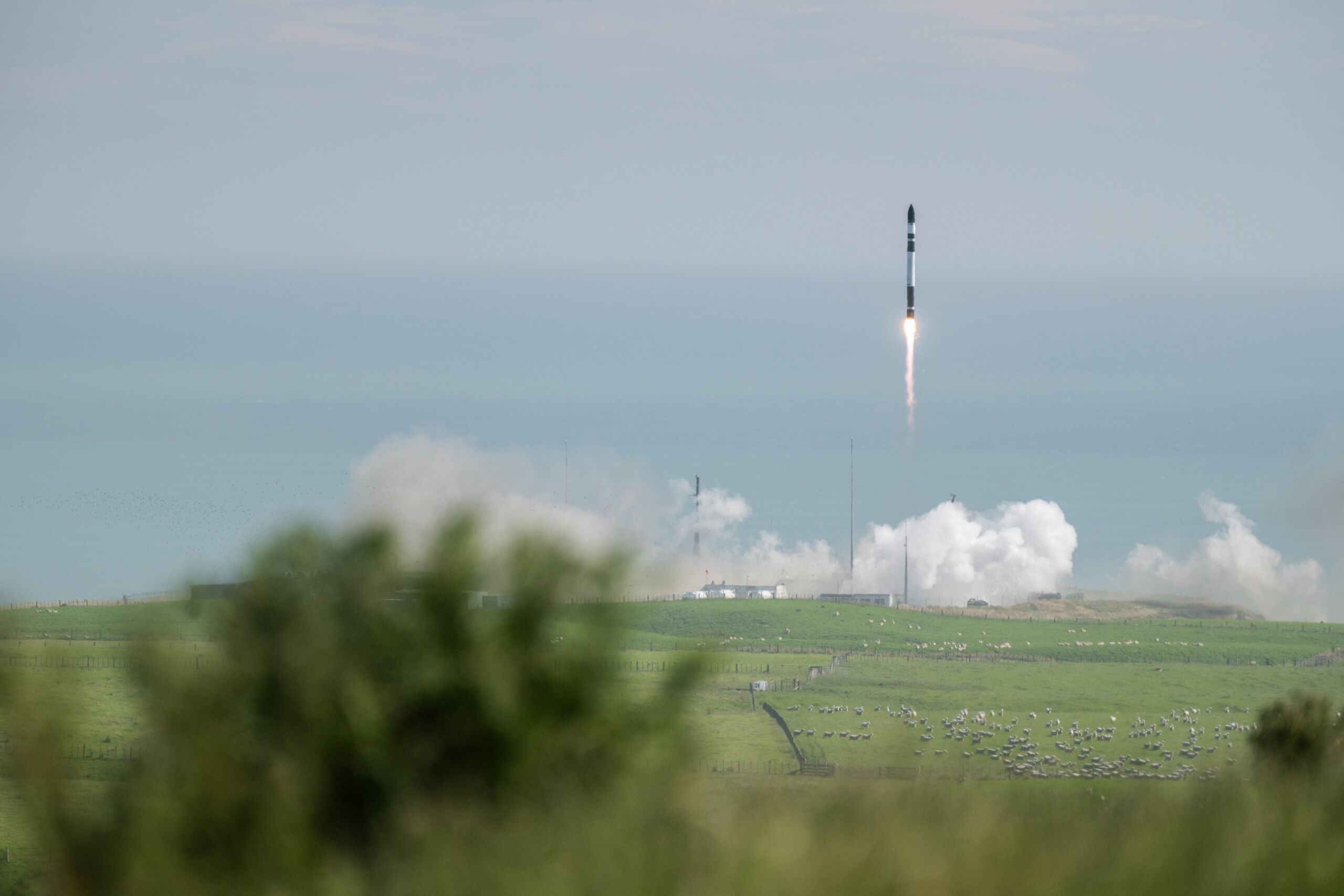
Electron successfully returns to flight. Rocket Lab successfully launched a Japanese radar imaging satellite on the first flight of its Electron rocket since a failure nearly three months ago, Space News reports. The Electron lifted off from the company’s Launch Complex 1 in New Zealand at 11: 05 pm ET on December 14. The vehicle deployed its payload, the QPS-SAR-5 or Tsukuyomi-1 satellite, for Japanese company iQPS, afterward.
A record number of launches this year … The launch was the first for Electron since a September 19 failure during a launch of another radar-imaging satellite for Capella Space. On that mission, the first stage performed as expected, but the second stage’s engine appeared to shut down immediately after ignition, preventing it from reaching orbit. The launch was the 10th flight of the Electron this year, including one launch of a suborbital version of Electron called HASTE. (submitted by Ken the Bin)
Shetland approved for UK launches. SaxaVord Spaceport on the small island of Unst has been given approval from the Civil Aviation Authority to begin orbital launches in 2024, the BBC reports. It will be the first fully licensed spaceport in Western Europe able to launch vertically into orbit. It permits up to 30 launches a year that will be used to take satellites and other payloads into space.
Launches this summer? … The site, which is the first spaceport in Scotland, has several launch operators around the world currently developing rockets. It is anticipated that German rocket firm HyImpulse will attempt sub-orbital launches as early as this August. Full orbital launches are expected to take place at SaxaVord from 2025. Cornwall Spaceport was the UK’s first licensed spaceport; however, its rockets are launched horizontally and carried by an aircraft. (submitted by gizmo23 and Ken the Bin)
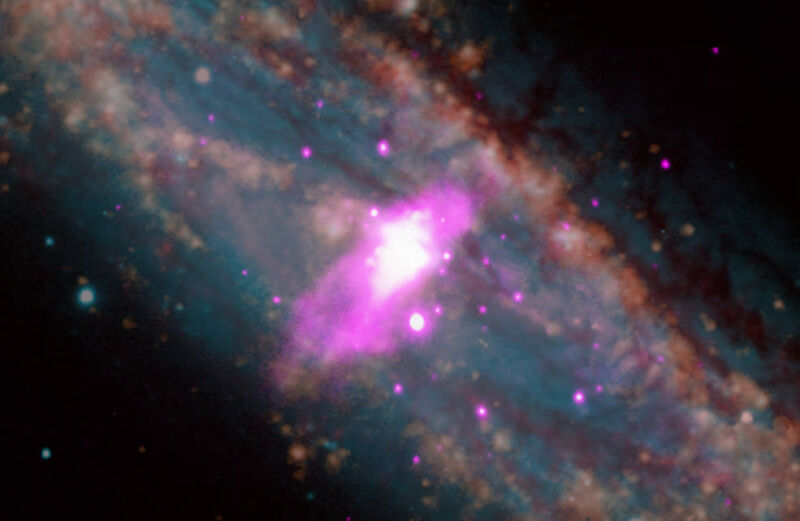
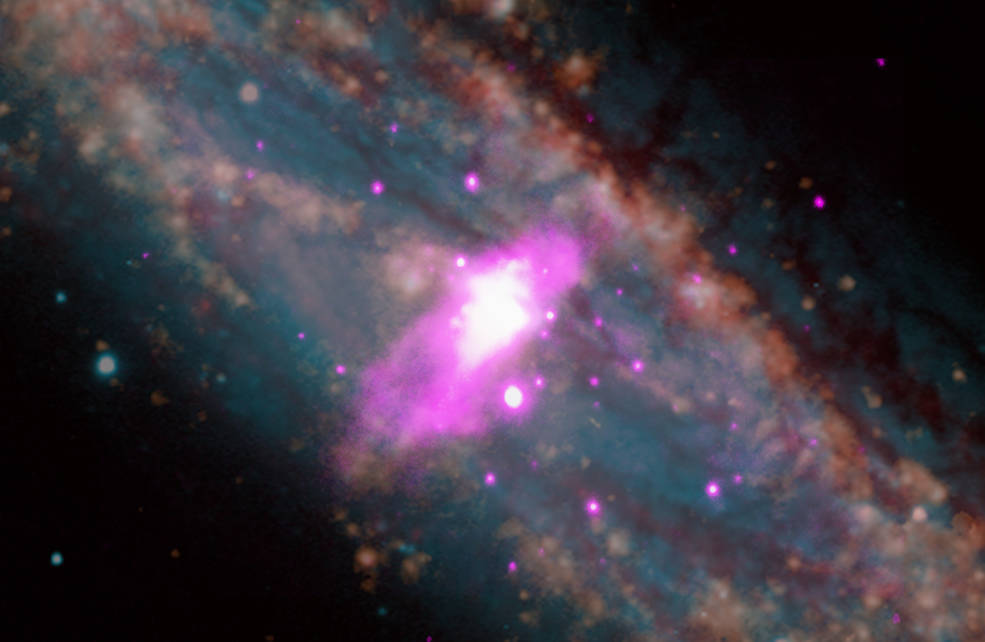
Enlarge/ X-ray emissions (purple) superimposed on a visible light image of a galaxy shows the galaxy winds being launched. CREDIT: X-ray: NASA/CXC/Ohio StateH-alpha and Optical: NSF/NOIRLab/AURA/KPNO/CTIO; Infrared: NASA/JPL-Caltech/Spitzer/ Optical: ESO/La Silla Observatory.
One of the ways massive stars, those at least 10-times bigger than the Sun, reach their end is in a supernova—an enormous explosion caused by the star’s core running out of fuel.
One consequence of a supernova is the production of galactic winds, which play a key role in regulating star formation. Although galactic winds have already been observed in several nearby galaxies, a team of scientists has now made the first direct observations of this phenomenon in a large population of galaxies in the distant Universe, at a time when galaxies are in their early stages of formation.
Feedback
According to the study’s lead author, Yucheng Guo, of the Centre de Recherche Astrophysique de Lyon, galactic winds are an important part of the galaxy evolution models.
“It was assumed there should be galactic winds that can regulate galaxies’ growth. However, it was very difficult to directly observe these winds. With our study, we show that at the early stage of the Universe, every normal galaxy had such winds,” Guo said.
According to Guo, galactic winds form a key part of the so-called feedback process that is important in our understanding of galaxy evolution. “Galactic winds originate as a result of star formation activity. These winds inject a lot of energy and momentum into the gas, resulting in it [being] expelled from the galaxy. If there is not enough gas in the galaxy, the star formation stops. This is called the feedback process,” he said.
According to Guo, galactic winds also enable exchange of matter between galaxies and their surroundings. “Each galaxy is surrounded by a gas halo. Galaxies can breathe out as well as breathe in gas,” Guo said.
Hard to see
He said that traditionally it has been very difficult to observe galactic winds, because the gas halos are almost transparent.
Guo and his team overcame this hurdle by using the Multi-Unit Spectroscopic Explorer (MUSE) instrument on the Very Large Telescope. “The instrument is able to observe the galaxies at redshift z ≈ 1, which corresponds to 7 billion years of the cosmic evolution.” Guo said at that wavelength, the MUSE instrument is able to detect and directly observe the emission from magnesium atoms in the galactic winds.
He said the other important feature of the research is that they managed to observe the galactic winds in more than 100 galaxies. “We also managed to detect the average shape of these winds, which is like an ice cream cone,” he said.
Guo said the direct observation of the galactic winds outside the local Universe was the first step of their research. “We still don’t know about their physical properties such as size, power, and also how they change with time and in different kinds of galaxies.”
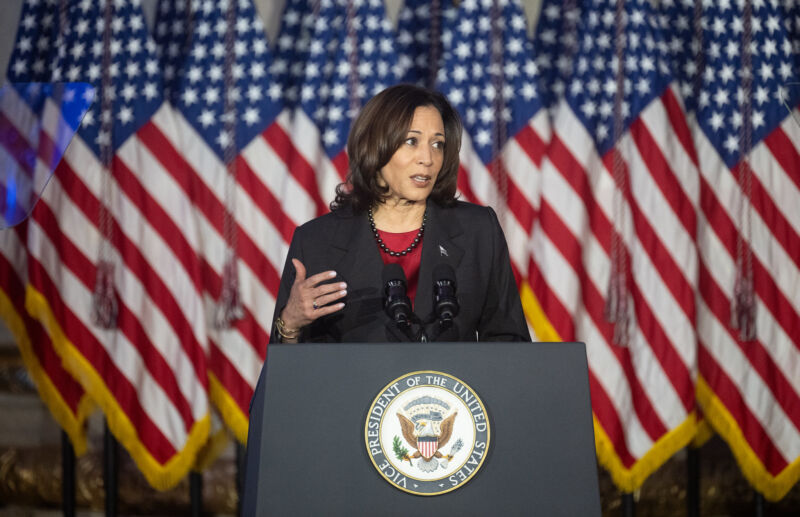
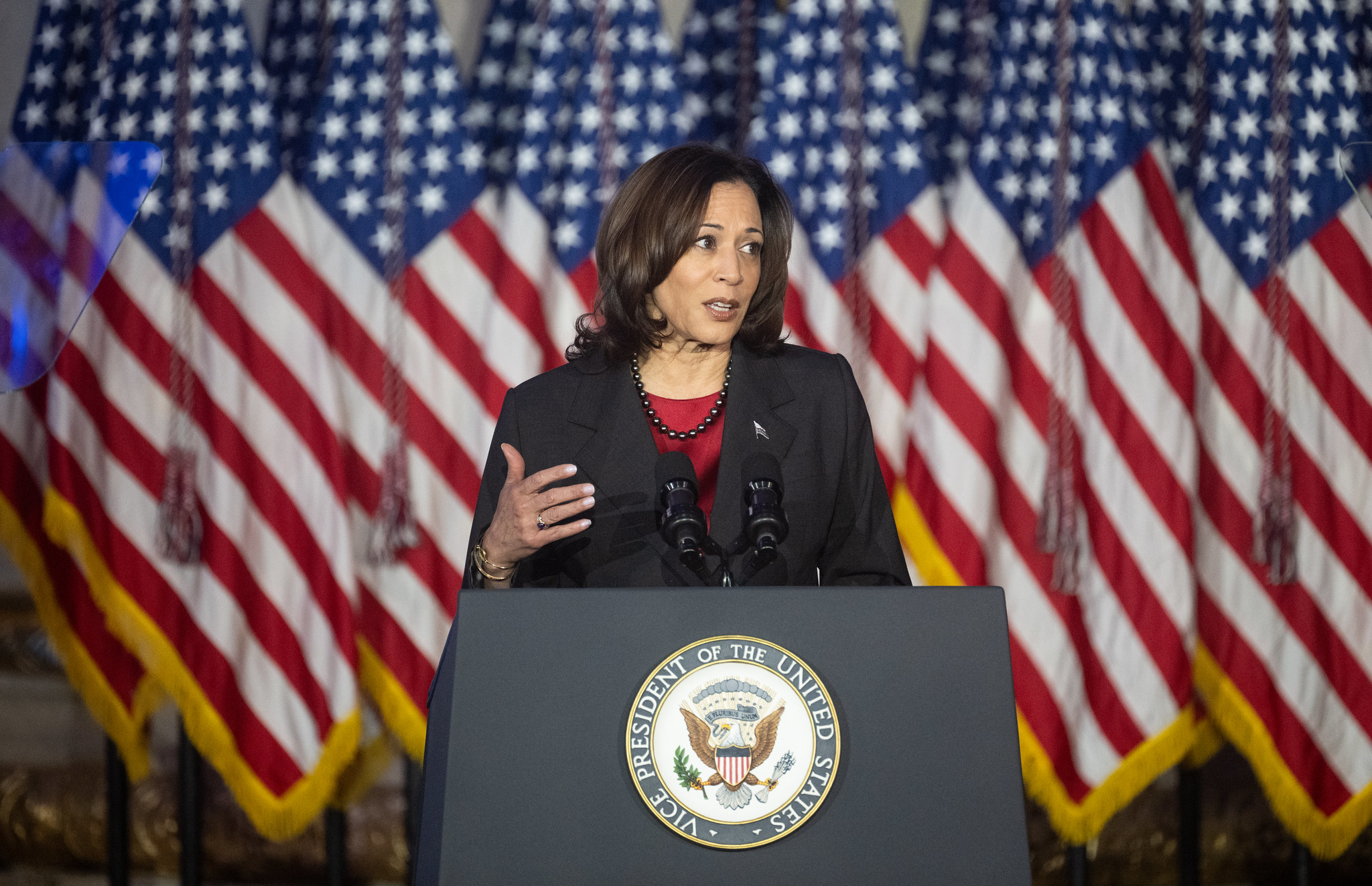
Enlarge/ Vice President Kamala Harris speaks at a National Space Council meeting Wednesday in Washington.
NASA/Joel Kowsky
One of the core tenets of NASA’s Artemis program to return astronauts to the Moon is its inclusion of international partners. This intertwines the program, like the International Space Station, with considerations of geopolitics and international relations, alongside key themes like US national prestige, exploration, and scientific discovery.
Earlier this year, NASA named a Canadian astronaut, Jeremy Hansen, to the Artemis II crew training to fly around the far side of the Moon, a mission that will likely launch sometime in 2025. This flight won’t land on the Moon, but NASA plans a series of lunar landing missions beginning with Artemis III later this decade.
On Wednesday, Vice President Kamala Harris announced an international astronaut will land on the Moon during one of NASA’s Artemis missions.
“Today, in recognition of the essential role that our allies and partners play in the Artemis program, I am proud to announce that alongside American astronauts, we intend to land an international astronaut on the surface of the Moon by the end of the decade,” Harris said at a meeting of the National Space Council.
Although the National Space Council is useful in aggregating disparate interests across the US government to help form more cohesive space policies, public meetings like the one Wednesday can seem perfunctory. Harris departed the stage soon after her speech, and other government officials read from prepared remarks during the rest of the event.
Nevertheless, Harris’ announcement highlighted the role the space program plays in elevating the soft power of the United States. It was widely assumed an international astronaut would eventually land on the Moon with NASA. Harris put a deadline on achieving this goal.
Among friends
NASA has long included astronauts from its international partners on human spaceflight missions, dating back to the ninth flight of the space shuttle in 1983, when West German astronaut Ulf Merbold joined five Americans on a flight to low-Earth orbit. This was seen by US government officials as a way to foster closer relations with like-minded countries. The inclusion of foreign astronauts on US missions also repays partner nations who make financial commitments to US-led space projects with a high-profile flight opportunity for one of their citizens.
In a similar way, the Soviet Union provided its Cold War allies with seats on Soyuz flights to low-Earth orbit. For several years, China has extended invitations for international astronauts to fly to its Tiangong space station. So far, only Chinese astronauts have visited Tiangong.
NASA managers dole out crew assignments on the International Space Station based on each partner’s financial contribution to the operating costs of the US-led segment of the complex. NASA is responsible for more than three-quarters of this part of the ISS budget, followed by Japan, the European Space Agency (ESA), and Canada. Russia is responsible for paying operating costs for its section of the ISS.
Among the international partners contributing to Artemis, it seems most likely a European astronaut would get the first slot for a landing with NASA.
ESA funded the development of the service modules used on NASA’s Orion spacecraft, which will ferry astronauts from Earth to the Moon and back. These modules provide power and propulsion for Orion. ESA is also developing refueling and communications infrastructure for the Gateway mini-space station to be constructed in orbit around the Moon.
A Japanese astronaut might also have a shot at getting a seat on an Artemis landing. Japan’s government has committed to providing the life-support system for the Gateway’s international habitation module, along with resupply services to deliver cargo to Gateway. Japan is also interested in building a pressurized rover for astronauts to drive across the lunar surface. In recognition of Japan’s contributions, NASA last year committed to flying a Japanese astronaut aboard Gateway.
Canada is building a robotic arm for Gateway, but a Canadian astronaut already has a seat on NASA’s first crewed Artemis mission, albeit without a trip to the lunar surface.
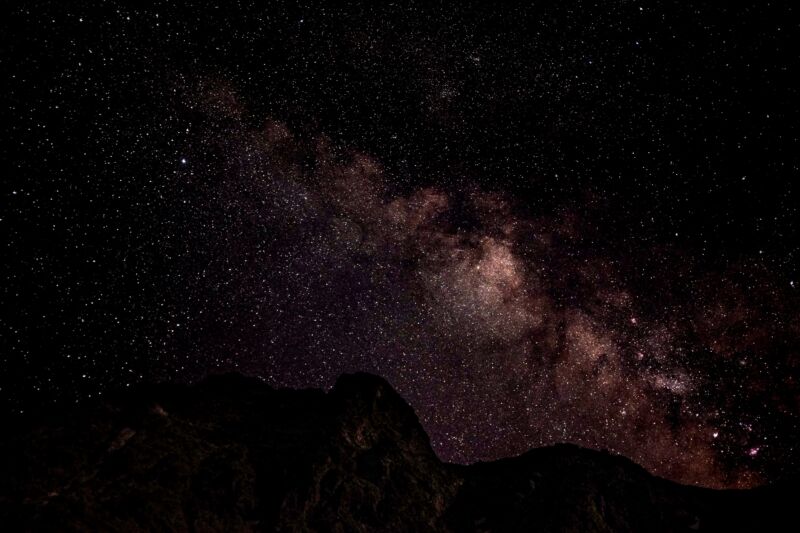
Enlarge/ The Milky Way Galaxy above the Pyrenees, right on the French and Spanish border.
bulbs_01_frizzle
Welcome to the Daily Telescope. There is a little too much darkness in this world and not enough light, a little too much pseudoscience and not enough science. We’ll let other publications offer you a daily horoscope. At Ars Technica, we’re going to take a different route, finding inspiration from very real images of a universe that is filled with stars and wonder.
Good morning. It’s December 21, and today’s image showcases our very own Milky Way Galaxy above the Pyrenees mountain range, which separates Spain from the rest of Europe.
It was sent in by a reader who captured it while hiking through the mountains and in their words bivvying—a new word for “minimalist camping” that I learned about five minutes ago. I’m jealous. Hiking through the Pyrenees and gazing at the stars at night sounds like a wonderful dream. The photographer told me they are no great astrophotographer, but that the skies were so dark and brilliant that even this single exposure photo taken with a Fuji X100 APS camera looks stunning.
“It’s still one of my favorite starry skies memories from hiking the Haute Randonnée Pyrénéenne, a high mountain route going all the way coast to coast along the French‑Spanish border,” the photographer said. “Because both the daytime and nighttime vistas there were just bloody marvelous.”
I have greatly enjoyed writing these Daily Telescope entries and seeing the amazing work you all have sent in. We’ve published everything from the very best images taken by NASA’s space telescopes down to iPhone photos. We all share the skies, and see and document them in our own way. Thank you so much for your submissions; there have been many more than we can publish. But I treasure them all and your time in sending them in. I can’t wait to see what delights the new year will bring. Until then, happy holidays, and may your stars be merry and bright.
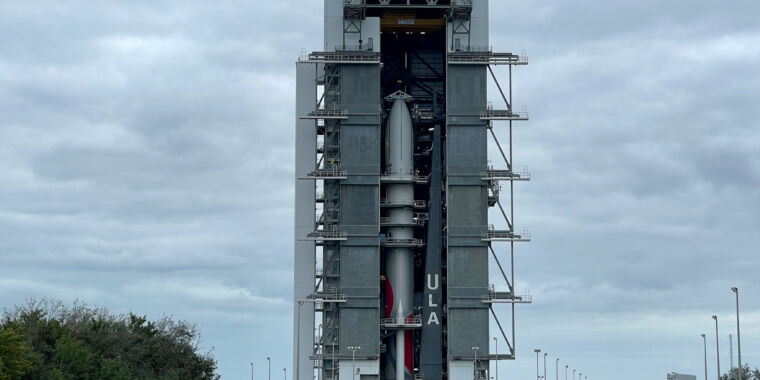
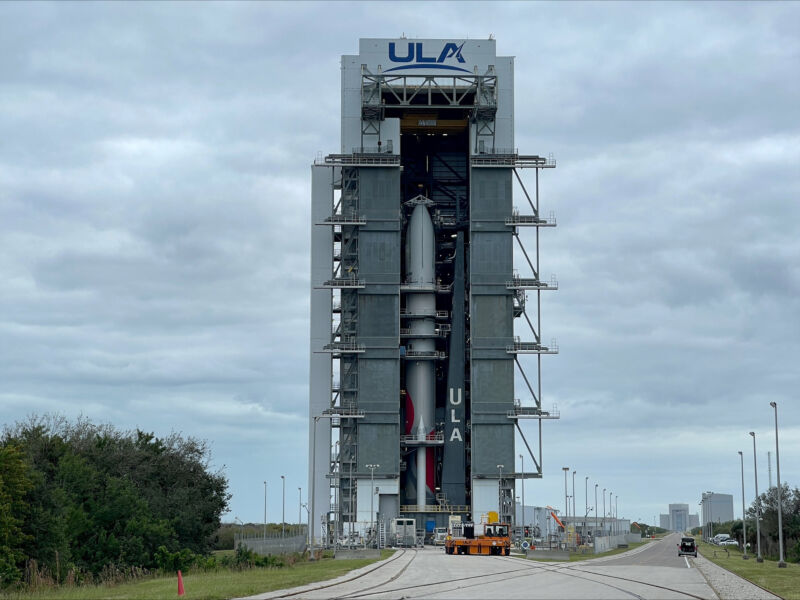
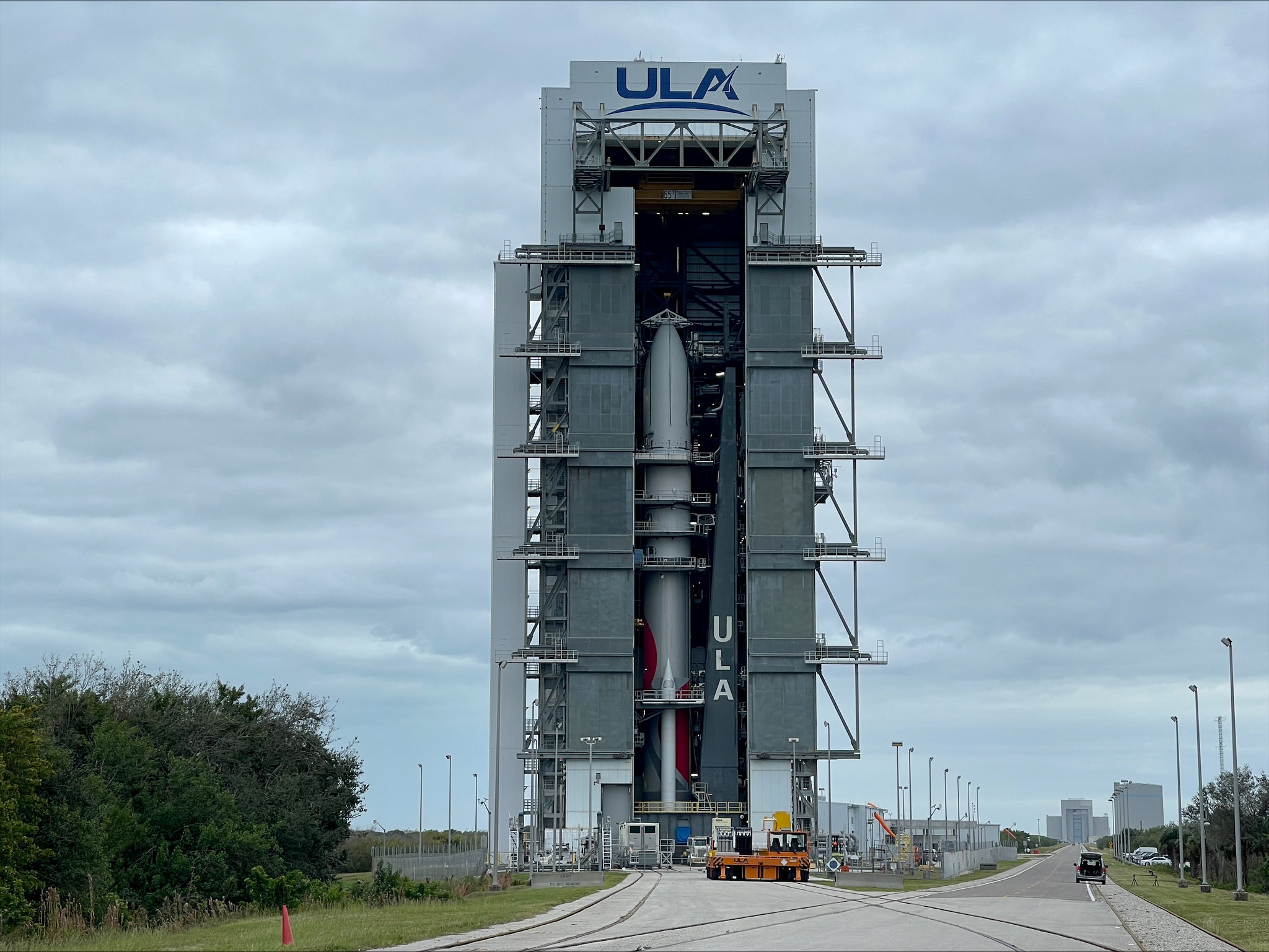
Enlarge/ United Launch Alliance’s first Vulcan rocket stands 202 feet (61.6 meters) tall with the addition of its payload fairing.
United Launch Alliance’s first Vulcan rocket has been fully assembled at Cape Canaveral, Florida, in preparation for its inaugural flight next month.
Technicians hoisted the Vulcan rocket’s payload fairing, containing a commercial lunar lander from Astrobotic, on top of the launch vehicle Wednesday morning at ULA’s Vertical Integration Facility. This milestone followed the early morning transfer of the payload fairing from a nearby facility where Astrobotic’s lunar lander was fueled for its flight to the Moon.
ULA’s new rocket has rolled between its vertical hangar and the launch pad at Cape Canaveral Space Force Station several times for countdown rehearsals and fueling tests. But ULA only needed the Vulcan rocket’s first stage and upper stage to complete those tests. The addition of the payload shroud Wednesday marked the first time ULA has fully stacked a Vulcan rocket, standing some 202 feet (61.6 meters) tall, still surrounded by scaffolding and work platforms inside its assembly building.
This moves the launch company closer to the first flight of Vulcan, the vehicle slated to replace ULA’s Atlas V and Delta IV rockets. After some final checkouts and a holiday break, ground crews will transport the Vulcan rocket to its launch pad in preparation for liftoff at 2: 18 am ET (07: 18 UTC) on January 8.
The launch was previously scheduled for December 24, but ULA delayed the flight until the next launch window to resolve ground system issues uncovered during one of the recent Vulcan countdown rehearsals. Astrobotic’s first robotic lunar lander, named Peregrine Mission One, only has a few days per month when it can depart Earth and take a course toward the Moon. The launch and trajectory must be timed to allow the spacecraft to reach its landing site with the proper lighting conditions.
First full stack
United Launch Alliance, a 50-50 joint venture between Boeing and Lockheed Martin, has been under pressure from rival SpaceX for the last few years. While SpaceX has launched more than 90 times this year, ULA’s rockets have only flown three times as the company winds down its Atlas V and Delta IV programs.
One Delta IV-Heavy rocket remains in ULA’s inventory. It’s supposed to launch next year with a classified payload for the National Reconnaissance Office, the US government’s spy satellite agency. There are 17 Atlas V rockets left to fly.
With Vulcan, ULA is poised to ramp up its launch rate. Tory Bruno, the company’s chief executive, says ULA has sold 70 Vulcan launches—more than half to commercial customers and the rest to the US military. Amazon has booked 38 Vulcan missions to deploy satellites for its Project Kuiper broadband network. Vulcan will initially be fully expendable, but ULA plans to introduce engine recovery and reuse later this decade.
ULA’s goal is to launch an average of two Vulcan rockets per month by the end of 2025. This would be a remarkably fast launch cadence just two years after the first flight of Vulcan. For comparison, it took longer for the Atlas V rocket and SpaceX’s Falcon 9 to get to four flights.
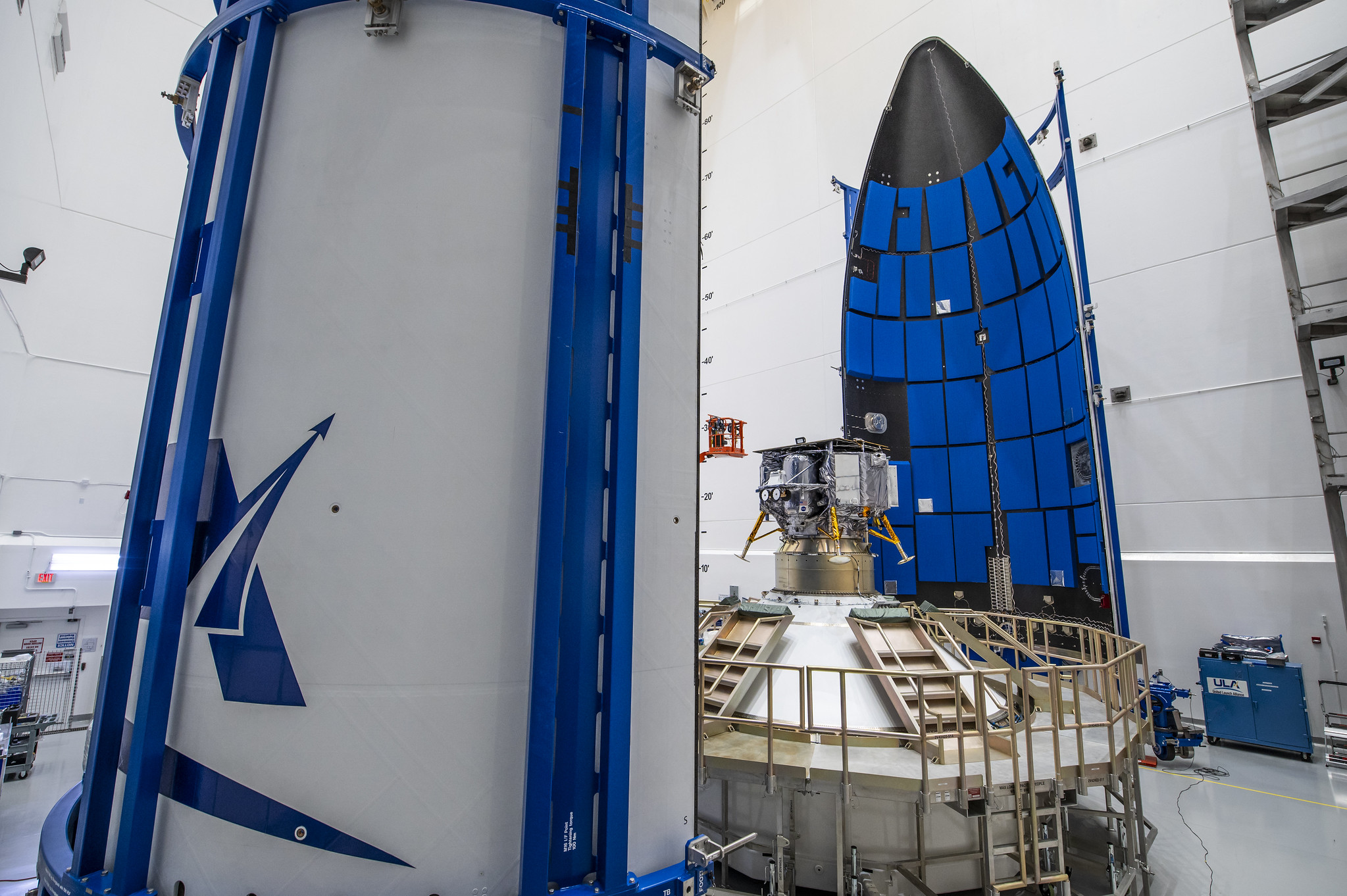
Enlarge/ Astrobotic’s Peregrine lander was recently encapsulated inside the Vulcan rocket’s payload fairing.
The Vulcan rocket was originally slated to launch in 2019 but faced repeated delays, primarily due to late deliveries of rocket engines from Blue Origin, Jeff Bezos’ space company. ULA bypassed a launch opportunity in May after a Vulcan upper stage exploded during a ground test.
Unlike the debuts of most rockets, the Vulcan will launch with a functioning payload. Astrobotic’s uncrewed Peregrine Mission One will carry 20 payloads to the lunar surface, including five for NASA through the agency’s Commercial Lunar Payload Services (CLPS) program. This will be the first mission to launch under the CLPS initiative, which NASA set up in 2018 to purchase commercial transportation services to the Moon for scientific instruments and experiments.
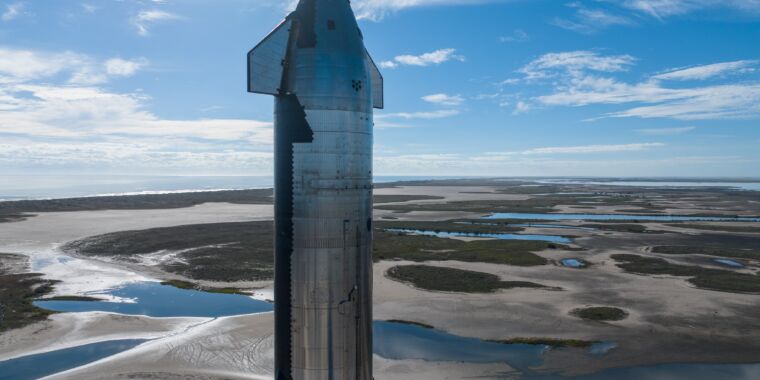
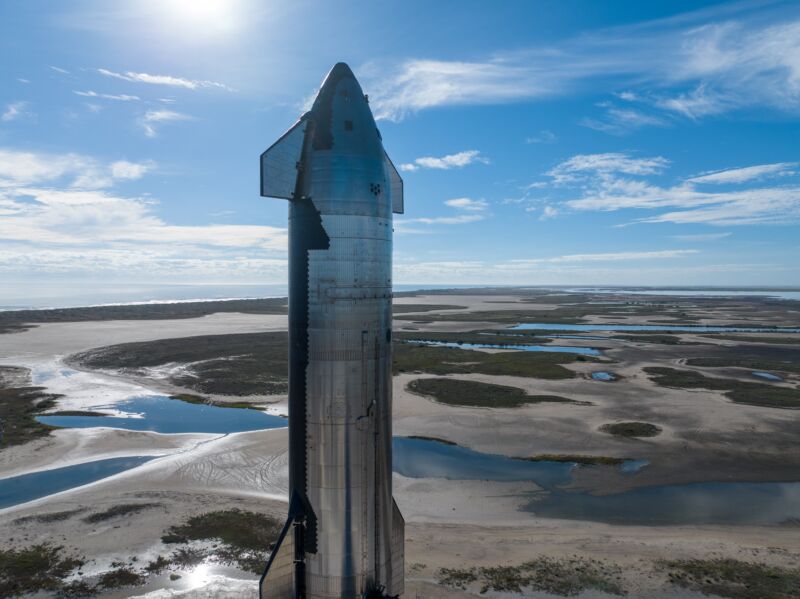
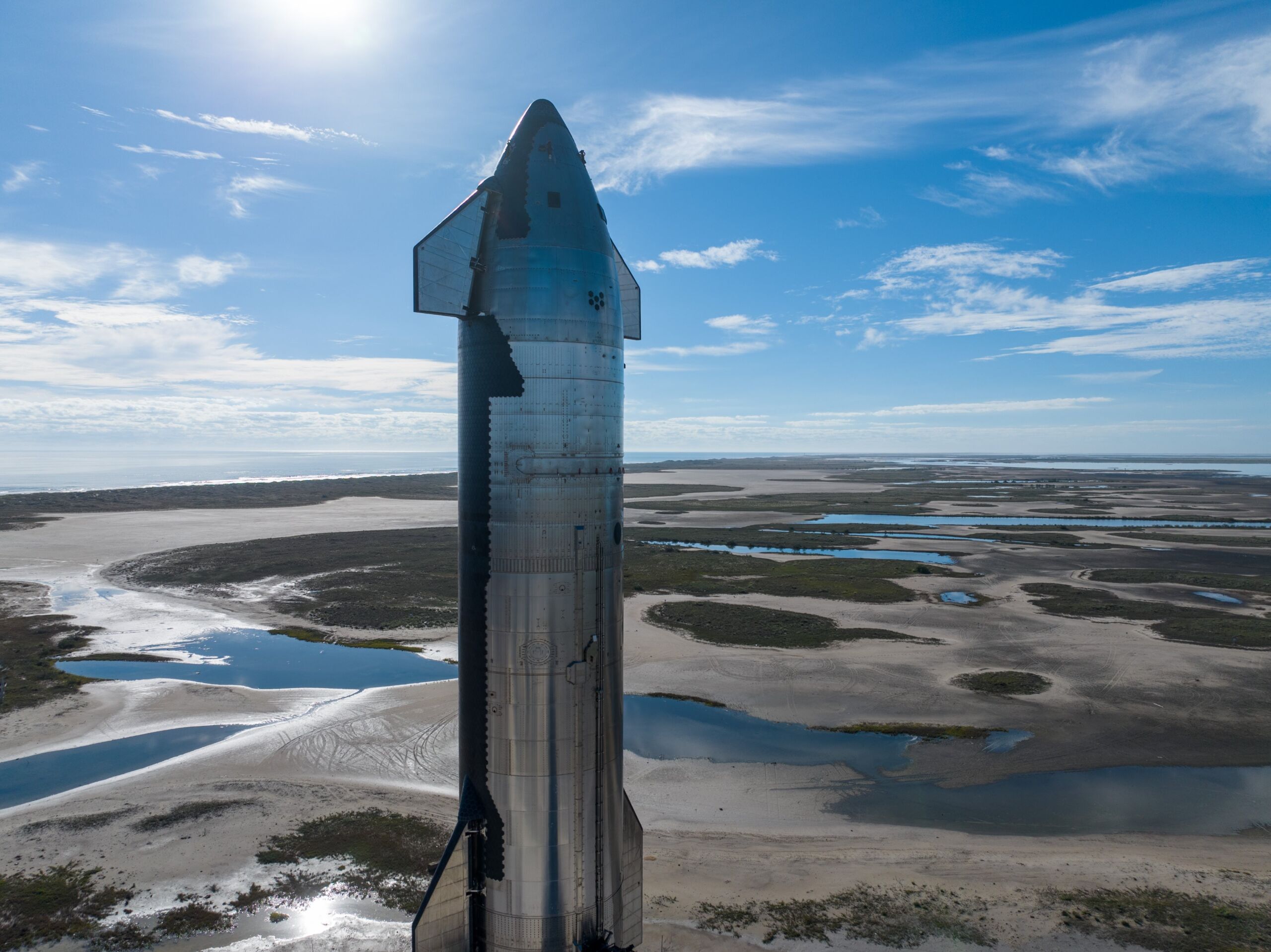
Enlarge/ Ship 28 is seen after being moved to SpaceX’s launch site in South Texas.
SpaceX
Just one month after the second flight of its massive Starship rocket, SpaceX is making progress toward a third attempt.
On Wednesday, at 1: 37 pm local time in South Texas, the company performed a static fire test of the next Starship—which bears the serial number Ship 28. The test of the rocket’s six engines appeared to be nominal as the Raptors ignited for a handful of seconds. The rocket and ground support equipment looked undamaged after the test.
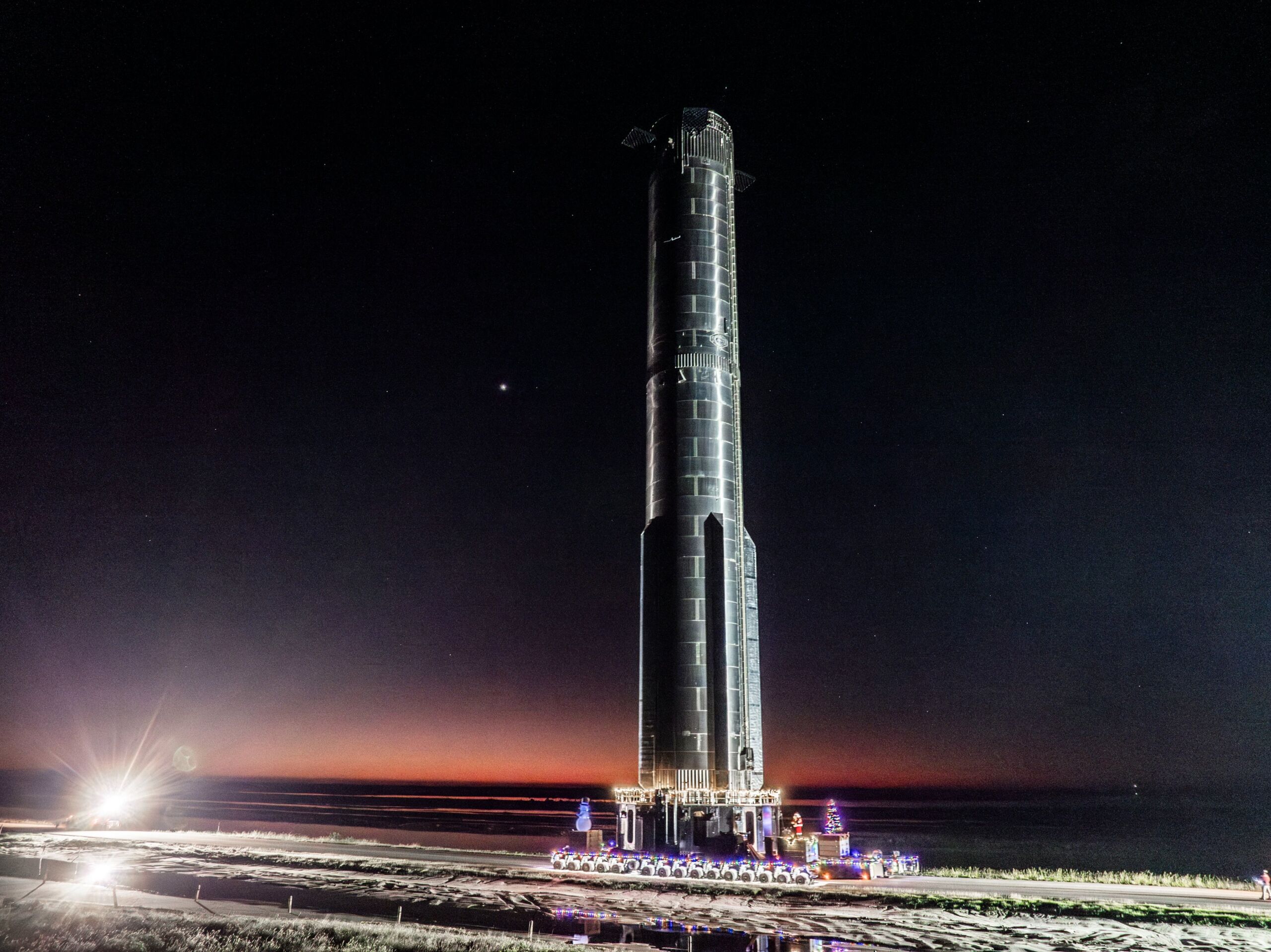
Also this week SpaceX rolled the booster to be used for the next attempt—Booster 10—to the launch site at its Starbase facility in South Texas. The vehicle has since been lifted onto the orbital launch mount. Presumably this rocket, too, will undergo a static fire test in the coming days.
After these tests are complete the Starship upper stage is likely to be stacked on top of the booster to complete the launch vehicle. At this point it seems likely that the hardware for “Integrated Flight Test 3” would be substantially ready to launch.
With this third flight, SpaceX will seek to fly further into a profile that will see Starship ultimately make a controlled landing into the ocean north of Kauai, Hawaii. SpaceX may also perform an in-space propellant transfer test, but this has not been confirmed.
Starship’s second launch attempt, on November 18, was notably more successful than the first attempt in April 2023. The second flight test demonstrated substantial improvements in engine reliability and provided valuable data about a challenging “hot staging” maneuver to separate the Super Heavy booster from the Starship upper stage.
Another test flight soon?
Recently Kathy Lueders, SpaceX’s general manager for the Starbase launch site near Brownsville, said the company will target the first quarter of next year for this third test flight. “It would be great if we were in the first quarter, definitely,” she said. “Elon [Musk] obviously would probably say the end of December, but I don’t think we’ll get there.”
Since the second test flight occurred, neither the company nor SpaceX founder Elon Musk has provided a technical update on what ultimately went wrong with the Starship upper stage, which failed a few minutes into its flight, or why the booster was ultimately lost after it separated from the Starship vehicle.
Enlarge/ Booster 10, with a few holiday decorations, is rolled to the launch site in South Texas.
SpaceX
However, far fewer modifications have been made to the rocket hardware or the launch site ahead of this third attempt, suggesting that at least some of the problems may have been flight software-related.
SpaceX has yet to receive regulatory approval for a third launch of Starship. The Federal Aviation Administration characterized the second attempt in November as a “mishap,” while acknowledging that no injuries or public property damage were reported.
After the anomaly, the agency said, via the social media site X, that “the FAA will oversee the @SpaceX-led mishap investigation to ensure SpaceX complies with its FAA-approved mishap investigation plan and other regulatory requirements.” The FAA has provided no additional information in the month since then.
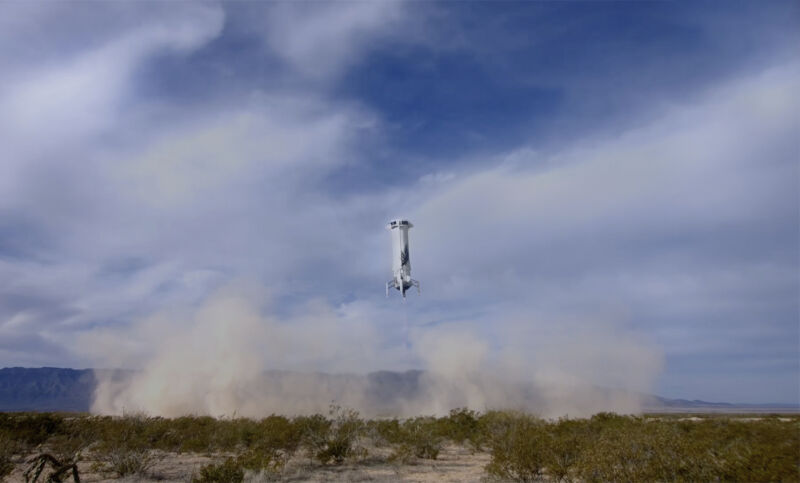
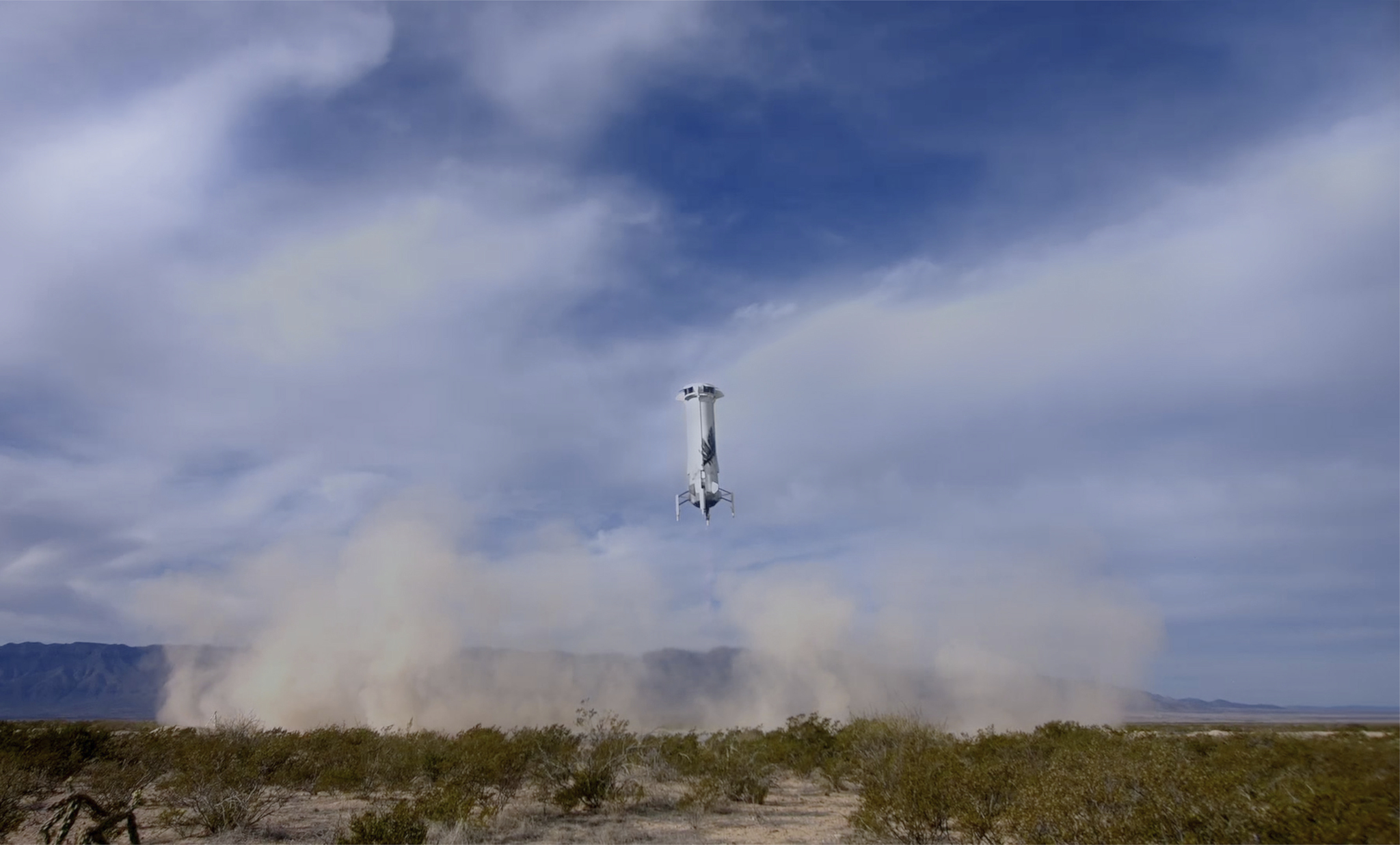
Enlarge/ Blue Origin’s New Shepard booster comes in for landing in West Texas at the conclusion of Tuesday’s suborbital flight.
Blue Origin
With redesigned engine components, Blue Origin’s New Shepard rocket took off from West Texas and flew to the edge of space on Tuesday with a package of scientific research and technology demonstration experiments.
This was the first flight of Blue Origin’s 60-foot-tall (18-meter) New Shepard rocket since September 12, 2022, when an engine failure destroyed the booster and triggered an in-flight abort for the vehicle’s pressurized capsule. There were no passengers aboard for that mission, and the capsule safely separated from the failed booster and parachuted to a controlled landing.
The flight on Tuesday also didn’t carry people. Instead, Blue Origin, Jeff Bezos’s space company, lofted 33 payloads from NASA, research institutions, and commercial companies. Some of these payloads were flown again on Tuesday’s launch after failing to reach space on the failed New Shepard mission last year. Among these payloads were an experiment to demonstrate hydrogen fuel cell technology in microgravity and an investigation studying the strength of planetary soils under different gravity conditions.
Blue Origin’s capsule, mounted on top of the rocket, also flew 38,000 postcards submitted by students through Club for the Future, the company’s nonprofit.
For Tuesday’s return-to-flight mission, the New Shepard rocket ignited its BE-3PM engine and climbed away from Blue Origin’s remote launch site near Van Horn, Texas, at 10: 42 am CST (16: 42 UTC). The hydrogen-fueled engine fired for more than two minutes, then shut down as scheduled as the rocket continued coasting upward, reaching an altitude of more than 347,000 feet (106 kilometers).
The booster returned for a precision propulsive landing a short distance from the launch pad, and Blue Origin’s capsule deployed three parachutes to settle onto the desert floor, completing a 10-minute up-and-down flight.
Blue Origin has launched 24 missions with its reusable New Shepard rocket, including six flights carrying people just over the Kármán line, the internationally recognized boundary of space 100 kilometers above Earth.
“A special thank you to all of our customers who flew important science today and the students who contributed postcards to advance our future of living and working in space for the benefit of Earth,” said Phil Joyce, Blue Origin’s senior vice president for the New Shepard program, in a statement. “Demand for New Shepard flights continues to grow and we’re looking forward to increasing our flight cadence in 2024.”
Blue Origin will fly people again “soon”
It took 15 months for Blue Origin to return to flight with New Shepard, but Tuesday’s successful launch puts the company on a path to resuming human missions. Most of Blue Origin’s customers for these suborbital flights have been wealthy individuals or special guests invited to strap in for a ride to space. Blue Origin’s passengers have included Bezos, aviation pioneer Wally Funk, and actor William Shatner, eager for a taste of spaceflight. New Shepard passengers experience a few minutes of microgravity before returning to Earth.
Blue Origin hasn’t disclosed its ticket price, but seats on a New Shepard flight last year reportedly sold for $1.25 million. This is more than double the price for a seat on Virgin Galactic’s suborbital spaceship.
So when will Blue Origin start flying people again? “Following a thorough review of today’s mission, we look forward to flying our next crewed flight soon,” said Erika Wagner, a longtime Blue Origin manager who co-hosted the company’s webcast of Tuesday’s flight.
But “soon” is a conveniently vague term. In March, when Blue Origin announced the results of its investigation into last year’s launch failure, the company said it would return to flight “soon” with New Shepard. Nine months later, New Shepard finally flew again.
Engineers probing the New Shepard accident last year concluded a nozzle failure on the rocket’s BE-3PM was the direct cause of the launch failure. The engine operated at higher temperatures than expected, leading to thermal damage to the nozzle, Blue Origin announced earlier this year.
Blue Origin said corrective actions to address the cause of the failure included design changes to the engine combustion chamber and adjustments to operating parameters. These changes were expected to reduce operating temperatures. Engineers also redesigned parts of the nozzle to help it better handle thermal and dynamic loads, the company said.
In September, the Federal Aviation closed its investigation into the New Shepard launch failure, and Blue Origin targeted an uncrewed return-to-flight mission in early October. However, Ars previously reported that an additional two-month delay was caused by an issue with certifying an engine part intended for flight.
The long-term grounding of the New Shepard rocket caused speculation about the program’s future, particularly at a time when Blue Origin is ramping up preparations for the inaugural flight of the much larger orbital-class New Glenn launcher. Last year’s launch failure left Blue Origin with just one New Shepard booster in its inventory—the rocket that made its ninth flight to space on Tuesday.
This particular booster has been exclusively used for uncrewed research missions. Blue Origin hasn’t confirmed whether it has another New Shepard rocket in production for human flights.
But statements from Blue Origin officials Tuesday suggest New Shepard has a future. Wagner said Blue Origin aims to open New Shepard missions to researchers on future flights, allowing scientists to directly work with their experiments in microgravity.