TV Technica: Our favorite shows of 2025
Netflix and Apple TV dominate this year’s list with thrillers, fantasy, sci-fi, and murder.

Credit: Collage by Aurich Lawson
Credit: Collage by Aurich Lawson
Editor’s note: Warning: Although we’ve done our best to avoid spoiling anything major, please note this list does include a few specific references to several of the listed shows that some might consider spoiler-y.
This was a pretty good year for television, with established favorites sharing space on our list with some intriguing new shows. Streaming platforms reigned supreme, with Netflix and Apple TV dominating our list with seven and five selections each. Genre-wise, we’ve got a bit of everything: period dramas (The Gilded Age, Outrageous), superheroes (Daredevil: Born Again), mysteries (Ludwig, Poker Face, Dept. Q), political thrillers (The Diplomats, Slow Horses), science fiction (Andor, Severance, Alien: Earth), broody fantasy (The Sandman), and even an unconventional nature documentary (Underdogs).
As always, we’re opting for an unranked list, with the exception of our “year’s best” selection at the very end, so you might look over the variety of genres and options and possibly add surprises to your eventual watchlist. We invite you to head to the comments and add your own favorite TV shows released in 2025.
Underdogs (National Geographic/Disney+)

Credit: National Geographic/Doug Parker
Most of us have seen a nature documentary or two (or three) at some point in our lives, so it’s a familiar format: sweeping, majestic footage of impressively regal animals accompanied by reverently high-toned narration (preferably with a tony British accent). Underdogs takes a decidedly different approach. Narrated with hilarious irreverence by Ryan Reynolds, the five-part series highlights nature’s less cool and majestic creatures—the outcasts and benchwarmers more noteworthy for their “unconventional hygiene choices” and “unsavory courtship rituals.” (It’s rated PG-13 due to the odd bit of scatalogical humor and shots of Nature Sexy Time.)
Each of the five episodes is built around a specific genre. “Superheroes” highlights the surprising superpowers of the honey badger, pistol shrimp, and the invisible glass frog, among others, augmented with comic book graphics; “Sexy Beasts” focuses on bizarre mating habits and follows the format of a romantic advice column; “Terrible Parents” highlights nature’s worst practices, following the outline of a parenting guide; “Total Grossout” is exactly what it sounds like; and “The Unusual Suspects” is a heist tale, documenting the supposed efforts of a macaque to put together the ultimate team of masters of deception and disguise (an inside man, a decoy, a fall guy, etc.). Green Day even wrote and recorded a special theme song for the opening credits.
While Reynolds mostly followed the script (which his team helped write), there was also a fair amount of improvisation—not all of it PG-13. The producers couldn’t use the racier ad-libs. But some made it into the final episodes, like Reynolds describing an aye-aye as “if fear and panic had a baby and rolled it in dog hair.” We also meet the velvet worm, which creeps up on unsuspecting prey before squirting disgusting slime all over their food, and the pearl fish, which hides from predators in a sea cucumber’s butt, among other lowly yet fascinating critters. Verdict: Underdogs is positively addictive. It’s my favorite nature documentary ever.
—Jennifer Ouellette
Dept. Q (Netflix)

Credit: Netflix
Dep. Q is a rare show that commits to old tropes—an unlikable but smart central character revisits cold cases—and somehow manages to repackage them in a way that feels distinctive. To get a sense of the show, you only have to describe its precise genre. You might call it a murder mystery, and there are murders in it, but one of the mysteries is whether a key player is alive or not, given that a lot of her story takes place in flashbacks with an uncertain relationship to the present. It’s almost a police procedural, except that many of the police are only following procedures grudgingly and erratically. It’s not really a whodunnit, given that you only end up learning who done some of it by the time the first season wraps up. And so on.
Amid all the genre fluidity, the show does a great job of balancing the key challenge of a mystery program: telling you enough that you can make reasonably informed guesses on at least some of what’s going on without giving the whole game away and making it easy to figure out all the details. And the acting is superb. Matthew Goode does a nice job of handling the central character’s recent trauma while helping you understand why he has a few loyal co-workers despite the fact that he was probably unlikable even before he was traumatized. And Alexej Manvelov (who I’d never seen before) is fantastic as a former Syrian policeman who drops occasional hints that he had been an active participant in that country’s police state.
There are definitely quibbles. The creation of a cold case squad happens on the flimsiest of motivations, and the fantastic Kelly Macdonald is badly underused. But the show is definitely good enough that I’m curious about some additional mysteries: Can the team behind it continue to avoid getting bogged down in the tropes in season two, and which of the many threads it left unresolved will be picked up when they try?
—John Timmer
Daredevil: Born Again (Disney+)
Credit: Marvel/Disney+
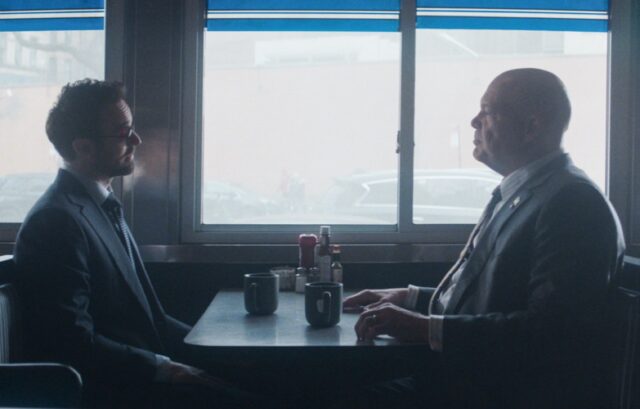
Enthusiasm was understandably high for Daredevil: Born Again, Marvel’s revival of the hugely popular series in the Netflix Defenders universe. Not only was Charlie Cox returning to the title role as Matt Murdock/Daredevil, but Vincent D’Onofrio was also coming back as his nemesis, crime lord Wilson Fisk/Kingpin. Their dynamic has always been electric, and that on-screen magic is as powerful as ever in Born Again, which quickly earned critical raves and a second season.
Granted, there were some rough spots. The entire season was overhauled during the 2023 Hollywood strikes, and at times it felt like two very different shows. A weird serial killer subplot was primarily just distracting. There was also the controversial decision to kill off a major character from the original Netflix series in the first episode. But that creative choice cleared the decks to place the focus squarely on Matt’s and Fisk’s parallel arcs, and the two central actors do not disappoint.
Matt decides to focus on his legal work while Fisk is elected mayor of New York City, intent on leaving his criminal life behind. But each struggles to remain in the light as the dark sides of their respective natures fight to be released. The result is an entertaining, character-driven series that feels very much a part of its predecessor while still having its own distinctive feel.
—Jennifer Ouellette
Boots (Netflix)
Credit: Netflix
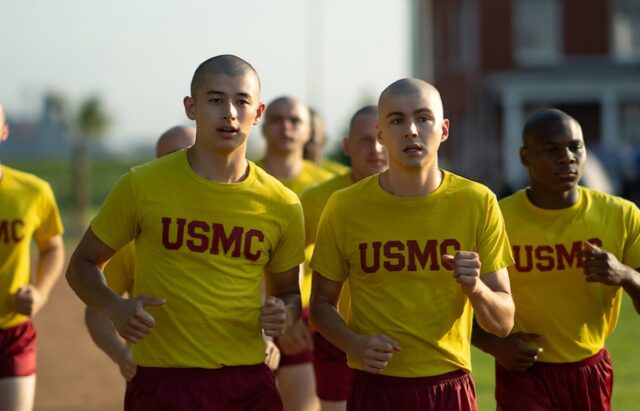
I confess I might have missed Boots had it not been singled out and dismissed as “woke garbage” by the Pentagon—thereby doubling the show’s viewership. I was pleased to discover that it’s actually a moving, often thought-provoking dramedy that humanizes all the young men from many different backgrounds who volunteer to serve their country in the US military. The show is based on a memoir (The Pink Marine) by Greg Cope White about his experiences as a gay teen in the military in the 1980s when gay and bisexual people weren’t allowed to serve. Boots is set in the early 1990s just before the onset of the “Don’t ask, don’t tell” era.
Miles Heizer stars as Cameron Cope (Cope White’s fictional alter ego), a closeted gay teen in Louisiana who signs up as a recruit for the US Marine Corps with his best (straight) friend Ray (Liam Oh). He’s not the most promising recruit, but over the course of eight episodes, we see him struggle, fail, pick himself back up, and try again during the grueling boot camp experience, forming strong bonds with his fellow recruits but all the while terrified of being outed and kicked out.
Heizer gives a powerful performance as Cameron, enhanced by the contrast with Max Parker’s stellar portrayal of the tightly wound Sergeant Liam Robert Sullivan—a decorated Marine inexplicably reassigned to train recruits while harboring his own secrets. Nor is Miles’ story the only focus: We learn more about several characters and their private struggles, and those inter-relationships are the heart and soul of the show. Netflix canceled the series, but this one season stands tall on its own.
—Jennifer Ouellette
Only Murders in the Building S5 (Hulu)

Credit: Hulu
This charming Emmy-nominated comedy series has made our “Best of TV” list every season, and 2025 is no exception. Only Murders in the Building (OMITB) stars Steve Martin, Martin Short, and Selena Gomez as Charles, Oliver, and Mabel, all residents of the same Manhattan apartment complex, the Arconia. The unlikely trio teams up to launch their own true crime podcast whenever someone dies in the building under suspicious circumstances, chronicling their independent investigation to solve the murder. There’s no shortage of podcast fodder, as this single building has a shockingly high murder rate.
S5 focused on the death of the building’s doorman, Lester (Teddy Coluca), found floating in the Arcadia’s fountain in the season finale. The discovery of a severed finger leads our team to conclude that Lester was murdered. Their quest involves a trio of billionaires, the mayor (Keegan-Michael Key), a missing mafioso (Bobby Cannavale) and his widow (Tea Leoni), and maybe even the building’s new robotic assistant, LESTR (voiced by Paul Rudd). As always, the season finale sets up next season’s murder: that of rival podcaster Cinda Canning (Tina Fey), who lives just long enough to reach the Arcadia’s gates and place one hand into the courtyard—technically dying “in the building.” One assumes that OMITB will eventually run out of fresh takes on its clever concept, but it certainly hasn’t done so yet.
—Jennifer Ouellette
The Sandman S2 (Netflix)

Credit: Netflix
I unequivocally loved the first season of The Sandman, the Netflix adaptation of Neil Gaiman’s influential graphic novel series (of which I am a longtime fan). I thought it captured the surreal, dream-like feel and tone of its source material, striking a perfect balance between the anthology approach of the graphic novels and grounding the narrative by focusing on the arc of its central figure: Morpheus, lord of the Dreaming. It was a long wait for the second and final season, but S2 retains all those elements to bring Dream’s story to its inevitably tragic yet satisfying end.
As always, the casting is extraordinary and the performances are note-perfect across the board. And Netflix did not skimp on the visuals, which bring the graphic novel imagery to vivid life. I still appreciate how the leisurely pacing lets the viewer relax and sink into this richly layered fictional world. Part I kicked off with an Endless family reunion that led Dream into revisiting Hell and agreeing to his sister Delirium’s request to look for their absent brother, Destruction. That sets in motion a chain of events that leads to the tragedy that unfolds in Part II. The bonus episode, in which Death gets one day (every hundred years) to be human—an adaptation of the standalone Death: The High Cost of Living—serves as a lovely coda to this unique series, which is pretty much everything I could have wanted in an adaptation.
—Jennifer Ouellette
Ludwig (BBC)
Credit: BBC
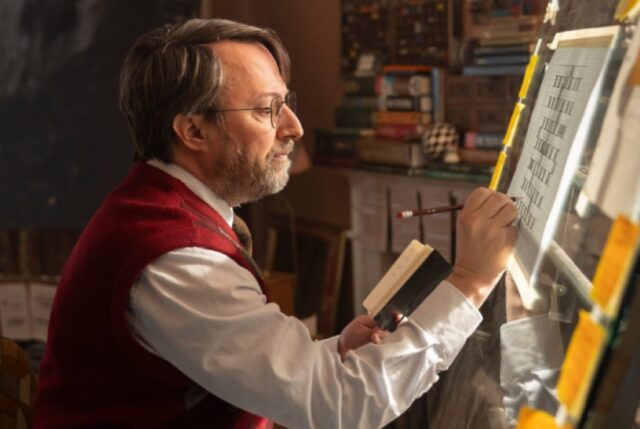
Ludwig is a clever twist on the British cozy mystery genre. David Mitchell stars as John Taylor, a reclusive eccentric who creates puzzles for a living under the pseudonym “Ludwig.” When his identical twin brother, Cambridge DCI James Taylor (also Mitchell), goes missing, his sister-in-law Lucy (Anna Maxwell Martin) convinces John to go undercover. John reluctantly pretends to be James to gain access to the police department in hopes of finding out what happened to his twin. He inevitably gets drawn into working on cases—and turns out to be exceptionally good at applying his puzzle skills to solve murders, even as his anxiety grows about his subterfuge being discovered.
The best crime shows deftly balance cases-of-the-week with longer character-driven story arcs, and Ludwig achieves that balance beautifully. The writers brought in a puzzle consultant to create the various crosswords that appear in the series, as well as a special cryptic crossword done in character as Ludwig that appeared in The Guardian. The first season ended with a bit of a cliffhanger about what’s really been going on with James, but fortunately, the BBC has renewed Ludwig for a second season, so we’ll get to see more of our cryptic crime-solver.
—Jennifer Ouellette
Poker Face S2 (Peacock)
Credit: Peacock
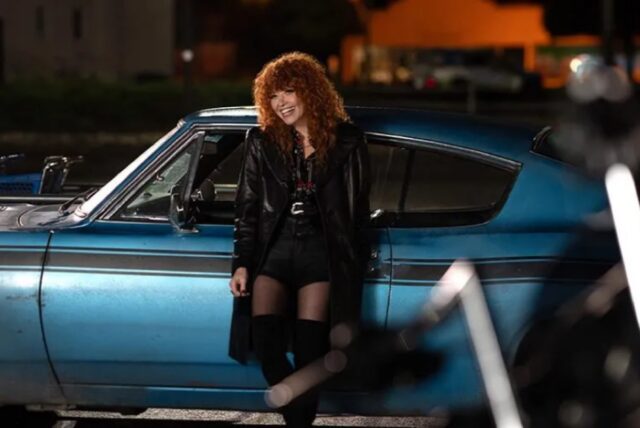
Poker Face is perfect comfort TV, evolving the case-of-the-week format that made enduring early TV hits like Columbo and Murder, She Wrote iconic. The second season takes the endlessly likeable BS-detector Charlie Cale (Natasha Lyonne) to the end of the road after she overcomes fleeing the mob in her 1969 Plymouth Barracuda. Along the way, Charlie pals around with A-list guest stars and solves crimes, winding her way from Florida to New York as each delightful new caper serves not to ramp up tension but to disrupt how viewers anticipate Charlie will move. Some might think that the lack of tension made the season weaker. But creator Rian Johnson recently revealed that he expects Poker Face to cast a new lead detective every two years. That makes it seem clear that Charlie’s second season was more about release.
In the most memorable episode of the season, “Sloppy Joseph,” the front row of an elementary school talent show suddenly becomes a bloody splash zone when a bullied boy is framed for killing the class pet, a gerbil, with a giant mallet. That scene is perhaps an apt metaphor for Johnson’s attempt to keep modern-day viewers from turning away from their TVs by shattering expectations. It’s unclear yet if his formulaic TV hijinks will work, but if anyone decides to pick up Poker Face after Peacock declined to renew it, Peter Dinklage is next in line to become the world’s greatest lie detector.
—Ashley Belanger
The Gilded Age S3 (HBO)
Credit: HBO
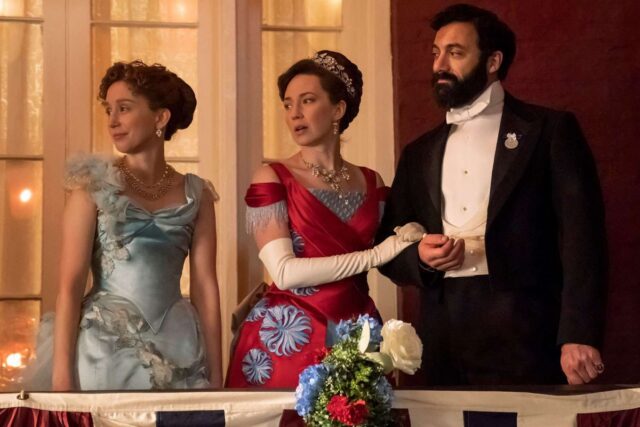
I was a latecomer to this eminently watchable show created by Julian Fellowes (Gosford Park), who also gave us the Emmy-winning sensation Downton Abbey. Instead of following the adventures of post-Edwardian British aristocracy and their domestic servants, the focus is on ultra-wealthy Americans and their domestic servants in the 1880s and the social tensions that arise from the “old money” versus “new money” dynamic of this rapidly changing period. The Gilded Age has been described as an “operatic soap” (rather than a soap opera), replete with a hugely talented ensemble cast donning lavish costumes and cavorting in extravagantly opulent settings. It’s unadulterated, addictive escapism, and the series really hit its stride in S3.
Old Money is represented by Agnes van Rhijn (Christine Baranski), a wealthy widow who lives with her spinster sister Ada (Cynthia Nixon); orphaned niece Marian (Louisa Jacobson); and son and heir Oscar (Blake Ritson), a closeted gay man seeking to marry a rich heiress. Living just across the street is New Money, personified by robber baron/railroad tycoon George Russell (Morgan Spector) and his socially ambitious wife Bertha (Carrie Coon) and their two children. You’ve got Marian’s friend Peggy (Denee Benton) representing the emerging Black upper class and a colorful assortment of domestics in both houses, like aspiring inventor Jack (Ben Ahlers), who dreams of greater things.
Fictionalized versions of notable historical people occasionally appear, and two figure prominently: Caroline Astor (Donna Murphy), who ruled New York society at the time, and her simpering sycophant Ward McAllister (Nathan Lane). (The Russells are loosely inspired by William and Ava Vanderbilt.) The stakes might sometimes seem small—there’s a multi-episode arc devoted to which of two competing opera houses New York’s social elite will choose to sponsor—but for the characters, they are huge, and Fellowes makes the audience feel equally invested in the outcomes. There were a few rough edges in the first season, but The Gilded Age quickly found its footing; it has gotten better and more richly textured with each successive season and never takes itself too seriously.
—Jennifer Ouellette
Outrageous (Britbox)
Credit: Britbox
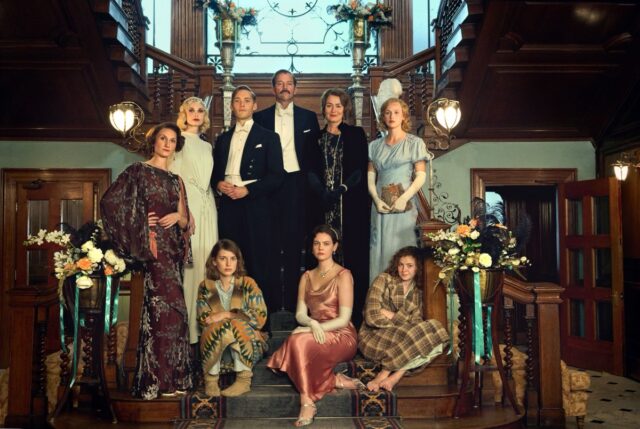
The Mitford sisters were born to be immortalized one day in a British period drama, and Outrageous is happy to oblige. There were six of them (and one brother), and their scandalous exploits frequently made global headlines in the 1930s. This is ultimately a fictionalized account of how the rise of Hitler and British fascism fractured this once tight-knit aristocratic family. The focus is on smaller, domestic drama—budding romances, failed marriages, literary aspirations, and dwindling fortunes—colored by the ominous global events unfolding on a larger scale.
Nancy (Bessie Carter) is the primary figure, an aspiring novelist with a cheating husband who feels increasingly alienated from her older sister and bestie Diana (Joanna Vanderham). Diana married a baron but becomes enamored of Oswald Mosley (Joshua Sasse), leader of the British fascist party, embarking on a torrid affair. Another sister, Unity (Shannon Watson), is also seduced by Nazi ideology and has a major crush on Hitler. Meanwhile, Jessica (Zoe Brough) is drawn to the Communist cause, which rankles both her siblings and her traditionally conservative parents.
Things come to a head when Unity goes to study in Germany and becomes completely radicalized, even publishing a vicious anti-semitic screed that shames the family. Diana also goes all-in on fascism when she leaves her husband for Mosley, whom Nancy loathes. Jessica elopes with her Communist cousin to Spain to be on the front lines of that civil war, leading to a lifelong estrangement from Diana. Nancy, the political moderate, is caught in the middle, torn between her love for her sisters and her increasing discomfort with Diana and Unity’s extreme political views.
The Mitford sisters were prolific letter writers all their lives, so there was plenty of material for screenwriter Sarah Williams to draw on when fictionalizing their stories at such a pivotal point in the family’s (and the world’s) history. Outrageous is quite historically accurate in broad outlines, and there are plenty of moments of wry, understated humor amid the family tensions. The gifted cast makes the sisters come alive in all their flawed humanity. There’s no word yet on a second season, and this one ends on a suitable note, but there’s so much more story left to tell, so I hope Outrageous returns.
—Jennifer Ouellette
A Man on the Inside S2 (Netflix)
Credit: Netflix
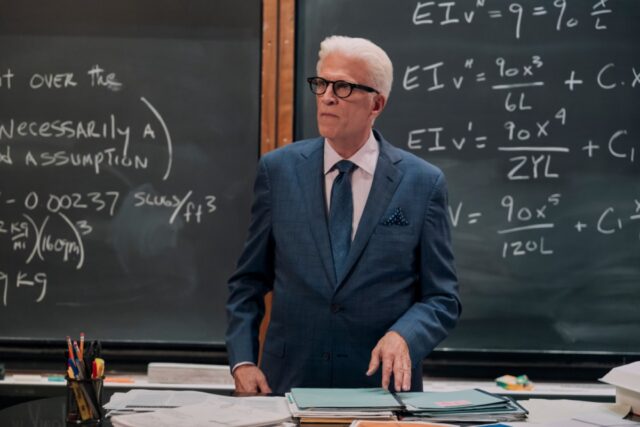
I’ll admit I wasn’t sure how well A Man on the Inside would fare with its sophomore season after knocking it out of the park in S1. I should have known showrunner Mike Schur (The Good Place) could pull it off. Ted Danson plays Charles Nieuwendyk, a recently widowed retired engineering professor. In S1, he was hired by private detective Julie Kovalenko (Lilah Richcreek Estrada) to go undercover at a San Francisco retirement community to solve the mystery of a stolen ruby necklace. In S2, Charles returns to his academic roots and goes undercover at fictional Wheeler College to solve the mystery of a stolen laptop—a crime that just might have implications for the survival of the college itself.
Charles even falls in love for the first time since his wife’s death with music professor Mona Margadoff (Mary Steenburgen, Danson’s wife IRL), despite the two being polar opposites. The show continues to be a welcome mix of funny, sweet, sour, and touching, while never lapsing into schmaltz. The central Thanksgiving episode—where Mona meets Charles’s family and friends for the first time—is a prime example, as various tensions simmering below the surface erupt over the dinner table. Somehow, everyone manages to make their respective peace in entirely believable ways. It’s lovely to see a series grapple so openly, with so much warmth and humor, with the loneliness of aging and grief and how it can affect extended family. And the show once again drives home the message that new beginnings are always possible, even when one thinks one’s life is over.
—Jennifer Ouellette
Andor S2 (Disney+)
Credit: Lucasfilm/Disney+
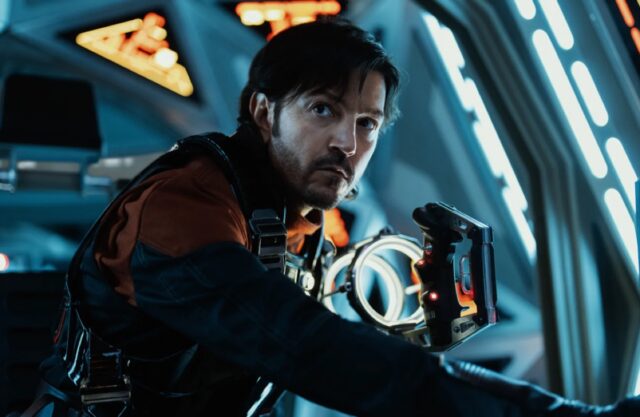
When real-life political administrations refer to officials as Darth Vader in unironically flattering terms, maybe George Lucas made the Dark Lord of the Sith a little too iconic. Showrunner Tony Gilroy made no such effort in his depiction of the fascists in Andor.
During Andor‘s run, which ended this year with S2, the Empire is full of sad corporate ladder climbers who are willing to stab another in the back to get to the next rung of the Imperial hierarchy. The show makes it clear that these are not people to emulate. If more fans watched the show, maybe that message could have landed for them.
For people who grew up with Star Wars and want something more to chew on in our adulthood than endless callbacks to the original trilogy, Andor is revelatory. It colors the war of light versus dark with large amounts of gray because sometimes, as one character puts it, you have to use the tools of your enemy to defeat them (save for genetically gifted farmboys). Maybe most of Star Wars was always supposed to be for kids, but prestige TV viewers got a glimpse of what the universe could feel like if it took itself more seriously. Rather than use the broad strokes of a war of good versus evil, Andor painted between the lines to demonstrate how systemic oppression can look a lot more personal than firing a giant space laser.
For all its great writing and themes, Andor also delivered high stakes and suspense. Although we already knew the outcome of the story, we still held our breath during tense scenes with characters who make the ultimate sacrifice for a future they will never see.
—Jacob May
National Finals Rodeo (The Cowboy Channel)

Credit: Sean Carroll
My personal end-of-year TV list would never be complete without a nod to The Cowboy Channel, i.e., the only place where armchair enthusiasts like myself can follow our favorite cowboys and cowgirls throughout the rodeo season. The goal is to rack up enough money to qualify for the Wrangler National Finals Rodeo (NFR), held at the Thomas & Mack Center in Las Vegas every December. This year, I’ve picked the channel’s stellar annual coverage of the NFR itself to highlight. The entire season comes down to this: an intense 10-day competition in which the top 15 athletes in each event duke it out night after night in hopes of winning a coveted championship gold buckle. And night after night, The Cowboy Channel is there with live commentary and post-round analysis.
What I love most is just how unpredictable the NFR can be. Part of that is the substantial monetary rewards that come with round wins; an athlete coming in at #1 in earnings can see even a substantial lead evaporate over just a few nights. Part of it has to do with who wins the average, i.e., who performs the best over ten nights collectively in each event. Winning the average comes with a substantial payout that can lead to unexpected upsets in the final results. But mostly it’s just the human factor: The best in the world can have a bad night, and young rookies can have the night of their lives. An ill-timed injury can knock an athlete out of the competition entirely. And sometimes the judges make inexplicably bad calls with major consequences (*coughStetson Wright in Round 6 saddle bronc *cough*).
It’s all part of the excitement of rodeo. The Cowboy Channel’s in-depth coverage lets us experience all that drama even if we can’t attend in person and lets us savor how the story unfolds in each subsequent round. We celebrate the wins, mourn the losses, and cheer mightily for the final champions. (Stetson did just fine in the end.) Then we gear up to do it all over again next year.
—Jennifer Ouellette
Top Guns: The Next Generation (National Geographic/Disney+)

Credit: National Geographic
The blockbuster success of the 1986 film Top Gun—chronicling the paths of young naval aviators as they go through the grueling US Navy’s Fighter Weapons School (aka the titular Top Gun)—spawned more than just a successful multimedia franchise. It has also been credited with inspiring future generations of fighter pilots. National Geographic took viewers behind the scenes to see the process play out for real with the documentary series Top Guns: The Next Generation.
Each episode focuses on a specific aspect of the training, following a handful of students from the Navy and Marines through the highs and lows of their training. That includes practicing dive bombs at breakneck speeds, successfully landing on an aircraft carrier by “catching the wire,” learning the most effective offensive and defensive maneuvers in dogfighting, and, finally, engaging in a freestyle dogfight against a seasoned instructor to complete the program and (hopefully) earn their golden wings. NatGeo was granted unprecedented access, even using in-cockpit cameras to capture the pulse-pounding action of being in the air, as well as more candidly intimate behind-the-scenes moments as the students grapple with their respective successes and failures. It’s a riveting watch.
—Jennifer Ouellette
Alien: Earth (FX/Hulu)

Credit: FX/Hulu
My first draft of what was supposed to be a 300-ish word blurb describing why Alien: Earth is fantastic ended up exploding into a Defector-esque narrative deep dive into my ever-evolving relationship with Alien 3 as a film and how Alien: Earth has helped reshape my appreciation for that poor broken baby of a movie by mixing the best of its visual techniques into A:E’s absolutely masterful cocktail of narrative stylings—but I’ll spare you all of that.
Here’s the short version without the bloviating: Alien: Earth is the thing I’ve been waiting for since I walked out of the theater after seeing Alien 3 in the summer of 1992. Unlike Alien Resurrection, any of the AvPs, or the wet-fart, falls-apart-like-mud-in-the-third-act swing-and-miss of Alien: Romulus, A:E gets nearly everything right. It’s grounded without being stodgy; exciting without being stupid; referential without being derivative; fun without being pandering; respectful of the lore while being willing to try something new; and, above all else, it bleeds craftsmanship—every frame makes it obvious that this is a show made by people who love and care for the Alien universe.
The thing that grabs me anew with every episode is the show’s presentation and execution—a self-aware blending of all the best things Scott, Cameron, and Fincher brought to their respective films. As I get older, I’m drawn more and more to entertainment that shows me interesting things and does so in ontologically faithful ways—and oh, does this show ever deliver.
Each episode is a carefully crafted visual and tonal mix of all the previous Alien films, with the episodes’ soundtracks shifting eras to match the action on-screen—like Alien 3’s jumpy choir flash-cut opening credits melding into Aliens’ lonely snare drums. The result is a blended world made of all the best things I remember from the films, and it works in the same way the game Alien: Isolation worked: by conjuring up exactly what the places where we used to have nightmares looked and felt like, and then scaring us there again.
I have heard that The Internet had some problems with the show, but, eh, everybody’s going to hate something. I vaguely remember some of the complaints having to do with how some of the new alien life-forms seem to be scarier or deadlier than our beloved and familiar main monster. All I’ve got for that one is a big fat shrug—I’m fine with our capital-A-aliens sharing the stage with some equally nasty new creatures. The aliens are always more interesting as devices to explore a story than as dramatic ends themselves, and I mean, let’s face it, in the past 40-plus years, there’s not much we haven’t seen them do and/or kill. They’re a literary force, not characters, and I’m way more interested in seeing how they shape the story of the people around them.
The tl;dr is that Alien: Earth is awesome, and if you haven’t watched it, you absolutely should. And when I was a kid, I used to regularly get put in time-out in recess for stiff-arming other kids while pretending to be a power loader, so you should consider my tastemaking credentials in this matter unimpeachable.
—Lee Hutchinson
Squid Game S3 (Netflix)
Credit: Netflix
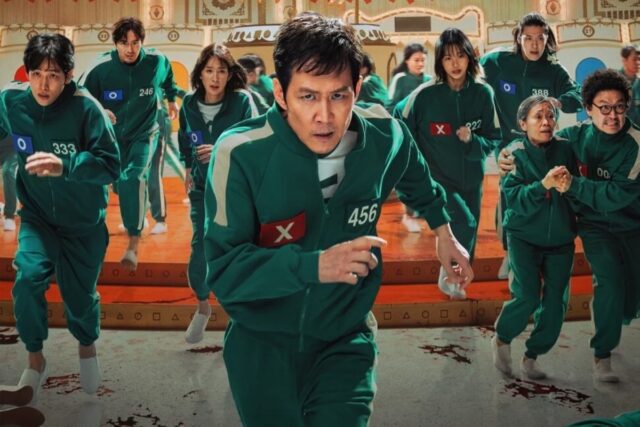
In the most violent series to ever catch the world’s attention by playing beloved children’s games, it turns out that the most high-stakes choice that creator Hwang Dong-hyuk could make was to put a child in the arena. For Squid Game‘s final season, Hwang has said the season’s pivotal moment—a pregnant girl birthing a baby during a game of hide-and-seek with knives—was designed to dash viewers’ hopes that a brighter future may await those who survive the games. By leaving the task of saving the baby to the series hero, Seong Gi-hun, whose own strained relationship with his daughter led him into the games in the first season, Squid Game walked a gritty tightrope to the very end.
The only real misstep was involving the goofiest set of cartoon villain VIPs more directly in the games. But we can forgive Hwang the clunky Dr. Evil-like dialogue that slowed down the action. He’s made it clear that he put everything into developing dramatic sequences for the game players—losing teeth, barely eating, rarely sleeping—and he fully admitted to The New York Times that “I have a cartoonish way of giving comic relief.
—Ashley Belanger
The Diplomat S3 (Netflix)
Credit: Netflix
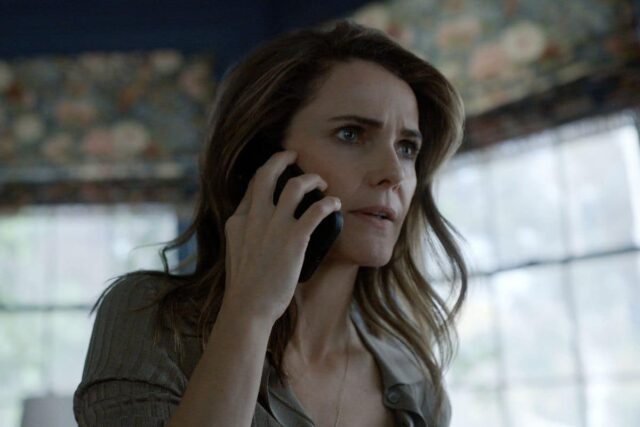
Let’s be clear: The Diplomat is a soap opera. If you’re not into cliffhangers, intense levels of drama, and will-they-won’t-they sexual tension, it’s probably not going to be for you. Sometimes there’s so much going on that it becomes almost farcical. If that doesn’t scare you off, what do you get in return?
Superb actors given rich and intriguing characters to inhabit. A political drama that nicely finds a balance between the excessive idealism of The West Wing and the excessive cynicism of Veep. A disturbingly realistic-feeling series of crises that the characters sometimes direct, and sometimes hang on for dear life as they get dragged along by. And, well, the cliffhangers have been good enough to get me tuning in to the next season as soon as it appears on Netflix.
Kerri Russell plays the titular diplomat, who is assigned to what seems like a completely innocuous position: ambassador to one of the US’s closest allies, the UK. Rufus Sewell portrays her husband, a loose-to-the-point-of-unmoored cannon who ensures the posting is anything but innocuous. Ali Ahn and Ato Assandoh, neither of whom I was familiar with, are fantastic as embassy staff. And as the central crisis has grown in scale, some familiar West Wing faces (Allison Janey and Bradley Whitford) have joined the cast. Almost all of the small roles have been superbly acted as well. And for all the dysfunction, cynicism, and selfish behavior that drive the plot forward, the politics in The Diplomat feels like pleasant escapism when compared to the present reality.
—John Timmer
Murderbot (Apple TV)
Credit: Apple TV+
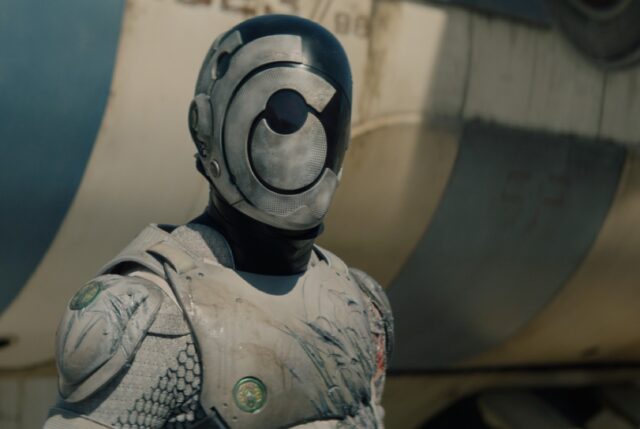
Apple TV+’s Murderbot, based on Martha Wells’ bestselling series of novels The Murderbot Diaries, is a jauntily charming sci-fi comedy dripping with wry wit and an intriguing mystery. Murderbot the TV series adapts the first book in the series, All Systems Red. A security unit that thinks of itself as Murderbot (Alexander Skarsgård) is on assignment on a distant planet, protecting a team of scientists who hail from a “freehold.”
Mensah (Noma Dumezweni) is the team leader. The team also includes Bharadwaj (Tamara Podemski) and Gurathin (David Dastmalchian), who is an augmented human plugged into the same data feeds as Murderbot (processing at a much slower rate). Pin-Lee (Sabrina Wu) also serves as the team’s legal counsel; they are in a relationship with Arada (Tattiawna Jones), eventually becoming a throuple with Ratthi (Akshaye Khanna). Unbeknownst to the team, Murderbot has figured out how to override his governor module that compels it to obey the humans’ commands. So Murderbot essentially has free will.
The task of adapting Wells’ novellas for TV fell to sibling co-creators Paul Weitz and Chris Weitz. (Wells herself was a consulting producer.) They’ve kept most of the storyline intact, fleshing out characters and punching up the humor a bit, even recreating campy scenes from Murderbot’s favorite show, The Rise and Fall of Sanctuary Moon. (John Cho and Clark Gregg make cameos as the stars of that fictional show-within-a-show.) The entire cast is terrific, but it’s Skarsgård’s hilariously deadpan performance that holds it all together as he learns how to relate to the humans—even forming some unexpectedly strong bonds.
—Jennifer Ouellette
Down Cemetery Road (Apple TV)
Credit: Apple TV
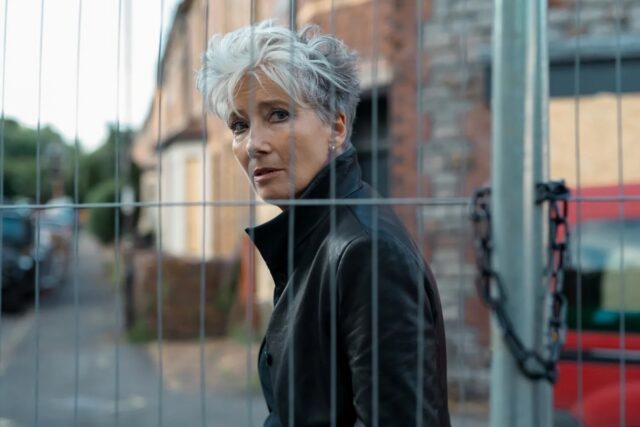
Fans of Slow Horses (see below), rejoice: with Down Cemetery Road, Apple TV has blessed us with another exciting mystery thriller series based on the works of Mick Herron—in this case, his 2003 novel introducing private investigator Zoë Boehm (Emma Thompson). Ruth Wilson co-stars as Sarah, an artist rather unhappily married to a finance bro. A neighboring building is destroyed by an explosion, and Sarah tries to deliver a get-well card to a little girl who survived from her young classmates. She’s inexplicably rebuffed, and her dogged attempts to figure out what’s going on lead her to seek the help of Zoë’s PI partner and estranged husband Joe (Adam Godley). What Joe finds out gets him killed, setting Sarah and Zoë on a collision course with high-placed government officials trying to cover up a pending scandal.
Thompson and Wilson make a dynamic pair. This is Thompson’s meatiest role in a while: Her Zoë is all flinty cynicism and tough exterior, masking an inner vulnerability she’s learned to keep buried. Wilson’s Sarah is the polar opposite in many ways, but she’s equally dogged, and both women are eccentrics who tend to rub people the wrong way. They’re united in a common goal: find the missing girl and bring her kidnappers (and Joe’s killer) to justice. Down Cemetery Road takes a bit of time to set up its premise and its characters, but the pace builds and builds to a big, satisfying finale. It’s not quite on the level of Slow Horses, but it’s pretty darned close.
—Jennifer Ouellette
Pluribus (Apple TV)
Credit: Apple TV
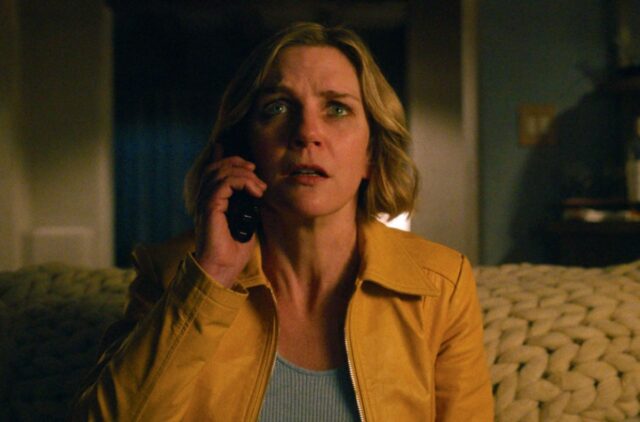
After watching five episodes of the nine-episode first season of Apple TV’s Pluribus, I’m still not sure if I should be rooting for protagonist Carol Sturka or not. On the one hand, Carol is one of the last true “individuals” on Earth, fighting to maintain that individuality against a creepy alien pseudo-virus that has made almost everyone else part of a creepy, psychically connected hive mind. Reversing that effect, and getting the world “back to normal,” is an understandable and sympathetic response on Carol’s part.
On the other hand, it’s unlear that being absorbed into the hive mind is a change for the worse, on a humanity-wide scale. Unlike Star Trek’s Borg—who are violent, shambling drones that seem to have an overall miserable existence—the new hive-mind humanity is unfailingly pacifist, intelligent, capable, and (seemingly) blissfully, peacefully happy. In a sense, this virus has “solved” human nature by removing the paranoia, fear, anger, and distrust that naturally come from never truly knowing what’s going on in your neighbor’s head.
The fact that Pluribus has so far been able to navigate this premise without coming down strongly on one side or the other is frankly incredible. The fact that it has done it with consistent humor, thrills, and amazing cinematography transforms it into a must-watch.
—Kyle Orland
Slow Horses S5 (Apple TV)
Credit: Apple TV
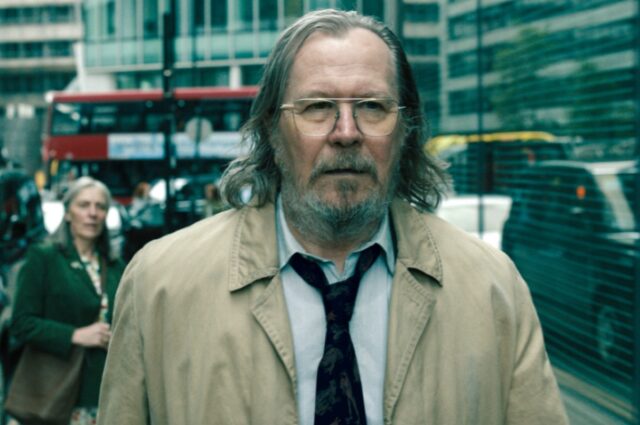
There are many things I enjoy about Slow Horses, the Apple TV thriller about some not-great spies based on Mick Herron’s novels of the same name. The plots are gripping. The acting can be sublime. It’s shot well. And in its fifth season, which began streaming this September, Slow Horses engages more with the author’s humor than in seasons past. But with a plot involving the honeypotting of the deluded computer expert almost-extraordinaire Roddy Ho (played to perfection by Christopher Chung), that would be hard to avoid.
Slough House is a rundown MI5 office used as a dumping ground for employees in disgrace—the slow horses. They can’t be fired, but they can quit, and working for Jackson Lamb (Gary Oldman) is meant to make that happen. Lamb is a veteran of the dirtiest days of the Cold War, knowing not only where most of the bodies are buried but having helped put a few of them there himself. His legendary field prowess is only dwarfed by his repellent personality, mocking and belittling everyone in sight—but often deservedly so.
Each member of his team is there for a different sin, and throughout the season—which involves a plot to destabilize the British government, ripped from an MI5 playbook—we see evidence of why they’ve been consigned to the slow horses. These are not invincible operators, just flawed human beings, perfectly capable of screwing up again and again. And yet, our lovable bunch of losers usually manages to come through in the end, showing up “the Park”—MI5’s (fictional) head office in London’s Regent’s Park, which is usually a step behind Lamb’s quick and devious thinking.
The adaptation is faithful enough to the books to give me deja vu during the first episode, and with just six episodes in a season, the payoff comes relatively quickly. I can’t wait for season 6.
—Jonathan Gitlin
Severance S2 (Apple TV)
Credit: Apple TV
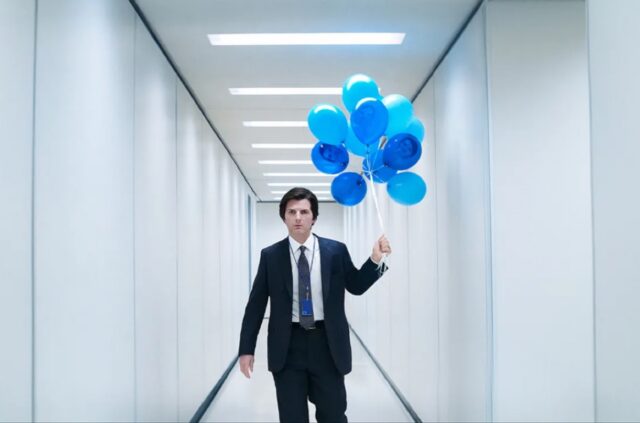
The second season of Severance was never going to be able to live up to the constant, slow rollout of gut punches that characterized the first season. Those first 10 episodes ably explored the most important implications of the titular severance procedure, which splits a single person into separate “innie” and “outtie” consciousnesses with distinct sets of memories. The audience got to explore those implications along with the “innie” characters, who were struggling against the boundaries of their odd cubicle life right up until that thrilling final shot.
With so much now revealed and understood, a lot of that fire fell out of the second season of the show. Sure, there were still some loose ends to tie up from the mysteries of the first season, and plenty of new, off-puttingly weird situations on offer. And the new season definitely has quite a few high points, like the big twist revealed when the “innies” get to have a rare outdoor excursion or the extended flashback showing a character trapped in a seemingly endless sequence of social tests she can’t remember afterward.
But S2 also spent entire episodes exploring backstories and mysteries that didn’t have nearly as much emotional or plot impact. By the time the final episode arrived—with a rescue sequence that required an inordinate amount of suspension of disbelief—I found myself wondering just how much more interesting juice there was to squeeze from the show’s brilliant original premise. I worry that the show is trending in the direction of Lost, which drew things out with a lot of uninteresting padding before finally resolving the plot’s core puzzle box in an unsatisfying way. I’m still along on that ride for now, but I really hope it’s going somewhere soon.
—Kyle Orland
And now for our top choice of the year:
The Residence (Netflix)
Credit: Netflix
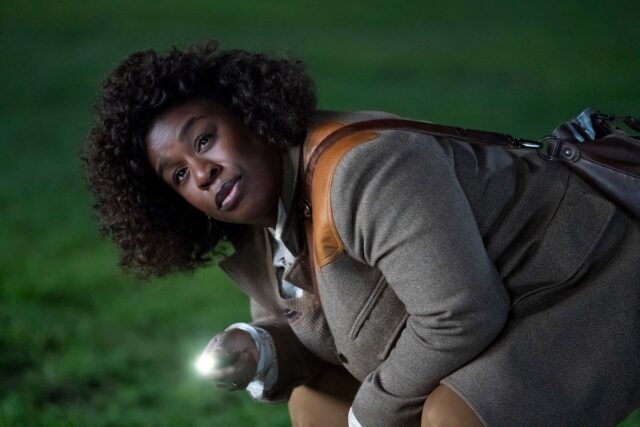
Paul William Davies created this delightful mystery comedy, loosely based on a bestselling nonfiction book by Kate Andersen Brower about the maids, butlers, cooks, florists, doormen, engineers, and others dedicated to ensuring the White House residence runs smoothly. In the middle of a state dinner for the visiting Australian prime minister, White House Chief Usher A.B. Wynter (Giancarlo Esposito) is found dead in the third-floor game room. Everyone initially assumes it was suicide.
Enter private detective Cordelia Cupp (Uzo Aduba), who most definitely does not think it was suicide and proceeds to investigate. She has about a dozen suspects, and her blunt, rather eccentric personality means she’s not remotely intimidated by the august setting of this particular murder. Cupp even takes the odd break in sleuthing to do a bit of birdwatching on the White House grounds. (It’s her goal to see all the birds President Teddy Roosevelt recorded during his tenure.) Birdwatching is more than a lifelong hobby for Cupp; it’s central to her character and to how she approaches solving crimes. Bonus: Viewers learn a lot of fascinating bird trivia over eight episodes.
Davies has devised a clever narrative structure, telling the story in flashbacks during a Congressional hearing (presided over by former US Sen. Al Franken playing a fictional senator from Washington state). It’s a good mystery with plenty of unexpected twists and snappy dialogue. Each episode title refers to a famous murder mystery; the camerawork is inventive and fun; and everyone in the cast knocks it out of the park. I especially loved pop star Kylie Minogue’s cameo playing a fictional version of herself as a state dinner guest. Davies apparently couldn’t convince her fellow Australian Hugh Jackman to also make a cameo. But Ben Prendergast’s winking portrayal of “Hugh Jackman”—only seen from behind or with his face obscured—is actually funnier than having the real actor.
It would be a mistake to dismiss The Residence as a mere bauble of a murder mystery just because of its playful, lighthearted tone. The show really does capture what is special and unique about the people who keep the White House residence functioning and why they matter—to each other and to America. Cupp’s final speech after unmasking the killer drives home those points with particular poignancy.
Netflix sadly canceled this excellent series, so there won’t be a second season—although I’m not sure how the writers could improve on such a tour de force. Do we really need Cupp to solve another elaborate murder in the White House? If I’m being honest, probably not. But she’s such a great character. I’d love to see more of her, perhaps in a Knives Out-style franchise where the location and main suspects continually change while the central detective stays the same. Somebody make it so.
—Jennifer Ouellette
Jennifer is a senior writer at Ars Technica with a particular focus on where science meets culture, covering everything from physics and related interdisciplinary topics to her favorite films and TV series. Jennifer lives in Baltimore with her spouse, physicist Sean M. Carroll, and their two cats, Ariel and Caliban.
TV Technica: Our favorite shows of 2025 Read More »