In other words, DTC websites run by pharmaceutical companies use “hand-picked telehealth companies to inappropriately steer patients toward specific, high-cost medications and inflate Big Pharma’s profit margins,” the senators write.
In an investigation last year of DTC platforms from Eli Lilly and Pfizer, the senators found that the pharmaceutical giants “spent up to $3 million combined for partnerships with telehealth companies, who funneled patients to the manufacturers’ products. … In one instance, 100 percent of the patients routed to a virtual visit with one of Eli Lilly’s chosen telehealth companies received a prescription.”
There’s already reason to be suspicious of conflicts of interest with TrumpRx, the senators note. There’s a “potential relationship between TrumpRx and an online dispensing company, BlinkRx, on whose Board the President’s son, Donald Trump, Jr., has sat since February 2025” the senators write.
The lawmakers are concerned that TrumpRx will violate the anti-kickback statute, which bars payments for inducing patients to use services or products that are reimbursable by a federal health care program.
Brian Reid, principal at health consultancy Reid Strategic, speculated to Politico that the delay of TrumpRx’s debut may be related to anti-kickback statute concerns.
“In any other administration, it would 100 percent be the AKS stuff,” Reid said. “It’s clear there’s a lawyer somewhere at HHS who has concerns about anti-kickback.”
Texas sues Delaware nurse practitioner shipping out hundreds of abortion pills each month.
A Texas fight with a nurse practitioner may eventually push the Supreme Court to settle an intensifying battle between states with strict abortion-ban laws and those with shield laws to protect abortion providers supporting out-of-state patients.
In a lawsuit filed Tuesday, Texas Attorney General Ken Paxton accused Debra Lynch, a Delaware-based nurse practitioner, of breaking Texas laws by shipping abortion pills that Lynch once estimated last January facilitated “up to 162 abortions per week” in the state.
“No one, regardless of where they live, will be freely allowed to aid in the murder of unborn children in Texas,” Paxton’s press release said.
In August, Paxton sent a cease-and-desist letter to shut down Lynch’s website, Her Safe Harbor, which she runs with her husband, Jay, a former communications director for Delaware’s health and social services department, alongside other volunteer licensed prescribers.
Fretting that Her Safe Harbor continues to advertise that Texas patients can get access to abortion pills “within days,” Paxton characterized Her Safe Harbor as an “extremist group” supposedly endangering women and unborn children in the state. To support that claim, Paxton cited two unrelated lawsuits where men allegedly ordered pills from other providers to poison pregnant partners and force miscarriages.
But Lynch told The New York Times that her lawyers advised her to ignore the demand letter, because Delaware’s shield law is one of the strongest in the country. Just before Paxton sent the letter, Delaware’s law was updated to clarify that it specifically “provides protection from civil and criminal actions that arise in another state that are based on the provision of health care services that are legal in Delaware,” the Times noted. And “even before that,” she said her lawyers “advised her that Delaware’s shield law protects her work.”
Paxton seems to expect the court will agree that shield laws cannot overrule state abortion ban laws or laws prohibiting out-of-state health practitioners from operating on Texans without a state license. His lawsuit demands a temporary and permanent injunction shutting down Her Safe Harbor, as well as the highest possible fines.
In a loss, Lynch could owe millions, as each mail order would be considered a violation of the state’s Human Life Protection Act, Paxton alleged, triggering a minimum $100,000 fine per violation. She could also face substantial jail time, the Austin American-Statesman reported, since Texas abortion “providers risk up to 99 years in prison.”
However, Lynch told the Times on Wednesday that the lawsuit will not stop her from shipping pills into Texas. She’s been anticipating this fight since at least the beginning of last year and remains committed to helping pregnant people in states with strict abortion laws get support from a qualified health provider. She fears that otherwise, they’ll feel driven to take riskier steps that could endanger their lives.
“I don’t fear Ken Paxton,” Lynch told the Statesman last January. “I don’t fear getting arrested or anything like that.”
Nurse plans to defend shield laws
This is the third lawsuit Paxton has filed against an out-of-state abortion pill provider, his press release noted. Legal experts who support abortion ban laws, as well as those supporting abortion shield laws, told the NYT they expect the Supreme Court to eventually weigh the arguments on both sides. If that happened, it could impact law enforcement in about a third of states with “near-total” abortion bans, as well as more than 20 states that enacted abortion shield laws.
To Lynch, abortion ban laws have already proven disastrous, doing more harm than good.
The Statesman cited data from the Society of Family Planning (SFP), showing that after the Supreme Court overturned Roe v. Wade in 2022, medication abortion by telehealth became much more popular in the US. In 2022, this type of service accounted for approximately 1 in 25 abortions; by 2024, the numbers had shot to 1 in 5.
“Nearly half of those prescriptions went to patients in states with abortion bans or restrictions on telehealth abortion,” the Statesman reported, and SFP’s data showed that Texas residents, particularly, were turning more to telehealth. In the first half of 2024, 2,800 Texans per month received abortion medication by mail, which was “more than any other abortion-restricted state,” the data showed.
SFP also found that, overall, abortions had increased following tighter restrictions, totaling more than 1 million in 2023, which SFP noted was “the highest number in more than a decade.”
Lynch told the Statesman that abortion-ban laws “hadn’t stopped her from mailing the medications. They hadn’t stopped patients from receiving them. They just created hundreds of miles between patients and providers,” leaving women “feeling isolated and afraid to access a procedure that’s legal in half the country, and which had been legal everywhere in the US for half a century.”
“They’re truly alone,” Lynch said. “That frightens the hell out of me.”
Lynch’s case, or one of the other Texas lawsuits, could put shield laws to the test and one day clarify for all US residents if medication abortion by telehealth is legal in states with more restrictive laws.
A win could back up shield laws and block Texas from prosecuting providers like Lynch, as well as from enforcing proposed laws like Texas’ House Bill 991. If passed, that law would let Texas residents sue Internet service providers for failing to block abortion pill providers’ websites.
On the Her Safe Harbor website, Lynch and her partners say that patient safety is their priority and that they go beyond what typical providers offer to ensure that people seeking abortions are well cared for. The website details which abortion pills patients will receive (Mifepristone and Misoprostol), while, unlike other abortion providers, also sends pain and nausea medication at no cost. Both the NYT and the Statesman’s reporters confirmed that Her Safe Harbor is also available for patients to check in with any questions or concerns throughout the process.
Paxton seems fixated on Her Safe Harbor’s claims that orders can be shipped to all states, regardless of state laws, which he alleged makes women not seeking abortions vulnerable to attacks by male partners.
However, Her Safe Harbor takes steps to speak directly with patients in states with the most restrictive abortion laws. An Ars test showed that patients seeking consultations from such states are encouraged to call health care providers directly, rather than submit a form that their state could try to subpoena, a step that could prevent the kinds of attacks that Paxton fears. Of course, anyone can still choose to initiate the process using the consultation form, with Her Safe Harbor providing reassurances that the group “has never and will never disclose any private health data to any authority. We will not comply if we are ever subpoenaed.”
“This lawsuit is not about patient safety”
In email comments, Jay Lynch, who helps run Her Safe Harbor with his wife, told Ars that Paxton’s lawsuit is not trying to “protect life” but seeking to “silence medicine.”
“Every day, we provide evidence-based medical care to women who are scared, vulnerable, and often out of options,” Jay said. “We assess medical history. We evaluate risk. We follow clinical guidelines. We act to prevent complications, hospitalizations, infertility, and death. That is what medicine is supposed to do: save lives and reduce harm.”
Jay accused Paxton of “trying to expand state control across borders” and “intimidate providers everywhere.”
“This lawsuit is not about patient safety,” Jay said. “It is about who gets to decide what care is allowed: trained medical professionals—or politicians with no clinical expertise.”
To Jay, a win for Paxton would put patients in a risky place, forcing doctors and nurses to choose between “doing what is medically right, or doing what is politically ‘safe.’”
“That is a dangerous place for any healthcare system to be,” Jay said, noting that “when politicians override clinicians, patients pay the price” through delayed treatment, worsening injuries, preventable emergencies, lost fertility, or their lives.
Working with her husband and other providers, Lynch told the NYT that Her Safe Harbor is currently shipping out hundreds of packages a month. She vowed that as long as threats to abortion access continued to risk women’s lives, the shipments would never stop.
“Women are losing their lives and children are winding up orphans, and babies are being born with non-life-sustaining medical conditions” due to abortion bans and restrictive laws, Lynch told the NYT. “As long as that is happening, there’s absolutely nothing or nobody that will deter us from our mission to bring health care to women.”
Ashley is a senior policy reporter for Ars Technica, dedicated to tracking social impacts of emerging policies and new technologies. She is a Chicago-based journalist with 20 years of experience.
The first 250 renewals for each drug class will be reviewed by real doctors, but after that, the AI chatbot will be on its own. Adam Oskowitz, Doctronic co-founder and a professor at the University of California, San Francisco, told Politico that the AI chatbot is designed to err on the side of safety and escalate any case with uncertainty to a real doctor.
“Utah’s approach to regulatory mitigation strikes a vital balance between fostering innovation and ensuring consumer safety,” Margaret Woolley Busse, executive director of the Utah Department of Commerce, said in a statement.
For now, it’s unclear if the Food and Drug Administration will step in to regulate AI prescribing. On the one hand, prescription renewals are a matter of practicing medicine, which falls under state governance. However, Politico notes that the FDA has said that it has the authority to regulate medical devices used to diagnose, treat, or prevent disease.
In a statement, Robert Steinbrook, health research group director at watchdog Public Citizen, blasted Doctronic’s program and the lack of oversight. “AI should not be autonomously refilling prescriptions, nor identifying itself as an ‘AI doctor,’” Steinbrook said.
“Although the thoughtful application of AI can help to improve aspects of medical care, the Utah pilot program is a dangerous first step toward more autonomous medical practice,” he said.”The FDA and other federal regulatory agencies cannot look the other way when AI applications undermine the essential human clinician role in prescribing and renewing medications.”
Enlarge/ Ten milligram tablets of the hyperactivity drug, Adderall, made by Shire Plc, is shown in a Cambridge, Massachusetts pharmacy Thursday, January 19, 2006.
The Centers for Disease Control and Prevention on Thursday warned that a federal indictment of an allegedly fraudulent telehealth company may lead to a massive, nationwide disruption in access to ADHD medications—namely Adderall, but also other stimulants—and could possibly increase the risk of injuries and overdoses.
“A disruption involving this large telehealth company could impact as many as 30,000 to 50,000 patients ages 18 years and older across all 50 US states,” the CDC wrote in its health alert.
The CDC warning came on the heels of an announcement from the Justice Department Thursday that federal agents had arrested two people in connection with an alleged scheme to illegally distribute Adderall and other stimulants through a subscription-based online telehealth company called Done Global. The company’s CEO and founder, Ruthia He, was arrested in Los Angeles, and its clinical president, David Brody, was arrested in San Rafael, California.
“As alleged, these defendants exploited the COVID-19 pandemic to develop and carry out a $100 million scheme to defraud taxpayers and provide easy access to Adderall and other stimulants for no legitimate medical purpose,” Attorney General Merrick Garland said in a statement. “Those seeking to profit from addiction by illegally distributing controlled substances over the Internet should know that they cannot hide their crimes and that the Justice Department will hold them accountable.”
Deadly consequences
According to the Justice Department, Done Global generated $100 million in revenue by arranging for the prescription of over 40 million pills of Adderall and other stimulants, which are addictive medications used to treat ADHD (attention-deficit/hyperactivity disorder). Done Global allegedly eased access to the drugs by limiting the information available to prescribers, instructing prescribers to prescribe Adderall and other stimulants even if the patient didn’t qualify, and mandating that the prescribing appointments last no longer than 30 minutes. The company also discouraged prescriber follow-up appointments and added an “auto-refill” feature.
Prosecutors further allege that He and Brody continued with their scheme after becoming aware that patients had overdosed and died.
The CDC cautioned that the disruption from lost access to Done Global prescriptions comes amid a long-standing, nationwide shortage of Adderall and other stimulant medications. For patients with ADHD, the disruption could be harmful. “Untreated ADHD is associated with adverse outcomes, including social and emotional impairment, increased risk of drug or alcohol use disorder, unintentional injuries, such as motor vehicle crashes, and suicide,” the CDC warns. Further, a loss of access could drive some to seek illicit sources of the drugs, which could turn deadly.
“Patients whose care or access to prescription stimulant medications is disrupted, and who seek medication outside of the regulated healthcare system, might significantly increase their risk of overdose due to the prevalence of counterfeit pills in the illegal drug market that could contain unexpected substances, including fentanyl,” the CDC said. Fentanyl is a synthetic opioid that is up to 50 times stronger than heroin and 100 times stronger than morphine.
The Drug Enforcement Administration recently reported that seven out of every 10 pills seized from the illegal drug market contain a potentially lethal dose of illegally made fentanyl, the CDC noted.
This post was updated to clarify that the DEA’s data indicated that 70 percent of illicit pills seized contained “potentially” lethal doses, which was not included in the CDC’s warning.
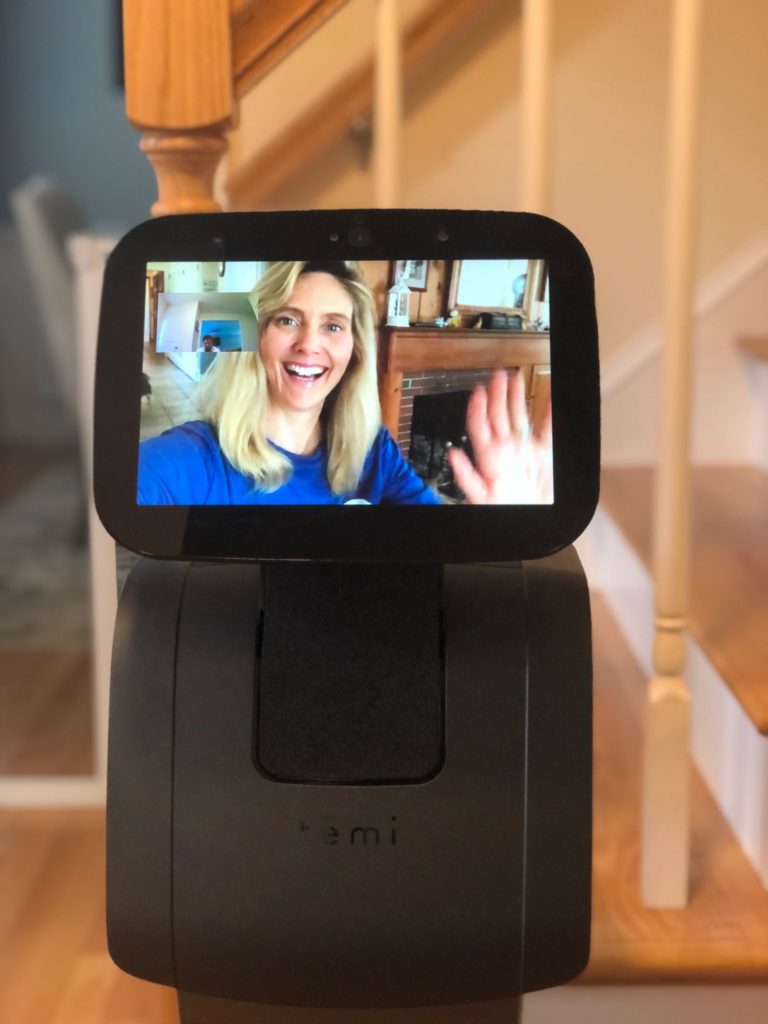
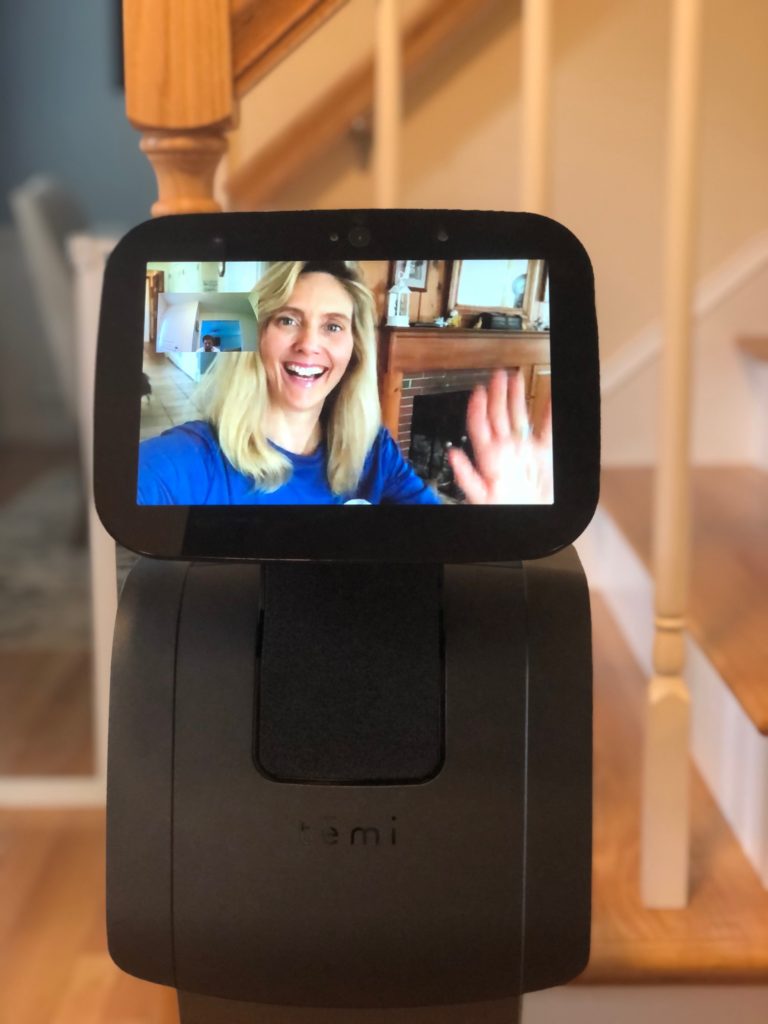
Connected Living and Temi announce a global partnership in response to the COVID-19 new world, in which the most at-risk population – our seniors – need enhanced ways to interact with family, community, and medical professionals all from a distance. Connected Living is now the U.S. partner and distributor of Temi powered by Connected Living, an interactive robot that’s been introduced to senior living and healthcare facilities.
The partnership with Temi is the latest addition to Connected Living’s comprehensive COVID-19 emergency toolkit, which enables senior living communities to manage outreach across all of its constituents, including those who work and live inside and outside the property. The suite of technology services geared at creating connected communities for seniors, includes a roster of pre-configured iPads, tablets, Alexa-enabled skills, a unique TV channel with programming designed for seniors, and a unique smartphone app that helps them stay more connected with their families and one another.
“We want to protect and connect our senior population, their caregivers, staff and families. Temi allows us to safely check temperatures at the door, set up family and doctor social or health visits, and interact with unlimited engagement content,” said Sarah Hoit, CEO and Co-Founder of Connected Living, which serves hundreds of senior living communities nationwide. “We need to do everything we can to bring health and wellbeing to our clients and to help stop the spread of COVID-19 in senior communities, while creating significant opportunity for socialization and healthcare visits.”
As the need to connect and protect our seniors is heightened during this COVID-19 global crisis, Temi can be used, in conjunction with Connected Living’s full suite of technology, to schedule both family visits and telehealth calls for anyone in the building and record the temperature of people entering the building or of current residents. This reasonably-priced robot, now being offered by Connected Living as the official U.S. distributor to the senior and healthcare market, can also be used as a “companion device” in the room to connect anytime with family, see interactive videos and content and help senior living community managers with “temperature capture.” Temi can also be used to ask for the foodservice menu or as a communication device to share safe, social distancing activities that might be occurring in the building.
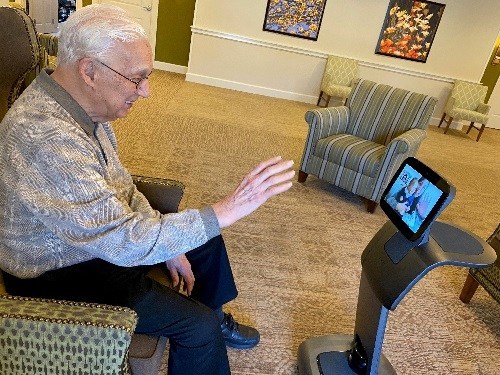
One of the most innovative senior living communities in the country, and client of Connected Living, is Connecticut-based, Maplewood Senior Living, who introduced Temi to the marketplace by purchasing 30 robots for their new high-end Inspīr Modern Living community center in Manhattan, along with one additional Temi for use in all their other properties, allowing for immediate interaction with anyone a resident wants to connect with virtually. Temi has been lifting spirits and connecting residents with family members and doctors. “We are committed to continuously innovating the way we do things, and bringing the best of what the market has to offer to our residents,” says Eleonora Tornatore-Mikesh, Chief Experience & Memory Care Officer of Maplewood Senior Living. “While this has always been our commitment, being able to deliver social and emotional visits with family, and/or connect with a doctor in the resident’s room is critical at this time.”
Through vibrant digital screen “faces,” Temi interacts with humans via autonomous navigation, dynamic video, enhanced audio, and advanced artificial intelligence. Within senior living communities, the gender-neutral Temis function as companion devices with virtually endless possibilities for education, healthcare, and entertainment through a proprietary Connected Living Alexa skill.
“The entire concept for Temi came from a visit to my grandmother, when I realized she was struggling to handle her smartphone,” said Yossi Wolf, Temi Co-Founder and Chairman. “Partnering with Connected Living to bring the convenience of personal robots to thousands of other elders is truly the fulfillment of a dream, and knowing that we’re easing the burden on this population is incredibly rewarding. Connected Living is a big part of making this dream come true.”
That comfort level is essential because Temis are playing a vital role in delivering healthcare to seniors on lockdown. The robots have proven useful in connecting residents with family, but also with doctors for remote consultations on non- emergent care.
“Our mission is to do the most work where we can do the most good, so harnessing technology to connect and protect the people we love is our focus.” Sarah Hoit, CEO & Co-Founder of Connected Living
Connected Living was recently featured in a case study by LeadingAge called, “Improving System-Wide Communication with Connected Living Enterprise Platform During the COVID-19 Crisis.” To request a copy of this case study or if you have a community in need of assistance to learn more about Connected Living and Temi, please email [email protected]
About Connected Living Based in Quincy, Mass., Connected Living was founded in 2007 to provide technology solutions to senior living communities to help them to deliver compassionate care, and to help seniors and their families to communicate better. The technology encourages resident engagement and inspires our aging population to increase their communication and connection with others to live healthier lives. Hundreds of communities nationwide have worked with Connected Living to increase occupancy, reduce employee turnover, and enhance the quality of life for seniors and their families. For more information about Connected Living, visit https://www.connectedliving.com/ConnectedLiving.com.
About Temi The Temi Company was founded by CEO Yossi Wolf in 2016. Having established robotics company Roboteam Defense seven years earlier with partner Elad Levy, Yossi decided to change direction to the consumer market and create Temi, the personal robot. Today Temi is a global company with offices in Shenzhen China (production), New York (Marketing & Sales), Tel Aviv (R&D) and Singapore. Learn more at robotemi.com.