
UAP

space-command-chief-throws-cold-water-on-the-question-of-uaps-in-space

Space Command chief throws cold water on the question of UAPs in space

Judging from recent comments from Gen. Stephen Whiting, head of US Space Command, we shouldn’t expect anything like that in whatever the government might release in response to Trump’s pending order.
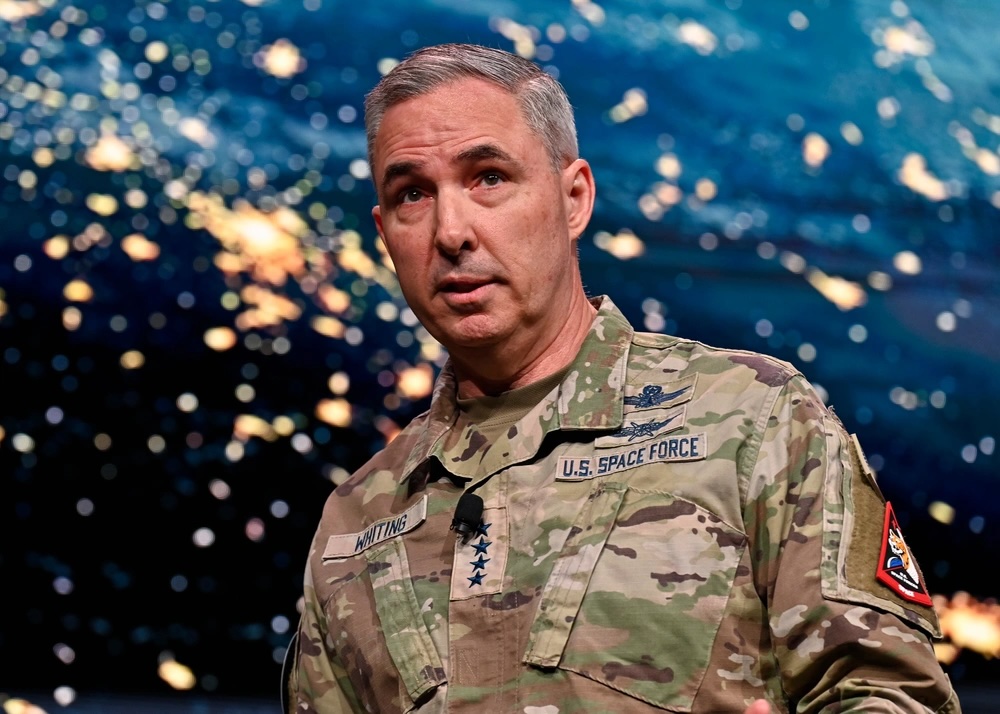
Gen. Stephen Whiting, commander of US Space Command.

Credit: US Air Force/Eric Dietrich

Gen. Stephen Whiting, commander of US Space Command. Credit: US Air Force/Eric Dietrich

“I can say, I, personally, was very interested in the president’s announcement,” Whiting told reporters last week at the Air and Space Forces Association’s Warfare Symposium in Colorado. “I look forward to seeing what data does come out. I can also tell you, as a space operator now of 36 years, having spent a lot of time with space domain awareness sensors, tracking things in space, I’ve never seen anything in space other than manmade objects, so I am not aware of anything that is extraterrestrial, other than comets and things like that.

“But I’m fascinated in the topic,” he continued. “And if something’s revealed, I’ll be interested as an American citizen.”

Space Command’s charge includes an area of responsibility (AOR) that extends from the top of Earth’s atmosphere to the Moon and beyond. One of its missions is to track, monitor, and catalog objects in space. Whiting suggested that everything he’s seen in orbit is attributable to a human-made or natural origin.

“We will respond to any presidential direction to go look at our files, but I think the term of art now is UAP, and the A is aerial, so these are things that are below the Kármán line (100 kilometers), that are in the atmosphere,” Whiting said. “I’ve seen some of the same videos and radar data that all of you have, and my guess is those relevant services and combatant commands will turn that data over. I’m very interested in the topic, but I have no personal experience with any of those phenomena.”

Space Command chief throws cold water on the question of UAPs in space Read More »
a-lot-of-people-are-mistaking-elon-musk’s-starlink-satellites-for-uaps

A lot of people are mistaking Elon Musk’s Starlink satellites for UAPs

That’s just Elon

But many UAP cases have verifiable explanations as airplanes, drones, or satellites, and lawmakers argue AARO might be able to solve more of the cases with more funding.

Airspace is busier than ever with air travel and consumer drones. More satellites are zooming around the planet as government agencies and companies like SpaceX deploy their constellations for Internet connectivity and surveillance. There’s more stuff up there to see.

“AARO increasingly receives cases that it is able to resolve to the Starlink satellite constellation,” the office said in this year’s annual report.

“For example, a commercial pilot reported white flashing lights in the night sky,” AARO said. “The pilot did not report an altitude or speed, and no data or imagery was recorded. AARO assessed that this sighting of flashing lights correlated with a Starlink satellite launch from Cape Canaveral, Florida, the same evening about one hour prior to the sighting.”

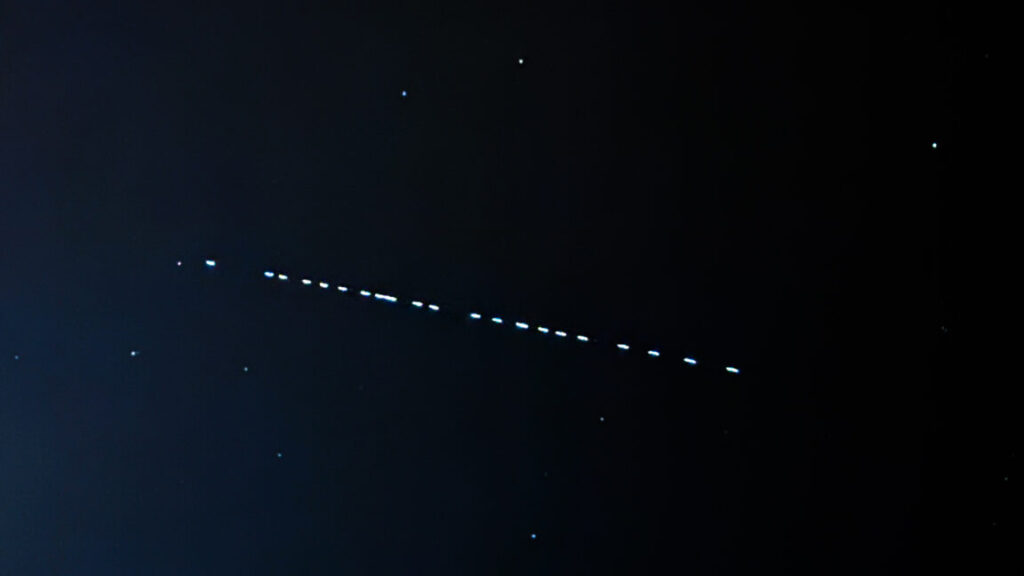
Jon Kosloski, director of AARO, said officials compared the parameters of these sightings with Starlink launches. When SpaceX releases Starlink satellites in orbit, the spacecraft are initially clustered together and reflect more sunlight down to Earth. This makes the satellites easier to see during twilight hours before they raise their orbits and become dimmer.

“We found some of those correlations in time, the direction that they were looking, and the location,” Kosloski said. “And we were able to assess that they were all in those cases looking at Starlink flares.”

SpaceX has more than 6,600 Starlink satellites in low-Earth orbit, more than half of all active spacecraft. Thousands more satellites for Amazon’s Kuiper broadband constellation and Chinese Internet network are slated to launch in the next few years.

“AARO is investigating if other unresolved cases may be attributed to the expansion of the Starlink and other mega-constellations in low-Earth orbit,” the report said.

The Starlink network is still relatively new. SpaceX launched the first Starlinks five years ago. Kosloski said he expects the number of erroneous UAP reports caused by satellites to go down as pilots and others understand what the Starlinks look like.

“It looks interesting and potentially anomalous. But we can model that, and we can show pilots what that anomaly looks like, so that that doesn’t get reported to us necessarily,” Kosloski said.

A lot of people are mistaking Elon Musk’s Starlink satellites for UAPs Read More »