wolfenstein 3d

looking-back-at-catacomb-3d,-the-game-that-led-to-wolfenstein-3d

Looking back at Catacomb 3D, the game that led to Wolfenstein 3D

No longer keen on more Commander Keen

While id’s decision to lean into fast, action-oriented first-person games might seem obvious in retrospect, the video reveals that it was far from an easy decision. Catacomb 3D earned the team just $5,000 (about $11,750 in December 2025 dollars) through a contract to deliver bi-monthly games for Softdisk’s Gamer’s Edge magazine-on-a-disk. Each episode of the Commander Keen series of run-and-gun 2D games, on the other hand, was still earning “10 times that amount” at the time, Romero said.

That made sticking with Commander Keen seem like the “obvious business decision,” Romero says in the video. The team even started work on a seventh Commander Keen game—with parallax scrolling and full VGA color support—right after Catacomb 3D‘s release. At the time, it felt like Catacomb 3D might be “just like a weird gimmick thing that we did for a little bit because we wanted to play with a different technology,” as John Carmack put it.

A tech demo shows early work on Commander Keen 7 that was abandoned in favor of Wolfenstein 3D.

That feeling started to fade away, Carmack said, after his brother Adrian had an “almost falling out of his seat” moment while pivoting toward an in-game troll in Catacomb 3D. “It automatically sucked you in,” Adrian Carmack said of the feeling. “You’re trying to look behind walls, doors, whatever… you get a pop-out like that, and it was just one of the craziest things in a video game I had ever seen.”

That kind of reaction from one of their own eventually convinced the team to abandon two weeks of work on Keen 7 to focus on what would become Wolfenstein 3D. “It kind of felt that’s where the future was going,” Carmack said in the video. “[We wanted to] “take it to some place that it wouldn’t happen staying in the existing conservative [lane].”

“Within two weeks, [I was up] at one in the morning and I’m just like, ‘Guys, we need to not make this game [Keen],’” Romero told Ars in 2024. “‘This is not the future. The future is getting better at what we just did with Catacomb.’ … And everyone was immediately was like, ‘Yeah, you know, you’re right. That is the new thing, and we haven’t seen it, and we can do it, so why aren’t we doing it?’”

Looking back at Catacomb 3D, the game that led to Wolfenstein 3D Read More »

decades-later,-john-romero-looks-back-at-the-birth-of-the-first-person-shooter

Decades later, John Romero looks back at the birth of the first-person shooter

Daikatana didn’t come up —

Id Software co-founder talks to Ars about everything from Catacomb 3-D to “boomer shooters.”

Decades later, John Romero looks back at the birth of the first-person shooter

John Romero remembers the moment he realized what the future of gaming would look like.

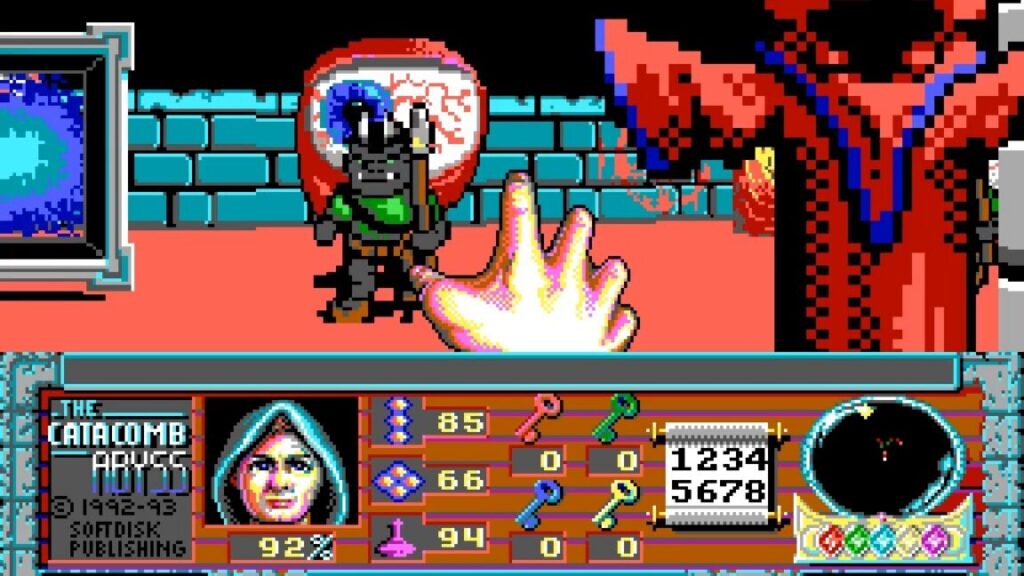
In late 1991, Romero and his colleagues at id Software had just released Catacomb 3-D, a crude-looking, EGA-colored first-person shooter that was nonetheless revolutionary compared to other first-person games of the time. “When we started making our 3D games, the only 3D games out there were nothing like ours,” Romero told Ars in a recent interview. “They were lockstep, going through a maze, do a 90-degree turn, that kind of thing.”

Despite Catacomb 3-D‘s technological advances in first-person perspective, though, Romero remembers the team at id followed its release by going to work on the next entry in the long-running Commander Keen series of 2D platform games. But as that process moved forward, Romero told Ars that something didn’t feel right.

Catacombs 3-D is less widely remembered than its successor, Wolfenstein 3D.

“Within two weeks, [I was up] at one in the morning and I’m just like, ‘Guys we need to not make this game [Keen],'” he said. “‘This is not the future. The future is getting better at what we just did with Catacomb.’ … And everyone was immediately was like, ‘Yeah, you know, you’re right. That is the new thing, and we haven’t seen it, and we can do it, so why aren’t we doing it?'”

The team started working on Wolfenstein 3D that very night, Romero said. And the rest is history.

Going for speed

What set Catacomb 3-D and its successors apart from other first-person gaming experiments of the time, Romero said, “was our speed—the speed of the game was critical to us having that massive differentiation. Everyone else was trying to do a world that was proper 3D—six degrees of freedom or representation that was really detailed. And for us, the way that we were going to go was a simple rendering at a high speed with good gameplay. Those were our pillars, and we stuck with them, and that’s what really differentiated them from everyone else.”

That focus on speed extended to id’s development process, which Romero said was unrecognizable compared to even low-budget indie games of today. The team didn’t bother writing out design documents laying out crucial ideas beforehand, for instance, because Romero said “the design doc was next to us; it was the creative director… The games weren’t that big back then, so it was easy for us to say, ‘this is what we’re making’ and ‘things are going to be like this.’ And then we all just work on our own thing.”

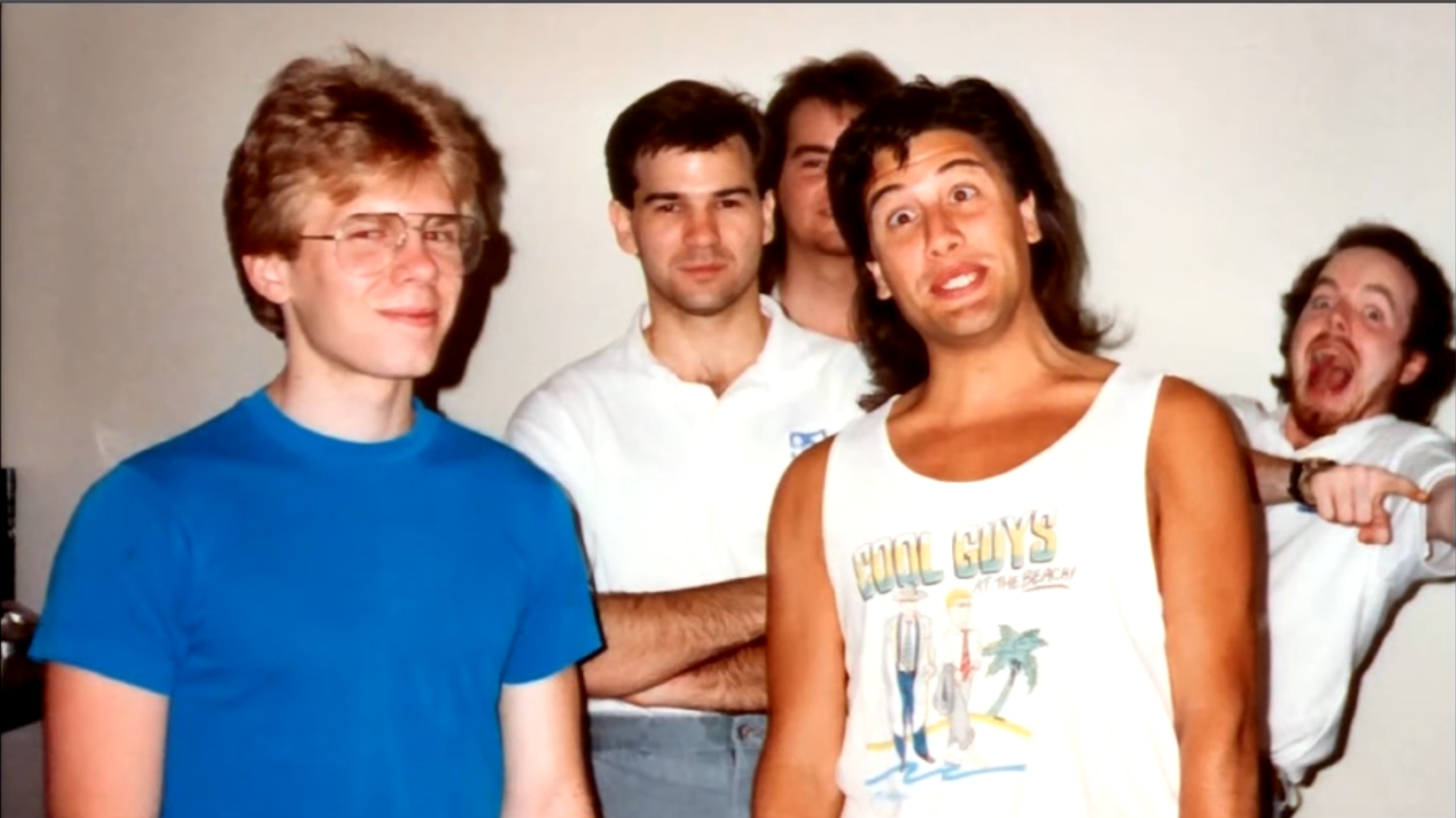
John Carmack (left) and John Romero (second from right) pose with their id Software colleagues in the early '90s.

Enlarge / John Carmack (left) and John Romero (second from right) pose with their id Software colleagues in the early ’90s.

The early id designers didn’t even use basic development tools like version control systems, Romero said. Instead, development was highly compartmentalized between different developers; “the files that I’m going to work on, he doesn’t touch, and I don’t touch his files,” Romero remembered of programming games alongside John Carmack. “I only put the files on my transfer floppy disk that he needs, and it’s OK for him to copy everything off of there and overwrite what he has because it’s only my files, and vice versa. If for some reason the hard drive crashed, we could rebuild the source from anyone’s copies of what they’ve got.”

Decades later, John Romero looks back at the birth of the first-person shooter Read More »