Although the US Department of Justice (DOJ) holds the power to block mergers that it deems to go against antitrust laws, Trump’s influence over the DOJ can’t be overlooked. While Paramount previously seemed to establish a good relationship with the president, Netflix co-CEO Ted Sarandos may have done the same recently.
Sarandos “spoke with the president in the last couple of weeks in a confab that lasted about two hours,” The Hollywood Reporter reported on Sunday, citing “multiple” anonymous sources. A White House official told the publication that they can’t comment on “private meetings that may or may not have occurred,” and Netflix didn’t respond to the publication’s requests for comment.
Meanwhile, Trump’s relationship with the Ellisons and Paramount may have taken a turn recently. Today, the president lashed out at Paramount over an interview with Rep. Marjorie Taylor Greene (R-Ga.) that aired on the news program 60 Minutes. As he said on Truth Social, per The Hollywood Reporter: “My real problem with the show, however, wasn’t the low IQ traitor, it was that the new ownership of 60 Minutes, Paramount, would allow a show like this to air. THEY ARE NO BETTER THAN THE OLD OWNERSHIP, who just paid me millions of Dollars for FAKE REPORTING about your favorite President, ME! Since they bought it, 60 Minutes has actually gotten WORSE.”
Appealing to the movie theater industry
The movie theater industry is one of the biggest critics of Netflix’s WB acquisition due to fear that the streaming leader won’t release as many movies to theaters for as long and may drive down licensing fees. Paramount is leaning into this trepidation.
As one of the oldest film studios (Paramount was founded as Famous Players Film Company in 1912), Paramount has much deeper ties to the theater business. Ellison claimed that if Paramount and WBD merge, there will be “a greater number of movies in theaters.”
Sarandos said last week that Netflix plans to maintain WBD’s current theater release schedule, which reportedly goes through 2029.
In terms of streaming, Paramount’s announcement pointed to a “combination of Paramount+ and HBO Max,” lending credence to a November report that Paramount would fold HBO Max into its own flagship streaming service if it buys WBD.
With numerous industries, big names, billions of dollars, and politics all at play, the saga of the WBD split and/or merger is only just beginning.
This article was updated on December 8 at 2: 31 p.m. ET with comment from Sarandos.
Netflix’s plans to own HBO Max, DC Comics, Harry Potter to face regulatory scrutiny.
The bidding war is over, and Netflix has been declared the winner.
After flirting with Paramount Skydance and Comcast, Warner Bros. Discovery (WBD) has decided to sell its streaming and movie studios business to Netflix. If approved, the deal is set to overturn the media landscape and create ripples that will affect Hollywood for years.
$72 billion acquisition
Netflix will pay an equity value of $72 billion, or an approximate total enterprise value of $82.7 billion, for Warner Bros. All of WBD has a $60 billion market value, NBC News notes.
The acquisition will take place after WBD completes the split of its streaming and studios businesses, which includes its film and TV libraries and the HBO channel, and its other TV networks, including CNN and TBS, into separate companies (Warner Bros. and Discovery Global, respectively). WBD’s split is expected to finish in Q3 2026.
Additionally, Netflix’s acquisition is subject to regulatory approvals, WBD shareholder approval, and other “customary closing conditions.”
Netflix expects the purchase to net it more subscribers, higher engagement, and “at least $2–3 billion of cost savings per year by the third year,” its announcement said.
Netflix co-CEO Greg Peters said in a statement that Netflix will use its global reach and business model to bring WB content to “a broader audience.”
The announcement didn’t specify what this means for current WBD staff, including WBD’s current president and CEO, David Zaslav. Gunnar Wiedenfels, who is currently CFO of WBD, is expected to be the CEO of Discovery Global after WBD split.
Netflix to own HBO Max
Netflix will have to overcome regulatory hurdles to complete this deal, which would evolve it from a streaming king to an entertainment juggernaut. If completed, the world’s largest streaming service by subscribers (301.63 million as of January) will own its third biggest rival (WBD has 128 million streaming subscribers, most of which are HBO Max users).
The acquisition would also give Netflix power over a mountain of current and incoming titles, including massive global franchises DC Comics, Game of Thrones, and Harry Potter.
If the deal goes through, Netflix said it will incorporate content from WB Studios, HBO Max, and HBO into Netflix. Netflix is expected to keep HBO Max available as a separate service, at least for the near term, Variety reported today. However, it’s easy to see a future where Netflix tries to push subscriptions bundling Netflix and HBO Max before consolidating the services into one product that would likely be more expensive than Netflix is today. Disney is setting the precedent with its bundles of Disney+ and the recently acquired Hulu, and by featuring a Hulu section within the Disney+ app.
Before today’s announcement, industry folks were concerned about Netflix potentially owning that much content while dominating streaming. However, Netflix said today that buying WB would enable it to “significantly expand US production capacity and continue to grow investment in original content over the long term, which will create jobs and strengthen the entertainment industry.”
Uniting Netflix and HBO Max’s libraries could make it easier for streaming subscribers to find content with fewer apps and fewer subscriptions. However, subscribers could also be negatively impacted (especially around pricing) if Netflix gains too much power, both as a streaming company and media rights holder.
In WBD’s most recent earnings report, its streaming business reported $45 million in quarterly earnings before interest, taxes, depreciation, and amortization. Netflix reported a quarterly net income of $2.55 billion in its most recent earnings report.
Netflix hasn’t detailed plans for the HBO cable channel. But given Netflix’s streaming ethos, the linear network may not endure in the long term. But since the HBO brand is valuable, we expect the name to persist, even if it’s just as a section of prestige titles within Netflix.
“A noose around the theatrical marketplace”
Among the stakeholders most in arms about the planned acquisition is the movie theater industry. Netflix’s co-CEO Ted Sarandos has historically seen minimal value in theaters as a distribution method. In April, he said that making movies “for movie theaters, for the communal experience” is “an outmoded idea.”
Today, Sarandos said that under Netflix, all WB movies will still hit theaters as planned, which brings us through 2029, per Variety.
During a conference call today, Sarandos said he has no “opposition to movies in theaters,” adding, per Variety:
My pushback has been mostly in the fact of the long exclusive windows, which we don’t really think are that consumer-friendly. But when we talk about keeping HBO operating, largely as it is, that also includes their output movie deal with Warner Bros., which includes a life cycle that starts in the movie theater, which we’re going to continue to support.
Notably, the executive said that “Netflix movies will take the same strides they have, which is, some of them do have a short run in the theater beforehand.”
Anticipating today’s announcement, the movie theater industry has been pushing for regulatory scrutiny over the sale of WB.
Michael O’Leary, CEO and president of Cinema United, the biggest exhibition trade organization, said in a statement today about the Netflix acquisition:
Regulators must look closely at the specifics of this proposed transaction and understand the negative impact it will have on consumers, exhibition, and the entertainment industry.
In a letter sent to Congress members this month, an anonymous group that described itself as “concerned feature film producers” wrote that Netflix’s purchase of WB would “effectively hold a noose around the theatrical marketplace” by reducing the number of theatrical releases and driving down the price of licensing fees for films after their theatrical release, as reported by Variety.
Up next: Regulatory hurdles
In the coming weeks, we’ll get a clearer idea of how antitrust concerns and politics may affect Netflix’s acquisition plans.
Recently, other media companies, such as Paramount, have been accused of trying to curry favor with US President Donald Trump in order to get deals approved. The US Department of Justice (DOJ) could try to block Netflix’s acquisition of WB. But there’s reason for Netflix and WB to remain optimistic if that happens. In 2017, Time Warner and AT&T successfully defeated the DOJ’s attempted merger block.
Still, Netflix and WB have their work cut out for them, as skepticism around the deal grows. Last month, US Senators Elizabeth Warren (D-Mass.), Richard Blumenthal (D-Conn.), and Bernie Sanders (I-Vt.) wrote to the DOJ’s antitrust division urging that any WB deal “is grounded in the law, not President Trump’s political favoritism.”
In a letter to Attorney General Pam Bondi last month, Rep. Darrel Issa (R-Calif.) said that buying WB would “enhance” Netflix’s “unequaled market power” and be “presumptively problematic under antitrust law.”
In a statement about Netflix’s announcement shared by NBC News today, a spokesperson for the California attorney general’s office said:
“The Department of Justice believes further consolidation in markets that are central to American economic life—whether in the financial, airline, grocery, or broadcasting and entertainment markets—does not serve the American economy, consumers, or competition well.”
Netflix’s rivals may also seek to challenge the deal. Attorneys for Paramount questioned the “fairness and adequacy” of WBD’s sales process ahead of today’s announcement.
Scharon is a Senior Technology Reporter at Ars Technica writing news, reviews, and analysis on consumer gadgets and services. She’s been reporting on technology for over 10 years, with bylines at Tom’s Hardware, Channelnomics, and CRN UK.
OpenAI has acquired Software Applications Incorporated (SAI), perhaps best known for the core team that produced what became Shortcuts on Apple platforms. More recently, the team has been working on Sky, a context-aware AI interface layer on top of macOS. The financial terms of the acquisition have not been publicly disclosed.
“AI progress isn’t only about advancing intelligence—it’s about unlocking it through interfaces that understand context, adapt to your intent, and work seamlessly,” an OpenAI rep wrote in the company’s blog post about the acquisition. The post goes on to specify that OpenAI plans to “bring Sky’s deep macOS integration and product craft into ChatGPT, and all members of the team will join OpenAI.”
That includes SAI co-founders Ari Weinstein (CEO), Conrad Kramer (CTO), and Kim Beverett (Product Lead)—all of whom worked together for several years at Apple after Apple acquired Weinstein and Kramer’s previous company, which produced an automation tool called Workflows, to integrate Shortcuts across Apple’s software platforms.
The three SAI founders left Apple to work on Sky, which leverages Apple APIs and accessibility features to provide context about what’s on screen to a large language model; the LLM takes plain language user commands and executes them across multiple applications. At its best, the tool aimed to be a bit like Shortcuts, but with no setup, generating workflows on the fly based on user prompts.
HBO Max subscriptions are getting up to 10 percent more expensive, owner Warner Bros. Discovery (WBD) revealed today.
HBO Max’s ad plan is going from $10 per month to $11/month. The ad-free plan is going from $17/month to $18.49/month. And the premium ad-free plan (which adds 4K support, Dolby Atmos, and the ability to download more content) is increasing from $21 to $23.
Meanwhile, prices for HBO Max’s annual plans are increasing from $100 to $110 with ads, $170 to $185 without ads, and $210 to $230 for the premium tier.
For current subscribers, the price hikes won’t take effect until November 20, Variety reported. People who try to subscribe to the streaming service from here on out will have to pay the new prices immediately.
Price hike hints
The price hikes follow comments from WBD CEO David Zaslav last month that WBD’s flagship streaming service was “way underpriced.” Speaking at the Goldman Sachs Cornucopia + Technology conference, Zaslav’s reasoning stemmed from the service’s “quality,” as well as people previously spending “on average, $55 for content 10 years ago.”
Another hint that HBO Max would be getting more expensive is its history of getting more expensive. The service most recently raised subscription fees in June 2024, when it made its ad-free plans more expensive. HBO Max’s first price hike was in January 2023. The service launched in May 2020.
HBO Max is getting more expensive as streaming companies grapple with the financial realities of making robust, diverse libraries of classic, new, and exclusive shows and movies available globally and on-demand. HBO Max rivals Disney+, Apple TV, and Peacock have all raised prices since the summer.
For years, WBD has been arguing that streaming services are too cheap. At a Citibank conference in 2023, WBD CFO Gunnar Weidenfels said that collapsing seven media distribution windows into one “and selling it at the lowest possible price doesn’t sound like a very smart strategy.
Infinite Reality, a media, ecommerce, and marketing company focused on 3D and AI-powered experiences, has entered an agreement to acquired Napster. That means that the brand originally launched in 1999 as a peer-to-peer (P2P) music file-sharing service is set to be reborn again. This time, new owners are reshaping the brand into one focused on marketing musicians in the metaverse.
Infinite announced today a definitive agreement to buy Napster for $207 million. The Norwalk, Connecticut-based company plans to turn Napster into a “social music platform that prioritizes active fan engagement over passive listening, allowing artists to connect with, own, and monetize the relationship with their fans.” Jon Vlassopulos, who became Napster CEO in 2022, will continue with his role at the brand.
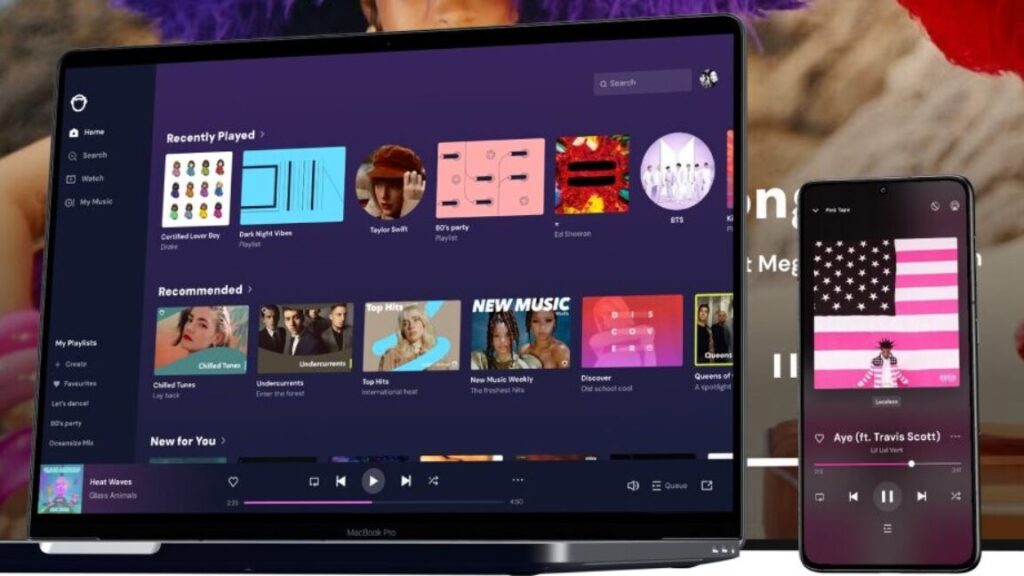
Since 2016, Napster has been operating as a (legal) streaming service. It claims to have over 110 million high-fidelity tracks, with some supporting lossless audio. Napster subscribers can also listen offline and watch music videos. The service currently starts at $11 per month.
Since 2022, Napster has been owned by Web3 and blockchain firms Hivemind and Algorand. Infinite also develops Web3 tech, and CEO John Acunto told CNBC that Algorand’s blockchain background was appealing, as was Napster’s licenses for streaming millions of songs.
To market musicians, Infinite has numerous ideas for helping Napster users interact more with the platform than they do with the current music streaming service. The company shared goals of using Napster to offer “branded 3D virtual spaces where fans can enjoy virtual concerts, social listening parties, and other immersive and community-based experiences” and more “gamification.” Infinite also wants musicians to use Napster as a platform where fans can purchase tickets for performances, physical and virtual merchandise, and “exclusive digital content.” The 6-year-old firm also plans to offer artists abilities to use “AI-powered customer service, sales, and community management agents” and “enhanced analytics dashboards to better understand fan behavior” with Napster.
Online graphic design platform provider Canva announced its acquisition of Affinity on Tuesday. The purchase adds tools for creative professionals to the Australian startup’s repertoire, presenting competition for today’s digital design stronghold, Adobe.
The companies didn’t provide specifics about the deal, but Cliff Obrecht, Canva’s co-founder and COO, told Bloomberg that it consists of cash and stock and is worth “several hundred million pounds.”
Canva, which debuted in 2013, has made numerous acquisitions to date, including Flourish, Kaleido, and Pixabay, but its purchase of Affinity is its biggest yet—by both price and headcount (90). Affinity CEO Ashley Hewson said via a YouTube video that Canva approached Affinity about a potential deal two months ago.
Before its Affinity purchase, Canva claimed 175 million users, which interestingly includes 90 million accrued since September 2022, when Canva launched Visual Suite. Without Affinity, though, Canva hasn’t had a way to appeal to the business-to-business market.
Affinity, which works with iPads, Macs, and Windows PCs, meanwhile, has a creative suite that includes a photo editor, professional page layout software, and Designer, a vector-based graphics software that “thousands” of illustrators, designers, and game developers use, Obrecht said when announcing the acquisition.
Of course, Affinity’s user base isn’t nearly the size of Adobe’s. Affinity claims that 3 million creative professionals use its tools. Adobe hasn’t provided hard numbers recently, but in 2017, it was estimated that Adobe Creative Cloud had 12 million subscribers, and Adobe currently claims to have 50 million members on its Behance online community.
However, Affinity has earned a following among creative professionals seeking an alternative to Adobe. Speaking to Bloomberg, Obrecht was keen to point out that Apple has featured Affinity apps in presentations about creative products, for example.
Perpetual Affinity licenses will still be available
Since being founded in 2014, one of the biggest ways that Affinity has stood out to creatives looking to avoid the costs associated with Adobe, including subscription fees, is perpetual licensing. New owner Canva pledged in an announcement today that one-time purchase fees will always be an option for Affinity users.
“Perpetual licenses will always be offered, and we will always price Affinity fairly and affordably,” an announcement today from Canva and Affinity said.
If Canva ever decides to sell Affinity as a subscription, perpetual licensing will remain available, Canva said, adding: “This fits with enabling Canva users to start adopting Affinity. It could also allow us to offer Affinity users a way to scale their workflows using Canva as a platform to share and collaborate on their Affinity assets, if they choose to.”
As we’ve seen with many other acquisitions, though, it’s common for companies to start changing their minds about how they’re willing to operate an acquired business years or even months after finalizing the purchase. And, of course, Canva’s idea of pricing “fairly and affordably” could differ from those of long-time Affinity users.
What about AI?
Canva also vowed to keep Affinity available as a standalone product and said there will be upcoming free updates to Affinity V2. However, Cameron Adams, Canva’s co-founder, pointed to potential future integration between Canva’s and Affinity’s offerings when speaking with Sydney Morning Herald:
Our product teams have already started chatting and we have some immediate plans for lightweight integration, but we think the products themselves will always be separate. Professional designers have really specific needs.
Canva’s announcement today said that the company plans to accelerate the rollout of “highly requested” Affinity features, “such as variable font support, blend and width tools, auto object selection, multi-page spreads, [and] ePub export.” With Canva, which was valued at $26 billion in 2021 and generates over $2.1 billion in annualized revenue, taking ownership of Affinity, the creative suite is expected to have more resources for improvements and updates than before.
Notably, though, Canva hasn’t revealed to what degree it may try to incorporate AI into Affinity. Canva is fully aboard the generative AI hype train and, as recently as this Monday pushed workers of all types to embrace the technology. Affinity, meanwhile, has said that it won’t make any generative AI tech and is “against anything which undermines human talent or tramples on artists’ IP.” Affinity’s stance could be forced to change one day under its new owner.
To start, though, Canva’s acquisition helps to fill the B2B gap in its portfolio, and it’s expected to use its new appeal to go after some of Adobe’s dominance.
“While our last decade at Canva has focused heavily on the 99 percent of knowledge workers without design training, truly empowering the world to design includes empowering professional designers, too. By joining forces with Affinity, we’re excited to unlock the full spectrum of designers at every level and stage of the design journey,” Obrecht said in Tuesday’s announcement.
Meanwhile, Adobe abandoned its own recent merger and acquisition efforts, a $20 billion purchase of Figma, in December due to regulatory concerns.
Walmart announced an agreement to buy Vizio today. Irvine, California-based Vizio is best known for lower-priced TVs, but its real value to Walmart is its advertising business and access to user data.
Walmart said it’s buying Vizio for approximately $2.3 billion, pending regulatory clearance and additional closing conditions. Vizio can also terminate the transaction over the next 45 days if it accepts a better offer, per the announcement.
Walmart will keep selling non-Vizio TVs should the merger close, Seth Dallaire, Walmart US’s EVP and CRO who would manage Vizio post-acquisition, told The Wall Street Journal (WSJ).
Walmart expects the acquisition to be finalized as soon as this summer, it told WSJ.
Ad-pportunity
Walmart, including Sam’s Club, is typically Vizio’s biggest customer by sales, per a WSJ report last week on the potential merger. But Walmart’s acquisition isn’t about getting a bigger piece of the budget-TV market (Walmart notably already sells its own “onn.” budget TVs). Instead, Walmart is looking to boost its Walmart Connect advertising business.
Vizio makes money by selling ads, including those shown on the Vizio SmartCast OS and on free content available on its TVs with ads. Walmart said buying Vizio will give it new ways to appeal to advertisers and that those ad efforts would be further fueled by Walmart’s high-volume sales of TVs.
Walmart said today that Vizio’s Platform+ ad business has “over 500 direct advertiser relationships, including many of the Fortune 500” and that SmartCast users have grown 400 percent since 2018 to 18 million active accounts.
Walmart Connect (which was rebranded from Walmart Media Group in 2021) sells various types of ads, including adverts that appear on Walmart’s website and app. Walmart Connect also sells ads that display on in-store screens, including display TVs and point-of-sale machines, in over 4,700 locations (Walmart has over 10,500 stores).
Walmart makes most of its US revenue from low-profit groceries, WSJ noted last week, but ads are higher profit. Walmart has said that it wants Walmart Connect to be a top-10 advertising business. Alphabet, Amazon, and Meta are among the world’s biggest advertising companies today. In the fiscal year ending January 2023, Walmart said that its global ads business represented under 1 percent ($2.7 billion) of its total annual revenue. In its fiscal year 2024 Q4 earnings report released today [PDF], Walmart said its global ad business grew 33 percent, including 22 percent in the US, compared to Q4 2023.
Hungry for customer data
Owning Platform+ would give Walmart new information about TV users. Data gathered from Vizio TVs will be combined with data on shoppers that Walmart already gets. Walmart plans to use this customer data to sell targeted ad space, such as banners above Walmart.com search results, and to help advertisers track ad results.
With people only able to buy so many new TVs, vendors have been pushing for ways to make money off of already-purchased TVs. That means putting ads on TV OSes and TVs that gather customer data, including what users watch and which ads they click on, when possible. TV makers like Vizio, Amazon, and LG are increasingly focusing on ads as revenue streams.
Meanwhile, retailers like Walmart are also turning to ads for revenue. Through Vizio, Walmart is looking to add a business with the vast majority of gross profit coming from ads. Data acquired through SmartCast can shed light on ad effectiveness and improve ad targeting, Vizio tells advertisers.
In an interview with WSJ, Dallaire noted that smart TVs and streaming have turned the TV business into a software, not hardware, business. According to a spokesperson for Parks Associate that Ars Technica spoke with, Vizio has 12 percent of connected TV OS market share. WSJ reported last week that Roku OS has more market share at 25 percent; although, a graph that Parks Associates’ rep sent to me suggests the percentage is smaller (Parks Associates’ spokesperson wouldn’t confirm Roku OS’ market share or the accuracy of WSJ’s report to Ars). Roku OS is on Walmart’s “onn.” TVs, but Walmart doesn’t own Roku.
Vizio TVs could get worse
From the perspective of a company seeking to grow its ad business, buying Vizio seems reasonable. But from a user perspective, Vizio TVs risk becoming too centered on selling and measuring ads.
There was already a large financial incentive for Vizio to focus on growing Platform+ and the profitability of SmartCast (in its most recent earnings report, Vizio said its average revenue per SmartCast user increased 14 percent year over year to $31.55). For years, Vizio’s business has been more about selling ads than selling TVs. An acquisition focused on ads can potentially detract from a focus on improving Vizio hardware.
Stuffing more ads into TVs could also ruin the experience for people seeking a quality TV at a lower cost. While some people may be willing to sacrifice features and image quality to save money, others aren’t willing to deal with more ads and incessant interest in viewer tracking for that experience. With Vizio expected to become part of a conglomerate eager to grow its ad business, it’s possible that the ads experience on Vizio TVs could worsen.
Editor’s note: This article was edited to include information from Parks Associates.