commercial space stations

congress-extends-iss-and-tells-nasa-to-get-moving-on-private-space-stations

Congress extends ISS and tells NASA to get moving on private space stations

Nominally, NASA plans to have one or more of these companies operating a commercial space station in low-Earth orbit by 2030. This is the date at which the US space agency has stated it will retire the aging laboratory, some elements of which are now nearly three decades old. However, some space policy officials have questioned whether any of the companies might be ready by then.

Cruz and other senators on the committee appear to share those concerns, as their legislation extends the International Space Station’s lifespan from 2030 to 2032 (an extension must still be approved by international partners, including Russia). Moreover, the authorization bill states, “The Administrator shall not initiate the de-orbit of the ISS until the date on which a commercial low-Earth orbit destination has reached an initial operational capability.”

With this legislation, the US Senate is making clear that it views a permanent human presence in low-Earth orbit as a high priority. This version of the authorization legislation must still be passed by the full Senate and work its way through the House of Representatives.

Reaction from the companies

After the legislation passed the Commerce committee, Axiom Space said on social media that it welcomes the changes: “Axiom Space is proud to support the NASA Authorization Act of 2026. The bill is a clear indicator that Chairman @SenTedCruz and the Senate Commerce Committee are determined to ensure the success of the entire human spaceflight enterprise.”

In an interview, the chief executive of Vast, Max Haot, said his company also welcomed the clarifying legislation—both for its language on commercial space stations as well as its reflection of the fact that NASA Administrator Jared Isaacman has been working overtime to set the Artemis lunar program on a better path for success.

“We are really impressed by what Jared has been able to do with the American space program and aligning all of the stakeholders,” he said. “As it relates to commercial space stations, we were happy to see the renewed commitment to transition from the ISS to commercial alternatives.”

Haot said there should not be a hard date for de-orbiting the International Space Station but that it should depend on the readiness of the commercial providers. He said Vast is confident that, should NASA issue an RFP and awards for private providers this year, Vast will be ready to support a continuous human presence in low-Earth orbit by the end of 2030.

Congress extends ISS and tells NASA to get moving on private space stations Read More »

space-ceo-explains-why-he-believes-private-space-stations-are-a-viable-business

Space CEO explains why he believes private space stations are a viable business

It’s a critical time for companies competing to develop a commercial successor to the International Space Station. NASA is working with several companies, including Axiom Space, Voyager Technologies, Blue Origin, and Vast, to develop concepts for private stations where it can lease time for its astronauts.

The space agency awarded Phase One contracts several years ago and is now in the final stages of writing requirements for Phase Two after asking for feedback from industry partners in September. This program is known as Commercial LEO Destinations, or CLDs in industry parlance.

Time is running out for NASA if it wants to establish continuity from the International Space Station, which will reach its end of life in 2030, with a follow-on station ready to go before then.

One of the more intriguing companies in the competition is Voyager Technologies, which recently announced a strategic investment from Janus Henderson, a global investment firm. In another sign that the competition is heating up, Voyager also just hired John Baum away from Vast, where he was the company’s business development leader.

To get a sense of this competition and how Voyager is coming along with its Starlab space station project, Ars spoke with the firm’s chairman, Dylan Taylor. This conversation has been lightly edited for clarity.

Ars: I know a lot of the companies working on CLDs are actively fundraising right now. How is this coming along for Voyager and Starlab?

Dylan Taylor: Fundraising is going quite well. You saw the Janus announcement. That’s significant for a few reasons. One is, it’s a significant investment. Of course, we’re not disclosing exactly how much. (Editor’s note: It likely is on the order of $100 million.) But the more positive development on the Janus investment is that they are such a well-known, well-respected financial investor.

If you look at the kind of bellwether investors, Janus would be up there with a Blackstone or Blackrock or Fidelity. So it’s significant not only in terms of capital contribution, but in… showing that commercial space stations are investable. This isn’t money coming from the Gulf States. It’s not a syndication of a bunch of $1,000 checks from retail investors. This is a very significant institutional investor coming in, and it’s a signal to the market. They did significant diligence on all our competitors, and they went out of the way saying that we’re far and away the best business plan, best design, and everything else, so that’s why it’s so meaningful.

Space CEO explains why he believes private space stations are a viable business Read More »

starlab—with-half-the-volume-of-the-iss—will-fit-inside-starship’s-payload-bay

Starlab—with half the volume of the ISS—will fit inside Starship’s payload bay

It’s full of stars —

“Building and integrating in space is very expensive.”

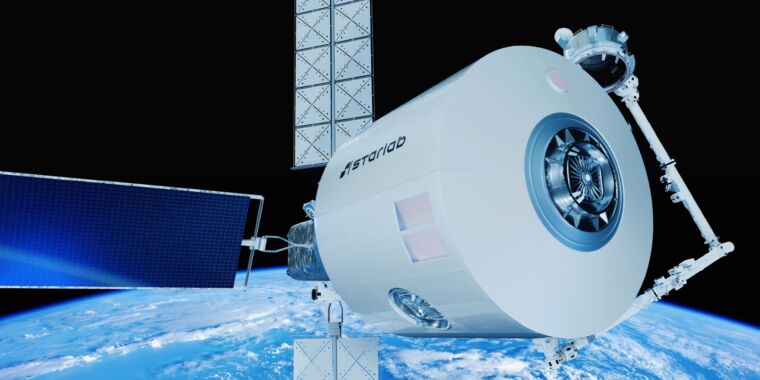
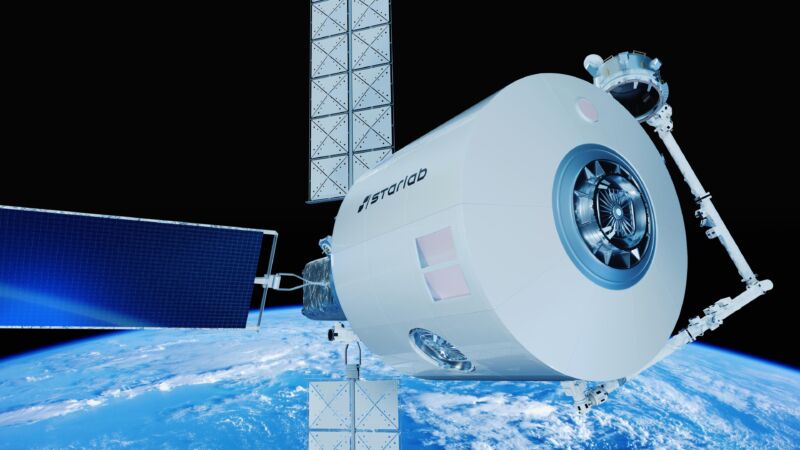
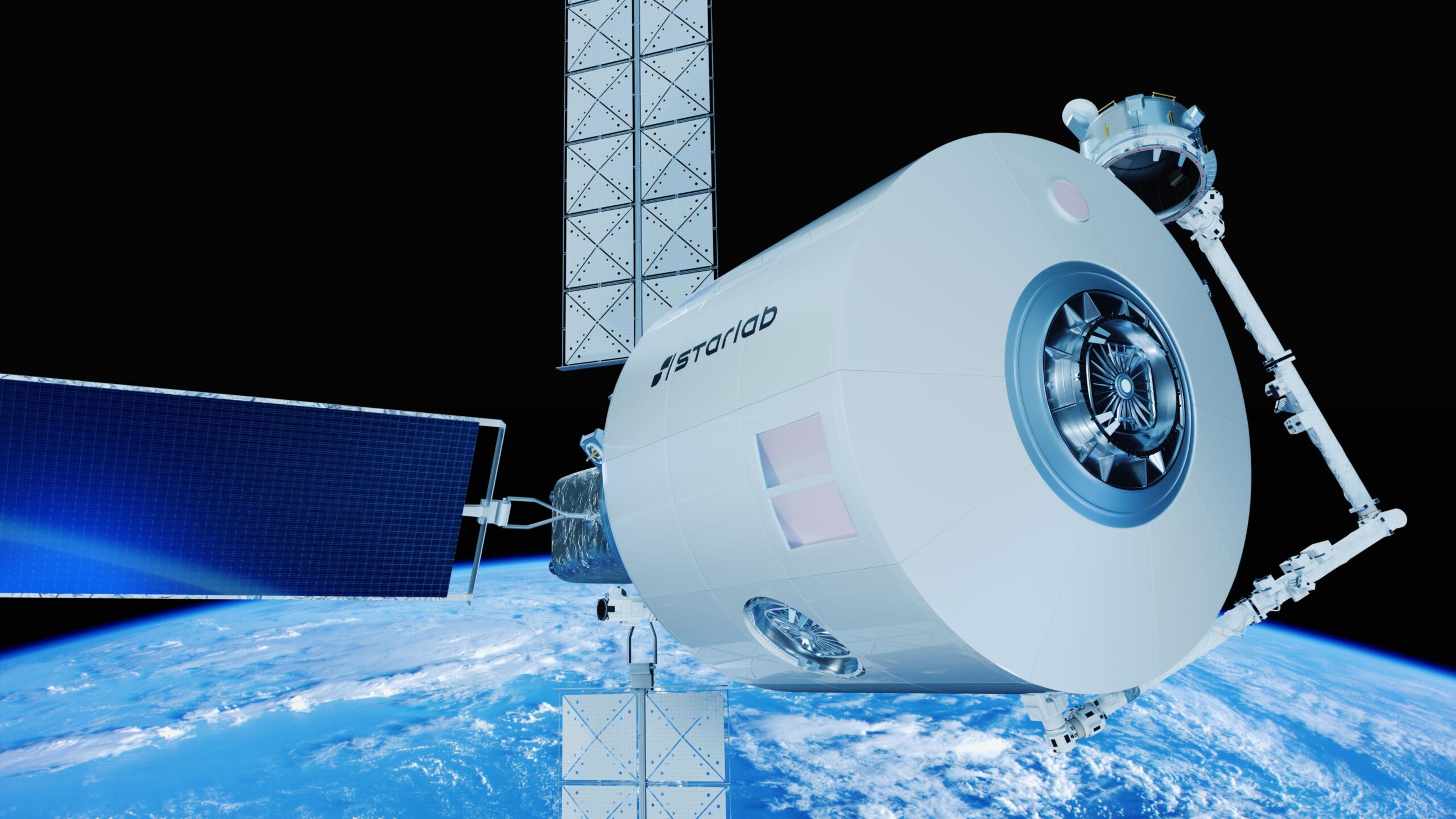
An artist's concept of the Starlab space station.

Enlarge / An artist’s concept of the Starlab space station.

Starlab LLC

The Starlab commercial space station will launch on SpaceX’s Starship rocket, officials said this week.

Starlab is a joint venture between the US-based Voyager Space and the European-based multinational aerospace corporation Airbus. The venture is building a large station with a habitable volume equivalent to half the pressurized volume of the International Space Station and will launch the new station no earlier than 2028.

“SpaceX’s history of success and reliability led our team to select Starship to orbit Starlab,” Dylan Taylor, chairman and CEO of Voyager Space, said in a statement. “SpaceX is the unmatched leader for high-cadence launches and we are proud Starlab will be launched to orbit in a single flight by Starship.”

Fitting in a big fairing

Starlab will have a diameter of about 26 feet (8 meters). It is perhaps not a coincidence that Starship’s payload bay can accommodate vehicles up to 26 feet across in its capacious fairing. However, in an interview, Marshall Smith, the chief technology officer of Voyager Space, said the company looked at a couple of launch options.

“We looked at multiple launches to get Starlab into orbit, and eventually gravitated toward single launch options,” he said. “It saves a lot of the cost of development. It saves a lot of the cost of integration. We can get it all built and checked out on the ground, and tested and launch it with payloads and other systems. One of the many lessons we learned from the International Space Station is that building and integrating in space is very expensive.”

With a single launch on a Starship, the Starlab module should be ready for human habitation almost immediately, Smith said.

It's hard to believe the interior of Starlab will ever be this clean in space.

Enlarge / It’s hard to believe the interior of Starlab will ever be this clean in space.

Starlab LLC

Starlab is one of several privately developed space stations vying to become a commercial replacement for the International Space Station, which NASA is likely to retire in 2030. Among the other contenders are Axiom Space, Blue Origin, and Vast Space. SpaceX may also configure a human-rated version of Starship as a temporary space station.

NASA has provided seed funding to some of these companies, including Voyager Space, to begin designing and developing their stations. NASA is expected to hold a second round of competition next year, when it will select one or more companies to proceed with building and testing their stations.

Finding customers

Each company is developing a space station that will serve both government customers—NASA wants to continue flying at least a handful of astronauts in low-Earth orbit for research purposes—as well as private customers. The challenge for Starlab and other commercial stations is developing a customer base beyond NASA to support the expense of flying and operating stations.

The challenge is a huge one: NASA spent more than $100 billion constructing the International Space Station and has a $3 billion annual budget for operations and transportation of people and supplies to the station. The agency is likely to fund commercial space stations at a level of about $1 billion a year, so these companies must build their facilities relatively quickly at low cost and then find a diverse base of customers to offset expenses.

Starlab may have an advantage in this regard with its co-ownership by Airbus. One of the big questions surrounding the end of the International Space Station is what happens to the European astronauts who fly there now. The European Space Agency will likely be reticent about funding missions to private space stations owned and operated by US companies. The involvement by Airbus, therefore, makes Starlab attractive to European nations as a destination.

Starlab—with half the volume of the ISS—will fit inside Starship’s payload bay Read More »