Donald Trump

all-federal-agencies-ordered-to-terminate-remote-work—ideally-within-30-days

All federal agencies ordered to terminate remote work—ideally within 30 days

Exceptions may be granted

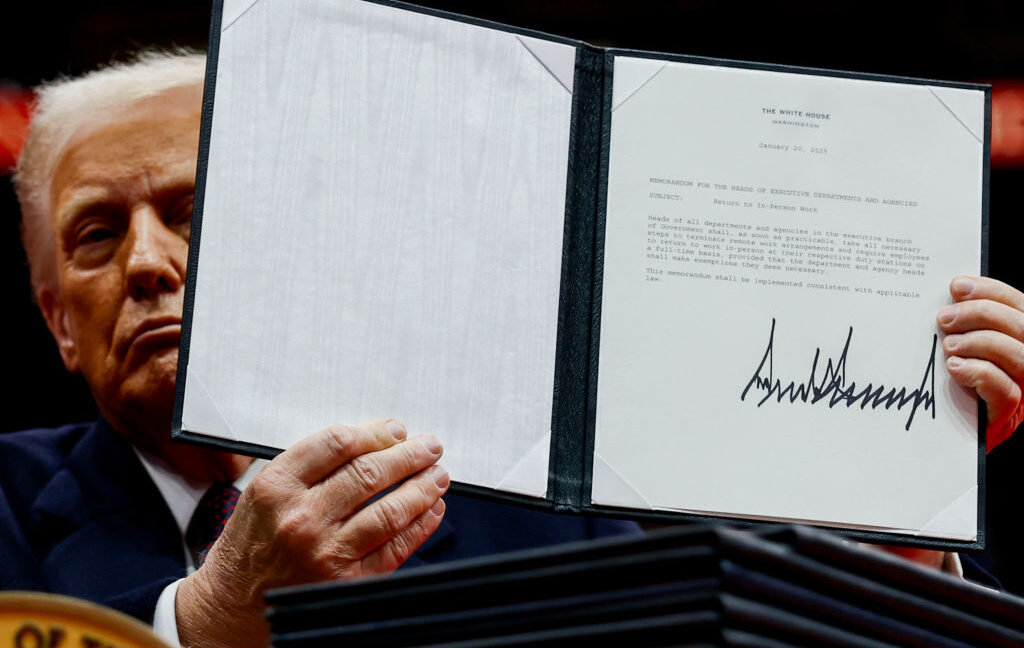
Ezell’s memo expanded criticism of the Biden administration’s approach to remote work, suggesting that it enabled federal unions’ alleged attempts “to abuse the collective-bargaining process to guarantee full-time telework into the indefinite future and forestall any requirement to return to the office.”

Suspecting that the “rampant use of telework is likely underreported,” the committee’s report concluded that “even the reported levels are excessive, there is little evidence that it is enhancing productivity or addressing recruitment and retention gaps, and there is evidence it is harming agency missions and citizen-facing services.”

To overcome these supposed deficiencies, the committee recommended that remote work policies be linked to performance metrics, rather than “employee preferences or union demands.” Any remote work that is granted should be tracked through automated systems, the report further prescribed, and any attempts for federal agencies to compete for talent using remote work perks should not be tolerated.

This will allow the government to alleviate the “national embarrassment” of empty offices and “dispose of unneeded property and terminate unnecessary leases,” the report said.

While some employees may be eligible for RTO exemptions—either to accommodate a disability or qualifying medical condition, or for some “other compelling reason certified by the agency head and the employee’s supervisor”—Ezell’s memo insisted that a general return-to-office push was necessary. He said that Trump’s presidential memo reflected “a simple reality” that “the only way to get employees back to the office is to adopt a centralized policy requiring return-to-work for all agencies across the federal government.”

“Seeking to cajole individual agencies to try to get employees to return to the worksite has not succeeded,” Ezell said.

Although Trump’s memo set no deadline for RTO efforts to begin, Ezell gave federal agency heads rather short notice to fall in line. All agencies must submit their RTO plans by 5 pm ET on Friday, January 24, Ezell’s memo said.

Those plans should specify “the date that the agency will be in full compliance with the new telework policy,” with a recommended deadline of 30 days to comply, Ezell said.

All federal agencies ordered to terminate remote work—ideally within 30 days Read More »

trump-can-save-tiktok-without-forcing-a-sale,-bytedance-board-member-claims

Trump can save TikTok without forcing a sale, ByteDance board member claims

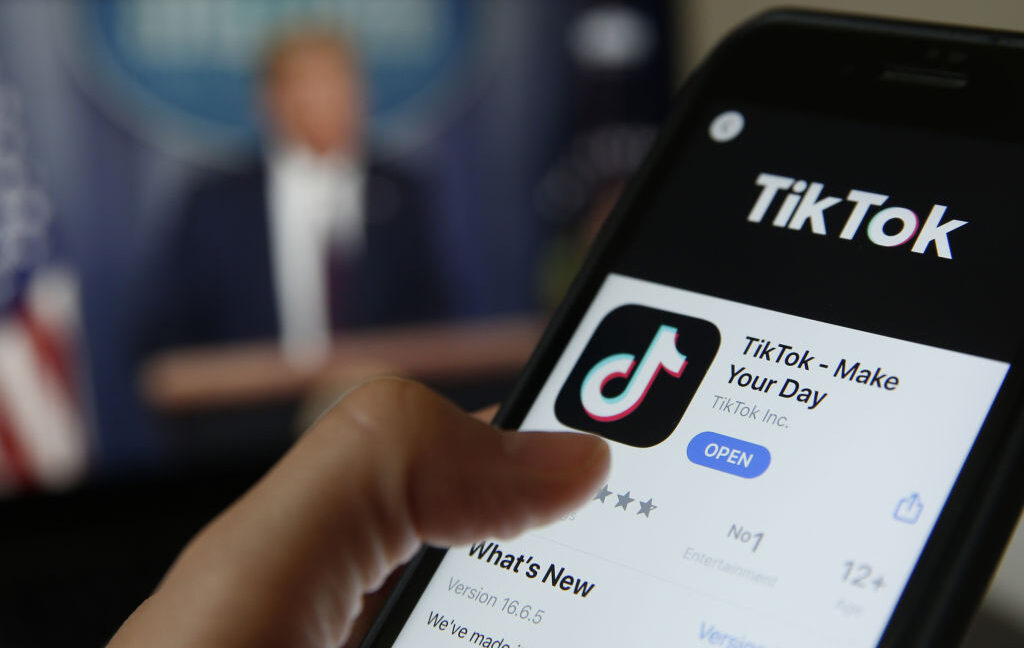
TikTok owner ByteDance is reportedly still searching for non-sale options to stay in the US after the Supreme Court upheld a national security law requiring that TikTok’s US operations either be shut down or sold to a non-foreign adversary.

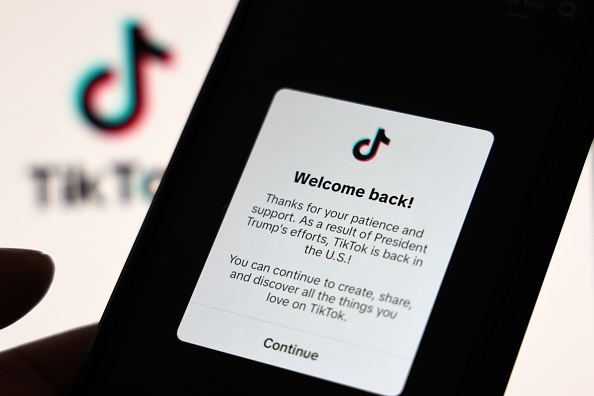
Last weekend, TikTok briefly went dark in the US, only to come back online hours later after Donald Trump reassured ByteDance that the US law would not be enforced. Then, shortly after Trump took office, he signed an executive order delaying enforcement for 75 days while he consulted with advisers to “pursue a resolution that protects national security while saving a platform used by 170 million Americans.”

Trump’s executive order did not suggest that he intended to attempt to override the national security law’s ban-or-sale requirements. But that hasn’t stopped ByteDance, board member Bill Ford told World Economic Forum (WEF) attendees, from searching for a potential non-sale option that “could involve a change of control locally to ensure it complies with US legislation,” Bloomberg reported.

It’s currently unclear how ByteDance could negotiate a non-sale option without facing a ban. Joe Biden’s extended efforts through Project Texas to keep US TikTok data out of China-controlled ByteDance’s hands without forcing a sale dead-ended, prompting Congress to pass the national security law requiring a ban or sale.

At the WEF, Ford said that the ByteDance board is “optimistic we will find a solution” that avoids ByteDance giving up a significant chunk of TikTok’s operations.

“There are a number of alternatives we can talk to President Trump and his team about that are short of selling the company that allow the company to continue to operate, maybe with a change of control of some kind, but short of having to sell,” Ford said.

Trump can save TikTok without forcing a sale, ByteDance board member claims Read More »

tiktok-is-mostly-restored-after-trump-pledges-an-order-and-half-us-ownership

TikTok is mostly restored after Trump pledges an order and half US ownership

At a rally Sunday, he did not clarify if this meant a US-based business or the government itself. “So they’ll have a partner, the United States, and they’ll have a lot of bidders … And there’s no risk, we’re not putting up any money. All we’re doing is giving them the approval without which they don’t have anything,” Trump said Sunday.

Legal limbo

Trump’s order, and TikTok’s return to service, both seem at odds with the law—and leadership in the Republican party. Speaker Mike Johnson said on NBC’s Meet the Press Sunday that Congress would “enforce the law.” Sens. Tom Cotton (R-Ark.) and Pete Ricketts (R-Neb.) issued a joint statement Sunday, commending Apple, Microsoft, and Google for “following the law,” and noting that other companies “face ruinous bankruptcy” for violating it.

“Now that the law has taken effect, there’s no legal basis for any kind of ‘extension’ of its effective date,” the statement read. The law states that “A path to executing a qualified divestiture” has to be determined before a one-time extension of 90 days can be granted.

TikTok’s best chance at avoiding a shutdown vanished in last week’s unanimous Supreme Court decision upholding the divest-or-sell law. Aimed at protecting national security interests from TikTok’s Chinese owners having access to the habits and data of 170 million American users, the law was ruled to be “content-neutral,” and that the US “had good reason to single out TikTok for special treatment.”

Reports at Forbes, Bloomberg, and elsewhere have suggested that ByteDance and its Chinese owners could be seeking to use TikTok as a bargaining chip, with maneuvers including a sale to Trump ally Elon Musk as a means of counteracting Trump’s proposed tariffs on Chinese imports.

One largely unforeseen side effect of Congress’ TikTok-centered actions is that Marvel Snap, a mobile collectible card and deck-building game, disappeared in similar fashion over the weekend. The game, developed by a California-based team, is published by ByteDance’s Nuverse mobile game division. With no web version available, Snap remained unavailable on app stores Monday morning. A message to players with the game installed noted that “This outage is a surprise to us and wasn’t planned,” though it pledged to restore the game.

TikTok is mostly restored after Trump pledges an order and half US ownership Read More »

tiktok-loses-supreme-court-fight,-prepares-to-shut-down-sunday

TikTok loses Supreme Court fight, prepares to shut down Sunday


TikTok has said it’s preparing to shut down Sunday.

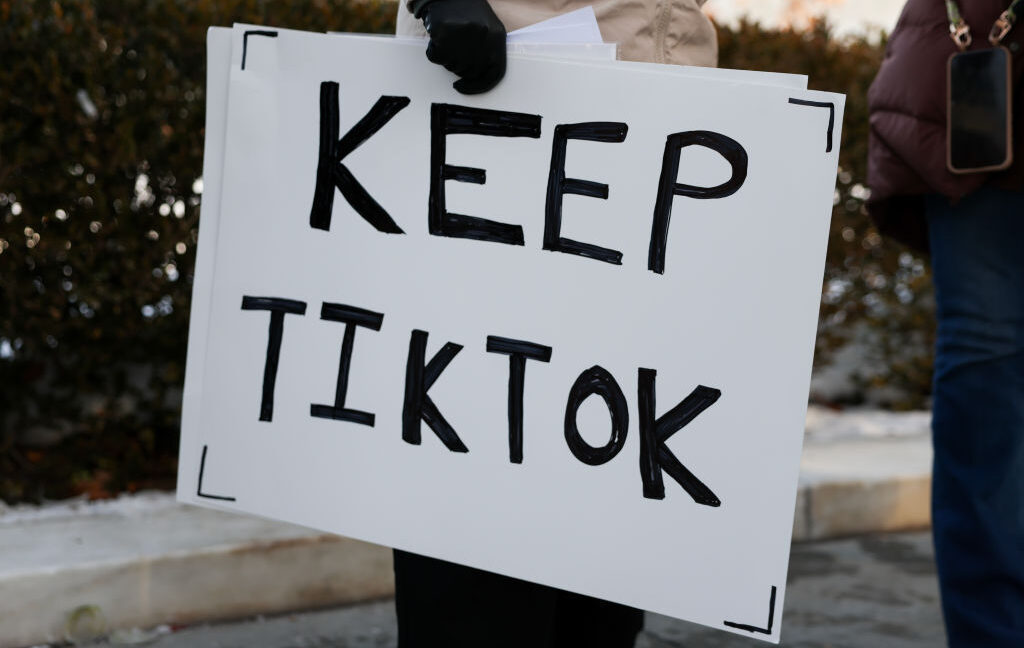
A TikTok influencer holds a sign that reads “Keep TikTok” outside the US Supreme Court Building as the court hears oral arguments on whether to overturn or delay a law that could lead to a ban of TikTok in the U.S., on January 10, 2025 in Washington, DC. Credit: Kayla Bartkowski / Stringer | Getty Images News

TikTok has lost its Supreme Court appeal in a 9–0 decision and will likely shut down on January 19, a day before Donald Trump’s inauguration, unless the app can be sold before the deadline, which TikTok has said is impossible.

During the trial last Friday, TikTok lawyer Noel Francisco warned SCOTUS that upholding the Biden administration’s divest-or-sell law would likely cause TikTok to “go dark—essentially the platform shuts down” and “essentially… stop operating.” On Wednesday, TikTok reportedly began preparing to shut down the app for all US users, anticipating the loss.

But TikTok’s claims that the divest-or-sell law violated Americans’ free speech rights did not supersede the government’s compelling national security interest in blocking a foreign adversary like China from potentially using the app to spy on or influence Americans, SCOTUS ruled.

“We conclude that the challenged provisions do not violate petitioners’ First Amendment rights,” the SCOTUS opinion said, while acknowledging that “there is no doubt that, for more than 170 million Americans, TikTok offers a distinctive and expansive outlet for expression, means of engagement, and source of community.”

Late last year, TikTok and its owner, the Chinese-owned company ByteDance, urgently pushed SCOTUS to intervene before the law’s January 19 enforcement date. Ahead of SCOTUS’ decision, TikTok warned it would have no choice but to abruptly shut down a thriving platform where many Americans get their news, express their views, and make a living.

The US had argued the law was necessary to protect national security interests as the US-China trade war intensifies, alleging that China could use the app to track and influence TikTok’s 170 million American users. A lower court had agreed that the US had a compelling national security interest and rejected arguments that the law violated the First Amendment, triggering TikTok’s appeal to SCOTUS. Today, the Supreme Court upheld that ruling.

According to SCOTUS, the divest-or-sell law is “content-neutral” and only triggers intermediate scrutiny. That requires that the law doesn’t burden “substantially more speech than necessary” to serve the government’s national security interests, rather than strict scrutiny which would force the government to protect those interests through the least restrictive means.

Further, the government was right to single TikTok out, SCOTUS wrote, due to its “scale and susceptibility to foreign adversary control, together with the vast swaths of sensitive data the platform collects.”

“Preventing China from collecting vast amounts of sensitive data from 170 million US TikTok users” is a “decidedly content agnostic” rationale, justices wrote.

“The Government had good reason to single out TikTok for special treatment,” the opinion said.

TikTok CEO Shou Zi Chew posted a statement on TikTok reacting to the ruling, thanking Trump for committing to “work with TikTok” to avoid a shut down and telling users to “rest assured, we will do everything in our power to ensure our platform thrives” in the US.

Momentum to ban TikTok has shifted

First Amendment advocates condemned the SCOTUS ruling. The American Civil Liberties Union called it a “major blow to freedom of expression online,” and the Electronic Frontier Foundation’s civil liberties director David Greene accused justices of sweeping “past the undisputed content-based justification for the law” to “rule only based on the shaky data privacy concerns.”

While the SCOTUS ruling was unanimous, justice Sonia Sotomayor said that  “precedent leaves no doubt” that the law implicated the First Amendment and “plainly” imposed a burden on any US company that distributes TikTok’s speech and any content creator who preferred TikTok as a publisher of their speech.

Similarly concerned was justice Neil Gorsuch, who wrote in his concurring opinion that he harbors “serious reservations about whether the law before us is ‘content neutral’ and thus escapes ‘strict scrutiny.'” Gorsuch also said he didn’t know “whether this law will succeed in achieving its ends.”

“But the question we face today is not the law’s wisdom, only its constitutionality,” Gorsuch wrote. “Given just a handful of days after oral argument to issue an opinion, I cannot profess the kind of certainty I would like to have about the arguments and record before us. All I can say is that, at this time and under these constraints, the problem appears real and the response to it not unconstitutional.”

For TikTok and content creators defending the app, the stakes were incredibly high. TikTok repeatedly denied there was any evidence of spying and warned that enforcing the law would allow the government to unlawfully impose “a massive and unprecedented speech restriction.”

But the Supreme Court declined to order a preliminary injunction to block the law until Trump took office, instead deciding to rush through oral arguments and reach a decision prior to the law’s enforcement deadline. Now TikTok has little recourse if it wishes to maintain US operations, as justices suggested during the trial that even if a president chose to not enforce the law, providing access to TikTok or enabling updates could be viewed as too risky for app stores or other distributors.

The law at the center of the case—the Protecting Americans from Foreign Adversary Controlled Applications Act—had strong bipartisan support under the Biden administration.

But President-elect Donald Trump said he opposed a TikTok ban, despite agreeing that US national security interests in preventing TikTok spying on or manipulating Americans were compelling. And this week, Senator Ed Markey (D-Mass.) has introduced a bill to extend the deadline ahead of a potential TikTok ban, and a top Trump adviser, Congressman Mike Waltz, has said that Trump plans to stop the ban and “keep TikTok from going dark,” the BBC reported. Even the Biden administration, whose justice department just finished arguing why the US needed to enforce the law to SCOTUS, “is considering ways to keep TikTok available,” sources told NBC News.

“What might happen next to TikTok remains unclear,” Gorsuch noted in the opinion.

Will Trump save TikTok?

It will likely soon be clear whether Trump will intervene. Trump filed a brief in December, requesting that the Supreme Court stay enforcement of the law until after he takes office because allegedly only he could make a deal to save TikTok. He criticized SCOTUS for rushing the decision and suggested that Congress’ passage of the law may have been “legislative encroachment” that potentially “binds his hands” as president.

“As the incoming Chief Executive, President Trump has a particularly powerful interest in and responsibility for those national-security and foreign-policy questions, and he is the right constitutional actor to resolve the dispute through political means,” Trump’s brief said.

TikTok’s CEO Chew signaled to users that Trump is expected to step in.

“On behalf of everyone at TikTok and all our users across the country, I want to thank President Trump for his commitment to work with us to find a solution that keeps TikTok available in the United States,” Chew’s statement said.

Chew also reminded Trump that he has 60 billion views of his content on TikTok and perhaps stands to lose a major platform through the ban.

“We are grateful and pleased to have the support of a president who truly understands our platform, one who has used TikTok to express his own thoughts and perspectives,” Chew said.

Trump seemingly has limited options to save TikTok, Forbes suggested. At trial, justices disagreed on whether Trump could legally decide to simply not enforce the law. And efforts to pause enforcement or claim compliance without evidence that ByteDance is working on selling off TikTok could be blocked by the court, analysts said. And while ByteDance has repeatedly said it’s unwilling to sell TikTok US, it’s possible, one analyst suggested to Forbes, that ByteDance might be more willing to divest “in exchange for Trump backing off his threat of high tariffs on Chinese imports.”

On Tuesday, a Bloomberg report suggested that China was considering whether selling TikTok to Elon Musk might be a good bargaining chip to de-escalate Trump’s attacks in the US-China trade war.

Photo of Ashley Belanger

Ashley is a senior policy reporter for Ars Technica, dedicated to tracking social impacts of emerging policies and new technologies. She is a Chicago-based journalist with 20 years of experience.

TikTok loses Supreme Court fight, prepares to shut down Sunday Read More »

fcc-chair-makes-one-last-stand-against-trump’s-call-to-punish-news-stations

FCC chair makes one last stand against Trump’s call to punish news stations


FCC not the president’s speech police (yet)

Chair: Complaints “seek to weaponize the licensing authority of the FCC.”

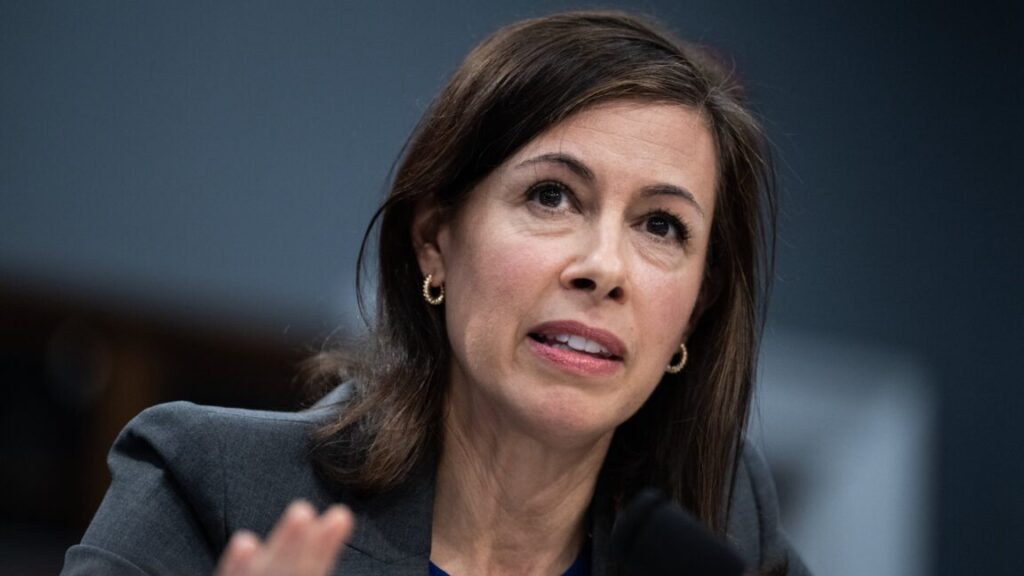
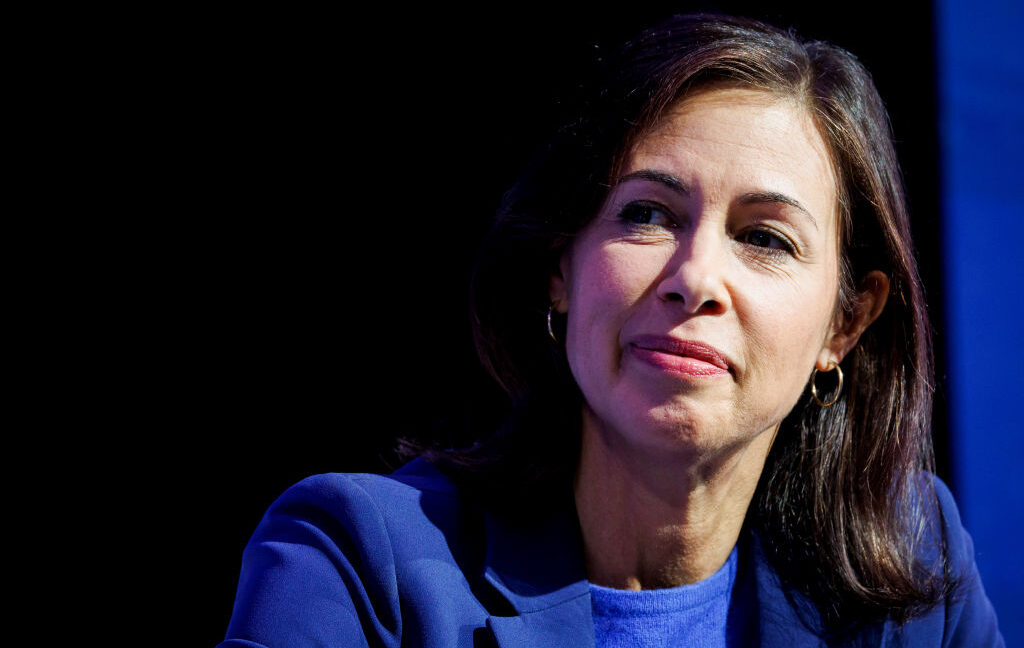
FCC Chairwoman Jessica Rosenworcel testifies during a House hearing on Thursday, May 16, 2024. Credit: Getty Images | Tom Williams

Taking action in the final days of the Biden administration, the Federal Communications Commission dismissed three complaints and a petition filed against broadcast television stations. FCC Chairwoman Jessica Rosenworcel said the action is important because “the incoming President has called on the Federal Communications Commission to revoke licenses for broadcast television stations because he disagrees with their content and coverage.”

“Today, I have directed the FCC to take a stand on behalf of the First Amendment,” she said. “We draw a bright line at a moment when clarity about government interference with the free press is needed more than ever. The action we take makes clear two things. First, the FCC should not be the president’s speech police. Second, the FCC should not be journalism’s censor-in-chief.”

President-elect Donald Trump’s chosen replacement for Rosenworcel, Commissioner Brendan Carr, wants the FCC to punish news broadcasters that he perceives as being unfair to Trump or Republicans in general. Backing Trump’s various complaints about news stations, Carr has threatened to revoke licenses by wielding the FCC’s authority to ensure that broadcasters using public airwaves operate in the public interest.

Rosenworcel said the complaints and petition she is dismissing “come from all corners—right and left—but what they have in common is they ask the FCC to penalize broadcast television stations because they dislike station behavior, content, or coverage.” After Trump criticized CBS in October, Rosenworcel said the agency “does not and will not revoke licenses for broadcast stations simply because a political candidate disagrees with or dislikes content or coverage.”

Chair: Complaints aim to “weaponize” FCC authority

The Center for American Rights filed complaints supporting Trump’s claims of bias regarding ABC’s fact-checking during a presidential debate, the editing of a CBS 60 Minutes interview with Kamala Harris, and NBC putting Harris on a Saturday Night Live episode. Separately, the Media and Democracy Project filed a petition to deny a license renewal for WTXF-TV in Philadelphia, a station owned and operated by Fox, alleging that Fox willfully distorted news with false reports of fraud in the 2020 election that Trump lost.

Rejecting all four, Rosenworcel said “the facts and legal circumstances in each of these cases are different. But what they share is that they seek to weaponize the licensing authority of the FCC in a way that is fundamentally at odds with the First Amendment. To do so would set a dangerous precedent. That is why we reject it here.”

Dismissing complaints isn’t likely to end the cases, said Jeffrey Westling, a lawyer at the conservative American Action Forum who has urged Congress to “limit or revoke the FCC’s authority to impose content-based restrictions on broadcast television.”

Westling said he agrees “substantively” with Rosenworcel, but added that “the DC Circuit Court has made clear that the FCC has to consider news distortion complaints (see Serafyn vs FCC) and not just dismiss them outright. If I am the complainants, I challenge these dismissals in court, win, and get more attention.”

When contacted by Ars today, the Center for American Rights provided a statement criticizing Rosenworcel’s decision as “political and self-serving.”

“We fundamentally believe that several actions taken by the three major networks were partisan, dishonest and designed to support Vice President Harris in her bid to become President,” the group said. “We will continue to pursue avenues to ensure the American public is protected from media manipulation of our Republic. The First Amendment does not protect intentional misrepresentation or fraud.”

The group previously touted the fact that Republican FCC Commissioner Nathan Simington urged FCC leadership to take its complaints seriously.

Fox ruling will be challenged

The Media and Democracy Project criticized Rosenworcel’s decision to dismiss its complaint against the Fox station in Philadelphia.

“We look forward to presenting on appeal the multiple court decisions that raise serious questions about the Murdochs’ and Fox’s character qualifications to remain broadcast licensees,” the Media and Democracy Project said in a statement provided to Ars. “As renowned First Amendment scholar Floyd Abrams stated in his filing with the Commission, the First Amendment is no bar to Commission action given the facts of this case. Our petition is clearly distinct from the other politically motivated complaints.”

The group’s petition pointed to a court ruling that found Fox News aired false statements about Dominion Voting Systems. Fox later agreed to pay Dominion $788 million to settle a defamation lawsuit.

“Our Petition to Deny is based on judicial findings that Fox made repeated false statements that undermined the electoral process and resulted in property damage, injury, and death; that Rupert and Lachlan Murdoch engaged in a ‘carefully crafted scheme’ in ‘bad faith’ to deprive Lachlan’s siblings of the control to which they are entitled under an irrevocable trust; and that ‘Murdoch knowingly caused the corporation to violate the law,'” the Media and Democracy Project said today.

The FCC order denying the petition also granted the station’s application for a license renewal. The order said the allegations regarding “material carried on a cable network under common control with the Licensee that a state court found to be false” aren’t grounds to deny the individual station’s license renewal. While some “non-FCC-related misconduct” can be considered by the FCC in an evaluation of a licensee’s character, the finding in the defamation suit doesn’t qualify, the order said.

Former FCC official objects

Gigi Sohn, a longtime advocate whose nomination to the FCC was rejected by the Senate, also criticized the FCC today. Sohn, who also served as counselor for FCC Chairman Tom Wheeler during the Obama administration, called the dismissal of the Fox petition a “failure to lead.”

“As [Rosenworcel] herself points out, the facts of these petitions are very different,” Sohn wrote. “The [Media and Democracy Project] petition seeks a hearing on Fox Philadelphia licenses because they allege that Fox lacks the character to hold them because it lied to the American people about the 2020 election. The conservative complaints are all based on disagreements with editorial judgments of the various broadcast networks.”

“The decision to lump these filings together and overturn years of FCC precedent that broadcasters’ character is central to holding a license is contrary to the Communications Act’s mandate that licenses be granted in ‘the public interest, convenience and necessity,'” Sohn also wrote. The FCC rationale would mean that “anything and everything a broadcast licensee does or says would be a First Amendment issue that warrants automatic license renewal,” she added.

Media advocacy group Free Press agreed with the FCC’s decision. “We have an incoming administration quite literally threatening to jail journalists for doing their jobs, and an incoming FCC chairman talking about revoking broadcast licenses any time he disagrees with their political coverage,” the group said.

Free Press sided with the FCC despite noting that the Fox case involved “false information [that] had devastating consequences in the January 6 attack on the peaceful transition of power four years ago.”

“Lies knowingly aired by Fox News Channel and some Murdoch-owned Fox affiliates present a significantly different challenge to regulators than merely fact-checking, editing or scheduling equal time for candidates in ways that displease the president-elect,” Free Press said. “Yet we agree with the urgent need to prevent the weaponization of the government against journalists and media companies on the eve of the inauguration, and in light of the dire threats the new administration poses.”

Photo of Jon Brodkin

Jon is a Senior IT Reporter for Ars Technica. He covers the telecom industry, Federal Communications Commission rulemakings, broadband consumer affairs, court cases, and government regulation of the tech industry.

FCC chair makes one last stand against Trump’s call to punish news stations Read More »

us-selling-69k-seized-bitcoins-could-mess-with-trump-plans-for-crypto-reserve

US selling 69K seized bitcoins could mess with Trump plans for crypto reserve

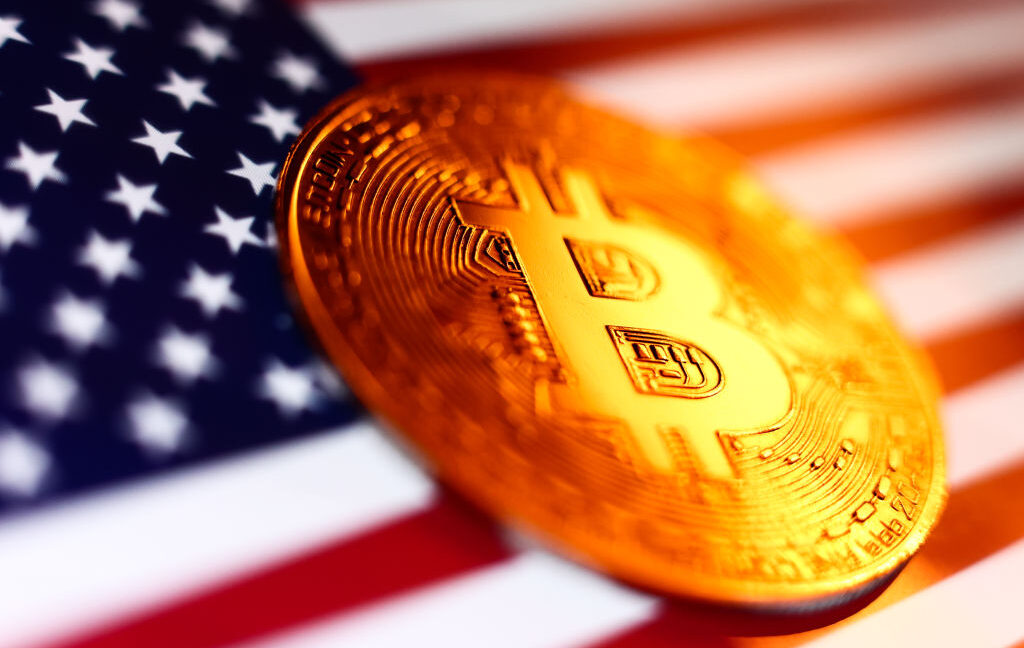
At the end of 2024, a US court authorized the Department of Justice to sell 69,370 bitcoins from “the largest cryptocurrency seizure in history.”

At bitcoin’s current price, just under $92,000, these bitcoins are worth nearly $6.4 billion, and crypto outlets are reporting that DOJ officials have said they’re planning to proceed with selling off the assets consistent with the court’s order. The DOJ had reportedly argued that bitcoin’s price volatility was a pressing reason to push for permission for the sale.

Ars has reached out to the DOJ for comment and will update the story with any new information regarding next steps.

A hacker initially stole these bitcoins from Silk Road—an illegal online marketplace where goods could only be bought and sold with bitcoins—in 2012, shortly before the US government shut down the marketplace. The US later discovered the stolen bitcoins in 2020 while conducting further investigations of Silk Road, eventually securing a consent agreement that year from the hacker, who signed the bitcoins over to the government.

Whether the government’s seizure of those bitcoins was proper has been disputed by Battle Born Investments, a company that purchased the assets of bankruptcy estate from an individual who they believed to be either the hacker whose bitcoins were seized or someone “associated with him.”

After a court battle failed to return the bitcoins, Battle Born attempted to unmask the hacker through a Freedom of Information Act (FOIA) request, which sparked a new court fight. But ultimately, in late December, the court agreed with the US government that the hacker had a right to privacy as someone who was the subject of a criminal investigation and shouldn’t be unmasked. That ended Battle Born’s claim to the bitcoins and cleared the way for the government’s sale.

US selling 69K seized bitcoins could mess with Trump plans for crypto reserve Read More »

x-ceo-signals-ad-boycott-is-over-external-data-paints-a-different-picture.

X CEO signals ad boycott is over. External data paints a different picture.

When X CEO Linda Yaccarino took the stage as a keynote speaker at CES 2025, she revealed that “90 percent of the advertisers” who boycotted X over brand safety concerns since Elon Musk’s 2022 Twitter acquisition “are back on X.”

Yaccarino did not go into any further detail to back up the data point, and X did not immediately respond to Ars’ request to comment.

But Yaccarino’s statistic seemed to bolster claims that X had made since Donald Trump’s re-election that advertisers were flocking back to the platform, with some outlets reporting that brands hoped to win Musk’s favor in light of his perceived influence over Trump by increasing spending on X.

However, it remains hard to gauge how impactful this seemingly significant number of advertisers returning will be in terms of spiking X’s value, which fell by as much as 72 percent after Musk’s Twitter takeover. And X’s internal data doesn’t seem to completely sync up with data from marketing intelligence firm Sensor Tower, suggesting that more context may be needed to understand if X’s financial woes may potentially be easing up in 2025.

Before the presidential election, Sensor Tower previously told Ars that “72 out of the top 100 spending US advertisers” on Twitter/X from October 2022 had “ceased spending on the platform as of September 2024.” This was up from 50 advertisers who had stopped spending on Twitter/X in October 2023, about a year after Musk’s acquisition, suggesting that the boycott had seemingly only gotten worse.

Shortly after the election, AdWeek reported that big brands, including Comcast, IBM, Disney, Warner Bros. Discovery, and Lionsgate Entertainment, had resumed advertising on X. But by the end of 2024, Sensor Tower told Ars that X still had seemingly not succeeded in wooing back many of pre-acquisition Twitter’s top spenders, making Yaccarino’s claim that “90 percent of advertisers are back on X” somewhat harder to understand.

X CEO signals ad boycott is over. External data paints a different picture. Read More »

appeals-court-blocks-fcc’s-efforts-to-bring-back-net-neutrality-rules

Appeals court blocks FCC’s efforts to bring back net neutrality rules

“The key here is not whether Broadband Internet Service Providers utilize telecommunications; it is instead whether they do so while offering to consumers the capability to do more,” Griffin wrote, concluding that “they do.”

“The FCC exceeded its statutory authority,” Griffin wrote, at one point accusing the FCC of arguing for a reading of the statute “that is too sweeping.”

The three-judge panel ordered a stay of the FCC’s order imposing net neutrality rules—known as the Safeguarding and Securing the Open Internet Order.

In a statement, FCC chair Jessica Rosenworcel suggested that Congress would likely be the only path to safeguard net neutrality moving forward. In the federal register, experts noted that net neutrality is critical to boosting new applications, services, or content, warning that without clear rules, the next Amazon or YouTube could be throttled before it can get off the ground.

“Consumers across the country have told us again and again that they want an Internet that is fast, open, and fair,” Rosenworcel said. “With this decision it is clear that Congress now needs to heed their call, take up the charge for net neutrality, and put open Internet principles in federal law.”

Rosenworcel will soon leave the FCC and will be replaced by Trump’s incoming FCC chair pick, Brendan Carr, who helped overturn net neutrality in 2017 and is expected to loosen broadband regulations once he’s confirmed.

Appeals court blocks FCC’s efforts to bring back net neutrality rules Read More »

trump-told-scotus-he-plans-to-make-a-deal-to-save-tiktok

Trump told SCOTUS he plans to make a deal to save TikTok

Several members of Congress— Senator Edward J. Markey (D-Mass.), Senator Rand Paul (R-Ky.), and Representative Ro Khanna (D-Calif.)—filed a brief agreeing that “the TikTok ban does not survive First Amendment scrutiny.” They agreed with TikTok that the law is “illegitimate.”

Lawmakers’ “principle justification” for the ban—”preventing covert content manipulation by the Chinese government”—masked a “desire” to control TikTok content, they said. Further, it could be achieved by a less-restrictive alternative, they said, a stance which TikTok has long argued for.

Attorney General Merrick Garland defended the Act, though, urging SCOTUS to remain laser-focused on the question of whether a forced sale of TikTok that would seemingly allow the app to continue operating without impacting American free speech violates the First Amendment. If the court agrees that the law survives strict scrutiny, TikTok could still be facing an abrupt shutdown in January.

The Supreme Court has scheduled oral arguments to begin on January 10. TikTok and content creators who separately sued to block the law have asked for their arguments to be divided, so that the court can separately weigh “different perspectives” when deciding how to approach the First Amendment question.

In its own brief, TikTok has asked SCOTUS to strike the portions of the law singling out TikTok or “at the very least” explain to Congress that “it needed to do far better work either tailoring the Act’s restrictions or justifying why the only viable remedy was to prohibit Petitioners from operating TikTok.”

But that may not be necessary if Trump prevails. Trump told the court that TikTok was an important platform for his presidential campaign and that he should be the one to make the call on whether TikTok should remain in the US—not the Supreme Court.

“As the incoming Chief Executive, President Trump has a particularly powerful interest in and responsibility for those national-security and foreign-policy questions, and he is the right constitutional actor to resolve the dispute through political means,” Trump’s brief said.

Trump told SCOTUS he plans to make a deal to save TikTok Read More »

china’s-plan-to-dominate-legacy-chips-globally-sparks-us-probe

China’s plan to dominate legacy chips globally sparks US probe

Under Joe Biden’s direction, the US Trade Representative (USTR) launched a probe Monday into China’s plans to globally dominate markets for legacy chips—alleging that China’s unfair trade practices threaten US national security and could thwart US efforts to build up a domestic semiconductor supply chain.

Unlike the most advanced chips used to power artificial intelligence that are currently in short supply, these legacy chips rely on older manufacturing processes and are more ubiquitous in mass-market products. They’re used in tech for cars, military vehicles, medical devices, smartphones, home appliances, space projects, and much more.

China apparently “plans to build more than 60 percent of the world’s new legacy chip capacity over the next decade,” and Commerce Secretary Gina Raimondo said evidence showed this was “discouraging investment elsewhere and constituted unfair competition,” Reuters reported.

Most people purchasing common goods don’t even realize they’re using Chinese chips, including government agencies, and the probe is meant to fix that by flagging everywhere Chinese chips are found in the US. Raimondo said she was “fairly alarmed” that research showed “two-thirds of US products using chips had Chinese legacy chips in them, and half of US companies did not know the origin of their chips including some in the defense industry.”

To deter harms from any of China’s alleged anticompetitive behavior, the USTR plans to spend a year investigating all of China’s acts, policies, and practices that could be helping China achieve global dominance in the foundational semiconductor market.

The agency will start by probing “China’s manufacturing of foundational semiconductors (also known as legacy or mature node semiconductors),” the press release said, “including to the extent that they are incorporated as components into downstream products for critical industries like defense, automotive, medical devices, aerospace, telecommunications, and power generation and the electrical grid.”

Additionally, the probe will assess China’s potential impact on “silicon carbide substrates (or other wafers used as inputs into semiconductor fabrication)” to ensure China isn’t burdening or restricting US commerce.

Some officials were frustrated that Biden didn’t launch the probe sooner, the Financial Times reported. It will ultimately be up to Donald Trump’s administration to complete the investigation, but Biden and Trump have long been aligned on US-China trade strategies, so Trump is not necessarily expected to meddle with the probe. Reuters noted that the probe could set Trump up to pursue his campaign promise of imposing a 60 percent tariff on all goods from China, but FT pointed out that Trump could also plan to use tariffs as a “bargaining chip” in his own trade negotiations.

China’s plan to dominate legacy chips globally sparks US probe Read More »

trump-nominates-jared-isaacman-to-become-the-next-nasa-administrator

Trump nominates Jared Isaacman to become the next NASA administrator

President-elect Donald Trump announced Wednesday he has selected Jared Isaacman, a billionaire businessman and space enthusiast who twice flew to orbit with SpaceX, to become the next NASA administrator.

“I am delighted to nominate Jared Isaacman, an accomplished business leader, philanthropist, pilot, and astronaut, as Administrator of the National Aeronautics and Space Administration (NASA),” Trump posted on his social media platform, Truth Social. “Jared will drive NASA’s mission of discovery and inspiration, paving the way for groundbreaking achievements in space science, technology, and exploration.”

In a post on X, Isaacman said he was “honored” to receive Trump’s nomination.

“Having been fortunate to see our amazing planet from space, I am passionate about America leading the most incredible adventure in human history,” Isaacman wrote. “On my last mission to space, my crew and I traveled farther from Earth than anyone in over half a century. I can confidently say this second space age has only just begun.”

Top officials who served at NASA under President Trump and President Obama endorsed Isaacman as the next NASA boss.

“Jared Isaacman will be an outstanding NASA Administrator and leader of the NASA family,” said Jim Bridenstine, who led NASA as administrator during Trump’s first term in the White House. “Jared’s vision for pushing boundaries, paired with his proven track record of success in private industry, positions him as an ideal candidate to lead NASA into a bold new era of exploration and discovery. I urge the Senate to swiftly confirm him.”

Lori Garver, NASA’s deputy administrator during the Obama administration, wrote on X that Isaacman’s nomination was “terrific news,” adding that “he has the opportunity to build on NASA’s amazing accomplishments to pave our way to an even brighter future.”

Isaacman, 41, is the founder and CEO of Shift4, a mobile payment processing platform, and co-founded Draken International, which owns a fleet of retired fighter jets to pose as adversaries for military air combat training. If the Senate confirms his nomination, Isaacman would become the 15th NASA administrator, and the fourth who has flown in space.

Trump nominates Jared Isaacman to become the next NASA administrator Read More »

china-hits-us-with-ban-on-critical-minerals-used-in-tech-manufacturing

China hits US with ban on critical minerals used in tech manufacturing

Although China’s response to the latest curbs was swift and seemingly strong, experts told Ars that China’s response to Biden’s last round of tariffs was relatively muted. It’s possible that this week’s ban on exports into the US could also be a response to President-elect Donald Trump’s threat to increase tariffs on all Chinese goods once he takes office.

Analysts warned Monday that new export curbs could end up hurting businesses in the US and allied nations while potentially doing very little to block China from accessing US tech. On Tuesday, four Chinese industry associations seemingly added fuel to the potential fire threatening US businesses by warning Chinese firms that purchasing US chips is “no longer safe,” Asia Financial reported.

Apparently, these groups would not say how or why the chips were unsafe, but the warning could hurt US chipmaking giants like Nvidia, AMD, and Intel, the financial industry publication closely monitoring China’s economy forecast said.

This was a “rare, coordinated move” by industry associations advising top firms in telecommunications, autos, semiconductors, and “the digital economy,” Asia Financial reported.

As US-China tensions escalate ahead of Trump’s next term, the tech industry has warned that any unpredictable rises in costs may end up spiking prices on popular consumer tech. With Trump angling to add a 35 percent tariff on all Chinese goods, that means average Americans could also end up harmed by the trade war, potentially soon paying significantly more for laptops, smartphones, and game consoles.

China hits US with ban on critical minerals used in tech manufacturing Read More »