Entertainment

tv-technica:-our-favorite-shows-of-2025

TV Technica: Our favorite shows of 2025


Netflix and Apple TV dominate this year’s list with thrillers, fantasy, sci-fi, and murder.

Credit: Collage by Aurich Lawson

Credit: Collage by Aurich Lawson

Editor’s note: Warning: Although we’ve done our best to avoid spoiling anything major, please note this list does include a few specific references to several of the listed shows that some might consider spoiler-y.

This was a pretty good year for television, with established favorites sharing space on our list with some intriguing new shows. Streaming platforms reigned supreme, with Netflix and Apple TV dominating our list with seven and five selections each. Genre-wise, we’ve got a bit of everything: period dramas (The Gilded Age, Outrageous), superheroes (Daredevil: Born Again), mysteries (Ludwig, Poker Face, Dept. Q), political thrillers (The Diplomats, Slow Horses), science fiction (Andor, Severance, Alien: Earth), broody fantasy (The Sandman), and even an unconventional nature documentary (Underdogs).

As always, we’re opting for an unranked list, with the exception of our “year’s best” selection at the very end, so you might look over the variety of genres and options and possibly add surprises to your eventual watchlist. We invite you to head to the comments and add your own favorite TV shows released in 2025.

Underdogs (National Geographic/Disney+)

a honey badger investigates a logg in South Africa

Credit: National Geographic/Doug Parker

Most of us have seen a nature documentary or two (or three) at some point in our lives, so it’s a familiar format: sweeping, majestic footage of impressively regal animals accompanied by reverently high-toned narration (preferably with a tony British accent). Underdogs takes a decidedly different approach. Narrated with hilarious irreverence by Ryan Reynolds, the five-part series highlights nature’s less cool and majestic creatures—the outcasts and benchwarmers more noteworthy for their “unconventional hygiene choices” and “unsavory courtship rituals.” (It’s rated PG-13 due to the odd bit of scatalogical humor and shots of Nature Sexy Time.)

Each of the five episodes is built around a specific genre. “Superheroes” highlights the surprising superpowers of the honey badger, pistol shrimp, and the invisible glass frog, among others, augmented with comic book graphics; “Sexy Beasts” focuses on bizarre mating habits and follows the format of a romantic advice column; “Terrible Parents” highlights nature’s worst practices, following the outline of a parenting guide; “Total Grossout” is exactly what it sounds like; and “The Unusual Suspects” is a heist tale, documenting the supposed efforts of a macaque to put together the ultimate team of masters of deception and disguise (an inside man, a decoy, a fall guy, etc.). Green Day even wrote and recorded a special theme song for the opening credits.

While Reynolds mostly followed the script (which his team helped write), there was also a fair amount of improvisation—not all of it PG-13. The producers couldn’t use the racier ad-libs. But some made it into the final episodes, like Reynolds describing an aye-aye as “if fear and panic had a baby and rolled it in dog hair.” We also meet the velvet worm, which creeps up on unsuspecting prey before squirting disgusting slime all over their food, and the pearl fish, which hides from predators in a sea cucumber’s butt, among other lowly yet fascinating critters. Verdict: Underdogs is positively addictive. It’s my favorite nature documentary ever.

Jennifer Ouellette

Dept. Q (Netflix)

group of people I'm an underground office sanding around a desk

Credit: Netflix

Dep. Q is a rare show that commits to old tropes—an unlikable but smart central character revisits cold cases—and somehow manages to repackage them in a way that feels distinctive. To get a sense of the show, you only have to describe its precise genre. You might call it a murder mystery, and there are murders in it, but one of the mysteries is whether a key player is alive or not, given that a lot of her story takes place in flashbacks with an uncertain relationship to the present. It’s almost a police procedural, except that many of the police are only following procedures grudgingly and erratically. It’s not really a whodunnit, given that you only end up learning who done some of it by the time the first season wraps up. And so on.

Amid all the genre fluidity, the show does a great job of balancing the key challenge of a mystery program: telling you enough that you can make reasonably informed guesses on at least some of what’s going on without giving the whole game away and making it easy to figure out all the details. And the acting is superb. Matthew Goode does a nice job of handling the central character’s recent trauma while helping you understand why he has a few loyal co-workers despite the fact that he was probably unlikable even before he was traumatized. And Alexej Manvelov (who I’d never seen before) is fantastic as a former Syrian policeman who drops occasional hints that he had been an active participant in that country’s police state.

There are definitely quibbles. The creation of a cold case squad happens on the flimsiest of motivations, and the fantastic Kelly Macdonald is badly underused. But the show is definitely good enough that I’m curious about some additional mysteries: Can the team behind it continue to avoid getting bogged down in the tropes in season two, and which of the many threads it left unresolved will be picked up when they try?

John Timmer 

Daredevil: Born Again (Disney+)
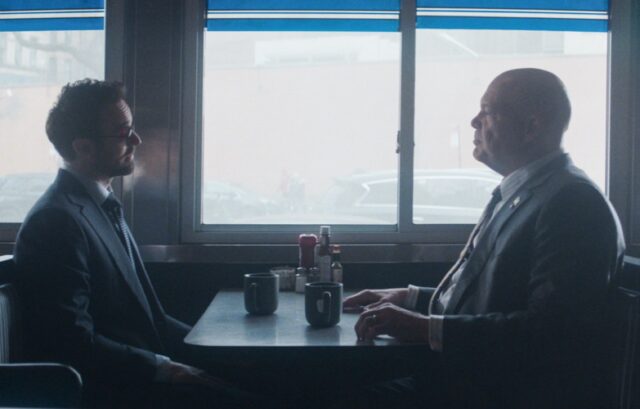
Matt Murdock and Wilson Fisk sitting across from each other in a diner

Credit: Marvel/Disney+

Enthusiasm was understandably high for Daredevil: Born Again, Marvel’s revival of the hugely popular series in the Netflix Defenders universe. Not only was Charlie Cox returning to the title role as Matt Murdock/Daredevil, but Vincent D’Onofrio was also coming back as his nemesis, crime lord Wilson Fisk/Kingpin. Their dynamic has always been electric, and that on-screen magic is as powerful as ever in Born Again, which quickly earned critical raves and a second season.

Granted, there were some rough spots. The entire season was overhauled during the 2023 Hollywood strikes, and at times it felt like two very different shows. A weird serial killer subplot was primarily just distracting. There was also the controversial decision to kill off a major character from the original Netflix series in the first episode. But that creative choice cleared the decks to place the focus squarely on Matt’s and Fisk’s parallel arcs, and the two central actors do not disappoint.

Matt decides to focus on his legal work while Fisk is elected mayor of New York City, intent on leaving his criminal life behind. But each struggles to remain in the light as the dark sides of their respective natures fight to be released. The result is an entertaining, character-driven series that feels very much a part of its predecessor while still having its own distinctive feel.

Jennifer Ouellette

Boots (Netflix)

army boot camp recruits running as part of their training in yellow t shirts and red shorts

Credit: Netflix

I confess I might have missed Boots had it not been singled out and dismissed as “woke garbage” by the Pentagon—thereby doubling the show’s viewership. I was pleased to discover that it’s actually a moving, often thought-provoking dramedy that humanizes all the young men from many different backgrounds who volunteer to serve their country in the US military. The show is based on a memoir (The Pink Marine) by Greg Cope White about his experiences as a gay teen in the military in the 1980s when gay and bisexual people weren’t allowed to serve. Boots is set in the early 1990s just before the onset of the “Don’t ask, don’t tell” era.

Miles Heizer stars as Cameron Cope (Cope White’s fictional alter ego), a closeted gay teen in Louisiana who signs up as a recruit for the US Marine Corps with his best (straight) friend Ray (Liam Oh). He’s not the most promising recruit, but over the course of eight episodes, we see him struggle, fail, pick himself back up, and try again during the grueling boot camp experience, forming strong bonds with his fellow recruits but all the while terrified of being outed and kicked out.

Heizer gives a powerful performance as Cameron, enhanced by the contrast with Max Parker’s stellar portrayal of the tightly wound Sergeant Liam Robert Sullivan—a decorated Marine inexplicably reassigned to train recruits while harboring his own secrets. Nor is Miles’ story the only focus: We learn more about several characters and their private struggles, and those inter-relationships are the heart and soul of the show. Netflix canceled the series, but this one season stands tall on its own.

Jennifer Ouellette

Only Murders in the Building S5 (Hulu)

young woman and two older men posing against backdrop of iconic NYC buildings

Credit: Hulu

This charming Emmy-nominated comedy series has made our “Best of TV” list every season, and 2025 is no exception. Only Murders in the Building (OMITB) stars Steve Martin, Martin Short, and Selena Gomez as Charles, Oliver, and Mabel, all residents of the same Manhattan apartment complex, the Arconia. The unlikely trio teams up to launch their own true crime podcast whenever someone dies in the building under suspicious circumstances, chronicling their independent investigation to solve the murder. There’s no shortage of podcast fodder, as this single building has a shockingly high murder rate.

S5 focused on the death of the building’s doorman, Lester (Teddy Coluca), found floating in the Arcadia’s fountain in the season finale. The discovery of a severed finger leads our team to conclude that Lester was murdered. Their quest involves a trio of billionaires, the mayor (Keegan-Michael Key), a missing mafioso (Bobby Cannavale) and his widow (Tea Leoni), and maybe even the building’s new robotic assistant, LESTR (voiced by Paul Rudd). As always, the season finale sets up next season’s murder: that of rival podcaster Cinda Canning (Tina Fey), who lives just long enough to reach the Arcadia’s gates and place one hand into the courtyard—technically dying “in the building.” One assumes that OMITB will eventually run out of fresh takes on its clever concept, but it certainly hasn’t done so yet.

Jennifer Ouellette

The Sandman S2 (Netflix)

Morpheus holds the key to Hell.

Credit: Netflix

I unequivocally loved the first season of The Sandman, the Netflix adaptation of Neil Gaiman’s influential graphic novel series (of which I am a longtime fan). I thought it captured the surreal, dream-like feel and tone of its source material, striking a perfect balance between the anthology approach of the graphic novels and grounding the narrative by focusing on the arc of its central figure: Morpheus, lord of the Dreaming. It was a long wait for the second and final season, but S2 retains all those elements to bring Dream’s story to its inevitably tragic yet satisfying end.

As always, the casting is extraordinary and the performances are note-perfect across the board. And Netflix did not skimp on the visuals, which bring the graphic novel imagery to vivid life. I still appreciate how the leisurely pacing lets the viewer relax and sink into this richly layered fictional world. Part I kicked off with an Endless family reunion that led Dream into revisiting Hell and agreeing to his sister Delirium’s request to look for their absent brother, Destruction. That sets in motion a chain of events that leads to the tragedy that unfolds in Part II. The bonus episode, in which Death gets one day (every hundred years) to be human—an adaptation of the standalone Death: The High Cost of Living—serves as a lovely coda to this unique series, which is pretty much everything I could have wanted in an adaptation.

Jennifer Ouellette

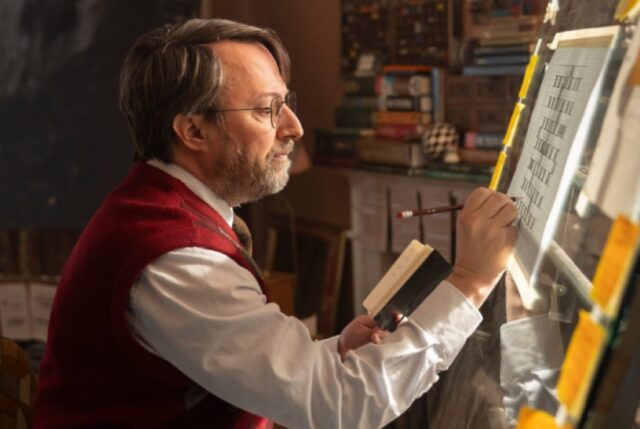
Ludwig (BBC)

middle aged man in dress shirt and short sleeved sweater meticulously working on a puzzle on an easel

Credit: BBC

Ludwig is a clever twist on the British cozy mystery genre. David Mitchell stars as John Taylor, a reclusive eccentric who creates puzzles for a living under the pseudonym “Ludwig.” When his identical twin brother, Cambridge DCI James Taylor (also Mitchell), goes missing, his sister-in-law Lucy (Anna Maxwell Martin) convinces John to go undercover. John reluctantly pretends to be James to gain access to the police department in hopes of finding out what happened to his twin. He inevitably gets drawn into working on cases—and turns out to be exceptionally good at applying his puzzle skills to solve murders, even as his anxiety grows about his subterfuge being discovered.

The best crime shows deftly balance cases-of-the-week with longer character-driven story arcs, and Ludwig achieves that balance beautifully. The writers brought in a puzzle consultant to create the various crosswords that appear in the series, as well as a special cryptic crossword done in character as Ludwig that appeared in The Guardian. The first season ended with a bit of a cliffhanger about what’s really been going on with James, but fortunately, the BBC has renewed Ludwig for a second season, so we’ll get to see more of our cryptic crime-solver.

Jennifer Ouellette

Poker Face S2 (Peacock)
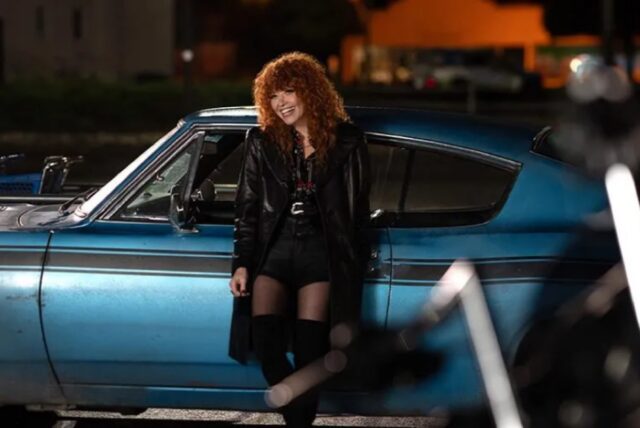
red haired woman in thigh boots and leather jacket standing in front of a classic blue sports car

Credit: Peacock

Poker Face is perfect comfort TV, evolving the case-of-the-week format that made enduring early TV hits like Columbo and Murder, She Wrote iconic. The second season takes the endlessly likeable BS-detector Charlie Cale (Natasha Lyonne) to the end of the road after she overcomes fleeing the mob in her 1969 Plymouth Barracuda. Along the way, Charlie pals around with A-list guest stars and solves crimes, winding her way from Florida to New York as each delightful new caper serves not to ramp up tension but to disrupt how viewers anticipate Charlie will move. Some might think that the lack of tension made the season weaker. But creator Rian Johnson recently revealed that he expects Poker Face to cast a new lead detective every two years. That makes it seem clear that Charlie’s second season was more about release.

In the most memorable episode of the season, “Sloppy Joseph,” the front row of an elementary school talent show suddenly becomes a bloody splash zone when a bullied boy is framed for killing the class pet, a gerbil, with a giant mallet. That scene is perhaps an apt metaphor for Johnson’s attempt to keep modern-day viewers from turning away from their TVs by shattering expectations. It’s unclear yet if his formulaic TV hijinks will work, but if anyone decides to pick up Poker Face after Peacock declined to renew it, Peter Dinklage is next in line to become the world’s greatest lie detector.

Ashley Belanger

The Gilded Age S3 (HBO)
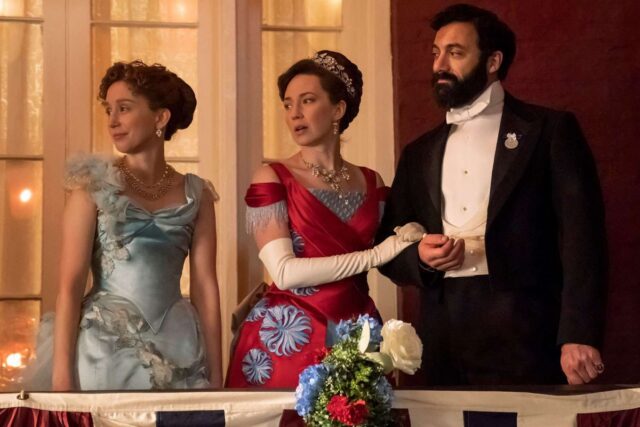
young woman with her parents in evening dress standing in an opera box

Credit: HBO

I was a latecomer to this eminently watchable show created by Julian Fellowes (Gosford Park), who also gave us the Emmy-winning sensation Downton Abbey. Instead of following the adventures of post-Edwardian British aristocracy and their domestic servants, the focus is on ultra-wealthy Americans and their domestic servants in the 1880s and the social tensions that arise from the “old money” versus “new money” dynamic of this rapidly changing period. The Gilded Age has been described as an “operatic soap” (rather than a soap opera), replete with a hugely talented ensemble cast donning lavish costumes and cavorting in extravagantly opulent settings. It’s unadulterated, addictive escapism, and the series really hit its stride in S3.

Old Money is represented by Agnes van Rhijn (Christine Baranski), a wealthy widow who lives with her spinster sister Ada (Cynthia Nixon); orphaned niece Marian (Louisa Jacobson); and son and heir Oscar (Blake Ritson), a closeted gay man seeking to marry a rich heiress. Living just across the street is New Money, personified by robber baron/railroad tycoon George Russell (Morgan Spector) and his socially ambitious wife Bertha (Carrie Coon) and their two children. You’ve got Marian’s friend Peggy (Denee Benton) representing the emerging Black upper class and a colorful assortment of domestics in both houses, like aspiring inventor Jack (Ben Ahlers), who dreams of greater things.

Fictionalized versions of notable historical people occasionally appear, and two figure prominently: Caroline Astor (Donna Murphy), who ruled New York society at the time, and her simpering sycophant Ward McAllister (Nathan Lane). (The Russells are loosely inspired by William and Ava Vanderbilt.) The stakes might sometimes seem small—there’s a multi-episode arc devoted to which of two competing opera houses New York’s social elite will choose to sponsor—but for the characters, they are huge, and Fellowes makes the audience feel equally invested in the outcomes. There were a few rough edges in the first season, but The Gilded Age quickly found its footing; it has gotten better and more richly textured with each successive season and never takes itself too seriously.

Jennifer Ouellette

Outrageous (Britbox)
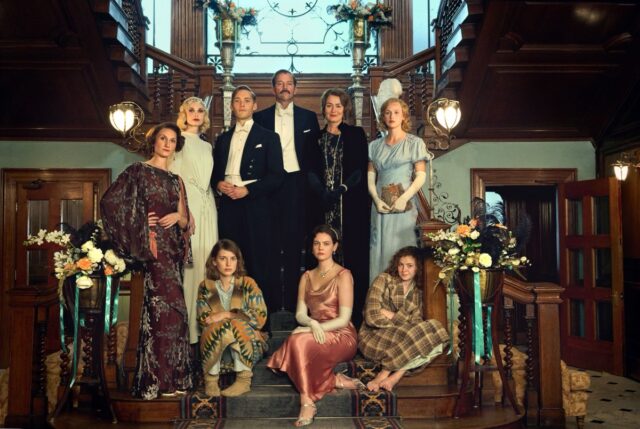
Aristocratic Family photo circa 1930s with everyone lined up along the grand staircase

Credit: Britbox

The Mitford sisters were born to be immortalized one day in a British period drama, and Outrageous is happy to oblige. There were six of them (and one brother), and their scandalous exploits frequently made global headlines in the 1930s. This is ultimately a fictionalized account of how the rise of Hitler and British fascism fractured this once tight-knit aristocratic family. The focus is on smaller, domestic drama—budding romances, failed marriages, literary aspirations, and dwindling fortunes—colored by the ominous global events unfolding on a larger scale.

Nancy (Bessie Carter) is the primary figure, an aspiring novelist with a cheating husband who feels increasingly alienated from her older sister and bestie Diana (Joanna Vanderham). Diana married a baron but becomes enamored of Oswald Mosley (Joshua Sasse), leader of the British fascist party, embarking on a torrid affair. Another sister, Unity (Shannon Watson), is also seduced by Nazi ideology and has a major crush on Hitler. Meanwhile, Jessica (Zoe Brough) is drawn to the Communist cause, which rankles both her siblings and her traditionally conservative parents.

Things come to a head when Unity goes to study in Germany and becomes completely radicalized, even publishing a vicious anti-semitic screed that shames the family. Diana also goes all-in on fascism when she leaves her husband for Mosley, whom Nancy loathes. Jessica elopes with her Communist cousin to Spain to be on the front lines of that civil war, leading to a lifelong estrangement from Diana. Nancy, the political moderate, is caught in the middle, torn between her love for her sisters and her increasing discomfort with Diana and Unity’s extreme political views.

The Mitford sisters were prolific letter writers all their lives, so there was plenty of material for screenwriter Sarah Williams to draw on when fictionalizing their stories at such a pivotal point in the family’s (and the world’s) history. Outrageous is quite historically accurate in broad outlines, and there are plenty of moments of wry, understated humor amid the family tensions. The gifted cast makes the sisters come alive in all their flawed humanity. There’s no word yet on a second season, and this one ends on a suitable note, but there’s so much more story left to tell, so I hope Outrageous returns.

Jennifer Ouellette

A Man on the Inside S2 (Netflix)
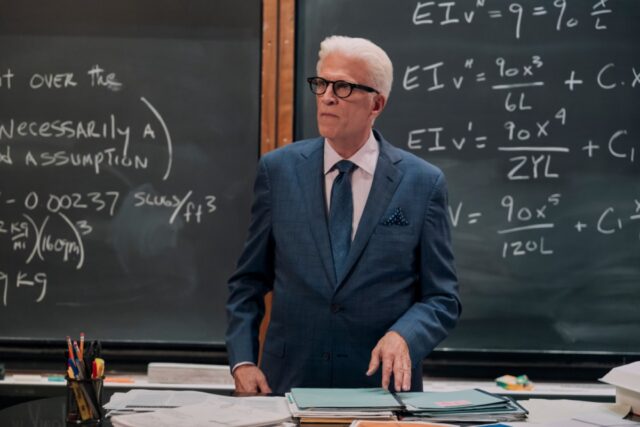
White haired older man in a nice blue suit and tie standing in front of a blackboard filled with equations in a college classroom

Credit: Netflix

I’ll admit I wasn’t sure how well A Man on the Inside would fare with its sophomore season after knocking it out of the park in S1. I should have known showrunner Mike Schur (The Good Place) could pull it off. Ted Danson plays Charles Nieuwendyk, a recently widowed retired engineering professor. In S1, he was hired by private detective Julie Kovalenko (Lilah Richcreek Estrada) to go undercover at a San Francisco retirement community to solve the mystery of a stolen ruby necklace. In S2, Charles returns to his academic roots and goes undercover at fictional Wheeler College to solve the mystery of a stolen laptop—a crime that just might have implications for the survival of the college itself.

Charles even falls in love for the first time since his wife’s death with music professor Mona Margadoff (Mary Steenburgen, Danson’s wife IRL), despite the two being polar opposites. The show continues to be a welcome mix of funny, sweet, sour, and touching, while never lapsing into schmaltz. The central Thanksgiving episode—where Mona meets Charles’s family and friends for the first time—is a prime example, as various tensions simmering below the surface erupt over the dinner table. Somehow, everyone manages to make their respective peace in entirely believable ways. It’s lovely to see a series grapple so openly, with so much warmth and humor, with the loneliness of aging and grief and how it can affect extended family. And the show once again drives home the message that new beginnings are always possible, even when one thinks one’s life is over.

Jennifer Ouellette

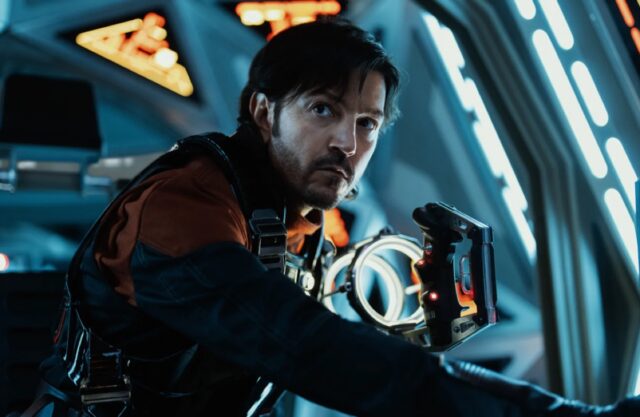
Andor S2 (Disney+)

Star Wars rebel Cassian in the cockpit of a spacecraft

Credit: Lucasfilm/Disney+

When real-life political administrations refer to officials as Darth Vader in unironically flattering terms, maybe George Lucas made the Dark Lord of the Sith a little too iconic. Showrunner Tony Gilroy made no such effort in his depiction of the fascists in Andor.

During Andor‘s run, which ended this year with S2, the Empire is full of sad corporate ladder climbers who are willing to stab another in the back to get to the next rung of the Imperial hierarchy. The show makes it clear that these are not people to emulate. If more fans watched the show, maybe that message could have landed for them.

For people who grew up with Star Wars and want something more to chew on in our adulthood than endless callbacks to the original trilogy, Andor is revelatory. It colors the war of light versus dark with large amounts of gray because sometimes, as one character puts it, you have to use the tools of your enemy to defeat them (save for genetically gifted farmboys). Maybe most of Star Wars was always supposed to be for kids, but prestige TV viewers got a glimpse of what the universe could feel like if it took itself more seriously. Rather than use the broad strokes of a war of good versus evil, Andor painted between the lines to demonstrate how systemic oppression can look a lot more personal than firing a giant space laser.

For all its great writing and themes, Andor also delivered high stakes and suspense. Although we already knew the outcome of the story, we still held our breath during tense scenes with characters who make the ultimate sacrifice for a future they will never see.

Jacob May

National Finals Rodeo (The Cowboy Channel)

exterior view of Thomas & Mack area in Las Vegas with banner proclaiming the 2024 Wranger National Finals rodeo

Credit: Sean Carroll

My personal end-of-year TV list would never be complete without a nod to The Cowboy Channel, i.e., the only place where armchair enthusiasts like myself can follow our favorite cowboys and cowgirls throughout the rodeo season. The goal is to rack up enough money to qualify for the Wrangler National Finals Rodeo (NFR), held at the Thomas & Mack Center in Las Vegas every December. This year, I’ve picked the channel’s stellar annual coverage of the NFR itself to highlight. The entire season comes down to this: an intense 10-day competition in which the top 15 athletes in each event duke it out night after night in hopes of winning a coveted championship gold buckle. And night after night, The Cowboy Channel is there with live commentary and post-round analysis.

What I love most is just how unpredictable the NFR can be. Part of that is the substantial monetary rewards that come with round wins; an athlete coming in at #1 in earnings can see even a substantial lead evaporate over just a few nights. Part of it has to do with who wins the average, i.e., who performs the best over ten nights collectively in each event. Winning the average comes with a substantial payout that can lead to unexpected upsets in the final results. But mostly it’s just the human factor: The best in the world can have a bad night, and young rookies can have the night of their lives. An ill-timed injury can knock an athlete out of the competition entirely. And sometimes the judges make inexplicably bad calls with major consequences (*coughStetson Wright in Round 6 saddle bronc *cough*).

It’s all part of the excitement of rodeo. The Cowboy Channel’s in-depth coverage lets us experience all that drama even if we can’t attend in person and lets us savor how the story unfolds in each subsequent round. We celebrate the wins, mourn the losses, and cheer mightily for the final champions. (Stetson did just fine in the end.) Then we gear up to do it all over again next year.

Jennifer Ouellette

Top Guns: The Next Generation (National Geographic/Disney+)

backs of four fighter pilots walking toward a fighter jet

Credit: National Geographic

The blockbuster success of the 1986 film Top Gun—chronicling the paths of young naval aviators as they go through the grueling US Navy’s Fighter Weapons School (aka the titular Top Gun)—spawned more than just a successful multimedia franchise. It has also been credited with inspiring future generations of fighter pilots. National Geographic took viewers behind the scenes to see the process play out for real with the documentary series Top Guns: The Next Generation.

Each episode focuses on a specific aspect of the training, following a handful of students from the Navy and Marines through the highs and lows of their training. That includes practicing dive bombs at breakneck speeds, successfully landing on an aircraft carrier by “catching the wire,” learning the most effective offensive and defensive maneuvers in dogfighting, and, finally, engaging in a freestyle dogfight against a seasoned instructor to complete the program and (hopefully) earn their golden wings. NatGeo was granted unprecedented access, even using in-cockpit cameras to capture the pulse-pounding action of being in the air, as well as more candidly intimate behind-the-scenes moments as the students grapple with their respective successes and failures. It’s a riveting watch.

Jennifer Ouellette

Alien: Earth (FX/Hulu)

young woman standing in a futuristic corridor bathed in white light

Credit: FX/Hulu

My first draft of what was supposed to be a 300-ish word blurb describing why Alien: Earth is fantastic ended up exploding into a Defector-esque narrative deep dive into my ever-evolving relationship with Alien 3 as a film and how Alien: Earth has helped reshape my appreciation for that poor broken baby of a movie by mixing the best of its visual techniques into A:E’s absolutely masterful cocktail of narrative stylings—but I’ll spare you all of that.

Here’s the short version without the bloviating: Alien: Earth is the thing I’ve been waiting for since I walked out of the theater after seeing Alien 3 in the summer of 1992. Unlike Alien Resurrection, any of the AvPs, or the wet-fart, falls-apart-like-mud-in-the-third-act swing-and-miss of Alien: Romulus, A:E gets nearly everything right. It’s grounded without being stodgy; exciting without being stupid; referential without being derivative; fun without being pandering; respectful of the lore while being willing to try something new; and, above all else, it bleeds craftsmanship—every frame makes it obvious that this is a show made by people who love and care for the Alien universe.

The thing that grabs me anew with every episode is the show’s presentation and execution—a self-aware blending of all the best things Scott, Cameron, and Fincher brought to their respective films. As I get older, I’m drawn more and more to entertainment that shows me interesting things and does so in ontologically faithful ways—and oh, does this show ever deliver.

Each episode is a carefully crafted visual and tonal mix of all the previous Alien films, with the episodes’ soundtracks shifting eras to match the action on-screen—like Alien 3’s jumpy choir flash-cut opening credits melding into Aliens’ lonely snare drums. The result is a blended world made of all the best things I remember from the films, and it works in the same way the game Alien: Isolation worked: by conjuring up exactly what the places where we used to have nightmares looked and felt like, and then scaring us there again.

I have heard that The Internet had some problems with the show, but, eh, everybody’s going to hate something. I vaguely remember some of the complaints having to do with how some of the new alien life-forms seem to be scarier or deadlier than our beloved and familiar main monster. All I’ve got for that one is a big fat shrug—I’m fine with our capital-A-aliens sharing the stage with some equally nasty new creatures. The aliens are always more interesting as devices to explore a story than as dramatic ends themselves, and I mean, let’s face it, in the past 40-plus years, there’s not much we haven’t seen them do and/or kill. They’re a literary force, not characters, and I’m way more interested in seeing how they shape the story of the people around them.

The tl;dr is that Alien: Earth is awesome, and if you haven’t watched it, you absolutely should. And when I was a kid, I used to regularly get put in time-out in recess for stiff-arming other kids while pretending to be a power loader, so you should consider my tastemaking credentials in this matter unimpeachable.

Lee Hutchinson

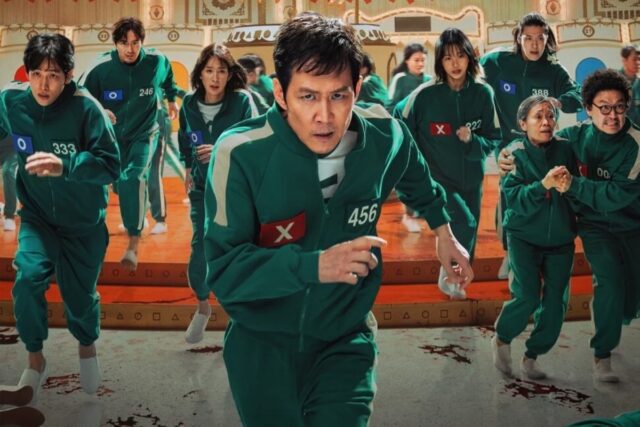
Squid Game S3 (Netflix)

assembly of asian people in matching jumpsuits preparing to compete in a deadly game

Credit: Netflix

In the most violent series to ever catch the world’s attention by playing beloved children’s games, it turns out that the most high-stakes choice that creator Hwang Dong-hyuk could make was to put a child in the arena. For Squid Game‘s final season, Hwang has said the season’s pivotal moment—a pregnant girl birthing a baby during a game of hide-and-seek with knives—was designed to dash viewers’ hopes that a brighter future may await those who survive the games. By leaving the task of saving the baby to the series hero, Seong Gi-hun, whose own strained relationship with his daughter led him into the games in the first season, Squid Game walked a gritty tightrope to the very end.

The only real misstep was involving the goofiest set of cartoon villain VIPs more directly in the games. But we can forgive Hwang the clunky Dr. Evil-like dialogue that slowed down the action. He’s made it clear that he put everything into developing dramatic sequences for the game players—losing teeth, barely eating, rarely sleeping—and he fully admitted to The New York Times that “I have a cartoonish way of giving comic relief.

Ashley Belanger

The Diplomat S3 (Netflix)
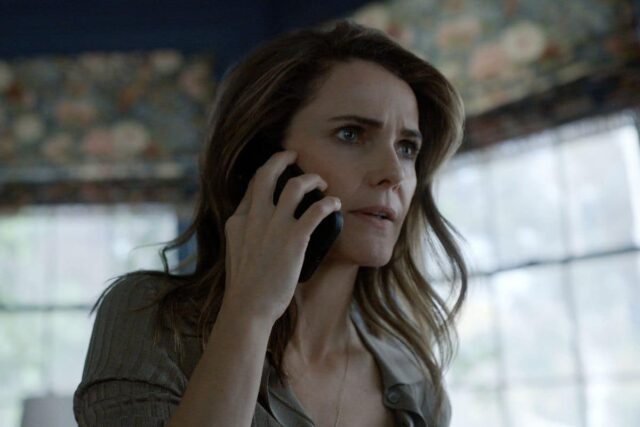
blonde woman on cell phone with a concerned look on her face

Credit: Netflix

Let’s be clear: The Diplomat is a soap opera. If you’re not into cliffhangers, intense levels of drama, and will-they-won’t-they sexual tension, it’s probably not going to be for you. Sometimes there’s so much going on that it becomes almost farcical. If that doesn’t scare you off, what do you get in return?

Superb actors given rich and intriguing characters to inhabit. A political drama that nicely finds a balance between the excessive idealism of The West Wing and the excessive cynicism of Veep. A disturbingly realistic-feeling series of crises that the characters sometimes direct, and sometimes hang on for dear life as they get dragged along by. And, well, the cliffhangers have been good enough to get me tuning in to the next season as soon as it appears on Netflix.

Kerri Russell plays the titular diplomat, who is assigned to what seems like a completely innocuous position: ambassador to one of the US’s closest allies, the UK. Rufus Sewell portrays her husband, a loose-to-the-point-of-unmoored cannon who ensures the posting is anything but innocuous. Ali Ahn and Ato Assandoh, neither of whom I was familiar with, are fantastic as embassy staff. And as the central crisis has grown in scale, some familiar West Wing faces (Allison Janey and Bradley Whitford) have joined the cast. Almost all of the small roles have been superbly acted as well. And for all the dysfunction, cynicism, and selfish behavior that drive the plot forward, the politics in The Diplomat feels like pleasant escapism when compared to the present reality.

John Timmer

Murderbot (Apple TV)

shot of head and upper torso of white armored robot and a faceless mask

Credit: Apple TV+

Apple TV+’s Murderbot, based on Martha Wells’ bestselling series of novels The Murderbot Diaries, is a jauntily charming sci-fi comedy dripping with wry wit and an intriguing mystery. Murderbot the TV series adapts the first book in the series, All Systems Red. A security unit that thinks of itself as Murderbot (Alexander Skarsgård) is on assignment on a distant planet, protecting a team of scientists who hail from a “freehold.”

Mensah (Noma Dumezweni) is the team leader. The team also includes Bharadwaj (Tamara Podemski) and Gurathin (David Dastmalchian), who is an augmented human plugged into the same data feeds as Murderbot (processing at a much slower rate). Pin-Lee (Sabrina Wu) also serves as the team’s legal counsel; they are in a relationship with Arada (Tattiawna Jones), eventually becoming a throuple with Ratthi (Akshaye Khanna). Unbeknownst to the team, Murderbot has figured out how to override his governor module that compels it to obey the humans’ commands. So Murderbot essentially has free will.

The task of adapting Wells’ novellas for TV fell to sibling co-creators Paul Weitz and Chris Weitz. (Wells herself was a consulting producer.) They’ve kept most of the storyline intact, fleshing out characters and punching up the humor a bit, even recreating campy scenes from Murderbot’s favorite show, The Rise and Fall of Sanctuary Moon. (John Cho and Clark Gregg make cameos as the stars of that fictional show-within-a-show.) The entire cast is terrific, but it’s Skarsgård’s hilariously deadpan performance that holds it all together as he learns how to relate to the humans—even forming some unexpectedly strong bonds.

Jennifer Ouellette

Down Cemetery Road (Apple TV)
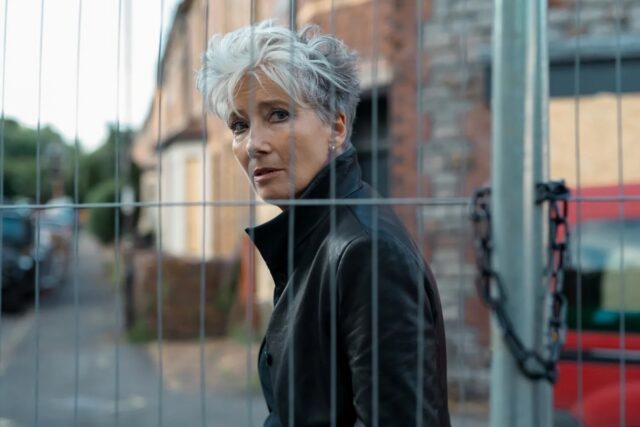
short gray-haired room in black coat staring through a mesh fence

Credit: Apple TV

Fans of Slow Horses (see below), rejoice: with Down Cemetery Road, Apple TV has blessed us with another exciting mystery thriller series based on the works of Mick Herron—in this case, his 2003 novel introducing private investigator Zoë Boehm (Emma Thompson). Ruth Wilson co-stars as Sarah, an artist rather unhappily married to a finance bro. A neighboring building is destroyed by an explosion, and Sarah tries to deliver a get-well card to a little girl who survived from her young classmates. She’s inexplicably rebuffed, and her dogged attempts to figure out what’s going on lead her to seek the help of Zoë’s PI partner and estranged husband Joe (Adam Godley). What Joe finds out gets him killed, setting Sarah and Zoë on a collision course with high-placed government officials trying to cover up a pending scandal.

Thompson and Wilson make a dynamic pair. This is Thompson’s meatiest role in a while: Her Zoë is all flinty cynicism and tough exterior, masking an inner vulnerability she’s learned to keep buried. Wilson’s Sarah is the polar opposite in many ways, but she’s equally dogged, and both women are eccentrics who tend to rub people the wrong way. They’re united in a common goal: find the missing girl and bring her kidnappers (and Joe’s killer) to justice. Down Cemetery Road takes a bit of time to set up its premise and its characters, but the pace builds and builds to a big, satisfying finale. It’s not quite on the level of Slow Horses, but it’s pretty darned close.

Jennifer Ouellette

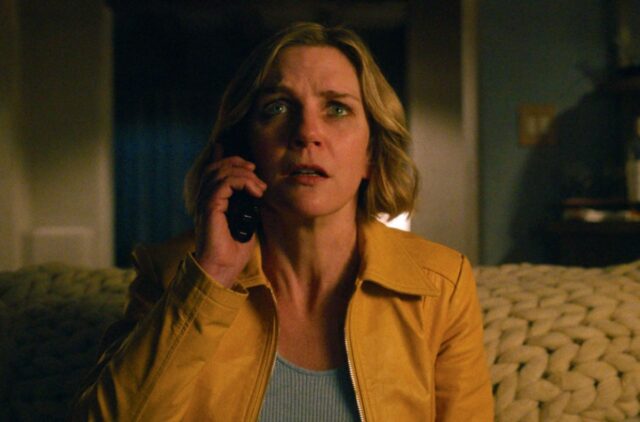
Pluribus (Apple TV)

blond woman on cell phone in yellow jacket looking dismayed

Credit: Apple TV

After watching five episodes of the nine-episode first season of Apple TV’s Pluribus, I’m still not sure if I should be rooting for protagonist Carol Sturka or not. On the one hand, Carol is one of the last true “individuals” on Earth, fighting to maintain that individuality against a creepy alien pseudo-virus that has made almost everyone else part of a creepy, psychically connected hive mind. Reversing that effect, and getting the world “back to normal,” is an understandable and sympathetic response on Carol’s part.

On the other hand, it’s unlear that being absorbed into the hive mind is a change for the worse, on a humanity-wide scale. Unlike Star Trek’s Borg—who are violent, shambling drones that seem to have an overall miserable existence—the new hive-mind humanity is unfailingly pacifist, intelligent, capable, and (seemingly) blissfully, peacefully happy. In a sense, this virus has “solved” human nature by removing the paranoia, fear, anger, and distrust that naturally come from never truly knowing what’s going on in your neighbor’s head.

The fact that Pluribus has so far been able to navigate this premise without coming down strongly on one side or the other is frankly incredible. The fact that it has done it with consistent humor, thrills, and amazing cinematography transforms it into a must-watch.

Kyle Orland

Slow Horses S5 (Apple TV)

scruffy bearded older man in a beige trenchcoat walking down busy London street

Credit: Apple TV

There are many things I enjoy about Slow Horses, the Apple TV thriller about some not-great spies based on Mick Herron’s novels of the same name. The plots are gripping. The acting can be sublime. It’s shot well. And in its fifth season, which began streaming this September, Slow Horses engages more with the author’s humor than in seasons past. But with a plot involving the honeypotting of the deluded computer expert almost-extraordinaire Roddy Ho (played to perfection by Christopher Chung), that would be hard to avoid.

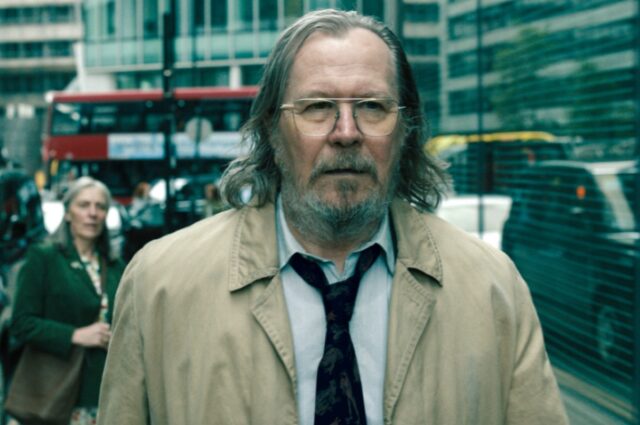
Slough House is a rundown MI5 office used as a dumping ground for employees in disgrace—the slow horses. They can’t be fired, but they can quit, and working for Jackson Lamb (Gary Oldman) is meant to make that happen. Lamb is a veteran of the dirtiest days of the Cold War, knowing not only where most of the bodies are buried but having helped put a few of them there himself. His legendary field prowess is only dwarfed by his repellent personality, mocking and belittling everyone in sight—but often deservedly so.

Each member of his team is there for a different sin, and throughout the season—which involves a plot to destabilize the British government, ripped from an MI5 playbook—we see evidence of why they’ve been consigned to the slow horses. These are not invincible operators, just flawed human beings, perfectly capable of screwing up again and again. And yet, our lovable bunch of losers usually manages to come through in the end, showing up “the Park”—MI5’s (fictional) head office in London’s Regent’s Park, which is usually a step behind Lamb’s quick and devious thinking.

The adaptation is faithful enough to the books to give me deja vu during the first episode, and with just six episodes in a season, the payoff comes relatively quickly. I can’t wait for season 6.

Jonathan Gitlin 

Severance S2 (Apple TV)
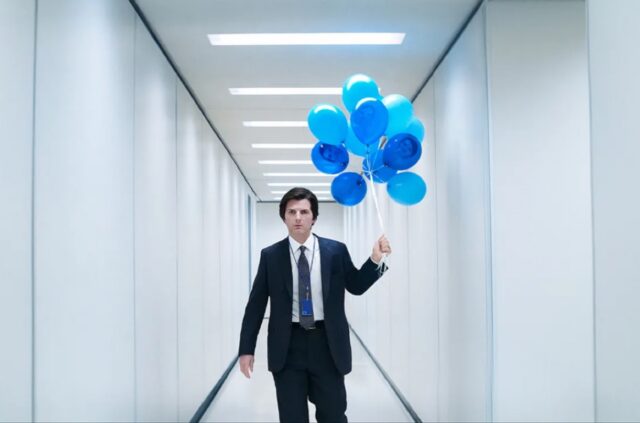
man in business suit holding blue helium balloons while standing in an antiseptic white corridor

Credit: Apple TV

The second season of Severance was never going to be able to live up to the constant, slow rollout of gut punches that characterized the first season. Those first 10 episodes ably explored the most important implications of the titular severance procedure, which splits a single person into separate “innie” and “outtie” consciousnesses with distinct sets of memories. The audience got to explore those implications along with the “innie” characters, who were struggling against the boundaries of their odd cubicle life right up until that thrilling final shot.

With so much now revealed and understood, a lot of that fire fell out of the second season of the show. Sure, there were still some loose ends to tie up from the mysteries of the first season, and plenty of new, off-puttingly weird situations on offer. And the new season definitely has quite a few high points, like the big twist revealed when the “innies” get to have a rare outdoor excursion or the extended flashback showing a character trapped in a seemingly endless sequence of social tests she can’t remember afterward.

But S2 also spent entire episodes exploring backstories and mysteries that didn’t have nearly as much emotional or plot impact. By the time the final episode arrived—with a rescue sequence that required an inordinate amount of suspension of disbelief—I found myself wondering just how much more interesting juice there was to squeeze from the show’s brilliant original premise. I worry that the show is trending in the direction of Lost, which drew things out with a lot of uninteresting padding before finally resolving the plot’s core puzzle box in an unsatisfying way. I’m still along on that ride for now, but I really hope it’s going somewhere soon.

Kyle Orland

And now for our top choice of the year:

The Residence (Netflix)
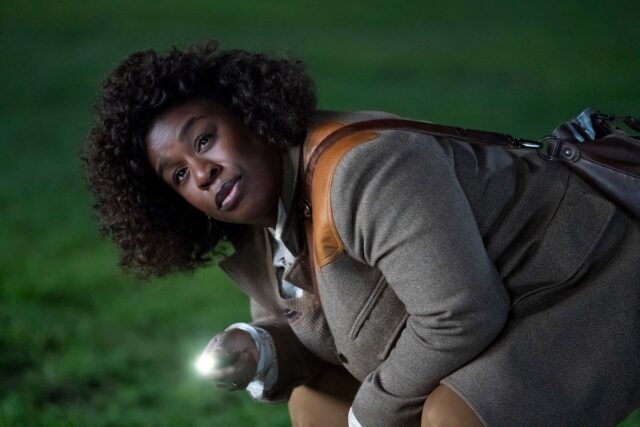
black woman crouched over on white house lawn with a flashlight at night

Credit: Netflix

Paul William Davies created this delightful mystery comedy, loosely based on a bestselling nonfiction book by Kate Andersen Brower about the maids, butlers, cooks, florists, doormen, engineers, and others dedicated to ensuring the White House residence runs smoothly. In the middle of a state dinner for the visiting Australian prime minister, White House Chief Usher A.B. Wynter (Giancarlo Esposito) is found dead in the third-floor game room. Everyone initially assumes it was suicide.

Enter private detective Cordelia Cupp (Uzo Aduba), who most definitely does not think it was suicide and proceeds to investigate. She has about a dozen suspects, and her blunt, rather eccentric personality means she’s not remotely intimidated by the august setting of this particular murder. Cupp even takes the odd break in sleuthing to do a bit of birdwatching on the White House grounds. (It’s her goal to see all the birds President Teddy Roosevelt recorded during his tenure.) Birdwatching is more than a lifelong hobby for Cupp; it’s central to her character and to how she approaches solving crimes. Bonus: Viewers learn a lot of fascinating bird trivia over eight episodes.

Davies has devised a clever narrative structure, telling the story in flashbacks during a Congressional hearing (presided over by former US Sen. Al Franken playing a fictional senator from Washington state). It’s a good mystery with plenty of unexpected twists and snappy dialogue. Each episode title refers to a famous murder mystery; the camerawork is inventive and fun; and everyone in the cast knocks it out of the park. I especially loved pop star Kylie Minogue’s cameo playing a fictional version of herself as a state dinner guest. Davies apparently couldn’t convince her fellow Australian Hugh Jackman to also make a cameo. But Ben Prendergast’s winking portrayal of “Hugh Jackman”—only seen from behind or with his face obscured—is actually funnier than having the real actor.

It would be a mistake to dismiss The Residence as a mere bauble of a murder mystery just because of its playful, lighthearted tone. The show really does capture what is special and unique about the people who keep the White House residence functioning and why they matter—to each other and to America. Cupp’s final speech after unmasking the killer drives home those points with particular poignancy.

Netflix sadly canceled this excellent series, so there won’t be a second season—although I’m not sure how the writers could improve on such a tour de force. Do we really need Cupp to solve another elaborate murder in the White House? If I’m being honest, probably not. But she’s such a great character. I’d love to see more of her, perhaps in a Knives Out-style franchise where the location and main suspects continually change while the central detective stays the same. Somebody make it so.

Jennifer Ouellette

Photo of Jennifer Ouellette

Jennifer is a senior writer at Ars Technica with a particular focus on where science meets culture, covering everything from physics and related interdisciplinary topics to her favorite films and TV series. Jennifer lives in Baltimore with her spouse, physicist Sean M. Carroll, and their two cats, Ariel and Caliban.

TV Technica: Our favorite shows of 2025 Read More »
leaked-avengers:-doomsday-teaser-is-now-public

Leaked Avengers: Doomsday teaser is now public

Downey Jr. might be playing a new role, but Marvel is really getting the band(s) back together on this one. The film takes place 14 months after the events of this year’s Thunderbolts*.  So we’ve got Avengers favorites Thor (Chris Hemsworth), the new Captain America (Anthony Mackie), Bucky Barnes (Sebastian Stan), Ant-Man (Paul Rudd), Falcon (Danny Ramirez), and Loki (Tom Hiddleston). Then there’s the Wakandan contingent: Shuri as the new Black Panther (Letitia Wright), M’Baku (Winston Duke), and Namor (Tenoch Huerta Mejia).

Naturally, the Thunderbolts(aka New Avengers) will appear: John Walker/US Agent (Wyatt Russell), Yelena Belova (Florence Pugh), Bob/Sentry (Lewis Pullman), Red Guardian (David Harbour), and Ghost (Hannah John-Kamen). So will the Fantastic Four: Reed Richards (Pedro Pascal), Sue Storm (Vanessa Kirby), Ben Grimm (Ebon Moss-Bachrach), and Johnny Storm (Joseph Quinn). But we also have the original X-Men: Charles Xavier (Patrick Stewart), Beast (Kelsey Grammer), Magneto (Ian McKellen), Mystique (Rebecca Romijn), Nightcrawler (Alan Cumming), and Cyclops (James Marsden).

For good measure, Marvel threw in Gambit (Channing Tatum) and Xu Shang-Chi (Simu Liu). There will also be plenty of cameos, like the Steve Rogers appearance that was recently revealed. We can expect to see  (at least briefly) Peggy Carter, Spider-Man (Tom Holland), Hawkeye (Jeremy Renner), and Doctor Strange (Benedict Cumberbatch), among others.

Avengers: Doomsday hits theaters on December 18, 2026. Avengers: Secret Wars is currently slated for release on December 17, 2027, and will mark the conclusion of the MCU’s Phase Six.

Leaked Avengers: Doomsday teaser is now public Read More »

odyssey-trailer-brings-the-myth-to-vivid-life

Odyssey trailer brings the myth to vivid life

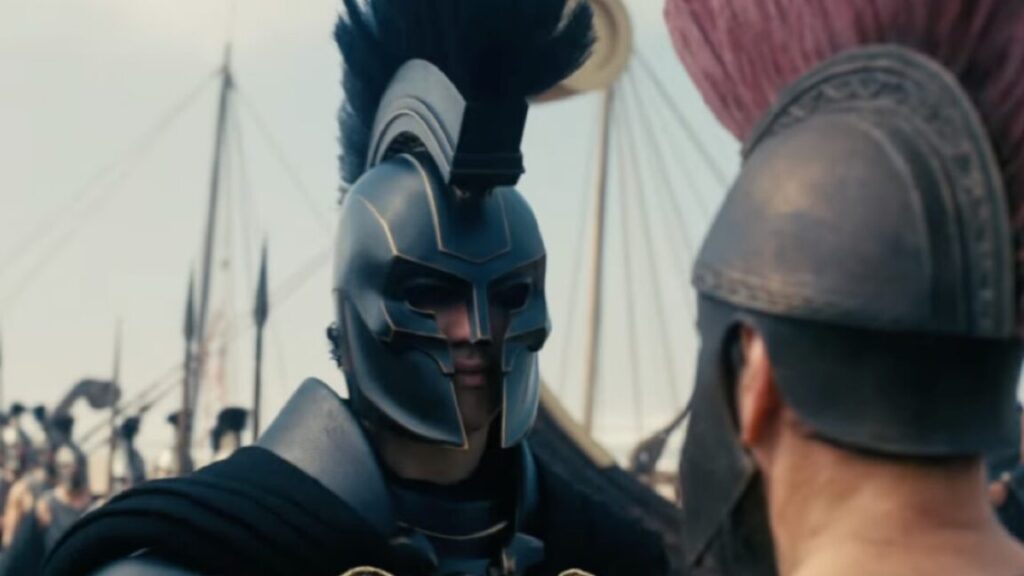
It’s difficult to underestimate the tremendous influence Homer’s epic has had on global culture. Nolan himself recalled seeing the Odyssey performed as a school play when he was just 5 or 6 years old. “I remember the Sirens and him being strapped to the mast and things like that,” he recently told Empire. “I think it’s in all of us, really. And when you start to break down the text and adapt it, you find that all of these other films—and all the films I’ve worked on—you know, they’re all from the Odyssey. It’s foundational.”

In addition to Damon, the cast includes Anne Hathaway as Penelope; Tom Holland as Odysseus’ son, Telemachus; Robert Pattinson as Antinous, one of Penelope’s many suitors; Jon Bernthal as the Spartan king, Menelaus; Benny Safdie as the Achaean commander during the Trojan War, Agamemnon; John Leguizamo as Odysseus’ faithful servant, Eumaeus; Himesh Patel as his second-in-command, Eurylochus; Will Yun Lee and Jimmy Gonzales as crew members; and Mia Goth as Penelope’s maid Melantho. We also have Zendaya as Athena, Charlize Theron as Circe, and Lupita Nyong’o in an as-yet-undisclosed role.

The Odyssey hits theaters on July 17, 2026.

Odyssey trailer brings the myth to vivid life Read More »

filmmaker-rob-reiner,-wife,-killed-in-horrific-home-attack

Filmmaker Rob Reiner, wife, killed in horrific home attack

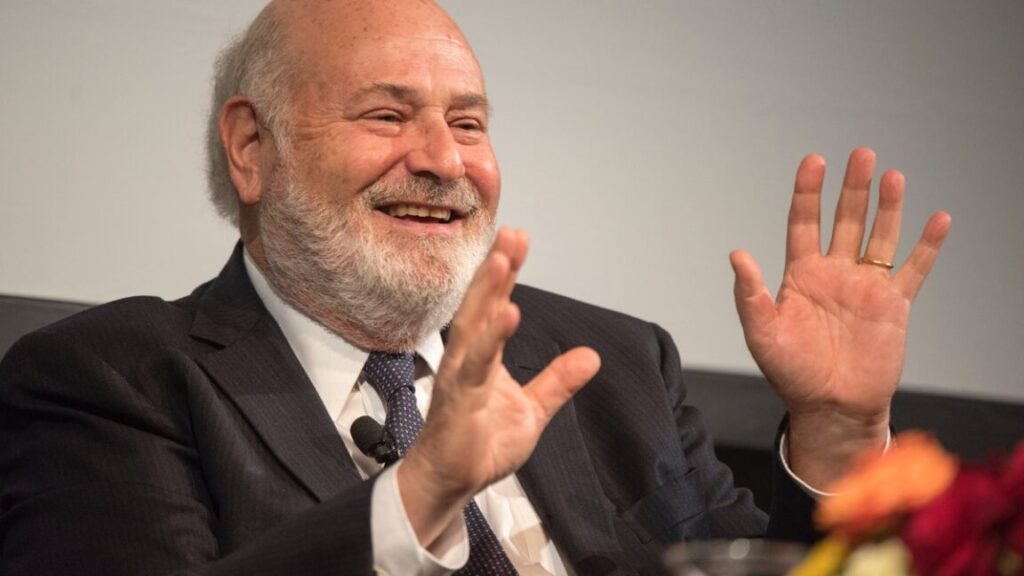
We woke up this morning to the horrifying news that beloved actor and director Rob Reiner and his wife Michele were killed in their Brentwood home in Los Angeles last night. Both had been stabbed multiple times. Details are scarce, but the couple’s 32-year-old son, Nick—who has long struggled with addiction and recently moved back in with his parents—has been arrested in connection with the killings, with bail set at $4 million.  [UPDATE: Nick Reiner’s bail has been revoked and he faces possible life in prison.]

“As a result of the initial investigation, it was determined that the Reiners were the victims of homicide,” the LAPD said. “The investigation further revealed that Nick Reiner, the 32-year-old son of Robert and Michele Reiner, was responsible for their deaths. Nick Reiner was located and arrested at approximately 9: 15 p.m. He was booked for murder and remains in custody with no bail. On Tuesday, December 16, 2025, the case will be presented to the Los Angeles County District Attorney’s Office for filing consideration.”

“It is with profound sorrow that we announce the tragic passing of Michele and Rob Reiner,” the family said in a statement confirming the deaths. “We are heartbroken by this sudden loss, and we ask for privacy during this unbelievably difficult time.”

Reiner started his career as an actor, best known for his Emmy-winning role as Meathead, son-in-law to Archie Bunker, on the 1970s sitcom All in the Family. (“I could win the Nobel Prize and they’d write ‘Meathead wins the Nobel Prize,’” Reiner once joked about the enduring popularity of the character.) Then Reiner turned to directing, although he continued to make small but memorable appearances in films such as Throw Momma from the Train, Sleepless in Seattle, The First Wives Club, and The Wolf of Wall Street, as well as TV’s The New Girl.

His first feature film as a director was an instant classic: 1984’s heavy metal mockumentary This Is Spinal Tap (check out the ultra-meta four-minute alt-trailer). He followed that up with a string of hits: The Sure Thing, Stand by Me, The Princess Bride, When Harry Met Sally…, Misery, the Oscar-nominated A Few Good Men, The American President, The Bucket List, and Ghosts of Mississippi. His 2015 film Being Charlie was co-written with his son Nick and was loosely based on Nick’s experience with addiction. Reiner’s most recent films were a 2024 political documentary about the rise of Christian nationalism and this year’s delightful Spinal Tap II: The End Continues.

Filmmaker Rob Reiner, wife, killed in horrific home attack Read More »

a-study-in-contrasts:-the-cinematography-of-wake-up-dead-man

A study in contrasts: The cinematography of Wake Up Dead Man

Rian Johnson has another Benoit Blanc hit on his hands with Wake Up Dead Man, in which Blanc tackles the strange death of a fire-and-brimstone parish priest, Monseigneur Jefferson Wicks (Josh Brolin). It’s a classic locked-room mystery in a spookily Gothic small-town setting, and Johnson turned to cinematographer Steve Yedlin (Looper, The Last Jedi) to help realize his artistic vision.

(Minor spoilers below but no major reveals.)

Yedlin worked on the previous two Knives Out installments. He’s known Johnson since the two were in their teens, and that longstanding friendship ensures that they are on the same page, aesthetically, from the start when they work on projects.

“We don’t have to test each other,” Yedlin told Ars. “There isn’t that figuring out period. We get to use the prep time in a way that’s really efficient and makes the movie better because we’re [in agreement] from the very first moment of whatever time we have crafting and honing and sculpting this movie. We don’t waste time talking abstractions or making sure we have the same taste. We can just dive right into the details of each individual scene and shot.”

This time, given the distinctive Gothic sensibility of Wake Up Dead Man, Yedlin played up the interplay between light and dark. For instance, Johnson’s script called for the occasional dramatic lighting changes, sometimes within the same scene. Case in point: When Wick is delivering his trademark hellfire-and-brimstone sermon in the pulpit, the sun bursts out of the clouds for a brief moment and illuminates him, before the clouds move back to cover the sun once again. Even Blanc gets his moment in the sun, so to speak, with his “road to Damascus” moment just before the final reveal.

“In the church, we have day, night, dawn, dusk,” said Yedlin. “We have early morning rays slashing in. As Wick’s speech swells up, the sun bursts out from behind the clouds and flares the lens. We had custom light control software so they can both control and tweak all the nuances of the lighting and also do the cues themselves where it’s changing during the shot, where it’s very flexible and we can be creative in the moment. It’s very repeatable and dependable and you can just push a button and it happens on the same line over the same length of time, every time.”

A study in contrasts: The cinematography of Wake Up Dead Man Read More »

supergirl-teaser-gives-us-a-likably-imperfect-kara-zor-el

Supergirl teaser gives us a likably imperfect Kara Zor-El

We met Alcock’s Supergirl briefly at the end of Superman, when she showed up to collect her dog Krypto, still a bit hung over from partying on a red-sun planet. She is more jaded than her cousin, having witnessed the destruction of Krypton and the loss of everything and everyone she loved. “He sees the good in everyone and I see the truth,” she says in the teaser.

Kara, aka Supergirl, is turning 23 and declares it will be the best year yet, which is admittedly “not a very high bar to clear.” While she might not be too keen on the prospect, she’s going to be a superhero nonetheless. Per the longline: “When an unexpected and ruthless adversary strikes too close to home, Kara Zor-El, aka Supergirl, reluctantly joins forces with an unlikely companion on an epic, interstellar journey of vengeance and justice.”

In addition to Alcock, the cast includes Matthias Schoenaerts as chief villain Krem of the Yellow Hills; Eve Ridley as Ruthye Marye Knoll, the aforementioned “unlikely companion” who meets and bonds with Supergirl over the course of the film; Ferdinand Kingsley as Ruthye’s father Elias; and David Krumholtz and Emily Beecham as Supergirl’s parents, Zor-El and Alura In-Ze. Jason Momoa also makes an appearance as Lobo, an alien bounty hunter from the planet Czarnia. We catch a brief, blurry glimpse of Momoa’s well-muscled mercenary with the glowing red eyes in the teaser. And of course, our favorite misbehaving pupster Krypto is returning, too; he kicks off the teaser by peeing on a newspaper.

Supergirl hits theaters on June 26, 2026.

post art showcasing the character of supergirl for the movie of the same name

Credit: Warner Bros.

Supergirl teaser gives us a likably imperfect Kara Zor-El Read More »

the-boys-gears-up-for-a-supe-ocalypse-in-s5-teaser

The Boys gears up for a supe-ocalypse in S5 teaser

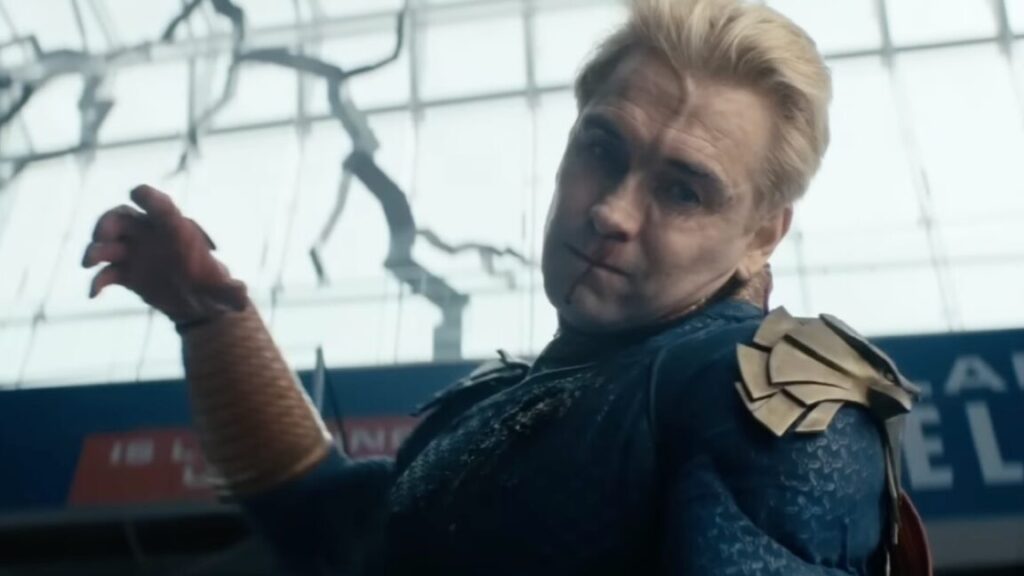
Prime Video dropped an extended teaser for the fifth and final season of The Boys—based on the comic book series of the same name by Garth Ennis and Darick Robertson—during CCXP in Sao Paulo, Brazil. And it looks like we’re getting nothing less than a full-on Supe-ocalypse as an all-powerful Homelander seeks revenge on The Boys.

(Spoilers for prior seasons of The Boys and S2 of Gen V below.)

Things were not looking good for our antiheroes after the S4 finale. They managed to thwart the assassination of newly elected US President Robert Singer, but new Vought CEO/evil supe Sister Sage (Susan Heyward) essentially overthrew the election and installed Senator Steve Calhoun (David Andrews) as president. Calhoun declared martial law, and naturally, Homelander (Antony “Give Him an Emmy Already” Starr) swore loyalty as his chief enforcer. Butcher (Karl Urban) and Annie (Erin Moriarty) escaped, but the rest of The Boys were rounded up and placed in re-education—er, “Freedom”—camps.

The second season of spinoff series Gen V was set after those events, and the finale concluded with Annie recruiting the main cast members to join the fight against Homelander and the Supes. Season 5 of The Boys picks up where the Gen V finale left off. Per the official premise:

In the fifth and final season, it’s Homelander’s world, completely subject to his erratic, egomaniacal whims. Hughie, Mother’s Milk, and Frenchie are imprisoned in a “Freedom Camp.” Annie struggles to mount a resistance against the overwhelming Supe force. Kimiko is nowhere to be found. But when Butcher reappears, ready and willing to use a virus that will wipe all Supes off the map, he sets in motion a chain of events that will forever change the world and everyone in it. It’s the climax, people. Big stuff’s gonna happen.

Most of the main cast is returning for the final season (although RIP Claudia Doumit’s Victoria Neuman), and we’ll also see the return of Soldier Boy (Jensen Ackles), aka Homelander’s daddy, revealed in the S4 finale mid-credits scene to be alive and chilling out in cryostorage. Showrunner Eric Kripke has said that he wanted to delve a little deeper into that father/son relationship, particularly since Soldier Boy has switched sides and aligned with the supes after Butcher tried to kill him in S3.

The Boys gears up for a supe-ocalypse in S5 teaser Read More »

sony-drops-new-trailer-for-28-years-later:-bone-temple

Sony drops new trailer for 28 Years Later: Bone Temple

Then, 28 days after leaving, Spike was rescued from a horde of infected by Sir Jimmy Crystal (Jack O’Connell), another original survivor who turned out to be the leader of a barbaric cult. That’s where the sequel picks up. Spike, Kelson, and Crystal will play major roles in The Bone Temple. Per the official premise:

Dr. Kelson finds himself in a shocking new relationship—with consequences that could change the world as they know it—and Spike’s encounter with Jimmy Crystal becomes a nightmare he can’t escape. In the world of The Bone Temple, the infected are no longer the greatest threat to survival—the inhumanity of the survivors can be stranger and more terrifying.

Samson the Alpha Zombie is back, too. The cast also includes Erin Kellyman, Emma Laird, and Maura Bird as Jimmy Ink, Jimmima, and Jimmy Jones, all members of Crystal’s cult. Best of all, Cillian Murphy will reprise his 28 Days Later/28 Weeks Later starring role as intrepid bike courier Jim, who miraculously survived the first two movies and, apparently, the ensuing 28 years.

The trailer opens with an exchange between Kelson and Crystal, in which the latter asks if Kelson is “Old Nick,” i.e., Satan. It’s a reasonable assumption, given that morbid bone temple. We also see Spike joining Crystal’s ranks and Kelson remembering the happier past before sharing a moment of truce with Samson. “I believe the infection can be treated,” Kelson says later, and in the final scene, we see him give Samson an injection representing “a leap into the unknown.” Will it really cure Samson? We know there’s already another film in the works, so that might be an interesting twist.

Look for 28 Years Later: Bone Temple to hit theaters on January 16, 2026.

Sony drops new trailer for 28 Years Later: Bone Temple Read More »

samara-weaving-levels-up-in-ready-or-not-2:-here-i-come-trailer

Samara Weaving levels up in Ready or Not 2: Here I Come trailer

One of big surprise hits of 2019 was the delightful horror comedy Ready or Not, in which Samara Weaving’s blushing bride must play a deadly game of Hide and Seek on her wedding night. Searchlight Pictures just released the trailer for its sequel: Ready or Not 2: Here I Come.

(Spoilers for Ready or Not below.)

In Ready or Not, Grace (Weaving) falls in love with Alex Le Domas (Mark O’Brien), a member of a wealthy gaming dynasty. After a picture-perfect wedding on the family estate, Alex informs Grace that there’s just one more formality to be observed: At midnight, she has to draw a card from a mysterious box and play whatever game is named there.

Grace, alas, draws Hide and Seek, the worst possible card. Grace is the prey, and she has to elude detection until dawn to avoid being killed in a bizarre ritual sacrifice to a supernatural figure named Mister LeBail. Yep, the family had made a deal with the devil, attaining great wealth in exchange for the occasional blood sacrifice. Unfortunately for the Le Domas family, Grace turns out to be a formidable adversary, taking out family members one by one and beating them at their own deadly game.

Ready or Not 2 picks up right where the first film left off, with a blood-spattered Grace—still in the remnants of her wedding gown—lighting up a well-deserved ciggie as the Le Domas mansion burns up in the background. But she then wakes up cuffed to a hospital bed and learns that the games are far from over.  The Le Domas family was just one among many “High Council” families, and Grace surviving Hide and Seek means it’s time for the next level: being hunted down by the other families. And it’s not like Grace can refuse to play—they’re holding her sister Faith (Kathryn Newton) hostage. So both sisters end up fighting for their lives, with the winner claiming control of the Council.

Samara Weaving levels up in Ready or Not 2: Here I Come trailer Read More »

blast-from-the-past:-15-movie-gems-of-1985

Blast from the past: 15 movie gems of 1985


Beyond the blockbusters: This watch list has something for everyone over the long holiday weekend.

Peruse a list of films released in 1985 and you’ll notice a surprisingly high number of movies that have become classics in the ensuing 40 years. Sure, there were blockbusters like Back to the Future, The Goonies, Pale Rider, The Breakfast Club and Mad Max: Beyond Thunderdome, but there were also critical arthouse favorites like Kiss of the Spider Woman and Akira Kurosawa’s masterpiece, Ran. Since we’re going into a long Thanksgiving weekend, I’ve made a list, in alphabetical order, of some of the quirkier gems from 1985 that have stood the test of time. (Some of the films first premiered at film festivals or in smaller international markets in 1984, but they were released in the US in 1985.)

(Some spoilers below but no major reveals.)

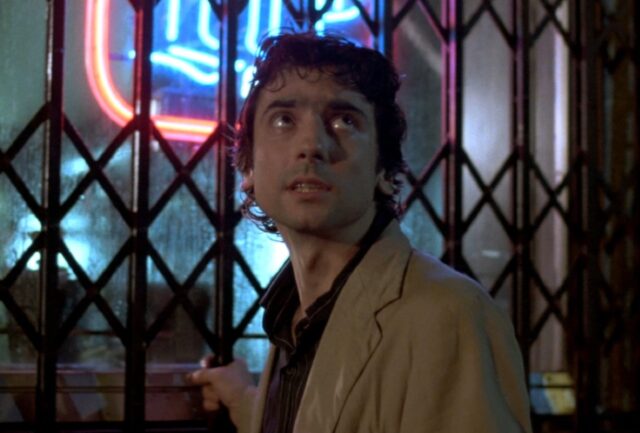
After Hours

young nerdy man in black shirt and casual tan jacket looking anxious

Credit: Warner Bros.

Have you ever had a dream, bordering on a nightmare, where you were trying desperately to get back home but obstacle after obstacle kept getting in your way? Martin Scorsese’s After Hours is the cinematic embodiment of that anxiety-inducing dreamscape. Griffin Dunne stars as a nebbishy computer data entry worker named Paul, who meets a young woman named Marcy (Rosanna Arquette) and heads off to SoHo after work to meet her. The trouble begins when his $20 cab fare blows out the window en route. The date goes badly, and Paul leaves, enduring a string of increasingly strange encounters as he tries to get back to his uptown stomping grounds.

After Hours is an unlikely mix of screwball comedy and film noir, and it’s to Scorsese’s great credit that the film strikes the right tonal balance, given that it goes to some pretty bizarre and occasionally dark places. The film only grossed about $10 million at the box office but received critical praise, and it’s continued to win new fans ever since, even inspiring an episode of Ted Lasso. It might not rank among Scorsese’s masterworks, but it’s certainly among the director’s most original efforts.

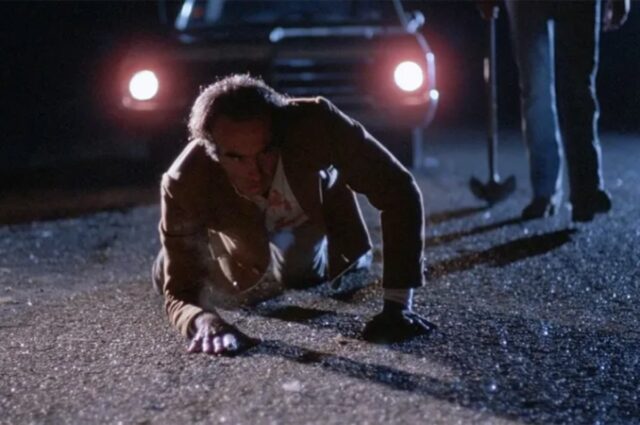
Blood Simple

man in tan suit crawling on the pavement at night in front of truck with headlights glaring. Feet of a man holding an axe is off to the right.

Credit: Circle Films

Joel and Ethan Coen are justly considered among today’s foremost filmmakers; they’ve made some of my favorite films of all time. And it all started with Blood Simple, the duo’s directorial debut, a neo-noir crime thriller set in small-town Texas. Housewife Abby (Frances McDormand) is having an affair with a bartender named Ray (John Getz). Her abusive husband, Julian (Dan Hedaya), has hired a private investigator named Visser (M. Emmet Walsh) and finds out about the affair. He then asks Visser to kill the couple for $10,000. Alas, things do not go as planned as everyone tries to outsmart everyone else, with disastrous consequences.

Blood Simple has all the elements that would become trademarks of the Coen brothers’ distinctive style: it’s both brutally violent and acerbically funny, with low-key gallows humor, not to mention inventive camerawork and lighting. The Coens accomplished a lot with their $1.5 million production budget. And you can’t beat that cast. (It was McDormand’s first feature role; she would go on to win her first Oscar for her performance in 1996’s Fargo.) The menacing shot of Ray dragging a shovel across the pavement toward a badly wounded Julian crawling on the road, illuminated by a car’s headlights, is one for the ages.

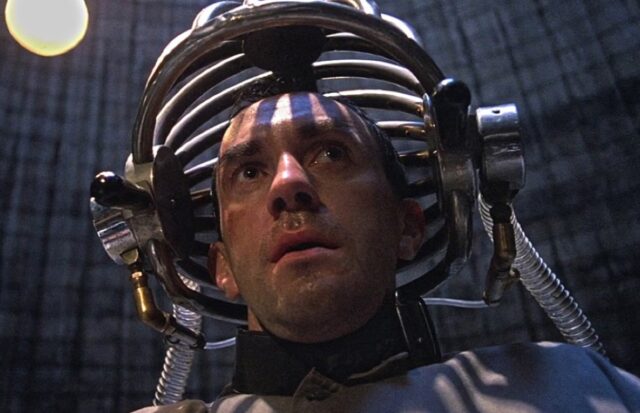
Brazil

anxious man being restrained with his head in a weird futuristic helmet

Credit: Universal Pictures

Terry Gilliam’s Oscar-nominated, Orwellian sci-fi tragicomedy, Brazil, is part of what the director has called his “Trilogy of Imagination,” along with 1981’s Time Bandits and 1988’s The Adventures of Baron Munchausen. Jonathan Pryce stars as a low-ranking bureaucrat named Sam Lowry who combats the soul-crushing reality of his bleak existence with elaborate daydreams in which he is a winged warrior saving a beautiful damsel in distress. One day, a bureaucratic error confuses Sam with a wanted terrorist named Archibald Tuttle (Robert De Niro), setting off a darkly comic series of misadventures as Sam tries to prove his true identity (and innocence). That’s when he meets Jill (Kim Greist), a dead ringer for his dream woman.

Along with 12 Monkeys and Monty Python and the Holy Grail, Brazil represents Gilliam at his best, yet it was almost not released in the US because Gilliam refused the studio’s request to give the film a happy ending. Each side actually ran ads in Hollywood trades presenting their respective arguments, and Gilliam ultimately prevailed. The film has since become a critical favorite and an essential must-watch for Gilliam fans. Special shoutout to Katherine Helmond’s inspired supporting performance as Sam’s mother Ida and her addiction to bad plastic surgery (“It’s just a little complication….”).

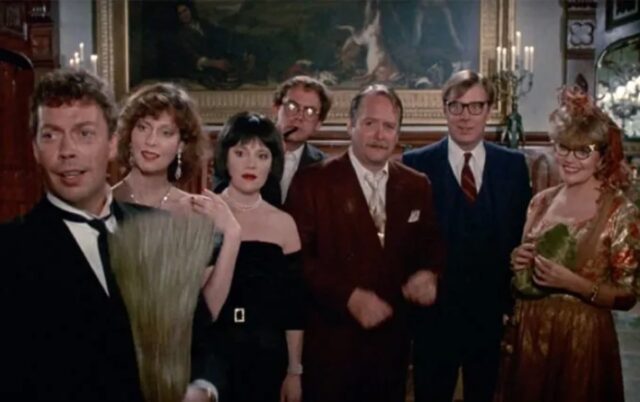
Clue

a group of people in dinner party fancy dress staring at the door.

Credit: Paramount Pictures

Benoit Blanc may hate the game Clue, but it’s delighted people of all ages for generations. And so has the deliciously farcical film adaptation featuring an all-star cast. Writer/director Jonathan Lynn (My Cousin Vinny) does a great job fleshing out the game’s premise and characters. A group of people is invited to an isolated mansion for a dinner with “Mr. Boddy” (Lee Ving) and are greeted by the butler, Wadsworth (Tim Curry). There is Mrs. Peacock (Eileen Brennan), Mrs. White (Madeline Kahn), Professor Plum (Christopher Lloyd), Mr. Green (Michael McKean), Colonel Mustard (Martin Mull), and Miss Scarlet (Lesley Ann Warren).

After dinner, Mr. Boddy reveals that he is the one who has been blackmailing them all, and when the lights suddenly go out, he is murdered. As everyone frantically tries to figure out whodunnit, more bodies begin to pile up, culminating in three different endings. (A different ending was shown in each theater but now all three are included.) The script is packed with bad puns and slapstick scenarios,  delivered with impeccable comic timing by the gifted cast. And who could forget Kahn’s famous ad-libbed line: “Flames… on the side of my face“? Like several films on this list, Clue got mixed reviews and bombed at the box office, but found its audience in subsequent decades. It’s now another cult classic that holds up even after multiple rewatchings.

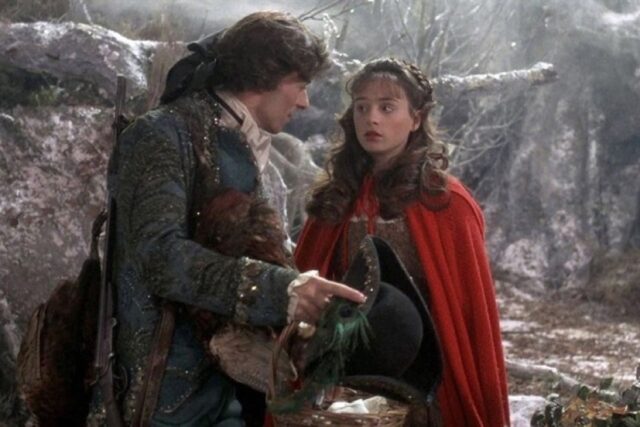
The Company of Wolves

beautiful young dark-haired girl in a red hooded cape talking to a darkly handsome young man with a rakish look about him

Credit: ITC Entertainment

Director Neil Jordan’s sumptuous Gothic fantasy horror is a haunting twist on “Little Red Riding Hood” adapted from a short story by Angela Carter in her anthology of fairy-tale reinventions, The Bloody Chamber. The central narrative concerns a young girl named Rosaleen (Sarah Patterson) who sports a knitted red cape and encounters a rakish huntsman/werewolf (Micha Bergese) in the woods en route to her grandmother’s (Angela Lansbury) house. There are also several embedded wolf-centric fairy tales, two told by Rosaleen and two told by the grandmother.

Jordan has described this structure as “a story with very different movements,” all variations on the central theme and “building to the fairy tale that everybody knows.” The production design and gorgeously sensual cinematography—all achieved on a limited $2 million budget—further enhance the dreamlike atmosphere.  The Company of Wolves, like the fairy tale that inspired it, is an unapologetically Freudian metaphor for Rosaleen’s romantic and sexual awakening, in which she discovers her own power, which both frightens and fascinates her. It’s rare to find such a richly layered film rife with symbolism and brooding imagery.

Desperately Seeking Susan

two young women, similar in appearance, dressed in 1980s New Wave outfits and striking a sultry pose for the camera

Credit: Orion Pictures

In this quintessential 1980s screwball comedy about mistaken identity, Roberta (Rosanna Arquette) is a dissatisfied upper-class New Jersey housewife fascinated by the local tabloid personal ads, especially messages between two free-spirited bohemian lovers, Susan (Madonna) and Jim (Robert Joy). She follows Susan one day and is conked on the head when a mob enforcer mistakes her for Susan, who had stolen a pair of valuable earrings from another paramour, who had stolen them from a mobster in turn. Roberta comes to with amnesia and, believing herself to be Susan, is befriended by Jim’s best friend, Dez (Aidan Quinn).

Desperately Seeking Susan is director Susan Seidelman’s love letter to the (admittedly sanitized) 1980s counterculture of Manhattan’s Lower East Side, peppered with cameo appearances by performance artists, musicians, comedians, actors, painters, and so forth of that time period. The script is rife with witty one-liners and a stellar supporting cast, including John Turturro as the owner of a seedy Magic Club, Laurie Metcalf as Roberta’s sister-in-law Leslie, and a deadpan Steven Wright as Leslie’s dentist love interest. It’s breezy, infectious, frothy fun, and easily Madonna’s best acting role, perhaps because she is largely playing herself.

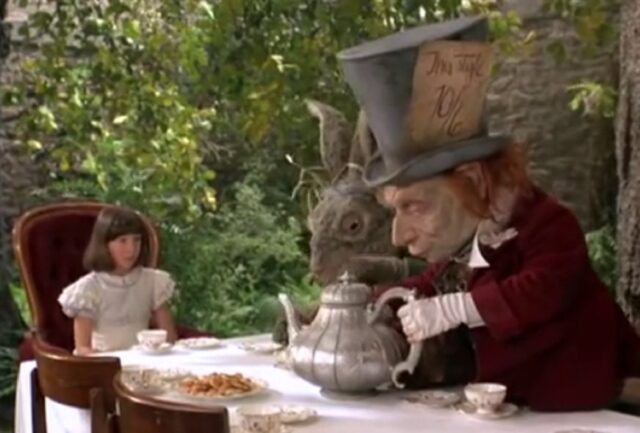
Dreamchild

Young dark-haired girl with a bob in a white dress sitting down for tea with a a giant March Hare and the Mad Hatter

Credit: Thorn EMI

Dennis Potter (The Singing Detective) co-wrote the screenplay for this beautifully shot film about Alice Liddell, the 11-year-old girl who inspired Alice in Wonderland. Coral Browne plays the elderly widowed Alice, who travels by ship to the US to receive an honorary degree in celebration of Lewis Carroll’s birthday—a historical event. From there, things become entirely fictional, as Alice must navigate tabloid journalists, a bewildering modern world, and various commercial endorsement offers that emerge because of Alice’s newfound celebrity.

All the while, Alice struggles to process resurfaced memories—told via flashbacks and several fantasy sequences featuring puppet denizens of Wonderland—about her complicated childhood friendship with “Mr. Dodgson” (Ian Holm) and the conflicting emotions that emerge. (Amelia Shankley plays Alice as a child.) Also, romance blooms between Alice’s companion, an orphan named Lucy (Nicola Cowper), and Alice’s new US agent, Jack Dolan (Peter Gallagher).

Directed by Gavin Millar, Dreamchild taps into the ongoing controversy about Carroll’s fascination, as a pioneer of early photography, with photographing little girls in the nude (a fairly common practice in Victorian times). There is no evidence he photographed Alice Liddell in this way, however, and Potter himself told The New York Times in 1985 that he didn’t believe there was ever any improper behavior. Repressed romantic longing is what is depicted in Dreamchild, and it’s to Millar’s credit, as well as Holm’s and Browne’s nuanced performances, that the resulting film is heartbreakingly bittersweet rather than squicky.

Fandango

a group of young men in casual garb standing in a row in front of a car against a classic Americana small town background

Credit: Warner Bros.

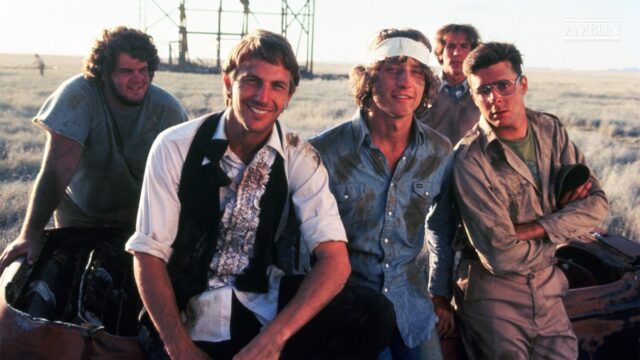
Director Kevin Reynolds’ Fandango started out as a student film satirizing fraternity life at a Texas university. Steven Spielberg thought the effort was promising enough to fund a full-length feature. Set in 1971, the plot (such that it is) centers on five college seniors—the Groovers—who embark on a road trip to celebrate graduation. Their misadventures include running out of gas, an ill-advised parachuting lesson, and camping on the abandoned set of Giant, but it’s really about the group coming to terms with the harsh realities of adulthood that await, particularly since they’ve all been called up for the Vietnam draft.

Spielberg purportedly was unhappy with the final film, but it won over other fans (like Quentin Tarantino) and became a sleeper hit, particularly after its home video release. The humor is dry and quirky, and Reynolds has a knack for sight gags and the cadences of local dialect. Sure, the plot meanders in a rather quixotic fashion, but that’s part of the charm. And the young cast is relentlessly likable. Fandango featured Kevin Costner in his first starring role, and Reynolds went on to make several more films with Costner (Robin Hood: Prince of Thieves, Rapa Nui, Waterworld), with mixed success. But Fandango is arguably his most enduring work.

Ladyhawke

Handsome man in period dress standing close to a beautiful woman with short blonde hair, as they both look apprehensively into the distance.

Credit: Warner Bros.

Rutger Hauer and Michelle Pfeiffer star in director Richard Donner’s medieval fantasy film, playing a warrior named Navarre and his true love Isabeau who are cursed to be “always together, yet eternally apart.” She is a hawk by day, while he is a wolf by night, and the two cannot meet in their human forms, due to the jealous machinations of the evil Bishop of Aquila (John Wood), once spurned by Isabeau. Enter a young thief named Philippe Gaston (Matthew Broderick), who decides to help the couple lift the curse and exact justice on the bishop and his henchmen.

Ladyhawke only grossed $18.4 million at the box office, just shy of breaking even against its $20 million budget, and contemporary critical reviews were very much mixed, although the film got two Oscar nods for best sound and sound effects editing. Sure, the dialogue is occasionally clunky, and Broderick’s wisecracking role is a bit anachronistic (shades of A Knight’s Tale). But the visuals are stunning, and the central fairy tale—fueled by Hauer’s and Pfeiffer’s performances—succeeds in capturing the imagination and holds up very well as a rewatch.

Pee-Wee’s Big Adventure

goofy man in tight fitting gray suit balancing sideways on a bicycle with a silly grin on his face

Credit: Warner Bros.

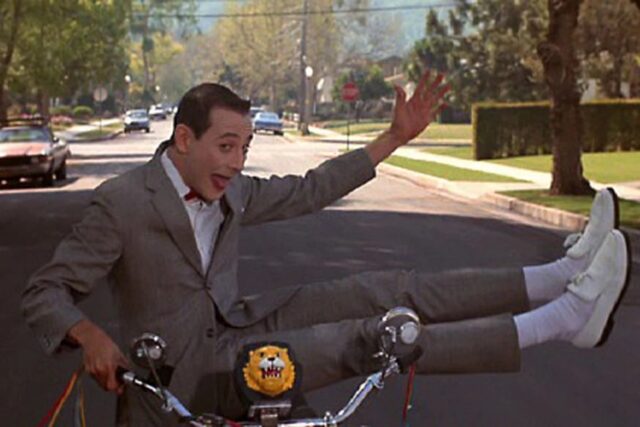
Paul Reubens originally created the Pee-Wee Herman persona for the Groundlings sketch comedy theater in Los Angeles, and his performances eventually snagged him an HBO special in 1981. That, in turn, led to Pee-Wee’s Big Adventure, directed by Tim Burton (who makes a cameo as a street thug), in which the character goes on a madcap quest to find his stolen bicycle. The quest takes Pee-Wee to a phony psychic, a tacky roadside diner, the Alamo Museum in San Antonio, Texas, a rodeo, and a biker bar, where he dances in platform shoes to “Tequila.” But really, it’s all about the friends he makes along the way, like the ghostly trucker Large Marge (Alice Nunn).

Some have described the film as a parodic homage to the classic Italian film, Bicycle Thieves, but tonally, Reubens wanted something more akin to the naive innocence of Pollyanna (1960). He chose Burton to direct after seeing the latter’s 1984 featurette, Frankenweenie, because he liked Burton’s visual sensibility. Pee-Wee’s Big Adventure is basically a surreal live-action cartoon, and while contemporary critics were divided—it’s true that a little Pee-Wee goes a long way and the over-the-top silliness is not to everyone’s taste—the film’s reputation and devoted fandom have grown over the decades.

A Private Function

a woman in a green dress and tight bun looking at a nervous man in white shirt and suspenders as he looks over his shoulder.

Credit: HandMade Films

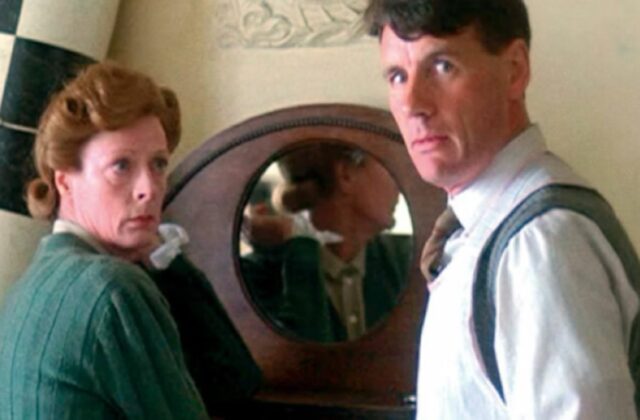
A Private Function is an homage of sorts to the British post-war black comedies produced by Ealing Studios between 1947 and 1957, including such timeless classics as Kind Hearts and Coronets, The Lavender Hill Mob, and The Ladykillers. It’s set in a small Yorkshire town in 1947, as  residents struggle to make ends meet amid strict government rations. With the pending royal wedding of Princess Elizabeth and Prince Philip, the wealthier townsfolk decide to raise a pig (illegally) to celebrate with a feast.

Those plans are put in jeopardy when local chiropodist Gilbert Chivers (Michael Palin) and his perennially discontented wife Joyce (Maggie Smith) steal the pig. Neither Gilbert nor Joyce knows the first thing about butchering said pig (named Betty), but she assures her husband that “Pork is power!” And of course, everyone must evade the local food inspector (Bill Paterson), intent on enforcing the rationing regulations. The cast is a veritable who’s who of British character actors, all of whom handle the absurd situations and often scatalogical humor with understated aplomb.

Prizzi’s Honor

woman and man dressed all in black, dragging a body by the legs.

Credit: 20th Century Fox

The great John Huston directed this darkly cynical black comedy. Charley Partanna (Jack Nicholson) is a Mafia hitman for the Prizzi family in New York City who falls for a beautiful Polish woman named Irene (Kathleen Turner) at a wedding. Their whirlwind romance hits a snag when Charley’s latest hit turns out to be Irene’s estranged husband, who stole money from the Prizzis. That puts Charlie in a dilemma. Does he ice her? Does he marry her? When he finds out Irene is a contract killer who also does work for the mob, it looks like a match made in heaven. But their troubles are just beginning.

Turner and Nicholson have great on-screen chemistry and play it straight in outrageous circumstances, including the comic love scenes.  The rest of the cast is equally game, especially William Hickey as the aged Don Corrado Prizzi, equal parts ruthlessly calculating and affectionately paternal. “Here… have a cookie,” he offers his distraught granddaughter (and Charley’s former fiancée), Maerose (Anjelica Huston). Huston won a supporting actress Oscar for her performance, which probably made up for the fact that she was paid at scale and dismissed by producers as having “no talent,” despite—or perhaps because of—being the director’s daughter and Nicholson’s then-girlfriend. Prizzi’s Honor was nominated for eight Oscars all told, and it deserves every one of them.

The Purple Rose of Cairo

woman and a man in Depression-era garb gazing at each other in a loose embrace

Credit: Orion Pictures

Woody Allen has made so many films that everyone’s list of favorites is bound to differ. My personal all-time favorite is a quirky, absurdist bit of metafiction called The Purple Rose of Cairo. Mia Farrow stars as Cecelia, a New Jersey waitress during the Great Depression who is married to an abusive husband (Danny Aiello). She finds escape from her bleak existence at the local cinema, watching a film (also called The Purple Rose of Cairo) over and over again. One day, the male lead, archaeologist Tom Baxter (Jeff Daniels), breaks character to address Cecelia directly. He then steps out of the film and the two embark on a whirlwind romance. (“I just met a wonderful man. He’s fictional, but you can’t have everything.”)

Meanwhile, the remaining on-screen characters (who are also sentient) refuse to perform the rest of the film until Tom returns, insulting audience members to pass the time. Then the actor who plays Tom, Gil Shepherd (also Daniels), shows up to try to convince Cecilia to choose reality over her fantasy dream man come to life. Daniels is wonderful in the dual role, contrasting the cheerfully naive Tom against the jaded, calculating Gil.  This clever film is by turns wickedly funny, poignant, and ultimately bittersweet, and deserves a place among Allen’s greatest works.

Real Genius

Credit: TriStar Pictures

How could I omit this perennial favorite? Its inclusion is a moral imperative. Fifteen-year-old Mitch Taylor (Gabriel Jarret) is a science genius and social outcast at his high school who is over the moon when Professor Jerry Hathaway (William Atherton), a star researcher at the fictional Pacific Technical University, handpicks Mitch to work in his own lab on a laser project. But unbeknownst to Mitch, Hathaway is in league with a covert CIA program to develop a space-based laser weapon for political assassinations. They need a 5-megawatt laser and are relying on Mitch and fellow genius/graduating senior Chris Knight (Val Kilmer) to deliver.

The film only grossed $12.9 million domestically against its $8 million budget. Reviews were mostly positive, however, and over time, it became a sleeper hit. Sure, the plot is predictable, the characters are pretty basic, and the sexually frustrated virgin nerds ogling hot cosmetology students in bikinis during the pool party reflects hopelessly outdated stereotypes on several fronts. But the film still offers smartly silly escapist fare, with a side of solid science for those who care about such things. Real Genius remains one of the most charming, winsome depictions of super-smart science whizzes idealistically hoping to change the world for the better with their work.

Witness

little Amish boy peeking through a crack in the door

Credit: Paramount

Witness stars Harrison Ford as John Book, a Philadelphia detective, who befriends a young Amish boy named Samuel (Lukas Haas) and his widowed mother Rachel (Kelly McGillis) after Samuel inadvertently witnesses the murder of an undercover cop in the Philadelphia train station. When Samuel identifies one of the killers as a police lieutenant (Danny Glover), Book must go into hiding with Rachel’s Amish family to keep Samuel safe until he can find a way to prove the murder was an inside job. And he must fight his growing attraction to Rachel to boot.

This was director Peter Weir’s first American film, but it shares the theme of clashing cultures that dominated Weir’s earlier work. The lighting and scene composition were inspired by Vermeer’s paintings and enhanced the film’s quietly restrained tone, making the occasional bursts of violence all the more impactful. The film has been praised for its depiction of the Amish community, although the extras were mostly Mennonites because the local Amish did not wish to appear on film. (The Amish did work on set as carpenters and electricians, however.) Witness turned into a surprise sleeper hit for Paramount. All the performances are excellent, including Ford and McGillis as the star-crossed lovers from different worlds, but it’s the young Haas who steals every scene with his earnest innocence.

Photo of Jennifer Ouellette

Jennifer is a senior writer at Ars Technica with a particular focus on where science meets culture, covering everything from physics and related interdisciplinary topics to her favorite films and TV series. Jennifer lives in Baltimore with her spouse, physicist Sean M. Carroll, and their two cats, Ariel and Caliban.

Blast from the past: 15 movie gems of 1985 Read More »
ryan-gosling-must-save-dying-stars-in-project-hail-mary-trailer

Ryan Gosling must save dying stars in Project Hail Mary trailer

The big holiday releases are still waiting in the wings, but it’s not too soon to look forward to what’s coming in 2026. Amazon MGM Studios has released a new trailer for its forthcoming space odyssey Project Hail Mary, which is based on Andy Weir’s (The Martian) bestselling 2021 novel about an amnesiac biologist-turned-schoolteacher in space.

Weir told The New York Times that the inspiration for his novel came from a planned multi-book space opera called Zhek that he began writing after The Martian, about a potential fuel for interstellar travel. He eventually abandoned that effort and wrote the 2017 novel, Artemis, instead, but aspects of Zhek found their way into the Project Hail Mary novel.

As we’ve previously reported, Amazon MGM Studios acquired the rights for Weir’s novel before it was even published and brought on Drew Goddard to write the screenplay. (Goddard also wrote the adapted screenplay for The Martian, so he’s an excellent choice.) The studio tapped Phil Lord and Christopher Miller (Cloudy with a Chance of Meatballs, The LEGO Movie) to direct and signed on Ryan Gosling to star. Per the official premise:

Science teacher Ryland Grace (Ryan Gosling) wakes up on a spaceship light years from home with no recollection of who he is or how he got there. As his memory returns, he begins to uncover his mission: solve the riddle of the mysterious substance causing the sun to die out. He must call on his scientific knowledge and unorthodox ideas to save everything on Earth from extinction… but an unexpected friendship means he may not have to do it alone.

In addition to Gosling, the cast includes Sandra Huller as head of the Hail Mary project and Ryland’s superior; Milana Vayntrub as project astronaut Olesya Ilyukhina; Ken Leung as project astronaut Yao Li-Jie; Liz Kingsman as Shapiro; Orion Lee as Xi; and James Ortiz as a new life form Ryland names Rocky.

Ryan Gosling must save dying stars in Project Hail Mary trailer Read More »

benoit-blanc-takes-on-a-“perfectly-impossible-crime”-in-wake-up-dead-man-trailer

Benoit Blanc takes on a “perfectly impossible crime” in Wake Up Dead Man trailer

Wake Up Dead Man garnered early rave reviews after screening at the Toronto International Film Festival (TIFF) in September, and an initial teaser released shortly after showcased Blanc puzzling over a classic locked-room mystery. The new trailer builds out some of the details without giving too much away.

Rev. Jud is the prime suspect in Wicks’ murder, since he loathed the man and hence had a clear motive, but he insists to Blanc that he is innocent. We learn that Wicks was wealthy, and this being a classic whodunit, we know the rest of the characters no doubt have their deep, dark secrets—one of which could have led to murder. And Johnson brings the humor, too, as Blanc, the groundskeeper, and Martha discover the desecration of Wicks’ tombstone with scrawled graffiti penises. “Makes me sick, these kids painting rocket ships all over his sacred resting place,” the unworldly Martha says.

Wake Up Dead Man will be in select theaters on November 26, 2025, and will start streaming on Netflix on December 12, 2o25. We can’t wait.

Benoit Blanc takes on a “perfectly impossible crime” in Wake Up Dead Man trailer Read More »