Entertainment

creating-a-distinctive-aesthetic-for-daredevil:-born-again

Creating a distinctive aesthetic for Daredevil: Born Again


Ars chats with cinematographer Hillary Fyfe Spera on bringing a 1970s film vibe to the Marvel series.

Enthusiasm was understandably high for Daredevil: Born Again, Marvel’s revival of the hugely popular series in the Netflix Defenders universe. Not only was Charlie Cox returning to the title role as Matt Murdock/Daredevil, but Vincent D’Onofrio was also coming back as his nemesis, crime lord Wilson Fisk/Kingpin. Their dynamic has always been electric, and that on-screen magic is as powerful as ever in Born Again, which quickly earned critical raves and a second season that is currently filming.

(Some spoilers for the series below, but no major reveals beyond the opening events of the first episode.)

Born Again was initially envisioned as more of an episodic reset rather than a straight continuation of the serialized Netflix series. But during the 2023 Hollywood strikes, with production halted, the studio gave the show a creative overhaul more in line with the Netflix tone, even though six episodes had been largely completed by then. The pilot was reshot completely, and new footage was added to subsequent episodes to ensure narrative continuity with the original Daredevil—with a few well-placed nods to other characters in the MCU for good measure.

It was a savvy move. Sure, fans were shocked when the pilot episode killed off Matt’s best friend and law partner, Foggy Nelson (Elden Hensen), in the first 10 minutes, with his grief-stricken law partner, Karen Page (Deborah Ann Woll), taking her leave from the firm by the pilot’s end. But that creative choice cleared the decks to place the focus squarely on Matt’s and Fisk’s parallel arcs. Matt decides to focus on his legal work while Fisk is elected mayor of New York City, intent on leaving his criminal life behind. But each man struggles to remain in the light as the dark sides of their respective natures fight to be released.

The result is a series that feels very much a part of its predecessor while still having its own distinctive feel. Much of that is due to cinematographer Hillary Fyfe Spera, working in conjunction with the broader production team to bring Born Again‘s aesthetic to vivid life. Fyfe Spera drew much of her inspiration from 1970s films like Taxi DriverThe French Connection, The Conversation, and Klute. “I’m a big fan of films of the ’70s, especially New York films,” Fyfe Spera told Ars. “It’s pervaded all of my cinematography from the beginning. This one in particular felt like a great opportunity to use that as a reference. There’s a lot of paranoia, and it’s really about character, even though we’re in a comic book environment. I just thought that the parallels of that reference were solid.”

Ars caught up with Fyfe Spera to learn more.

Karen, Matt, and Foggy enjoy a moment of camaraderie before tragedy strikes. Marvel Studios/Disney+

Ars Technica: I was surprised to learn that you never watched an episode of the original Netflix series when designing the overall look of Born Again. What was your rationale for that?

Hillary Fyfe Spera: I think as a creative person you don’t want to get too much in your head before you get going. I was very aware of Daredevil, the original series. I have a lot of friends who worked on it. I’ve seen sequences, which are intimidatingly incredible. [My decision] stemmed from wanting to bring something new to the table. We still pay homage to the original; that’s in our blood, in our DNA. But there was enough of that in the ether, and I wanted to think forward and be very aware of the original comics and the original lore and story. It was more about the identities of the characters and making sure New York itself was an authentic character. Looking back now, we landed in a lot of the same places. I knew that would happen naturally.

Ars Technica:  I was intrigued by your choice to use anamorphic lenses, one assumes to capture some of that ’70s feel, particularly the broad shots of the city.

Hillary Fyfe Spera: It’s another thing that I just saw from the very beginning; you just get a feeling about lenses in your gut. I know the original show was 1.78; I just saw this story as 2.39. It just felt like so many of the cityscapes exist in that wide-screen format. For me, the great thing about anamorphic is the relationship within composition in the lens. We talk about this dichotomy of two individuals or reflections or parallel worlds. I felt the widescreen gave us that ability. Another thing we do frequently is center framing, something the widescreen lens can really nail. Also, we shoot with these vintage-series Panavision anamorphics, which are so beautiful and textured, and have beautiful flaring effects. It brought organic textured elements to the look of the show that were a little out of the box.

Ars Technica: The city is very much a character, not just a showy backdrop. Is that why you insisted on shooting as much as possible on location?

Hillary Fyfe Spera: We shot in New York on the streets, and that is a challenge. We deal with everything from weather to fans to just New Yorkers who don’t really care, they just need to go where they’re going. Rats were a big part of it. We use a lot of wet downs and steam sources to replicate what it looks like outside our window every day. It’s funny, I’ll walk down the street and be like, “Oh look at that steam source, it’s real, it’s coming out of the street.”

Shooting a show of this scale and with its demands in a practical environment is such a fun challenge, because you have to be beholden to what you’re receiving from the universe. I think that’s cool. One of my favorite things about cinematography is that you can plan it to an inch of its life, prepare a storyboard and shot list as much as you possibly can, and then the excitement of being out in the world and having to adapt to what’s happening is a huge part of it. I think we did that. We had the confidence to say, “Well, the sun’s setting over there and that looks pretty great, let’s make that an element, let’s bring it in.” Man, those fluorescent bulbs that we can’t turn off across the street? They’re part of it. They’re the wrong color, but maybe they’re the right color because that’s real.

Ars Technica: Were there any serendipitous moments you hadn’t planned but decided to keep in the show anyway? 

Hillary Fyfe Spera: There’s one that we were shooting on an interior. It was on a set that we built, where Fisk has a halo effect around his head. It’s a reflection in a table. That set was built by Michael Shaw, our production designer. One of our operators happened to tilt the camera down into the reflection, and we’re like, “Oh my God, it’s right there.” Of course, it ended up in the show; it was a total gimme. Another example is a lot of our New York City street stuff, which was completely just found. We just went out there and we shot it: the hotdog carts, the streets, the steam, the pigeons. There’s so many pigeons. I think it really makes it feel authentic.

Ars Technica: The Matt Murdock/Wilson Fisk dynamic is so central to the show. How does the cinematography visually enhance that dynamic? 

Hillary Fyfe Spera: They’re coming back to their identities as Kingpin and Daredevil, and they’re wrestling with those sides of themselves. I think in Charlie and Vincent’s case, both of them would say that neither one is complete without the other. For us, visually, that’s just such a fun challenge to be able to show that dichotomy and their alter egos. We do it a lot with lensing.

In Fisk’s case, we use a lot of wide-angle lenses, very close to him, very low angle to show his stature and his size. We use it with a white light in the pilot, where, as the Kingpin identity is haunting him and coming more to the surface, we show that with this white light. There’s the klieg lights of his inauguration, but then he steps into darkness and into this white light. It’s actually a key frame taken directly from the comic book, of that under light on him.

For Matt Murdock, it’s similar. He is wrestling with going back to being Daredevil, which he’s put aside after Foggy’s death. The red blinking light for him is an indication of that haunting him. You know it’s inevitable, you know he’s going to put the suit back on. It’s who these guys are, they’re damaged individuals dealing with their past and their true selves. And his world, just from an aesthetic place, is a lot warmer with a lot more use of handheld.

We’re using visual languages to separate everyone, but also have them be in the same conversation. As the show progresses, that arc is evolving. So, as Fisk becomes more Kingpin, we light him with a lot more white light, more oppression, he’s the institution. Matt is going into more of the red light environment, the warmer environment. There’s a diner scene between the two of them, and within their coverage Matt is shot handheld and Fisk is shot with a studio mode with a lockdown camera. So, we’re mixing, we’re blending it even within the scenes to try and stay true to that thesis.

Ars Technica: The episodes are definitely getting darker in terms of the lighting. That has become quite an issue, particularly on television, because many people’s TVs are not set up to be able to handle that much darkness.

Hillary Fyfe Spera: Yeah, when I visit my parents, I try to mess with their TV settings a little. People are just watching it in the wrong way. I can’t speak for everyone; I love darkness. I love a night exterior, I love what you don’t see. For me, that goes back to films like The French Connection. It’s all about what you don’t see. With digital, you see so much, you have so much latitude and resolution that it’s a challenge in the other way, where we’re trying to create environments where there is a lot of contrast and there is a lot of mystery. I just think cinematographers get excited with the ability to play with that. It’s hard to have darkness in a digital medium. But I think viewers on the whole are getting used to it. I think it’s an evolving conversation.

Ars Technica: The fight choreography looks like it would be another big challenge for a cinematographer.

Hillary Fyfe Spera: I need to give a shoutout to my gaffer, Charlie Grubbs, and key grip, Matt Staples. We light an environment, we shoot those sequences with three cameras a lot of times, which is hard to do from a lighting perspective because you’re trying to make every shot feel really unique. A lot of that fight stuff is happening so quickly that you want to backlight a lot, to really set out moments so you can see it. You don’t want to fall into a muddy movement world where you can’t really make out the incredible choreography. So we do try and set environments that are cinematic, but that shoot certain directions that are really going to pinpoint the movement and the action.

It’s a collaboration conversation with Phil Silvera, our stunt coordinator and action director: not only how we can support him, but how we can add these cinematic moments that sometimes aren’t always based in reality, but are just super fun. We’ll do interactive lighting, headlights moving through, flares, just to add a little something to the sequence. The lighting of those sequences are as much a character, I think, as the performances themselves.

Ars Technica: Will you be continuing the same general look and feel in terms of cinematography for S2?

Hillary Fyfe Spera: I’ve never come back for a second season. I love doing a project and moving on, but what was so cool about doing this one was that the plan is to evolve it, so we keep going. The way we leave things in episode nine—I don’t know if we’re picking up directly after, but there is a visual arc that lands in nine, and we will continue that in S2, which has its own arc as well. There are more characters and more storylines in S2, and it’s all being folded into the visual look, but it is coming from the same place: the grounded, ’70s New York look, and even more comic cinematic moments. I think we’re going to bring it.

Photo of Jennifer Ouellette

Jennifer is a senior writer at Ars Technica with a particular focus on where science meets culture, covering everything from physics and related interdisciplinary topics to her favorite films and TV series. Jennifer lives in Baltimore with her spouse, physicist Sean M. Carroll, and their two cats, Ariel and Caliban.

Creating a distinctive aesthetic for Daredevil: Born Again Read More »

go-back-to-the-grid-in-tron:-ares-trailer

Go back to the Grid in TRON: Ares trailer

An AI program enters the real world in TRON: Ares.

It’s difficult to underestimate the massive influence that Disney’s 1982 cult science fiction film, TRON, had on both the film industry—thanks to combining live action with what were then groundbreaking visual effects, rife with computer-generated imagery—and on nerd culture at large.  Over the ensuing decades there has been one sequel, an animated TV series, a comic book miniseries, video games, and theme park attractions, all modeled on director Steve Lisberg’s original fictional world.

Now we’re getting a third installment in the film franchise: TRON: Ares, directed by Joachim Rønning (Pirates of the Caribbean: Dead Men Tell No Tales, Maleficent: Mistress of Evil), that serves as a standalone sequel to 2010’s TRON: Legacy. Disney just released the first trailer and poster art, and while the footage is short on plot, it’s got the show-stopping visuals we’ve come to expect from all things TRON.

(Spoilers for ending of TRON: Legacy below.)

TRON: Legacy ended with Sam Flynn (Garrett Hedlund), son of Kevin Flynn (Jeff Bridges) from the original film, preventing the digital world from bleeding into the real world, as planned by the Grid’s malevolent ruling program, Clu. He brought with him Quorra (Olivia Wilde), a naturally occurring isomorphic algorithm targeted for extinction by Clu.

Go back to the Grid in TRON: Ares trailer Read More »

genres-are-bustin’-out-all-over-in-strange-new-worlds-s3-teaser

Genres are bustin’ out all over in Strange New Worlds S3 teaser

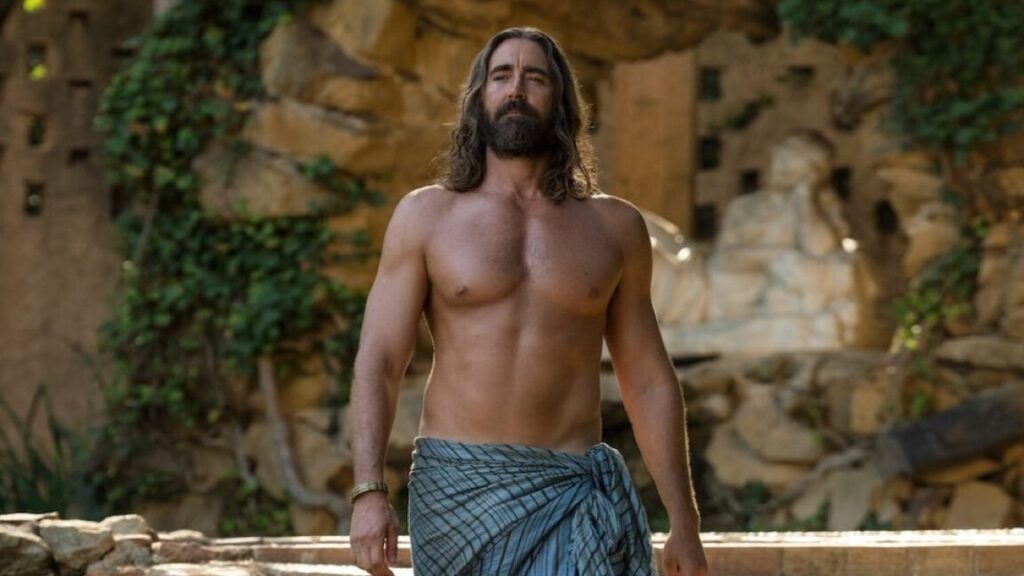
Star Trek: Strange New Worlds returns this summer with ten new episodes.

Paramount+ has dropped a tantalizing one-minute teaser for the upcoming third season of Star Trek: Strange New Worlds., and it looks like the latest adventures of the starship Enterprise will bring romance, comedy, mystery, and even a bit of analog tech, not to mention a brand new villain.

(Some spoilers for S2 below)

We haven’t seen much from the third season to date. There was an exclusive clip during San Diego Comic Con last summer—a callback to the S2 episode “Charades,” in which a higher-dimensional race, the Kerkohvians, accidentally reconfigured Spock’s half-human, half-Vulcan physiology to that of a full-blooded human, just before Spock was supposed to meet his Vulcan fiancee’s parents. The S3 clip had the situation reversed: The human crew had to make themselves Vulcan to succeed on a new mission but weren’t able to change back.

The S2 finale found the Enterprise under vicious attack by the Gorn, who were in the midst of invading one of the Federation’s colony worlds. Several crew members were kidnapped (La’an, M’Benga, Ortegas, and Sam), along with other survivors of the attack. Pike faced a momentous decision: follow orders to retreat, or disobey them to rescue his crew. In October, we learned that Pike naturally chose the latter. New footage shown at New York City Comic-Con picked up where the finale left off, giving us the kind of harrowing high-stakes pitched space battle against a ferocious enemy that has long been a hallmark of the franchise.

Genres are bustin’ out all over in Strange New Worlds S3 teaser Read More »

john-wick-has-a-new-target-in-latest-ballerina-trailer

John Wick has a new target in latest Ballerina trailer

Ana de Armas stars as an assassin in training in From the World of John Wick: Ballerina.

Lionsgate dropped a new trailer for Ballerina—or, as the studio is now calling it, From the World of John Wick: Ballerina, because what every film needs is a needlessly clunky title. There’s nothing clunky about this new trailer, however: It’s the stylized, action-packed dose of pure adrenaline one would expect from the franchise, and it ends with Ana de Armas’ titular ballerina facing off against none other than John Wick himself (Keanu Reeves).

(Spoilers for 2019’s John Wick Chapter 3: Parabellum.)

Chronologically, Ballerina takes place during the events of John Wick Chapter 3: Parabellum. As previously reported, Parabellum found Wick declared excommunicado from the High Table for killing crime lord Santino D’Antonio on the grounds of the Continental. On the run with a bounty on his head, he makes his way to the headquarters of the Ruska Roma crime syndicate, led by the Director (Anjelica Huston). That’s where we learned Wick was originally named Jardani Jovonovich and trained as an assassin with the syndicate. The Director also trains young girls to be ballerina-assassins, and one young ballerina (played by Unity Phelan) is shown rehearsing in the scene. That dancer, Eve Macarro, is the main character in Ballerina, now played by de Armas.

Huston returns as the Director, Ian McShane is back as Winston, and Lance Reddick makes one final (posthumous) appearance as the Continental concierge, Charon. New cast members include Gabriel Byrne as main villain the Chancellor, who turns an entire town against Eve; Sharon Duncan-Brewster as Nogi, Eve’s mentor; Norman Reedus as Daniel Pine; and Catalina Sandino Moreno and David Castaneda in as-yet-undisclosed roles.

John Wick has a new target in latest Ballerina trailer Read More »

behind-the-scenes-of-the-electric-state

Behind the scenes of The Electric State

The directors adopted more of a colorful 1990s aesthetic than the haunting art that originally inspired their film. While some fans of Stålenhag’s work expressed disappointment at this artistic choice, the artist himself had nothing but praise. “When you paint or draw something, you can do anything,” Stålenhag has said. ‘There are no constraints other than the time you spend painting. To see a live action movie make something I painted and to see it so truthfully translated impressed me on all levels.”

Bringing a vision to life

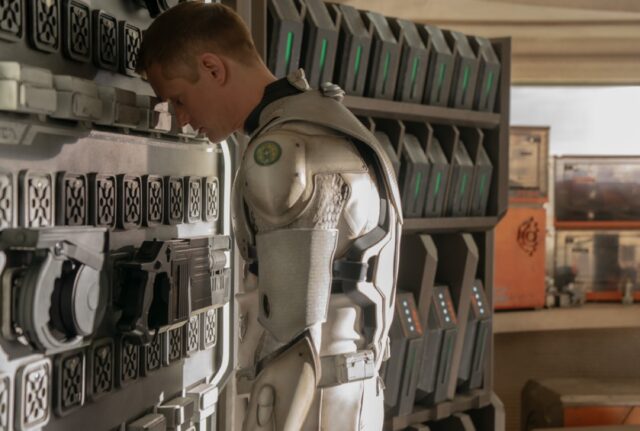
The task of bringing that aesthetic to the screen fell to people like Oscar-winning production designer Dennis Gassner, whose many credits include Barton Fink, Bugsy, The Hudsucker Proxy, The Truman Show, Blade Runner 2049, Skyfall, Quantum of Solace, Spectre, Into the Woods, and Big Fish. (In fact, there’s a carousel featured in the design of the Happyland amusement park that Gassner first used in Big Fish.) He and Richard L. Johnson (Pacific Rim, The Avengers) led a team that not only designed and constructed more than 100 sets for the film, but also created a host of original robot characters to augment the ones featured in Stålenhag’s book.

On set during filming of The Electric State Netflix

All the robots featured in the film have their own stories, “distinct personalities and emotional arcs,” per Anthony Russo. The directors wanted the robots to “feel authentic to the alternate 1990s but still had roots in recognizable designs,” according to Joe Russo—the kinds of things one would see in vintage commercials, shopping malls, corporate branding, and so forth. “Everything is story,” Gassner told Ars. “Story is paramount. What story are you telling? Who are the characters in this story? What are their environments? How do they feel within the environments?”

Gassner’s team designed about 175 robots all told, selecting their favorites to be featured in the final film. “It’s like a great casting call,” Gassner said. “So we played a lot, there was a long time of development in the art department between myself and a vast team of artists. We worked very closely with the visual effects department, but what the characters look like are part of the art department, and our collaboration with Joe and Anthony Russo on the study of characters. That was the fun part, getting the shape right, the character right, the color right, the clothing right.”

Behind the scenes of The Electric State Read More »

outbreak-turns-30

Outbreak turns 30


Ars chats with epidemiologist Tara Smith about the film’s scientific accuracy and impact over 3 decades.

Dustin Hoffman and Renee Russo starred in this medical disaster thriller. Credit: Warner Bros.

Back in 2020, when the COVID pandemic was still new, everyone was “sheltering in place” and bingeing films and television. Pandemic-related fare proved especially popular, including the 1995 medical disaster-thriller Outbreak, starring Dustin Hoffman. Chalk it up to morbid curiosity, which some researchers have suggested is an evolved response mechanism for dealing with threats by learning from imagined experiences. Outbreak turned 30 this week, making this the perfect time to revisit the film.

(Spoilers for Outbreak abound below.) 

Outbreak deals with the re-emergence of a deadly virus called Motaba, 28 years after it first appeared in an African jungle, infecting US soldiers and many others. The US military secretly destroyed the camp to conceal evidence of the virus, a project overseen by Major General Donald McClintock (Donald Sutherland) and Brigadier General William Ford (Morgan Freeman). When it re-emerges in Zaire decades later, a military doctor, Colonel Sam Daniels (Hoffman), takes a team to the afflicted village to investigate, only to find the entire town has died.

Daniels takes blood samples and realizes the villagers had been infected by a deadly new virus. But Ford shrugs off  Daniels’ concerns about a potential global spread, not wanting the truth to come out about the bombing of the village nearly 30 years ago. Daniels alerts his estranged ex-wife, Dr. Roberta “Robby” Keough, who works for the Centers for Disease Control and Prevention, about the virus, and she, too, is initially concerned.

Meanwhile, a local monkey is captured and brought to the US as an exotic pet. A smuggler named Jimbo (Patrick Dempsey)—who works at an animal testing facility—tries to sell the monkey to a pet shop owner named Rudy (Daniel Chodos) in the fictional town of Cedar Creek, California. The monkey bites Rudy. Unable to sell the monkey, Jimbo lets it loose in the woods and flies home to Boston. Both Jimbo and his girlfriend (who greets him at Logan Airport and passionately kisses a feverish Jimbo right before he collapses) die from the virus.

Naturally Keough hears about the Boston cases and realizes Daniels was right—the new virus has found its way to American soil. Initially she thinks there aren’t any other cases, but then Rudy’s demise comes to light, along with the death of a hospital technician who became infected after accidentally breaking a vial of Rudy’s blood during testing. When the virus strikes down a cinema filled with moviegoers, Daniels and Keough realize the virus has mutated and become airborne.

This time Ford and a reluctant McClintock can’t afford not to act as the bodies keep piling up.  The military declares martial law in the town as Daniels and his fellow scientists race to develop a cure, even as the nefarious McClintock schemes to bomb Cedar Creek to smithereens to contain the virus. The deaths of the residents strike him as a necessary cost to preserve his hopes of developing Motaba as a biological weapon; he dismisses them as “casualties of war.”

Outbreak ended up grossing nearly $190 million worldwide when it was released in March 1995, but critical reviews were mixed. Some loved the medical thriller aspects and quick pacing, while others dismissed it as shallow and improbable. Some of the biggest criticisms of the film came from scientists.

A mixed bag

“Honestly, the science, if you look at it broadly, is not awful,” Tara Smith, an epidemiologist at Kent State University in Ohio, told Ars. “They showed BSL-4 facilities and had a little description of the different levels that you work in. The protagonists respond to an outbreak, they take samples, they bring them back to the lab. They infect some cells, infect some animals, they do some microscopy, although it’s not clear that they’re actually doing electron microscopy, which would be needed to see the virus. But overall, the steps are right.”

Granted, there are plenty of things to nitpick. “There’s a lot of playfulness,” said Smith. “Kevin Spacey [who plays military doctor Lt. Col. Casey Schuler] takes out a fake virus tube and tosses it to Cuba Gooding Jr. [who plays another military doctor, Major Salt]. You don’t play in the BSL-4 laboratories. You just don’t. And a lab tech [who becomes infected] is spinning a centrifuge and doing other things at the same time. Then he opens up the centrifuge and just puts his hand in there and everything breaks. That’s how he gets exposed to the virus. I’ve used a centrifuge hundreds of times. You wait until everything is stopped to open it up. As a trained scientist, those are the things you are told over and over not to do. [The filmmakers] exploit those to drive the plot.”

One of the biggest scientific criticisms is the time compression: the virus multiplies in the body within an hour instead of days; Salt eventually synthesizes a cure in under a minute when this would normally take months; and Keough (who has been infected) recovers almost immediately after being injected with said cure. Smith also noted that scientists identify the two Motaba strains using electron micrographs rather than sequencing them, as would normally be required.

And that whole bit about the Motaba virus liquefying organs just isn’t a thing, according to Smith. “If you read The Hot Zone [Richard Preston’s bestselling 1994 nonfiction thriller], or watch Outbreak and take a shot every time you hear ‘liquefying,’ you would be dead by the end,” she said. “I don’t know how that trope got so established in the media, but you see it every time the Ebola comes up: people are bleeding from their eyes, they’re liquefying. That doesn’t happen. They’re horribly sick. It is an awful virus, but people don’t just melt.”

That said, “I think the biggest [scientific] issue with Outbreak was the whole airborne thing,” said Smith. “Realistically, viruses just don’t change transmission like that.”

Influencing public perceptions

According to Smith, Outbreak may have impacted public perceptions of the 2014–2016 Ebola outbreak—the largest yet seen—fueling widespread fear. “There were very serious people in The New York Times talking about Ebola potentially becoming airborne,” she said. “There was one study where scientists had aerosolized the virus on purpose and given it to pigs and the pigs got infected, which was treated as proof that Ebola could be airborne.”

“That idea that Ebola is super contagious and you can spread it by air—that really originates with Outbreak in 1995, because if you look at the science, it’s just not there,” Smith continued. “Ebola is not that easy to get unless you have close, personal, bodily-fluid-exchanging contact. But people certainly thought it was airborne in 2014–2015, and thought that Ebola was going to cause this huge outbreak in the United States. Of course, we just had a few select cases.”

Smith is currently working on a project that reviews various outbreak stories in popular media and their influence on public perception, particularly when it comes to the origins of those outbreaks. “Where does the virus, fungus, or bacteria come from?” said Smith. “So many films and TV series have used a lab leak origin, where something was made in the laboratory, it escapes, and causes a global pandemic. That’s an important narrative when we talk about the COVID pandemic, because so many people jumped on the lab leak bandwagon as an origin for that. In Outbreak it’s a natural virus, not a lab leak. I don’t think you’d see that if it were re-made today.”

Sam and Salt find the information they’re looking for. Warner Bros.

Outbreak is often unfavorably compared to another pandemic movie, 2011’s Contagion, of which Smith is naturally a fan. “Contagion is the gold standard [of pandemic movies],” said Smith. “Contagion was done in very close collaboration with a lot of scientists. One of the scientists in the movie is even named for [Columbia University epidemiologist] Ian Lipkin. Scientific accuracy was more important from the start. And there’s a bigger timeframe. These things happen in months rather than days. Even in Contagion, the vaccine was developed quicker than in the COVID pandemic, but at least it was a little bit more realistically done, scarily so when you think about the Jude Law character who was the blogger peddling fake cures—very similar to Ivermectin during the COVID pandemic.”

One might quibble with the science, but as entertainment, after 30 years, the film holds up remarkably well, despite the obvious tropes of action films of the 1990s. (Sam and Salt defying orders and hijacking a military helicopter, then using it to face-off mid-air against a military aircraft deployed to bomb the town out of existence, is just one credibility-straining example.) The talented cast alone makes it worth a rewatch. And for Smith, it was nice to see a strong female epidemiologist as a leading character in Russo’s Bobby Keough. On the whole, “I honestly think Outbreak was fairly good,” she said.

Photo of Jennifer Ouellette

Jennifer is a senior writer at Ars Technica with a particular focus on where science meets culture, covering everything from physics and related interdisciplinary topics to her favorite films and TV series. Jennifer lives in Baltimore with her spouse, physicist Sean M. Carroll, and their two cats, Ariel and Caliban.

Outbreak turns 30 Read More »

hbo-drops-the-last-of-us-s2-trailer

HBO drops The Last of Us S2 trailer

Pedro Pascal returns as Joel in The Last of Us S2.

HBO released a one-minute teaser of the hotly anticipated second season of The Last of Us—based on Naughty Dog’s hugely popular video game franchise—during CES in January. We now have a full trailer, unveiled at SXSW after the footage leaked over the weekend, chock-full of Easter eggs for gaming fans of The Last of Us Part II.

(Spoilers for S1 below.)

The series takes place in the 20-year aftermath of a deadly outbreak of mutant fungus (Cordyceps) that turns humans into monstrous zombie-like creatures (the Infected, or Clickers). The world has become a series of separate totalitarian quarantine zones and independent settlements, with a thriving black market and a rebel militia known as the Fireflies making life complicated for the survivors. Joel (Pedro Pascal) is a hardened smuggler tasked with escorting the teenage Ellie (Bella Ramsay) across the devastated US, battling hostile forces and hordes of zombies, to a Fireflies unit outside the quarantine zone. Ellie is special: She is immune to the deadly fungus, and the hope is that her immunity holds the key to beating the disease.

S2 is set five years after the events of the first season and finds the bond beginning to fray between plucky survivors Joel and Ellie. That’s the inevitable outcome of S1’s shocking finale, when they finally arrived at their destination, only to discover the secret to her immunity to the Cordyceps fungus meant Ellie would have to die to find a cure. Ellie was willing to sacrifice herself, but once she was under anesthesia, Joel went berserk and killed all the hospital staff to save her life—and lied to Ellie about it, claiming the staff were killed by raiders.

HBO drops The Last of Us S2 trailer Read More »

andor-s2-featurette-teases-canonical-tragic-event

Andor S2 featurette teases canonical tragic event

Most of the main S1 cast is returning for S2, with the exception of Shaw. Forest Whitaker once again reprises his Rogue One role as Clone Wars veteran Saw Gerrera, joined by fellow Rogue One alums Ben Mendelsohn and Alan Tudyk as Orson Krennic and K-2SO, respectively. Benjamin Bratt has also been cast in an as-yet-undisclosed role.

The behind-the-scenes look opens with footage of a desperate emergency broadcast calling for help because Imperial ships were landing, filled with storm troopers intent on quashing any protesters or nascent rebels against the Empire who might be lurking about. “Revolutionary movements are spontaneously happening all over the galaxy,” series creator Tony Gilroy explains. “How those come together is the stuff of our story.” While S1 focused a great deal on political intrigue, Genevieve O’Reilly, who plays Mon Mothma, describes S2 as a “juggernaut,” with a size and scope to match.

The footage shown—some new, some shown in the last week’s teaser—confirms that assessment. There are glimpses of Gerrera, Krennic, and K-2SO, as well as Mothma’s home world, Chandrila. And are all those protesters chanting on the planet of Ghorman? That means we’re likely to see the infamous Ghorman Massacre, a brutal event that resulted in Mothma resigning from the Senate in protest against Emperor Palpatine. The massacre was so horrifying that it eventually served to mobilize and unite rebel forces across the galaxy in the Star Wars canon.

The first three (of 12) episodes of Andor S2 premiere on April 22, 2025, on Disney+. Subsequent three-episode chapters will drop weekly for the next three weeks after that.

poster art for Andor S2

Credit: LucasFilm/Disney+

Andor S2 featurette teases canonical tragic event Read More »

netflix-drops-trailer-for-the-russo-brothers’-the-electric-state

Netflix drops trailer for the Russo brothers’ The Electric State

Millie Bobby Brown and Chris Pratt star in the Netflix original film The Electric State.

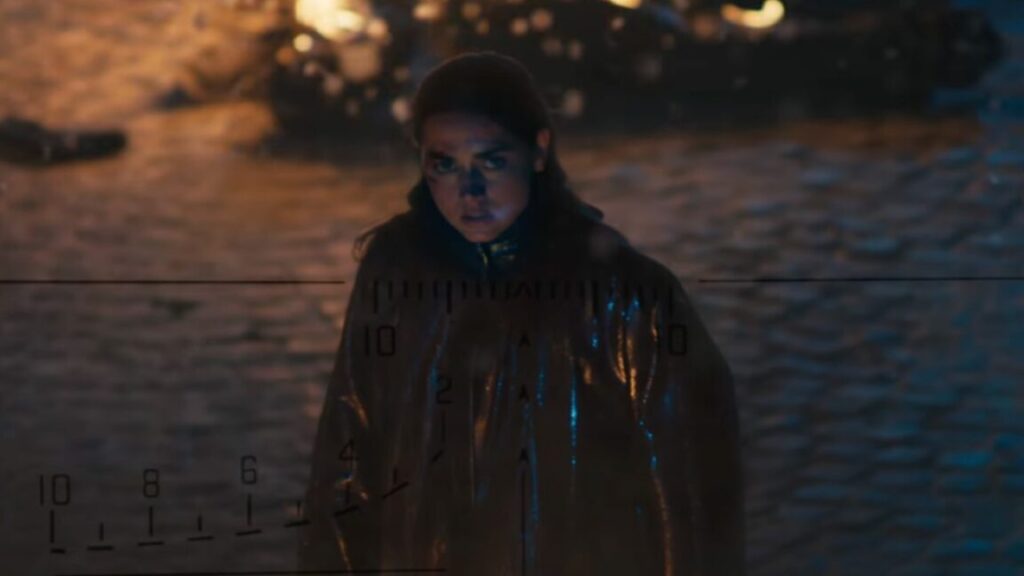
Anthony and Joe Russo have their hands full these days with the Marvel films Avengers: Doomsday and Avengers: Secret War, slated for 2026 and 2027 releases, respectively. But we’ll get a chance to see another, smaller film from the directors this month on Netflix: The Electric State, adapted from the graphic novel by Swedish artist/designer Simon Stålenhag.

Stålenhag’s stunningly surreal neofuturistic art—featured in his narrative art books, 2014’s Tales from the Loop and 2016’s Things From the Flood—inspired the 2020 eight-episode series Tales From the Loop, in which residents of a rural town find themselves grappling with strange occurrences thanks to the presence of an underground particle accelerator. That adaptation captured the mood and tone of the art that inspired it and received Emmy nominations for cinematography and special visual effects.

The Electric State was Stålenhag’s third such book, published in 2018 and set in a similar dystopian, ravaged landscape. Paragraphs of text, accompanied by larger artworks, tell the story of a teen girl named Michelle who must travel across the country with her robot companion to find her long-lost brother, while being pursued by a federal agent. The Russo brothers acquired the rights early on and initially intended to make the film with Universal, but when the studio decided it would not be giving the film a theatrical release, Netflix bought the distribution rights.

It’s worth noting that the Russo brothers have made several major plot changes from the source material, a decision that did not please Stålenhag’s many fans, particularly since the first-look images revealed that the directors were also adopting more of a colorful 1990s aesthetic than the haunting art that originally inspired their film. Per the official premise:

Netflix drops trailer for the Russo brothers’ The Electric State Read More »

the-revolution-starts-now-with-andor-s2-teaser

The revolution starts now with Andor S2 teaser

Diego Luna returns as Cassian in the forthcoming second season of Andor.

The first season of Andor, the Star Wars prequel series to Rogue One and A New Hope, earned critical raves for its gritty aesthetic and multilayered narrative rife with political intrigue. While ratings were a bit sluggish, they were good enough to win the series a second season, and Disney+ just dropped the first action-packed teaser trailer.

(Spoilers for S1 below.)

As previously reported, the story begins five years before the events of Rogue One, with the Empire’s destruction of Cassian Andor’s (Diego Luna) homeworld and follows his transformation from a “revolution-averse” cynic to a major player in the nascent rebellion who is willing to sacrifice himself to save the galaxy. S1 left off with Cassian returning to Ferrix for the funeral of his adoptive mother, Maarva (Fiona Shaw), rescuing a friend from prison, and dodging an assassination attempt. A post-credits scene showed prisoners assembling the firing dish of the now-under-construction Death Star.

According to the official longline, S2 “will see the characters and their relationships intensify as the horizon of war draws near and Cassian becomes a key player in the Rebel Alliance. Everyone will be tested and, as the stakes rise, the betrayals, sacrifices and conflicting agendas will become profound. “

In addition to Luna, most of the main cast from S1 is returning: Genevieve O’Reilly as Mon Mothma, a senator of the Republic who helped found the Rebel Alliance; Adria Arjona as mechanic and black market dealer Bix Caleen; James McArdle as Caleen’s boyfriend, Timm Karlo; Kyle Soller as Syril Karn, deputy inspector for the Preox-Morlana Authority; Stellan Skarsgård as Luthen Rael, an antiques dealer who is secretly part of the Rebel Alliance; Denise Gough as Dedra Meero, supervisor for the Imperial Security Bureau; Faye Marsay as Vel Sartha, a Rebel leader on the planet Aldhani; Varada Sethu as Cinta Kaz, another Aldhani Rebel; Elizabeth Dulau as Luthen’s assistant Kleya; and Muhannad Bhaier as Wilmon, who runs the Repaak Salyard.

The revolution starts now with Andor S2 teaser Read More »

the-stepford-wives-turns-50

The Stepford Wives turns 50

It’s hard to believe it’s been 50 years since the release of The Stepford Wives, a film based on the 1972 novel of the same name by Ira Levin. It might not be to everyone’s taste, but its lasting cultural influence is undeniable. A psychological horror/thriller with a hint of sci-fi, the film spawned multiple made-for-TV sequels and a campy 2004 remake, as well as inspiring one of the main characters in the hit series Desperate Housewives. The term “Stepford wife” became part of our shared cultural lexicon, and Jordan Peele even cited the film as one of the key influences for his 2017 masterpiece Get Out.

(Spoilers below for the novel and both film adaptations.)

Levin’s novels were a hot commodity in Hollywood at the time, especially after the success of his most famous novel, Rosemary’s Baby (1967), adapted into a 1968 horror film starring Mia Farrow. (The novels A Kiss Before Dying, The Boys from Brazil, Sliver, and Levin’s play Deathtrap were also adapted to film.) The plot of the The Stepford Wives film follows the novel’s plot fairly closely.

Katharine Ross stars as Joanna Eberhart, a young wife and mother and aspiring photographer who moves with her family to the seemingly idyllic fictional Connecticut suburb of Stepford at her husband Walter’s (Peter Masterson) insistence. She bonds with sassy fellow newcomer Bobbie (Paula Prentiss) over scotch and Ring Dings (and their respective messy kitchens), mutually marveling at the vacuous behavior of the other neighborhood’ wives.

There are soon hints that all is not right in Stepford. Carol (Nanette Newman) has a bit too much to drink at a garden party and begins to glitch. Together with dissatisfied trophy wife Charmaine (Tina Louise), Joanna and Bobbie hold a women’s “consciousness raising” meeting (aka a bitching session), only to have it devolve into the other wives raving about the time-saving merits of Easy On spray starch. Meanwhile, Walter has joined the exclusive Stepford Men’s Association and becomes increasingly secretive and distant.

When Charmaine suddenly transforms into yet another vapid housewife after a weekend getaway with her husband, Joanna and Bobbie become suspicious and decide to investigate. They discover that there used to be a women’s group in Stepford—headed by Carol, no less—but all the transformed wives suddenly lost interest. Is it something in the water causing the transformation? That turns out to be a dead end, but one clue is that the creepy head of the Men’s Association, Dale “Diz” Coba (Patrick O’Neal), used to work for Disney building animatronics. (When Diz first tells Joanna about his background, she says she doesn’t believe it: “You don’t look like someone who enjoys making people happy.” Her instincts are correct.)

The Stepford Wives turns 50 Read More »

wheel-of-time-s3-trailer-tees-us-up-for-last-battle

Wheel of Time S3 trailer tees us up for Last Battle

After defeating Ishamael, one of the most powerful of the Forsaken, at the end of Season Two, Rand reunites with his friends in the city of Falme and is declared the Dragon Reborn. But in Season Three, the threats against the Light are multiplying: the White Tower stands divided, the Black Ajah run free, old enemies return to the Two Rivers, and the remaining Forsaken are in hot pursuit of the Dragon… including Lanfear, whose relationship with Rand will mark a crucial choice between Light and Dark for them both.

Prime Video released a one-minute teaser for The Wheel of Time at CCXP24 in Sao Paulo, Brazil, in December. That teaser was notable for Moraine’s prediction concerning her and Rand’s intertwined fates: “In every future where I lived, Rand dies. And the only way he lives is if I don’t.”

The full trailer reiterates that prediction and gives us glimpses of a battle breaking out in the White Tower, the port city of Tanchico, and growing tension between Rand and Egwene (Madeleine Madden), who is troubled by Rand’s romantic entanglement with Lanfear (Natasha O’Keeffe), a powerful member of the Forsaken who hopes to seduce Rand to the Shadow. It’s all gearing up for Rand’s destiny to fight in the Last Battle.

The first three episodes of the third season of The Wheel of Time premiere on March 13, 2025, with episodes airing weekly after that through April 17.

Wheel of Time S3 trailer tees us up for Last Battle Read More »