HBO Max

“streaming-stops-feeling-infinite”:-what-subscribers-can-expect-in-2026

“Streaming stops feeling infinite”: What subscribers can expect in 2026


Spoiler: expect higher prices

Streaming may get a little worse before it gets better.

We’re far from streaming’s original promise: instant access to beloved and undiscovered titles without the burden of ads, bundled services, or price gouging that have long been associated with cable.

Still, every year we get more dependent on streaming for entertainment. Despite streaming services’ flaws, many of us are bound to keep subscribing to at least one service next year. Here’s what we can expect in 2026 and beyond.

Subscription prices keep rising, but perhaps not as expected

There’s virtually no hope of streaming subscription prices plateauing in 2026. Streaming companies continue to face challenges as content production and licensing costs rise, and it’s often easier to get current customers to pay slightly more than to acquire new subscribers. Meanwhile, many streaming companies are still struggling with profitability and revenue after spending years focusing on winning subscribers with content.

“We see many services are only now aligning content spend with realistic lifetime value per subscriber,” Christofer Hamilton, industry insights manager at streaming analyst Parrot Analytics, told Ars.

Companies may get more creative with how they frame higher costs to subscribers, however. People who pay extra to stream without ads are the most likely to see price bumps as streaming companies continue pushing customers toward ad-based tiers.

Charging more for “premium” features—such as 4K streaming, simultaneous streams, or offline downloads—offers another way for streaming companies to boost revenue without implementing broad price hikes that risk provoking customer outrage. Subscribers can expect streaming prices to get “more menu-like next year,” said Michael Goodman, director of entertainment research at Parks Associates, a research firm focusing on IoT, consumer electronics, and entertainment.

When will the price hikes stop?

If streaming prices won’t stop rising next year, when will they?

Ultimately, it may be up to subscribers to vote with their dollars by canceling subscriptions or opting for cheaper or free alternatives, such as FAST (free ad-supported streaming television) channels with linear programming.

As Goodman put it, “Until we see net adds stall or decline as a result of price hikes, services have no incentive to stop raising prices.”

Some experts doubt that streaming services will ever willingly stop increasing prices. Bill Yousman, professor and director of the Media Literacy and Digital Culture graduate program at Sacred Heart University, sees precedent for this in cable companies.

“If the big streaming companies had their way, there would be no limit to their price hikes. We have already seen this with the cable monopolies and their disregard for consumer dissatisfaction,” he said.

Yousman believes that prices will only “be brought under control if there is some type of government regulation,” but he noted that’s unlikely under the Trump administration.

To date, US lawmakers haven’t shown interest in halting the steady rise of streaming prices. Most lawmakers who have sought to regulate the industry have focused on industry consolidation. There has been some effort from lawmakers to rein in streaming price hikes, though, especially through proposed federal legislation dubbed the Price Gouging Prevention Act.

Streaming services lean deeper into cable-like bundles

Companies will look to leverage subscribers’ frustration with pricing by being more aggressive about bundling third-party services like traditional pay TV, Internet, and cell phone service with streaming subscriptions. The idea is that people are less likely to cancel a streaming subscription if it’s tied to a different subscription (including another streaming subscription). The strategy echoes the days of cable, when some people kept unused landlines just to save money on cable channels or Internet service.

“For subscribers, 2026 is the year streaming stops feeling infinite and starts feeling more like premium cable used to: fewer apps, clearer bundles, and higher expectations for each service they pay for,” Parrot’s Hamilton said.

Thanks to traditional pay TV providers, bundles have a bad connotation among people looking to save money and simplify their subscriptions. But bundling doesn’t always have to be a bad thing, as Yousman explains:

If the companies wanted to really be responsive to consumers, they would let them design their own packages rather than having to choose options that may or may not include all the services they want. What works against this, of course, is the demand for ever-increasing profits at all times.

Should a sale of Warner Bros. Discovery’s (WBD’s) HBO Max be completed (late) next year, subscribers will face more pressure to bundle their streaming subscriptions.

“When dominant platforms like Netflix or Paramount absorb major content players, it accelerates the erosion of streaming’s original promise: freedom from monopolistic bundles,” Vikrant Mathur, co-founder of streaming technology provider Future Today, said.

Netflix and Paramount duke it out over Warner Bros.

WBD announced plans this month to sell its streaming and movie studios business to Netflix for an equity value of $72 billion, or an approximate total enterprise value of $82.7 billion. Paramount Skydance, however, quickly swooped in with a hostile takeover bid for all of WBD, including its cable channels, for $108.4 billion. A WBD shareholder vote will occur in spring or early summer, chairman Samuel Di Piazza told CNBC. By the end of 2026, we should have a clearer understanding of the future of HBO Max, as well as Netflix and Paramount+.

Any acquisition will be subject to regulatory scrutiny, causing more uncertainty for subscribers. If Netflix buys HBO Max, users of both services can expect higher prices due to reduced competition and the extensive amount of content and number of big-budget franchises (including Harry Potter and DC Comics) expected to unite under one platform.

“If Netflix gets [HBO Max] and the WB studios, HBO Max subscribers are more likely to see a smoother transition, strong ongoing investment in premium content, and simpler app/billing integration,” Parks Associates’ Goodman said.

But while the potential merger is worth watching, subscribers are unlikely to truly feel the impact of HBO Max potentially changing ownership until after 2026.

“Producing a show is a yearslong process, so the content that was already slated to air isn’t going to disappear, and the new content acquired through the WB library won’t be available until the merger is approved and closes,” Tre Lovell, attorney and owner of Los Angeles entertainment law firm The Lovell Firm, explained.

Content starts getting less bold

Looking beyond 2026, a sale of part or all of WBD would likely open the door for more streaming acquisitions. That could eventually benefit customers by making it easier to find content to watch with fewer subscriptions. But merged companies are also less likely to take risks on unique and diverse content.

Analysts I spoke with pointed to fewer niche and mid-tier original shows and movies and more show cancellations if either Netflix or Paramount buys HBO Max. Either buyer would probably focus more on the already-successful franchises that WB owns, such as Game of Thrones, Batman, and Superman.

“Big combined libraries push companies to double down on proven IP because it travels, merchandises, and reduces marketing risk,” said Robert Rosenberg, a partner at the New York law firm Moses Singer focusing on intellectual property, entertainment, technology, and data law.

Rosenberg also expects to see a “tilt toward” live events, sports, and unscripted content “for retention” if HBO Max sells.

In the shorter term, Rory Gooderick, research manager at analyst firm Ampere Analysis, predicted that WBD will be “cautious when greenlighting new large-scale projects until” the acquisition is finalized.

Beyond the potential HBO Max sale, more merger activity could lead to streaming services straying from their original selling point of offering bolder, quirkier content.

As the industry consolidates, “sticky content,” like procedurals, reality shows, and “comfort TV that drives long viewing sessions,” will take priority among mainstream, subscription-based streaming services, especially as they put more emphasis on ad-tier subscriptions, Goodman predicted.

A more stable future?

The new year will be formative for streaming and yield lasting impacts for subscribers. We’ve discussed numerous negative implications, but there could be a silver lining. While we may see more turbulence, hopefully, we’ll also start to see a road toward more stable streaming options.

Streaming subscribers can’t directly stop mergers or price hikes or control streaming libraries. But with services like Netflix and Disney+ focusing on becoming one-stop shops with massive libraries, there’s an opportunity for other services to hone their specialties and stand out by providing offbeat, unexpected, and rare content at more affordable prices.

As the landscape settles, streamers should be mindful of the importance of variety to subscribers. According to Bill Michels, chief product officer at Gracenote, Nielsen’s content data business unit:

There will be some consolidation. But the [connected TV] landscape, inclusive of FAST and [direct-to-consumer] channels, provides more than ample video variety for viewers, so the biggest challenge will be connecting content with the right audience. Audience engagement depends on good content. Audience retention depends on making sure audiences are never without something to watch.
Photo of Scharon Harding

Scharon is a Senior Technology Reporter at Ars Technica writing news, reviews, and analysis on consumer gadgets and services. She’s been reporting on technology for over 10 years, with bylines at Tom’s Hardware, Channelnomics, and CRN UK.

“Streaming stops feeling infinite”: What subscribers can expect in 2026 Read More »
paramount-tries-to-swipe-warner-bros.-from-netflix-with-a-hostile-takeover

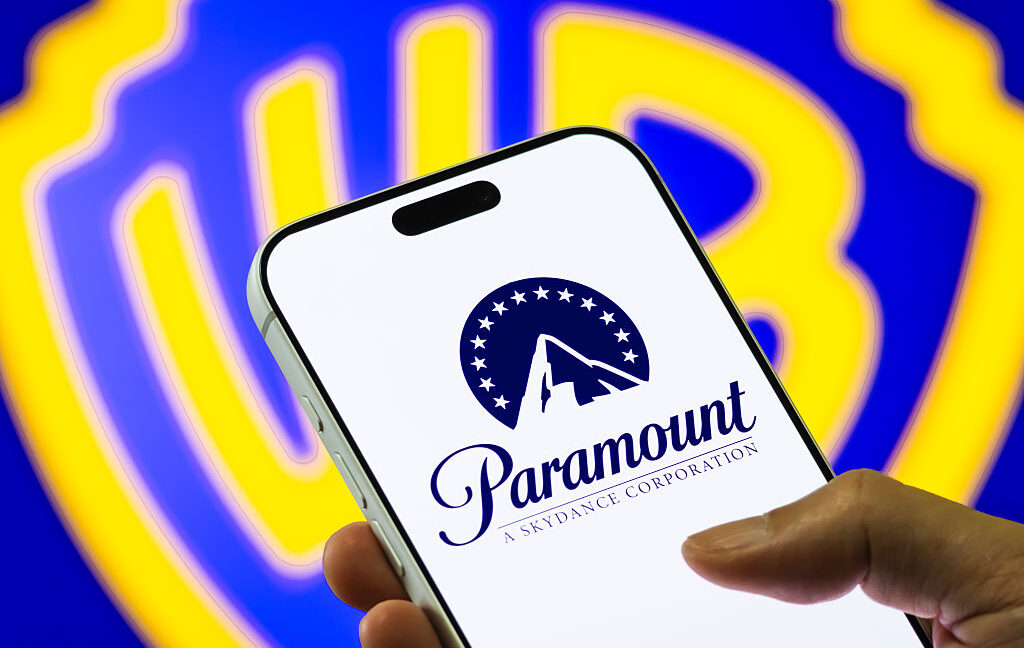
Paramount tries to swipe Warner Bros. from Netflix with a hostile takeover

Although the US Department of Justice (DOJ) holds the power to block mergers that it deems to go against antitrust laws, Trump’s influence over the DOJ can’t be overlooked. While Paramount previously seemed to establish a good relationship with the president, Netflix co-CEO Ted Sarandos may have done the same recently.

Sarandos “spoke with the president in the last couple of weeks in a confab that lasted about two hours,” The Hollywood Reporter reported on Sunday, citing “multiple” anonymous sources. A White House official told the publication that they can’t comment on “private meetings that may or may not have occurred,” and Netflix didn’t respond to the publication’s requests for comment.

Meanwhile, Trump’s relationship with the Ellisons and Paramount may have taken a turn recently. Today, the president lashed out at Paramount over an interview with Rep. Marjorie Taylor Greene (R-Ga.) that aired on the news program 60 Minutes. As he said on Truth Social, per The Hollywood Reporter: “My real problem with the show, however, wasn’t the low IQ traitor, it was that the new ownership of 60 Minutes, Paramount, would allow a show like this to air. THEY ARE NO BETTER THAN THE OLD OWNERSHIP, who just paid me millions of Dollars for FAKE REPORTING about your favorite President, ME! Since they bought it, 60 Minutes has actually gotten WORSE.”

Appealing to the movie theater industry

The movie theater industry is one of the biggest critics of Netflix’s WB acquisition due to fear that the streaming leader won’t release as many movies to theaters for as long and may drive down licensing fees. Paramount is leaning into this trepidation.

As one of the oldest film studios (Paramount was founded as Famous Players Film Company in 1912), Paramount has much deeper ties to the theater business. Ellison claimed that if Paramount and WBD merge, there will be “a greater number of movies in theaters.”

Sarandos said last week that Netflix plans to maintain WBD’s current theater release schedule, which reportedly goes through 2029.

In terms of streaming, Paramount’s announcement pointed to a “combination of Paramount+ and HBO Max,” lending credence to a November report that Paramount would fold HBO Max into its own flagship streaming service if it buys WBD.

With numerous industries, big names, billions of dollars, and politics all at play, the saga of the WBD split and/or merger is only just beginning.

This article was updated on December 8 at 2: 31 p.m. ET with comment from Sarandos. 

Paramount tries to swipe Warner Bros. from Netflix with a hostile takeover Read More »

netflix’s-$72b-wb-acquisition-confounds-the-future-of-movie-theaters,-streaming

Netflix’s $72B WB acquisition confounds the future of movie theaters, streaming


Netflix’s plans to own HBO Max, DC Comics, Harry Potter to face regulatory scrutiny.

The bidding war is over, and Netflix has been declared the winner.

After flirting with Paramount Skydance and Comcast, Warner Bros. Discovery (WBD) has decided to sell its streaming and movie studios business to Netflix. If approved, the deal is set to overturn the media landscape and create ripples that will affect Hollywood for years.

$72 billion acquisition

Netflix will pay an equity value of $72 billion, or an approximate total enterprise value of $82.7 billion, for Warner Bros. All of WBD has a $60 billion market value, NBC News notes.

The acquisition will take place after WBD completes the split of its streaming and studios businesses, which includes its film and TV libraries and the HBO channel, and its other TV networks, including CNN and TBS, into separate companies (Warner Bros. and Discovery Global, respectively). WBD’s split is expected to finish in Q3 2026.

Additionally, Netflix’s acquisition is subject to regulatory approvals, WBD shareholder approval, and other “customary closing conditions.”

Netflix expects the purchase to net it more subscribers, higher engagement, and “at least $2–3 billion of cost savings per year by the third year,” its announcement said.

Netflix co-CEO Greg Peters said in a statement that Netflix will use its global reach and business model to bring WB content to “a broader audience.”

The announcement didn’t specify what this means for current WBD staff, including WBD’s current president and CEO, David Zaslav. Gunnar Wiedenfels, who is currently CFO of WBD, is expected to be the CEO of Discovery Global after WBD split.

Netflix to own HBO Max

Netflix will have to overcome regulatory hurdles to complete this deal, which would evolve it from a streaming king to an entertainment juggernaut. If completed, the world’s largest streaming service by subscribers (301.63 million as of January) will own its third biggest rival (WBD has 128 million streaming subscribers, most of which are HBO Max users).

The acquisition would also give Netflix power over a mountain of current and incoming titles, including massive global franchises DC Comics, Game of Thrones, and Harry Potter.

If the deal goes through, Netflix said it will incorporate content from WB Studios, HBO Max, and HBO into Netflix. Netflix is expected to keep HBO Max available as a separate service, at least for the near term, Variety reported today. However, it’s easy to see a future where Netflix tries to push subscriptions bundling Netflix and HBO Max before consolidating the services into one product that would likely be more expensive than Netflix is today. Disney is setting the precedent with its bundles of Disney+ and the recently acquired Hulu, and by featuring a Hulu section within the Disney+ app.

Before today’s announcement, industry folks were concerned about Netflix potentially owning that much content while dominating streaming. However, Netflix said today that buying WB would enable it to “significantly expand US production capacity and continue to grow investment in original content over the long term, which will create jobs and strengthen the entertainment industry.”

Uniting Netflix and HBO Max’s libraries could make it easier for streaming subscribers to find content with fewer apps and fewer subscriptions. However, subscribers could also be negatively impacted (especially around pricing) if Netflix gains too much power, both as a streaming company and media rights holder.

In WBD’s most recent earnings report, its streaming business reported $45 million in quarterly earnings before interest, taxes, depreciation, and amortization. Netflix reported a quarterly net income of $2.55 billion in its most recent earnings report.

Netflix hasn’t detailed plans for the HBO cable channel. But given Netflix’s streaming ethos, the linear network may not endure in the long term. But since the HBO brand is valuable, we expect the name to persist, even if it’s just as a section of prestige titles within Netflix.

“A noose around the theatrical marketplace”

Among the stakeholders most in arms about the planned acquisition is the movie theater industry. Netflix’s co-CEO Ted Sarandos has historically seen minimal value in theaters as a distribution method. In April, he said that making movies “for movie theaters, for the communal experience” is “an outmoded idea.”

Today, Sarandos said that under Netflix, all WB movies will still hit theaters as planned, which brings us through 2029, per Variety.

During a conference call today, Sarandos said he has no “opposition to movies in theaters,” adding, per Variety:

My pushback has been mostly in the fact of the long exclusive windows, which we don’t really think are that consumer-friendly. But when we talk about keeping HBO operating, largely as it is, that also includes their output movie deal with Warner Bros., which includes a life cycle that starts in the movie theater, which we’re going to continue to support.

Notably, the executive said that “Netflix movies will take the same strides they have, which is, some of them do have a short run in the theater beforehand.”

Anticipating today’s announcement, the movie theater industry has been pushing for regulatory scrutiny over the sale of WB.

Michael O’Leary, CEO and president of Cinema United, the biggest exhibition trade organization, said in a statement today about the Netflix acquisition:

Regulators must look closely at the specifics of this proposed transaction and understand the negative impact it will have on consumers, exhibition, and the entertainment industry.

In a letter sent to Congress members this month, an anonymous group that described itself as “concerned feature film producers” wrote that Netflix’s purchase of WB would “effectively hold a noose around the theatrical marketplace” by reducing the number of theatrical releases and driving down the price of licensing fees for films after their theatrical release, as reported by Variety.

Up next: Regulatory hurdles

In the coming weeks, we’ll get a clearer idea of how antitrust concerns and politics may affect Netflix’s acquisition plans.

Recently, other media companies, such as Paramount, have been accused of trying to curry favor with US President Donald Trump in order to get deals approved. The US Department of Justice (DOJ) could try to block Netflix’s acquisition of WB. But there’s reason for Netflix and WB to remain optimistic if that happens. In 2017, Time Warner and AT&T successfully defeated the DOJ’s attempted merger block.

Still, Netflix and WB have their work cut out for them, as skepticism around the deal grows. Last month, US Senators Elizabeth Warren (D-Mass.), Richard Blumenthal (D-Conn.), and Bernie Sanders (I-Vt.) wrote to the DOJ’s antitrust division urging that any WB deal “is grounded in the law, not President Trump’s political favoritism.”

In a letter to Attorney General Pam Bondi last month, Rep. Darrel Issa (R-Calif.) said that buying WB would “enhance” Netflix’s “unequaled market power” and be “presumptively problematic under antitrust law.”

In a statement about Netflix’s announcement shared by NBC News today, a spokesperson for the California attorney general’s office said:

“The Department of Justice believes further consolidation in markets that are central to American economic life—whether in the financial, airline, grocery, or broadcasting and entertainment markets—does not serve the American economy, consumers, or competition well.”

Netflix’s rivals may also seek to challenge the deal. Attorneys for Paramount questioned the “fairness and adequacy” of WBD’s sales process ahead of today’s announcement.

Photo of Scharon Harding

Scharon is a Senior Technology Reporter at Ars Technica writing news, reviews, and analysis on consumer gadgets and services. She’s been reporting on technology for over 10 years, with bylines at Tom’s Hardware, Channelnomics, and CRN UK.

Netflix’s $72B WB acquisition confounds the future of movie theaters, streaming Read More »

higher-prices,-simpler-streaming-expected-if-hbo-max-folds-into-paramount+

Higher prices, simpler streaming expected if HBO Max folds into Paramount+


The end of HBO Max is “certainly plausible.”

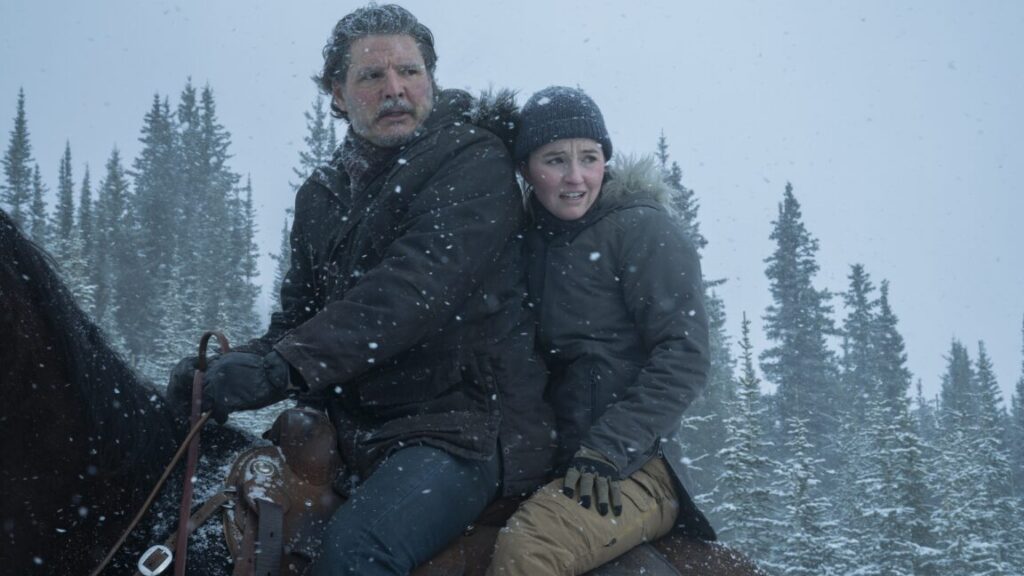
A still from the second season of HBO’s The Last of Us. Credit: HBO

Warner Bros. Discovery (WBD) has a ‘for sale’ sign up. And that could mean big changes for subscribers to the company’s most popular streaming service, HBO Max.

After receiving unsolicited acquisition offers, WBD recently declared itself open to “strategic alternatives to maximize shareholder value.” WBD drew new attention by being open to selling its streaming business (WBD is also still open to moving forward with previously shared plans to split into a cable company and a streaming and movie studios company next year).

Naturally, mergers and acquisitions talk has heated up since then, with Paramount as one of the most eager suitors. Paramount, which merged with Skydance in August, is reportedly planning to keep “much of Warner Bros. Discovery Inc. intact” if a deal happens, per a Bloomberg report that cited unnamed people familiar with the plans of David Ellison, Paramount’s CEO.

For HBO Max subscribers, the most pertinent part of Bloomberg’s report follows:

Under Ellison’s plan, Warner Bros.’ HBO Max streaming service would merge into the existing Paramount+ platform, one of the people said. He believes combining the offerings will allow more people to see the work of film and TV show creators. The libraries of the two companies will make Paramount+ more compelling for subscribers.

The purported strategy would likely end the ability to subscribe to HBO Max in favor of the opportunity to pay for a beefier version of Paramount+.

More broadly, the merger talks bring into question the future for HBO Max subscribers should Warner Bros. engage in any sort of M&A activity with one of its most desirable businesses.

Higher prices are possible

Choice is typically seen as good for consumers. But in the case of streaming, which only recently overtook broadcast and cable viewing, the recent expansion of services available is often viewed negatively. Streaming fragmentation forces people to jump from service to service in order to find something to watch and to pay for more subscriptions.

As a result, a WBD merger could be a double-edged sword for streaming subscribers. The most obvious con is the potential for price hikes.

Speaking to Ars about a potential WBD merger, Vikrant Mathur, co-founder of streaming technology provider Future Today, said:

On one hand, it means subscribers getting access to a larger library, a simpler content discovery, and a consistent streaming experience, but on the other, we risk increasing subscription costs for current subscribers of both services, a trend that has been leading to subscription fatigue and diminishing the original promise of streaming.

Max Alderman, partner at FE International, an M&A advisory firm with a specialty in content businesses, said HBO Max subscribers can expect “friction” if Paramount buys HBO Max. He pointed out that overlapping platforms often result in “temporary confusion around pricing, content access, and brand continuity.” Alderman added:

Over the longer run, though, a combined offering could improve content breadth and potentially deliver better value per dollar.

Still, a Paramount-owned HBO Max stands the risk of failing to meet subscribers’ expectations, “especially for a service like HBO Max that’s earned a reputation for high-end, prestige programming,” Julie Clark, VP of media and entertainment at TransUnion, which works in streaming ads, told Ars.

The end of HBO Max?

With cable declining, HBO Max is the HBO brand’s best bet at longevity. The idea of HBO dissolving into shows and movies that you find on Paramount+ doesn’t sound like a fitting ending to a 53-year-old brand that has brought us shows like The Sopranos, The Wire, Game of Thrones, and White Lotus. HBO has gone through multiple streaming rebrands, but the end of a dedicated HBO streaming service, as suggested by Bloomberg’s report, is a different level. Yet, HBO Max folding into Paramount+ is “certainly plausible,” according to Alderman.

“The current market doesn’t support redundant platforms competing for the same audience,” he explained.

Today’s streaming services are focused on reaching and maintaining profitability long term. In its most recent earnings report, Paramount’s streaming business, which includes Paramount+, BET+, and Pluto TV, reported adjusted operating income before depreciation and amortization of $157 million, up from $26 million a year ago. The numbers were largely driven by Paramount+ growing subscribers to 77.7 million and charging more.

In its earnings report this week, WBD said that its streaming business, which includes HBO Max and Discovery+, posted earnings before interest, taxes, depreciation, and amortization of $345 million, compared to $289 million a year ago. WBD claims 128 million streaming subscribers, primarily through HBO Max.

“This potential merger underscores the escalating content and distribution costs in the industry,” Alderman said. “For [subscription video on demand platforms] to succeed, they need scale of revenue, as well as operational cost efficiencies, both of which can come through consolidation.” 

It’s understandable that a brand that acquires HBO Max would seek to streamline operations with any streaming business that it already owns. But it’s hard to imagine any buyer throwing out the HBO name.

“I’d be skeptical that the HBO brand is going away completely. We’ve seen the name yo-yo, and it’s clear that it still packs a punch for consumers looking for premium content,” Clark said.

Even if HBO Max lives as a tile within the Paramount+ app, or the app of another buyer, (à la Hulu under Disney+), it wouldn’t make sense to get rid of the legendary acronym completely.

“HBO is one of the few streaming brands that still commands prestige pricing,” Alderman said.

If a company does acquire any form of HBO, one of its top challenges is expected to be streamlining operations while maintaining HBO’s premium brand. This could be especially difficult under a “more mainstream umbrella like Paramount+,” Alderman noted.

Streaming has already diluted the HBO brand somewhat. Through streaming, HBO is now associated with stuff from DC Comics and Cartoon Network, as well as reality shows, like 90 Day Fiancé and Naked and Afraid. Merging with Paramount+ or even Netflix could expand the HBO umbrella more.

That expanded umbrella could allow a company like Paramount to better compete against Netflix, something WBD executives have shied away from. HBO Max is “not everything for everyone in a household,” JB Perrette, WBD’s streaming president and CEO, said this spring.

“What people want from us in a world where they’ve got Netflix and Amazon [Prime Video] are those things that differentiate us,” Casey Bloys, chairman and CEO of HBO and Max content, told The Wall Street Journal in May.

A “stress test” for more streaming mergers

Aside from the impact on HBO Max subscribers, WBD’s merger talks have broad implications. A deal would open the door for much more consolidation in the streaming space, something that experts have been anticipating for some years and that addresses the boom of streaming services. Per Clark, discussions of a Paramount-WBD merger are “less about two studios joining forces and more about a stress test for future M&A.”

If WBD accepts a Paramount bid and that bid clears regulatory hurdles, it would signal that “premium content under fewer umbrellas is back in play,” Clark said.

A Paramount-WBD merger is likely to speed up consolidation among mid-tier players, like NBCUniversal, Lionsgate, and AMC, Alderman said, pointing to these companies’ interest in scaling their streaming businesses and in building differentiated portfolios to counter Netflix and Disney+’s expansive libraries.

If Paramount and WBD don’t merge, Clark expects to see more “piecemeal” strategies, such as rights-sharing, joint venture bundles, and streaming-as-a-service models.

Photo of Scharon Harding

Scharon is a Senior Technology Reporter at Ars Technica writing news, reviews, and analysis on consumer gadgets and services. She’s been reporting on technology for over 10 years, with bylines at Tom’s Hardware, Channelnomics, and CRN UK.

Higher prices, simpler streaming expected if HBO Max folds into Paramount+ Read More »

hbo-max-prices-increase-by-up-to-$20-today

HBO Max prices increase by up to $20 today

HBO Max subscriptions are getting up to 10 percent more expensive, owner Warner Bros. Discovery (WBD) revealed today.

HBO Max’s ad plan is going from $10 per month to $11/month. The ad-free plan is going from $17/month to $18.49/month. And the premium ad-free plan (which adds 4K support, Dolby Atmos, and the ability to download more content) is increasing from $21 to $23.

Meanwhile, prices for HBO Max’s annual plans are increasing from $100 to $110 with ads, $170 to $185 without ads, and $210 to $230 for the premium tier.

For current subscribers, the price hikes won’t take effect until November 20, Variety reported. People who try to subscribe to the streaming service from here on out will have to pay the new prices immediately.

Price hike hints

The price hikes follow comments from WBD CEO David Zaslav last month that WBD’s flagship streaming service was “way underpriced.” Speaking at the Goldman Sachs Cornucopia + Technology conference, Zaslav’s reasoning stemmed from the service’s “quality,” as well as people previously spending “on average, $55 for content 10 years ago.”

Another hint that HBO Max would be getting more expensive is its history of getting more expensive. The service most recently raised subscription fees in June 2024, when it made its ad-free plans more expensive. HBO Max’s first price hike was in January 2023. The service launched in May 2020.

HBO Max is getting more expensive as streaming companies grapple with the financial realities of making robust, diverse libraries of classic, new, and exclusive shows and movies available globally and on-demand. HBO Max rivals Disney+, Apple TV, and Peacock have all raised prices since the summer.

For years, WBD has been arguing that streaming services are too cheap. At a Citibank conference in 2023, WBD CFO Gunnar Weidenfels said that collapsing seven media distribution windows into one “and selling it at the lowest possible price doesn’t sound like a very smart strategy.

HBO Max prices increase by up to $20 today Read More »

hbo-max-subscribers-lose-access-to-cnn-livestream-on-november-17

HBO Max subscribers lose access to CNN livestream on November 17

HBO Max subscribers will no longer be able to watch CNN from the streaming platform as of November 17, Warner Bros. Discovery (WBD) informed customers today.

After this date, HBO Max subscribers will still be able to watch some CNN content, including shows and documentaries, on demand.

The CNN Max livestream for HBO Max launched as an open beta in September 2023. Since then, it has featured live programming from CNN’s US arm and CNN International, as well as content made specifically for HBO Max.

WBD is pulling HBO Max’s CNN channel as it prepares to launch a standalone CNN streaming service, inevitably introducing more fragmentation to the burgeoning streaming industry. The streaming service is supposed to launch this fall and provide access to original CNN programing and journalism, including “a selection of live channels, catch-up features, and video-on-demand programming,” a May announcement said.

In a statement today, Alex MacCallum, EVP of digital products and services for CNN, said:

CNN has benefitted tremendously from its two years of offering a live 24/7 feed of news to HBO Max customers. We learned from HBO Max’s large base of subscribers what people want and enjoy the most from CNN, and with the launch of our own new streaming subscription offering coming later this fall, we look forward to building off that and growing our audience with this unique, new offering.

WBD will sell subscriptions to CNN’s new streaming service as part of an “All Access” subscription that will include the ability to read paywalled articles on CNN’s website.

HBO Max subscribers lose access to CNN livestream on November 17 Read More »

hbo-max-is-“way-underpriced,”-warner-bros.-discovery-ceo-says

HBO Max is “way underpriced,” Warner Bros. Discovery CEO says

Consumers in America would pay twice as much 10 years ago for content. People were spending, on average, $55 for content 10 years ago, and the quality of the content, the amount of content that we’re getting, the spend is 10 or 12 fold and they’re paying dramatically less. I think we want a good deal for consumers, but I think over time, there’s real opportunity, particularly for us, in that quality area, to raise price.

A question of quality

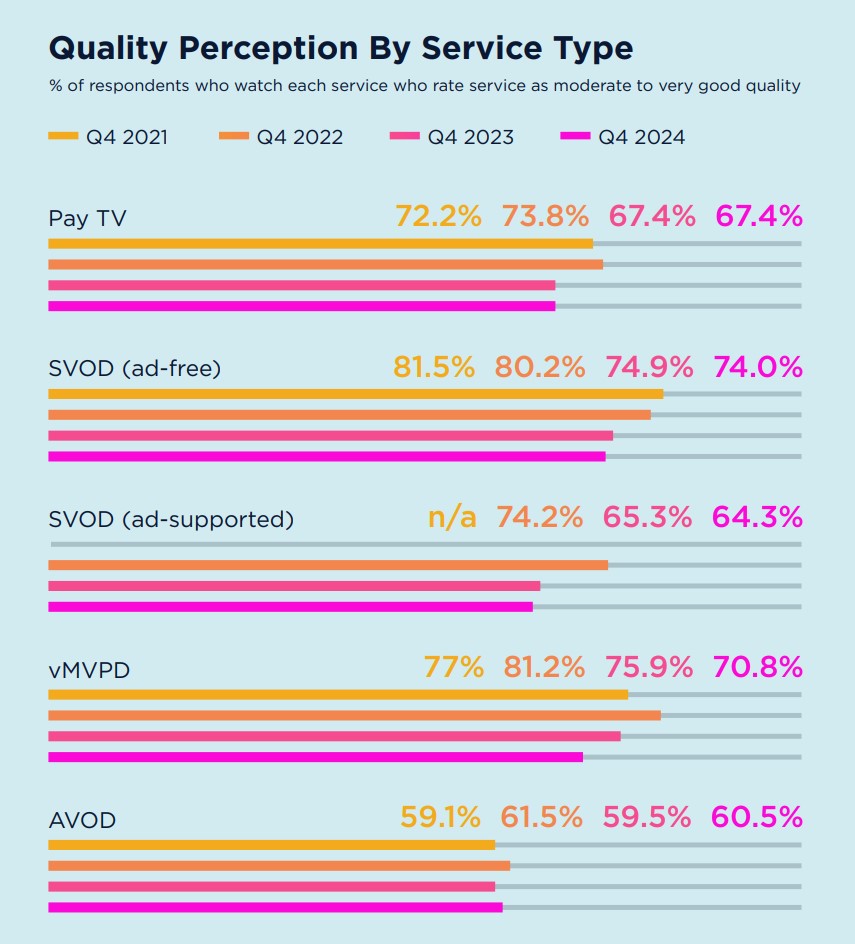
Zaslav is arguing that the quality of the shows and movies on HBO Max warrants an eventual price bump. But, in general, viewers find streaming services are getting less impressive. A Q4 2024 report from TiVo found that the percentage of people who think the streaming services that they use have “moderate to very good quality” has been declining since Q4 2021.

Bar graph From TiVO's Q4 2024 Video Trends report.

From TiVO’s Q4 2024 Video Trends report.

Credit: TiVo

From TiVO’s Q4 2024 Video Trends report. Credit: TiVo

Research also points to people being at their limit when it comes to TV spending. Hub Entertainment Research’s latest “Monetizing Video” study, released last month, found that for consumers, low prices “by far still matters most to the value of a TV service.”

Meanwhile, niche streaming services have been gaining in popularity as streaming subscribers grow bored with the libraries of mainstream streaming platforms and/or feel like they’ve already seen the best of what those services have to offer. Antenna, a research firm focused on consumer subscription services, reported this month that specialty streaming service subscriptions increased 12 percent year over year in 2025 thus far and grew 22 percent in the first half of 2024.

Zaslav would likely claim that HBO Max is an outlier when it comes to streaming library dissatisfaction. Although WBD’s streaming business (which includes Discovery+) turned a $293 million profit and grew subscriber-related revenue (which includes ad revenues) in its most recent earnings report, investors would likely be unhappy if the company rested on its financial laurels. WBD has one of the most profitable streaming businesses, but it still trails far behind Netflix, which posted an operating income of $3.8 billion in its most recent earnings.

Still, increasing prices is rarely welcomed by customers. With many other options for streaming these days (including free ones), HBO Max will have to do more to convince people that it is worth the extra money than merely making the claim.

HBO Max is “way underpriced,” Warner Bros. Discovery CEO says Read More »

peacemaker-s2-trailer-finds-our-anti-hero-in-a-parallel-world

Peacemaker S2 trailer finds our anti-hero in a parallel world

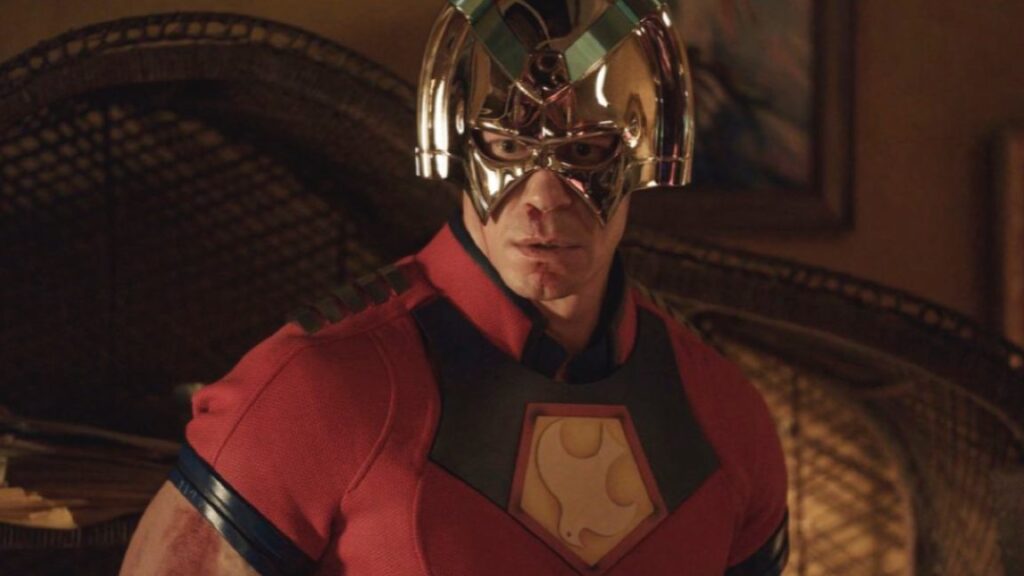
HBO Max dropped the hotly anticipated full trailer for S2 of Peacemaker—James Gunn’s Emmy-nominated series spun off from his 2021 film, The Suicide Squad—at San Diego Comic-Con this weekend.

(Spoilers for S1 below.)

As previously reported, the eight-episode first season was set five months after the events of The Suicide Squad. Having survived a near-fatal shooting, Peacemaker—aka Christopher Smith—is recruited by the US government for a new mission: the mysterious Project Butterfly, led by a mercenary named Clemson Murn (Chukwudi Iwuji). The team also includes A.R.G.U.S. agent John Economos (Steve Agee) of the Belle Reve Penitentiary, National Security Agency agent and former Waller aide Emilia Harcourt (Jennifer Holland), and new team member Leota Adebayo (Danielle Brooks).

Project Butterfly turned out to be a mission to save Earth from an alien species of parasitic butterfly-like creatures who took over human bodies. The misfit members of the project eventually succeeded in defeating the butterflies in a showdown at a ranch, and even survived the carnage despite some severe injuries.

Cena, Brooks, Holland, Agee, and Stroma are all back for S2, along with Nhut Lee as Judomaster and Eagly, of course. Robert Patrick is also listed in the S2 cast, reprising his role as Chris’ father, Auggie. New cast members include Frank Grillo as Rick Flagg Sr. (Grillo voiced the role in the animated Creature Commandos), now head of A.R.G.U.S. and out to avenge his son’s death; Tim Meadows as A.R.G.U.S. agent Langston Fleury; Sol Rodriguez as Sasha Bordeaux; and Michael Rooker as Red St. Wild, described as Eagly’s “nemesis.”

The events of S1 played out within the old DCEU, while S2 takes place in the new DCU, but Gunn has said that those earlier events are nonetheless considered “canon,” apart from the cameos by DCEU Justice League members. S2 is part of Gunn’s “Gods and Monsters” slate; Cena’s Peacemaker even made a brief cameo in Superman. This time around, Chris will be struggling “to reconcile his past with his newfound sense of purpose while continuing to kick righteous evil-doer butt in his misguided quest for peace at any cost,” per the official synopsis.

Peacemaker S2 trailer finds our anti-hero in a parallel world Read More »

max-pivots-back-to-hbo-max-as-wbd-rethinks-ability-to-compete-with-netflix

Max pivots back to HBO Max as WBD rethinks ability to compete with Netflix

Today, Zaslav and company are doing an about-face, with the CEO saying that WBD is “bringing back HBO, the brand that represents the highest quality in media, to further accelerate” the streaming service’s “growth in the years ahead.”

WBD’s announcement added that “returning the HBO brand into HBO Max will further drive the service forward and amplify the uniqueness that subscribers can expect from the offering.”

“It is also a testament to WBD’s willingness to keep boldly iterating its strategy and approach—leaning heavily on consumer data and insights—to best position itself for success,” the media conglomerate claimed.

“Not everything for everyone”

The announcement is a result of WBD rethinking its streaming strategy as leadership acknowledges that it failed to sell Max as an essential streaming service.

Last month, executives admitted that Max is viewed as more of an add-on service, per The Wall Street Journal (WSJ). Executives said at the time that they no longer want to try to push their streaming service as something for every member of the household.

“What people want from us in a world where they’ve got Netflix and Amazon [Prime Video] are those things that differentiate us,” Casey Bloys, chairman and CEO of HBO and Max content, told WSJ.

The strategy pivot since has included moving further away from children’s programming and some Discovery content, like shows from the Food Network and HGTV. There have also been reports of WBD exploring splitting Discovery from Max.

“We’re not fighting for the more-is-better game,” JB Perrette, WBD’s streaming president and CEO, told WSJ. “We’ll let others deal with the volume.”

In today’s announcement, Perrette doubled down on those sentiments:

We will continue to focus on what makes us unique—not everything for everyone in a household, but something distinct and great for adults and families. It’s really not subjective, not even controversial—our programming just hits different.

Max pivots back to HBO Max as WBD rethinks ability to compete with Netflix Read More »

the-justice-league-is-not-impressed-in-peacemaker-s2-teaser

The Justice League is not impressed in Peacemaker S2 teaser

Cena, Brooks, Holland, Agee, and Stroma are all back for S2, along with Nhut Lee as Judomaster and Eagly, of course. Robert Patrick is also listed in the S2 cast, reprising his role as Chris’ father, Auggie; since Chris killed him in S1, one assumes Auggie will appear in flashbacks, hallucinations, or perhaps an alternate universe. (This is a soft reboot, after all.) New cast members include Frank Grillo as Rick Flagg Sr. (Grillo voiced the role in the animated Creature Commandos), now head of A.R.G.U.S. and out to avenge his son’s death; Tim Meadows as A.R.G.U.S. agent Langston Fleury; and Sol Rodriguez as Sasha Bordeaux.

Set to “Oh Lord” by Foxy Shazam, the teaser opens with Leota driving Chris to a job interview, assuring him, “They’re gonna be doing backflips to get you to join.” It turns out to be an interview with Justice League members Green Lantern/Guy Gardner (Nathan Fillion), Hawkgirl/Kendra Saunders (Isabel Merced), and Maxwell Lord (Sean Gunn), but they are not really into the interviewing process or taking note of Chris’ marksmanship and combat skills. They even diss poor Chris while accidentally keeping the microphone turned on: “This guy sucks.” (All three reprise their roles from Superman and are listed as S2 cast members, but it’s unclear how frequently they will appear.)

The other team members aren’t faring much better. They saved the world from the butterflies; you’d think people would treat them with a bit more respect, if not as outright heroes. Leota is “living in the worst level of Grand Theft Auto,” per John Economos; Emilia Harcourt has anger management issues and is diagnosed with “a particularly severe form of toxic masculinity”; and Vigilante is working in the food service industry. There’s not much detail as to the plot, apart from Chris going on the run from A.R.G.U.S., but the final scene shows Chris walking through a door and encountering another version of himself. So things are definitely about to get interesting.

The second season of Peacemaker will premiere on Max on August 21, 2025.

The Justice League is not impressed in Peacemaker S2 teaser Read More »

the-sisterhood-faces-a-powerful-foe-in-dune:-prophecy-trailer

The Sisterhood faces a powerful foe in Dune: Prophecy trailer

Dune: Prophecy will premiere on HBO and Max on November 17, 2024.

New York Comic-Con kicked off today and among the highlights was an HBO panel devoted to the platform’s forthcoming new series, Dune: Prophecy—including the release of a two-and-a-half-minute trailer.

As previously reported, the series was announced in 2019, with director Denis Villeneuve serving as an executive producer and Alison Schapker (Alias, Fringe, Altered Carbon) serving as showrunner. It’s a prequel series inspired by the novel Sisterhood of Dune, written by Brian Herbert and Kevin J. Anderson, exploring the origins of the Bene Gesserit.  The first season will have six episodes, and it’s unclear how closely the series will adhere to the source material. Per the official premise:

Set 10,000 years before the ascension of Paul Atreides, Dune: Prophecy follows two Harkonnen sisters as they combat forces that threaten the future of humankind, and establish the fabled sect that will become known as the Bene Gesserit.

Emily Watson co-stars as Valya Harkonnen, leader of the Sisterhood, with Olivia Williams playing her sister, Tula Harkonnen. Mark Strong plays Emperor Javicco Corrino, while Jodhi May plays Empress Natalya, and Sarah-Sofie Boussnina plays Princess Ynez.

The cast also includes Shalom Brune-Franklin as Mikaela, a Fremen woman who serves the royal family; Travis Fimmel as Desmond Hart, “a charismatic soldier with an enigmatic past”; Chris Mason as swordsman Keiran Atreides; Josh Heuston as Constantine Corrino, the illegitimate son of Javicco; Edward Davis as rising politician Harrow Harkonnen; Tabu as Sister Francesca, the Emperor’s former lover; Jihae as Reverend Mother Kasha, the Emperor’s Truthsayer; Faoileann Cunningham as Sister Jen; Chloe Lea as Lila; Jade Anouka as Sister Theodosia; and Aoife Hinds as Sister Emeline.

The Sisterhood faces a powerful foe in Dune: Prophecy trailer Read More »

witness-the-rise-of-the-bene-gesserit-in-new-dune:-prophecy-teaser

Witness the rise of the Bene Gesserit in new Dune: Prophecy teaser

True power begins with control —

“Our hands are poised on the levers of power but yet our grasp on it is still fragile.”

The HBO Original Series Dune: Prophecy will premiere this November.

Fans of director Denis Villeneuve’s epic two-part film adaptation of Frank Herbert’s Dune have no doubt been curious about the upcoming HBO Max series, Dune: Prophecy. It’s a prequel series inspired by the novel Sisterhood of Dune, written by Brian Herbert and Kevin J. Anderson, exploring the origins of the Bene Gesserit. The studio just dropped a tantalizing teaser rife with political intrigue, ominous warnings, and a bit of hand-to-hand combat.

The series was first announced in 2019, with Villeneuve serving as an executive producer and Alison Schapker (Alias, Fringe, Altered Carbon) serving as showrunner. The first season will consist of six episodes, and it’s unclear how closely the series will adhere to the source material. Per the official premise:

Set 10,000 years before the ascension of Paul Atreides, Dune: Prophecy follows two Harkonnen sisters as they combat forces that threaten the future of humankind, and establish the fabled sect that will become known as the Bene Gesserit.

Emily Watson co-stars as Valya Harkonnen, leader of the Sisterhood, with Olivia Williams playing her sister, Tula Harkonnen. Mark Strong plays Emperor Javicco Corrino, described as “a man from a great line of war-time Emperors, who is called upon to govern the Imperium and manage a fragile peace,” while Jodhi May plays Empress Natalya, and Sarah-Sofie Boussnina plays Princess Ynez.

The cast also includes Shalom Brune-Franklin as Mikaela, a Fremen woman who serves the royal family; Travis Fimmel as Desmond Hart, described as “a charismatic soldier with an enigmatic past”; Chris Mason as swordsman Keiran Atreides; Josh Heuston as Constantine Corrino, the illegitimate son of Javicco; Edward Davis as rising politician Harrow Harkonnen; Tabu as Sister Francesca, the Emperor’s former lover; Jihae as Reverend Mother Kasha, the Emperor’s Truthsayer; Faoileann Cunningham as Sister Jen; Chloe Lea as Lila; Jade Anouka as Sister Theodosia; and Aoife Hinds as Sister Emeline, all acolytes at the Sisterhood School.

Power = control

A short teaser was shown in May during the Warner Bros. Discovery Upfront presentation in New York City. It was heavy on the exposition, with a voiceover describing the founding of a sisterhood assigned to the Great Houses “to help them sift truth from lies.” The result was a “network of influence throughout the Imperium… but power comes with a price.” They want to place a Sister on the throne and arrange a marriage to make it possible. Not all the Sisters were on board with the plan, however, with one warning that the Sisterhood was playing god “and we will be judged for it.”

This latest teaser opens with an admonition to acolytes of the Sisterhood: “You wish to serve the Great Houses and shape the flow of power; you must first exert power over yourself.” The emperor seems to be easily wooed by the “sorceresses,” much to his empress’s chagrin, but the more influence the Sisterhood wields, the more enemies it gains. Desmond Hart also has his suspicions about the Sisterhood, probably with good reason. “Our hands are poised on the levers of power but yet our grasp on it is still fragile,” Valya tells her sister Tula, assuring her that “I am trying to protect the Imperium”—and “sacrifices must be made.”

Dune: Prophecy premieres this November on Max.

Listing image by HBO Max

Witness the rise of the Bene Gesserit in new Dune: Prophecy teaser Read More »