homo erectus

“million-year-old”-fossil-skulls-from-china-are-far-older—and-not-denisovans

“Million-year-old” fossil skulls from China are far older—and not Denisovans


careful with that, it’s an antique

The revised age may help make sense of 2-million-year-old stone tools elsewhere in China.

Two skulls from Yunxian, in northern China, aren’t ancestors of Denisovans after all; they’re actually the oldest known Homo erectus fossils in eastern Asia.

A recent study has re-dated the skulls to about 1.77 million years old, which makes them the oldest hominin remains found so far in East Asia. Their age means that Homo erectus (an extinct common ancestor of our species, Neanderthals, and Denisovans) must have spread across the continent much earlier and much faster than we’d previously given them credit for. It also sheds new light on who was making stone tools at some even older archaeological sites in China.

Homo erectus spread like wildfire

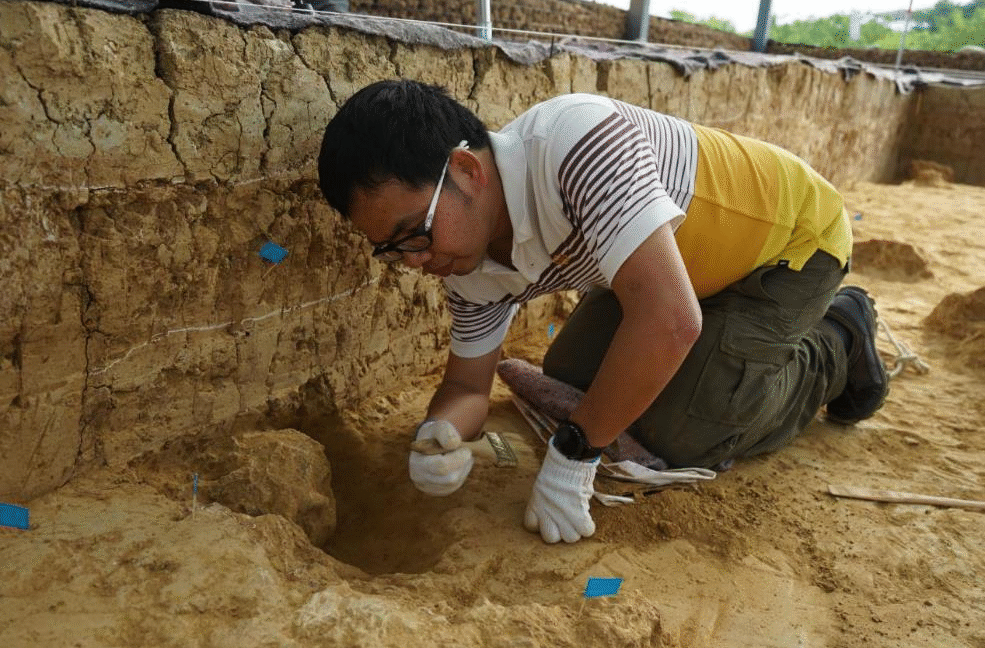
Yunxian is an important—and occasionally contentious—archaeological site on the banks of central China’s Han River. Along with hundreds of stone tools and animal bones, the layers of river sediment have yielded three nearly complete hominin skulls (only two of which have been described in a publication so far). Shantou University paleoanthropologist Hua Tu and his colleagues measured the ratio of two isotopes, aluminum-26 and beryllium-10, in grains of quartz from the sediment layer that once held the skulls. The results suggest that Homo erectus lived and died along the Han River 1.77 million years ago. That’s just 130,000 years after the species first appeared in Africa.

(Side note: This river has been depositing layers of silt and gravel on the same terraces for at least 2 million years, and that’s just extremely cool.)

The revised date suggests that Homo erectus spread across Asia much more quickly than anthropologists had realized. So far, the oldest hominin bones found anywhere outside Africa are five skulls, along with hundreds of other bones, from Dmanisi Cave in Georgia. The Dmanisi bones are between 1.85 million and 1.77 million years old, and they (probably—more on that below) also belong to Homo erectus.

Until recently, the next-oldest Homo erectus fossils outside Africa were the 1.63-million-year-old fossils from another Chinese site, Gongwangling, a short distance north of Yunxian. (That’s not counting a couple of teeth from a site in southern China with an age that is a little less certain.) Those dates had suggested Homo erectus seemed to have taken a leisurely 140,000 years to spread east into Asia. But it now looks like hominins were living in Georgia and central China at about the same time, which means they spread out very fast, started earlier than we knew, or both.

The Homo longi and short of it

All of this means that the Yunxian skulls are probably not—as a September 2025 study claimed—close ancestors of the enigmatic Denisovans. The authors of that paper had digitally reconstructed one of the skulls and concluded that it looked a lot like a 146,000-year-old skull from Harbin, China (which a recent DNA study identified as a Denisovan, also known as Homo longi).

The researchers had argued that the original owners of the Yunxian skulls had lived not long after the Denisovan/Homo longi branch of the hominin family tree split off from ours—in other words, that the Yunxian skulls weren’t mere Homo erectus but early Homo longi, close cousins of our own species. Using the original paleomagnetic dates for the Yunxian skulls, that study’s authors drew up a hominin family tree in which our species and Denisovans are more closely related to each other than either is to Neanderthals—one in which the branching happened much earlier than DNA evidence suggests.

There were many issues with those arguments, but the revised age for the Yunxian skulls sounds like a death knell for them. “1.77 million years is just too old to be a credible connection to the Denisovan group, which DNA tells us got started after around 700,000 years ago,” University of Wisconsin paleoanthropologist John Hawks, who was not involved in the study, told Ars in an email.

But the most interesting thing about these skulls being 1.77 million years old is that the date provides a reference point for understanding even older sites in China—sites that may suggest that Homo erectus wasn’t even the first hominin to make it this far.
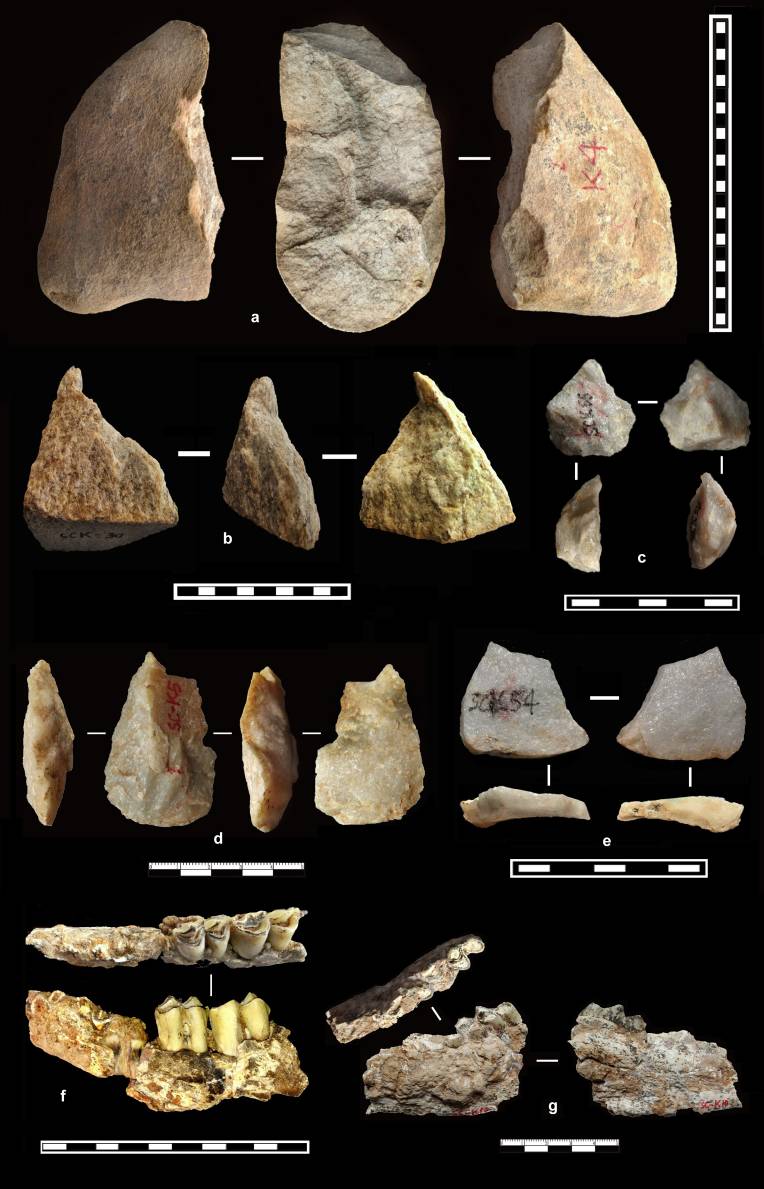
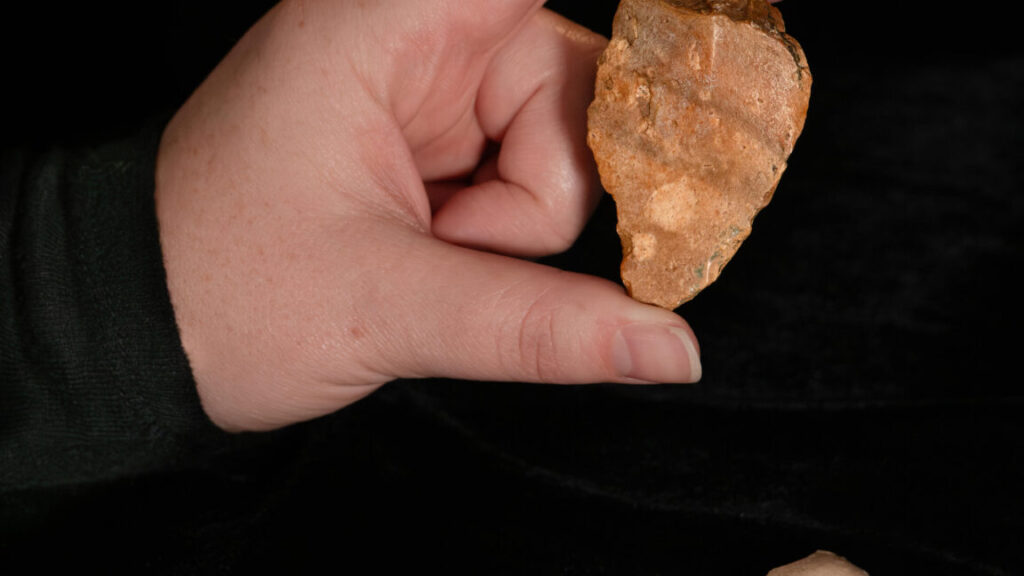
Photograph of stone tools

Stone tools collected from Shangchen, China.

Credit: Prof. Zhaoyu Zhu

Stone tools collected from Shangchen, China. Credit: Prof. Zhaoyu Zhu

Out of Africa: The prequel

Homo erectus first shows up in the fossil record around 1.9 million years ago in Africa, where it’s sometimes also called Homo ergaster because paleoanthropologists seem to enjoy naming things and then arguing about those names for several decades. A few hundred thousand years later, Homo erectus showed up everywhere: from South Africa northward to the Levant and from Dmanisi Cave in Georgia eastward to the islands of Indonesia.

We typically think of Homo erectus as the first of our hominin ancestors to expand beyond Africa, along routes that our own species would retread 1.5 million years later. More to the point, many paleoanthropologists think of them as the first hominin that could have adapted to so many different environments, each with its own challenges, along the way.

But we may need to give earlier members of our genus, like Homo habilis, a little more credit because stone tools from two other sites in China seem to be older than Homo erectus. At Shangchen, a site on the southern edge of China’s Loess Plateau, archaeologists unearthed stone tools from a 2.1-million-year-old layer of sediment. And at the Xihoudu site in northern China, stone tools date to 2.43 million years ago.

“If you have a site in China that’s 2.43 million years, and the origin of Homo erectus is 1.9 million years ago, either you need to push the origin of Homo erectus back to 2.5 or 2.6 million years or we need to accept that we need to be looking at other hominins that may have actually moved out of Africa,” University of Hawai’i at Manoa paleoanthropologist Christopher Bae, a coauthor of the new study, told Ars.

So who made those 2-million-year-old tools?

Archaeologists have unearthed stone tools but no hominin fossils at both sites, making it difficult to say for sure who the toolmakers were. But if they weren’t Homo erectus, the next most likely suspects would be older members of our genus, like Homo habilis or Homo rudolfensis. That would mean hominin expansion “out of Africa” actually happened several times during the history of our genus: once with early Homo, again with Homo erectus, and yet again with our species.

“There could have been an earlier wave that died out or interbred, so there’s all kinds of possibilities open there,” Purdue University paleoanthropologist Darryl Granger, also a coauthor of the recent study, told Ars.

In fact, there’s some debate about whether the Dmanisi fossils actually belonged to Homo erectus proper. One thing the two dueling reconstructions of the Yunxian skulls agree on is that those hominins had flattish faces, more like ours—and like the 1.63-million-year-old Homo erectus skull from Gongwangling. But the Dmanisi hominins’ lower faces project dramatically forward, like those of older hominins.

Some paleoanthropologists classify the Dmanisi fossils as their own species, but others argue they’re more like early members of our genus, such as Homo habilis or Homo rudolfensis. Those earlier hominins may have been more capable of migrating and adapting than we’ve realized.

It’s still very clear, from both fossil and genetic evidence, that our species evolved in Africa and spread from there to the rest of the world. But it’s also increasingly clear that there were several other species of hominins in other places, doing other things, at least off and on, for a very long time before we showed up. Yunxian, and its revised age, could help anthropologists better understand part of that story.

“Actually being able to anchor the Homo erectus sites with firm, solid dates helps us try to reconfigure this model,” said Bae. “This is where Yunxian really plays a major role in this. Now that we’ve got older dates to anchor the Yunxian Homo erectus fossils, I think we can really bring in this discussion with Xihoudu and Shangchen.”

Time to dig deeper

The answers may still lie buried—maybe just a few meters below the fossil skulls and stone tools at sites like Yunxian and Gongwangling, in older sediment layers. Archaeologists may not have seen a reason to explore these, since no one lived in China before 1.7 million years ago. The age of the Yunxian skulls, along with the even older stone tools at Shangchen and Xihoudu, may warrant deeper digging.

“People haven’t been looking for artifacts and fossils in two-plus million-year-old sediments in these locations in China,” said Granger. “I can think of places that I would like to go back and look if I had more time and money.”

At other sites, researchers have already unearthed fossil animal bones from the same age range as China’s oldest stone tools, but paleoanthropologists haven’t double-checked whether any of those bones might belong to early hominins rather than other mammals. Bae said, “It’s just that they haven’t been receiving any attention, or not enough attention.”

Science Advances, 2026. DOI: 10.1126/sciadv.ady2270 About DOIs).

Photo of Kiona N. Smith

Kiona is a freelance science journalist and resident archaeology nerd at Ars Technica.

“Million-year-old” fossil skulls from China are far older—and not Denisovans Read More »
we-have-a-fossil-closer-to-our-split-with-neanderthals-and-denisovans

We have a fossil closer to our split with Neanderthals and Denisovans

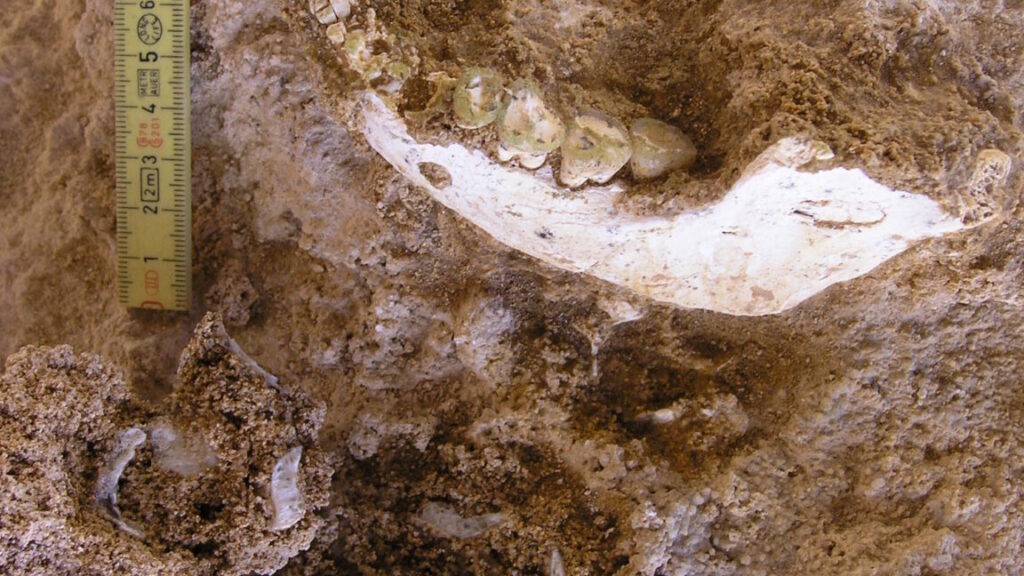
The Casablanca fossils are about the same age as hominin fossils from Spain, which belong to a species called Homo antecessor. This species has been suggested to be a likely ancestor of Neanderthals and Denisovans. Overall, it looks like the fossils from Casablanca are a North African counterpart to Homo antecessor, with the Spanish hominins eventually leading to Neanderthals and the North African ones eventually leading to us.

Both groups share some features in their teeth and lower jaws, but they’re also different in some important ways. The teeth and chins in particular share some older features with Homo erectus. But the jaws have more newfangled features in the places where chewing muscles once attached to the bone—features that Neanderthals and our species share. On the other hand, the teeth are missing some other relatively recent features that would later help define Neanderthals (and were already beginning to show up in Homo antecessor).

Altogether, it looks like the Homo erectus populations and the Neanderthals and Denisovans had been separated for a while by the time the hominins at Grotte à Hominidés lived. But not that long. These hominins were probably part of a generation that was fairly close to that big split, near the base of our branch of the hominin family tree.

Here’s looking at you, hominin

Based on ancient DNA, it looks like Neanderthals and Denisovans started evolving into two separate species sometime between 470,000 and 430,000 years ago. Meanwhile, our branch would eventually become recognizable as us sometime around 300,000 years ago, or possibly earlier. At various times and places, all three species would eventually come back together to mingle and swap DNA, leaving traces of those interactions buried deep in each other’s genomes.

And 773,000 years after a predator dragged the remains of a few unfortunate hominins into its den in northern Africa, those hominins’ distant descendants would unearth the gnawed, broken bones and begin piecing together the story.

Nature, 2025 DOI: 10.1038/s41586-025-09914-y  (About DOIs).

We have a fossil closer to our split with Neanderthals and Denisovans Read More »

stone-tools-may-hint-at-ancestors-of-homo-floresiensis

Stone tools may hint at ancestors of Homo floresiensis

Some stone tools found near a river on the Indonesian island of Sulawesi suggest that the first hominins had reached the islands by at least 1.04 million years ago. That’s around the same time that the ancestors of the infamously diminutive “Hobbits” may have reached the island of Flores.

Archaeologist Budianto Hakim of Indonesia’s National Research and Innovation Agency and his colleagues were the ones who recently unearthed the tools from a site on Sulawesi. Although a handful of stone flakes from that island don’t tell us who the ancestors of the small species were or how they reached remote islands like Flores and Luzon, the tools are one more piece in the puzzle. And this handful of stone flakes may eventually play a role in helping us understand how other hominin species conquered most of the world long before we came along. 

Crossing the ocean a million years ago

Sometimes the deep past leaves the smallest traces. At the Calio site, a sandstone outcrop in what’s now a cornfield outside the village of Ujung in southern Sulawesi, people left behind just a handful of sharp stone flakes roughly a million years ago. There are seven of them, ranging from 22 to 60 millimeters long, and they’re scratched, worn, and chipped from tumbling around at the bottom of a river. But it’s still clear that they were once shaped by skilled human—or at least human-like—hands that used hard stones as hammers to make sharp-edged chert flakes for cutting and scraping.

The oldest of these tools is likely to be between 1.04 and 1.48 million years old. Hakim and his colleagues dated teeth from a wild pig to around 1.26 million years ago. They were part of a jawbone archaeologists unearthed from a layer just above the oldest flake. Throw in some statistical modeling, and you get the range of likely dates for the stone flake buried in the deepest layer of soil.

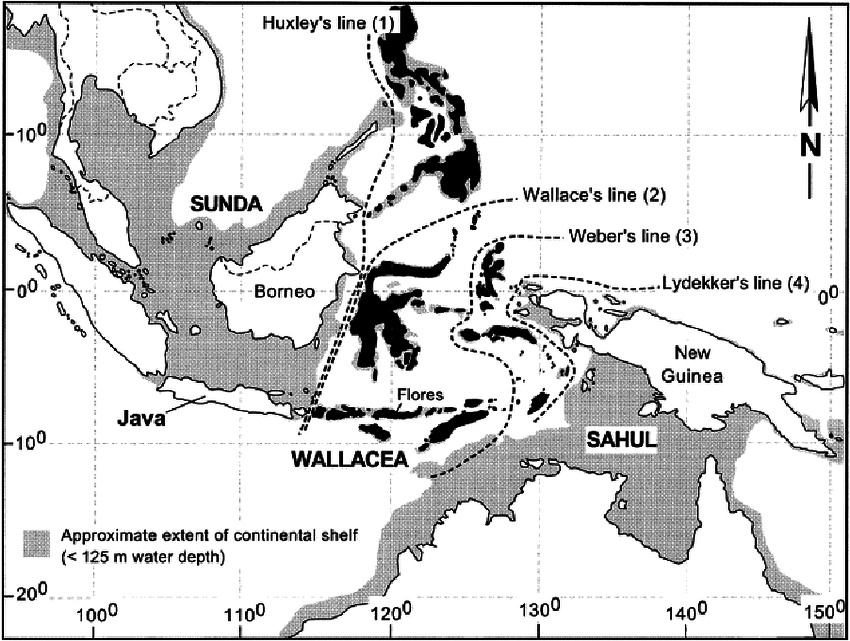
Even the younger end of that estimate would make these tools the oldest evidence yet of hominins (of any species) in the islands of Indonesia and the Philippines. This area, sometimes called Wallacea, lies between the continents of Asia and Australia, separated from both by wide channels of deep ocean.

“But the Calio site has yet to yield any hominin fossils,” said Brumm, “so while we now know there were tool-makers on Sulawesi a million years ago, their identity remains a mystery.” But they may be related to the Hobbits, a short-statured group of hominins who lived hundreds of kilometers away on the island of Flores until around 50,000 years ago.

“The discovery of Early Pleistocene artifacts at Calio suggests that Sulawesi was populated by hominins at around the same time as Flores, if not earlier,” wrote Hakim and his colleagues in their recent paper. 

The Flores connection

The islands that now make up Indonesia and the Philippines have been a hominin hotspot for at least a million years. Our species wandered onto the scene sometime between 63,000 and 73,000 years ago, but at least one other hominin species had already been there for at least a million years. We’re just not sure exactly who they were, when they arrived, or how.

“Precisely when hominins first crossed to Sulawesi remains an open question, as does the taxonomic affinity of the colonizing population,” the authors note. 

map of Wallacean islands

This map shows the islands of Wallacea. The large one just east of Java is Sulawesi. Credit: Darren O’Connell

That’s why the handful of stone tools the team recently unearthed at Calio matter: They’re another piece of that puzzle, albeit a small one. Every slightly older date is one step closer to the first hominin tools, bones, or footprints in these islands, and another pin on the map of who was where and when.

And that map is accumulating quite a lot of pins, representing an ever-increasing number of species. Once the first hominins made it across the Makassar Strait, they found themselves in isolated groups on islands cut off from the mainland—and each other—so the hominin family tree started branching very quickly. On at least two islands, Flores and Luzon, those original hominin settlers eventually gave rise to local species, Homo floresiensis and Homo luzonensis. And University of Wollongong paleoanthropologist Richard Roberts, a co-discoverer of Homo floresiensis, thinks there are probably more isolated island hominin species.

In 2019, when Homo luzonensis was first described, Roberts told Ars, “These new fossils, and the assignation of them to a new species (Homo luzonensis), fulfills one of the predictions Mike Morwood and others (myself included) made when we first reported (15 years ago!) the discovery of Homo floresiensis: that other unknown species of hominins would be found in the islands of Southeast Asia.”

Both Homo floresiensis (the original “Hobbits”) and Homo luzonensis were short, clocking in at just over a meter tall. Their bones and teeth are different enough from each other to set them apart as a unique species, but they have enough in common that they probably share a common ancestor—one they don’t share with us. They’re more like our distant cousins, and the islands of Wallacea may have been home to many other such cousins, if Roberts and his colleagues are correct. 

Complicated family history

But who was the common ancestor of all these hominin cousins? That’s where things get complicated (as if they weren’t already). Most paleoanthropologists lean toward Homo erectus, but there’s a chance—along with some tantalizing hints, and no direct evidence—that much more ancient human relatives called Australopithecines may have made the journey a million (or two) years before Homo erectus.

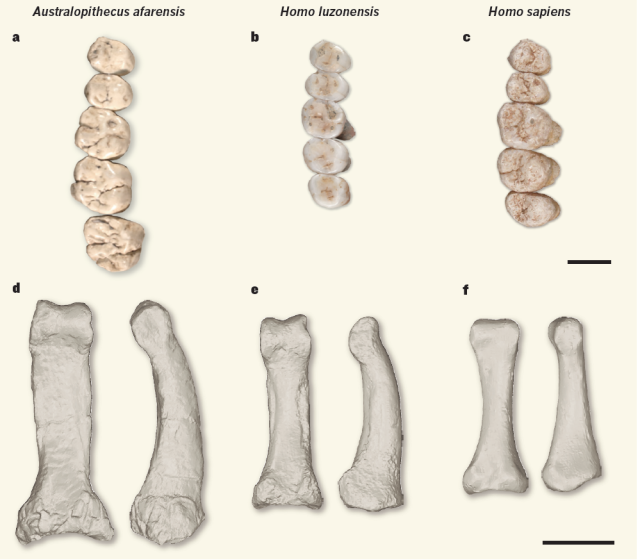
Finger and toe bones from Homo luzonensis are curved, as if they spent as much of their lives climbing trees as walking. That’s more like Australopithecines than any member of our genus Homo. But their teeth are smaller and shaped more like ours. Anthropologists call this mix of features a mosaic, and it can make it tough to figure out how hominin species are related. That’s part of why the question of when the ancestors of the Hobbits arrived on their respective islands is so important.

Illusstrated chart of bones and teeth from three hominins

Compare the teeth and phalanx of Homo luzonensis to those of Homo sapiens (right) and Australopithecus afarensis (left). Credit: Tocheri 2019

We don’t know the answer yet, but we do know that someone was making stone tools on Flores by 1.02 million years ago. Those toolmakers may have been Homo erectus, Australopithecines, or something already recognizable as tiny Homo floresiensis. The Hobbits (or their ancestors) were distinctly “Hobbity” by around 700,000 years ago; fossil teeth and bones from a handful of hominins at a site called Mata Menge make that clear. The Hobbits discovered at Liang Bua Cave on Flores date to somewhere between 50,000 and 100,000 years ago.

Meanwhile, 2,800 kilometers away on the island of Luzon, the oldest stone tools, along with their obvious cut marks left behind on animal bones, date back to 700,000 years ago. That’s as old as the Mata Menge Hobbits on Flores. The oldest Homo luzonensis fossils are between 50,000 and 67,000 years old. It’s entirely possible that older evidence, of the island’s original settlers and of Homo luzonensis, may eventually be found, but until then, we’re left with a lot of blank space and a lot of questions.

And now we know that the oldest traces of hominin presence on Sulawesi is at least 1.04 million years old. But might Sulawesi have its own diminutive hominins?

So are there more Hobbits out there?

“Sulawesi is a wild card—it’s like a mini-continent in itself,” said Brumm. “If hominins were cut off on this huge and ecologically rich island for a million years, would they have undergone the same evolutionary changes as the Flores hobbits? Or would something totally different have happened?”

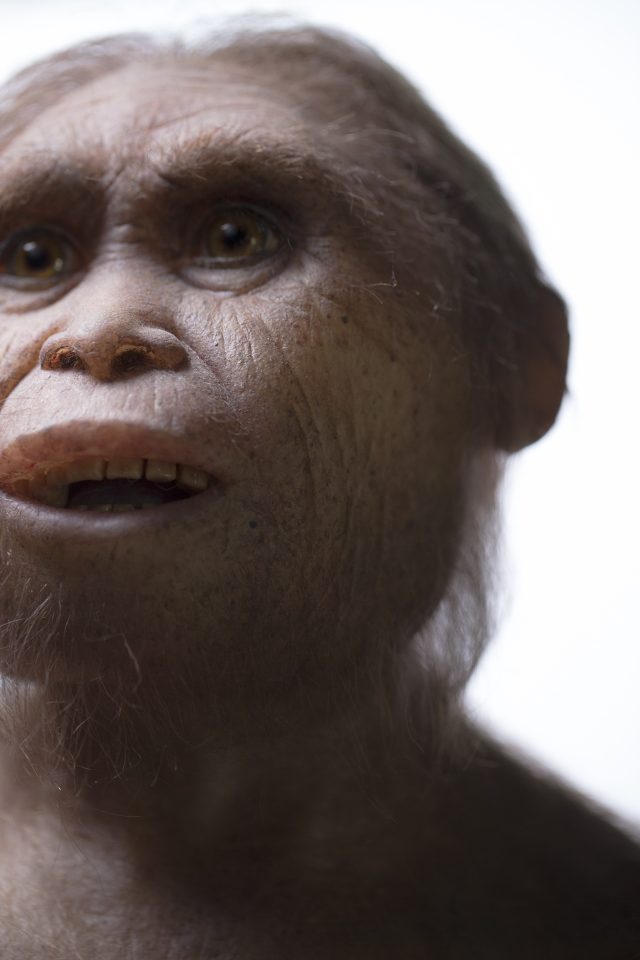
Reconstruction of Homo floresiensis by Atelier Elisabeth Daynes. Credit: Kinez Riza

A phenomenon called island dwarfism played a role in Homo floresiensis‘ evolution; species that live in relative isolation on small islands tend to evolve into either much larger or much smaller versions of their ancestors (which is why the Hobbits shared their island home with pygmy elephants and giant moas). But how small does an island need to be before island dwarfism kicks in? Sulawesi is about 12 times as large as Flores, for example. So what might the descendants of the Calio toolmakers have looked like by 100,000 years ago?

That’s something that we’ll only know if archaeologists on Sulawesi, like Hakim and his team, find fossil remains of those hominins.

Seafarers or tsunami survivors?

Understanding exactly when hominins first set foot on the island of Sulawesi might eventually help us figure out how they got there. These islands are thousands of kilometers from the Southeast Asian mainland and from each other, so getting there would have meant crossing vast stretches of deep, open ocean.

Archaeologists haven’t found any evidence that anyone who came before our species built boats or rafts, although those watercraft would have been made of materials that tend to decay pretty quickly, so even scraps of ancient wood and rope are extremely rare and lucky finds. But some ancient hominins did have a decent grasp of all the basic skills they’d need for at least a simple raft: woodworking and rope-making. 

Another possibility is that hominins living on the coast of mainland Southeast Asia could have been swept out to sea by a tsunami, and some of them could have been lucky enough to survive the misadventure and wash ashore someplace like Sulawesi, Flores, or Luzon (RIP to any others). But for that scenario to work, enough hominins would have had to reach each island to create a lasting population, and it probably had to happen more than once to end up with hominin groups on at least three distant islands.

Either way, it’s no small feat, even for a Hobbit with small feet.

Nature, 2025 DOI: 10.1038/s41586-025-09348-6 (About DOIs).

Stone tools may hint at ancestors of Homo floresiensis Read More »

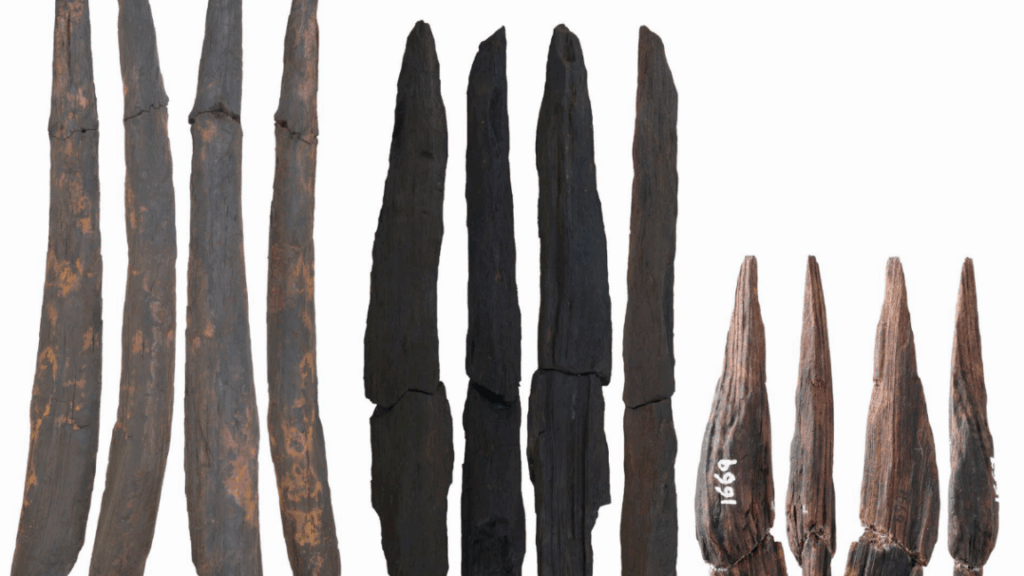
oldest-wooden-tools-in-east-asia-may-have-come-from-any-of-three-species

Oldest wooden tools in East Asia may have come from any of three species

That leaves a few possibilities: Denisovans, Homo heidelbergensis (the common ancestor of Neanderthals, Denisovans, and our species), or Homo erectus. All three species could have lived in the area at the time. But nobody at Gantangqing left behind any convenient, readily identifiable bones along with their wooden tools, stone tools, and butchered animal bones (so inconsiderate of them), making it hard to pin down exactly which species these 300,000-year-old hunter-gatherers belonged to.

Homo erectus had been in Asia for more than a million years by the time Gantangqing’s lakeshore was occupied; the oldest Homo erectus fossils in Asia are from Indonesia and date back 1.8 million years. They also stuck around until quite recently. In caves at a site called Zhoukoudian, outside Beijing in eastern China, Homo erectus remains date to sometime between 700,000 and 200,000 years ago (there’s still a lot of debate on exactly how old the site is).

All of that means that Homo erectus’ presence in the region overlaps the age of the wood tools at Gantangqing. And the stone tools found nearby are fairly simple cores and flakes that don’t rule out Homo erectus as their makers. Archaeologists haven’t unearthed evidence of Homo erectus making or using sophisticated wooden tools like this, but for a species that managed to harness fire and cross miles of ocean, it’s not too wild a speculation.

On the other hand, we know that Denisovans were probably in the area, too, or at least not too far away. A recently identified Denisovan skull from Harbin, China, is 146,000 years old but bears a striking resemblance to other hominin skulls from sites all over China, which range from 300,000 to 200,000 years old. And making finely crafted wooden tools fits with everything we know about Denisovan capabilities.

Then there’s Homo heidelbergensis, the direct ancestor of Denisovans. In fact, it’s a little hard to tell where hominins stop being Homo heidelbergensis and start being Denisovans, or even whether the distinction matters. It’s a problem paleoanthropologists refer to as the “muddle in the Middle,” since both species date to the Middle Pleistocene. So if Homo erectus and Denisovans are in the running, so is Homo heidelbergensis, by default.

And unless someone finds a telltale skull nearby or another very similar toolkit at a site with telltale skulls to consult, we may not know for sure.

Science, 2023. DOI: 10.1126/science.adr8540  (About DOIs).

Oldest wooden tools in East Asia may have come from any of three species Read More »