immigration and customs enforcement

“capture-it-all”:-ice-urged-to-explain-memo-about-collecting-info-on-protesters

“Capture it all”: ICE urged to explain memo about collecting info on protesters

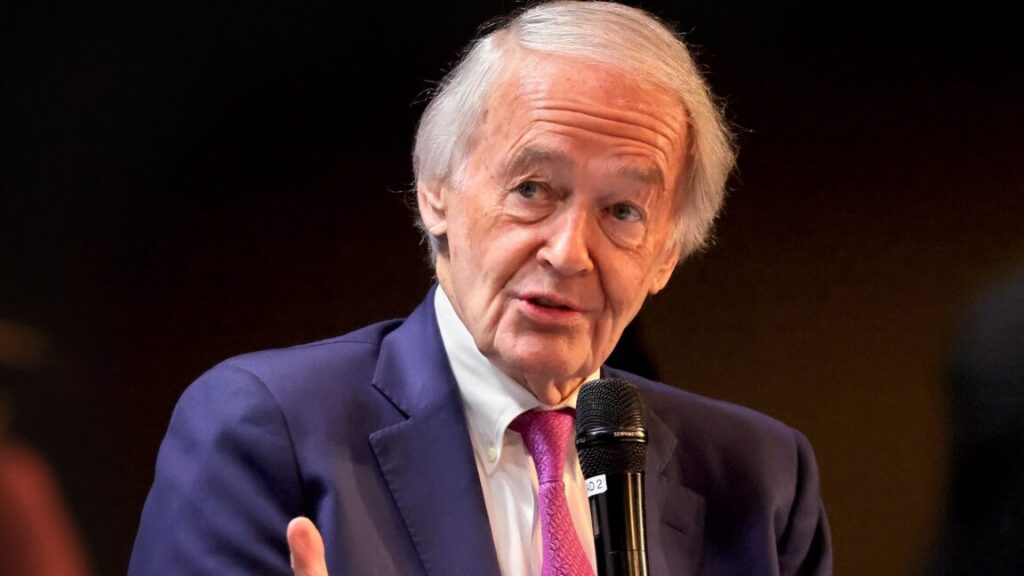
Senator Edward J. Markey (D-Mass.) demanded that Immigration and Customs Enforcement (ICE) confirm or deny the existence of a “domestic terrorists” database that lists US citizens who protest ICE’s immigration crackdown.

ICE “officers and senior Trump administration officials have repeatedly suggested that the Department of Homeland Security (DHS) is building a ‘domestic terrorists’ database comprising information on US citizens protesting ICE’s actions in recent weeks,” Markey wrote in a letter yesterday to Acting ICE Director Todd Lyons. “If such a database exists, it would constitute a grave and unacceptable constitutional violation. I urge you to immediately confirm or deny the existence of such a database, and if it exists, immediately shut it down and delete it.”

Creating a database of peaceful protesters “would constitute a shocking violation of the First Amendment and abuse of power,” and amount to “the kinds of tactics the United States rightly condemns in authoritarian governments such as China and Russia,” Markey said.

Markey’s letter said DHS officials “have repeatedly stated that the agency is engaged in efforts to monitor, catalog, and intimidate individuals engaged in peaceful protests,” and gave several examples. Trump border czar Tom Homan recently told Laura Ingraham on Fox News, “One thing I’m pushing for right now, Laura, we’re going to create a database where those people that are arrested for interference, impeding, and assault, we’re going to make them famous. We’re going to put their face on TV. We’re going to let their employers, and their neighborhoods, and their schools know who these people are.”

Markey’s letter called Homan’s comment “especially alarming given the numerous incidents in which DHS appears to have concluded that protesting ICE itself constitutes grounds for arrest.” Markey pointed to another recent incident in Portland, Maine, in which a masked ICE agent told an observer who was taking video that “we have a nice little database and now you’re considered a domestic terrorist.”

“Capture it all”: ICE urged to explain memo about collecting info on protesters Read More »

ice-protester-says-her-global-entry-was-revoked-after-agent-scanned-her-face

ICE protester says her Global Entry was revoked after agent scanned her face

“I am concerned that border patrol and other federal enforcement agencies now have my license plate and personal information, and that I may be detained or arrested again in the future,” she wrote. “I am concerned about further actions that could be taken against me or my family. I have instructed my family to be cautious and return inside if they see unfamiliar vehicles outside of our home.”

Cleland said she hasn’t performed any observation of federal agents since January 10, but has “continued to engage in peaceful protests” and is “assessing when I will return to active observations.”

We contacted the Department of Homeland Security about Cleland’s declaration and will update this article if we get a response.

Extensive use of facial recognition

Federal agents have made extensive use of facial recognition during President Trump’s immigration crackdown with technology from Clearview AI and a face-scanning app called Mobile Fortify. They use facial recognition technology both to verify citizenship and identify protesters.

“Ms. Cleland was one of at least seven American citizens told by ICE agents this month that they were being recorded with facial recognition technology in and around Minneapolis, according to local activists and videos posted to social media,” The New York Times reported today, adding that none of the people had given consent to be recorded.

ICE also uses a variety of other technologies, including cell-site simulators (or Stingrays) to track phone locations, and Palantir software to help identify potential deportation targets.

Although Cleland vowed to continue protesting and eventually get back to observing ICE and CBP agents, her declaration said she felt intimidated after the recent incident.

“The interaction with the agents on January 10th made me feel angry and intimidated,” she wrote. “I have been through Legal Observer Training and know my rights. I believe that I did not do anything that warranted being stopped in the way that I was on January 10th.”

ICE protester says her Global Entry was revoked after agent scanned her face Read More »

dhs-keeps-trying-and-failing-to-unmask-anonymous-ice-critics-online

DHS keeps trying and failing to unmask anonymous ICE critics online

The Department of Homeland Security (DHS) has backed down from a fight to unmask the owners of Instagram and Facebook accounts monitoring Immigration and Customs Enforcement (ICE) activity in Pennsylvania.

One of the anonymous account holders, John Doe, sued to block ICE from identifying him and other critics online through summonses to Meta that he claimed infringed on core First Amendment-protected activity.

DHS initially fought Doe’s motion to quash the summonses, arguing that the community watch groups endangered ICE agents by posting “pictures and videos of agents’ faces, license plates, and weapons, among other things.” This was akin to “threatening ICE agents to impede the performance of their duties,” DHS alleged. DHS’s arguments echoed DHS Secretary Kristi Noem, who has claimed that identifying ICE agents is a crime, even though Wired noted that ICE employees often post easily discoverable LinkedIn profiles.

To Doe, the agency seemed intent on testing the waters to see if it could seize authority to unmask all critics online by invoking a customs statute that allows agents to subpoena information on goods entering or leaving the US.

But then, on January 16, DHS abruptly reversed course, withdrawing its summonses from Meta.

A court filing confirmed that DHS dropped its requests for subscriber information last week, after initially demanding Doe’s “postal code, country, all email address(es) on file, date of account creation, registered telephone numbers, IP address at account signup, and logs showing IP address and date stamps for account accesses.”

The filing does not explain why DHS decided to withdraw its requests.

However, previously, DHS requested similar information from Meta about six Instagram community watch groups that shared information about ICE activity in Los Angeles and other locations. DHS withdrew those requests, too, after account holders defended their First Amendment rights and filed motions to quash their summonses, Doe’s court filing said.

DHS keeps trying and failing to unmask anonymous ICE critics online Read More »

white-house-alters-arrest-photo-of-ice-protester,-says-“the-memes-will-continue”

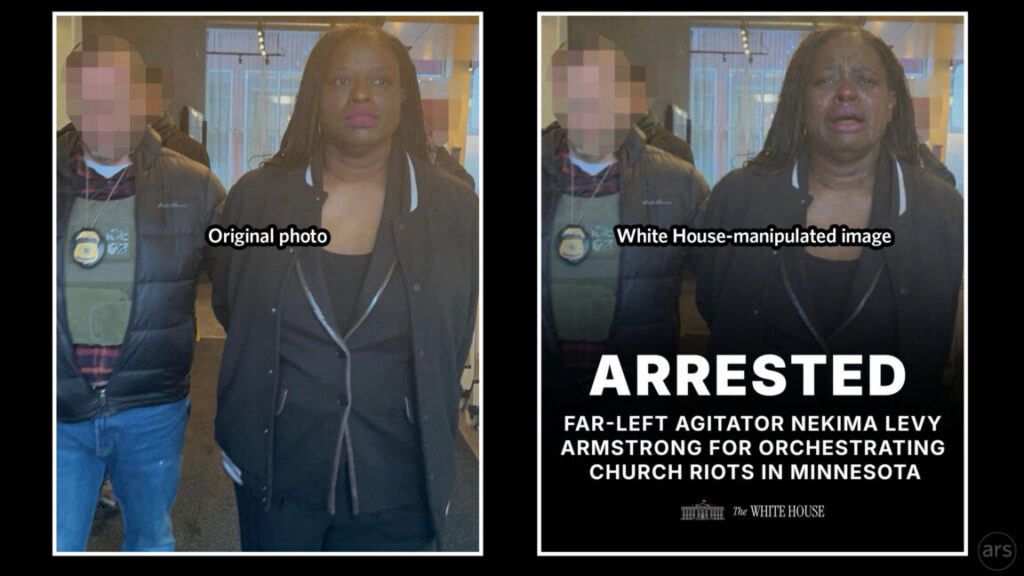
White House alters arrest photo of ICE protester, says “the memes will continue”

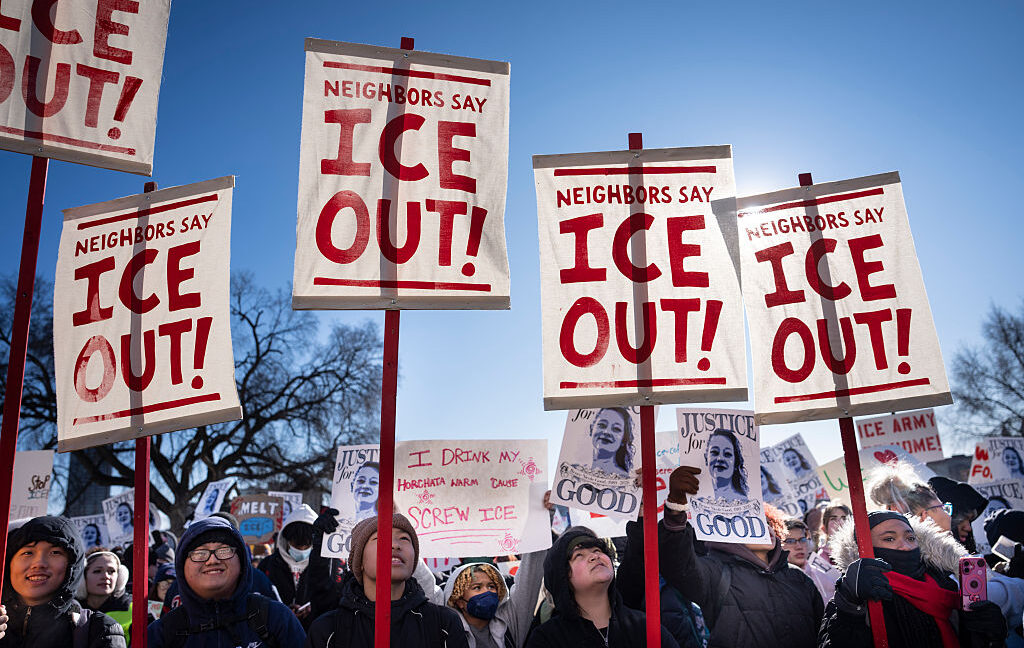
Protesters disrupted services on Sunday at the Cities Church in St. Paul, chanting “ICE OUT” and “Justice for Renee Good.” The St. Paul Pioneer Press quoted Levy Armstrong as saying, “When you think about the federal government unleashing barbaric ICE agents upon our community and all the harm that they have caused, to have someone serving as a pastor who oversees these ICE agents is almost unfathomable to me.”

The church website lists David Easterwood as one of its pastors. Protesters said this is the same David Easterwood who is listed as a defendant in a lawsuit that Minnesota Attorney General Keith Ellison filed against Noem and other federal officials. The lawsuit lists Easterwood as a defendant “in his official capacity as Acting Director, Saint Paul Field Office, U.S. Immigration and Customs Enforcement.”

Levy Armstrong, who is also a former president of the NAACP’s Minneapolis branch, was arrested yesterday morning. Announcing the arrest, Attorney General Pam Bondi wrote, “WE DO NOT TOLERATE ATTACKS ON PLACES OF WORSHIP.” Bondi alleged that Levy Armstrong “played a key role in organizing the coordinated attack on Cities Church in St. Paul, Minnesota.”

Multiple arrests

Noem said Levy Armstrong “is being charged with a federal crime under 18 USC 241,” which prohibits “conspir[ing] to injure, oppress, threaten, or intimidate any person in any State, Territory, Commonwealth, Possession, or District in the free exercise or enjoyment of any right or privilege secured to him by the Constitution or laws of the United States.”

“Religious freedom is the bedrock of the United States—there is no first amendment right to obstruct someone from practicing their religion,” Noem wrote.

St. Paul School Board member Chauntyll Allen was also arrested. Attorneys for the Cities Church issued statements supporting the arrests and saying they “are exploring all legal options to protect the church and prevent further invasions.”

A federal magistrate judge initially ruled that Levy Armstrong and Allen could be released, but they were still being held last night after the government “made a motion to stay the release for further review, claiming they might be flight risks,” the Pioneer Press wrote.

White House alters arrest photo of ICE protester, says “the memes will continue” Read More »

iceblock-lawsuit:-trump-admin-bragged-about-demanding-app-store-removal

ICEBlock lawsuit: Trump admin bragged about demanding App Store removal


ICEBlock creator sues to protect apps that are crowd-sourcing ICE sightings.

In a lawsuit filed against top Trump administration officials on Monday, Apple was accused of caving to unconstitutional government demands by removing an Immigration and Customs Enforcement-spotting app from the App Store with more than a million users.

In his complaint, Joshua Aaron, creator of ICEBlock, cited a Fox News interview in which Attorney General Pam Bondi “made plain that the United States government used its regulatory power to coerce a private platform to suppress First Amendment-protected expression.”

Suing Bondi—along with Department of Homeland Security Secretary Kristi Noem, Acting Director of ICE Todd Lyons, White House “Border Czar” Thomas D. Homan, and unnamed others—Aaron further alleged that US officials made false statements and “unlawful threats” to criminally investigate and prosecute him for developing ICEBlock.

Currently, ICEBlock is still available to anyone who downloaded the app prior to the October removal from the App Store, but updates have been disrupted, and Aaron wants the app restored. Seeking an injunction to block any attempted criminal investigations from chilling his free speech, as well as ICEBlock users’ speech, Aaron vowed in a statement provided to Ars to fight to get ICEBlock restored.

“I created ICEBlock to keep communities safe,” Aaron said. “Growing up in a Jewish household, I learned from history about the consequences of staying silent in the face of tyranny. I will never back down from resisting the Trump Administration’s targeting of immigrants and conscripting corporations into its unconstitutional agenda.”

Expert calls out Apple for “capitulation”

Apple is not a defendant in the lawsuit and did not respond to Ars’ request to comment.

Aaron’s complaint called out Apple, though, for alleged capitulation to the Trump administration that appeared to be “the first time in Apple’s nearly fifty-year history” that “Apple removed a US-based app in response to the US government’s demands.” One of his lawyers, Deirdre von Dornum, told Ars that the lawsuit is about more than just one app being targeted by the government.

“If we allow community sharing of information to be silenced, our democracy will fail,” von Dornum said. “The United States will be no different than China or Russia. We cannot stand by and allow that to happen. Every person has a right to share information under the First Amendment.”

Mario Trujillo, a staff attorney from a nonprofit digital rights group called the Electronic Frontier Foundation that’s not involved in the litigation, agreed that Apple’s ban appeared to be prompted by an unlawful government demand.

He told Ars that “there is a long history that shows documenting law enforcement performing their duties in public is protected First Amendment activity.” Aaron’s complaint pointed to a feature on one of Apple’s own products—Apple Maps—that lets users crowd-source sightings of police speed traps as one notable example. Other similar apps that Apple hosts in its App Store include other Big Tech offerings, like Google Maps and Waze, as well as apps with explicit names like Police Scanner.

Additionally, Trujillo noted that Aaron’s arguments are “backed by recent Supreme Court precedent.”

“The government acted unlawfully when it demanded Apple remove ICEBlock, while threatening others with prosecution,” Trujillo said. “While this case is rightfully only against the government, Apple should also take a hard look at its own capitulation.”

ICEBlock maker sues to stop app crackdown

ICEBlock is not the only app crowd-sourcing information on public ICE sightings to face an app store ban. Others, including an app simply collecting footage of ICE activities, have been removed by Apple and Google, 404 Media reported, as part of a broader crackdown.

Aaron’s suit is intended to end that crackdown by seeking a declaration that government demands to remove ICE-spotting apps violate the First Amendment.

“A lawsuit is the only mechanism that can bring transparency, accountability, and a binding judicial remedy when government officials cross constitutional lines,” Aaron told 404 Media. “If we don’t challenge this conduct in court, it will become a playbook for future censorship.”

In his complaint, Aaron explained that he created ICE in January to help communities hold the Trump administration accountable after Trump campaigned on a mass deportation scheme that boasted numbers far beyond the number of undocumented immigrants in the country.

“His campaign team often referenced plans to deport ’15 to 20 million’ undocumented immigrants, when in fact the number of undocumented persons in the United States is far lower,” his complaint said.

The app was not immediately approved by Apple, Aaron said. But after a thorough vetting process, Apple approved the app in April.

ICEBlock wasn’t an overnight hit but suddenly garnered hundreds of thousands of users after CNN profiled the app in June.

Trump officials attack ICEBlock with false claims

Within hours of that report, US officials began blasting the app, claiming that it was used to incite violence against ICE officers and amplifying pressure to get the app yanked from the App Store.

But Bondi may have slipped up by making comments that seemed to make it clear her intentions were to restrict disfavored speech. On Fox, Bondi claimed that CNN’s report supposedly promoting the app was dangerous, whereas the Fox News report was warning people not to use the app and was perfectly OK.

“Bondi’s statements make clear that her threats of adverse action constitute viewpoint discrimination, where speech ‘promoting’ the app is unlawful but speech ‘warning’ about the app is lawful,” the lawsuit said.

Other Trump officials were accused of making false statements and using unlawful threats to silence Aaron and ICEBlock users.

“What they’re doing is actively encouraging people to avoid law enforcement activities, operations, and we’re going to actually go after them,” Noem told reporters in July. In a statement, Lyons claimed that ICEBlock “basically paints a target on federal law enforcement officers’ backs” and that “officers and agents are already facing a 500 percent increase in assaults.” Echoing Lyons and Noem, Homan called for an investigation into CNN for reporting on the app, which “falsely implied that Plaintiffs’ protected speech was illegally endangering law enforcement officers,” Aaron alleged.

Not named in the lawsuit, White House Press Secretary Karoline Leavitt also allegedly made misleading statements. That included falsely claiming “that ICEBlock and similar apps are responsible for violent attacks on law enforcement officers, such as the tragic shooting of immigrants at an ICE detention facility in Dallas, Texas, on September 24, 2025,” where “no actual evidence has ever been cited to support these claims,” the lawsuit said.

Despite an apparent lack of evidence, Apple confirmed that ICEBlock was removed in October, “based on information we’ve received from law enforcement about the safety risks associated with ICEBlock,” a public statement said. In a notice to Aaron, Apple further explained that the app was banned “because its purpose is to provide location information about law enforcement officers that can be used to harm such officers individually or as a group.”

Apple never shared any more information with Aaron to distinguish his app from other apps allowed in the App Store that help people detect and avoid nearby law enforcement activities. The iPhone maker also didn’t confirm the source of its information, Aaron said.

However, on Fox, Bondi boasted about reaching “out to Apple today demanding they remove the ICEBlock app from their App Store—and Apple did so.”

Then, later during sworn testimony before the Senate Judiciary Committee, she reiterated those comments, while also oddly commenting that Google received the same demand, despite ICEBlock intentionally being designed for iPhone only.

She also falsely claimed that ICEBlock “was reckless and criminal in that people were posting where ICE officers lived” but “subsequently walked back that statement,” Aaron’s complaint said.

Aaron is hoping the US District Court in the District of Columbia will agree that “Bondi’s demand to Apple to remove ICEBlock from the App store, as well as her viewpoint-based criticism of CNN for publicizing the app, constitute a ‘scheme of state censorship’ designed to ‘suppress’” Aaron’s “publication and distribution of the App.”

His lawyer, Noam Biale, told Ars that “Attorney General Bondi’s self-congratulatory claim that she succeeded in pushing Apple to remove ICEBlock is an admission that she violated our client’s constitutional rights. In America, government officials cannot suppress free speech by pressuring private companies to do it for them.”

Similarly, statements from Noem, Lyons, and Homan constituted “excessive pressure on Apple to remove the App and others like it from the App Store,” Aaron’s complaint alleged, as well as unconstitutional suppression of Aaron’s and ICEBlock users’ speech.

ICEBlock creator was one of the first Mac Geniuses

Aaron maintains that ICEBlock prominently features a disclaimer asking all users to “please note that the use of this app is for information and notification purposes only. It is not to be used for the purposes of inciting violence or interfering with law enforcement.”

In his complaint, he explained how the app worked to automatically delete ICE sightings after four hours—information that he said could not be recovered. That functionality ensures that “ICEBlock cannot be used to track ICE agents’ historical presence or movements,” Aaron’s lawsuit noted.

Rather than endangering ICE officers, Aaron argued that ICEBlock helps protect communities from dangerous ICE activity, like tear gassing and pepper spraying, or alleged racial profiling triggering arrests of US citizens and immigrants. Kids have been harmed, his complaint noted, with ICE agents documented “arresting parents and leaving young children unaccompanied” and even once “driving an arrestee’s car away from the scene of arrest with the arrestee’s young toddler still strapped into a car seat.”

Aaron’s top fear driving his development of the app was his concern that escalations in ICE enforcement—including arbitrary orders to hit 75 arrests a day—exposed “immigrants and citizens alike to violence and rampant violations of their civil liberties” that ICEBlock could shield them from.

“These operations have led to widespread and well-documented civil rights violations against citizens, lawful residents, and undocumented immigrants alike, causing serious concern among members of the public, elected officials, and federal courts,” Aaron’s complaint said.

They also “have led some people—regardless of immigration or citizenship status—to want to avoid areas of federal immigration enforcement activities altogether” and “resulted in situations where members of the public may wish, when enforcement activity becomes visible in public spaces, to observe, record, or lawfully protest against such activity.”

In 2001, Aaron worked for Apple as one of the first Mac Geniuses in its Apple Stores. These days, he flexes his self-taught developer skills by creating apps intended to do social good and help communities.

Emphasizing that he was raised in a Jewish household where he heard stories from Holocaust survivors that left a lasting mark, Aaron said that the ICEBlock app represented his “commitment to use his abilities to advocate for the protection of civil liberties.” Without an injunction, he’s concerned that he and other like-minded app makers will remain in the Trump administration’s crosshairs, as the mass deportation scheme rages on through ongoing ICE raids across the US, Aaron told 404 Media.

“More broadly, the purpose [of the lawsuit] is to hold government officials accountable for using their authority to silence lawful expression and intimidate creators of technology they disfavor,” Aaron said. “This case is about ensuring that public officials cannot circumvent the Constitution by coercing private companies or threatening individuals simply because they disagree with the message or the tool being created.”

Photo of Ashley Belanger

Ashley is a senior policy reporter for Ars Technica, dedicated to tracking social impacts of emerging policies and new technologies. She is a Chicago-based journalist with 20 years of experience.

ICEBlock lawsuit: Trump admin bragged about demanding App Store removal Read More »

ice-wants-to-build-a-24/7-social-media-surveillance-team

ICE wants to build a 24/7 social media surveillance team

Together, these teams would operate as intelligence arms of ICE’s Enforcement and Removal Operations division. They will receive tips and incoming cases, research individuals online, and package the results into dossiers that could be used by field offices to plan arrests.

The scope of information contractors are expected to collect is broad. Draft instructions specify open-source intelligence: public posts, photos, and messages on platforms from Facebook to Reddit to TikTok. Analysts may also be tasked with checking more obscure or foreign-based sites, such as Russia’s VKontakte.

They would also be armed with powerful commercial databases such as LexisNexis Accurint and Thomson Reuters CLEAR, which knit together property records, phone bills, utilities, vehicle registrations, and other personal details into searchable files.

The plan calls for strict turnaround times. Urgent cases, such as suspected national security threats or people on ICE’s Top Ten Most Wanted list, must be researched within 30 minutes. High-priority cases get one hour; lower-priority leads must be completed within the workday. ICE expects at least three-quarters of all cases to meet those deadlines, with top contractors hitting closer to 95 percent.

The plan goes beyond staffing. ICE also wants algorithms, asking contractors to spell out how they might weave artificial intelligence into the hunt—a solicitation that mirrors other recent proposals. The agency has also set aside more than a million dollars a year to arm analysts with the latest surveillance tools.

ICE did not immediately respond to a request for comment.

Earlier this year, The Intercept revealed that ICE had floated plans for a system that could automatically scan social media for “negative sentiment” toward the agency and flag users thought to show a “proclivity for violence.” Procurement records previously reviewed by 404 Media identified software used by the agency to build dossiers on flagged individuals, compiling personal details, family links, and even using facial recognition to connect images across the web. Observers warned it was unclear how such technology could distinguish genuine threats from political speech.

ICE wants to build a 24/7 social media surveillance team Read More »