paramount plus

“streaming-stops-feeling-infinite”:-what-subscribers-can-expect-in-2026

“Streaming stops feeling infinite”: What subscribers can expect in 2026


Spoiler: expect higher prices

Streaming may get a little worse before it gets better.

We’re far from streaming’s original promise: instant access to beloved and undiscovered titles without the burden of ads, bundled services, or price gouging that have long been associated with cable.

Still, every year we get more dependent on streaming for entertainment. Despite streaming services’ flaws, many of us are bound to keep subscribing to at least one service next year. Here’s what we can expect in 2026 and beyond.

Subscription prices keep rising, but perhaps not as expected

There’s virtually no hope of streaming subscription prices plateauing in 2026. Streaming companies continue to face challenges as content production and licensing costs rise, and it’s often easier to get current customers to pay slightly more than to acquire new subscribers. Meanwhile, many streaming companies are still struggling with profitability and revenue after spending years focusing on winning subscribers with content.

“We see many services are only now aligning content spend with realistic lifetime value per subscriber,” Christofer Hamilton, industry insights manager at streaming analyst Parrot Analytics, told Ars.

Companies may get more creative with how they frame higher costs to subscribers, however. People who pay extra to stream without ads are the most likely to see price bumps as streaming companies continue pushing customers toward ad-based tiers.

Charging more for “premium” features—such as 4K streaming, simultaneous streams, or offline downloads—offers another way for streaming companies to boost revenue without implementing broad price hikes that risk provoking customer outrage. Subscribers can expect streaming prices to get “more menu-like next year,” said Michael Goodman, director of entertainment research at Parks Associates, a research firm focusing on IoT, consumer electronics, and entertainment.

When will the price hikes stop?

If streaming prices won’t stop rising next year, when will they?

Ultimately, it may be up to subscribers to vote with their dollars by canceling subscriptions or opting for cheaper or free alternatives, such as FAST (free ad-supported streaming television) channels with linear programming.

As Goodman put it, “Until we see net adds stall or decline as a result of price hikes, services have no incentive to stop raising prices.”

Some experts doubt that streaming services will ever willingly stop increasing prices. Bill Yousman, professor and director of the Media Literacy and Digital Culture graduate program at Sacred Heart University, sees precedent for this in cable companies.

“If the big streaming companies had their way, there would be no limit to their price hikes. We have already seen this with the cable monopolies and their disregard for consumer dissatisfaction,” he said.

Yousman believes that prices will only “be brought under control if there is some type of government regulation,” but he noted that’s unlikely under the Trump administration.

To date, US lawmakers haven’t shown interest in halting the steady rise of streaming prices. Most lawmakers who have sought to regulate the industry have focused on industry consolidation. There has been some effort from lawmakers to rein in streaming price hikes, though, especially through proposed federal legislation dubbed the Price Gouging Prevention Act.

Streaming services lean deeper into cable-like bundles

Companies will look to leverage subscribers’ frustration with pricing by being more aggressive about bundling third-party services like traditional pay TV, Internet, and cell phone service with streaming subscriptions. The idea is that people are less likely to cancel a streaming subscription if it’s tied to a different subscription (including another streaming subscription). The strategy echoes the days of cable, when some people kept unused landlines just to save money on cable channels or Internet service.

“For subscribers, 2026 is the year streaming stops feeling infinite and starts feeling more like premium cable used to: fewer apps, clearer bundles, and higher expectations for each service they pay for,” Parrot’s Hamilton said.

Thanks to traditional pay TV providers, bundles have a bad connotation among people looking to save money and simplify their subscriptions. But bundling doesn’t always have to be a bad thing, as Yousman explains:

If the companies wanted to really be responsive to consumers, they would let them design their own packages rather than having to choose options that may or may not include all the services they want. What works against this, of course, is the demand for ever-increasing profits at all times.

Should a sale of Warner Bros. Discovery’s (WBD’s) HBO Max be completed (late) next year, subscribers will face more pressure to bundle their streaming subscriptions.

“When dominant platforms like Netflix or Paramount absorb major content players, it accelerates the erosion of streaming’s original promise: freedom from monopolistic bundles,” Vikrant Mathur, co-founder of streaming technology provider Future Today, said.

Netflix and Paramount duke it out over Warner Bros.

WBD announced plans this month to sell its streaming and movie studios business to Netflix for an equity value of $72 billion, or an approximate total enterprise value of $82.7 billion. Paramount Skydance, however, quickly swooped in with a hostile takeover bid for all of WBD, including its cable channels, for $108.4 billion. A WBD shareholder vote will occur in spring or early summer, chairman Samuel Di Piazza told CNBC. By the end of 2026, we should have a clearer understanding of the future of HBO Max, as well as Netflix and Paramount+.

Any acquisition will be subject to regulatory scrutiny, causing more uncertainty for subscribers. If Netflix buys HBO Max, users of both services can expect higher prices due to reduced competition and the extensive amount of content and number of big-budget franchises (including Harry Potter and DC Comics) expected to unite under one platform.

“If Netflix gets [HBO Max] and the WB studios, HBO Max subscribers are more likely to see a smoother transition, strong ongoing investment in premium content, and simpler app/billing integration,” Parks Associates’ Goodman said.

But while the potential merger is worth watching, subscribers are unlikely to truly feel the impact of HBO Max potentially changing ownership until after 2026.

“Producing a show is a yearslong process, so the content that was already slated to air isn’t going to disappear, and the new content acquired through the WB library won’t be available until the merger is approved and closes,” Tre Lovell, attorney and owner of Los Angeles entertainment law firm The Lovell Firm, explained.

Content starts getting less bold

Looking beyond 2026, a sale of part or all of WBD would likely open the door for more streaming acquisitions. That could eventually benefit customers by making it easier to find content to watch with fewer subscriptions. But merged companies are also less likely to take risks on unique and diverse content.

Analysts I spoke with pointed to fewer niche and mid-tier original shows and movies and more show cancellations if either Netflix or Paramount buys HBO Max. Either buyer would probably focus more on the already-successful franchises that WB owns, such as Game of Thrones, Batman, and Superman.

“Big combined libraries push companies to double down on proven IP because it travels, merchandises, and reduces marketing risk,” said Robert Rosenberg, a partner at the New York law firm Moses Singer focusing on intellectual property, entertainment, technology, and data law.

Rosenberg also expects to see a “tilt toward” live events, sports, and unscripted content “for retention” if HBO Max sells.

In the shorter term, Rory Gooderick, research manager at analyst firm Ampere Analysis, predicted that WBD will be “cautious when greenlighting new large-scale projects until” the acquisition is finalized.

Beyond the potential HBO Max sale, more merger activity could lead to streaming services straying from their original selling point of offering bolder, quirkier content.

As the industry consolidates, “sticky content,” like procedurals, reality shows, and “comfort TV that drives long viewing sessions,” will take priority among mainstream, subscription-based streaming services, especially as they put more emphasis on ad-tier subscriptions, Goodman predicted.

A more stable future?

The new year will be formative for streaming and yield lasting impacts for subscribers. We’ve discussed numerous negative implications, but there could be a silver lining. While we may see more turbulence, hopefully, we’ll also start to see a road toward more stable streaming options.

Streaming subscribers can’t directly stop mergers or price hikes or control streaming libraries. But with services like Netflix and Disney+ focusing on becoming one-stop shops with massive libraries, there’s an opportunity for other services to hone their specialties and stand out by providing offbeat, unexpected, and rare content at more affordable prices.

As the landscape settles, streamers should be mindful of the importance of variety to subscribers. According to Bill Michels, chief product officer at Gracenote, Nielsen’s content data business unit:

There will be some consolidation. But the [connected TV] landscape, inclusive of FAST and [direct-to-consumer] channels, provides more than ample video variety for viewers, so the biggest challenge will be connecting content with the right audience. Audience engagement depends on good content. Audience retention depends on making sure audiences are never without something to watch.

Photo of Scharon Harding

Scharon is a Senior Technology Reporter at Ars Technica writing news, reviews, and analysis on consumer gadgets and services. She’s been reporting on technology for over 10 years, with bylines at Tom’s Hardware, Channelnomics, and CRN UK.

“Streaming stops feeling infinite”: What subscribers can expect in 2026 Read More »
higher-prices,-simpler-streaming-expected-if-hbo-max-folds-into-paramount+

Higher prices, simpler streaming expected if HBO Max folds into Paramount+


The end of HBO Max is “certainly plausible.”

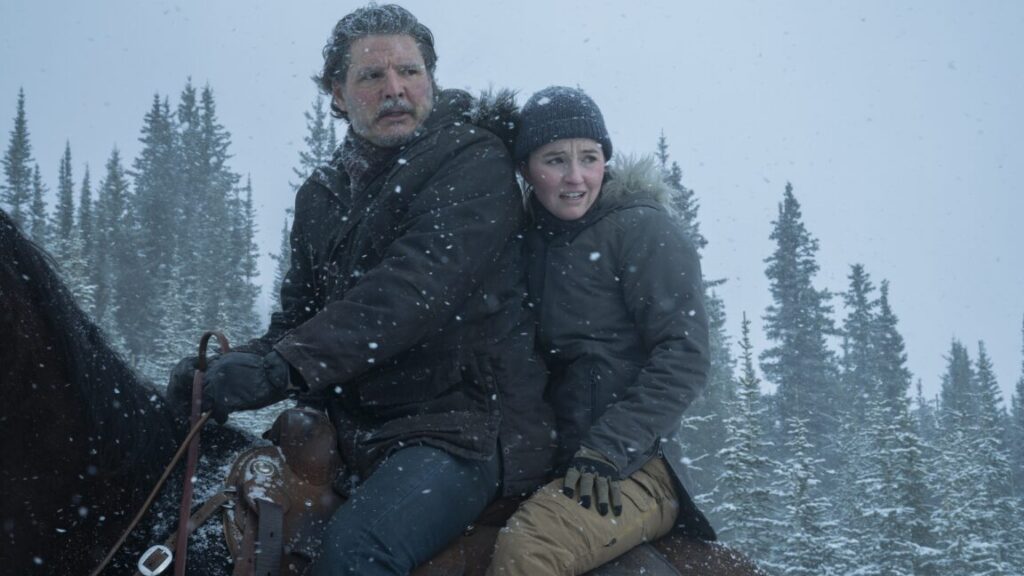
A still from the second season of HBO’s The Last of Us. Credit: HBO

Warner Bros. Discovery (WBD) has a ‘for sale’ sign up. And that could mean big changes for subscribers to the company’s most popular streaming service, HBO Max.

After receiving unsolicited acquisition offers, WBD recently declared itself open to “strategic alternatives to maximize shareholder value.” WBD drew new attention by being open to selling its streaming business (WBD is also still open to moving forward with previously shared plans to split into a cable company and a streaming and movie studios company next year).

Naturally, mergers and acquisitions talk has heated up since then, with Paramount as one of the most eager suitors. Paramount, which merged with Skydance in August, is reportedly planning to keep “much of Warner Bros. Discovery Inc. intact” if a deal happens, per a Bloomberg report that cited unnamed people familiar with the plans of David Ellison, Paramount’s CEO.

For HBO Max subscribers, the most pertinent part of Bloomberg’s report follows:

Under Ellison’s plan, Warner Bros.’ HBO Max streaming service would merge into the existing Paramount+ platform, one of the people said. He believes combining the offerings will allow more people to see the work of film and TV show creators. The libraries of the two companies will make Paramount+ more compelling for subscribers.

The purported strategy would likely end the ability to subscribe to HBO Max in favor of the opportunity to pay for a beefier version of Paramount+.

More broadly, the merger talks bring into question the future for HBO Max subscribers should Warner Bros. engage in any sort of M&A activity with one of its most desirable businesses.

Higher prices are possible

Choice is typically seen as good for consumers. But in the case of streaming, which only recently overtook broadcast and cable viewing, the recent expansion of services available is often viewed negatively. Streaming fragmentation forces people to jump from service to service in order to find something to watch and to pay for more subscriptions.

As a result, a WBD merger could be a double-edged sword for streaming subscribers. The most obvious con is the potential for price hikes.

Speaking to Ars about a potential WBD merger, Vikrant Mathur, co-founder of streaming technology provider Future Today, said:

On one hand, it means subscribers getting access to a larger library, a simpler content discovery, and a consistent streaming experience, but on the other, we risk increasing subscription costs for current subscribers of both services, a trend that has been leading to subscription fatigue and diminishing the original promise of streaming.

Max Alderman, partner at FE International, an M&A advisory firm with a specialty in content businesses, said HBO Max subscribers can expect “friction” if Paramount buys HBO Max. He pointed out that overlapping platforms often result in “temporary confusion around pricing, content access, and brand continuity.” Alderman added:

Over the longer run, though, a combined offering could improve content breadth and potentially deliver better value per dollar.

Still, a Paramount-owned HBO Max stands the risk of failing to meet subscribers’ expectations, “especially for a service like HBO Max that’s earned a reputation for high-end, prestige programming,” Julie Clark, VP of media and entertainment at TransUnion, which works in streaming ads, told Ars.

The end of HBO Max?

With cable declining, HBO Max is the HBO brand’s best bet at longevity. The idea of HBO dissolving into shows and movies that you find on Paramount+ doesn’t sound like a fitting ending to a 53-year-old brand that has brought us shows like The Sopranos, The Wire, Game of Thrones, and White Lotus. HBO has gone through multiple streaming rebrands, but the end of a dedicated HBO streaming service, as suggested by Bloomberg’s report, is a different level. Yet, HBO Max folding into Paramount+ is “certainly plausible,” according to Alderman.

“The current market doesn’t support redundant platforms competing for the same audience,” he explained.

Today’s streaming services are focused on reaching and maintaining profitability long term. In its most recent earnings report, Paramount’s streaming business, which includes Paramount+, BET+, and Pluto TV, reported adjusted operating income before depreciation and amortization of $157 million, up from $26 million a year ago. The numbers were largely driven by Paramount+ growing subscribers to 77.7 million and charging more.

In its earnings report this week, WBD said that its streaming business, which includes HBO Max and Discovery+, posted earnings before interest, taxes, depreciation, and amortization of $345 million, compared to $289 million a year ago. WBD claims 128 million streaming subscribers, primarily through HBO Max.

“This potential merger underscores the escalating content and distribution costs in the industry,” Alderman said. “For [subscription video on demand platforms] to succeed, they need scale of revenue, as well as operational cost efficiencies, both of which can come through consolidation.” 

It’s understandable that a brand that acquires HBO Max would seek to streamline operations with any streaming business that it already owns. But it’s hard to imagine any buyer throwing out the HBO name.

“I’d be skeptical that the HBO brand is going away completely. We’ve seen the name yo-yo, and it’s clear that it still packs a punch for consumers looking for premium content,” Clark said.

Even if HBO Max lives as a tile within the Paramount+ app, or the app of another buyer, (à la Hulu under Disney+), it wouldn’t make sense to get rid of the legendary acronym completely.

“HBO is one of the few streaming brands that still commands prestige pricing,” Alderman said.

If a company does acquire any form of HBO, one of its top challenges is expected to be streamlining operations while maintaining HBO’s premium brand. This could be especially difficult under a “more mainstream umbrella like Paramount+,” Alderman noted.

Streaming has already diluted the HBO brand somewhat. Through streaming, HBO is now associated with stuff from DC Comics and Cartoon Network, as well as reality shows, like 90 Day Fiancé and Naked and Afraid. Merging with Paramount+ or even Netflix could expand the HBO umbrella more.

That expanded umbrella could allow a company like Paramount to better compete against Netflix, something WBD executives have shied away from. HBO Max is “not everything for everyone in a household,” JB Perrette, WBD’s streaming president and CEO, said this spring.

“What people want from us in a world where they’ve got Netflix and Amazon [Prime Video] are those things that differentiate us,” Casey Bloys, chairman and CEO of HBO and Max content, told The Wall Street Journal in May.

A “stress test” for more streaming mergers

Aside from the impact on HBO Max subscribers, WBD’s merger talks have broad implications. A deal would open the door for much more consolidation in the streaming space, something that experts have been anticipating for some years and that addresses the boom of streaming services. Per Clark, discussions of a Paramount-WBD merger are “less about two studios joining forces and more about a stress test for future M&A.”

If WBD accepts a Paramount bid and that bid clears regulatory hurdles, it would signal that “premium content under fewer umbrellas is back in play,” Clark said.

A Paramount-WBD merger is likely to speed up consolidation among mid-tier players, like NBCUniversal, Lionsgate, and AMC, Alderman said, pointing to these companies’ interest in scaling their streaming businesses and in building differentiated portfolios to counter Netflix and Disney+’s expansive libraries.

If Paramount and WBD don’t merge, Clark expects to see more “piecemeal” strategies, such as rights-sharing, joint venture bundles, and streaming-as-a-service models.

Photo of Scharon Harding

Scharon is a Senior Technology Reporter at Ars Technica writing news, reviews, and analysis on consumer gadgets and services. She’s been reporting on technology for over 10 years, with bylines at Tom’s Hardware, Channelnomics, and CRN UK.

Higher prices, simpler streaming expected if HBO Max folds into Paramount+ Read More »

new-starfleet-academy-trailer-debuts-at-nycc

New Starfleet Academy trailer debuts at NYCC

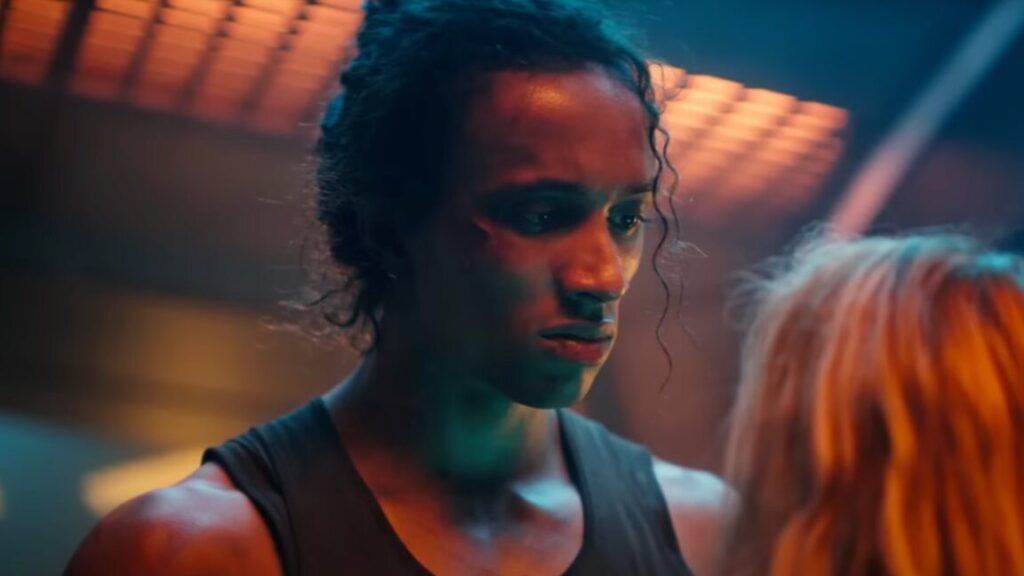
Rosta’s Caleb is front and center in the new trailer. We see him as a child with his mother (Tatiana Maslany), who is torn away from him by armed guards as Nus Braka cackles, “You hold on to how much you hate me right now, kid. It’ll keep you warm at night.” Cut to Captain Ake finding the now-grown Caleb and recruiting him to the Academy with a promise to help him find Nus Braka—presumably to exact some kind of revenge. We get to see instructors put the new cadets through their paces as they strive to be worthy of the Starfleet uniform. Love might be in the air for Caleb. And Captain Ake seems to have her own twisted history with Nus Braka.

As Ars senior editor Sam Axon pointed out in 2023, there have been Kobayashi Maru references throughout the franchise, as well as substantial plotlines about the academy in The Next Generation and Deep Space Nine, among others. There were also Starfleet Academy video games in the 1990s for various platforms.

Star Trek: Starfleet Academy premieres on January 15, 2026, on Paramount+.

First look at Strange New Worlds S4

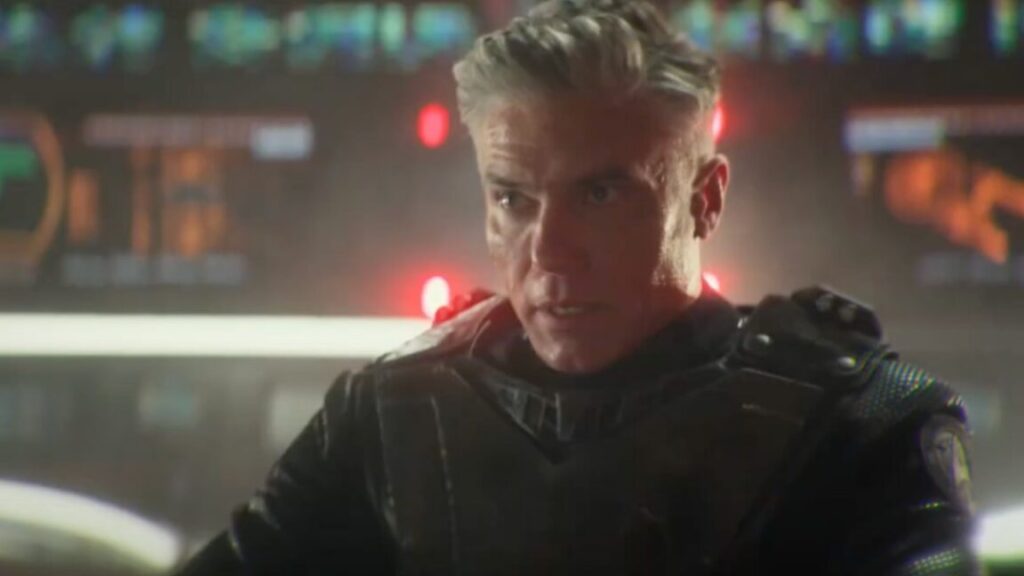
Let’s be honest. The third season of Strange New Worlds has been pretty uneven. But a course correction could be in the offing, judging by a four-and-a-half minute clip from the upcoming fourth season that was unveiled at NYCC. It’s an extended sequence in which Captain Pike (Anson Mount) and his crew respond to a distress signal from another ship, only to encounter a massive space storm that knocks out almost all their systems. They decide to take a shuttle to a nearby planet to gather some much-needed iridium to power their warp drive. (Is anyone else hearing echoes of Galaxy Quest and the hunt for a replacement beryllium sphere?)

Still, the tone does seem more of a return to form for the series. (For what it’s worth, producer Akiva Goldsman has attributed the S3 issues in part to production delays as a result of strikes and staffing changes.) The fourth season of Star Trek: Strange New Worlds is slated for release sometime next year. The series has already been renewed for a truncated fifth and final season of six episodes.

New Starfleet Academy trailer debuts at NYCC Read More »

genres-are-bustin’-out-all-over-in-strange-new-worlds-s3-teaser

Genres are bustin’ out all over in Strange New Worlds S3 teaser

Star Trek: Strange New Worlds returns this summer with ten new episodes.

Paramount+ has dropped a tantalizing one-minute teaser for the upcoming third season of Star Trek: Strange New Worlds., and it looks like the latest adventures of the starship Enterprise will bring romance, comedy, mystery, and even a bit of analog tech, not to mention a brand new villain.

(Some spoilers for S2 below)

We haven’t seen much from the third season to date. There was an exclusive clip during San Diego Comic Con last summer—a callback to the S2 episode “Charades,” in which a higher-dimensional race, the Kerkohvians, accidentally reconfigured Spock’s half-human, half-Vulcan physiology to that of a full-blooded human, just before Spock was supposed to meet his Vulcan fiancee’s parents. The S3 clip had the situation reversed: The human crew had to make themselves Vulcan to succeed on a new mission but weren’t able to change back.

The S2 finale found the Enterprise under vicious attack by the Gorn, who were in the midst of invading one of the Federation’s colony worlds. Several crew members were kidnapped (La’an, M’Benga, Ortegas, and Sam), along with other survivors of the attack. Pike faced a momentous decision: follow orders to retreat, or disobey them to rescue his crew. In October, we learned that Pike naturally chose the latter. New footage shown at New York City Comic-Con picked up where the finale left off, giving us the kind of harrowing high-stakes pitched space battle against a ferocious enemy that has long been a hallmark of the franchise.

Genres are bustin’ out all over in Strange New Worlds S3 teaser Read More »

we’ve-got-a-lavish-new-trailer-for-star-trek:-section-31

We’ve got a lavish new trailer for Star Trek: Section 31

Michelle Yeoh stars in Star Trek: Section 31.

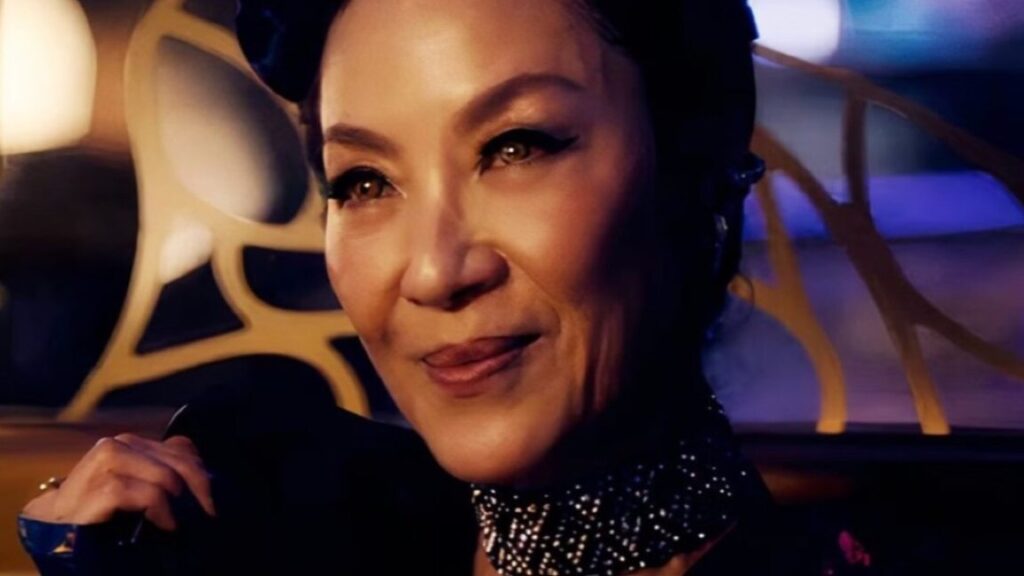
We’ve got a shiny new trailer for Star Trek: Section 31, the long-awaited spinoff film that brings back Michelle Yeoh’s magnificent Phillipa Georgiou from Star Trek: Discovery. The film will give us the backstory for Georgiou’s evil Mirror Universe counterpart, where she was a despotic emperor who murdered millions of her own people.

As previously reported, Yeoh’s stylishly acerbic Georgiou was eventually written out of Discovery, but fans took hope from rumors of a spinoff series featuring the character. That turned into a spinoff film, and we’ll take it. Miku Martineau plays a young Phillipa Georgiou in the film. Meanwhile, Yeoh’s older Georgiou is tasked with protecting the United Federation of Planets as part of a black ops group called Section 31, while dealing with all the blood she’s spilled in her past.

Any hardcore Star Trek fan will tell you that Section 31 was first introduced as an urban legend of sorts in Star Trek: Deep Space Nine. Apparently Ira Steven Behr—who came up with the idea of a secret rogue organization within Starfleet doing shady things to protect the Federation—took inspiration from Commander Sisko’s comment in one episode about how “It’s easy to be a saint in paradise.” The name is taken from Starfleet Charter Article 14, Section 31, which allows Starfleet to take extraordinary measures in the face of extreme threats—including sabotage, assassination, and even biological warfare.

We’ve got a lavish new trailer for Star Trek: Section 31 Read More »

star-trek:-lower-decks-s5-teaser-gives-cerritos-crew-one-last-mission

Star Trek: Lower Decks S5 teaser gives Cerritos crew one last mission

“Lower decks! Lower decks!” The fifth season of Star Trek: Lower Decks will be the animated series’ last (boo!).

Star Trek: Lower Decks is a particular favorite among Ars staffers; it’s arguably the best of the recent crop of Star Trek shows, along with Star Trek: Strange New Worlds. So we were disappointed when we learned that the animated series would be ending with its fifth season. Paramount+ debuted the first teaser for S5 during the Star Trek panel at San Diego Comic-Con over the weekend, along with a teaser for Star Trek: Section 31—a spinoff film from Star Trek: Discovery featuring Michelle Yeoh’s Philippa Georgiou—a clip from Strange New Worlds S3, and the latest news about Star Trek: Starfleet Academy.

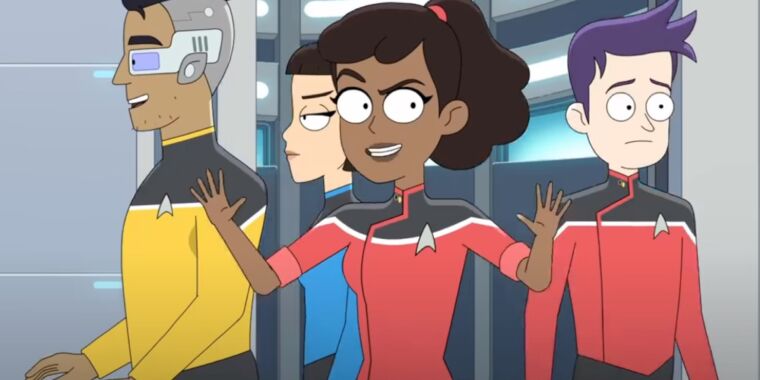
The Lower Decks teaser opens with a suitably nostalgic recap of some of the highlights of the adventures of the plucky crew of the USS Cerritos, inviting viewers to join them for one last adventure. Cue Boimler (Jack Quaid) and Mariner (Tawny Newsome) in voiceover objecting to that description (“Yeah, right, we’re not done voyaging—we’ve hardly even cracked one quadrant yet”). Their S5 mission involves a “quantum fissure” that is causing “space potholes” to pop up all over the Alpha Quadrant (“boo interdimensional portals!”), and the Cerritos crew must close them—while navigating angry Klingons, an Orion war, and who knows what other crazy developments?

The final season of Lower Decks premieres on Paramount+ on October 24, 2024, and will run through December 19.

Newsome is already committed to her first post-Lower Decks project: co-writing the first live-action Star Trek comedy with franchise head honcho Alex Kurtzman. There’s no title yet, but Deadline Hollywood reports that the premise will involve “Federation outsiders serving a gleaming resort planet [who] find out their day-to-day exploits are being broadcast to the entire quadrant.” So, a Star Trek Truman Show? Color us intrigued.

Star Trek: Strange New Worlds S3

A first look at what’s coming in the third season of Star Trek: Strange New Worlds.

Strange New Worlds marked a welcome return to Star Trek’s original episodic structure. The franchise’s Comic-Con panel featured a special sneak peek at the upcoming first season. The clip is a callback to the S2 episode “Charades,” in which a higher-dimensional race, the Kerkohvians, accidentally reconfigured Spock’s half-human, half-Vulcan physiology to that of a full-blooded human—just before Spock was supposed to meet his Vulcan fiancee’s parents.

The S3 clip has the situation reversed: The human crew must make themselves Vulcan to succeed on a new mission. They succeed in record time but aren’t able to change back. The Vulcan versions of the Enterprise crew are hilariously on point, and a long-suffering Spock must endure repeated references to his inferior half-Vulcan status.

We also learned that Cillian O’Sullivan will join the recurring cast as Dr. Roger Korby. ToS fans will recognize that name; it’s a legacy character (originally played by Michael Strong). Korby was a renowned archaeologist in the field of medical archaeology, introduced in the episode “What Are Little Girls Made Of?‘ as Nurse Chapel’s long-missing fiancé. That’s bound to cause problems for SNW‘s Nurse Christine Chapel (Jess Bush), who is currently romantically involved with Spock. SNW S5 will premiere sometime in 2025, and the series has already been renewed for a fourth season

Speaking of Strange New Worlds, remember that fantastic S2 episode (“Substance Rhapsody”) in which a quantum probability field caused the entire crew to break into song? Executive producer Akira Goldman revealed during the panel that he is toying with the idea of a Star Trek stage musical, although he cautioned that “We’re in the very early stages of figuring out whether we can bring a version of [“Substance Rhapsody”] to the stage.”

Star Trek: Lower Decks S5 teaser gives Cerritos crew one last mission Read More »

plucky-crew-of-star-trek:-discovery-seeks-a-strange-artifact-in-s5-trailer

Plucky crew of Star Trek: Discovery seeks a strange artifact in S5 trailer

Their final adventure begins —

“It has been a hell of a journey. But everything ends someday.”

Star Trek: Discovery returns for its fifth and final season after a two-year hiatus.

It’s been two years since we had new episodes of Star Trek: Discovery, which debuted in 2017. Now Paramount+ has dropped the official trailer for the fifth and final season of the spinoff series.

(Spoilers for prior seasons below.)

As previously reported, Sonequa Martin-Green plays Michael Burnham, an orphaned human raised on the planet Vulcan by none other than Sarek (James Frain) and his human wife, Amanda Grayson (Mia Kirshner)—aka, Spock’s (Ethan Peck) parents. So, she is Spock’s adoptive sister. As I’ve written previously, the S2 season-long arc involved the mysterious appearances of a “Red Angel” and a rogue Starfleet AI called Control that sought to wipe out all sentient life in the universe.

The big reveal was that the Red Angel was actually a time-travel suit worn by Michael’s biological mother. She had accidentally jumped 950 years into a bleak future in which Control had achieved its nefarious goal and had been traveling through time, leaving signals (in the form of the visions), hoping to alter that future. In the S2 finale, Michael donned a copy of her mother’s suit to lead Discovery over 900 years into the future. The crew of the Enterprise told Starfleet that Discovery was destroyed in the battle and was ordered never to speak of the ship or her crew again.

In S3, Michael, Discovery, and her crew arrived in the future and found that Control’s plan had been thwarted: Life still exists. But the galaxy was very different thanks to something called The Burn, a catastrophic event that caused all the dilithium in the Milky Way to explode and destroy much of Starfleet in the process. In the aftermath, with no warp drive possible, all the planets had become disconnected and were no longer governed by the Federation. Michael did, however, manage to locate one sole Federation liaison on a remote space station with the help of a new ally, Book (David Ajala).

The Discovery crew reunited with what was left of Starfleet, figured out what caused The Burn, and managed to defeat a rival syndicate known as the Emerald Chain, inspiring planets to start rejoining the Federation. Burnham finally became captain of Discovery after Saru (Doug Jones) opted to return to his home planet of Kaminar for a spell. And we bid a sorrowful farewell to Philippa Georgiou (Michelle Yeoh).

S4 opened with the plucky crew—including Saru as first officer—helping rebuild the Federation and celebrating the reopening of Starfleet Academy. They soon encountered a “gravitational anomaly” five light-years in diameter that destroyed Book’s home planet of Kwejian as it moved through the galaxy. It turned out to be a powerful technology belonging to an alien species with interconnected minds called 10-C, whose language employed mathematical equations. In the S4 finale, the aliens ultimately agreed to turn off their technology, thereby sparing Earth and other Federation planets.

The fifth season was already in development by March 2020, and the plan was to film those episodes back-to-back with S4. Then, the COVID-19 pandemic hit and put those plans on hold. Filming didn’t happen until 2022. While S5 was originally meant to air last year, once Paramount decided to pull the plug and make it the final season, they needed to shoot additional footage in order to wrap up the series properly. Per the official premise:

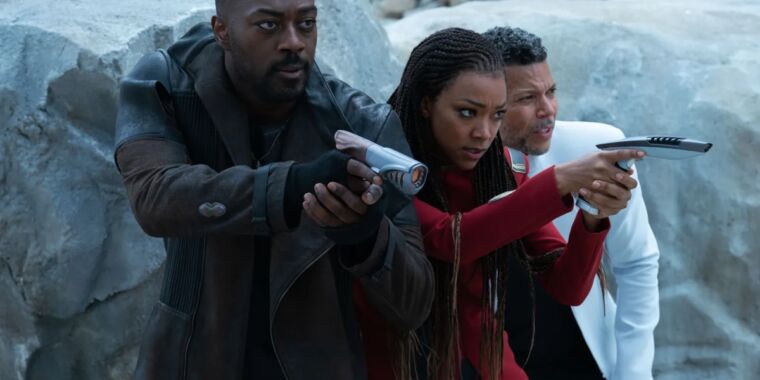
The fifth and final season will find Captain Michael Burnham (Sonequa Martin-Green) and the crew of the U.S.S. Discovery uncovering a mystery that will send them on an epic adventure across the galaxy to find an ancient power whose very existence has been deliberately hidden for centuries. But there are others on the hunt as well… dangerous foes who are desperate to claim the prize for themselves and will stop at nothing to get it.

In addition to Martin-Green, Jones, and Ajala, much of the main cast is returning for S5: Anthony Rapp as Stamets; Mary Wiseman as Tilly; Wilson Cruz as Dr. Culber; Blu del Barrio as Adira Tal; and Callum Keith Rennie as Rayner. Eve Harlow and Elias Toufexis will reprise their recurring roles as Moll and L’ak, respectively. Returning as notable guest stars in S5: Oded Fehr as Starfleet Commander-in-Chief Charles Vance; Chelah Horsdal as Lair Rillak; Tara Rowling as T’Rina; David Cronenberg as Kovich; and Tig Notaro as Jett Reno.

The first two episodes of the fifth and final season of Star Trek: Discovery will premiere on Paramount+ on April 4, 2024; the remaining eight episodes will air weekly after that through May 30.

Listing image by Paramount+

Plucky crew of Star Trek: Discovery seeks a strange artifact in S5 trailer Read More »

debt-laden-warner-bros.-discovery-and-paramount-consider-merger

Debt-laden Warner Bros. Discovery and Paramount consider merger

Game of Thrones

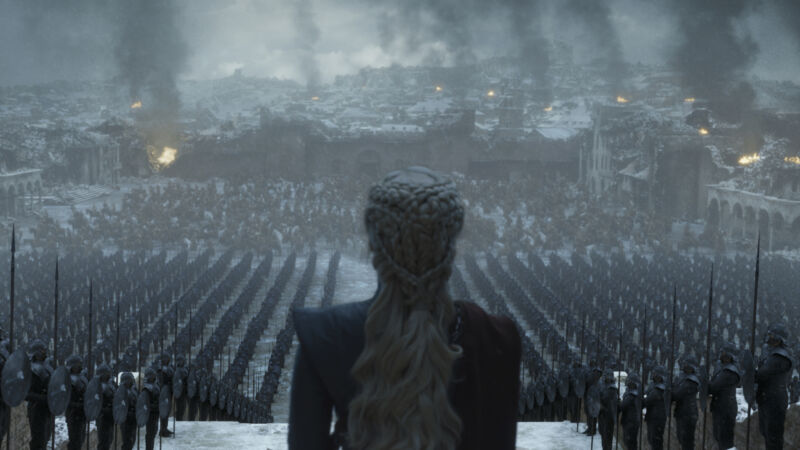
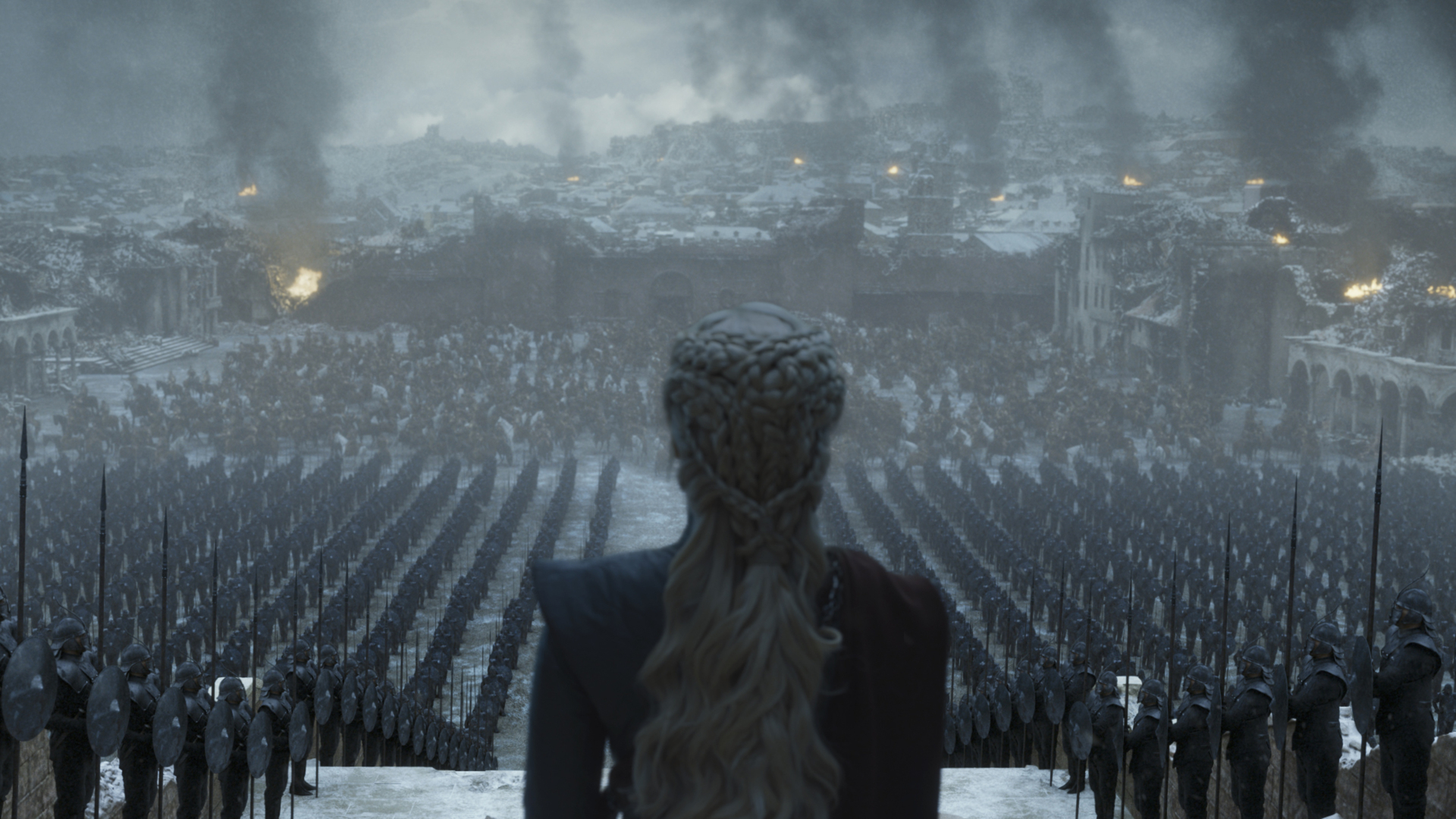
Enlarge / Media firms are looking for allies to help them take the coveted media throne.

The CEOs of Warner Bros. Discovery (WBD) and Paramount Global discussed a potential merger on Tuesday, according to a report from Axios citing “multiple” anonymous sources. No formal talks are underway yet, according to The Wall Street Journal. But the discussions look like the start of consolidation discussions for the media industry during a tumultuous time of forced evolution.

On Wednesday, Axios reported that WBD head David Zaslav and Paramount head Bob Bakish met in Paramount’s New York City headquarters for “several hours.”

Zaslav and Shari Redstone, owner of Paramount’s parent company National Amusements Inc (NAI), have also spoken, Axios claimed.

One of the publication’s sources said a WBD acquisition of NAI, rather than only Paramount Global, is possible.

Talks to unite the likes of Paramount’s film studio, Paramount+ streaming service, and TV networks (including CBS, BET, Nickelodeon, and Showtime) with WBD’s Max streaming service, CNN, Cinemax, and DC Comics properties are reportedly just talks, but Axios said WBD “hired bankers to explore the deal.”

It’s worth noting that WBD will suffer a big tax hit if it engages in merger and acquisition activity before April 8 due to a tax formality related to Discovery’s merger with WarnerMedia (which formed Warner Bros. Discovery) in 2022.

A union of debts

Besides the reported talks being in very early stages, there are reasons to be skeptical about a WBD and Paramount merger. The biggest one? Debt.

The New York Times notes that WBD has $40 billion in debt and $5 billion in free cash flow. Paramount, meanwhile, has $15 billion in debt and a negative cash flow. Zaslav has grown infamous for slashing titles and even enacting layoffs to save costs. But WBD is eyeing greener pastures and declared Max as “getting slightly profitable” in October. Adding more debt to WBD’s plate could be viewed as a step backward.

Additionally, Paramount is even more connected to old, flailing forms of media than WBD, as noted by The Information, which pointed to two-thirds of Paramount’s revenue coming from traditional TV networks.

Antitrust concerns could also impact such a deal.

WBD stocks closed down 5.7 percent, and Paramount’s closed down 2 percent after Axios’ report broke.

Of course, these details about a potential merger may have been reported because WBD and/or Paramount want us to know about it so that they can gauge market reaction and/or entice other media companies to discuss potential deals.

Debt-laden Warner Bros. Discovery and Paramount consider merger Read More »