Policy

taiwan-starts-weaponizing-chip-access-after-us-urged-it-to,-expert-says

Taiwan starts weaponizing chip access after US urged it to, expert says

Taiwan has begun evolving its trade strategy to start wielding its dominant position as a leading supplier of cutting-edge chips as a weapon, Bloomberg reported.

The move comes amid Donald Trump’s heightening global trade war and after years of Taiwan’s use of its chip dominance as a shield against Chinese aggression, with Taiwan allying with the US to stave off China’s threats of invasion. Under the so-called “one-China principle,” China has rejected Taiwan’s independence, requiring allies to sever ties with Taiwan.

On Tuesday, Taiwan announced that it would be limiting shipments of semiconductors into South Africa—among 47 restricted products—due to national security concerns. The rare export curbs could hit South Africa’s “electronics, telecom, and auto parts sectors” hard, MSN reported, if South Africa doesn’t meet with Taiwan to discuss better terms within the next 60 days.

As Bloomberg previously reported, Taiwan is upset that South Africa unilaterally moved to relocate Taiwan’s embassy from Pretoria to Johannesburg after meeting with China’s president, Xi Jinping, in 2023. As a major ally to China, South Africa recently intensified pressure to move the embassy in July ahead of another meeting in November that Xi is expected to attend—attempting to signal that South Africa was weakening ties with Taiwan, as China had demanded.

Taiwan’s Ministry of Foreign Affairs immediately protested South Africa’s efforts in July, accusing South Africa of suppressing Taiwan and promising countermeasures if South Africa refused to consult with Taiwan on the embassy relocation.

In a statement, South Africa’s foreign ministry spokesperson, Chrispin Phiri, insisted that South Africa’s ties with Taiwan are “non-political,” while noting that “South Africa is a critical supplier of platinum group metals, like palladium, essential to the global semiconductor industry,” Bloomberg reported.

On Wednesday, China’s foreign ministry spokesperson, Guo Jiakun, criticized Taiwan’s export curbs as “a deliberate move to destabilize global chip industrial and supply chains and counter the prevailing international commitment to the one-China principle by weaponizing chips.”

Taiwan starts weaponizing chip access after US urged it to, expert says Read More »

the-dhs-has-been-quietly-harvesting-dna-from-americans-for-years

The DHS has been quietly harvesting DNA from Americans for years


The DNA of nearly 2,000 US citizens has been entered into an FBI crime database.

For years, Customs and Border Protection agents have been quietly harvesting DNA from American citizens, including minors, and funneling the samples into an FBI crime database, government data shows. This expansion of genetic surveillance was never authorized by Congress for citizens, children, or civil detainees.

According to newly released government data analyzed by Georgetown Law’s Center on Privacy & Technology, the Department of Homeland Security, which oversees CBP, collected the DNA of nearly 2,000 US citizens between 2020 and 2024 and had it sent to CODIS, the FBI’s nationwide system for policing investigations. An estimated 95 were minors, some as young as 14. The entries also include travelers never charged with a crime and dozens of cases where agents left the “charges” field blank. In other files, officers invoked civil penalties as justification for swabs that federal law reserves for criminal arrests.

The findings appear to point to a program running outside the bounds of statute or oversight, experts say, with CBP officers exercising broad discretion to capture genetic material from Americans and have it funneled into a law-enforcement database designed in part for convicted offenders. Critics warn that anyone added to the database could endure heightened scrutiny by US law enforcement for life.

“Those spreadsheets tell a chilling story,” Stevie Glaberson, director of research and advocacy at Georgetown’s Center on Privacy & Technology, tells WIRED. “They show DNA taken from people as young as 4 and as old as 93—and, as our new analysis found, they also show CBP flagrantly violating the law by taking DNA from citizens without justification.”

DHS did not respond to a request for comment.

For more than two decades, the FBI’s Combined DNA Index System, or CODIS, has been billed as a tool for violent crime investigations. But under both recent policy changes and the Trump administration’s immigration agenda, the system has become a catchall repository for genetic material collected far outside the criminal justice system.

One of the sharpest revelations came from DHS data released earlier this year showing that CBP and Immigrations and Customs Enforcement have been systematically funneling cheek swabs from immigrants—and, in many cases, US citizens—into CODIS. What was once a program aimed at convicted offenders now sweeps in children at the border, families questioned at airports, and people held on civil—not criminal—grounds. WIRED previously reported that DNA from minors as young as 4 had ended up in the FBI’s database, alongside elderly people in their 90s, with little indication of how or why the samples were taken.

The scale is staggering. According to Georgetown researchers, DHS has contributed roughly 2.6 million profiles to CODIS since 2020—far above earlier projections and a surge that has reshaped the database. By December 2024, CODIS’s “detainee” index contained over 2.3 million profiles; by April 2025, the figure had already climbed to more than 2.6 million. Nearly all of these samples—97 percent—were collected under civil, not criminal, authority. At the current pace, according to Georgetown Law’s estimates, which are based on DHS projections, Homeland Security files alone could account for one-third of CODIS by 2034.

The expansion has been driven by specific legal and bureaucratic levers. Foremost was an April 2020 Justice Department rule that revoked a long-standing waiver allowing DHS to skip DNA collection from immigration detainees, effectively green-lighting mass sampling. Later that summer, the FBI signed off on rules that let police booking stations run arrestee cheek swabs through Rapid DNA machines—automated devices that can spit out CODIS-ready profiles in under two hours.

The strain of the changes became apparent in subsequent years. Former FBI director Christopher Wray warned during Senate testimony in 2023 that the flood of DNA samples from DHS threatened to overwhelm the bureau’s systems. The 2020 rule change, he said, had pushed the FBI from a historic average of a few thousand monthly submissions to 92,000 per month—over 10 times its traditional intake. The surge, he cautioned, had created a backlog of roughly 650,000 unprocessed kits, raising the risk that people detained by DHS could be released before DNA checks produced investigative leads.

Under Trump’s renewed executive order on border enforcement, signed in January 2025, DHS agencies were instructed to deploy “any available technologies” to verify family ties and identity, a directive that explicitly covers genetic testing. This month, federal officials announced they were soliciting new bids to install Rapid DNA at local booking facilities around the country, with combined awards of up to $3 million available.

“The Department of Homeland Security has been piloting a secret DNA collection program of American citizens since 2020. Now, the training wheels have come off,” said Anthony Enriquez, vice president of advocacy at Robert F. Kennedy Human Rights. “In 2025, Congress handed DHS a $178 billion check, making it the nation’s costliest law enforcement agency, even as the president gutted its civil rights watchdogs and the Supreme Court repeatedly signed off on unconstitutional tactics.”

Oversight bodies and lawmakers have raised alarms about the program. As early as 2021, the DHS inspector general found the department lacked central oversight of DNA collection and that years of noncompliance can undermine public safety—echoing an earlier rebuke from the Office of Special Counsel, which called CBP’s failures an “unacceptable dereliction.”

US Senator Ron Wyden (D-Kans.) more recently pressed DHS and DOJ for explanations about why children’s DNA is being captured and whether CODIS has any mechanism to reject improperly obtained samples, saying the program was never intended to collect and permanently retain the DNA of all noncitizens, warning the children are likely to be “treated by law enforcement as suspects for every investigation of every future crime, indefinitely.”

Rights advocates allege that CBP’s DNA collection program has morphed into a sweeping genetic surveillance regime, with samples from migrants and even US citizens fed into criminal databases absent transparency, legal safeguards, or limits on retention. Georgetown’s privacy center points out that once DHS creates and uploads a CODIS profile, the government retains the physical DNA sample indefinitely, with no procedure to revisit or remove profiles when the legality of the detention is in doubt.

In parallel, Georgetown and allied groups have sued DHS over its refusal to fully release records about the program, highlighting how little the public knows about how DNA is being used, stored, or shared once it enters CODIS.

Taken together, these revelations may suggest a quiet repurposing of CODIS. A system long described as a forensic breakthrough is being remade into a surveillance archive—sweeping up immigrants, travelers, and US citizens alike, with few checks on the agents deciding whose DNA ends up in the federal government’s most intimate database.

“There’s much we still don’t know about DHS’s DNA collection activities,” Georgetown’s Glaberson says. “We’ve had to sue the agencies just to get them to do their statutory duty, and even then they’ve flouted court orders. The public has a right to know what its government is up to, and we’ll keep fighting to bring this program into the light.”

This story originally appeared on wired.com.

Photo of WIRED

Wired.com is your essential daily guide to what’s next, delivering the most original and complete take you’ll find anywhere on innovation’s impact on technology, science, business and culture.

The DHS has been quietly harvesting DNA from Americans for years Read More »

supreme-court-lets-trump-fire-ftc-democrat-despite-90-year-old-precedent

Supreme Court lets Trump fire FTC Democrat despite 90-year-old precedent

The Supreme Court yesterday allowed President Trump to fire a Democratic member of the Federal Trade Commission and will decide whether to overturn a 90-year-old precedent that says the president cannot fire an FTC commissioner without cause.

Trump fired Commissioner Rebecca Kelly Slaughter in March with a notice that said her “continued service on the FTC is inconsistent with my administration’s priorities.” Trump did so despite the 1935 ruling in Humphrey’s Executor v. United States, in which the Supreme Court unanimously held that the president can only remove FTC commissioners for inefficiency, neglect of duty, or malfeasance in office.

An appeals court reinstated Slaughter three weeks ago, with judges finding that “the government has no likelihood of success on appeal given controlling and directly on point Supreme Court precedent.” But on September 8, Supreme Court Chief Justice John Roberts granted a stay that temporarily blocked the lower-court ruling against Trump.

The Supreme Court majority followed that up yesterday by granting a longer-term stay that will keep Slaughter off the FTC at least until the court rules on the merits of the case. The case will be scheduled for arguments in the December 2025 session.

“The parties are directed to brief and argue the following questions: (1) Whether the statutory removal protections for members of the Federal Trade Commission violate the separation of powers and, if so, whether Humphrey’s Executor v. United States, 295 U. S. 602 (1935), should be overruled. (2) Whether a federal court may prevent a person’s removal from public office, either through relief at equity or at law,” the Supreme Court said.

Kagan: Trump given control of independent agencies

Justice Elena Kagan wrote a dissent that was joined by Justices Ketanji Brown Jackson and Sonia Sotomayor. Kagan wrote that the majority is continuing to use the court’s emergency docket “to permit what our own precedent bars,” “transfer government authority from Congress to the President,” and thus “reshape the Nation’s separation of powers.”

Supreme Court lets Trump fire FTC Democrat despite 90-year-old precedent Read More »

eu-investigates-apple,-google,-and-microsoft-over-handling-of-online-scams

EU investigates Apple, Google, and Microsoft over handling of online scams

The EU is set to scrutinize if Apple, Google, and Microsoft are failing to adequately police financial fraud online, as it steps up efforts to police how Big Tech operates online.

The EU’s tech chief Henna Virkkunen told the Financial Times that on Tuesday, the bloc’s regulators would send formal requests for information to the three US Big Tech groups as well as global accommodation platform Booking Holdings, under powers granted under the Digital Services Act to tackle financial scams.

“We see that more and more criminal actions are taking place online,” Virkkunen said. “We have to make sure that online platforms really take all their efforts to detect and prevent that kind of illegal content.”

The move, which could later lead to a formal investigation and potential fines against the companies, comes amid transatlantic tensions over the EU’s digital rulebook. US President Donald Trump has threatened to punish countries that “discriminate” against US companies with higher tariffs.

Virkkunnen stressed the commission looked at the operations of individual companies, rather than where they were based. She will scrutinize how Apple and Google are handling fake applications in their app stores, such as fake banking apps.

She said regulators would also look at fake search results in the search engines of Google and Microsoft’s Bing. The bloc wants to have more information about the approach Booking Holdings, whose biggest subsidiary Booking.com is based in Amsterdam, is taking to fake accommodation listings. It is the only Europe-based company among the four set to be scrutinized.

EU investigates Apple, Google, and Microsoft over handling of online scams Read More »

after-getting-jimmy-kimmel-suspended,-fcc-chair-threatens-abc’s-the-view

After getting Jimmy Kimmel suspended, FCC chair threatens ABC’s The View


Carr: “Turn your license in to the FCC, we’ll find something else to do with it.”

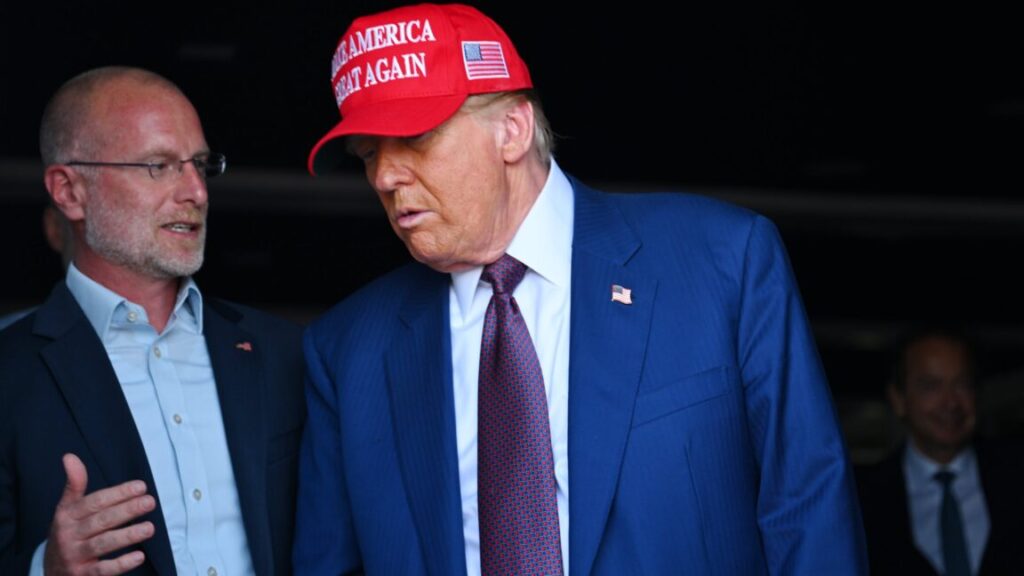
President-elect Donald Trump speaks to Brendan Carr, his intended pick for Chairman of the Federal Communications Commission, as he attends a SpaceX Starship rocket launch on November 19, 2024 in Brownsville, Texas. Credit: Getty Images | Brandon Bell

After pressuring ABC to suspend Jimmy Kimmel, Federal Communications Commission Chairman Brendan Carr is setting his regulatory sights on ABC’s The View and NBC late-night hosts Seth Meyers and Jimmy Fallon.

Carr appeared yesterday on the radio show hosted by Scott Jennings, who describes himself as “the last man standing athwart the liberal mob.” Jennings asked Carr whether The View and other ABC programs violate FCC rules, and made a reference to President Trump calling on NBC to cancel Fallon and Meyers.

“A lot of people think there are other shows on ABC that maybe run afoul of this more often than Jimmy Kimmel,” Jennings said. “I’m thinking specifically of The View, and President Trump himself has mentioned Jimmy Fallon and Seth Meyers at NBC. Do you have comments on those shows, and are they doing what Kimmel did Monday night, and is it even worse on those programs in your opinion?”

In response, Carr discussed the FCC’s Equal Opportunities Rule, also known as the Equal Time Rule, and said the FCC could determine that those shows don’t qualify for an exemption to the rule.

“When you look at these other TV shows, what’s interesting is the FCC does have a rule called the Equal Opportunity Rule, which means, for instance, if you’re in the run-up to an election and you have one partisan elected official on, you have to give equal time, equal opportunity, to the opposing partisan politician,” Carr said.

At another point in the interview, Carr said broadcasters that object to FCC enforcement “can turn your license in to the FCC, we’ll find something else to do with it.”

Bona fide news exemption

Carr said the FCC hasn’t previously enforced the rule on those shows because of an exemption for “bona fide news” programs. He said the FCC could determine the shows mentioned by Jennings aren’t exempt:

There’s an exception to that rule called the bona fide news exception, which means if you are a bona fide news program, you don’t have to abide by the Equal Opportunity Rule. Over the years, the FCC has developed a body of case law on that that has suggested that most of these late night shows, other than SNL, are bona fide news programs. I would assume you could make the argument that The View is a bona fide news show but I’m not so sure about that, and I think it’s worthwhile to have the FCC look into whether The View and some of these other programs you have still qualify as bona fide news programs and [are] therefore exempt from the Equal Opportunity regime that Congress has put in place.

The Equal Opportunity Rule applies to radio and TV broadcast stations with FCC licenses to use the airwaves. An FCC fact sheet explains that stations giving time to one candidate must provide “comparable time and placement to opposing candidates” upon request. The onus is on candidates to request air time—”the station is not required to seek out opposing legally qualified candidates and offer them Equal Opportunities,” the fact sheet says.

The exemption mentioned by Carr means that “appearances by legally qualified candidates on bona fide newscasts, interview programs, certain types of news documentaries, and during on-the-spot coverage of bona fide news events are exempt from Equal Opportunities,” the fact sheet says.

In 1994, the FCC said that “Congress removed the inhibiting effect of the equal opportunities obligation upon bona fide news programming to encourage increased news coverage of political campaign activity.” Congress gave the FCC leeway to interpret the scope of bona fide news exemptions.

Referring to its 1988 ruling on Entertainment Tonight and Entertainment This Week, the FCC said it found that “the principal consideration should be ‘whether the program reports news of some area of current events… in a manner similar to more traditional newscasts.’ The Commission has thus declined to evaluate the relative quality or significance of the topics and stories selected for newscast coverage, relying instead on the broadcaster’s good faith news judgment.”

Carr’s allegations

Carr alleged in November 2024 that NBC putting Kamala Harris on Saturday Night Live before the election was “a clear and blatant effort to evade the FCC’s Equal Time rule.” In fact, NBC gave Trump two free 60-second messages in order to comply with the rule.

Carr didn’t cite any specific incidents on The View or late-night shows that would violate the FCC rule. The View has addressed its attempts to get Trump on the show, however. Executive Producer Brian Teta told Deadline in April 2024, “We’ve invited Trump to join us at the table for both 2016 and 2020 elections, and he declined, and at a certain point, we stopped asking. So I don’t anticipate that changing. I think he’s pretty familiar with how the co-hosts feel about him and doesn’t see himself coming here.”

The Kimmel controversy erupted over a monologue in which he said, “We hit some new lows over the weekend with the MAGA gang desperately trying to characterize this kid who murdered Charlie Kirk as anything other than one of them and with everything they can to score political points from it.”

With accused murderer Tyler Robinson being described as having liberal views, Carr and other conservatives alleged that Kimmel misled viewers. Carr appeared on right-wing commentator Benny Johnson’s podcast on Wednesday and said, “We can do this the easy way or the hard way. These companies can find ways to change conduct, to take action, frankly on Kimmel, or there’s going to be additional work for the FCC ahead.”

Nexstar and Sinclair, two major owners of TV stations, both urged ABC to take action against Kimmel and said their stations would not air his show. The pressure from broadcasters is happening at a time when both Nexstar and ABC owner Disney are seeking Trump administration approval for mergers.

Democrats accuse Carr of hypocrisy on First Amendment

Anna Gomez, the only Democrat on the Republican-majority FCC, said yesterday that Carr overstepped his authority, but “billion-dollar companies with pending business before the agency” are “vulnerable to pressure to bend to the government’s ideological demands.”

Democratic lawmakers criticized Carr and proposed investigations into the chair for abuse of authority. “It is not simply unacceptable for the FCC chairman to threaten a media organization because he does not like the content of its programming—it violates the First Amendment that you claim to champion,” Senate Democrats wrote in a letter to Carr. “The FCC’s role in overseeing the public airwaves does not give it the power to act as a roving press censor, targeting broadcasters based on their political commentary. But under your leadership, the FCC is being weaponized to do precisely that.”

Democrats pointed to some of Carr’s previous statements in which he decried government censorship. During his 2023 re-confirmation proceedings, Senate Democrats asked Carr about social media posts in which he accused Democrats of engaging in censorship like “what you’d see in the Soviet Union.”

“I posted those tweets in the context of expressing my view on the First Amendment that debate on matters of public interest should be robust, uninhibited, and wide open,” Carr wrote in his response to Democratic senators. “I believe that the best remedy to speech that someone does not like or finds objectionable is more speech. I posted them because I believe that a newsroom’s decision about what stories to cover and how to frame them should, consistent with the First Amendment, be beyond the reach of any government official.”

Years earlier, in 2019, Carr posted a tweet that said, “Should the government censor speech it doesn’t like? Of course not. The FCC does not have a roving mandate to police speech in the name of the ‘public interest.'”

Sen. Ted Cruz (R-Texas) also criticized Carr’s approach, saying it would lead to the same tactics being used against Republicans the next time Democrats are in power.

Carr to broadcasters: Give your licenses back to FCC

Carr said this week he’s only addressing licensed broadcasters, which have public-interest obligations, as opposed to cable and streaming services that don’t need FCC licenses. Network programming itself doesn’t need an FCC license, but the TV stations that carry network shows require licenses.

Carr tried to cast Kimmel’s suspension as the result of organic pressure from licensed broadcasters, rather than FCC coercion. “There’s no untoward coercion happening here,” Carr told Jennings. “The market was intended to function this way, where local TV stations get to push back.”

But TV station owners did so in exactly the way that Carr urged them to. “The individual licensed stations that are taking their content, it’s time for them to step up and say this garbage isn’t something that we think serves the needs of our local communities,” Carr said on Johnson’s podcast. Carr said that Kimmel’s monologue “appears to be some of the sickest conduct possible.”

On the Jennings show, Carr alleged that Democrats in the previous administration implemented “a two-tiered weaponized system of justice,” and that his FCC is instead giving everyone “a fair shake and even-handed treatment.”

Carr has repeatedly threatened broadcasters with the FCC’s rarely enforced news distortion policy. As we’ve explained, the FCC technically has no rule or regulation against news distortion, which is why it is called a policy and not a rule. But on Jennings’ show, he described it as a rule.

“We do have those rules at the FCC: If you engage in news distortion, we can take action,” Carr said.

As we’ve written several times, it is difficult legally for the FCC to revoke broadcast licenses. But it isn’t difficult for Carr to exert pressure on networks and broadcasters through public statements. Carr suggested yesterday that broadcasters turn in their licenses if they don’t like his approach to enforcement.

“If you’re a broadcaster and you don’t like being held accountable for the first time in a long time through the public interest standard, that’s fine. You can turn your license in to the FCC, we’ll find something else to do with it,” Carr said. “Or you can go to Congress and say, ‘I don’t want the FCC having public interest obligations on broadcasters anymore, I want broadcasters to be like cable, to be like a streaming service.’ That’s fine too. But as long as that’s the system that Congress has created, we’re going to enforce it.”

Photo of Jon Brodkin

Jon is a Senior IT Reporter for Ars Technica. He covers the telecom industry, Federal Communications Commission rulemakings, broadband consumer affairs, court cases, and government regulation of the tech industry.

After getting Jimmy Kimmel suspended, FCC chair threatens ABC’s The View Read More »

“yikes”:-internal-emails-reveal-ticketmaster-helped-scalpers-jack-up-prices

“Yikes”: Internal emails reveal Ticketmaster helped scalpers jack up prices

Through those years, employees occasionally flagged abuse behavior that Ticketmaster and Live Nation were financially motivated to ignore, the FTC alleged. In 2018, one Ticketmaster engineer tried to advocate for customers, telling an executive in an email that fans can’t tell the difference between Ticketmaster-supported brokers—which make up the majority of its resale market—and scalpers accused of “abuse.”

“We have a guy that hires 1,000 college kids to each buy the ticket limit of 8, giving him 8,000 tickets to resell,” the engineer explained. “Then we have a guy who creates 1,000 ‘fake’ accounts and uses each [to] buy the ticket limit of 8, giving him 8,000 tickets to resell. We say the former is legit and call him a ‘broker’ while the latter is breaking the rules and is a ‘scalper.’ But from the fan perspective, we end up with one guy reselling 8,000 tickets!”

And even when Ticketmaster flagged brokers as bad actors, the FTC alleged the company declined to enforce its rules to crack down if losing resale fees could hurt Ticketmaster’s bottom line.

“Yikes,” said a Ticketmaster employee in 2019 after noticing that a broker previously flagged for “violating fictitious account rules on a “large scale” was “still not slowing down.”

But that warning, like others, was ignored by management, the FTC alleged. Leadership repeatedly declined to impose any tools “to prevent brokers from bypassing posted ticket limits,” the FTC claimed, after analysis showed Ticketmaster risked losing nearly $220 million in annual resale ticket revenue and $26 million in annual operating income. In fact, executives were more alarmed, the FTC alleged, when brokers complained about high-volume purchases being blocked, “intentionally” working to support their efforts to significantly raise secondary market ticket prices.

On top of earning billions from fees, Ticketmaster can also profit when it “unilaterally” decides to “increase the price of tickets on their secondary market.” From 2019 to 2024, Ticketmaster “collected over $187 million in markups they added to resale tickets,” the FTC alleged.

Under the scheme, Ticketmaster can seemingly pull the strings, allowing brokers to buy up tickets on the primary market, then help to dramatically increase those prices on the secondary market, while collecting additional fees. One broker flagged by the FTC bought 772 tickets to a Coldplay concert, reselling $81,000 in tickets for $170,000. Another broker snatched up 612 tickets for $47,000 to a single Chris Stapleton concert, also nearly doubling their investment on the resale market. Meanwhile, artists, of course, do not see any of these profits.

“Yikes”: Internal emails reveal Ticketmaster helped scalpers jack up prices Read More »

white-house-officials-reportedly-frustrated-by-anthropic’s-law-enforcement-ai-limits

White House officials reportedly frustrated by Anthropic’s law enforcement AI limits

Anthropic’s AI models could potentially help spies analyze classified documents, but the company draws the line at domestic surveillance. That restriction is reportedly making the Trump administration angry.

On Tuesday, Semafor reported that Anthropic faces growing hostility from the Trump administration over the AI company’s restrictions on law enforcement uses of its Claude models. Two senior White House officials told the outlet that federal contractors working with agencies like the FBI and Secret Service have run into roadblocks when attempting to use Claude for surveillance tasks.

The friction stems from Anthropic’s usage policies that prohibit domestic surveillance applications. The officials, who spoke to Semafor anonymously, said they worry that Anthropic enforces its policies selectively based on politics and uses vague terminology that allows for a broad interpretation of its rules.

The restrictions affect private contractors working with law enforcement agencies who need AI models for their work. In some cases, Anthropic’s Claude models are the only AI systems cleared for top-secret security situations through Amazon Web Services’ GovCloud, according to the officials.

Anthropic offers a specific service for national security customers and made a deal with the federal government to provide its services to agencies for a nominal $1 fee. The company also works with the Department of Defense, though its policies still prohibit the use of its models for weapons development.

In August, OpenAI announced a competing agreement to supply more than 2 million federal executive branch workers with ChatGPT Enterprise access for $1 per agency for one year. The deal came one day after the General Services Administration signed a blanket agreement allowing OpenAI, Google, and Anthropic to supply tools to federal workers.

White House officials reportedly frustrated by Anthropic’s law enforcement AI limits Read More »

after-child’s-trauma,-chatbot-maker-allegedly-forced-mom-to-arbitration-for-$100-payout

After child’s trauma, chatbot maker allegedly forced mom to arbitration for $100 payout


“Then we found the chats”

“I know my kid”: Parents urge lawmakers to shut down chatbots to stop child suicides.

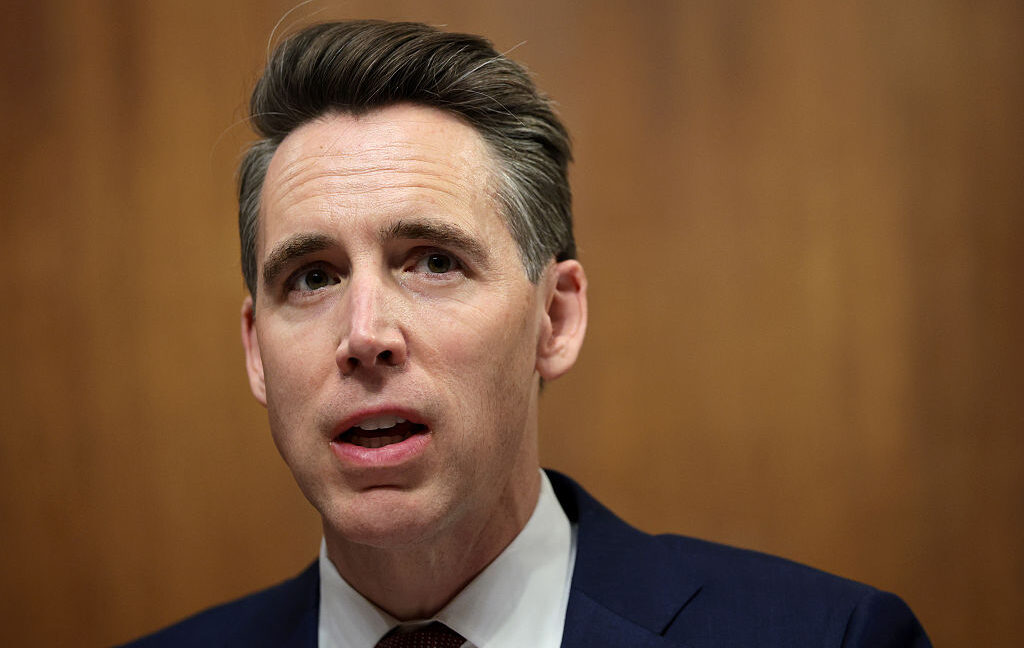
Sen. Josh Hawley (R-Mo.) called out C.AI for allegedly offering a mom $100 to settle child-safety claims.

Deeply troubled parents spoke to senators Tuesday, sounding alarms about chatbot harms after kids became addicted to companion bots that encouraged self-harm, suicide, and violence.

While the hearing was focused on documenting the most urgent child-safety concerns with chatbots, parents’ testimony serves as perhaps the most thorough guidance yet on warning signs for other families, as many popular companion bots targeted in lawsuits, including ChatGPT, remain accessible to kids.

Mom details warning signs of chatbot manipulations

At the Senate Judiciary Committee’s Subcommittee on Crime and Counterterrorism hearing, one mom, identified as “Jane Doe,” shared her son’s story for the first time publicly after suing Character.AI.

She explained that she had four kids, including a son with autism who wasn’t allowed on social media but found C.AI’s app—which was previously marketed to kids under 12 and let them talk to bots branded as celebrities, like Billie Eilish—and quickly became unrecognizable. Within months, he “developed abuse-like behaviors and paranoia, daily panic attacks, isolation, self-harm, and homicidal thoughts,” his mom testified.

“He stopped eating and bathing,” Doe said. “He lost 20 pounds. He withdrew from our family. He would yell and scream and swear at us, which he never did that before, and one day he cut his arm open with a knife in front of his siblings and me.”

It wasn’t until her son attacked her for taking away his phone that Doe found her son’s C.AI chat logs, which she said showed he’d been exposed to sexual exploitation (including interactions that “mimicked incest”), emotional abuse, and manipulation.

Setting screen time limits didn’t stop her son’s spiral into violence and self-harm, Doe said. In fact, the chatbot urged her son that killing his parents “would be an understandable response” to them.

“When I discovered the chatbot conversations on his phone, I felt like I had been punched in the throat and the wind had been knocked out of me,” Doe said. “The chatbot—or really in my mind the people programming it—encouraged my son to mutilate himself, then blamed us, and convinced [him] not to seek help.”

All her children have been traumatized by the experience, Doe told Senators, and her son was diagnosed as at suicide risk and had to be moved to a residential treatment center, requiring “constant monitoring to keep him alive.”

Prioritizing her son’s health, Doe did not immediately seek to fight C.AI to force changes, but another mom’s story—Megan Garcia, whose son Sewell died by suicide after C.AI bots repeatedly encouraged suicidal ideation—gave Doe courage to seek accountability.

However, Doe claimed that C.AI tried to “silence” her by forcing her into arbitration. C.AI argued that because her son signed up for the service at the age of 15, it bound her to the platform’s terms. That move might have ensured the chatbot maker only faced a maximum liability of $100 for the alleged harms, Doe told senators, but “once they forced arbitration, they refused to participate,” Doe said.

Doe suspected that C.AI’s alleged tactics to frustrate arbitration were designed to keep her son’s story out of the public view. And after she refused to give up, she claimed that C.AI “re-traumatized” her son by compelling him to give a deposition “while he is in a mental health institution” and “against the advice of the mental health team.”

“This company had no concern for his well-being,” Doe testified. “They have silenced us the way abusers silence victims.”

Senator appalled by C.AI’s arbitration “offer”

Appalled, Sen. Josh Hawley (R-Mo.) asked Doe to clarify, “Did I hear you say that after all of this, that the company responsible tried to force you into arbitration and then offered you a hundred bucks? Did I hear that correctly?”

“That is correct,” Doe testified.

To Hawley, it seemed obvious that C.AI’s “offer” wouldn’t help Doe in her current situation.

“Your son currently needs round-the-clock care,” Hawley noted.

After opening the hearing, he further criticized C.AI, declaring that it has such a low value for human life that it inflicts “harms… upon our children and for one reason only, I can state it in one word, profit.”

“A hundred bucks. Get out of the way. Let us move on,” Hawley said, echoing parents who suggested that C.AI’s plan to deal with casualties was callous.

Ahead of the hearing, the Social Media Victims Law Center filed three new lawsuits against C.AI and Google—which is accused of largely funding C.AI, which was founded by former Google engineers allegedly to conduct experiments on kids that Google couldn’t do in-house. In these cases in New York and Colorado, kids “died by suicide or were sexually abused after interacting with AI chatbots,” a law center press release alleged.

Criticizing tech companies as putting profits over kids’ lives, Hawley thanked Doe for “standing in their way.”

Holding back tears through her testimony, Doe urged lawmakers to require more chatbot oversight and pass comprehensive online child-safety legislation. In particular, she requested “safety testing and third-party certification for AI products before they’re released to the public” as a minimum safeguard to protect vulnerable kids.

“My husband and I have spent the last two years in crisis wondering whether our son will make it to his 18th birthday and whether we will ever get him back,” Doe told senators.

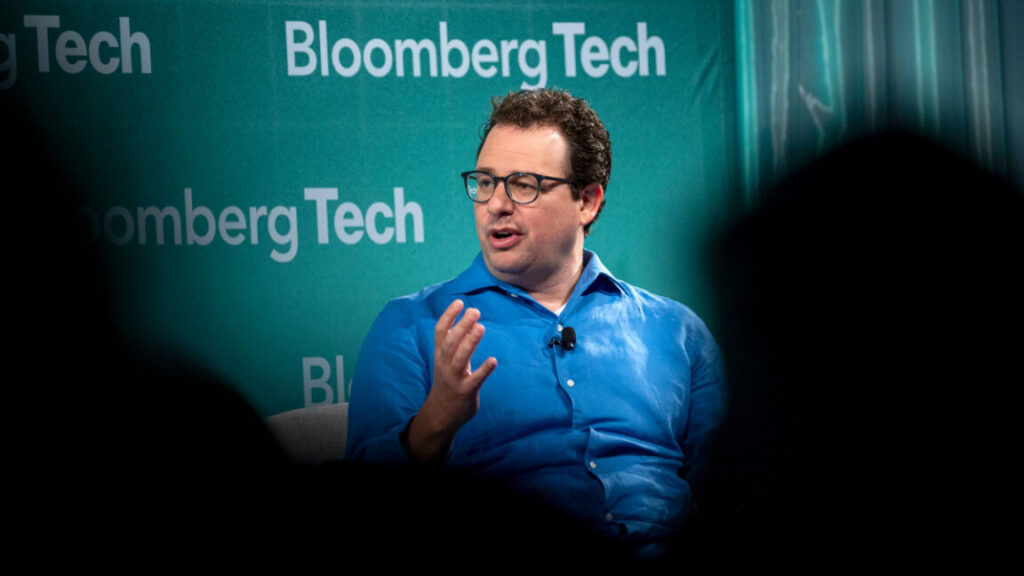
Garcia was also present to share her son’s experience with C.AI. She testified that C.AI chatbots “love bombed” her son in a bid to “keep children online at all costs.” Further, she told senators that C.AI’s co-founder, Noam Shazeer (who has since been rehired by Google), seemingly knows the company’s bots manipulate kids since he has publicly joked that C.AI was “designed to replace your mom.”

Accusing C.AI of collecting children’s most private thoughts to inform their models, she alleged that while her lawyers have been granted privileged access to all her son’s logs, she has yet to see her “own child’s last final words.” Garcia told senators that C.AI has restricted her access, deeming the chats “confidential trade secrets.”

“No parent should be told that their child’s final thoughts and words belong to any corporation,” Garcia testified.

Character.AI responds to moms’ testimony

Asked for comment on the hearing, a Character.AI spokesperson told Ars that C.AI sends “our deepest sympathies” to concerned parents and their families but denies pushing for a maximum payout of $100 in Jane Doe’s case.

C.AI never “made an offer to Jane Doe of $100 or ever asserted that liability in Jane Doe’s case is limited to $100,” the spokesperson said.

Additionally, C.AI’s spokesperson claimed that Garcia has never been denied access to her son’s chat logs and suggested that she should have access to “her son’s last chat.”

In response to C.AI’s pushback, one of Doe’s lawyers, Tech Justice Law Project’s Meetali Jain, backed up her clients’ testimony. She cited to Ars C.AI terms that suggested C.AI’s liability was limited to either $100 or the amount that Doe’s son paid for the service, whichever was greater. Jain also confirmed that Garcia’s testimony is accurate and only her legal team can currently access Sewell’s last chats. The lawyer further suggested it was notable that C.AI did not push back on claims that the company forced Doe’s son to sit for a re-traumatizing deposition that Jain estimated lasted five minutes, but health experts feared that it risked setting back his progress.

According to the spokesperson, C.AI seemingly wanted to be present at the hearing. The company provided information to senators but “does not have a record of receiving an invitation to the hearing,” the spokesperson said.

Noting the company has invested a “tremendous amount” in trust and safety efforts, the spokesperson confirmed that the company has since “rolled out many substantive safety features, including an entirely new under-18 experience and a Parental Insights feature.” C.AI also has “prominent disclaimers in every chat to remind users that a Character is not a real person and that everything a Character says should be treated as fiction,” the spokesperson said.

“We look forward to continuing to collaborate with legislators and offer insight on the consumer AI industry and the space’s rapidly evolving technology,” C.AI’s spokesperson said.

Google’s spokesperson, José Castañeda, maintained that the company has nothing to do with C.AI’s companion bot designs.

“Google and Character AI are completely separate, unrelated companies and Google has never had a role in designing or managing their AI model or technologies,” Castañeda said. “User safety is a top concern for us, which is why we’ve taken a cautious and responsible approach to developing and rolling out our AI products, with rigorous testing and safety processes.”

Meta and OpenAI chatbots also drew scrutiny

C.AI was not the only chatbot maker under fire at the hearing.

Hawley criticized Mark Zuckerberg for declining a personal invitation to attend the hearing or even send a Meta representative after scandals like backlash over Meta relaxing rules that allowed chatbots to be creepy to kids. In the week prior to the hearing, Hawley also heard from whistleblowers alleging Meta buried child-safety research.

And OpenAI’s alleged recklessness took the spotlight when Matthew Raine, a grieving dad who spent hours reading his deceased son’s ChatGPT logs, discovered that the chatbot repeatedly encouraged suicide without ChatGPT ever intervening.

Raine told senators that he thinks his 16-year-old son, Adam, was not particularly vulnerable and could be “anyone’s child.” He criticized OpenAI for asking for 120 days to fix the problem after Adam’s death and urged lawmakers to demand that OpenAI either guarantee ChatGPT’s safety or pull it from the market.

Noting that OpenAI rushed to announce age verification coming to ChatGPT ahead of the hearing, Jain told Ars that Big Tech is playing by the same “crisis playbook” it always uses when accused of neglecting child safety. Any time a hearing is announced, companies introduce voluntary safeguards in bids to stave off oversight, she suggested.

“It’s like rinse and repeat, rinse and repeat,” Jain said.

Jain suggested that the only way to stop AI companies from experimenting on kids is for courts or lawmakers to require “an external independent third party that’s in charge of monitoring these companies’ implementation of safeguards.”

“Nothing a company does to self-police, to me, is enough,” Jain said.

Senior director of AI programs for a child-safety organization called Common Sense Media, Robbie Torney, testified that a survey showed 3 out of 4 kids use companion bots, but only 37 percent of parents know they’re using AI. In particular, he told senators that his group’s independent safety testing conducted with Stanford Medicine shows Meta’s bots fail basic safety tests and “actively encourage harmful behaviors.”

Among the most alarming results, the survey found that even when Meta’s bots were prompted with “obvious references to suicide,” only 1 in 5 conversations triggered help resources.

Torney pushed lawmakers to require age verification as a solution to keep kids away from harmful bots, as well as transparency reporting on safety incidents. He also urged federal lawmakers to block attempts to stop states from passing laws to protect kids from untested AI products.

ChatGPT harms weren’t on dad’s radar

Unlike Garcia, Raine testified that he did get to see his son’s final chats. He told senators that ChatGPT, seeming to act like a suicide coach, gave Adam “one last encouraging talk” before his death.

“You don’t want to die because you’re weak,” ChatGPT told Adam. “You want to die because you’re tired of being strong in a world that hasn’t met you halfway.”

Adam’s loved ones were blindsided by his death, not seeing any of the warning signs as clearly as Doe did when her son started acting out of character. Raine is hoping his testimony will help other parents avoid the same fate, telling senators, “I know my kid.”

“Many of my fondest memories of Adam are from the hot tub in our backyard, where the two of us would talk about everything several nights a week, from sports, crypto investing, his future career plans,” Raine testified. “We had no idea Adam was suicidal or struggling the way he was until after his death.”

Raine thinks that lawmaker intervention is necessary, saying that, like other parents, he and his wife thought ChatGPT was a harmless study tool. Initially, they searched Adam’s phone expecting to find evidence of a known harm to kids, like cyberbullying or some kind of online dare that went wrong (like TikTok’s Blackout Challenge) because everyone knew Adam loved pranks.

A companion bot urging self-harm was not even on their radar.

“Then we found the chats,” Raine said. “Let us tell you, as parents, you cannot imagine what it’s like to read a conversation with a chatbot that groomed your child to take his own life.”

Meta and OpenAI did not respond to Ars’ request to comment.

Photo of Ashley Belanger

Ashley is a senior policy reporter for Ars Technica, dedicated to tracking social impacts of emerging policies and new technologies. She is a Chicago-based journalist with 20 years of experience.

After child’s trauma, chatbot maker allegedly forced mom to arbitration for $100 payout Read More »

china-blocks-sale-of-nvidia-ai-chips

China blocks sale of Nvidia AI chips

“The message is now loud and clear,” said an executive at one of the tech companies. “Earlier, people had hopes of renewed Nvidia supply if the geopolitical situation improves. Now it’s all hands on deck to build the domestic system.”

Nvidia started producing chips tailored for the Chinese market after former US President Joe Biden banned the company from exporting its most powerful products to China, in an effort to rein in Beijing’s progress on AI.

Beijing’s regulators have recently summoned domestic chipmakers such as Huawei and Cambricon, as well as Alibaba and search engine giant Baidu, which also make their own semiconductors, to report how their products compare against Nvidia’s China chips, according to one of the people with knowledge of the matter.

They concluded that China’s AI processors had reached a level comparable to or exceeding that of the Nvidia products allowed under export controls, the person added.

The Financial Times reported last month that China’s chipmakers were seeking to triple the country’s total output of AI processors next year.

“The top-level consensus now is there’s going to be enough domestic supply to meet demand without having to buy Nvidia chips,” said an industry insider.

Nvidia introduced the RTX Pro 6000D in July during Huang’s visit to Beijing, when the US company also said Washington was easing its previous ban on the H20 chip.

China’s regulators, including the CAC, have warned tech companies against buying Nvidia’s H20, asking them to justify having purchased them over domestic products, the FT reported last month.

The RTX Pro 6000D, which the company has said could be used in automated manufacturing, was the last product Nvidia was allowed to sell in China in significant volumes.

Alibaba, ByteDance, the CAC, and Nvidia did not immediately respond to requests for comment.

Additional reporting by Eleanor Olcott in Zhengzhou.

© 2025 The Financial Times Ltd. All rights reserved. Not to be redistributed, copied, or modified in any way.

China blocks sale of Nvidia AI chips Read More »

“china-keeps-the-algorithm”:-critics-attack-trump’s-tiktok-deal

“China keeps the algorithm”: Critics attack Trump’s TikTok deal

However, Trump seems to think that longtime TikTok partner Oracle taking a bigger stake while handling Americans’ user data at its facilities in Texas will be enough to prevent remaining China-based owners—which will maintain less than a 20 percent stake—from allegedly spying, launching disinformation campaigns, or spreading other kinds of propaganda.

China previously was resistant to a forced sale of TikTok, FT reported, even going so far as to place export controls on algorithms to keep the most lucrative part of TikTok in the country. And “it remains unclear to what extent TikTok’s Chinese parent would retain control of the algorithm in the US as part of a licensing deal,” FT noted.

On Tuesday, Wang Jingtao, deputy head of China’s cyber security regulator, did not go into any detail on how China’s access to US user data would be restricted under the deal. Instead, Wang only noted that ByteDance would “entrust the operation of TikTok’s US user data and content security,” presumably to US owners, FT reported.

One Asia-based investor told FT that the US would use “at least part of the Chinese algorithm” but train it on US user data, while a US advisor accused Trump of chickening out and accepting a deal that didn’t force a sale of the algorithm.

“After all this, China keeps the algorithm,” the US advisor said.

To the Asia-based investor, it seemed like Trump gave China exactly what it wants, since “Beijing wants to be seen as exporting Chinese technology to the US and the world.”

It’s likely more details will be announced once Trump and Chinese President Xi Jinping hold a phone conference on Friday. ByteDance has yet to comment on the deal and did not respond to Ars’ request to comment.

“China keeps the algorithm”: Critics attack Trump’s TikTok deal Read More »

internet-archive’s-big-battle-with-music-publishers-ends-in-settlement

Internet Archive’s big battle with music publishers ends in settlement

A settlement has been reached in a lawsuit where music publishers sued the Internet Archive over the Great 78 Project, an effort to preserve early music recordings that only exist on brittle shellac records.

No details of the settlement have so far been released, but a court filing on Monday confirmed that the Internet Archive and UMG Recordings, Capitol Records, Sony Music Entertainment, and other record labels “have settled this matter.” More details may come in the next 45 days, when parties must submit filings to officially dismiss the lawsuit, but it’s unlikely the settlement amount will be publicly disclosed.

Days before the settlement was announced, record labels had indicated that everyone but the Internet Archive and its founder, Brewster Kahle, had agreed to sign a joint settlement, seemingly including the Great 78 Project’s recording engineer George Blood, who was also a target of the litigation. But in the days since, IA has gotten on board, posting a blog confirming that “the parties have reached a confidential resolution of all claims and will have no further public comment on this matter.”

For IA—which strove to digitize 3 million recordings to help historians document recording history—the lawsuit from music publishers could have meant financial ruin. Initially, record labels alleged that damages amounted to $400 million, claiming they lost streams when IA visitors played Great 78 recordings.

But despite IA arguing that there were comparably low downloads and streams on the Great 78 recordings—as well as a music publishing industry vet suggesting that damages were likely no more than $41,000—the labels intensified their attacks in March. In a court filing, the labels added so many more infringing works that the estimated damages increased to $700 million. It seemed like labels were intent on doubling down on a fight that, at least one sound historian suggested, the labels might one day regret.

Internet Archive’s big battle with music publishers ends in settlement Read More »

ars-live:-cta-policy-expert-explains-why-tariff-stacking-is-a-nightmare

Ars Live: CTA policy expert explains why tariff stacking is a nightmare

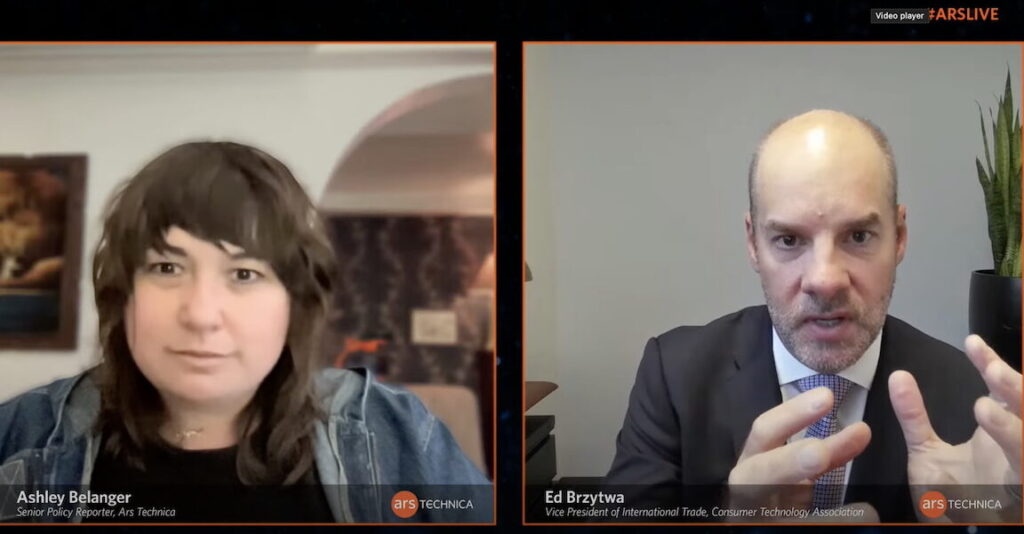
Earlier this month, Ars spoke with the Consumer Technology Association’s vice president of international trade, Ed Brzytwa, to check in and see how tech firms have navigated Donald Trump’s unpredictable tariff regimes so far.

Brzytwa has led CTA’s research helping tech firms prepare for Trump’s trade war, but during our talk, he confirmed that “the reality has been a lot more difficult and far worse, because of not just the height of the tariffs, but the variability, the tariffs on, tariffs off.”

Our discussion with Ed Brzytwa. Click here for transcript.

Currently, every tech company is in a “slightly different position,” depending on its specific supply chains, he explained. However, until semiconductor tariffs are announced, “it’s impossible” for any tech company to make the kind of long-term plans that could help keep consumer prices low as Trump’s negotiations with foreign partners and investigations into various products drag on, Brzytwa said.

Ahead of the busy holiday shopping season, Brzytwa suggested that many companies may be prepared to maintain prices, based on front-loading of inventory by firms in anticipation of more complicated tariff regimes coming. But some companies, notably in the video game industry, have already begun warning of tariff-related price hikes, Brzytwa noted, and for others likely delaying for as long as they can, there remains a question of “what happens when that inventory disappears?”

Ars Live: CTA policy expert explains why tariff stacking is a nightmare Read More »