Science

person-accidentally-poisoned-46-coworkers-with-toxin-loaded-homemade-lunch

Person accidentally poisoned 46 coworkers with toxin-loaded homemade lunch

For some, microwaving fish in the employee lunch room is the ultimate work faux pas. But for one (likely mortified) employee of a seafood distribution plant in Maryland, it’s probably causing a mass poisoning with the homemade noodle dish they brought to share for lunch. The dish sickened 46 employees, spurring their employer to hastily release a statement assuring customers that it wasn’t the company’s food that caused the illnesses.

On October 21, first responders and paramedics arrived at the NAFCO Wholesale Fish Distribution Facility in Jessup, where dozens of employees had abruptly fallen ill about three hours after lunch. Helicopter footage of the event captured images of workers around picnic tables outside the plant, some doubled over and with their heads down.

Ultimately, 46 people were sickened, and at least 26 were treated at an area hospital with symptoms of food poisoning, according to The Baltimore Banner. They all recovered.

“NAFCO maintains the highest standards of food safety and regularly undergoes rigorous inspections by health authorities,” NAFCO said in a written statement. “Its products continue to be safely produced and consumed by customers nationwide, and there are no issues related to its supply chain.”

Enterotoxins

In an update on Tuesday, the Maryland Department of Health announced that testing found that Staphylococcus aureus was the cause of the illnesses. S. aureus is often thought of as a skin bacterium, but the pathogen can spread to food from unwashed hands, the Centers for Disease Control and Prevention notes. In food that isn’t thoroughly cooked or is held at warm temperatures (between 40° F and 140° F) conducive to bacterial growth, the germ can grow and produce toxins.

Person accidentally poisoned 46 coworkers with toxin-loaded homemade lunch Read More »
these-hornets-break-down-alcohol-so-fast-that-they-can’t-get-drunk

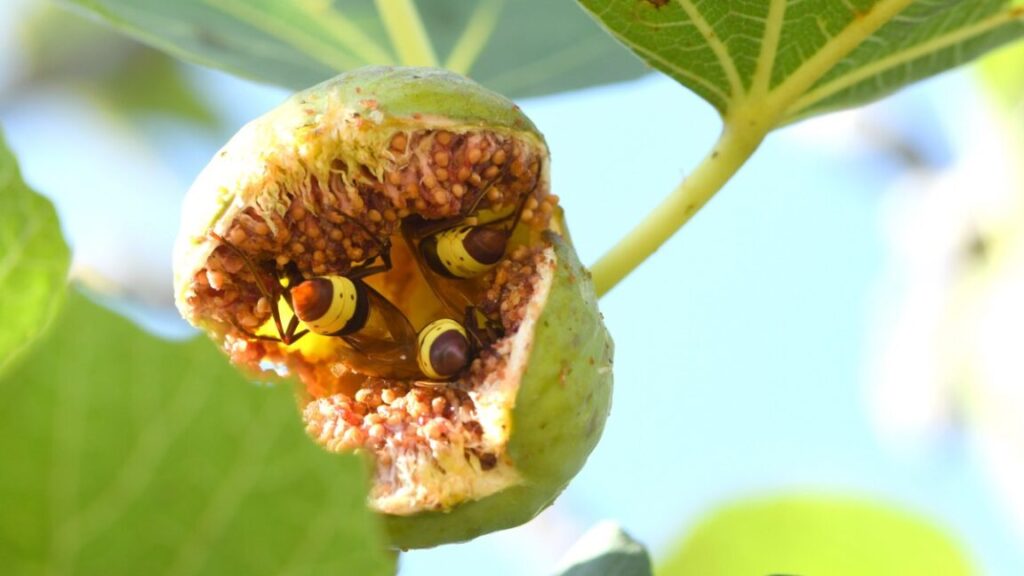
These hornets break down alcohol so fast that they can’t get drunk

Many animals, including humans, have developed a taste for alcohol in some form, but excessive consumption often leads to adverse health effects. One exception is the Oriental wasp. According to a new paper published in the Proceedings of the National Academy of Sciences, these wasps can guzzle seemingly unlimited amounts of ethanol regularly and at very high concentrations with no ill effects—not even intoxication. They pretty much drank honeybees used in the same experiments under the table.

“To the best of our knowledge, Oriental hornets are the only animal in nature adapted to consuming alcohol as a metabolic fuel,” said co-author Eran Levin of Tel Aviv University. “They show no signs of intoxication or illness, even after chronically consuming huge amounts of alcohol, and they eliminate it from their bodies very quickly.”

Per Levin et al., there’s a “drunken monkey” theory that predicts that certain animals well-adapted to low concentrations of ethanol in their diets nonetheless have adverse reactions at higher concentrations. Studies have shown that tree shrews, for example, can handle concentrations of up to 3.8 percent, but in laboratory conditions, when they consumed ethanol in concentrations of 10 percent or higher, they were prone to liver damage.

Similarly, fruit flies are fine with concentrations up to 4 percent but have increased mortality rates above that range. They’re certainly capable of drinking more: fruit flies can imbibe half their body volume in 15 percent (30 proof) alcohol each day. Not even spiking the ethanol with bitter quinine slows them down. Granted, they have ultra-fast metabolisms—the better to burn off the booze—but they can still become falling-down drunk. And fruit flies vary in their tolerance for alcohol depending on their genetic makeup—that is, how quickly their bodies adapt to the ethanol, requiring them to inhale more and more of it to achieve the same physical effects, much like humans.

These hornets break down alcohol so fast that they can’t get drunk Read More »

“impact-printing”-is-a-cement-free-alternative-to-3d-printed-structures

“Impact printing” is a cement-free alternative to 3D-printed structures

Recently, construction company ICON announced that it is close to completing the world’s largest 3D-printed neighborhood in Georgetown, Texas. This isn’t the only 3D-printed housing project. Hundreds of 3D-printed homes are under construction in the US and Europe, and more such housing projects are in the pipeline.

There are many factors fueling the growth of 3D printing in the construction industry. It reduces the construction time; a home that could take months to build can be constructed within days or weeks with a 3D printer. Compared to traditional methods, 3D printing also reduces the amount of material that ends up as waste during construction. These advantages lead to reduced labor and material costs, making 3D printing an attractive choice for construction companies.

A team of researchers from the Swiss Federal Institute of Technology (ETH) Zurich, however, claims to have developed a robotic construction method that is even better than 3D printing. They call it impact printing, and instead of typical construction materials, it uses Earth-based materials such as sand, silt, clay, and gravel to make homes. According to the researchers, impact printing is less carbon-intensive and much more sustainable and affordable than 3D printing.

This is because Earth-based materials are abundant, recyclable, available at low costs, and can even be excavated at the construction site. “We developed a robotic tool and a method that could take common material, which is the excavated material on construction sites, and turn it back into usable building products, at low cost and efficiently, with significantly less CO2 than existing industrialized building methods, including 3D printing,” said Lauren Vasey, one of the researchers and an SNSF Bridge Fellow at ETH Zurich.

How does impact printing work?

Excavated materials can’t be used directly for construction. So before beginning the impact printing process, researchers prepare a mix of Earth-based materials that has a balance of fine and coarse particles, ensuring both ease of use and structural strength. Fine materials like clay act as a binder, helping the particles stick together, while coarser materials like sand or gravel make the mix more stable and strong. This optimized mix is designed such that it can move easily through the robotic system without getting stuck or causing blockages.

“Impact printing” is a cement-free alternative to 3D-printed structures Read More »

a-candy-engineer-explains-the-science-behind-the-snickers-bar

A candy engineer explains the science behind the Snickers bar

It’s Halloween. You’ve just finished trick-or-treating and it’s time to assess the haul. You likely have a favorite, whether it’s chocolate bars, peanut butter cups, those gummy clusters with Nerds on them, or something else.

For some people, including me, one piece stands out—the Snickers bar, especially if it’s full-size. The combination of nougat, caramel, and peanuts coated in milk chocolate makes Snickers a popular candy treat.

As a food engineer studying candy and ice cream at the University of Wisconsin-Madison, I now look at candy in a whole different way than I did as a kid. Back then, it was all about shoveling it in as fast as I could.

Now, as a scientist who has made a career studying and writing books about confections, I have a very different take on candy. I have no trouble sacrificing a piece for the microscope or the texture analyzer to better understand how all the components add up. I don’t work for, own stock in, or receive funding from Mars Wrigley, the company that makes Snickers bars. But in my work, I do study the different components that make up lots of popular candy bars. Snickers has many of the most common elements you’ll find in your Halloween candy.

Let’s look at the elements of a Snickers bar as an example of candy science. As with almost everything, once you get into it, each component is more complex than you might think.

Snickers bars contain a layer of nougat, a layer of caramel mixed with peanuts, and a chocolate coating.

Credit: istarif/iStock via Getty Images

Snickers bars contain a layer of nougat, a layer of caramel mixed with peanuts, and a chocolate coating. Credit: istarif/iStock via Getty Images

Airy nougat

Let’s start with the nougat. The nougat in a Snickers bar is a slightly aerated candy with small sugar crystals distributed throughout.

One of the ingredients in the nougat is egg white, a protein that helps stabilize the air bubbles that provide a light texture. Often, nougats like this are made by whipping sugar and egg whites together. The egg whites coat the air bubbles created during whipping, which gives the nougat its aerated texture.

A boiled sugar syrup is then slowly mixed into the egg white sugar mixture, after which a melted fat is added. Since fat can cause air bubbles to collapse, this step has to be done last and very carefully.

A candy engineer explains the science behind the Snickers bar Read More »

how-can-you-write-data-to-dna-without-changing-the-base-sequence?

How can you write data to DNA without changing the base sequence?

The developers of the system call each of these potentially modifiable spots on the template an epi-bit, with the modified version corresponding to a 1 in a conventional computer bit and the unmodified version corresponding to a 0. Because no synthesis is required, multiple bits can be written simultaneously. To read the information, the scientists rigged the system so that 1s fluoresce and 0s don’t. The fluorescence, along with the sequences of bases, was read as the DNA was passed through a tiny pore.

Pictures in a meta-genome

Using this system, Zhang et al. created five DNA templates and 175 bricks to record 350 bits at a time. Using a collection of tagged template molecules, the researchers could store and read roughly 275,000 bits, including a color picture of a panda’s face and a rubbing of a tiger from the Han dynasty, which ruled China from 202 BCE to 220 CE.

They then had 60 student volunteers “with diverse academic backgrounds” store texts of their choice in epi-bits using a simple kit in a classroom. Twelve of the 15 stored texts were read successfully.

We’re not quite ready for your cat videos yet, though. There are still errors in the printing and reading steps, and since these modifications don’t survive when DNA is copied, making additional versions of the stored information may get complicated. Plus, the stability of these modifications under different storage conditions remains unknown, although the authors note that their epi-bits stayed stable at temperatures of up to 95o° C.

But once these and a few other problems are solved—and the technology is scaled up, further optimized and automated, and/or tweaked to accommodate other types of epigenetic modifications—it will be a clever and novel way to harness natural data storage methods for our needs.

Nature, 2024.  DOI: 10.1038/s41586-024-08040-5

How can you write data to DNA without changing the base sequence? Read More »

lidar-mapping-reveals-mountainous-medieval-cities-along-the-silk-road

Lidar mapping reveals mountainous medieval cities along the Silk Road

The city of Tugunbulak, which stretched beyond the forest inspector’s house, had powerful walls enclosing the area of 120 hectares, nearly five times larger than the Tashbulak site. With those walls, there was a dense architecture with hundreds of buildings, streets, palaces, plazas—even industrial facilities the Frachetti’s team suspects were used to produce iron or steel.

To put that in perspective, the medieval walls of Siena, one of the foremost cities in Italy during that time, surrounded an area of 105 hectares at the peak of its power. Genoa, another crown jewel among Italian medieval cities, between the 6th and 11th centuries, had walls protecting just 20 hectares, an area bumped up to around 50 hectares by the time of Frederic Barbarossa’s invasion between 1155 and 1158 CE.

Tugunbulak was a monster of a city. But what did it look like?

A city of iron?

“If you looked at Tugunbulak from the outside you would have seen these kind of rocky walls. They appear to have been made in a technology called rammed earth. The builders would take mud and press it into something almost like cement—a very high labor, very dense, very defensive and fortified material,” Frachetti says. Rammed earth was a dominant building technique used in the early stages of Tugunbulak’s development. “The later phase in the site, we see some stone architecture foundations with mud brick on the top. They used local resources and building techniques that were popular in the region,” Frachetti explains.

According to the team, the main contribution of the city to the Silk Road trade was iron, as the surrounding mountains are particularly rich in iron ore. One of the still unanswered questions was about the way Tugunbulak’s people lived and worked. Were they skillful blacksmiths forging iron and perhaps even steel in their mountainous city? Did at least some of its inhabitants live the lives of nomads, visiting the city only periodically to trade on market days or did they live there permanently?  “We’d like to know how extensive was the industry there—what level of production were they actually doing?” Franchetti says. He suggested that a shifting, seasonal population that most likely lived in yurts spread outside of the walls was more likely in the smaller Tashbulak, considering it lacked residential suburbs. “Tugunbulak must have been a far more organized political entity. Their power and their influence must have been significant in the broader economy of the Silk Road,” Frachetti claims.

Lidar mapping reveals mountainous medieval cities along the Silk Road Read More »

nasa’s-oldest-active-astronaut-is-also-one-of-the-most-curious-humans

NASA’s oldest active astronaut is also one of the most curious humans

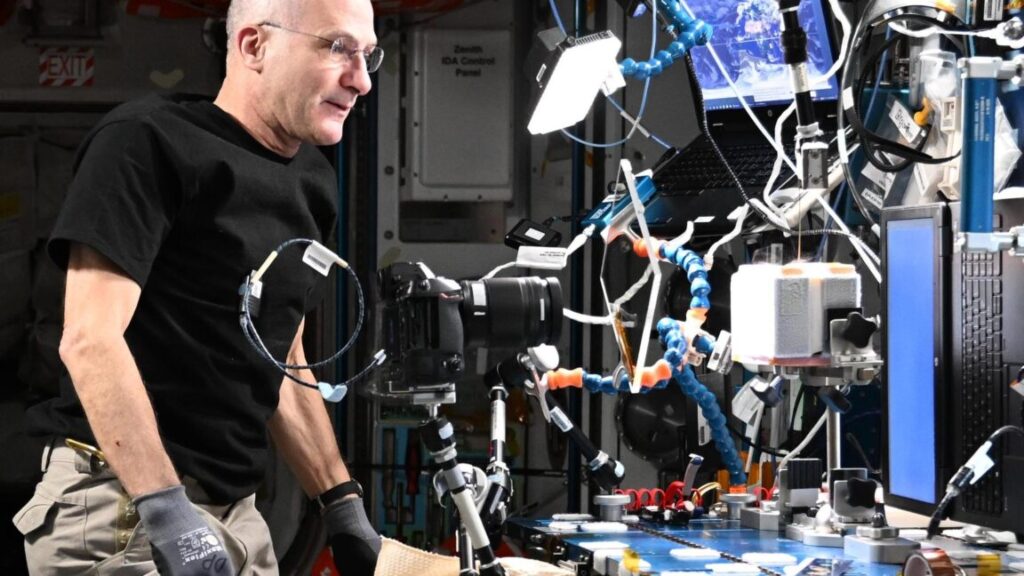
For his most recent trip to the International Space Station, in lieu of bringing coffee or some other beverage in his “personal drink bag” allotment for the stay, NASA astronaut Don Pettit asked instead for a couple of bags of unflavored gelatin.

This was not for cooking purposes but rather to perform scientific experiments. How many of us would give up coffee for science?

Well, Donald Roy Pettit is not like most of us.

At the age of 69, Pettit is NASA’s oldest active astronaut and began his third long-duration stay on the space station last month. A lifelong tinkerer and gifted science communicator, he already is performing wonders up there, and we’ll get to his current activities in a moment. But just so you understand who we’re dealing with, the thing to know about Pettit is that he is insatiably curious, and wants to share the wonder of science and the natural world with others.

Here’s just one small example. During his last six-month increment in orbit, from late 2011 to the middle of 2012, Pettit had some Lego blocks he’d been using for student demonstrations. After the final one, he asked if he could use the Legos for a science experiment. He turned them into a belts-and-rollers-type Van de Graaff generator and produced groundbreaking work in electric fluids. This research was published in Physical Review Letters after Pettit returned to Earth. Most of us probably could not even spell Van de Graaff generator, and this dude is up there, in space, building them out of toys.

The way Pettit, a chemical engineer by training, explains things is that he has the “programmatic” scientific research he does for NASA, and then there’s everything else, often done during his limited free time.

“This is well-planned, well thought out, peer-reviewed, and uplinked to station with the supplies needed,” he said of programmatic research. “And then you have what I call science of opportunity. This is science which comes to mind while you are there, simply because you are there, and you can do it because you can. The scientific disciplines that I’ve dabbled in on the International Space Station include fluid physics, classic physics, chemistry, biology, plant growth, and Earth observations.”

Wafers of water ice. Credit: Don Pettit/NASA

NASA’s oldest active astronaut is also one of the most curious humans Read More »

pizza-place-accidentally-spiked-dough-with-thc,-sickening-dozens

Pizza place accidentally spiked dough with THC, sickening dozens

In a statement on its website, Yeti’s co-owner Cale Ryan said that police testing “confirmed that pizza had been sold with dough mistakenly prepared with Delta-9-contaminated oil. The oil accidentally used in the product originated from a shared storage space in the on-site cooperative commercial kitchen.”

Oil jug with no label

Over the weekend, Ryan explained further to the Wisconsin State Journal that when Famous Yeti’s ran out of olive oil for its pizza dough, one of the cooks went across the hall to borrow some. “It’s not normal to do, but you borrow a cup of sugar from a neighbor,” Ryan said. “We went over to borrow some oil and grabbed the wrong one.” The contamination affected one batch of dough, which makes 60 pizzas, he said.

According to the health department, the oil the cook took “was in a clear plastic jug that looks like other cooking oils. There was a label on the cap that had manufacturer’s information, use by date, and noted it contained Delta-9 cannabis. The operator did not notice the label on the cap. There was no additional labeling on the body of the bottle.” The health department said it doesn’t know what dosages ended up in the pizza.

THC exposure can cause dizziness, increased blood pressure, increased heart rate, nausea, vomiting, anxiety, panic attacks, paranoia, hallucinations, short-term memory impacts, time distortion, and sleepiness. “Keep in mind each person’s reaction may be different, and the concentration of THC in the pizza can vary by piece,” the health department cautioned.

In a letter posted to Facebook Friday, Ryan apologized and took full responsibility for the contamination. “We put people and families at risk and frightened and confused children and parents. … I am incredibly sorry that I allowed us to act this irresponsibly and ended up hurting the people who have made Yetis [sic] the wonderful place it has been.”

According to America’s Poison Centers, cannabis edible exposures have been increasing among children and teens since at least 2019. Much like what happened at Yeti’s, the trend in accidental poisonings can be blamed on poor labeling and cannabis products that resemble common foods, including candies.  To date, Poison Centers have tracked nearly 7,000 exposures in children this year. “While edible cannabis does not typically result in serious problems for adults, children have more severe reactions and are more likely to require medical attention” the poison centers say. In children, severe reactions to cannabis can include slowed breathing, seizure, and coma.

Pizza place accidentally spiked dough with THC, sickening dozens Read More »

graphene-enhanced-ceramic-tiles-make-striking-art

Graphene-enhanced ceramic tiles make striking art

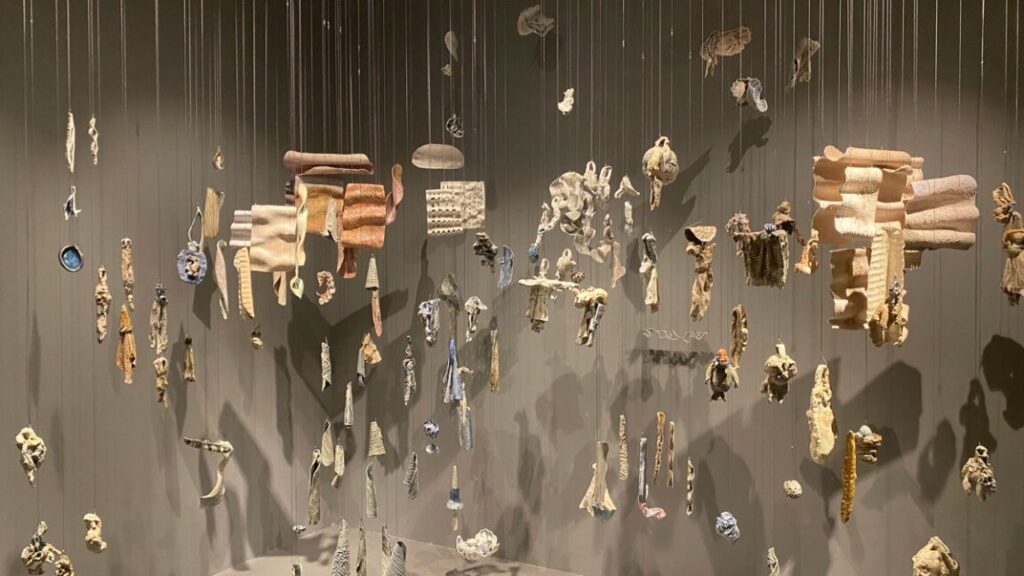
In recent years, materials scientists experimenting with ceramics have started adding an oxidized form of graphene to the mix to produce ceramics that are tougher, more durable, and more resistant to fracture, among other desirable properties. Researchers at the National University of Singapore (NUS) have developed a new method that uses ultrasound to more evenly distribute graphene oxide (GO) in ceramics, according to a new paper published in the journal ACS Omega. And as a bonus, they collaborated with an artist who used the resulting ceramic tiles to create a unique art exhibit at the NUS Museum—a striking merger of science and art.

As reported previously, graphene is the thinnest material yet known, composed of a single layer of carbon atoms arranged in a hexagonal lattice. That structure gives it many unusual properties that hold great promise for real-world applications: batteries, super capacitors, antennas, water filters, transistors, solar cells, and touchscreens, just to name a few.

In 2021, scientists found that this wonder material might also provide a solution to the fading of colors of many artistic masterpieces. For instance, several of Georgia O’Keeffe’s oil paintings housed in the Georgia O’Keeffe Museum in Santa Fe, New Mexico, have developed tiny pin-sized blisters, almost like acne, for decades. Conservators have found similar deterioration in oil-based masterpieces across all time periods, including works by Rembrandt.

Van Gogh’s Sunflower series has been fading over the last century due to constant exposure to light. A 2011 study found that chromium in the chrome yellow Van Gogh favored reacted strongly with other compounds like barium and sulfur when exposed to sunlight. A 2016 study pointed the finger at the sulfates, which absorb in the UV spectrum, leading to degradation.

Even contemporary art materials are prone to irreversible color changes from exposure to light and oxidizing agents, among other hazards. That’s why there has been recent work on the use of nanomaterials for conservation of artworks. Graphene has a number of properties that make it attractive for art-conservation purposes. The one-atom-thick material is transparent, adheres easily to various substrates, and serves as an excellent barrier against oxygen, gases (corrosive or otherwise), and moisture. It’s also hydrophobic and is an excellent absorber of UV light.

Graphene-enhanced ceramic tiles make striking art Read More »

a-how-to-for-ethical-geoengineering-research

A how-to for ethical geoengineering research

Holistic climate justice: The guidelines recognize that geoengineering won’t affect just those people currently residing on Earth, but on future generations as well. Some methods, like stratospheric aerosols, don’t eliminate the risks caused by warming, but shift them onto future generations, who will face sudden and potentially dramatic warming if the geoengineering is ever stopped. Others may cause regional differences in either benefits or warming, shifting consequences to different populations.

Special attention should be paid to those who have historically been on the wrong side of environmental problems in the past. And harms to nature need to be considered as well.

Inclusive public participation: The research shouldn’t be approached as simply a scientific process; instead, any affected communities should be included in the process, and informed consent should be obtained from them. There should be ongoing public engagement with those communities and adapt to their cultural values.

Transparency: The public needs to be aware of who’s funding any geoengineering research and ensure that whoever’s providing the money doesn’t influence decisions regarding the design of the research. Those decisions, and the considerations behind them, should also be made clear to the public.

Informed governance: Any experiments have to conform to laws ranging from local to international. Any research programs should be approved by an independent body before any work starts. All the parties involved—and this could include the funders, the institutions, and outside contractors—should be held accountable to governments, public institutions, and those who will potentially be impacted by the work.

If you think this will make pursuing this research considerably more complicated, you are absolutely correct. But again, even tests of these approaches could have serious environmental consequences. And many of these things represent best practices for any research with potential public consequences; the fact that they haven’t always been pursued is not an excuse to continue to avoid doing them.

A how-to for ethical geoengineering research Read More »

if-you-thought-astra-was-going-to-go-away-quietly,-you-were-wrong

If you thought Astra was going to go away quietly, you were wrong

On Wednesday morning, a surprising email popped into my inbox with the following subject line: “Astra announces Department of Defense contract valued up to $44 Million.”

I had to read it a second time to make sure I got it right. Astra, the launch company? Astra, whose valuation went from $2.6 billion to $25 million after a series of launch failures? Astra, the company that was taken private in July at 50 cents a share?

Yes, it was that Astra.

This was curious, indeed. To get some answers, I spoke with the cofounder of Astra, Chris Kemp, who remains the company’s chief executive.

“If I have learned anything, it’s that you just don’t give up,” Kemp said. “You know, if you give up easily, this is not the place to be. Fortunately, I am surrounded by a team that has chosen not to give up.”

Rocket 4 becomes more real

I’ll be frank: When Kemp and his co-founder, Adam London, took Astra private this summer, I never expected to hear from the company again. Astra certainly was not the first launch company to fail, and it won’t be the last. But it is the first to seemingly resurrect itself in such a dramatic way.

To be clear, Astra is not back yet. The company remains in the phase of building and testing rocket stages and engines and does not have a launch vehicle ready to go. Its new booster, Rocket 4, will launch no earlier than the fourth quarter of 2025, Kemp said. (That date should probably be viewed with some skepticism).

The company has previously discussed Rocket 4, which is intended to carry 600 kg to low-Earth orbit, as far back as August 2022. But at the time, most of the launch industry, including this reporter, shrugged and moved along. After all, the company’s smaller vehicle, Rocket 3, failed on five of its seven orbital launch attempts. The general sentiment was that the new rocket would never fly.

However, even as Astra’s finances worsened and the company had to stave off bankruptcy by being taken private, not everyone dismissed the vision. In April 2023, the US Space Force awarded a task order for Rocket 4 to launch the STP-S29B mission. That was interesting, but it was just a single data point. Then came this week’s announcement that the US Department of Defense’s “Defense Innovation Unit” had awarded a grant worth up to $44 million to Astra for a “tactically responsive launch system.”

If you thought Astra was going to go away quietly, you were wrong Read More »

study:-dna-corroborates-“well-man”-tale-from-norse-saga

Study: DNA corroborates “Well-man” tale from Norse saga

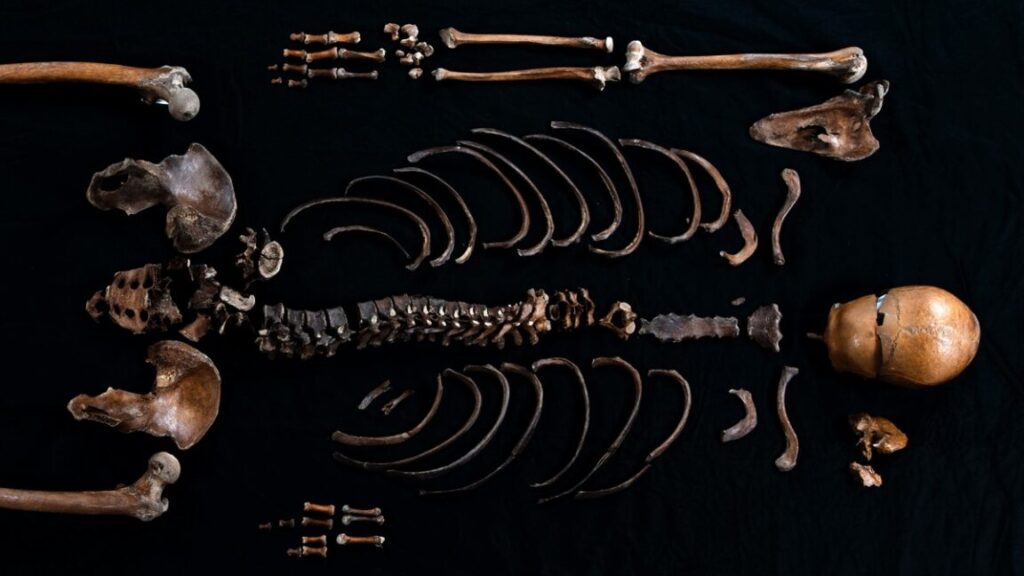
The results: The Well-man was indeed male, between 30 and 40, with blue eyes and blond or light-brown hair, and his ancestry was traced to southern Norway, most likely present-day Vest-Agder. This is interesting because King Sverre’s men were from central Norway, and it had long been assumed that the dead body thrown into the well was part of that army. It was the invading Baglers who hailed from southern Norway. The authors are careful to note that one cannot definitively conclude that therefore the Well-man was a Bagler, but it’s certainly possible that the Baglers tossed one of their own dead into the well.

As for whether the action was a form of 12th-century biological warfare intended to poison the well, the authors weren’t able to identify any pathogens in their analysis. But that might be because of the strict decontamination procedures that were used to prepare the tooth samples, which may have also removed traces of any pathogen DNA. So they could not conclude one way or another whether the Well-man had been infected with a deadly pathogen at the time of his death.

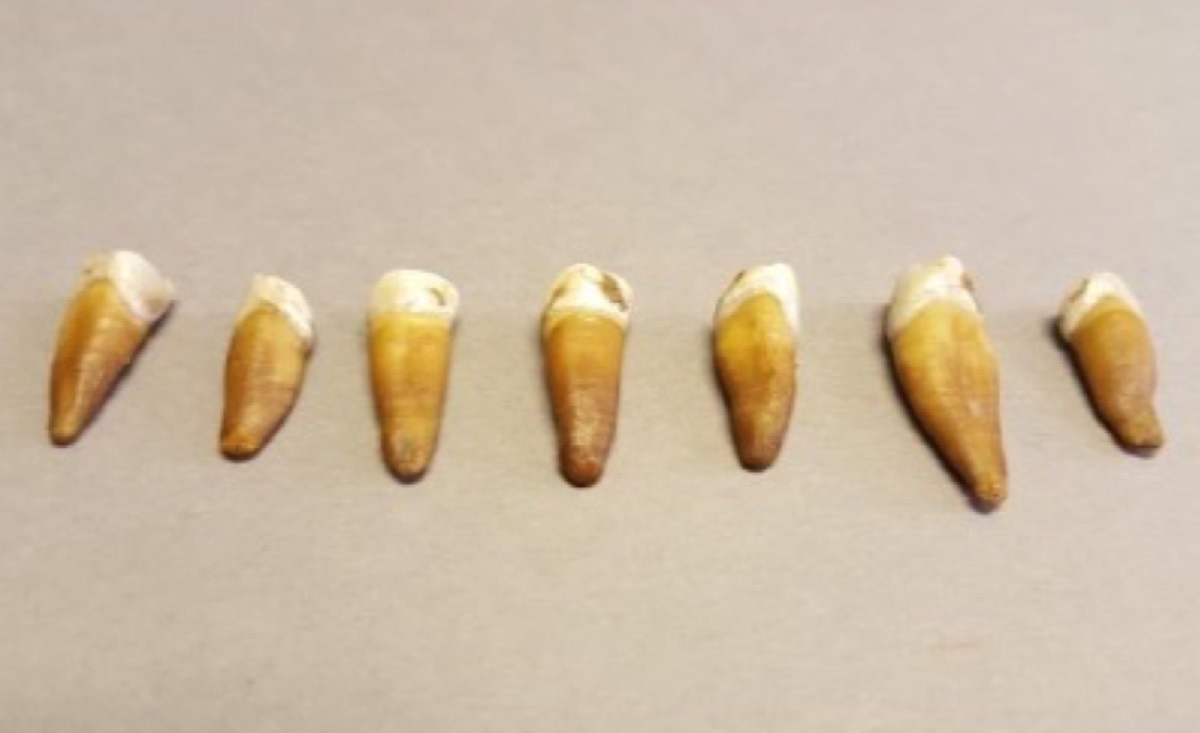
Seven well-man teeth recovered from excavation

Seven Well-man teeth recovered from the excavation.

Credit: Norwegian Institute for Cultural Heritage Research

Seven Well-man teeth recovered from the excavation. Credit: Norwegian Institute for Cultural Heritage Research

“It was a compromise between removing surface contamination of the people who have touched the tooth and then removing some of the possible pathogens. There are lots of ethical considerations,” said co-author Martin Ellegaard, also of the Norwegian University of Science and Technology. “We need to consider what kind of tests we’re doing now because it will limit what we can do in the future.”

The fact that the Well-man hailed from southern Norway indicates that the distinctive genetic drift observed in southern Norway populations already existed during King Sverre’s reign. “This has implications for our understanding of Norwegian populations, insofar as it implies that this region must have been relatively isolated not only since that time, but also at least for a few hundred years beforehand and perhaps longer,” the authors concluded. Future research sequencing more ancient Norwegian DNA would shed further light on this finding—perhaps even the remains of the Norwegian Saint Olaf, believed to be buried near Trondheim Cathedral.

iScience, 2024. DOI: 10.1016/j.isci.2024.111076  (About DOIs).

Study: DNA corroborates “Well-man” tale from Norse saga Read More »